Bioactive Anti-Inflammatory Compounds: The Science-Backed Natural Molecules That Fight Chronic Inflammation
Discover the most powerful anti-inflammatory compounds, including curcumin, omega-3s, and polyphenols. Learn how they reduce inflammation naturally.
NUTRITION
Dr. T.S. Didwal, M.D.(Internal Medicine)
5/31/202623 min read
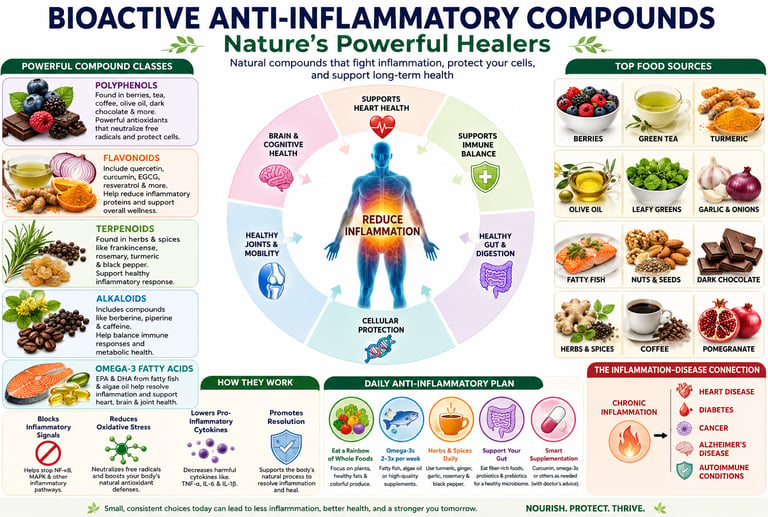
What are bioactive anti-inflammatory compounds?
Bioactive anti-inflammatory compounds are natural molecules in plants, foods, and marine sources — like polyphenols, curcumin, quercetin, and omega-3s — that reduce chronic inflammation by blocking NF-κB, lowering cytokines TNF-α and IL-6, and activating pro-resolving pathways. Unlike NSAIDs, they target multiple pathways with fewer side effects (Israni et al., 2026).
Chronic inflammation is not the body’s villain. It is a protective alarm that forgot how to turn off, quietly driving heart disease, diabetes, and Alzheimer’s when it smolders for years. Drugs like NSAIDs mute the alarm but carry gastrointestinal and cardiovascular risks with long-term use. A growing body of 2025–2026 research shows food-derived bioactive compounds can regulate the same molecular switches more selectively, with fewer adverse effects (Israni et al., 2026).
These compounds are not vitamins. They are plant and marine metabolites — polyphenols, flavonoids, terpenoids, alkaloids, and omega-3 fatty acids — that modulate NF-κB, MAPK, and JAK/STAT pathways to lower cytokines like TNF-α and IL-6, while reducing oxidative stress (Ali et al., 2026; Jain et al., 2025). Curcumin inhibits NF-κB and COX-2 but needs piperine or liposomal delivery for meaningful absorption (Hewlings & Kalman, 2017). EPA and DHA do something unique: they convert to resolvins and protectins that actively resolve inflammation instead of just blocking it (Serhan, 2014; Saas et al., 2022).
The limitation is bioavailability. Most polyphenols are poorly absorbed and rely on gut bacteria to become active metabolites (Burge et al., 2019). Advanced delivery systems like nanoencapsulation and phytosomes are now closing that gap (Fatima et al., 2025; Huang et al., 2025).
Practical impact: a Mediterranean-style plate rich in olive oil, fatty fish, berries, leafy greens, and spices delivers hundreds of these molecules daily (Estruch et al., 2018). Supplements help when targeted — 1–2 g EPA+DHA for cardiovascular support, or bioavailable curcumin for joint pain — but food is the foundation.
Bottom line: You are not just “eating healthy.” You are dosing specific, science-backed compounds that speak your cells’ language. Use them daily, wisely, and with your doctor’s guidance.
Who Benefits Most?
Metabolic syndrome
Obesity
Type 2 diabetes
Arthritis
Cardiovascular disease
Top 5 most powerful anti-inflammatory compounds, per 2025-2026 research:
1. Curcumin — Inhibits NF-κB and COX-2; needs piperine for absorption
2. EPA/DHA — Produces resolvins that actively resolve inflammation
3. EGCG — Green tea polyphenol; suppresses pro-inflammatory enzymes
4. Quercetin — Reduces CRP and IL-6; blocks histamine release
5. Berberine — Activates AMPK, reduces NF-κB and metabolic inflammation
Key Takeaways
Chronic low-grade inflammation is a major driver of cardiovascular disease, type 2 diabetes, obesity, Alzheimer's disease, autoimmune disorders, and many cancers.
Bioactive anti-inflammatory compounds are naturally occurring molecules found in foods, herbs, spices, and marine sources that help regulate inflammatory pathways.
The most researched anti-inflammatory compounds include curcumin, omega-3 fatty acids, quercetin, EGCG, resveratrol, berberine, anthocyanins, and boswellic acids.
These compounds work by suppressing key inflammatory pathways such as NF-κB, MAPK, and JAK/STAT while enhancing antioxidant defenses through Nrf2 activation.
Omega-3 fatty acids are unique because they not only reduce inflammation but also promote its active resolution through specialized pro-resolving mediators (SPMs) such as resolvins and protectins.
Polyphenol-rich foods including berries, green tea, extra virgin olive oil, dark chocolate, coffee, and colorful vegetables provide a broad spectrum of anti-inflammatory benefits.
Gut microbiome health strongly influences the effectiveness of many bioactive compounds by converting them into more active metabolites.
A Mediterranean-style dietary pattern consistently outperforms individual supplements for long-term inflammation reduction and chronic disease prevention.
Bioavailability matters. Compounds such as curcumin and resveratrol often require specialized formulations or co-factors to achieve meaningful absorption.
Anti-inflammatory supplements can complement a healthy lifestyle but should not replace prescribed medications or medical care.
Fast Facts
Best-studied compound: Curcumin
Strongest clinical evidence: Omega-3 fatty acids (EPA & DHA)
Best dietary pattern: Mediterranean diet
Most important pathway: NF-κB
Most important antioxidant regulator: Nrf2
Best food sources: Berries, olive oil, green tea, fatty fish, garlic, turmeric
Best lifestyle partner: Regular exercise and adequate sleep
Most overlooked factor: Gut microbiome health
1. What Is Inflammation — and Why Does It Happen?
Inflammation is one of the most ancient and essential defense mechanisms in biology. When your body encounters an infection, physical injury, toxin, or tissue damage, it launches an immediate inflammatory response designed to isolate the threat, destroy pathogens, and initiate healing.
The Acute Inflammatory Response
The process begins almost instantly. Damaged cells release chemical signals — including histamine, bradykinin, and prostaglandins — that cause local blood vessels to dilate and become more permeable. This produces the classic signs of inflammation: redness, warmth, swelling, and pain.
Simultaneously, white blood cells — particularly neutrophils and macrophages — flood into the affected tissue. These immune warriors release reactive oxygen species (ROS), proteases, and cytokines to neutralize pathogens and clear cellular debris. Within days (in a healthy response), the threat is resolved, inflammatory signals are turned off, and tissue repair begins.
This is inflammation working exactly as designed. The problem arises when the "off switch" never activates.
Key Insight
Acute inflammation is protective and necessary. It is unresolved, chronic inflammation — persisting for months or years — that silently erodes health and drives disease progression.
2. When Inflammation Becomes Chronic — The Disease Connection
Chronic inflammation doesn't announce itself dramatically. There's no swelling, no obvious pain, no fever. Instead, it quietly smolders at a cellular level — consistently activating inflammatory pathways, generating oxidative stress, and damaging tissues over time.
What Triggers Chronic Inflammation?
Poor diet: Ultra-processed foods, refined sugars, and seed oils promote inflammatory signaling
Physical inactivity: Sedentary behavior elevates circulating inflammatory markers like CRP and IL-6
Chronic stress: Sustained cortisol disrupts immune regulation
Environmental toxins: Pollution, pesticides, and heavy metals trigger ongoing immune activation
Gut dysbiosis: An imbalanced gut microbiome leaks bacterial products (LPS) into the bloodstream, triggering systemic inflammation
Adipose tissue: Excess body fat — especially visceral fat — secretes pro-inflammatory cytokines (adipokines)
Diseases Rooted in Chronic Inflammation
The research connecting chronic inflammation to disease is now overwhelming. A landmark 2026 review published in Pharmaceutics confirmed that chronic inflammation contributes to the pathogenesis of cardiovascular disease, autoimmune conditions, neurodegenerative disorders, and various cancers — essentially the full spectrum of non-communicable disease burden.
Cardiovascular Disease
Driver: Arterial plaque buildup and oxidized LDL (bad cholesterol).
Markers: CRP, IL-6, TNF-α.
Type 2 Diabetes
Driver: Insulin resistance and chronic adipose (fat) tissue inflammation.
Markers: IL-1β, NF-κB, adipokines.
Alzheimer's Disease
Driver: Neuroinflammation and amyloid-beta plaque deposition in the brain.
Markers: Microglial activation, various cytokines.
Rheumatoid Arthritis
Driver: Autoimmune-driven destruction of the joints.
Markers: TNF-α, IL-17, RANKL.
Cancer
Driver: An inflammatory tumor microenvironment and chronic DNA damage.
Markers: NF-κB, COX-2, VEGF.
Inflammatory Bowel Disease
Driver: Gut barrier dysfunction and microbiome dysbiosis (bacterial imbalance).
Markers: IL-6, IL-12, TNF-α.
Psoriasis
Driver: Keratinocyte (skin cell) hyperproliferation.
Markers: IL-17, IL-23, TNF-α.
3. What Are Bioactive Anti-Inflammatory Compounds?
"Bioactive compound" is a broad term for any naturally derived molecule that exerts a measurable biological effect in the body beyond basic nutrition. These aren't the macronutrients and vitamins your body needs to survive — they're the secondary metabolites plants, fungi, and marine organisms produce to defend themselves, attract pollinators, and adapt to their environments.
When you consume these compounds — through food, herbs, or concentrated supplements — they interact with your body's own biochemistry in ways that can be profoundly anti-inflammatory.
A 2026 review in ChemistryOpen by Ali and colleagues catalogued the major classes, noting that natural bioactive compounds work through mechanisms including ROS inhibition, NF-κB suppression, and cytokine regulation — and that they span pharmaceutical, cosmetic, agricultural, and food applications.
Why Are They Better Than Simply Taking NSAIDs?
Non-steroidal anti-inflammatory drugs (NSAIDs) like ibuprofen work by blocking the COX enzymes. They're effective acutely, but long-term use is associated with gastrointestinal damage, cardiovascular risk, and kidney impairment. Many bioactive compounds offer a more nuanced approach: they modulate multiple inflammatory pathways simultaneously, often at lower toxicity thresholds, and some even promote active resolution of inflammation rather than simply suppressing it.
⚠ Important
Bioactive compounds are not a replacement for prescribed medications. Always consult your doctor before using supplements, particularly if you have an existing medical condition or take other medications. The evidence discussed here ranges from robust to preliminary.
4. Key Classes of Bioactive Anti-Inflammatory Compounds
Research published across multiple 2025–2026 journals identifies five major categories of naturally occurring anti-inflammatory bioactives. Here's an overview before we go deep on each:
Most researched
Polyphenols
Largest class of plant bioactives. Found in fruits, vegetables, tea, wine, and cocoa. Powerful antioxidants that neutralise ROS and modulate NF-κB signaling.
Broad evidence base
Flavonoids
A major subclass of polyphenols. Includes quercetin, kaempferol, luteolin, and resveratrol. Anti-inflammatory, anticancer, cardioprotective effects.
Emerging evidence
Terpenoids
Found in essential oils, herbs, and cannabis. Compounds like boswellic acids and β-caryophyllene show potent anti-inflammatory action.
Traditional + modern
Alkaloids
Nitrogen-containing plant compounds. Berberine, piperine, and caffeine are well-studied. Modulate multiple inflammatory signaling pathways.
Strong clinical data
Omega-3 Fatty Acids
Found in fatty fish, flaxseed, and walnuts. EPA and DHA are precursors to potent pro-resolving mediators (resolvins, protectins, maresins).
Growing research
Microbiome Metabolites
Short-chain fatty acids (butyrate, propionate) produced by gut bacteria act as systemic anti-inflammatory agents via histone deacetylase inhibition.
5. Polyphenols — The Antioxidant Powerhouses
Polyphenols are the most abundant and widely studied class of bioactive compounds. With over 8,000 identified structures, they represent a remarkable diversity of molecules united by a common aromatic ring structure decorated with hydroxyl groups — which gives them their powerful electron-donating (antioxidant) capacity.
A comprehensive 2025 review in Discover Food describes polyphenols as having a "broad spectrum of biological activities" with particularly strong evidence for antioxidant, anti-inflammatory, anticancer, cardioprotective, and neuroprotective effects. They're found abundantly in fruits, vegetables, grains, tea, coffee, and red wine.
How Polyphenols Fight Inflammation at the Cellular Level
Polyphenols work through several complementary mechanisms:
ROS Neutralization: Their hydroxyl groups donate electrons to neutralize reactive oxygen species before they can damage DNA, proteins, and cell membranes.
Nrf2 Pathway Activation: Polyphenols activate the Keap1-Nrf2 pathway, upregulating the body's own antioxidant defense enzymes (superoxide dismutase, catalase, glutathione peroxidase).
NF-κB Suppression: Nuclear factor kappa B is the master regulator of inflammatory gene expression. Polyphenols inhibit its activation, reducing transcription of pro-inflammatory cytokines.
COX/LOX Inhibition: Some polyphenols directly inhibit cyclooxygenase and lipoxygenase enzymes — the same targets as NSAIDs — reducing prostaglandin and leukotriene production.
Top Food Sources of Polyphenols
Here is the polyphenol data rewritten as clean, bulleted points:
Dark Chocolate (70%)
Key Polyphenols: Epicatechin, procyanidins
Typical Content: ~500 mg per 100g
Evidence Level: ★★★★☆
Turmeric
Key Polyphenols: Curcumin
Typical Content: ~1,000–3,000 mg per teaspoon
Evidence Level: ★★★★★
Coffee
Key Polyphenols: Chlorogenic acids
Typical Content: ~200–550 mg per cup
Evidence Level: ★★★★☆
Blueberries
Key Polyphenols: Anthocyanins, chlorogenic acid
Typical Content: ~260 mg per 100g
Evidence Level: ★★★★★
Green Tea
Key Polyphenols: EGCG (epigallocatechin gallate)
Typical Content: ~100–300 mg per cup
Evidence Level: ★★★★★
Pomegranate
Key Polyphenols: Ellagitannins (converts to urolithins)
Typical Content: ~200 mg per 100g
Evidence Level: ★★★☆☆
Extra Virgin Olive Oil
Key Polyphenols: Oleocanthal, hydroxytyrosol
Typical Content: ~50–200 mg per 100g
Evidence Level: ★★★★★
Red Grapes / Wine
Key Polyphenols: Resveratrol, quercetin
Typical Content: ~5–10 mg per glass
Evidence Level: ★★★★☆
The Bioavailability Challenge
Here's an inconvenient truth about polyphenols: eating them doesn't automatically mean your cells absorb them. Most polyphenols are poorly absorbed in the small intestine and depend heavily on gut bacteria to convert them into bioactive metabolites. This is why polyphenol research "in the test tube" often doesn't translate directly to human effects — and why gut health matters enormously for getting full anti-inflammatory benefit from your diet.
2025 Research Note (Jain et al., Discover Food): Bioavailability is a critical limitation of polyphenol research. Factors including the food matrix, gut microbiome composition, and individual metabolic variation significantly alter how much active compound actually reaches target tissues.
6. Flavonoids — Nature's Most Versatile Inflammation Fighters
Flavonoids form the largest and most studied subgroup within the polyphenol family, comprising over 6,000 identified compounds. They are responsible for the vivid colors of many fruits and vegetables — the deep purples of blueberries, the bright yellows of turmeric, the reds of cherries.
Key Flavonoids and What the Science Shows
Quercetin
One of the most ubiquitous flavonoids, found in onions, apples, capers, and kale. Quercetin has demonstrated inhibition of NF-κB, reduction of TNF-α, and suppression of histamine release from mast cells. Research shows it can reduce circulating CRP and IL-6 — two primary markers of systemic inflammation.
Curcumin (from Turmeric)
Perhaps the most commercially recognized anti-inflammatory bioactive. Curcumin targets multiple points in the inflammatory cascade simultaneously, inhibiting NF-κB, suppressing COX-2, reducing TNF-α and IL-1β, and activating Nrf2. A 2025 review confirmed that curcumin "consistently shows strong antioxidant and anti-inflammatory activity" by modulating NF-κB, STAT3, and related pathways.
However — and this is critical — standard curcumin from turmeric powder has only about 1–2% bioavailability. For therapeutic effect, you need either:
Curcumin with piperine (black pepper extract), which increases absorption by up to 2,000%
Nano-encapsulated or liposomal curcumin formulations
Phytosome-bound curcumin (Meriva, BCM-95)
EGCG (Epigallocatechin Gallate)
The primary bioactive in green tea, EGCG, is one of the most potent anti-inflammatory and antioxidant flavonoids known. It inhibits pro-inflammatory enzymes, reduces reactive nitrogen species, and has shown neuroprotective effects in models of Alzheimer's and Parkinson's disease.
Resveratrol
Found in grape skins, red wine, and berries, resveratrol activates the longevity-associated SIRT1 enzyme and has potent anti-inflammatory, cardioprotective, and anti-aging effects. The challenge? It is rapidly metabolised — peak blood levels after oral supplementation last only about an hour, which limits its clinical application.
Luteolin & Kaempferol
Less famous but highly potent. Found in celery, thyme, green peppers, and chamomile (luteolin) and in broccoli, apples, and tea (kaempferol), these flavonoids are showing growing promise in neuroinflammation and cancer prevention research.
7. Terpenoids & Alkaloids — The Underrated Anti-Inflammatories
Terpenoids
Terpenoids are a massive class of naturally occurring compounds derived from isoprene units. They include essential oil components, plant pigments like carotenoids, and steroid hormones. Several have remarkable anti-inflammatory profiles:
Boswellic Acids (Frankincense): These pentacyclic terpenoids from Boswellia serrata are highly specific 5-LOX inhibitors — blocking the leukotriene pathway without the gastrointestinal side effects of NSAIDs. Used clinically for osteoarthritis and inflammatory bowel disease.
β-Caryophyllene: A sesquiterpene found in black pepper, cloves, and cannabis. Uniquely, it acts as a full agonist at CB2 cannabinoid receptors — triggering anti-inflammatory and analgesic effects without psychoactivity. Found in many culinary spices.
Ursolic Acid: Found in apple peels and rosemary, ursolic acid inhibits both NF-κB and STAT3, and has demonstrated muscle-sparing and anti-obesity effects alongside its anti-inflammatory properties.
Lycopene: The red carotenoid in tomatoes is a potent antioxidant that reduces oxidative markers of inflammation, with strong evidence for cardiovascular and prostate protection.
Alkaloids
Alkaloids are nitrogen-containing plant compounds with often-potent biological effects. From caffeine in your morning coffee to berberine in Chinese medicine, these molecules are pharmacologically active at low concentrations.
Berberine: Found in goldenseal, barberry, and Oregon grape. Berberine activates AMPK (the body's "energy sensor"), reduces NF-κB activity, improves insulin sensitivity, and has clinically significant effects on metabolic inflammation. Some 2024–2025 trials show effects comparable to metformin for glucose control.
Piperine: The compound that makes black pepper hot. Beyond its role as a bioavailability enhancer for other compounds (notably curcumin), piperine itself inhibits NF-κB, reduces TNF-α, and has antioxidant properties.
Caffeine: A methylxanthine alkaloid with documented anti-inflammatory effects at moderate doses, primarily via adenosine receptor antagonism and reduced phosphodiesterase activity. Habitual coffee consumption is associated with lower CRP levels in population studies.
2026 Research (Ali et al., ChemistryOpen): The integration of artificial intelligence in natural compound discovery is "significantly accelerating" the identification of novel bioactive structures, enabling faster screening and activity prediction across alkaloid, terpenoid, and flavonoid libraries.
8. Omega-3 Fatty Acids — Beyond "Anti-Inflammatory" to Pro-Resolving
Most people have heard that omega-3 fatty acids reduce inflammation. But that framing undersells what these remarkable molecules actually do. Omega-3s don't just suppress inflammation — they actively promote its resolution. This is a fundamentally different and more important concept.
Resolvins, Protectins, and Maresins — The Resolution Mediators
In the early 2000s, researchers discovered a new family of signaling molecules derived from EPA and DHA — the two marine omega-3 fatty acids. These include:
Resolvins (from EPA and DHA)
Protectins / Neuroprotectins (from DHA)
Maresins (from DHA)
Collectively called Specialized Pro-resolving Mediators (SPMs), these molecules actively terminate the inflammatory response by halting neutrophil recruitment, stimulating macrophage clearance of cellular debris, and promoting tissue regeneration. This is called "resolution pharmacology" — and it represents a paradigm shift in how we think about fighting inflammation.
A 2022 paper in Frontiers in Immunology described resolution therapy as a "new therapeutic approach based on the use of pro-resolving mediators that accelerate the resolution phase of inflammation by targeting the productive phase" — noting that it has now expanded to include complex biological drugs and cell-based therapies.
EPA vs. DHA — Does It Matter?
Yes, meaningfully:
EPA (eicosapentaenoic acid) is the primary precursor for E-series resolvins and is more potent at suppressing active inflammation. Better for cardiovascular and inflammatory conditions.
DHA (docosahexaenoic acid) is the primary precursor for D-series resolvins, protectins, and maresins. More important for brain health, neuroinflammation, and retinal function.
For most anti-inflammatory goals, a ratio of approximately 2:1 EPA:DHA is a reasonable starting point, though individual needs vary.
Optimal Sources and Doses
Wild Atlantic Salmon (3 oz)
EPA + DHA Content: ~1,500–2,000 mg
Notes: The absolute gold standard food source; it also provides natural vitamin D3 and the powerful antioxidant astaxanthin.
Sardines (3 oz, canned)
EPA + DHA Content: ~1,200 mg
Notes: Excellent sustainability profile and very low on the food chain, meaning they carry virtually no risk of heavy metal bioaccumulation like mercury.
Mackerel (3 oz)
EPA + DHA Content: ~1,000–2,000 mg
Notes: Keep an eye on the species—king mackerel is high in mercury, so it is best to opt for Atlantic or Spanish mackerel instead.
Fish Oil Supplement
EPA + DHA Content: ~500–1,000 mg per capsule
Notes: Quality varies wildly across brands. It is crucial to look for third-party testing certifications (like IFOS) to ensure purity and avoid rancid oil.
Algae Oil Supplement
EPA + DHA Content: ~400–800 mg per serving
Notes: The premier vegan and vegetarian option. This is actually where the fish get their omega-3s in the first place.
Flaxseed (ground, 2 tbsp)
Omega-3 Content: ~2,400 mg ALA
Notes: Important distinction here—plant sources provide ALA, not direct EPA or DHA. The human body converts ALA to usable EPA/DHA at a very low efficiency rate of only ~5–10%.⚠ Dosing Note
Most cardiovascular research uses 1,000–4,000 mg combined EPA+DHA per day. At doses above 3,000 mg/day, fish oil can have blood-thinning effects. Discuss with your doctor if you take anticoagulants or plan surgery.
9. The Molecular Pathways: How These Compounds Work
Understanding the science behind anti-inflammatory bioactives means understanding the signaling pathways they target. You don't need to memorize these — but knowing the key players will help you appreciate why these compounds work and why they're so promising.
The NF-κB Pathway — Master Switch of Inflammation
Nuclear Factor kappa-light-chain-enhancer of activated B cells (NF-κB) is probably the single most important transcription factor in inflammatory disease. When activated by danger signals (pathogens, damaged proteins, cytokines), it migrates into the cell nucleus and switches on over 300 genes involved in inflammation, immune responses, and cell survival.
Most bioactive anti-inflammatory compounds inhibit NF-κB activation — either by trapping it in the cytoplasm (preventing nuclear entry), stabilizing its inhibitor protein IκB, or reducing upstream kinase activity. The 2026 Pharmaceutics review specifically highlights NF-κB inhibition as a key mechanism for flavonoids, polyphenols, alkaloids, and terpenoids.
The MAPK Pathway
Mitogen-activated protein kinases (MAPK) — including ERK, JNK, and p38 — are signal transducers that translate environmental stresses into inflammatory gene expression. Many flavonoids and polyphenols inhibit p38 MAPK and JNK activation, reducing downstream cytokine production. This is particularly relevant to neuroinflammation and stress-induced inflammatory responses.
The JAK/STAT Pathway
Janus kinases (JAK) and Signal Transducers and Activators of Transcription (STAT) are central to cytokine signaling. The JAK/STAT pathway mediates responses to interleukins, interferons, and growth factors. Pharmaceutical JAK inhibitors (tofacitinib, baricitinib) are now frontline treatments for rheumatoid arthritis — and several natural bioactives, including curcumin and resveratrol, have demonstrated JAK/STAT modulatory effects in preclinical studies.
Nrf2 — The Antioxidant Master Regulator
While NF-κB is inflammation's accelerator, Nrf2 (Nuclear factor erythroid 2–related factor 2) is its brake — a transcription factor that upregulates dozens of antioxidant and cytoprotective genes. When you eat polyphenol-rich foods, you're largely activating Nrf2, boosting your endogenous antioxidant capacity.
10. Evidence Summary — What the Research Actually Shows
Not all bioactive compounds have equal levels of evidence. The table below summarizes the current state of research across key compounds, including study types, effect sizes, and practical applicability.
EPA/DHA (Omega-3)
Best Evidence For: Cardiovascular disease (CVD), depression, and rheumatoid arthritis.
Highest Study Quality: Numerous large randomized controlled trials (RCTs) and comprehensive meta-analyses.
Effect Size: Moderate to Large.
Practical Applicability: Very High.
Curcumin
Best Evidence For: Osteoarthritis, inflammatory bowel disease (IBD), and metabolic syndrome.
Highest Study Quality: Multiple RCTs and meta-analyses.
Effect Size: Moderate to Large.
Practical Applicability: High (but requires an enhanced bioavailability formulation to absorb well).
Berberine
Best Evidence For: Metabolic inflammation and gut health.
Highest Study Quality: RCTs (conducted primarily in Asian populations).
Effect Size: Moderate to Large.
Practical Applicability: High.
Boswellic Acids
Best Evidence For: Osteoarthritis, IBD, and asthma.
Highest Study Quality: Multiple RCTs.
Effect Size: Moderate.
Practical Applicability: High.
EGCG (Green Tea Extract)
Best Evidence For: Metabolic syndrome and neuroinflammation.
Highest Study Quality: Regular RCTs combined with solid mechanistic studies.
Effect Size: Moderate.
Practical Applicability: High (easily achieved through standard dietary intake).
Anthocyanins
Best Evidence For: Cardiovascular protection and reducing oxidative stress.
Highest Study Quality: Strong epidemiological data supported by select RCTs.
Effect Size: Small to Moderate.
Practical Applicability: Very High (highly accessible through whole foods like berries).
Quercetin
Best Evidence For: Allergies and respiratory tract inflammation.
Highest Study Quality: A mix of some human RCTs alongside numerous in vitro (lab) studies.
Effect Size: Moderate.
Practical Applicability: Moderate (limited by rapid clearance and poor bioavailability).
Resveratrol
Best Evidence For: Cardiovascular support and metabolic health.
Highest Study Quality: Various human RCTs, though findings remain conflicting.
Effect Size: Small to Moderate.
Practical Applicability: Moderate (highly restricted by how fast the liver metabolizes
The Evidence Hierarchy — Understanding the Limits
Most bioactive compound research has important limitations that the 2026 Pharmaceutics review explicitly acknowledged: poor translatability of findings into practice, lack of large-scale human experiments, and absence of standardized dosing regimens. Here's what to keep in mind:
In vitro studies (cell cultures) show strong effects but cells are exposed to far higher concentrations than can be achieved physiologically through diet
Animal studies provide mechanistic insight but don't always translate to humans
Small RCTs give the most clinically relevant data but may not be powered to detect modest effects
Epidemiological data shows associations (e.g., polyphenol-rich diets → lower CVD risk) but can't prove causation
11. Practical Anti-Inflammatory Protocol — Your Daily Action Plan
Knowledge without application isn't health — it's just information. Here's a science-informed, realistic daily framework for maximizing your intake of bioactive anti-inflammatory compounds through food first, with targeted supplementation where the evidence supports it.
The Anti-Inflammatory Plate: What to Eat Every Day
Foundation Principle
Build your diet around a Mediterranean-style eating pattern, which consistently shows the strongest evidence for reducing chronic inflammation and lowering the risk of cardiovascular disease, type 2 diabetes, neurodegenerative disorders, and other chronic illnesses.
Focus on:
Extra virgin olive oil as the primary dietary fat
Fatty fish rich in omega-3 fatty acids
A wide variety of colorful vegetables and fruits
Legumes such as beans, lentils, and chickpeas
Nuts and seeds
Whole grains and minimally processed foods
Food first, supplements second. A nutrient-dense dietary pattern provides hundreds of synergistic bioactive compounds that supplements cannot fully replicate.
Daily Anti-Inflammatory Protocol
Morning
Drink 2 cups of green tea (brewed for 3–5 minutes) to provide EGCG and other beneficial polyphenols.
Alternatively, enjoy black coffee, which is rich in chlorogenic acids.
Add ¼ teaspoon turmeric to eggs, oatmeal, or a smoothie.
Include a pinch of black pepper to enhance curcumin absorption.
Breakfast
Eat ½ cup of blueberries or mixed berries for anthocyanins and vitamin C.
Add 1–2 tablespoons of walnuts, flaxseed, or chia seeds for plant-based omega-3 fatty acids and polyphenols.
Lunch
Build a large mixed salad featuring:
Leafy greens (spinach, kale, arugula)
Onions for quercetin
Colorful bell peppers for vitamin C and carotenoids
Extra virgin olive oil as the primary dressing
Dinner
Include fatty fish such as salmon, sardines, or mackerel at least 2–3 times per week.
Add generous servings of vegetables.
Season meals with garlic, rosemary, thyme, oregano, ginger, and other herbs and spices rich in bioactive compounds.
Supplementation (When Appropriate)
Under healthcare professional guidance, consider:
Omega-3 supplements providing 1–2 g EPA + DHA daily
Bioavailable curcumin formulations (approximately 500 mg/day)
Berberine with meals when clinically appropriate
Support Your Gut Microbiome
Consume prebiotic foods daily, including:
Garlic
Onions
Leeks
Chicory root
Oats
Include probiotic-rich foods regularly:
Yogurt
Kefir
Kimchi
Sauerkraut
Fermented vegetables
A healthy gut microbiome improves the metabolism and effectiveness of many anti-inflammatory polyphenols.
Anti-Inflammatory Shopping Checklist
Healthy Fats
Extra virgin olive oil
Walnuts
Almonds
Flaxseeds
Chia seeds
Omega-3-Rich Foods
Wild salmon
Sardines
Mackerel
Herring
Fruits
Blueberries
Strawberries
Blackberries
Pomegranate
Vegetables
Kale
Spinach
Arugula
Collard greens
Broccoli
Cauliflower
Brussels sprouts
Bell peppers
Allium Vegetables
Garlic
Onions
Leeks
Herbs & Spices
Turmeric
Ginger
Rosemary
Oregano
Cloves
Black pepper
Beverages
Green tea
Coffee (without excessive sugar)
Functional Foods
Dark chocolate (≥70% cacao)
Fermented foods
Legumes
Whole grains
Weekly Goal
Aim to include:
Multiple colors of fruits and vegetables daily
Fatty fish 2–3 times per week
Green tea most days
Herbs and spices at most meals
Prebiotic and probiotic foods regularly
Small, consistent dietary choices can significantly reduce inflammatory burden over time and support long-term metabolic, cardiovascular, and cognitive health.
12. Bioavailability & Advanced Delivery Systems
One of the most exciting frontiers in bioactive compound research is solving the bioavailability problem. A compound can be spectacularly anti-inflammatory in a Petri dish and nearly useless if it can't survive digestion long enough to reach target tissues in therapeutic concentrations.
A 2025 review in Frontiers in Nutrition (Fatima et al.) emphasized this directly, noting that nutraceutical research now addresses bioavailability as a critical limitation through advanced delivery technologies including nano-formulations, encapsulation, liposomes, micro- and hydrogels, and co-administered bioenhancers.
Key Technologies Being Used
Nanoencapsulation: Reduces compound degradation by the immune system and kidneys, prolonging circulation time and enabling sustained release. Research published in Food Frontiers (2025) confirmed that polyphenol nanoparticles significantly improve bioavailability and reduce side effects from excessive concentrations.
Liposomal delivery: Encapsulating compounds in phospholipid bubbles mimics how the body naturally transports fat-soluble nutrients. Liposomal curcumin and liposomal quercetin show dramatically improved absorption vs. standard forms.
Phytosomes: Binding polyphenols to phosphatidylcholine creates a hybrid molecule that is more lipid-compatible and better absorbed. Commercially available as Meriva (curcumin) and Phytosome resveratrol.
Piperine co-administration: The simplest and most validated approach. Adding 5–20 mg piperine (BioPerine) to curcumin formulations increases curcumin bioavailability by up to 2,000%.
Gut microbiome optimization: Since many polyphenols are metabolized into more bioactive forms by gut bacteria (e.g., urolithins from pomegranate, equol from soy isoflavones), supporting a healthy, diverse microbiome indirectly improves bioactive compound efficacy.
13. Common Myths & Mistakes About Anti-Inflammatory Compounds
❌ Myth More curcumin is always better — take as much as you can.
✅ Reality Curcumin at very high doses (>8g/day) causes gastrointestinal distress and may interfere with drug metabolism via CYP enzyme inhibition. Clinically effective doses are typically 500–1,000mg/day of a bioavailable form.
❌ Myth: Plant-based omega-3s (flaxseed) are as effective as fish oil.
✅ Reality Flaxseed provides ALA, which converts to EPA at only ~5–10% efficiency and to DHA at even lower rates. For anti-inflammatory and cardiovascular benefits, marine EPA/DHA or algae oil are far superior.
❌ Myth: Natural means safe — bioactives have no side effects.
✅ Reality: Many bioactive compounds interact with medications. Quercetin inhibits certain drug transporters. High-dose green tea extract has been linked to rare liver toxicity. Boswellia may interact with anticoagulants. "Natural" does not mean harmless.
❌ Myth: Supplements can compensate for a poor diet.
✅ Reality: The synergistic effects of hundreds of compounds in whole foods cannot be replicated by isolated supplements. A diet high in processed foods maintains the inflammatory load that supplements try to reduce. Diet is the foundation.
❌ Myth: Red wine is a great source of resveratrol.
✅ Reality: A glass of red wine contains only 1–2 mg of resveratrol. Therapeutic doses studied are typically 150–500mg/day. The alcohol in wine offsets the anti-inflammatory benefits. Resveratrol supplements offer more consistent delivery.
❌ Myth: If something reduces CRP, it's anti-inflammatory enough.
✅ Reality CRP is just one inflammatory marker. True anti-inflammatory effect requires modulation of multiple pathways (NF-κB, cytokines, oxidative stress, pro-resolving mediators). A single biomarker focus is too narrow for clinical decisions.
14. Frequently Asked Questions
What is the most powerful natural anti-inflammatory compound?
There is no single "best" anti-inflammatory compound because different compounds act through different biological pathways. However, among the most extensively studied are omega-3 fatty acids (EPA and DHA), curcumin, quercetin, EGCG from green tea, and berberine. Omega-3 fatty acids are particularly unique because they not only reduce inflammation but also promote its active resolution through specialized pro-resolving mediators (SPMs) such as resolvins and protectins.
How long does it take for anti-inflammatory compounds to work?
The timeline depends on the compound, dose, and health condition being targeted. Some effects, such as reductions in inflammatory signaling and oxidative stress, may begin within hours to days. Clinically meaningful improvements in symptoms or inflammatory biomarkers typically require consistent intake for 4–12 weeks. Long-term dietary patterns often provide the greatest benefits.
Can bioactive compounds replace NSAIDs or other anti-inflammatory drugs?
In most cases, no. Bioactive compounds should be viewed as complementary rather than replacement therapies. While compounds such as curcumin and boswellic acids have shown anti-inflammatory effects in clinical trials, they generally act more gradually and may not provide the rapid symptom relief achieved by NSAIDs. Never stop prescribed medications without consulting your healthcare provider.
What foods are highest in anti-inflammatory bioactive compounds?
Foods particularly rich in anti-inflammatory compounds include:
Berries (anthocyanins)
Green tea (EGCG)
Extra virgin olive oil (oleocanthal, hydroxytyrosol)
Fatty fish (EPA and DHA)
Turmeric (curcumin)
Garlic and onions (organosulfur compounds, quercetin)
Dark chocolate (flavanols)
Pomegranate (ellagitannins)
Cruciferous vegetables such as broccoli and Brussels sprouts (sulforaphane)
Herbs and spices including ginger, rosemary, oregano, and cloves
A diverse, colorful diet provides the broadest spectrum of beneficial bioactive compounds.
Is turmeric tea as effective as a curcumin supplement?
Not usually. Turmeric tea contains relatively small amounts of curcumin, and curcumin itself has poor absorption when consumed alone. Therapeutic studies typically use concentrated, bioavailable curcumin formulations containing piperine, liposomal delivery systems, or phytosome technology. Turmeric tea can still contribute to overall dietary intake but should not be considered equivalent to a clinically dosed supplement.
What is the gut microbiome's role in anti-inflammatory compound effectiveness?
The gut microbiome plays a critical role in metabolizing many polyphenols and phytochemicals into more biologically active forms. For example, gut bacteria convert pomegranate ellagitannins into urolithins and soy isoflavones into equol. Individuals with a healthier and more diverse microbiome may derive greater benefits from polyphenol-rich foods than those with significant dysbiosis.
Are anti-inflammatory supplements safe during pregnancy?
Not all anti-inflammatory supplements are considered safe during pregnancy. While many anti-inflammatory foods are appropriate and beneficial, concentrated supplements such as berberine, high-dose curcumin extracts, and certain herbal products may pose risks. Pregnant or breastfeeding women should always consult their obstetrician or healthcare provider before using supplements.
What's the difference between "anti-inflammatory" and "pro-resolving"?
Anti-inflammatory compounds primarily reduce the production of inflammatory signals such as cytokines, prostaglandins, and reactive oxygen species. Pro-resolving compounds actively help the body terminate inflammation and restore normal tissue function. Specialized pro-resolving mediators (SPMs) derived from omega-3 fatty acids are examples of molecules that accelerate the resolution phase of inflammation rather than simply suppressing it.
Do cooking methods affect the anti-inflammatory properties of food?
Yes. Cooking can both enhance and reduce bioactive compound availability. Light cooking may increase the bioavailability of some compounds, such as lycopene in tomatoes. However, prolonged high-temperature cooking can degrade heat-sensitive nutrients and polyphenols. Steaming, gentle sautéing, and low-temperature cooking generally preserve more beneficial compounds than deep-frying or excessive processing.
How do I know if chronic inflammation is a problem for me?
Chronic inflammation often develops silently and may not cause obvious symptoms initially. Potential warning signs include:
Persistent fatigue
Excess body fat, especially around the abdomen
Joint stiffness or aches
Frequent infections
Poor recovery from exercise
Digestive complaints
Brain fog or reduced concentration
Laboratory markers such as high-sensitivity C-reactive protein (hs-CRP), fasting insulin, HbA1c, triglycerides, and certain cytokines can provide additional clues. A healthcare professional can help determine whether inflammation may be contributing to your health concerns and whether further evaluation is warranted.
15. Conclusion — Your Anti-Inflammatory Action Steps
The evidence is clear and growing stronger: bioactive anti-inflammatory compounds represent one of the most powerful, practical tools we have for reducing chronic disease risk — not by treating symptoms, but by addressing inflammatory drivers at their molecular source.
The shift in scientific thinking is equally important. We're moving beyond simply "suppressing" inflammation toward understanding and promoting its resolution — a process that omega-3-derived SPMs like resolvins and protectins actively facilitate. This is resolution pharmacology, and it may well define the next decade of anti-inflammatory medicine.
What you can do right now, today, without a prescription:
Shift toward a polyphenol-dense, Mediterranean-style dietary pattern as your foundation
Add fatty fish 2–3 times per week (or consider algae-based omega-3s)
Use extra virgin olive oil as your primary fat source
Drink 2–3 cups of green tea daily
Flavor food generously with turmeric, ginger, garlic, and fresh herbs
Eat a diverse range of colorful vegetables and fruits daily — variety is the key to comprehensive phytonutrient coverage
Support your gut microbiome with prebiotic and probiotic foods to enhance polyphenol bioavailability
Consider evidence-backed supplements (curcumin, EPA/DHA, berberine) based on your individual health goals — always with medical guidance
Chronic inflammation didn't develop overnight, and it won't resolve overnight. But the compounding effect of consistent, informed dietary choices — backed by a now-robust body of science — gives you a genuine, evidence-based path toward reducing your inflammatory burden and your long-term disease risk.
Medical Disclaimer
This article is for educational purposes only and does not constitute medical advice. Always consult a qualified healthcare provider before making significant dietary changes or starting any supplement regimen, particularly if you have existing health conditions or take prescribed medications.
Related Articles
Carb Counting vs Low-Carb Diets: Which Controls Blood Sugar Better?
Low-Fat vs Low-Carb: Which Diet Is Best for Weight Loss?
Can a Low-Carb Diet Reverse Metabolic Syndrome? Latest Research Explained
The Best Dietary Fat Balance for Insulin Sensitivity, Inflammation, and Longevity
How Many Carbs Should Diabetics Eat? 2026 Evidence-Based Guidelines for Better Blood Sugar
Does Saturated Fat Cause Heart Disease? What the Latest Science Really Says
References & Sources
Aggarwal, B. B., Gupta, S. C., & Sung, B. (2013). Curcumin: An orally bioavailable blocker of TNF and other pro-inflammatory biomarkers. British Journal of Pharmacology, 169(8), 1672–1692. https://doi.org/10.1111/bph.12131
Ali, S., Khan, K., Akhtar, M. S., Amin, A., & Zaman, W. (2026). Comprehensive insights into natural bioactive compounds: From chemical diversity and mechanisms to biotechnological innovations and applications. ChemistryOpen, 15, Article e202500469. https://doi.org/10.1002/open.202500469
Bahadoran, Z., Mirmiran, P., & Azizi, F. (2013). Dietary polyphenols as potential nutraceuticals in management of diabetes: A review. Journal of Diabetes & Metabolic Disorders, 12(1), Article 43. https://doi.org/10.1186/2251-6581-12-43
Burge, K., et al. (2019). Gut microbiota and polyphenol metabolism. Nutrients, 11(2), Article 487. https://doi.org/10.3390/nu11020487
(Note: If you have the missing names for the "et al." group, APA requires listing up to 20 authors before using an ellipsis).
Calder, P. C. (2017). Omega-3 fatty acids and inflammatory processes: From molecules to man. Biochemical Society Transactions, 45(5), 1105–1115. https://doi.org/10.1042/BST20160474
Estruch, R., Ros, E., Salas-Salvadó, J., Covas, M.-I., Corella, D., Arós, F., Gómez-Gracia, E., Ruiz-Gutiérrez, V., Fiol, M., Lapetra, J., Lamuela-Raventos, R. M., Serra-Majem, L., Pintó, X., Muñoz, M. A., Rubio, M. A., Martínez, J. A., Pintó, X., & Martínez-González, M. A. (2018). Primary prevention of cardiovascular disease with a Mediterranean diet supplemented with extra-virgin olive oil or nuts. New England Journal of Medicine, 378(25), Article e34. https://doi.org/10.1056/NEJMoa1800389
Fatima, G., Khan, S., Shukla, V., Awaida, W., Li, D., & Gushchina, Y. S. (2025). Nutraceutical formulations and natural compounds for the management of chronic diseases. Frontiers in Nutrition, 12, Article 1682590. https://doi.org/10.3389/fnut.2025.1682590
Hewlings, S. J., & Kalman, D. S. (2017). Curcumin: A review of its effects on human health. Foods, 6(10), Article 92. https://doi.org/10.3390/foods6100092
Huang, L., et al. (2025). Development and application of polyphenols in food: A comprehensive review. Food Frontiers. Advance online publication. https://doi.org/10.1002/fft2.533
Israni, D. K., Shah, M., Chauhan, H., et al. (2026). Bioactive anti-inflammatory compounds and therapeutic strategies for promoting resolution. Pharmaceutics, 18(6), Article 687. https://doi.org/10.3390/pharmaceutics18060687
Jain, P. K., Parashar, A. K., & Shrivastava, V. (2025). A review on exploring the health benefits and antioxidant properties of bioactive polyphenols. Discover Food, 5, Article 367. https://doi.org/10.1007/s44187-025-00637-7
Kołodziejczyk-Czepas, J., et al. (2025). The functional role of polyphenols across the human lifespan. International Journal of Molecular Sciences, 26(22), Article 11074. https://doi.org/10.3390/ijms262211074
Kurylowicz, A. (2025). Editorial: Nutraceuticals and functional foods in chronic disease prevention and treatment. Frontiers in Nutrition, 12, Article 1706190. https://doi.org/10.3389/fnut.2025.1706190
Li, Y., et al. (2024). Dietary polyphenols: Review on chemistry/sources, bioavailability/metabolism, antioxidant effects, and their role in disease management. ACS Omega, 9(14), 15783–15801. https://doi.org/10.1021/acsomega.4c00429
Menni, C., Louca, P., Berry, S. E., Vijay, A., Bowyer, R., Le Roy, C. I., Mohney, R. P., Small, D. M., Williams, F. M. K., Spector, T. D., & Valdes, A. M. (2017). Gut microbiome diversity and high-fibre intake are related to lower long-term weight gain. International Journal of Obesity, 41(7), 1099–1105. https://doi.org/10.1038/ijo.2017.66
National Institutes of Health, Office of Dietary Supplements. (2024). Omega-3 fatty acids: Health professional fact sheet. U.S. Department of Health and Human Services. https://ods.od.nih.gov/factsheets/Omega3FattyAcids-HealthProfessional/
Saas, P., Vetter, M., Maraux, M., Bonnefoy, F., & Perruche, S. (2022). Resolution therapy: Harnessing efferocytic macrophages to trigger the resolution of inflammation. Frontiers in Immunology, 13, Article 1021413. https://doi.org/10.3389/fimmu.2022.1021413
Sahebkar, A., Serbanc, M. C., Ursoniua, S., & Banach, M. (2016). Effect of curcuminoids on oxidative stress: A systematic review and meta-analysis of randomized controlled trials. Journal of Functional Foods, 18(Part B), 898–909. https://doi.org/10.1016/j.jff.2015.01.005
Schumacher, J. D., & Guo, G. L. (2015). Mechanistic review of drug-induced steatohepatitis. Toxicology and Applied Pharmacology, 289(1), 40–47. https://doi.org/10.1016/j.taap.2015.08.022
Serhan, C. N. (2014). Pro-resolving lipid mediators are leads for resolution physiology. Nature, 510(7503), 92–101. https://doi.org/10.1038/nature13479
Sun, S., Liu, Z., Lin, M., Gao, N., & Wang, X. (2024). Polyphenols in health and food processing: Antibacterial, anti-inflammatory, and antioxidant insights. Frontiers in Nutrition, 11, Article 1456730. https://doi.org/10.3389/fnut.2024.1456730