How Many Carbs Should Diabetics Eat? 2026 Evidence-Based Guidelines for Better Blood Sugar
Low-carb diet for diabetes explained: latest research, meal plans, safety tips, and who benefits most. Backed by 2025–2026 studies.
NUTRITIONDIABETES
Dr. T.S. Didwal, M.D.(Internal Medicine)
4/20/202621 min read
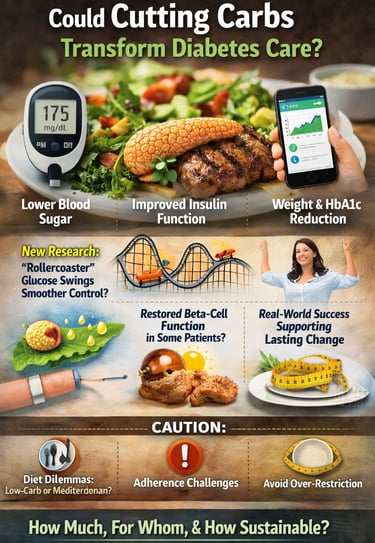
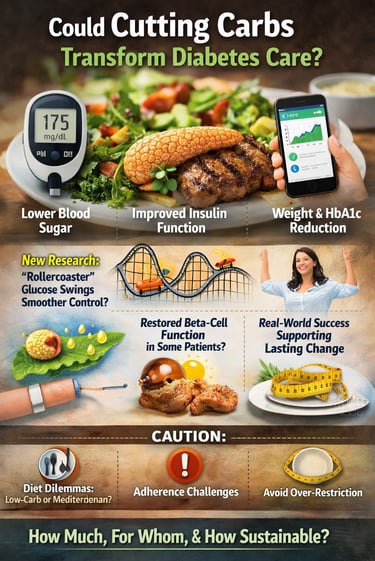
A low-carbohydrate diet (20–130 g/day) can significantly improve blood sugar control in people with Type 2 Diabetes Mellitus and Type 1 Diabetes by reducing glucose spikes, lowering HbA1c, and improving insulin efficiency. Recent 2025–2026 studies show benefits, including reduced glycemic variability, weight loss, and better blood pressure control. Some evidence also suggests improved pancreatic β-cell function in early-stage type 2 diabetes.
However, low-carb diets are not one-size-fits-all. Long-term success depends on adherence, cultural fit, and proper medical supervision—especially for patients on insulin or glucose-lowering medications, as rapid blood sugar improvements may require dose adjustments.
Bottom line: Low-carbohydrate diets are a powerful, evidence-based option for diabetes management, but should be personalized and implemented with clinical guidance for safety and sustainability.
Clinical Perspective
Patient Phenotyping Is Central: Not all individuals with Type 2 Diabetes Mellitus respond uniformly to carbohydrate restriction. Stratification based on insulin resistance severity, β-cell reserve, and adiposity phenotype (visceral vs lean T2D) should guide dietary intensity and expectations.
Rapid Glycemic Impact Requires Proactive Medication Adjustment: Low-carbohydrate interventions can produce early and substantial reductions in glycemia, particularly in insulin-treated patients. Clinicians must anticipate and down-titrate insulin or sulfonylureas to prevent hypoglycemia.
Glycemic Variability as a Therapeutic Target: Beyond HbA1c, reduction in glucose excursions is increasingly recognized as clinically meaningful. Evidence suggests low-carb diets significantly improve time-in-range and reduce hypoglycemia risk, particularly relevant in Type 1 Diabetes and insulin-requiring T2D.
Hepatic Glucose Output Is a Key Mechanism: Carbohydrate restriction may suppress excessive hepatic gluconeogenesis, improving fasting glucose. This complements pharmacologic approaches targeting liver metabolism (e.g., metformin).
β-Cell Preservation: A Window of Opportunity: Early-stage T2D may benefit from reduced glucotoxicity and metabolic load, potentially improving β-cell responsiveness. However, this effect is likely time-sensitive and not universal.
Cardiometabolic Risk Profile Must Be Individualized: While triglycerides and HDL often improve, LDL responses are heterogeneous. Lipid monitoring and emphasis on unsaturated fats are essential to mitigate long-term cardiovascular risk.
Integration With Incretin-Based Therapies: There is potential synergy between low-carb diets and GLP-1 receptor agonists, both targeting appetite, weight, and glycemia via overlapping pathways.
Adherence Determines Outcomes: Real-world effectiveness hinges on sustainability. Flexible, culturally adapted low-carb models outperform rigid ketogenic prescriptions in long-term adherence.
Not a Universal First-Line for All: Alternative patterns (e.g., Mediterranean diet) remain valid, especially where long-term adherence or cardiovascular priorities dominate.
Clinical Bottom Line: Low-carbohydrate nutrition is a powerful, evidence-based tool—not a standalone solution. Its optimal use lies in personalized, monitored, and integrated diabetes care pathways.
What if the most powerful lever for controlling your blood sugar isn’t a new drug—but a change in what’s on your plate? For decades, people living with Type 2 Diabetes Mellitus and Type 1 Diabetes have been told to “watch carbohydrates.” Today, a new wave of high-quality research is asking a sharper question: how much carbohydrate is optimal—and what happens when we reduce it substantially?
Emerging evidence from 2025–2026 suggests that lowering carbohydrate intake can do more than smooth post-meal glucose spikes. In insulin-deficient states, it may significantly reduce day-to-day glucose swings—often described by patients as a “rollercoaster”—improving both safety and quality of life (Song et al., 2026). In people with type 2 diabetes, structured low-carbohydrate interventions delivered through mobile health platforms have demonstrated clinically meaningful reductions in HbA1c (≈0.7%), along with improvements in blood pressure and body weight (Kolivas et al., 2025).
Even more compelling is the possibility that dietary change may influence underlying disease biology. Carbohydrate restriction has been associated with improved pancreatic β-cell responsiveness—hinting that, in some patients, reducing metabolic stress could partially restore insulin secretion capacity (Gower et al., 2025). These effects appear consistent across diverse populations, from Middle Eastern cohorts to global meta-analyses comparing Eastern and Western dietary patterns (Ahmed et al., 2025; Mongkolsucharitkul et al., 2025). Importantly, benefits are not confined to tightly controlled trials; real-world “free-living” studies show that individuals can achieve meaningful glycemic improvements and even reduce medications with appropriate support (Collins, 2026).
Yet, this is not a one-size-fits-all solution. Individual responses vary, long-term adherence remains a challenge, and careful medical supervision is essential—especially for those on insulin or glucose-lowering drugs.
So where does that leave us? Not with hype, but with a critical, evidence-based question: could reducing carbohydrates be a cornerstone strategy in modern diabetes care—and if so, for whom, how much, and how sustainably?
↓57% Reduction in glycemic variability (Song et al., 2026)
↓0.72% HbA1c drop in mHealth LCD trial (Kolivas et al., 2025)
↑β-cell: improved insulin secretion capacity (Gower et al., 2025)
↓BP Significant blood pressure reduction (Collins, 2026)
What Is a Low-Carbohydrate Diet — And Why Is It Getting So Much Attention?
If you or someone you love is living with diabetes, you have almost certainly heard the phrase "watch your carbs." But what does that really mean — and, more importantly, does it actually work? The latest wave of peer-reviewed research published between 2025 and 2026 offers the most detailed and encouraging answers yet.
A low-carbohydrate diet (LCD) is generally defined as one that restricts daily carbohydrate intake to between 20 and 130 grams per day, compared to the typical Western diet's 250–300 grams. Some research uses a stricter "very low-carbohydrate" or ketogenic threshold (under 50 g/day), while other studies allow more flexibility. The common thread is this: by limiting the primary macronutrient that directly raises blood glucose, the body has less work to do to maintain stable sugar levels.
For people with diabetes — whether type 1 (where the pancreas produces little to no insulin) or type 2 (where the body becomes resistant to insulin's effects) — this reduction in carbohydrate load can translate into fewer blood sugar spikes, reduced medication needs, lower HbA1c levels (your 3-month blood sugar average), and significant improvements in weight, blood pressure, and overall wellbeing.
Over the next 3,000 words, we will walk you through six landmark studies — all published in 2025 or 2026 — that together paint a compelling and nuanced picture of just how powerful this dietary approach can be. We will also give you practical tools to implement these findings in your own daily life, answer your most pressing questions, and help you take the next step confidently alongside your healthcare team.
Important: While the research is exciting, always consult your doctor or diabetes care team before making significant dietary changes, especially if you take insulin or blood pressure medications. Reductions in blood sugar from an LCD can occur quickly, and medication adjustments may be necessary for your safety.
Study 1: Calming the Blood Sugar Rollercoaster in Insulin-Deficient Diabetes
Song et al. (2026) — Glycemic Variability in Insulin-Deficient Diabetes
One of the most frustrating aspects of living with diabetes — particularly type 1 or type 2 diabetes that requires insulin — is the unpredictable swing of blood glucose levels throughout the day. One moment you are too high (hyperglycemia), the next you have dropped too low (hypoglycemia). This up-and-down pattern, known as glycemic variability (GV), is not just uncomfortable. Research links high GV to increased risk of cardiovascular disease, kidney damage, and nerve problems — independent of average blood sugar levels.
In this 2026 Frontiers in Nutrition study, Song and colleagues specifically examined how a low-carbohydrate diet affects glycemic variability in people with insulin-deficient diabetes — those whose pancreases produce very little or no insulin at all. This is significant because most LCD research has focused on type 2 diabetes; this study addresses a gap in the literature.
The findings were striking. Participants following the LCD showed measurable reductions in all major markers of glycemic variability, including mean amplitude of glycemic excursions (MAGE), time in hypoglycemia, and time above the target glucose range. Essentially, their blood glucose became far steadier and more predictable — less like a rollercoaster and more like a gentle, manageable slope.
Why does this happen? The answer is elegant in its simplicity: carbohydrates are the food component most directly responsible for rapid glucose rises after meals. When you eat fewer of them, the post-meal glucose "spike" becomes much smaller — meaning the body's corrective insulin response (whether from injected insulin or from whatever residual function the pancreas still has) does not need to work as hard, and the subsequent drop in blood sugar is also minimized.
For patients, this translates into something deeply practical: fewer hypoglycemic episodes, fewer correction doses of insulin, more predictable days, and a significant reduction in the mental burden of constant glucose monitoring and adjustment.
Study 2: Your Smartphone as a Diabetes Coach — The mHealth LCD Revolution
Kolivas et al. (2025) — mHealth LCD Intervention in Type 2 Diabetes
We live in a world of smartphones and apps, and diabetes management is no exception. The Kolivas et al. (2025) study, published in npj Metabolic Health and Disease, explored a clinically important question: can a mobile health (mHealth) platform deliver effective low-carbohydrate dietary support to people with type 2 diabetes — and produce real, measurable clinical improvements?
The answer was a clear yes. Participants in this Australian-based study used an mHealth application to receive dietary guidance, track their carbohydrate intake, and stay supported between healthcare visits. The results across multiple health markers were impressive. Average HbA1c levels fell by approximately 0.72 percentage points — a clinically meaningful improvement that reduces the risk of long-term diabetes complications. But what made this study particularly noteworthy was that the benefits extended well beyond blood sugar control alone.
Blood pressure also fell significantly — a critical finding given that hypertension is one of the leading causes of heart disease and kidney failure in people with diabetes. Body weight decreased as well, with participants losing an average of several kilograms over the study period. And perhaps most importantly for real-world applicability, adherence to the LCD was high when delivered through the mHealth platform, suggesting that technology can bridge the gap between what we know works in research settings and what patients can actually sustain in their daily lives.
For anyone who has ever felt overwhelmed trying to make dietary changes — especially without frequent access to a dietitian or specialist — this study offers genuine hope. The right digital support structure can make a low-carbohydrate approach not just clinically effective, but actually achievable long-term.
Technology Tip for Patients
Apps like MySugr, Carb Manager, and Cronometer can help you track carbohydrate intake, glucose trends, and progress over time — all from your phone. Ask your diabetes care team about recommended mHealth tools in your region.
Study 3: Can a Low-Carb Diet Actually Heal Your Insulin-Producing Cells?
Gower et al. (2025) — β-Cell Response to Carbohydrate Restriction in T2D
Perhaps the most scientifically fascinating question in diabetes nutrition research is this: can dietary change not just manage the symptoms of diabetes, but actually address one of its underlying causes? This is precisely what the Gower et al. (2025) study examined — with results that could reframe the way we think about type 2 diabetes treatment.
The pancreatic beta cell (β-cell) is the specialized cell type responsible for producing and releasing insulin. In type 2 diabetes, β-cells are under extraordinary stress. They are forced to overproduce insulin to overcome the body's insulin resistance, and over time, this chronic overwork leads to β-cell exhaustion and dysfunction. This is why type 2 diabetes typically worsens over time — not because of anything the patient does wrong, but because of this progressive β-cell burnout.
Gower and colleagues at the University of Alabama at Birmingham tested whether a carbohydrate-restricted diet could relieve this burden on β-cells — essentially giving them a chance to rest and recover. The results were encouraging: participants on the carbohydrate-restricted diet showed measurable improvements in β-cell response, including enhanced insulin secretion relative to the degree of insulin resistance present. In other words, their β-cells were performing better, not worse, after the dietary intervention.
This finding carries profound implications. It suggests that for some people with type 2 diabetes — especially those in the earlier stages of the disease — a sustained low-carbohydrate diet could slow or even partially reverse the progression of β-cell dysfunction. This is not a cure, but it is a powerful tool for disease modification, not just disease management.
Study 4: Low-Carb Diets Work Across Cultures — Evidence from Egypt
Ahmed et al. (2025) — LCD in Egyptian Patients with Type 2 Diabetes
A crucial question in nutrition research is whether findings from one country or culture translate to another. Most early LCD research was conducted in Western, high-income countries with access to a wide variety of low-carbohydrate food options. But what about patients in the Middle East and North Africa, where dietary staples like bread, rice, and legumes are deeply embedded in cultural identity and daily eating patterns?
The Ahmed et al. (2025) study directly addressed this gap by investigating the effects of a low-carbohydrate dietary intervention in Egyptian patients with type 2 diabetes. This is a particularly important population given that Egypt has one of the highest diabetes prevalence rates in the world, and food culture plays a central role in patient adherence to any dietary recommendation.
The study found that a structured LCD produced meaningful improvements in key diabetes markers among Egyptian participants, including reductions in fasting blood glucose, HbA1c, and body weight. Importantly, the intervention was designed with cultural sensitivity in mind — replacing high-carbohydrate staples with locally available alternatives such as vegetables, legumes in moderation, eggs, fish, and lean meats.
The finding matters for two reasons. First, it confirms that the metabolic benefits of carbohydrate restriction are not culturally specific — they appear to be a fundamental human physiological response. Second, it demonstrates that LCDs can be adapted to diverse food traditions without abandoning cultural foods entirely, making this approach more sustainable and equitable across global populations.
Study 5: East Meets West — A Global Meta-Analysis of Low-Carb Diets
Mongkolsucharitkul et al. (2025) — Systematic Review & Meta-Analysis
When it comes to medical evidence, systematic reviews and meta-analyses sit at the very top of the hierarchy. Rather than examining a single study's findings, they pool results from multiple rigorous randomized controlled trials (RCTs), providing a far more reliable and generalizable picture of an intervention's true effect. The Mongkolsucharitkul et al. (2025) study did exactly this — and uniquely compared LCD outcomes between Eastern and Western populations.
The meta-analysis included multiple RCTs conducted across both Western nations (United States, United Kingdom, Australia, and Europe) and Eastern nations (countries in East and Southeast Asia). This comparison is clinically valuable because Asian populations tend to develop type 2 diabetes at lower body weight thresholds, often have different fat distribution patterns, and consume diets with distinct baseline carbohydrate compositions (particularly high in white rice).
The overall findings confirmed that low-carbohydrate diets are consistently effective for type 2 diabetes management across both population groups, reducing HbA1c, fasting glucose, and body weight compared to standard dietary controls. However, there were some nuanced differences: Eastern populations in some analyses showed comparable or even greater glycemic improvements, potentially because their baseline diets were higher in refined carbohydrates, leaving more room for improvement.
This global-scale evidence base gives clinicians and patients worldwide greater confidence that the LCD approach is not a culturally narrow intervention but a broadly applicable tool for diabetes management — one that simply requires thoughtful adaptation to local food availability and traditions.
Study 6: Real People, Real Life — Free-Living Low-Carb in the Real World
Collins (2026) — Prospective Free-Living LCD Trial in T2D
Many clinical trials are conducted in tightly controlled settings — participants are given specific foods, carefully monitored, and supported by research teams every step of the way. While this rigour is necessary for establishing causation, it raises a practical question: do these benefits hold up when real people try to follow a low-carbohydrate diet in the messy, unpredictable reality of everyday life?
The Collins (2026) study, published in BMJ Nutrition, Prevention & Health, specifically tested a "free-living" LCD — meaning participants were given guidance and support, but were not provided with pre-prepared meals. They shopped, cooked, and made food choices on their own, just as you or I would. This design makes the findings far more applicable to the general population.
Over the trial period, participants showed significant improvements in glycaemic control, with HbA1c declining meaningfully alongside reductions in fasting blood glucose. Blood pressure and body weight also improved. Crucially, many participants were able to reduce their diabetes medications under medical supervision — a finding that is both clinically remarkable and personally empowering.
The free-living nature of this trial also revealed important insights about adherence. Participants who succeeded long-term tended to share certain characteristics: they had identified personal motivations for change (such as reducing medication or increasing energy), they had social support from family or peers, and they approached the diet with flexibility rather than rigid perfectionism. These behavioral insights are just as important as the clinical data, because they point to the conditions under which this dietary approach is most likely to succeed in real-world settings.
Practical Applications: How to Start Safely and Sustainably
Understanding the science is one thing — living it is another. Here is a grounded, patient-friendly framework for translating the research findings into your daily life. Always implement these changes in conversation with your diabetes care team, particularly if you take insulin or other glucose-lowering medications.
Step 1: Medical Clearance First
Before changing your diet, consult your doctor. LCDs lower blood sugar quickly — insulin and other medication doses may need urgent adjustment to prevent hypoglycemia.
Step 2: Set a Carb Target
Aim for 50–100g of carbohydrates per day to start. This is enough to see glycemic benefits without being as restrictive as a full ketogenic approach.
Step 3: Fill Half Your Plate with Vegetables
Non-starchy vegetables (broccoli, spinach, zucchini, peppers, cauliflower) are low in carbs, high in fiber and nutrients. Make them the foundation of every meal.
Step 4: Prioritize Protein at Every Meal
Eggs, chicken, fish, lean meats, paneer, tofu, and legumes in moderation help stabilize blood sugar, build muscle, and keep you full longer.
Step 5: Replace, Don't Restrict
Swap white rice for cauliflower rice, regular roti for a smaller whole-grain version, or sugary drinks for water or herbal tea. Small swaps accumulate into big results.
Step 6: Use a Tracking App
Apps like Carb Manager or MySugr help you see your carbohydrate intake in real time. As Kolivas et al. (2025) showed, mHealth tools significantly improve adherence and outcomes.
7-day starter meal plan
This plan maintains the target of 70–100g of carbohydrates per day and incorporates the cultural flexibility highlighted in recent research.
Day 1: Kickoff
Breakfast: 2-egg omelette with sautéed mushrooms and spinach.
Lunch: Grilled chicken salad with a liberal olive oil and lemon dressing.
Dinner: Baked salmon served with steamed broccoli and creamy cauliflower mash.
Day 2: Vegetarian Highlights
Breakfast: Full-fat Greek yogurt topped with ground flaxseeds and a handful of berries.
Lunch: A small portion of lentil soup (Moong or Masoor dal) paired with a large green salad.
Dinner: Paneer tikka with sautéed spinach and one small whole-grain roti.
Day 3: Healthy Fats Focus
Breakfast: Scrambled eggs with sliced avocado and grilled tomatoes.
Lunch: Tuna lettuce wraps (using large Romaine or iceberg leaves) with cucumber slices.
Dinner: Grilled chicken with roasted zucchini and sautéed green beans.
Day 4: Plant-Based Variations
Breakfast: Full-fat cheese omelette paired with unsweetened green tea.
Lunch: Small portion of Dal with a large, fiber-rich garden salad.
Dinner: Stir-fried tofu with mixed colorful vegetables served over cauliflower rice.
Day 5: High-Protein Stability
Breakfast: Two boiled eggs, sliced cucumber, and a small handful of walnuts or almonds.
Lunch: Grilled fish tacos using lettuce cups instead of tortillas, topped with salsa.
Dinner: Roasted chicken thighs with steamed broccoli and a half-cup of rajma (kidney beans).
Day 6: Simple & Light
Breakfast: Green smoothie made with spinach, almond milk, and a scoop of unsweetened protein powder.
Lunch: Hearty chicken and vegetable soup (clear broth base).
Dinner: Grilled lamb chops served with roasted cauliflower and a fresh green salad.
Day 7: The Sunday Special
Breakfast: Poached eggs with sautéed kale and a side of cottage cheese (paneer).
Lunch: Large Mediterranean-style salad with boiled eggs, olives, and olive oil dressing.
Dinner: Grilled prawns with stir-fried seasonal vegetables and one small roti.
Pro-Tips for Success
The "Half-Plate" Rule: Regardless of the specific meal, aim to fill 50% of your plate with non-starchy vegetables (leafy greens, peppers, cauliflower, etc.).
Hydration: Drink plenty of water or infused herbal teas. Low-carb diets can have a mild diuretic effect, making hydration and electrolyte balance key.
Snacking: If hungry between meals, reach for a handful of nuts, a piece of cheese, or a few celery sticks with nut butter to keep blood sugar stable.
Monitoring Tip: If you use a continuous glucose monitor (CGM) or check your blood sugar at home, check it more frequently for the first two weeks on a low-carbohydrate diet. You may see significant improvements quickly, and your medication may need to be adjusted promptly. Never reduce insulin doses on your own — always consult your prescribing doctor first.
Low-carb vs Mediterranean: Both patterns improve glycemic control in Type 2 Diabetes Mellitus. Low-carb often produces faster reductions in glucose and triglycerides, while Mediterranean diets have stronger long-term cardiovascular outcome data and may be easier to sustain.
Adherence challenges: Strict carbohydrate restriction can be difficult to maintain over time, especially in high-carb cultural settings. Drop-off in adherence may reduce long-term effectiveness despite strong short-term results.
Risk of over-restriction: Very low-carb or ketogenic approaches may lead to nutritional gaps (fiber, micronutrients), excessive reliance on saturated fats, or hypoglycemia if medications are not adjusted—highlighting the need for individualized, medically supervised plans.
Frequently Asked Questions About Low-Carbohydrate Diets and Diabetes
1 How low is "low-carb" — do I need to go full keto?
Not necessarily. The studies reviewed here used a range of carbohydrate targets, from under 50g/day (ketogenic) to up to 130g/day (moderate LCD). Even a reduction from a typical 250–300g/day diet to 100–130g/day produces meaningful glycemic improvements. Start with a target that feels sustainable for you — you can always tighten it further once you have found your rhythm. Many people see excellent results at 80–100g/day without the strict restrictions of a ketogenic approach.
2 Is a low-carbohydrate diet safe if I am on insulin?
It can be very safe — but it requires careful medical supervision, especially in the initial weeks. Because LCDs significantly lower blood glucose levels, continuing the same insulin dose you were on before starting the diet can cause dangerous hypoglycemia (low blood sugar). Your doctor will likely need to reduce your insulin dose proactively. Song et al. (2026) specifically studied people with insulin-deficient diabetes and found meaningful safety benefits, but emphasized the importance of clinical monitoring throughout the transition period.
3 How quickly will I see results?
Blood glucose improvements can begin within days to weeks of starting an LCD — sometimes dramatically so. Weight and blood pressure improvements typically follow over weeks to months. HbA1c takes approximately three months to reflect dietary changes, since it measures average blood glucose over that period. In the Collins (2026) free-living trial, many participants saw clinically significant HbA1c reductions within three to six months. However, long-term sustainability matters more than speed, so pace yourself and focus on building habits you can maintain.
4 Can I follow a low-carb diet if I have type 1 diabetes?
Yes, though it requires more careful management. The Song et al. (2026) study specifically examined people with insulin-deficient diabetes (which includes type 1) and found significant reductions in glycemic variability — meaning fewer dangerous highs and lows. Many people with type 1 diabetes report that an LCD makes their blood sugar far more predictable, which is a major quality-of-life improvement. The critical requirement is close collaboration with your endocrinologist or diabetes nurse to adjust your insulin-to-carbohydrate ratios and basal rates accordingly.
5 What if I am vegetarian or follow specific cultural food traditions?
A low-carbohydrate diet is entirely adaptable to vegetarian, vegan, and culturally specific food traditions. The Ahmed et al. (2025) study demonstrated successful implementation in Egyptian patients whose diet is rich in bread and legumes — and the intervention was adapted using locally available foods. For vegetarians, excellent low-carb protein sources include eggs, paneer, tofu, tempeh, Greek yogurt, nuts, seeds, and legumes in moderation. Non-starchy vegetables (which can be eaten abundantly on an LCD) are typically central to most world cuisines and require no cultural compromise whatsoever.
6 Will eating more fat on a low-carb diet harm my heart?
This is a very reasonable concern, and the research is reassuring. Multiple studies, including Kolivas et al. (2025) and Collins (2026), actually found improvements in cardiovascular risk markers including blood pressure. When carbohydrate intake is reduced, triglycerides typically fall, and HDL ("good") cholesterol often rises — both beneficial for heart health. LDL cholesterol responses are more variable and should be monitored. The key is choosing heart-healthy fats (olive oil, avocado, nuts, fatty fish) rather than relying heavily on processed meats and saturated fats. Regular lipid panel monitoring is recommended.
7 How do I maintain a low-carb diet long-term without feeling deprived?
Sustainability is the most important factor, and the research from Collins (2026) identified key success predictors: clear personal motivation, social and family support, and a flexible rather than perfectionist mindset. Practically, this means finding low-carb meals you genuinely enjoy (not just ones you can tolerate), allowing for occasional higher-carb moments at social events without guilt, and focusing on what you are gaining — better energy, more stable mood, less medication, more control — rather than on what you are giving up. Gradual, consistent change consistently outperforms radical, unsustainable restriction.
Your Low-Carb Diabetes Action Plan: A Clear User Engagement Strategy
Reading about the research is just the first step. Turning knowledge into habit requires a structured approach. Here is a simple three-phase engagement strategy, inspired by the behavioral patterns identified in the studies reviewed above:
Phase 1 — Prepare (Week 1)
Book an appointment with your doctor or diabetes care team to discuss dietary changes. Download a carbohydrate-tracking app. Identify three to five low-carb meals you already enjoy or are willing to try. Clear high-carb snack items from your kitchen and stock up on vegetables, proteins, and healthy fats.
Phase 2 — Launch (Weeks 2–4)
Begin the 7-day meal plan above and repeat it, swapping meals you enjoy most. Monitor your blood glucose more frequently and record results. Contact your doctor promptly if you experience hypoglycemia. Celebrate your first week of consistent low-carb eating — this is a major achievement.
Phase 3 — Sustain (Month 2 onward)
Schedule a follow-up with your healthcare team to review your glucose data, weight, and blood pressure. Check your HbA1c at the 3-month mark. Expand your low-carb recipe repertoire. Join an online or local support community for people managing diabetes through diet. Share your progress story — your experience may inspire someone else.
Clinical pearls
1. The beta-Cell "Sabbatical"
Scientific Perspective: Carbohydrate restriction reduces the secretory demand on pancreatic $\beta$-cells. Gower et al. (2025) demonstrated that lowering the glucose load can ameliorate glucotoxicity and potentially "rescue" $\beta$-cell function by improving insulin secretion relative to insulin resistance.
Think of your insulin-producing cells like an overworked engine. Constantly eating high carbs keeps the "gas pedal" floored. Eating fewer carbs acts like a vacation for your pancreas, allowing those tired cells to rest, recover, and work more efficiently.
2. Targeting the "Rollercoaster" (Glycemic Variability)
Scientific Perspective: HbA1c is a measure of average glycemia, but Glycemic Variability (GV) is an independent risk factor for microvascular complications. Song et al. (2026) showed that LCDs significantly reduce the Mean Amplitude of Glycemic Excursions (MAGE), even in insulin-deficient states.
Your "average" blood sugar might look okay, but huge swings—jumping from very high to very low—are what actually damage your blood vessels and make you feel exhausted. Low-carb eating turns those scary mountain peaks into gentle hills, making your day much more predictable.
3. The mHealth Adherence Multiplier
Scientific Perspective: Clinical outcomes in LCD interventions are highly dependent on sustained adherence. Kolivas et al. (2025) highlight that mobile health (mHealth) integration provides the real-time feedback loops necessary to "ameliorate" glycemic profiles and weight status outside of a controlled clinic.
Knowledge isn't enough; you need a co-pilot. Using an app to track your carbs doesn't just count numbers—it provides a digital safety net that keeps you on track between doctor visits, making the diet much easier to stick to long-term.
4. Cultural Neutrality of Metabolism
Scientific Perspective: Metabolic responses to carbohydrate restriction appear to be a fundamental physiological "hard-wiring" that transcends ethnicity. Ahmed et al. (2025) and Mongkolsucharitkul et al. (2025) prove that LCD benefits are consistent across Egyptian and Southeast Asian populations, despite vastly different baseline diets.
You don't have to eat a "Western" diet to fix your blood sugar. Whether your staples are rice, bread, or noodles, the biology remains the same: reducing the total starch load works. You can adapt these principles to your own traditional foods by using clever swaps and portion control.
5. The "Free-Living" Deprescribing Window
Scientific Perspective: The Collins (2026) trial emphasizes that in "free-living" conditions, the primary clinical success is not just glucose lowering, but medication reduction. The rapid improvement in insulin sensitivity necessitates a proactive "deprescribing" protocol to avoid iatrogenic hypoglycemia.
This diet is so powerful that your current medication might actually become "too much" for you very quickly. As your blood sugar drops naturally through food choices, you must work closely with your doctor to scale back your pills or insulin safely. It’s the best kind of "problem" to have.
Author’s Note
This article was developed to bridge the gap between rapidly evolving nutrition science and real-world diabetes care. In recent years, research on carbohydrate restriction has expanded significantly, offering new insights into glycemic control, metabolic physiology, and patient-centered outcomes. However, scientific progress is only meaningful if it is translated into clear, practical guidance that patients and clinicians can actually use.
The goal here is not to promote a single “perfect diet,” but to present current evidence in a balanced, clinically relevant manner. While low-carbohydrate approaches show strong and consistent benefits in many individuals with Type 2 Diabetes Mellitus and even selected cases of Type 1 Diabetes, they are not universally superior for every patient. Individual variability—in physiology, culture, lifestyle, and personal preference—remains central to effective diabetes management.
Importantly, dietary interventions do not exist in isolation. Their success depends on appropriate medication adjustment, ongoing monitoring, and alignment with broader cardiometabolic goals. Clinicians should view nutrition as a core therapeutic pillar alongside pharmacology, not as an alternative to it. Patients, in turn, should feel empowered—but also supported—when making dietary changes, particularly when using insulin or other glucose-lowering therapies.
Every effort has been made to ensure that the information presented is grounded in peer-reviewed research (2025–2026) and reflects current clinical thinking. That said, medical science is dynamic, and recommendations will continue to evolve as new evidence emerges.
Ultimately, the aim of this work is simple: to provide clarity in a field often dominated by confusion, and to support informed, individualized decision-making between patients and their healthcare teams.
Medical Disclaimer: This article is for informational and educational purposes only and does not constitute medical advice. All information is based on peer-reviewed research published in 2025–2026. Always consult a qualified healthcare professional — including your doctor, endocrinologist, or registered dietitian — before making any changes to your diet, medications, or diabetes management plan. Individual responses to dietary change vary significantly, and medical supervision is especially important for people using insulin or glucose-lowering medications.
Related Articles:
Can You Reverse Type 2 Diabetes with Diet? Science-Based Guide 2026
Do You Need to Go Low-Carb for Diabetes? Mediterranean vs Low-Carb Explained (Doctor’s Guide)
How Gut Bacteria Affect Blood Sugar, Insulin Resistance, and Metabolism
Can Omega-3 Boost Muscle Protein Synthesis? What the Latest Research Reveals | DR T S DIDWAL
Beyond the Low-Fat Myth: 6 New Studies Redefining Dietary Fat and Heart Health | DR T S DIDWAL
References
[1] Song, J., Wang, J., Wan, J., Lu, Y., Wang, W., Li, L., Wang, J., Wei, L., & Yin, J. (2026). The beneficial impact of a low-carbohydrate diet on glycemic variability in insulin-deficient diabetes. Frontiers in Nutrition, 12, 1733037. https://doi.org/10.3389/fnut.2025.1733037
[2] Kolivas, D., Fraser, L., Schweitzer, R., et al. (2025). mHealth low carbohydrate dietary intervention ameliorates glycaemic profile, blood pressure and weight status in people with type 2 diabetes. npj Metabolic Health and Disease, 3, 12. https://doi.org/10.1038/s44324-025-00053-6
[3] Gower, B. A., Goss, A. M., Yurchishin, M. L., Deemer, S. E., Sunil, B., & Garvey, W. T. (2025). Effects of a carbohydrate-restricted diet on β-cell response in adults with type 2 diabetes. The Journal of Clinical Endocrinology & Metabolism, 110(7), 1811–1817. https://doi.org/10.1210/clinem/dgae670
[4] Ahmed, N., Saad, N., Khafagy, G., et al. (2025). Low-carbohydrate diet: A promising strategy for type 2 diabetes management among Egyptian patients. Egyptian Journal of Internal Medicine, 37, 67. https://doi.org/10.1186/s43162-025-00456-3
[5] Mongkolsucharitkul, P., Surawit, A., Pimsen, A., Winitchayothin, S., Pumeiam, S., Pinsawas, B., Ophakas, S., Suta, S., Pasookhush, P., & Mayurasakorn, K. (2025). Effectiveness of low-carbohydrate diets on type 2 diabetes: A systematic review and meta-analysis of randomized controlled trials in Eastern vs. Western populations. Diabetes Research and Clinical Practice, 229, 112464. https://doi.org/10.1016/j.diabres.2025.112464
[6] Collins, S. (2026). Effect of a low-carbohydrate diet on glycaemic control and disease management in type 2 diabetes: Results from a prospective free-living trial. BMJ Nutrition, Prevention & Health. Advance online publication. https://doi.org/10.1136/bmjnph-2025-001353
Medical Disclaimer: This article is for informational and educational purposes only and does not constitute medical advice. All information is based on peer-reviewed research published in 2025–2026. Always consult a qualified healthcare professional — including your doctor, endocrinologist, or registered dietitian — before making any changes to your diet, medications, or diabetes management plan. Individual responses to dietary change vary significantly, and medical supervision is especially important for people using insulin or glucose-lowering medications.
© 2026 · Evidence-Based Diabetes Nutrition · All six studies cited are peer-reviewed and publicly accessible via their respective DOI links.
Written and medically reviewed by Dr T.S. Didwal, MD