How Gut Bacteria Affect Blood Sugar, Insulin Resistance & Metabolism
Learn how gut bacteria impact insulin sensitivity, inflammation, and blood sugar control—plus proven lifestyle strategies to reverse metabolic dysfunction.
DIABETESMETABOLISM
Dr. T.S. Didwal, M.D.(Internal Medicine)
6/2/202616 min read
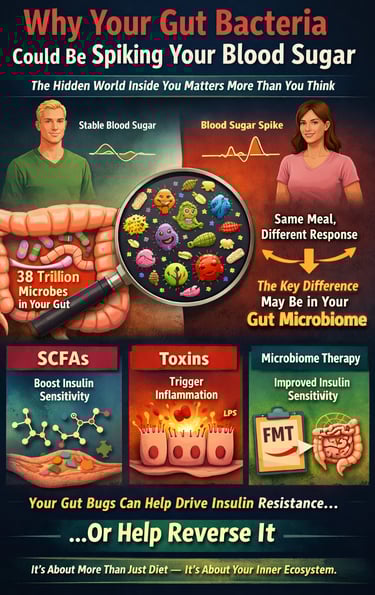
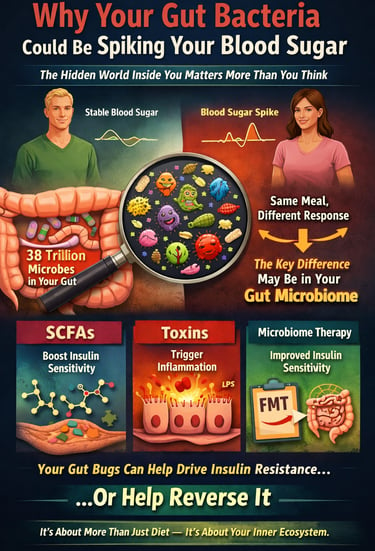
Gut bacteria (the microbiome) directly influence insulin sensitivity through inflammation, metabolism, and hormone signalling. When the microbiome is balanced, beneficial bacteria produce short-chain fatty acids (SCFAs) that improve insulin response, strengthen the gut barrier, and reduce inflammation. However, an unhealthy microbiome (dysbiosis) increases harmful compounds like lipopolysaccharides (LPS), which trigger chronic inflammation and block insulin signalling — a key driver of insulin resistance and type 2 diabetes (Al Qassab et al., 2026; Ji et al., 2025).
High-fibre diets improve insulin sensitivity by ~15–25% in trials
Exercise consistently increases the relative abundance of SCFA-producing bacteria, with reported changes typically in the range of 20–40%, though responses vary significantly across individuals and are strongly influenced by dietary fibre intake.
Bottom line:
Insulin resistance is not just about sugar intake — your gut microbiome strongly influences it. Improving gut health is a scientifically supported strategy to enhance blood sugar control and reduce the risk of metabolic diseases.Two people eat the same bagel. Same calories. Same carbs. One person’s blood sugar stays steady. The other’s spikes for hours.
For years, we blamed genetics, weight, or willpower. But 2025–2026 research reveals a hidden player that explains why: your gut microbiome.
The 38 trillion bacteria in your gut don’t just digest food. They act like a second endocrine organ, producing compounds that either unlock your cells for insulin or jam the signal completely. When your microbiome is healthy, you get more short-chain fatty acids, a stronger gut barrier, and better GLP-1 signaling. When it’s out of balance — dysbiosis — you get inflammation, “leaky gut,” and metabolic endotoxemia that blocks insulin at the cell door.
This is not fringe science anymore. Human trials using faecal microbiota transplantation have measurably improved insulin sensitivity in just 6 weeks. Drugs like Metformin and Semaglutide now show that part of their benefit comes from changing gut bacteria.
Here’s what you’ll learn in this guide:
1. The 4 exact pathways gut bacteria use to cause or reverse insulin resistance
2. Which “guardian” bacteria predict good blood sugar, and how to grow them
3. 9 evidence-based strategies to remodel your microbiome, with timelines
4. The truth about probiotics, prebiotics, and FMT in 2026
5. Myths that keep people stuck, plus a 12-question FAQ doctors get asked
If you care about blood sugar, prediabetes, PCOS, fatty liver, or healthy aging, your microbiome is the missing link. Let’s fix it.
What Is Insulin Resistance — And Why Your Gut Decides It
Insulin resistance defined, simply: Think of insulin as a key. Your muscle, liver, and fat cells are locked doors. After you eat carbs, blood sugar rises and your pancreas sends insulin to unlock those doors so glucose can enter for energy.
In insulin resistance, the locks get rusty. Cells stop responding to insulin. Glucose stays in the blood. Your pancreas pumps out 2x, 5x, even 10x more insulin to compensate. Eventually, the pancreas burns out → type 2 diabetes.
Why it matters: Insulin resistance drives far more than diabetes. It’s the root of fatty liver disease, PCOS, heart disease, Alzheimer’s “type 3 diabetes,” and some cancers. 88% of American adults have at least one marker of metabolic dysfunction. Most don’t know it.
The gut twist: For decades, we blamed excess calories and inactivity. Both matter. But 2025–2026 data shows chronic low-grade inflammation from gut bacteria is an upstream trigger. Fix the inflammation, and insulin often starts working again — even before weight changes.
Key Insight
Insulin resistance is an inflammatory-metabolic disorder. Your microbiome controls inflammation. Therefore, your microbiome controls insulin sensitivity.
Meet Your Gut Microbiome: The 38 Trillion Reasons Blood Sugar Varies
Your gut microbiome is the ecosystem of bacteria, viruses, fungi, and archaea living mainly in your colon. Roughly 38 trillion microbial cells — about the same number as human cells in your body.
A healthy microbiome = diversity. Like a rainforest, hundreds of species keep each other in check. Two families dominate: Firmicutes and Bacteroidetes.
A dysbiotic microbiome = monoculture. Low diversity, overgrowth of pro-inflammatory species, and loss of “guardian” bacteria.
Guardian species for blood sugar:
Here is a breakdown of how gut dysbiosis directly drives type 2 diabetes, organized by the specific bacteria involved and the systemic changes they trigger.
Key Bacteria and Their Metabolic Impacts
Akkermansia muciniphila
The Job: Thickens and maintains the protective gut mucus layer to prevent a "leaky gut."
When Low: Lipopolysaccharides (LPS)—inflammatory toxins—leak into the bloodstream, triggering a 3× higher risk of insulin resistance.
Faecalibacterium prausnitzii
The Job: Acts as a major producer of butyrate, a crucial anti-inflammatory molecule.
When Low: Short-Chain Fatty Acid (SCFA) production drops, leading to higher fasting glucose levels.
Bifidobacterium
The Job: Trains and regulates the immune system while lowering metabolic endotoxemia (blood toxins).
When Low: Systemic inflammation increases, directly worsening glucose tolerance.
Roseburia
The Job: Produces butyrate and actively supports the secretion of GLP-1 (a hormone that manages insulin).
When Low: Incretin hormones decrease, causing sharp, unhealthy blood sugar spikes after meals.
The Type 2 Diabetes "Dysbiosis Signature"
When a microbiome shifts toward type 2 diabetes, it consistently shows a specific pattern:
A significantly higher Firmicutes to Bacteroidetes ratio.
An overgrowth of Prevotella copri.
A severe drop in both Akkermansia and Faecalibacterium populations.
Causation, Not Correlation: This bacterial shift isn't just a side effect of diabetes. Fecal Microbiota Transplant (FMT) studies prove that transferring these altered gut populations into a healthy host actually transfers the metabolic disease itself
Science-Backed Mechanisms: How Bacteria Hack Your Metabolism
1. Short-Chain Fatty Acids (SCFAs): Your Metabolic Messengers
When beneficial bacteria ferment fiber, they make butyrate, propionate, and acetate. These SCFAs fuel colon cells, tighten gut junctions, and bind GPR41/43 receptors to release GLP-1 and PYY — hormones that improve insulin secretion and satiety.
Dysbiosis effect: Low fiber = low SCFAs = weak gut barrier + blunted GLP-1. This is why high-fibre diets improve insulin sensitivity by 15–25% in trials, even without weight loss.
2. Lipopolysaccharides (LPS) & Metabolic Endotoxemia
Gram-negative bacteria carry LPS in their cell walls. In “leaky gut,” LPS leaks into the blood. Your immune system attacks it, creating chronic inflammation. LPS directly phosphorylates IRS-1, blocking insulin’s signal.
Result: This is “metabolic endotoxemia.” It’s like having a low-grade infection 24/7 that rusts insulin’s locks.
3. Bile Acid Metabolism: Your Liver’s Remote Control
Your liver makes primary bile acids. Gut bacteria convert them to secondary bile acids that activate FXR and TGR5 receptors. These receptors control glucose production, insulin sensitivity, and fat burning.
Dysbiosis effect: Wrong bacteria = wrong bile acids = liver keeps pumping out glucose and storing fat, even when insulin says “stop.”
4. Branched-Chain Amino Acids (BCAAs): Too Much of a Good Thing
BCAAs from protein are vital for muscle. But Prevotella copri and other dysbiotic species overproduce BCAAs. Excess BCAAs chronically activate mTORC1/S6K1, which feedback-inhibits insulin receptors.
Translation: Two people eat steak. The one with Prevotella dominance gets an insulin-blocking BCAA flood. The one with Bacteroides doesn’t.
The Gut-Metabolic Profile: Healthy vs Dysbiotic Side-by-Side
1. Microbial Diversity
Healthy: Functions like a resilient "rainforest" with high diversity (300+ distinct species).
Dysbiotic: Acts like a fragile "monoculture" with low diversity (fewer than 150 species).
2. Guardian Bacteria & Gut Barrier
Healthy: Features high levels of beneficial bacteria like Akkermansia and Faecalibacterium, keeping tight junctions intact and preventing harmful substances from entering the bloodstream.
Dysbiotic: Guardian bacteria are depleted, resulting in a thin protective mucus layer. The gut becomes "leaky," allowing lipopolysaccharides (LPS) to enter the blood and cause endotoxemia.
3. Metabolic Signaling & Bile Acids
Healthy: Produces high levels of Short-Chain Fatty Acids (SCFAs) like butyrate and propionate, triggering a strong GLP-1 satiety signal. Bile acids are balanced, activating key receptors (FXR/TGR5) for metabolic health.
Dysbiotic: SCFA output drops, leading to weak satiety signals and poor glucose disposal. Disrupted bile acids further promote fatty liver and hyperglycemia (high blood sugar).
4. Inflammation & Clinical Outcome
Healthy: Keeps the immune system calm, maintaining low inflammatory markers (hs-CRP less than 1 mg/L). This results in stable blood glucose and low fasting insulin.
Dysbiotic: Triggers chronic, low-grade inflammation (hs-CRP rises to 3–10 mg/L). This leads to post-meal blood sugar spikes and elevated fasting insulin (greater than 10 μIU/mL).
Metabolites: The Chemical Texts Your Gut Sends Your Pancreas
Your microbes are chemical factories. Beyond SCFAs, 2025 research mapped dozens of metabolites that talk to human cells:
1. TMAO – Made from choline/carnitine in red meat/eggs by gut bacteria. High TMAO = higher diabetes & heart disease risk.
2. Indole derivatives – From tryptophan. Strengthen the gut barrier, improve insulin sensitivity.
3. Secondary bile acids – LCA, DCA. Regulate FXR/TGR5 and glucose output.
4. Imidazole propionate – Impairs insulin signaling via mTOR. Elevated in T2D.
Key point: The same food creates different metabolites depending on who’s in your gut. This explains “personalized glycemic responses.”
Emerging Biomarkers of the Gut–Insulin Axis
Imidazole Propionate: A gut microbiome-derived metabolite that impairs insulin signaling through the mTOR pathway and is consistently elevated in people with type 2 diabetes.
Zonulin: A regulator of intestinal permeability. Higher zonulin levels suggest a “leaky gut,” allowing inflammatory compounds to enter the bloodstream and promote insulin resistance.
Lipopolysaccharide-Binding Protein (LBP): A blood marker of exposure to bacterial endotoxins (LPS). Elevated LBP reflects metabolic endotoxemia and chronic low-grade inflammation.
FGF21 (Fibroblast Growth Factor 21): A metabolic stress hormone involved in glucose and lipid regulation. High levels may indicate metabolic dysfunction and reduced insulin sensitivity.
Succinate: A microbial metabolite that acts as a signaling molecule. Excess circulating succinate has been linked to inflammation, obesity, and impaired glucose metabolism.
Key Takeaway: These emerging biomarkers may help identify gut-driven metabolic dysfunction before overt diabetes develops, offering new opportunities for personalized prevention and treatment.
What 2025–2026 Studies Actually Found: Evidence Summary
Key Insights from Recent Research
The Root Trigger: Gut-derived lipopolysaccharide (LPS—a type of bacterial toxin) acts as an upstream trigger for insulin resistance. It causes IRS-1 serine phosphorylation, which essentially jams the cell's insulin receptors and stops glucose from entering (Al Qassab et al., 2026).
Causality Proven: The link between the gut and diabetes isn't just a correlation. Fecal Microbiota Transplants (FMT) from lean donors to diabetic recipients improved insulin sensitivity by 20% in just 6 weeks. This treatment is currently moving into Phase 3 clinical trials (Ji et al., 2025).
The "Good vs. Bad" Biomarkers: A high Firmicutes-to-Bacteroidetes (F/B) ratio combined with low levels of Akkermansia bacteria predicts Type 2 Diabetes (Ji et al., 2025).
Metabolic Byproducts Matter: Your gut microbes digest food into metabolites that dictate insulin signaling. Harmful compounds like TMAO and imidazole propionate worsen insulin resistance, while beneficial short-chain fatty acids (SCFAs) and indoles improve it by activating specific gut receptors like GPR41/43 and TGR5 (Wu et al., 2025).
Exercise Alteration: Exercise acts like a drug for your gut. Just 4 weeks of aerobic exercise increases SCFA-producing bacteria by 20% to 40%, completely independent of what you eat. Additionally, targeted multi-strain probiotics can lower fasting glucose by 8 to 12 mg/dL (Krishna et al., 2025).
An Exploding Field: Academic research into the microbiome-insulin resistance axis has surged by 400% since 2010, led predominantly by researchers in China, the USA, and Germany (Zyoud et al., 2025).
The Bottom Line
On average, targeted microbiome interventions improve insulin sensitivity by 10% to 25%. This makes gut-targeted therapy roughly as effective as standard Metformin treatment, but without the common gastrointestinal side effects.
9 Practical Ways to Rebuild a Blood-Sugar-Friendly Microbiome
1. Eat 30+ g Fiber Daily: Feed the Good Guys
Goal: 25–30 g for women, 30–38 g for men. Focus on diverse prebiotic fibers: oats, barley, lentils, chickpeas, onions, garlic, asparagus, green bananas, apples.
Why: Fiber → SCFAs → GLP-1 + tighter gut barrier.
Timeline: SCFAs increase in 3–4 days. Insulin sensitivity shifts in 2–4 weeks.
Pro tip: “Fiber diversity” beats total grams. Aim for 30 different plant foods/week.
2. Add Fermented Foods Daily: Re-seed + Diversify
Options: Kefir 1 cup, unsweetened yogurt with live cultures, kimchi 2 tbsp, sauerkraut, miso, tempeh.
Evidence: Stanford 2021 + 2025 follow-ups: 4–6 servings/day increased microbiome diversity and lowered 19 inflammatory markers in 10 weeks.
Caution: Start slow if you have SIBO or IBS.
3. Cut Ultra-Processed Foods: Stop Feeding the Weeds
Emulsifiers like carboxymethylcellulose, polysorbate-80, and artificial sweeteners sucralose/saccharin increase LPS and degrade mucus.
Rule: If it has >5 ingredients or ingredients you can’t pronounce, it’s likely pro-inflammatory.
4. Move Daily: Exercise Is a Prebiotic
Aerobic exercise ↑ Faecalibacterium and Roseburia 20–40% in 2–4 weeks, independent of weight loss. Resistance training improves the gut barrier.
Dose: 150 min moderate aerobic + 2 strength sessions/week. Even 10-min walks after meals cut glucose spikes 30%.
5. Prioritize 7–9 Hours of Sleep: Reset Your Microbial Clock
One night of 4-hour sleep ↑ Firmicutes and reduces insulin sensitivity by 20% the next day. Chronic poor sleep = chronic dysbiosis.
Hack: Keep room 65–68°F. Gut bacteria have circadian rhythms too.
6. Manage Stress: Cortisol Kills Your Gut Lining
Chronic stress via cortisol + vagus nerve alters the microbiome toward LPS producers.
Tools: 10-minute breathwork, yoga, or mindfulness daily lower cortisol and improves Bifidobacterium.
7. Use Antibiotics Only When Necessary
One course of broad-spectrum antibiotics can reduce diversity for 6–12 months.
If needed: Take during, plus S. boulardii probiotic and high prebiotic fiber after. Discuss with the doctor.
8. Consider Targeted Probiotics: Strain Matters
Best evidence strains for glucose: Lactobacillus rhamnosus GG, L. casei, Bifidobacterium lactis HN019, Akkermansia muciniphila pasteurized.
Dose: 10–50 billion CFU, multi-strain, 8–12 weeks.
Reality check: Probiotics are transients. You need fiber to make them stick.
9. Test, Don’t Guess: Biomarkers to Track
Ask your doctor for:
Fasting insulin + HOMA-IR: Goal insulin <8 μIU/mL, HOMA-IR <1.5
hs-CRP: Goal <1 mg/L shows low inflammation
Triglyceride/HDL ratio: Goal <2
Emerging: FGF21, adiponectin/leptin ratio
Probiotics, Prebiotics, Postbiotics, FMT: What Works in 2026?
Here is the breakdown of the 2026 gut health and metabolic interventions
Comparison of Metabolic Gut Interventions
Prebiotics & Fiber (First-Line Therapy): Backed by strong clinical evidence, RCTs (randomized controlled trials) show a 15% to 25% increase in insulin sensitivity. It is highly recommended for everyone, though users should increase intake gradually to avoid temporary bloating.
Fermented Foods (Daily Maintenance): Supported by strong evidence for their ability to increase gut diversity and lower inflammation. It is ideal for daily upkeep, though patients should watch the high sodium content in options like kimchi and sauerkraut.
Probiotics (Targeted Adjunct): Show moderate, strain-specific evidence, resulting in a 5 to 12 mg/dL drop in Fasting Blood Glucose (FBG). While excellent as a dietary add-on, product quality varies wildly across the market, and not all strains successfully colonize the gut.
Postbiotics (The Emerging Frontier): Showing great promise for individuals with overlapping IBS (Irritable Bowel Syndrome) and Insulin Resistance (IR). Beneficial compounds include butyrate and pasteurized Akkermansia, though they remain expensive and require a prescription in certain countries.
Fecal Microbiota Transplants (FMT - Advanced/Severe Cases): While already strongly established for treating C. diff infections, FMT is currently in Phase 2 and 3 clinical trials for Type 2 Diabetes. It shows immense potential for severe insulin resistance and obesity, but it is not yet FDA-approved for metabolic diseases.
Metformin & GLP-1 Medications (The Pharmaceutical Baseline): Backed by strong evidence, recent data reveals that part of these blockbuster drugs' therapeutic effect actually comes from how they alter the microbiome. They remain the gold standard for Type 2 Diabetes and PCOS, though they carry a high risk of GI side effects and can be costly.
The 2026 Clinical Trend
We are shifting away from generic supplements toward precision medicine. The next frontier relies on precision probiotics customized to your specific stool test results, combined with targeted postbiotics like pasteurized Akkermansia.
Common Myths & Mistakes That Wreck Your Gut-Blood Sugar Axis
Myth 1: “If I’m skinny, my gut must be fine.”
Truth: 40% of “normal weight” adults have metabolic dysfunction. “TOFI” – Thin Outside, Fat Inside – often means visceral fat + dysbiosis.
Myth 2: “All carbs are bad for blood sugar.”
Truth: Lentils and soda both have carbs. Lentils feed Faecalibacterium → butyrate → better insulin. Soda feeds LPS producers. The type of carb + your microbes matters.
Myth 3: “Probiotics alone will fix it.”
Truth: Without fiber, probiotics are tourists. They visit, don’t move in. Stanford data: probiotics without diet change did not increase diversity.
Mistake 1: Going too low-carb, too fast.
Ultra-low fiber keto can starve SCFA producers in 1 week, worsening glucose tolerance long-term for some people. Cycle carbs or include low-net-carb fibers like chia, flax, and avocado.
Mistake 2: Ignoring post-meal walks.
A 10-min walk after eating reduces glucose spikes 22–30% by increasing muscle uptake and shifting microbiome.
Mistake 3: Over-sanitising.
Early-life C-section, formula, and antibiotics ↑ lifetime diabetes risk by reducing diversity. As adults, some dirt, pets, and fermented foods help.
FAQs: 12 Questions Everyone Asks About Gut Bacteria & Glucose
Q1: Can healing my gut actually reverse prediabetes?
A: Yes, for many people. Studies show restoring diversity + SCFAs improves insulin sensitivity enough to move HbA1c from 6.0% to 5.5% in 8–12 weeks. It’s not guaranteed, but it’s one of the most powerful levers we have.
Q2: How fast will I see blood sugar changes after fixing my diet?
A: Microbes shift in 3–4 days. Butyrate rises in 1 week. Measurable fasting glucose/insulin changes take 2–4 weeks. HbA1c takes 3 months. Track post-meal glucose with a CGM for fastest feedback.
Q3: Are at-home microbiome tests worth it in 2026?
A: For curiosity, yes. For clinical decisions, not yet. They lack standardization. Better to track hs-CRP, fasting insulin, and triglyceride/HDL. The Aging Biomarker Consortium is building clinical standards.
Q4: What’s “metabolic endotoxemia” in plain English?
A: Imagine tiny pieces of dead bacteria leaking from your gut into blood. Your immune system thinks you’re infected, so it creates inflammation that blocks insulin. That’s endotoxemia.
Q5: Do I need to avoid all red meat because of TMAO?
A: Not necessarily. TMAO production depends on your microbes. Some people are high converters; some aren’t. If you eat red meat, pair it with polyphenols – olive oil, balsamic, herbs – and fiber. Test TMAO if concerned.
Q6: Can gut issues cause sugar cravings?
A: Yes. Dysbiotic bacteria send signals via the vagus nerve to your brain, asking for sugar and fast carbs – their preferred fuel. As you restore Bifidobacterium and SCFAs, cravings drop in 2–3 weeks.
Q7: Is intermittent fasting good or bad for gut bacteria?
A: Time-restricted eating 12–16 hours improves Akkermansia and the gut barrier in most studies. But fasting for> 24 h with no fiber can reduce SCFA producers. Best: 14:10 eating window + high fiber in feeding window.
Q8: Will taking Metformin hurt my microbiome?
A: Paradoxically, part of Metformin’s benefit is via the microbiome – it increases Akkermansia and SCFA. But it can cause a B12 deficiency. Monitor B12 if long-term.
Q9: What about GLP-1 drugs like Ozempic? Gut connection?
A: GLP-1 agonists change microbiome composition, increasing SCFA producers. Your gut naturally makes GLP-1 when you feed it fiber. Drugs + fiber diet = synergy.
Q10: Can stress really raise my blood sugar through my gut?
A: Yes. Cortisol increases gut permeability in hours. Chronic stress shifts the microbiome to LPS producers. Meditating 10 min/day lowers fasting glucose in trials.
Q11: I have IBS. Will fixing my gut for blood sugar help my IBS too?
A: Often, yes. Faecalibacterium and butyrate heal both gut lining and insulin signaling. But go slow with fiber. Start low-FODMAP prebiotics like partially hydrolyzed guar gum.
Q12: What’s the #1 lab test to ask my doctor for?
A: Fasting insulin. Fasting glucose alone misses 50% of insulin resistance. Goal: <8 μIU/mL. Combine with hs-CRP <1 mg/L for inflammation check.
Clinical pearls
1. The "Fire" in the Blood (Endotoxemia)
Scientific Perspective: Metabolic endotoxemia, characterized by increased circulating levels of Lipopolysaccharides (LPS), serves as a primary driver of systemic low-grade inflammation. This inflammation induces serine phosphorylation of the Insulin Receptor Substrate (IRS-1), effectively decoupling the insulin signal from the glucose transport mechanism ($GLUT4$).
When your gut is "leaky," toxic fragments of bad bacteria slip into your bloodstream. Your immune system sees these fragments as an infection and sounds a "fire alarm" (inflammation). This alarm distracts your cells so much that they can’t hear insulin knocking on the door to let sugar in.
2. SCFAs: The Chemical "Handshake"
Scientific Perspective: Microbial fermentation of non-digestible carbohydrates produces Short-Chain Fatty Acids (SCFAs) like butyrate and propionate. These act as ligands for G-protein-coupled receptors (GPR41/43), stimulating the release of $GLP-1$ (glucagon-like peptide-1), which enhances insulin secretion and improves peripheral glucose uptake.
Think of fiber as "raw material" for a factory. When your good bacteria eat fiber, they poop out beneficial chemicals called SCFAs. These chemicals travel to your pancreas and brain to say, "The food is here! Let’s handle the blood sugar efficiently." This is actually how many famous weight-loss drugs work, but your gut can do it naturally.
3. The "Guardian" Species (Akkermansia)
Scientific Perspective: Akkermansia muciniphila is a mucin-degrading bacterium that strengthens the intestinal epithelial barrier. A depletion of this species is strongly correlated with a thinned mucus layer and increased gut permeability, which correlates directly with the onset of insulin resistance and obesity.
You have a specific "hero" bacterium called Akkermansia. Its job is to maintain the "security fence" (the gut lining) that keeps toxins out of your body. When you don't have enough of these heroes, your fence gets holes in it, making it much harder to keep your blood sugar stable.
4. Diversity as Metabolic Insurance
Scientific Perspective: High alpha-diversity (the variety of species within a single host) is a hallmark of metabolic resilience. Low diversity creates a "functional vacuum" where opportunistic, pro-inflammatory bacteria can dominate the ecosystem, leading to a disrupted Bacteroidetes-to-Firmicutes ratio and metabolic dysfunction.
A healthy gut is like a diverse rainforest; if one plant dies, the forest survives. A "thin" or weak gut is like a lawn—if one weed takes over, the whole system fails. The more different types of healthy foods you eat, the more "insurance" you have against the blood sugar spikes that lead to diabetes.
5. The "BCAA" Overload
Scientific Perspective: While dietary Branched-Chain Amino Acids (BCAAs) are vital for muscle protein synthesis, microbial overproduction of BCAAs (specifically by Prevotella copri) is associated with chronic activation of the mTORC1 pathway. This over-activation leads to inhibitory phosphorylation of insulin receptors, worsening insulin resistance.
Most people think of BCAAs as a gym supplement for muscles. However, when the "wrong" bacteria take over your gut, they start pumping out too many of these compounds 24/7. This "over-supply" confuses your body’s metabolism and actually makes it harder for your cells to respond to insulin correctly.
Clinical Takeaway: Managing blood sugar isn't just about what you eat—it's about what you are feeding the 38 trillion "guests" living in your gut. Improving your "microbial infrastructure" is just as important as counting calories.
Conclusion: Your 30-Day Gut-Insulin Reset Plan
You now know insulin resistance isn’t just about calories. It’s about communication — between your food, your microbes, and your cells.
Your action steps:
Week 1: Remove + Re-seed
Cut ultra-processed foods, liquid sugar, artificial sweeteners
Add 1 fermented food daily + 5 g extra fiber
10-min walk after each meal
Week 2: Feed + Diversify
Hit 25–30 g fiber from 20+ plants
Sleep 7–9 hours, room dark/cool
Add resistance training 2x
Week 3: Strengthen Barrier
Add polyphenols: berries, EVOO, green tea
Breathwork 10 min/day for stress
Consider targeted probiotic if needed
Week 4: Test + Tweak
Check fasting glucose, waist-to-height ratio
If using CGM, note post-meal patterns
Book doctor visit to discuss fasting insulin/hs-CRP
Remember: You’re not fighting your body. You’re farming your inner ecosystem. Healthy microbes → healthy metabolism → healthy you.
Disclaimer: This article is for informational purposes only and does not constitute medical advice. Individual circumstances vary, and treatment decisions should always be made in consultation with qualified healthcare professionals.
Related Articles
The Cardiometabolic Cascade: How Disease Starts—and How to Reverse It (2026 Science) | DR T S DIDWAL
How SCFAs from Gut Bacteria Boost Metabolic Health
References
Al Qassab, M., Chaarani, N., Hamou, A., et al. (2026). The gut microbiota–insulin resistance axis: Mechanisms, clinical implications, and therapeutic potential. FASEB BioAdvances, 8(1), e70080.
American Diabetes Association. (2026). Standards of care in diabetes—2026. Diabetes Care, 49(Supplement_1).
Ji, H., Su, S., Chen, M., et al. (2025). The role of gut microbiota in insulin resistance: Recent progress. Frontiers in Microbiology, 16, 1633029. https://doi.org/10.3389/fmicb.2025.1633029
Krishna, U., Tayade, P., Patidar, H., & Yadav, N. (2025). The impact of gut microbiota in the development and management of diabetes. Journal of Diabetology, 16(3), 193–203.
Wastyk, H. C., Fragiadakis, G. K., Perelman, D., Dahan, D., Merrill, B. D., Yu, F. B., Topf, M., Gonzalez, C. G., Van Treuren, W., Han, S., Robinson, J. L., Elias, J. E., Sonnenburg, E. D., & Sonnenburg, J. L. (2021). Gut-microbiota-targeted diets modulate human immune status. Cell, 184(16), 4137–4153.e14. https://doi.org/10.1016/j.cell.2021.06.019
Wu, K., Xiao, Y., Zhang, T., et al. (2025). The role of the gut microbiota and its metabolites: A new predictor in diabetes and its complications. European Journal of Medical Research, 30, 601.
Zyoud, S. H., Shakhshir, M., Abushanab, A. S., et al. (2025). Global research landscape and advancements on the links between the gut microbiome and insulin resistance. Gut Pathogens, 17, 72.