How SCFAs From Gut Bacteria Boost Metabolic Health
Can your gut bacteria control weight and blood sugar? Learn how SCFAs shape metabolism, inflammation, and long-term metabolic health.
NUTRITIONMETABOLISM
Dr. T.S. Didwal, M.D.(Internal Medicine)
5/4/202616 min read
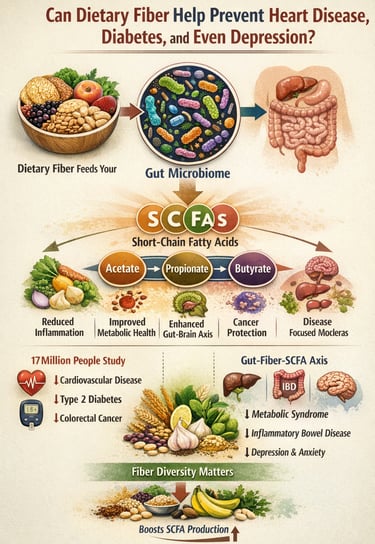
Short-chain fatty acids (SCFAs) are bioactive molecules—primarily acetate, propionate, and butyrate—produced when gut bacteria ferment dietary fiber. These compounds act as metabolic messengers, linking diet to whole-body health.
Why SCFAs Matter
SCFAs influence multiple organ systems through receptor signaling (GPR41, GPR43, GPR109a) and epigenetic regulation (HDAC inhibition).
Key Functions:
Metabolic health: Improve insulin sensitivity, reduce fat storage, enhance GLP-1 and PYY release
Cardiovascular health: Lower cholesterol synthesis and systemic inflammation
Gut integrity: Butyrate fuels colon cells and strengthens the intestinal barrier
Brain function: Modulate neuroinflammation, serotonin production, and gut-brain signaling
Immune regulation: Reduce chronic inflammation and support immune balance
How SCFAs Work
Acetate → Appetite regulation via the brain
Propionate → Reduces liver cholesterol production
Butyrate → Anti-inflammatory, anti-cancer, supports gut lining
These SCFAs:
Activate G-protein coupled receptors → regulate metabolism and immunity
Inhibit histone deacetylases (HDACs) → influence gene expression and cancer pathways
SCFAs Health Benefits Backed by Research
Large-scale and recent studies show:
↓ Risk of type 2 diabetes
↓ Cardiovascular disease and mortality
↓ colorectal cancer risk
Improved gut microbiome diversity
Emerging link to reduced depression risk
SCFAs are now being studied as:
Biomarkers for mental health (depression)
Modifiers of immune recovery (e.g., stem cell transplant)
Regulators of drug metabolism
Key Takeaways
SCFAs regulate metabolism, inflammation, and gut health
Fiber diversity matters more than fiber quantity alone
SCFAs improve insulin sensitivity and reduce CVD risk
Emerging role in brain health and immune function
Small dietary changes → measurable metabolic benefits
Short-chain fatty acids (SCFAs) are emerging as central mediators linking diet, the gut microbiome, and systemic health. Produced when intestinal microbes ferment dietary fiber, the primary SCFAs—acetate, propionate, and butyrate—act not merely as metabolic byproducts but as signaling molecules that regulate energy balance, immune function, and gene expression (Mukhopadhya & Louis, 2025; Zhao et al., 2025). Butyrate, for example, serves as the main fuel for colonocytes and exerts anti-inflammatory and anti-cancer effects through inhibition of histone deacetylases, while propionate influences hepatic lipid metabolism and cholesterol synthesis (Delzenne et al., 2025).
Large-scale evidence underscores their clinical relevance. An umbrella review involving over 17 million individuals demonstrated that higher dietary fiber intake—proxying greater SCFA production—is associated with reduced risk of cardiovascular disease, type 2 diabetes, and all-cause mortality (Veronese et al., 2025). Beyond metabolism, emerging data suggest that altered circulating SCFA profiles may reflect gut-brain axis dysfunction in conditions such as major depressive disorder, highlighting their potential as biomarkers and therapeutic targets (Le Do et al., 2026).
Together, these findings position SCFAs at the intersection of nutrition, microbiology, and chronic disease prevention—shifting the clinical focus from nutrients alone to the metabolic outputs of the gut ecosystem.
Section 1: What Are SCFAs and Where Do They Come From?
SCFAs are organic acids with fewer than six carbon atoms, produced when your gut microbiota ferments dietary fiber — the plant-based carbohydrates your own digestive enzymes cannot break down. The three principal SCFAs are:
Acetate — the most abundant; serves as an energy substrate and immune modulator, and crosses the blood-brain barrier to regulate appetite via the hypothalamus
Propionate — primarily acts in the liver to inhibit cholesterol synthesis and modulate glucose production (gluconeogenesis)
Butyrate — the primary energy source for colonocytes (your colon's lining cells); a potent anti-inflammatory and anti-cancer agent
The bacteria responsible for SCFA production are not randomly distributed. Keystone species — including Faecalibacterium prausnitzii, Roseburia intestinalis, and Akkermansia muciniphila — are disproportionately responsible for butyrate and propionate output. Critically, these species are highly sensitive to diet, antibiotic exposure, and chronic stress. Their depletion in states of gut dysbiosis can dramatically reduce SCFA output, even when a person is technically consuming adequate fiber (Mukhopadhya & Louis, 2025).
SCFAs exert their influence through two primary mechanisms:
Receptor signaling — binding to G-protein coupled receptors (GPR41, GPR43, GPR109a) on intestinal cells, immune cells, and adipocytes to modulate inflammation, appetite, and fat storage
Epigenetic regulation — butyrate in particular acts as a histone deacetylase (HDAC) inhibitor, meaning it can modulate gene expression and silence cancer-promoting pathways (Zhao et al., 2025; Sankarganesh et al., 2025)
This dual mechanism — receptor-based and epigenetic — explains why SCFAs have such a diverse reach across body systems.
Section 2: SCFAs and Metabolic Health — From Obesity to Diabetes
One of the most clinically significant roles of SCFAs is in metabolic regulation. In individuals with obesity and type 2 diabetes, SCFA signaling is consistently impaired. Research by Zhang et al. (2023) established that reduced SCFA binding at GPR41 and GPR43 is a defining feature of insulin-resistant states — suggesting SCFA deficiency is not merely a consequence of poor metabolic health, but a potential driver of it.
Here is how SCFAs influence metabolism at a molecular level:
Appetite regulation: Acetate signals the hypothalamus to suppress hunger; propionate and butyrate stimulate intestinal L-cells to release GLP-1 and PYY — satiety hormones that slow gastric emptying and reduce caloric intake
Insulin sensitivity: SCFAs improve glucose uptake in muscle and adipose tissue by enhancing insulin receptor signaling pathways
Fat storage: SCFA binding at GPR43 inhibits fat accumulation in adipocytes, redirecting energy toward oxidative metabolism
Liver function: Propionate inhibits cholesterol synthesis in the liver and reduces hepatic fat deposition, making it particularly relevant to non-alcoholic fatty liver disease (NAFLD)
Delzenne et al. (2025), in their landmark Nature Reviews Microbiology article, synthesized decades of evidence confirming that dietary fiber — through SCFA-mediated pathways — can reduce visceral fat, lower fasting glucose, and improve lipid profiles. The umbrella review by Veronese et al. (2025), spanning more than 17 million participants, reinforced this with epidemiological gravitas: high fiber intake was associated with a statistically significant reduction in type 2 diabetes incidence and metabolic syndrome outcomes.
Practical insight: Even modest fiber increases matter. Dose-response analyses in the Veronese review found that adding just 7–8 grams of fiber per day above your current intake produces measurable reductions in metabolic disease risk — the equivalent of one cup of raspberries or half a cup of black beans.
Section 3: SCFAs and Cardiovascular Health
The cardiovascular benefits of dietary fiber have long been recognized, but SCFAs help explain the mechanism. Propionate, in particular, acts as a molecular messenger delivered directly to the liver, where it:
Inhibits HMG-CoA reductase activity — the same enzyme targeted by statin drugs — thereby reducing cholesterol synthesis
Modulates gluconeogenesis, improving fasting blood glucose
Reduces systemic C-reactive protein (CRP) and other inflammatory markers associated with atherosclerosis
Beta-glucan — the soluble fiber found in oats and barley — is especially efficient at driving propionate production. This is the mechanistic explanation behind oatmeal's well-documented cholesterol-lowering effect (Vinelli et al., 2022). As Delzenne et al. (2025) note, this makes beta-glucan consumption a biologically rational dietary strategy for cardiovascular risk reduction — "nature's version of a metabolic regulator."
Additionally, butyrate's anti-inflammatory effects extend to the vascular system. By inhibiting the NF-κB inflammatory pathway, butyrate reduces the chronic low-grade inflammation that drives endothelial dysfunction, arterial stiffness, and — ultimately — heart disease.
From the Veronese et al. (2025) umbrella review: high dietary fiber intake was associated with reduced cardiovascular disease incidence and cardiovascular mortality across all age groups, sexes, and geographic regions — making this one of the most universally applicable dietary interventions in preventive cardiology.
Section 4: The Gut-Brain Axis — SCFAs and Mental Health
Perhaps the most surprising frontier of SCFA research is its implications for brain health and mental illness. A landmark 2026 meta-analysis by Le Do et al. (2026) — published in the Biomedical Journal — formally established circulating SCFA profiles as a biomarker of gut-brain axis dysfunction in major depressive disorder (MDD). This study found that individuals with MDD have distinct, measurable alterations in circulating acetate, propionate, and butyrate levels compared to healthy controls — providing the first robust meta-analytic evidence that SCFA signatures may serve as diagnostic or prognostic biomarkers in depression.
The mechanisms connecting SCFAs to brain function are multi-layered:
Blood-brain barrier crossing: Both acetate and butyrate cross the blood-brain barrier, where they influence neuronal energy metabolism and microglial (immune) cell activity
Vagal nerve signaling: SCFA-triggered GLP-1 release activates the vagus nerve, transmitting gut signals directly to limbic brain regions involved in mood regulation
Neuroinflammation: Butyrate suppresses microglial activation and reduces neuroinflammatory cytokines, which are elevated in both depression and neurodegenerative diseases
Serotonin synthesis: SCFAs regulate enterochromaffin cells in the gut, which produce approximately 90% of the body's serotonin
Zhang et al. (2023) catalogued SCFA involvement across a range of neuropsychiatric and neurodegenerative conditions — including Alzheimer's disease, Parkinson's disease, autism spectrum disorder, and anxiety — while Veronese et al. (2025) umbrella review found associations between higher fibre intake and reduced depression risk in population-level data.
This body of evidence positions the gut-fibre-SCFA-brain axis as a legitimate therapeutic target in neuropsychiatric medicine — not as a replacement for conventional treatment, but as a meaningful and evidence-grounded adjunct.
Section 5: SCFAs in Immune Function and Cancer Prevention
Beyond metabolism and the brain, SCFAs play a critical role in immune regulation — a role that is now being studied in one of medicine's most complex clinical arenas: hematopoietic stem cell transplantation (HSCT).
A 2026 review by Hajjar et al. (2026), published in Frontiers in Microbiology, examined how microbiota-derived SCFAs modulate immune reconstitution in HSCT patients. The HSCT context is significant because transplant patients undergo complete ablation of their immune systems, and SCFA-producing bacteria are often decimated by intensive antibiotics and chemotherapy. The review found that SCFA depletion in this setting is associated with increased graft-versus-host disease (GVHD), impaired immune recovery, and worse transplant outcomes — while preserved SCFA production correlates with better immunological reconstitution. This represents a compelling new clinical application of SCFA biology with direct patient survival implications.
In colorectal oncology, the mechanisms are well-established. Butyrate functions as an HDAC inhibitor — modifying histone acetylation patterns to suppress oncogene expression and promote tumor suppressor activity. In cancer cells, butyrate's HDAC inhibition triggers apoptosis (programmed cell death) while leaving normal colonocytes unaffected. This selective anti-cancer activity, combined with butyrate's role in maintaining the intestinal epithelial barrier, makes it a compelling chemoprotective molecule (Delzenne et al., 2025; Zhao et al., 2025).
Sankarganesh et al. (2025) also highlighted an underappreciated angle: SCFAs influence drug metabolism by modulating hepatic and intestinal enzyme activity, which has direct implications for pharmacotherapy in patients with gut dysbiosis. Patients with depleted SCFA-producing microbiota may metabolize drugs differently — a clinically relevant consideration for oncologists and pharmacists alike.
Section 6: The Fiber Diversity Principle — Why Variety Beats Volume
Not all fiber is created equal. One of the most practically important findings of 2025 comes from Galeano-Garcia et al. (2025), who tested whether combining different types of dietary fiber produces SCFA yields greater than any single fiber alone — and found a striking answer: yes, significantly so.
Their in vitro and human fecal fermentation experiments showed that a mixture of fiber types produced synergistic SCFA boosts — not merely additive ones. Crucially, individuals with metabolic syndrome — whose gut microbiomes are already dysbiotic — showed the greatest synergistic response, suggesting that fiber diversity may be most therapeutically valuable precisely when gut health is most compromised.
The mechanistic explanation is microbial cross-feeding: bacteria that ferment one fiber type produce byproducts that serve as substrates for other bacterial species fermenting different fiber types. This ecological cascade amplifies total SCFA output beyond what any single fiber can achieve.
What this means in practice: Rotating between fiber types — inulin-rich foods (garlic, onions, leeks), resistant starch sources (cooled potatoes, green bananas, lentils), beta-glucan foods (oats, barley), and pectin-rich fruits (apples, citrus) — is more effective than consuming large amounts of any one fiber. Aim for 30 different plant foods per week as a practical target for fiber diversity.
Practical Applications: Your SCFA Optimization Plan
Translating this science into daily life is simpler than it may appear. Here is a clinically informed, patient-friendly framework:
1. Build a Diverse Fiber Foundation (The "30 Plants" Rule)
Aim for 30 different plant foods weekly. Rotate across categories:
Inulin/FOS: Garlic, onions, leeks, asparagus, chicory, Jerusalem artichokes
Resistant starch: Cooked-and-cooled potatoes, green bananas, lentils, chickpeas, white beans
Beta-glucan: Oats, barley, shiitake and oyster mushrooms
Pectin/soluble fiber: Apples (with skin), pears, citrus, carrots
Polyphenol-rich: Blueberries, blackberries, red onion, dark chocolate (85%+)
Cruciferous: Broccoli, cauliflower, Brussels sprouts, kale
Seeds/whole grains: Chia, flaxseeds, walnuts, quinoa, rye
2. Increase Gradually — The 3–5 Gram Weekly Rule
Rapid fiber increases cause gas and bloating. Add 3–5 grams per week, spread across meals. Your microbiome adapts; within 4–8 weeks, tolerance typically improves significantly.
3. Target Specific SCFAs for Specific Goals
Gut Lining Integrity
Best Fiber Type: Resistant Starch (found in cooked-and-cooled potatoes, lentils, and green bananas).
Primary SCFA: Butyrate.
The Mechanism: Butyrate is the preferred fuel source for the cells lining your colon (colonocytes). It strengthens the gut barrier and provides the "building blocks" needed for cellular repair and cancer prevention.
Cholesterol Reduction
Best Fiber Type: Beta-glucan (found in oats and barley).
Primary SCFA: Propionate.
The Mechanism: Propionate travels directly to the liver, where it signals the organ to downregulate cholesterol production, acting as a natural metabolic brake on LDL levels.
Appetite and Blood Sugar Control
Best Fiber Type: Inulin, FOS, and Pectin (found in garlic, onions, asparagus, and apples).
Primary SCFA: Acetate and GLP-1 stimulation.
The Mechanism: These fibers trigger the release of satiety hormones (GLP-1 and PYY) that signal the brain to feel full while simultaneously improving how your cells respond to insulin.
Systemic Anti-Inflammatory Support
Best Fibre Type: Mixed Fibers + Polyphenols (found in a variety of colourful plants, berries, and nuts).
Primary SCFA: A synergistic blend of all three (Acetate, Propionate, and Butyrate).
The Mechanism: A diverse intake ensures a broad spectrum of SCFAs that circulate through the blood, lowering systemic inflammation markers like C-reactive protein (CRP) and protecting the cardiovascular system.
4. Protect Your SCFA-Producing Bacteria
Minimize unnecessary antibiotic use
Incorporate fermented foods (yogurt, kefir, sauerkraut, kimchi) to maintain microbial diversity
Prioritize consistent sleep — chronic sleep deprivation depletes Faecalibacterium prausnitzii and Akkermansia muciniphila
Reduce ultra-processed food intake, which feeds dysbiotic bacteria at the expense of SCFA producers
5. When Supplements Are Appropriate
Whole foods are preferred for their complete food matrix — fibre, polyphenols, vitamins, and minerals synergizing together. However, for individuals with:
IBD or IBS, where certain high-fibre foods trigger symptoms
Post-surgical digestive limitations
Verified gut dysbiosis
...a multi-fibre supplement (combining inulin, resistant starch, and beta-glucan) may serve as a practical adjunct, consistent with the synergy evidence from Galeano-Garcia et al. (2025).
6.Clinical Considerations
Increase fiber gradually (3–5 g/week) to avoid bloating
Patients with:
IBS (especially FODMAP-sensitive)
Active IBD
Post-surgical gut conditions
may require individualized approaches
Frequently Asked Questions (FAQs)
Q1: What exactly are SCFAs and why should I care about them? SCFAs — acetate, propionate, and butyrate — are produced when your gut bacteria ferment dietary fiber. Think of them as a communication network between your gut and the rest of your body. They regulate your immune system, blood sugar, cholesterol, inflammation, and even your mood. Mukhopadhya and Louis (2025) describe each SCFA as having a distinct "job": butyrate repairs your colon lining and fights cancer cells; propionate manages cholesterol in your liver; acetate helps control hunger signals in your brain.
Q2: Can SCFAs really affect my mental health? Increasingly, the evidence says yes. A 2026 meta-analysis by Le Do et al. found that people with major depression have measurably different SCFA blood profiles compared to healthy individuals — making SCFAs the first proposed gut-derived biomarker of gut-brain axis dysfunction in depression. Butyrate and acetate cross the blood-brain barrier, regulate neuroinflammation, and support serotonin production. This doesn't mean fiber cures depression — but optimizing your SCFA-producing gut ecology is a scientifically supported component of holistic mental health care.
Q3: How quickly will I notice changes if I increase my fiber intake? Your gut microbiome begins responding within 24–48 hours of significant dietary changes. However, stable, lasting changes to microbiome composition typically take 4–12 weeks of consistent dietary modification (Vinelli et al., 2022). Many people notice reduced bloating, more stable energy, and better bowel regularity within 2–4 weeks once they increase fiber gradually.
Q4: Is eating more fiber enough, or does the type of fiber matter? Both matter — but type is often overlooked. Different fibers feed different bacteria and produce different SCFAs. Resistant starch specifically boosts butyrate (for gut lining health); beta-glucan in oats drives propionate (for cholesterol management); inulin and FOS promote bifidobacteria and acetate production (Vinelli et al., 2022). Moreover, combining fiber types creates a synergistic boost in SCFA output that surpasses any single fiber consumed alone (Galeano-Garcia et al., 2025). Variety isn't just nice to have — it's the strategy.
Q5: I have metabolic syndrome or prediabetes — is fiber particularly important for me? Especially so. Galeano-Garcia et al. (2025) found that individuals with metabolic syndrome showed the largest SCFA synergistic responses to mixed-fiber consumption — suggesting that fiber diversity is most therapeutically powerful when gut health is most compromised. Zhang et al. (2023) also showed that impaired SCFA signaling at GPR41 and GPR43 receptors is a defining feature of insulin resistance, making SCFA restoration a mechanistically sound therapeutic target alongside conventional diabetes management.
Q6: What do SCFAs have to do with cancer prevention? Butyrate's role in colorectal cancer prevention is one of the most compelling stories in nutritional oncology. It acts as an HDAC inhibitor — modifying gene expression in cancer cells to trigger apoptosis (cell death), suppress oncogene activity, and restore normal cell cycle regulation — while leaving healthy colonocytes unaffected (Delzenne et al., 2025; Zhao et al., 2025). Epidemiologically, the Veronese et al. (2025) umbrella review found robust associations between high fiber intake and reduced colorectal cancer risk across more than 17 million individuals.
Q7: I'm on medications. Could SCFAs affect how my drugs work? This is an emerging and clinically important question. Sankarganesh et al. (2025) highlighted that SCFAs modulate hepatic and intestinal enzymes involved in drug metabolism. Patients with gut dysbiosis — and therefore reduced SCFA levels — may process certain medications differently. If you are on long-term medications (particularly for metabolic, inflammatory, or psychiatric conditions) and are making significant dietary changes to support your gut microbiome, it is worth mentioning this to your prescribing physician, especially if your condition requires therapeutic drug monitoring.
Clinical pearls translated for both the medical professional and the curious patient.
1. The Fiber Diversity Synergy
Scientific Perspective: Bacterial "cross-feeding" networks mean that a heterogeneous substrate profile (diverse fiber types) produces a synergistic rather than merely additive increase in SCFA yield. This is particularly potent in dysbiotic populations, such as those with metabolic syndrome.
Don't just eat a mountain of broccoli. Your gut is like a diverse city; different "workers" (bacteria) need different "tools" (fibers) to do their jobs. Eating 30 different plants a week creates a much bigger health boost than eating the same three vegetables every day.
2. Butyrate as an Epigenetic Switch
Scientific Perspective: Butyrate functions as a Histone Deacetylase (HDAC) inhibitor. By modulating histone acetylation, it promotes the expression of tumor suppressor genes and induces apoptosis in colorectal cancer cells while serving as the primary oxidative fuel for healthy colonocytes.
Patient-Friendly Perspective: Butyrate is like a "safety inspector" for your colon. It provides the energy your gut wall needs to stay strong, but it also has the power to flip a switch that tells potential cancer cells to stop growing and self-destruct.
3. Propionate: The "Natural Statin"
Scientific Perspective: Propionate travels via the portal vein to the liver, where it inhibits HMG-CoA reductase—the rate-limiting enzyme in cholesterol biosynthesis. This makes beta-glucan (a propionate precursor) a mechanistically sound intervention for hyperlipidemia.
Patient-Friendly Perspective: When you eat oats or barley, your gut bacteria turn them into a signal called propionate. This signal travels to your liver and tells it to slow down its own cholesterol production, acting a lot like a natural, low-dose version of a cholesterol medication.
4. The SCFA Mood Signature
Scientific Perspective: Circulating SCFA profiles (specifically acetate, propionate, and butyrate) have been identified as meta-analytic biomarkers for Major Depressive Disorder (MDD). SCFAs modulate the gut-brain axis by reducing neuroinflammation and stimulating the vagus nerve.
Patient-Friendly Perspective: We now know that people with depression often have lower levels of these "messenger molecules" in their blood. By feeding your gut the right fibers, you are helping your body produce the chemicals it needs to lower brain inflammation and support a more stable mood.
5. Metabolic Re-routing (GPR Signaling)
Scientific Perspective: SCFA binding at G-protein coupled receptors (GPR41/43) stimulates the release of GLP-1 and PYY. This enhances insulin sensitivity and shifts energy balance by inhibiting fat storage in adipocytes and promoting oxidative metabolism.
Patient-Friendly Perspective: SCFAs are natural "appetite suppressants." They trigger the release of the same hormones (like GLP-1) that famous weight-loss drugs target. They tell your body to feel full, burn energy instead of storing it as fat, and help your cells use blood sugar more efficiently.
Call to Action: Start Your SCFA Journey Today
You don't need an expensive supplement, a restrictive diet, or a complicated protocol. You need more plants, more variety, and more consistency.
Here's your 3-step entry point:
Week 1: Add One New Plant Per Day Pick one plant food you don't normally eat — a handful of blackberries, a spoonful of ground flaxseed, half a cup of lentils — and add it to one meal. That's it. You're already diversifying your fiber, feeding new bacterial communities, and nudging SCFA production upward.
Week 2–4: Track Your "30 Plants" Score Keep a simple weekly tally of different plant foods you consume. Aim for 30 by the end of the week. Include herbs and spices — they count. Share your score in the comments below or with a friend — social accountability significantly improves dietary consistency.
Month 2 and Beyond: Rotate, Don't Repeat Avoid eating the same five foods repeatedly. Use the fiber category table in this article as a rotating shopping list. Each week, ensure you're hitting at least one food from each of the six fiber categories. Over time, this builds the microbial diversity that research consistently associates with better metabolic, cardiovascular, immune, and mental health outcomes.
Engage With Us:
Leave a comment: "Which fiber category was missing from your diet?" — and share one food you're adding this week.
Share this article with someone managing blood sugar, cholesterol, or mood — the science here is directly relevant to their daily choices.
Subscribe to receive our monthly evidence reviews on nutrition, microbiome science, and preventive medicine.
If you found this article useful, consider bookmarking the 30-Plant Checklist and returning to it weekly as a planning tool. Real dietary change happens through small, consistent actions — not dramatic overhauls.
Author’s Note
This article was written to bridge a growing gap between rapidly evolving microbiome science and its practical application in clinical medicine. Over the past decade—and especially in the last few years—the evidence surrounding short-chain fatty acids (SCFAs) has expanded from basic physiology to meaningful roles in metabolic disease, cardiovascular health, neuropsychiatry, and immune regulation. Yet, much of this knowledge remains fragmented across highly specialized research domains.
As a clinician in internal medicine, my goal is to synthesize this complex body of evidence into a form that is both scientifically rigorous and clinically useful—for healthcare professionals and informed patients alike. The insights presented here are derived from careful review of contemporary peer-reviewed literature, with an emphasis on mechanistic clarity, translational relevance, and real-world applicability.
It is important to recognize that while SCFAs represent a promising therapeutic frontier, they are not a standalone solution. They function within a broader biological system shaped by diet, lifestyle, medications, and individual variability in the gut microbiome. Therefore, any dietary or therapeutic intervention aimed at modulating SCFAs should be viewed as part of a comprehensive, individualized approach to health.
The science of the microbiome is still evolving—but its clinical implications are already too significant to ignore.
Related Articles
The Missing Nutrient in Modern Diets: How Fiber Protects Your Brain, Gut, Heart, and Metabolism
Your Gut Microbiome Explained: How It Controls Immunity, Metabolism, and Disease | DR T S DIDWAL
Your Gut Bacteria Are What You Eat: A Science-Backed Guide to the Gut Microbiome | DR T S DIDWAL
Feed Your Gut, Fuel Your Health: Diet, Microbiota, and Systemic Health
References
Delzenne, N. M., Bindels, L. B., Neyrinck, A. M., & Walter, J. (2025). The gut microbiome and dietary fibres: implications in obesity, cardiometabolic diseases and cancer. Nature Reviews Microbiology, 23(4), 225–238. https://doi.org/10.1038/s41579-024-01108-z
Galeano-Garcia, G. S., Chen, T., Engen, P. A., Keshavarzian, A., Hamaker, B. R., & Cantu-Jungles, T. M. (2025). New insights into synergistic boosts in SCFA production across health conditions induced by a fiber mixture. Nutrients, 17(24), 3904. https://doi.org/10.3390/nu17243904
Hajjar, C., Kuijper, E. J., Butel, M.-J., Khoury, G., Mallah, M., Karam Sarkis, D., Lesnik, P., Le Goff, W., Bazarbachi, A., & Abifadel, M. (2026). Microbiota-derived short-chain fatty acids in hematopoietic stem cell transplantation: immunomodulation at the host-microbiota interface. Frontiers in Microbiology, 17, 1754099. https://doi.org/10.3389/fmicb.2026.1754099
Le Do, Q., Malau, I. A., Nguyen, H. T., Liu, J., Chang, J. P., & Su, K. P. (2026). Circulating short-chain fatty acid (SCFA) profiles as a biomarker of gut-brain axis dysfunction: A meta-analysis for the SCFA signature in major depression. Biomedical Journal, 100968. Advance online publication. https://doi.org/10.1016/j.bj.2026.100968
Mukhopadhya, I., & Louis, P. (2025). Gut microbiota-derived short-chain fatty acids and their role in human health and disease. Nature Reviews Microbiology, 23, 635–651. https://doi.org/10.1038/s41579-025-01183-w
Sankarganesh, P., Bhunia, A., Kumar, A. G., Babu, A. S., Gopukumar, S. T., & Lokesh, E. (2025). Short-chain fatty acids (SCFAs) in gut health: Implications for drug metabolism and therapeutics. Medicine in Microecology. https://doi.org/10.1016/j.medmic.2025.100205
Veronese, N., Gianfredi, V., Solmi, M., Barbagallo, M., Dominguez, L. J., Mandata, C., Di Palermo, C., Carruba, L., Solimando, L., Stubbs, B., Castagna, A., Maggi, S., Zanetti, M., Al-Daghri, N., Nucci, D., Gosling, C., & Fontana, L. (2025). The impact of dietary fiber consumption on human health: An umbrella review of evidence from 17,155,277 individuals. Clinical Nutrition, 51, 325–333. https://doi.org/10.1016/j.clnu.2025.06.021
Vinelli, V., Biscotti, P., Martini, D., Del Bo', C., Marino, M., Merano, T., Nikoloudaki, O., Calabrese, F. M., Turroni, S., Taverniti, V., Union Caballero, A., Andres-Lacueva, C., Porrini, M., Gobbetti, M., De Angelis, M., Brigidi, P., Pinart, M., Nimptsch, K., Guglielmetti, S., & Riso, P. (2022). Effects of dietary fibers on short-chain fatty acids and gut microbiota composition in healthy adults: A systematic review. Nutrients, 14(13), 2559. https://doi.org/10.3390/nu14132559
Zhang, D., Jian, Y. P., Zhang, Y. N., et al. (2023). Short-chain fatty acids in diseases. Cell Communication and Signaling, 21, 212. https://doi.org/10.1186/s12964-023-01219-9
Zhao, Y., Chen, J., Qin, Y., Yuan, J., Yu, Z., Ma, R., Liu, F., & Zhao, J. (2025). Linking short-chain fatty acids to systemic homeostasis: Mechanisms, therapeutic potential, and future directions. Journal of Nutrition and Metabolism, 2025, 8870958. https://doi.org/10.1155/jnme/8870958
UPDATED ON 4TH MAY 2026