Does Saturated Fat Cause Heart Disease? What the Latest Science Really Says
Forget the old rules. New research reveals how saturated fat affects your metabolism based on your unique biology. Discover the truth about "very long-chain" fats and heart health
NUTRITION
Dr. T.S. Didwal, M.D.(Internal Medicine)
5/22/202616 min read
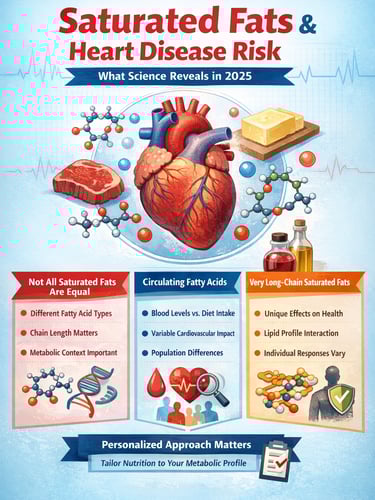
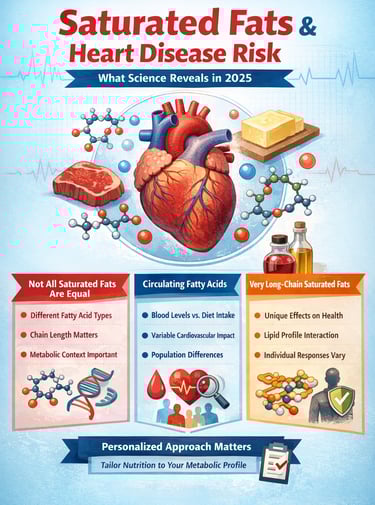
For decades, millions of people threw away egg yolks, feared butter, and bought “heart-healthy” low-fat foods — only to unknowingly replace natural fats with ultra-processed carbohydrates and added sugars. Saturated fat became nutrition’s most feared nutrient, blamed almost single-handedly for heart attacks, clogged arteries, and premature death.
But modern cardiovascular science is forcing a major reassessment.
A powerful wave of research published between 2025 and 2026 suggests the story is far more complex — and far more unsettling — than the old “saturated fat equals heart disease” narrative. Scientists now recognize that different saturated fats behave differently inside the body, that blood biomarkers predict risk better than food diaries, and that what replaces saturated fat may matter more than the fat itself.
Even more surprising: some saturated fats appear metabolically neutral, while certain very long-chain saturated fatty acids may even show protective associations in metabolically healthy individuals.
The implications are enormous. If the newest evidence is correct, decades of one-size-fits-all dietary advice may have overlooked the real drivers of cardiovascular risk: ultra-processed foods, insulin resistance, chronic inflammation, and poor overall dietary quality.
This article examines the latest 2025–2026 evidence from major cardiology and nutrition journals — including updated guidance from the American Heart Association — to separate scientific fact from outdated dietary dogma and explain what the modern evidence actually says about saturated fat and heart disease.
Key Takeaways About Saturated Fat and Heart Disease (2025–2026 Research)
1. Not all saturated fats are the same — Chain length matters. Palmitic acid (C16) raises LDL cholesterol more than stearic acid (C18) found in beef and dark chocolate, while very long-chain saturated fats (VLCSFAs) may be neutral or even beneficial in certain metabolic contexts.
2. Individual response to saturated fat varies widely — Genetics, insulin sensitivity, and metabolic health determine how much your LDL cholesterol rises. Some people are strong responders, others show minimal change.
3. Food source and food matrix matter more than total grams — Saturated fat from fermented dairy (yogurt, cheese) and minimally processed foods behaves differently than from ultra-processed foods or processed meats.
4. What you replace saturated fat with is crucial — Replacing it with olive oil, nuts, seeds, and fatty fish improves heart health markers. Replacing it with refined carbs or sugar often does not.
5. Blood biomarkers beat food diaries — Circulating fatty acid levels and metabolic markers predict cardiovascular risk far better than self-reported dietary intake (Shi et al., 2025).
6. Reducing saturated fat benefits high-risk individuals most — People with diabetes, high LDL, hypertension, or existing heart disease gain clearer benefits. Metabolically healthy people may see limited additional advantage.
7. 2026 AHA Guidelines emphasize personalization — Latest guidance moves away from strict one-size-fits-all saturated fat limits toward overall dietary patterns, metabolic context, and individualized nutrition (Lichtenstein et al., 2026).
Major 2025–2026 studies reshaping this field
Not All Saturated Fats Are the Same
One of the most important conceptual shifts in modern nutrition science is recognizing saturated fat not as a single substance but as a diverse family of molecules with distinct chain lengths, metabolic pathways, and health effects.
A comprehensive 2025 review by Szabó in the journal Nutrients, titled "Dietary Fatty Acids and Metabolic Health," provides the clearest framework for understanding this diversity. The review underscores that chain length, degree of saturation, and food matrix all determine how a fatty acid behaves once it enters your body.
The Chain-Length Spectrum
Short-chain saturated fats (C2–C6)
Example: Butyric acid
Found in: Butter, fermented dairy
Effect: Supports gut health and is rapidly absorbed for energy
Medium-chain saturated fats (C8–C12)
Examples: Lauric acid, Caprylic acid
Found in: Coconut oil, palm kernel oil
Effect: Quickly oxidized for energy; raises both HDL and LDL cholesterol
Long-chain saturated fats (C14–C18)
Examples: Palmitic acid, Stearic acid
Found in: Red meat, butter, chocolate
Effect: Palmitic acid raises LDL cholesterol, while stearic acid is largely neutral
Very long-chain saturated fats (≥C20)
Examples: Arachidic acid, Behenic acid, Lignoceric acid
Found in: Peanuts, canola oil, certain nuts
Effect: Context-dependent; may be neutral or potentially protective for metabolic health
Clinical Pearl
Stearic acid (C18:0), the dominant saturated fat in dark chocolate and beef, is largely converted to oleic acid (the same monounsaturated fat in olive oil) in the liver. Lumping it with palmitic acid in blanket "avoid saturated fat" advice is biochemically imprecise.
Source Context Matters as Much as Chemistry
The food matrix surrounding a fatty acid dramatically alters its metabolic fate. Full-fat fermented dairy products such as yogurt and kefir consistently show neutral or beneficial cardiovascular associations in observational studies — despite containing substantial saturated fat. Why? Accompanying nutrients like calcium, potassium, vitamin K2, and bioactive peptides appear to modify lipid metabolism in ways that offset any LDL-raising effect.
Contrast this with the saturated fat found in ultra-processed shelf-stable snack foods: the same fatty acids arrive packaged with refined starches, sodium, emulsifiers, and added sugars — a combination that does consistently predict worse metabolic outcomes.
Very Long-Chain Saturated Fatty Acids: A Surprising Discovery
Among the most striking findings in recent lipid science is the emerging story of very long-chain saturated fatty acids (VLCSFAs) — a category almost entirely absent from mainstream nutrition conversations until now.
A 2025 study by Domínguez-López and colleagues, published in Cardiovascular Diabetology, examined plasma VLCSFAs and their association with cardiometabolic risk across a large cohort. The findings challenge several long-held assumptions.
What Makes VLCSFAs Different?
Structural role, not just energy: Unlike palmitic acid, VLCSFAs play important roles in cell membrane integrity, myelin sheaths in nerve tissue, and sphingolipid synthesis.
Lower intestinal absorption: Their long chains mean they are absorbed more slowly and less efficiently than shorter saturated fats.
Endogenous synthesis matters: Blood levels of VLCSFAs reflect not just dietary intake but also internal fatty acid elongation activity — meaning your genetics and metabolic state strongly influence circulating levels.
The Context-Dependency Finding
The Domínguez-López (2025) study's most important insight: VLCSFAs do not operate in isolation. Their association with cardiometabolic risk — positive or negative — was heavily modulated by the broader lipid environment. In individuals with favorable HDL cholesterol, controlled triglycerides, and good glucose regulation, higher plasma VLCSFAs showed neutral or even inverse associations with cardiovascular disease markers.
In individuals with dyslipidemia or insulin resistance, the picture was less favorable.
"The health effect of a fat is not a property of the molecule alone — it is a property of the metabolic ecosystem in which that molecule exists."
This "lipid ecosystem" concept is perhaps the single most important framework shift in 2025–2026 cardiovascular nutrition. Rather than asking "Is this fat good or bad?", the better question is: "how does this fat behave in my specific lipid environment?"
Key Takeaway
VLCSFAs — found in peanuts, canola oil, and certain nuts — are not the saturated fats you need to worry about. Their effects are context-dependent and, in many metabolic profiles, neutral to potentially beneficial. The research strongly argues against treating all saturated fats as a monolithic threat.
Circulating Fatty Acids vs. Dietary Intake: Why Blood Tests Tell a Better Story
Most nutrition research for the past several decades relied on dietary recall questionnaires — asking people what they ate over the past 24 hours, week, or month. This methodology has well-documented limitations: recall bias, portion size errors, and the fact that what you eat doesn't necessarily equal what your body absorbs.
A landmark 2025 analysis by Shi and colleagues, published in the European Journal of Preventive Cardiology, moved the field forward substantially. Combining individual-level data from three large prospective cohorts with an updated meta-analysis, the study examined circulating fatty acids — the fats actually measured in participants' blood — and their relationship with cardiovascular disease risk.
Why Circulating Levels Are More Informative
Your blood fatty acid profile reflects the net result of everything your body does with dietary fat: absorption efficiency, hepatic metabolism, de novo lipogenesis, esterification into lipoproteins, and cellular uptake. Two people eating identical diets will have meaningfully different circulating fatty acid profiles based on:
Genetic variants in fatty acid desaturase and elongase enzymes (FADS1/2, ELOVL genes)
Insulin sensitivity — insulin resistance stimulates de novo palmitate synthesis regardless of dietary intake
Gut microbiome composition, which influences absorption and short-chain fatty acid production
Physical activity level, which accelerates fatty acid oxidation
Hormonal status (sex hormones influence lipid metabolism substantially)
Key Findings from Shi et al. (2025)
The study found that different classes of circulating fatty acids had distinct and divergent associations with cardiovascular disease risk — reinforcing that lumping them together produces misleading conclusions. Importantly, population subgroup analyses showed that demographic variation in these associations was substantial, meaning that findings from one ethnic or age group cannot be automatically applied to another.
For Clinicians & Patients
Request a comprehensive lipid panel plus fasting glucose as a baseline metabolic assessment. Some lipid clinics and functional medicine practitioners also offer more detailed fatty acid fractionation panels. These objective biomarkers tell you far more about your actual cardiovascular risk than any food diary.
Does Reducing Saturated Fat Actually Help? The Intervention Evidence
“Higher intake of saturated fat raises LDL cholesterol in many individuals, but the magnitude and clinical significance of this effect show substantial inter-individual variability. The response depends on genetics (e.g., ApoE genotype), metabolic health, insulin sensitivity, baseline diet, food matrix, and the nutrient that replaces saturated fat. While certain saturated fatty acids (particularly palmitic acid) consistently increase LDL-C in most people, others (such as stearic acid) have minimal effect, and the overall impact on cardiovascular risk cannot be determined by LDL-C changes alone.”
A comprehensive 2025 risk-stratified systematic review by Steen and colleagues in the Annals of Internal Medicine tackled exactly this question, examining randomized trials of interventions aimed at reducing or modifying saturated fat intake and measuring effects on cholesterol, mortality, and major cardiovascular events.
The Risk-Stratification Insight
The study's most clinically significant innovation was stratifying participants by baseline cardiovascular risk. The results were unambiguous: the benefit of reducing saturated fat was not uniform. It was meaningfully concentrated in individuals who already had elevated cardiovascular risk — those with established dyslipidemia, hypertension, existing coronary artery disease, or multiple metabolic risk factors.
In lower-risk, metabolically healthy individuals, the measured benefits of saturated fat reduction were substantially smaller — sometimes indistinguishable from no effect.
The Replacement Effect: The Most Important Variable
Modern research shows that what replaces saturated fat matters as much as — or more than — simply reducing it.
Replacing saturated fat with monounsaturated fats
Examples: Olive oil, avocado
Effect on LDL: Modest reduction
Cardiovascular effect: Favorable
Evidence strength: Strong
Replacing saturated fat with polyunsaturated fats
Examples: Omega-3 and omega-6 fats from fish, nuts, and seeds
Effect on LDL: Significant reduction
Cardiovascular effect: Favorable
Evidence strength: Strong
Replacing saturated fat with complex carbohydrates
Examples: Whole grains, legumes
Effect on LDL: Modest reduction
Cardiovascular effect: Neutral to mildly favorable
Evidence strength: Moderate
Replacing saturated fat with refined carbohydrates or added sugars
Examples: White bread, sugary cereals, processed low-fat foods
Effect on LDL: LDL may decrease slightly
Additional effects: Triglycerides rise and HDL falls
Cardiovascular effect: Neutral to unfavorable
Evidence strength: Strong
Simply restricting saturated fat without meaningful replacement
Effect on LDL and cardiovascular outcomes: Variable and inconsistent
Evidence strength: Mixed
Key Clinical Insight
One of the major failures of the low-fat dietary era (1980s–2000s) was replacing natural fats with ultra-processed, high-sugar, refined-carbohydrate foods.
This substitution often failed to improve cardiovascular health and, in many individuals, worsened metabolic markers such as triglycerides, HDL cholesterol, and insulin resistance.
What the 2026 AHA Dietary Guidelines Say
The most authoritative synthesis of this evolving evidence comes from the 2026 Dietary Guidance to Improve Cardiovascular Health, a scientific statement published in Circulation by the American Heart Association (Lichtenstein et al., 2026). This document updates earlier AHA positions and represents the current consensus of cardiovascular nutritional science.
Core Positions of the 2026 AHA Statement
The 2026 statement does not abandon guidance on saturated fat — but it meaningfully contextualizes it. The AHA continues to support limiting saturated fat, particularly for individuals at elevated cardiovascular risk, while increasingly emphasizing overall dietary pattern quality over single-nutrient targets. Mediterranean-style and DASH-style eating patterns, rich in plant foods, fish, olive oil, and minimally processed ingredients, remain the most robustly supported dietary frameworks for cardiovascular protection.
Complementing the AHA statement, a 2026 clinician's guide published in JACC: Advances (Aggarwal et al., 2026) addressed trending cardiovascular nutritional controversies head-on. The guide acknowledges the nuance now documented in the research — including the emerging VLCSFA evidence and the limits of universal fat restriction — while providing practical clinical frameworks for patient-centered dietary counseling.
AHA 2026 Consensus
Limit saturated fat — particularly for high-risk individuals — while replacing it with unsaturated fats and high-quality carbohydrates. Prioritize whole dietary patterns over single-nutrient tracking. Individual metabolic context matters.
Evidence Summary: Six Key 2025–2026 Studies at a Glance
Szabó (2025) — Nutrients
Study type: Comprehensive review
Key finding: The health effects of saturated fat depend on chain length and metabolic context; there is no single universal “saturated fat effect.”
Evidence strength: Strong
Shi et al. (2025) — European Journal of Preventive Cardiology
Study type: Three-cohort meta-analysis
Key finding: Circulating fatty acid profiles predict cardiovascular disease risk better than dietary intake estimates alone.
Evidence strength: Strong
Domínguez-López et al. (2025) — Cardiovascular Diabetology
Study type: Prospective cohort study
Key finding: Very long-chain saturated fatty acids (VLCSFAs) may have neutral or potentially protective cardiometabolic effects depending on overall lipid profile and metabolic health.
Evidence strength: Moderate
Steen et al. (2025) — Annals of Internal Medicine
Study type: Risk-stratified systematic review of randomized controlled trials
Key finding: Benefits of saturated fat reduction are greatest in high-risk individuals, and outcomes depend heavily on what replaces saturated fat in the diet.
Evidence strength: Strong
Lichtenstein et al. (2026) — Circulation (American Heart Association Scientific Statement)
Study type: Expert consensus guideline
Key finding: Updated AHA guidance emphasizes overall dietary patterns and personalized cardiovascular nutrition rather than strict single-nutrient targets.
Evidence strength: Strong
Aggarwal et al. (2026) — JACC: Advances
Study type: Clinical review
Key finding: Provides a clinician-focused framework for interpreting saturated fat controversies using nuanced, patient-specific counseling rather than blanket dietary restriction.
Evidence strength: Moderate
Common Myths and Costly Mistakes About Saturated Fat
Myth: “Saturated fat directly causes heart attacks.”
Reality: The cardiovascular effects of saturated fat depend on:
the type of saturated fat,
food source,
metabolic health,
and overall dietary pattern.
The relationship is complex and not universally harmful.
Myth: “Cutting saturated fat benefits everyone equally.”
Reality: Research suggests the greatest benefit occurs in people with:
high LDL cholesterol,
diabetes,
hypertension,
or existing cardiovascular disease.
In metabolically healthy individuals, aggressive restriction may provide limited additional benefit.
Myth: “Low-fat foods are automatically heart-healthy.”
Reality: Many low-fat processed foods replace fat with:
refined carbohydrates,
starches,
and added sugars.
This can:
raise triglycerides,
lower HDL cholesterol,
and worsen metabolic health.
Myth: “Your food diary accurately predicts cardiovascular risk.”
Reality: Blood-based biomarkers are more informative than dietary recall alone.
Two people eating the same diet can have very different lipid profiles because of:
genetics,
insulin sensitivity,
gut microbiome differences,
and physical activity levels.
Myth: “Coconut oil is universally healthy because it is natural.”
Reality: Coconut oil is about 90% saturated fat and rich in lauric acid (C12).
Although it can raise HDL cholesterol, it also significantly raises LDL cholesterol.
Current evidence supports moderation rather than unrestricted use.
Practical Guidance: A Personalized Approach to Saturated Fat
Given the complexity of the evidence, what should you actually do? Here is a practical, evidence-grounded framework organized by individual risk profile.
Step 1: Know Your Baseline
Before making dietary changes, get objective data. Request a comprehensive blood panel that includes:
Recommended Baseline
Fasting lipid panel: total cholesterol, LDL-C, HDL-C, triglycerides
Non-HDL cholesterol and LDL particle number (if available)
Fasting glucose and HbA1c (insulin sensitivity markers)
High-sensitivity C-reactive protein (hsCRP) — inflammation marker
Fasting insulin (for metabolic syndrome screening)
Blood pressure measurement
Family history of early cardiovascular disease
Step 2: Identify Your Risk Tier
.Saturated Fat Recommendations by Risk Profile
High Risk
Includes individuals with:
existing cardiovascular disease (CVD),
LDL cholesterol >160 mg/dL,
diabetes,
hypertension,
or a strong family history of heart disease.
Recommended approach:
Limit saturated fat to ≤7% of daily calories.
Replace with healthier fats from olive oil, nuts, seeds, and fatty fish.
Consider guidance from a cardiologist or registered dietitian.
Moderate Risk
Includes individuals with:
one or two cardiovascular risk factors,
borderline lipid abnormalities,
or overweight/obesity.
Recommended approach:
Aim for saturated fat intake around 7–10% of daily calories.
Focus more on overall dietary quality and eating patterns than strict gram counting.
Lower Risk
Includes individuals who are:
metabolically healthy,
physically active,
with favorable lipid profiles,
and no strong family history of cardiovascular disease.
Recommended approach:
Prioritize overall dietary quality rather than aggressive fat restriction.
Some flexibility with saturated fat intake may be reasonable.
Avoid ultra-processed food sources and monitor metabolic markers periodically.
Step 3: Build a Whole-Pattern Diet, Not a Fat-Avoidance Diet
The most consistent finding across 2025–2026 research is that overall dietary quality predicts cardiovascular outcomes better than any single nutrient target. Here is a practical daily framework:
Heart-Protective Daily Eating Principles
Build meals around vegetables, legumes, whole grains, and fruits — these anchor all evidence-based dietary patterns
Use olive oil as your primary added fat; include avocado, nuts, and seeds regularly
Eat fatty fish (salmon, mackerel, sardines) at least twice per week for omega-3 fatty acids
Include fermented dairy (yogurt, kefir) if dairy is tolerated — the evidence suggests neutral to beneficial effects
If you eat red meat, choose lean cuts and limit processed varieties (bacon, sausage, deli meats)
Avoid trans fats (partially hydrogenated oils) entirely — the one dietary fat with truly unambiguous harm evidence
When reducing saturated fat, replace it with unsaturated fats or fiber-rich carbohydrates — not refined starches or sugar
Monitoring Over Time
Recheck your lipid panel 3–6 months after making significant dietary changes. If your LDL, triglycerides, and fasting glucose move in favorable directions, your dietary approach is working for your metabolism. If markers worsen, adjust — this is the essence of personalized nutrition.
Frequently Asked Questions
Does saturated fat cause heart disease?
The relationship is neither simple nor universal. Certain saturated fatty acids — especially palmitic acid in large amounts — do raise LDL cholesterol, which is a cardiovascular risk factor. However, the magnitude of risk depends heavily on the type of saturated fat, your individual metabolic profile, your baseline cardiovascular risk, and what you eat alongside it. Current 2025–2026 evidence supports a nuanced, personalized approach rather than categorical avoidance.
Is saturated fat from dairy different from saturated fat in red meat?
Yes, meaningfully so. Fermented dairy products like yogurt and kefir consistently show neutral or positive cardiovascular associations in large prospective studies, despite containing substantial saturated fat. The accompanying nutrients — calcium, vitamin K2, probiotics, bioactive peptides — appear to modify the metabolic impact. Red meat's saturated fat, especially from processed varieties, tends to show less favorable associations, partly because of heme iron and other accompanying compounds.
What are very long-chain saturated fatty acids (VLCSFAs) and should I be concerned about them?
VLCSFAs have carbon chains of 20 or more (arachidic, behenic, and lignoceric acids), found mainly in peanuts, canola oil, and some nuts. New 2025 research from Domínguez-López and colleagues found that their cardiovascular effects are context-dependent: in metabolically healthy individuals with favorable lipid profiles, higher plasma VLCSFAs showed neutral to potentially protective associations. They are not the saturated fats driving cardiovascular risk in the traditional sense.
Should I ask my doctor for a circulating fatty acid test?
A standard comprehensive lipid panel is sufficient for most people. More detailed fatty acid fractionation testing is available at specialized lipid clinics and adds value primarily for individuals with complex or unusual lipid profiles, genetic dyslipidemias, or those who have not responded as expected to dietary interventions. Discuss with your physician whether advanced lipid testing is appropriate for your situation.
What should I replace saturated fat with if I reduce it?
The replacement matters enormously. Replacing saturated fat with monounsaturated fats (olive oil, avocados) or polyunsaturated fats (walnuts, flaxseed, fatty fish) consistently produces favorable cardiovascular outcomes. Replacing it with refined carbohydrates or added sugars does not. Focus on upgrading to higher-quality foods rather than simply subtracting fat.
Is coconut oil healthy?
Coconut oil is approximately 90% saturated fat, with lauric acid (C12) as its dominant fatty acid. While it raises HDL cholesterol modestly, it also raises LDL substantially. Most major cardiology guidelines, including the 2026 AHA statement, do not recommend coconut oil as a primary cooking fat. It can be used occasionally as a flavoring, but should not displace olive oil or other unsaturated fat sources as your main cooking fat.
Does the evidence support a ketogenic or carnivore diet for heart health?
Very low-carbohydrate and ketogenic diets raise complex questions for cardiovascular health. They can improve triglycerides, HDL, blood glucose, and weight in some individuals — but they also raise LDL cholesterol significantly in others ("lean mass hyper-responders"). The 2026 AHA guidelines and the JACC Advances 2026 clinician's guide do not currently endorse these dietary patterns for cardiovascular health at a population level. They may be appropriate for specific individuals under close medical supervision, but are not a default recommendation.
How much saturated fat is safe to eat per day?
Current guidelines suggest limiting saturated fat to 7–10% of total daily calories — roughly 15–22 grams on a 2,000-calorie diet. For those at high cardiovascular risk, staying at or below 7% (approximately 15 grams) is recommended. For metabolically healthy individuals with favorable baseline lipid profiles, the evidence is somewhat more permissive, but exceeding 10% regularly — especially from processed food sources — is not supported by current research.
Can I eat eggs and full-fat cheese without worrying about saturated fat?
For most metabolically healthy people, moderate consumption of eggs (up to one per day in the context of an otherwise heart-healthy diet) does not appear to meaningfully raise cardiovascular risk in the general population. Full-fat cheese consumed in modest portions as part of an overall healthy dietary pattern also shows neutral cardiovascular associations in most evidence. If you have familial hypercholesterolemia or significantly elevated LDL at baseline, more conservative intake is prudent — discuss this with your doctor.
What is the most important single dietary change I can make for heart health?
Across virtually all high-quality evidence, increasing vegetables, legumes, whole grains, and fish while reducing ultra-processed foods and added sugars produces the largest, most consistent cardiovascular benefit. This broad dietary pattern upgrade dwarfs the effect of targeting any single nutrient like saturated fat in isolation. Start there, optimize from that foundation.
Conclusion and Action Steps
The science of saturated fat and heart disease has matured far beyond the blunt "fat is bad" messaging of previous decades. What 2025–2026 research collectively tells us is that metabolic context, fatty acid type, food source, and replacement strategy all determine whether saturated fat helps or harms your cardiovascular health.
For the majority of people, the path forward is not obsessive fat restriction but informed personalization: understanding your own risk profile, monitoring the biomarkers that actually predict your cardiovascular outcomes, and building a high-quality dietary pattern around whole, minimally processed foods.
The 2026 AHA guidelines reinforce what the best nutrition science has been converging on for years: no single macronutrient is the enemy, and no single dietary rule applies to everyone. What matters is the totality of your diet, the health of your metabolism, and the quality of the foods you choose consistently over time.
Your Action Steps Today
Schedule a comprehensive blood panel if you haven't had one in the past 12 months
Identify your cardiovascular risk tier with your doctor and calibrate your dietary goals accordingly
Replace ultra-processed foods and refined carbohydrates before worrying about fat gram counts
Make olive oil, nuts, fatty fish, and fermented dairy your primary fat sources
If you do reduce saturated fat, replace it with unsaturated fats — not refined carbs
Recheck your metabolic markers 3–6 months after dietary changes and adjust based on your response
Work with a registered dietitian or cardiologist if you are in a high-risk category
Ready to Understand Your Own Metabolic Profile?
The most powerful nutrition strategy is one tailored to your biology — not a one-size-fits-all guideline. Request comprehensive blood work from your healthcare provider, review your results against the biomarkers discussed in this article, and build a dietary plan rooted in your individual data. That is the evidence-based path forward.
Disclaimer: This article is for informational purposes only and does not constitute medical advice. Individual circumstances vary, and treatment decisions should always be made in consultation with qualified healthcare professionals.
Related ArticlesIs
Full-Fat Dairy Actually Good for You? The New Science on C15:0 & C17:0 and Heart Health
De Novo Lipogenesis Explained: How Sugar Turns Into Liver Fat and High Triglycerides
Rethinking Dietary Fats: What New Research Reveals About Plant vs. Animal Fats | DR T S DIDWAL
What’s New in the 2025 Blood Pressure Guidelines? A Complete Scientific Breakdown | DR T S DIDWAL
Low-Fat vs. Low-Carb: Which Diet is Best for Weight Loss? | DR T S DIDWAL
5 Steps to Reverse Metabolic Syndrome: Diet, Habit, & Lifestyle Plan | DR T S DIDWAL
The Role of Cholesterol in Health and Disease: Beyond the "Bad" Label | DR T S DIDWAL
Lowering Cholesterol with Food: 4 Phases of Dietary Dyslipidemia Treatment | DR T S DIDWAL
High Triglyceride Levels: 5 New Facts to Help You Lower Your Risk | DR T S DIDWAL
The Best Dietary Fat Balance for Insulin Sensitivity, Inflammation, and Longevity | DR T S DIDWAL
References
Aggarwal, M., Allen, K., Bhattacharya, R., Dastmalchi, L. N., Kris-Etherton, P. M., Klodas, E., Mozaffarian, D., Ostfeld, R. J., Petersen, K. S., Reddy, K. R., Ros, E., Vinaithirthan, V., & Freeman, A. M. (2026). A clinician's guide for trending cardiovascular nutritional controversies in 2026. JACC: Advances, 5(3). Advance online publication. https://doi.org/10.1016/j.jacadv.2026.102591
Dayrit, F. M. (2023). Editorial: Saturated fat: metabolism, nutrition, and health impact. Frontiers in Nutrition, 10, Article 1208047. https://doi.org/10.3389/fnut.2023.1208047
Domínguez-López, I., Eichelmann, F., Prada, M., et al. (2025). Very long-chain saturated fatty acids in plasma lipids: Association with cardiometabolic risk influenced by lipid interactions. Cardiovascular Diabetology, 24(1), Article 37. https://doi.org/10.1186/s12933-025-03037-4
Lichtenstein, A. H., Khera, A., Anderson, C. A. M., Appel, L. J., DeSilva, D. M., Gardner, C., Hu, F. B., Jones, D. W., & Petersen, K. S. (2026). 2026 dietary guidance to improve cardiovascular health: A scientific statement from the American Heart Association. Circulation, 153(18). Advance online publication. https://doi.org/10.1161/CIR.0000000000001435
Mizuno, A. (2025). There is more than meets the label: Rethinking saturated fat and cardiovascular health [Editorial]. JMA Journal, 8(2), 408–410. https://doi.org/10.31662/jmaj.2025-0120
Shi, F., Chowdhury, R., Sofianopoulou, E., Koulman, A., Sun, L., Steur, M., & Kaptoge, S. (2025). Association of circulating fatty acids with cardiovascular disease risk: Analysis of individual-level data in three large prospective cohorts and updated meta-analysis. European Journal of Preventive Cardiology, 32(3), 233–246. https://doi.org/10.1093/eurjpc/zwae315
Steen, J. P., Klatt, K. C., Chang, Y., Guyatt, G. H., Zhu, H., Swierz, M. J., & Johnston, B. C. (2025). Effect of interventions aimed at reducing or modifying saturated fat intake on cholesterol, mortality, and major cardiovascular events: A risk-stratified systematic review of randomized trials. Annals of Internal Medicine. Advance online publication. https://doi.org/10.7326/ANNALS-25-02229
Szabó, É. (2025). Dietary fatty acids and metabolic health. Nutrients, 17(15), 2512. https://doi.org/10.3390/nu17152512