Antiaging Diet: A Science-Backed Guide to Longevity, Inflammation, and Cellular Health
Discover how an antiaging diet rich in polyphenols, omega-3s, legumes, herbs, and Blue Zone foods can activate longevity pathways, reduce inflammation, clear senescent cells, and slow aging at the cellular level. Evidence-based guide
AGINGNUTRITION
Dr. T.S. Didwal, M.D.
1/24/202614 min read
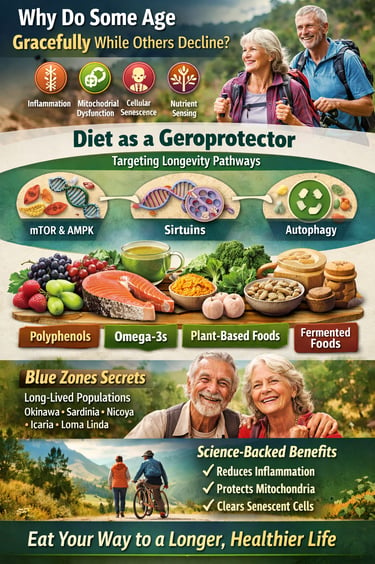
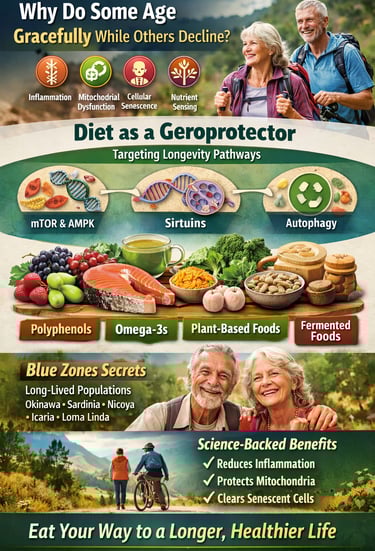
Why do some individuals reach their eighth or ninth decade with sharp cognition, metabolic resilience, and physical independence, while others develop cardiovascular disease, diabetes, sarcopenia, and neurodegeneration decades earlier? Modern aging science suggests the answer lies less in chronological time and more in biological aging—an intricate process shaped by inflammation, mitochondrial dysfunction, cellular senescence, and dysregulated nutrient sensing. Increasingly, research points to diet not merely as fuel, but as a programmable biological signal capable of modulating these fundamental hallmarks of aging (Davinelli et al., 2025).
The concept of an antiaging diet has therefore evolved beyond antioxidants and calorie counting toward geroprotection—the strategic use of dietary patterns and bioactive compounds that slow aging trajectories and extend healthspan. Polyphenols, omega-3 fatty acids, caloric restriction mimetics, and fiber-rich plant foods act on longevity pathways such as mTOR, AMPK, sirtuins, and autophagy, directly influencing oxidative stress, inflammaging, insulin resistance, and epigenetic regulation (Moskalev & Veselova, 2025).
Remarkably, these mechanisms are not theoretical. They are observed in long-lived populations from the Blue Zones, where diets rich in legumes, vegetables, herbs, extra virgin olive oil, tea, and fermented foods correlate with exceptional longevity and reduced burden of age-related diseases (Davinelli et al., 2025). Experimental and clinical evidence further demonstrates that dietary polyphenols—resveratrol, quercetin, curcumin, and catechins—exert multitarget effects on mitochondrial health, senescent cell signaling, and chronic low-grade inflammation (Proshkina et al., 2024).
This article explores how an evidence-based geroprotective diet functions at the cellular level, why whole-food dietary diversity outperforms isolated supplements, and how personalized nutrition may redefine longevity medicine in the coming decades globally.
Clinical Pearls :
1. Prioritize the "Whole Package" Over the Pill
The Science: Isolated supplements often lack the "food matrix"—the complex structure of fibers, fats, and secondary compounds that guide nutrients to your cells.
The Pearl: Think of a whole orange as a complete delivery system; a Vitamin C pill is just the passenger. Whenever possible, eat the whole food rather than taking the extract. The natural synergy between compounds in a blueberry is far more effective at "talking" to your genes than a standalone polyphenol supplement.
2. Feed Your Gut to Unlock Your Medicine
The Science: Many geroprotectors, like those in pomegranates or tea, are "pro-nutrients" that require specific gut bacteria to transform them into their active, anti-aging forms (like Urolithin A).
The Base: If your gut microbiome isn't healthy, you won't reap the full benefits of a longevity diet. To maximize your "return on investment" from healthy eating, include fermented foods (kimchi, kefir) and diverse fibers to ensure your internal "pharmacy" is open for business.
3. Activate Your "Cellular Recycling" Mode
The Science: Compounds like spermidine (found in aged cheese and mushrooms) act as "caloric restriction mimetics," triggering autophagy—the process where cells identify and repair broken components.
The Pearl: You don't necessarily have to starve to trigger cellular cleaning. By incorporating foods that mimic fasting signals, you can encourage your body to "take out the trash" at a cellular level, preventing the buildup of damaged proteins that lead to age-related decline.
4. Silence the "Silent Fire" (Inflammaging)
The Science: Aging is often driven by inflammaging—a low-grade, chronic inflammatory state that acts like a slow-moving fire, damaging healthy tissue over decades.
The Pearl: Treat your meals like a natural fire extinguisher. Using Extra Virgin Olive Oil (EVOO) as your primary fat and consuming fatty fish twice a week provides the "molecular water" needed to dampen this chronic inflammation before it leads to joint, heart, or brain issues.
5. Aim for Diversity, Not Perfection
The Science: Aging is "pleiotropic," meaning it happens through many different pathways at once. No single "superfood" can cover every hallmark of aging.
The Pearl: Don't get stuck eating only kale. The most resilient people in Blue Zones eat a "rainbow" of at least 30 different plants per week. Each color represents a different defense team for your cells. The more variety you have on your plate, the more "biological shields" you have guarding your longevity.
Antiaging Diet as a Geroprotector: What Science Says About Eating Your Way to Longevity
What Are Geroprotectors, Anyway?
Before we explore the dinner menu that could add years to your life, let's get clear on terminology. Geroprotectors are substances that slow down the aging process and reduce age-related diseases. Think of them as your body's defense system against time itself. While pharmaceutical geroprotectors exist, the most accessible and perhaps most powerful ones come from what you eat every day—your dietary geroprotectors.
The exciting news? You don't need expensive supplements or futuristic treatments. The answer lies in polyphenols, bioactive compounds found abundantly in everyday foods, and strategic dietary patterns that have kept certain populations healthy for centuries.
The Blue Zones Blueprint: Where Diet Meets Longevity
Let's start our journey where people are already winning the aging game. Davinelli et al. (2025) conducted groundbreaking research examining dietary polyphenols in the world's Blue Zones—regions where people routinely live past 100 with remarkable health. These areas include Okinawa (Japan), Sardinia (Italy), Nicoya (Costa Rica), Icaria (Greece), and Loma Linda (California).
Key Findings from the Blue Zones Study
What makes Blue Zone diets special? It's not just one magic ingredient but a symphony of polyphenol-rich foods working together. The research reveals that these populations consume diets extraordinarily high in plant-based foods containing diverse polyphenolic compounds.
In Okinawa, the traditional diet features sweet potatoes, soybeans, and bitter melon—all loaded with flavonoids and phenolic acids. Sardinians consume substantial amounts of red wine rich in resveratrol and procyanidins, along with goat's milk and pecorino cheese. A2casein protein found in goat's and sheep's milk is thought to be more easily digested than the A1 variant often found in modern cow's milk. The Nicoya diet emphasises corn tortillas with lime (which increases calcium bioavailability), beans, and tropical fruits packed with anthocyanins and ellagitannins.
The researchers connected these dietary patterns to the hallmarks of aging—the fundamental cellular and molecular processes that drive how we age. These hallmarks include genomic instability, telomere attrition, epigenetic alterations, loss of proteostasis, disabled macroautophagy, deregulated nutrient sensing, mitochondrial dysfunction, cellular senescence, stem cell exhaustion, altered intercellular communication, chronic inflammation, and dysbiosis.
Key Takeaway: Blue Zone populations don't fight aging with single supplements—they consume a diverse array of polyphenol-rich whole foods that target multiple aging mechanisms simultaneously.
The Comprehensive Geroprotector Landscape
Moskalev and Veselova (2025) took a broader approach, systematically reviewing potential dietary geroprotectors and their impact on fundamental aging mechanisms. This research provides a comprehensive roadmap of how specific nutrients interact with our cellular aging machinery.
The Geroprotector All-Stars
The study identified several categories of dietary compounds with robust geroprotective properties:
Polyphenols emerged as front-runners, with compounds like resveratrol (found in grapes and berries), curcumin (from turmeric), quercetin (abundant in onions and apples), and epigallocatechin gallate or EGCG (from green tea) showing remarkable effects across multiple aging pathways.
Polyunsaturated fatty acids, particularly omega-3 fatty acids from fish and flaxseed, demonstrated significant effects on reducing chronic inflammation—a key driver of aging often called "inflammaging." These healthy fats also support mitochondrial function and cellular membrane integrity.
The research highlighted caloric restriction mimetics—compounds that produce benefits similar to calorie restriction without actually reducing food intake. These include spermidine (found in wheat germ, soybeans, and aged cheese), metformin (though primarily pharmaceutical), and various plant polyphenols.
Mechanisms of Action
What fascinated researchers was how these dietary geroprotectors work at the molecular level. Many activate cellular stress response pathways like autophagy—your cells' recycling system that clears out damaged components. Others modulate nutrient-sensing pathways including mTOR, AMPK, and sirtuins, essentially recalibrating how your cells respond to nutrients and energy.
Several compounds demonstrated senolytic properties—the ability to clear senescent cells (zombie cells that accumulate with age and secrete inflammatory factors). Others showed mitochondrial protection, preserving the power plants of your cells that decline with aging.
Key Takeaway: The most effective antiaging diet incorporates multiple categories of geroprotectors that work synergistically on different aging mechanisms, rather than relying on any single compound.
Polyphenols: The Geroprotective Powerhouses
Proshkina et al. (2024) provided the most detailed examination of polyphenols as geroprotectors, reviewing their effects across various model organisms and potential applications in human aging.
The Polyphenol Family Tree
Polyphenols represent a diverse family of over 8,000 compounds found in plants. The research categorized them into major classes:
Flavonoids (including flavonols, flavones, flavanones, flavan-3-ols, anthocyanins, and isoflavones) constitute the largest group. You'll find these in tea, cocoa, berries, citrus fruits, and soybeans. Each subclass offers unique benefits—anthocyanins provide the purple pigment in blueberries and support cardiovascular health, while isoflavones from soy show hormonal balancing effects.
Phenolic acids like chlorogenic acid (abundant in coffee) and caffeic acid demonstrate potent antioxidant and anti-inflammatory properties.
Stilbenes, with resveratrol as the star member, activate longevity pathways and have been extensively studied for their lifespan extension properties in various organisms.
Lignans found in flaxseeds and whole grains show protective effects against hormone-related cancers and cardiovascular disease.
Laboratory Evidence and Human Translation
The research presented compelling evidence from model organisms. In yeast, worms (C. elegans), fruit flies (Drosophila), and mice, various polyphenols extended lifespan by 10-30% depending on the compound and dosage. More importantly, they extended healthspan—the period of life spent in good health—not just lifespan.
Resveratrol activated sirtuins (particularly SIRT1), proteins that regulate cellular metabolism and stress resistance. Quercetin combined with dasatinib showed senolytic effects, clearing aged cells in mouse models. EGCG from green tea improved mitochondrial function and reduced oxidative stress.
Nutraceuticals: The Geroprotective Bridge Between Food and Medicine
Recent research by Rivero-Segura et al. (2024) expands our understanding of geroprotective compounds by examining nutraceuticals—bioactive substances derived from food sources that provide medical or health benefits beyond basic nutrition.
Key Findings from the Nutraceuticals Study
This comprehensive review identified several nutraceutical geroprotectors that show remarkable promise for healthy aging. The researchers emphasized compounds like resveratrol, curcumin, omega-3 fatty acids, coenzyme Q10, and various vitamins that target specific aging mechanisms.
What sets this research apart is its focus on practical application. The study examined how these nutraceuticals affect cellular senescence, mitochondrial function, and oxidative stress—key drivers of aging—while also evaluating their safety profiles and optimal dosing strategies for humans.
The researchers highlighted that nutraceuticals occupy a unique space between conventional foods and pharmaceuticals, offering concentrated geroprotective benefits with generally favorable safety profiles. They noted that combinations of nutraceuticals may work synergistically, providing enhanced benefits compared to single compounds.
Key Takeaway: Nutraceuticals represent a practical, accessible approach to geroprotection, offering concentrated doses of beneficial compounds found in whole foods, though the research emphasizes they work best as part of a comprehensive antiaging dietary strategy rather than as replacements for healthy eating patterns.
This finding reinforces the comprehensive approach outlined throughout this article—while whole foods form the foundation, strategic use of nutraceutical supplements may enhance geroprotective effects when whole food sources are insufficient or when targeting specific aging pathways.
The Human Connection
While animal studies are promising, the researchers emphasized that human translation requires consideration of bioavailability—how much of these compounds actually get absorbed and reach target tissues. Most polyphenols have relatively low bioavailability, but the gut microbiome metabolizes them into more absorbable forms. This highlights the importance of gut health in geroprotection.
Epidemiological studies show strong correlations between high polyphenol intake and reduced risk of age-related diseases including cardiovascular disease, neurodegenerative conditions, type 2 diabetes, and certain cancers. However, the researchers noted that whole food sources provide superior benefits compared to isolated supplements, likely due to synergistic effects among multiple compounds.
Key Takeaway: Polyphenols work through multiple mechanisms—activating longevity pathways, clearing damaged cells, protecting mitochondria, and reducing inflammation—making them ideal candidates for an antiaging dietary strategy.
Building Your Geroprotective Plate
So how do you translate this science into practical eating strategies? Here's your comprehensive guide to constructing an antiaging diet based on these three major studies.
The Foundation: Plant Diversity
All three studies emphasize that diversity matters enormously. Different polyphenols target different aging mechanisms, so eating a rainbow of plant foods ensures comprehensive coverage. Aim for at least 30 different plant foods weekly—yes, herbs and spices count!
Berries should be daily staples. Blueberries, strawberries, blackberries, and raspberries pack concentrated anthocyanins and ellagitannins. Frozen berries retain most polyphenols and offer year-round availability.
Leafy greens and cruciferous vegetables provide flavonols like quercetin and kaempferol, plus sulforaphane (a different geroprotective compound). Think kale, spinach, arugula, broccoli, and Brussels sprouts.
Legumes appear prominently in Blue Zones for good reason—they're rich in polyphenols, fiber, and plant protein while being caloric restriction mimetics due to their effect on satiety and blood sugar regulation
.
The Flavor Enhancers: Herbs and Spices
Turmeric containing curcumin deserves special mention. Combine it with black pepper (containing piperine) to increase absorption by 2,000%. Add it to curries, smoothies, or golden milk.
Green tea provides EGCG and other catechins. Three to five cups daily appears optimal in research studies. Matcha offers higher concentrations since you consume the whole leaf.
Extra virgin olive oil is the fat of choice in Mediterranean Blue Zones, rich in oleocanthal and oleuropein—polyphenols with anti-inflammatory properties comparable to ibuprofen.
The Protein Strategy
While Blue Zones emphasize plant proteins, they're not strictly vegetarian. The key is moderation and quality. Omega-3 rich fish like salmon, sardines, and mackerel provide crucial polyunsaturated fatty acids. Aim for two to three servings weekly.
Fermented soy products (tempeh, natto, miso) offer isoflavones in forms with enhanced bioavailability. They also support gut microbiome health—critical for polyphenol metabolism.
The Beverage Choices
Coffee emerges as a geroprotective beverage across all studies, rich in chlorogenic acid and other polyphenols. Three to four cups daily associates with reduced mortality risk, though individual tolerance varies.
Red wine in moderation (one glass daily, particularly with meals) provides resveratrol and procyanidins. However, the alcohol content means this isn't universally recommended—grape juice or dealcoholized wine may offer similar polyphenol benefits without alcohol risks.
What to Minimize
The research consistently shows that processed foods, excessive added sugars, and refined carbohydrates accelerate aging through glycation (forming harmful AGEs—advanced glycation end products), inflammation, and metabolic dysfunction. An antiaging diet naturally crowds these out by emphasizing whole foods.
The Synergy Factor: Why Whole Foods Wins
A crucial insight across all three studies: whole foods outperform isolated supplements. Why? The research suggests several mechanisms:
Polyphenol diversity creates synergistic effects where compounds enhance each other's absorption and activity. The food matrix—the physical structure of whole foods—affects bioavailability. Fibre, fats, and other components influence the absorption and metabolism of polyphenols.
The gut microbiome plays a starring role, transforming polyphenols into more bioavailable metabolites. Whole food diets support beneficial bacteria that enhance this conversion, while also providing prebiotics that feed these microbes.
Beyond Polyphenols: The Complete Picture
While polyphenols dominate geroprotective research, the studies emphasize they're part of a broader dietary pattern. Fiber supports gut health and promotes satiety. Minerals like magnesium and potassium affect hundreds of enzymatic reactions. B vitamins support DNA repair and methylation—key epigenetic processes.
The timing of eating may matter too. Some research suggests that mild intermittent fasting or time-restricted eating enhances autophagy and other geroprotective pathways, potentially amplifying the benefits of dietary polyphenols.
The Personalization Principle
Individual responses to dietary geroprotectors vary based on genetics, gut microbiome composition, existing health conditions, and lifestyle factors. What works optimally in Sardinia may need adjustment for your biochemistry.
Consider working with a nutritionist familiar with antiaging nutrition to personalize your approach. Biomarkers like inflammatory markers (C-reactive protein), metabolic markers (HbA1c, lipids), and even emerging markers of biological age can help track your response.
Common Pitfalls to Avoid
Supplement obsession: While supplements can fill gaps, they shouldn't replace whole foods. Many polyphenol supplements have poor bioavailability, and high doses may cause adverse effects.
All-or-nothing thinking: Perfection isn't the goal. An antiaging diet is about consistent patterns, not occasional indulgences. The Blue Zones show that 80-90% adherence to healthy eating patterns correlates with longevity benefits.
Ignoring other lifestyle factors: Diet is crucial but works synergistically with exercise, stress management, sleep quality, and social connections—all prominent in Blue Zones.
Frequently Asked Questions
Q: How quickly will I see benefits from an antiaging diet?
A: Some markers improve within weeks—inflammation and oxidative stress markers can decrease measurably in 2-4 weeks. Metabolic improvements like blood sugar regulation may appear within months. However, the full geroprotective effects accumulate over years of consistent dietary patterns. Think marathon, not sprint.
Q: Are polyphenol supplements as good as whole foods?
A: Research consistently shows whole foods provide superior benefits. Supplements may have lower bioavailability, lack synergistic compounds present in whole foods, and miss the gut microbiome benefits of fiber and other food components. Supplements can supplement (not replace) a polyphenol-rich diet when whole food sources are insufficient.
Q: Can I undo decades of poor diet with geroprotective eating?
A: It's never too late to benefit! Studies show that adopting healthier eating patterns at any age provides benefits. While earlier is better, even changes made in middle age or later reduce disease risk and may slow aging processes. Your cells are constantly renewing, and dietary changes affect these new cells immediately.
Q: Do I need to eat like Blue Zones populations exactly?
A: The principles matter more than precise replication. Focus on high plant food diversity, regular legume consumption, healthy fats, moderate alcohol (if any), and whole foods while minimizing processed foods. Adapt to your food culture, preferences, and availability.
Q: How much does diet matter compared to genetics?
A: While genetics influence longevity, lifestyle factors including diet account for 70-80% of variation in how we age. Epigenetics shows that diet can influence gene expression, essentially modifying how your genetic blueprint manifests. You're not a prisoner of your genes.
Q: Are there any risks to geroprotective diets?
A: Whole food-based antiaging diets are generally safe for most people. However, those with specific medical conditions, taking certain medications, or with allergies should consult healthcare providers. Very high polyphenol intakes (typically only achievable through supplements) may interfere with iron absorption or certain medications.
Key Takeaways
Dietary geroprotectors, particularly polyphenols, work through multiple mechanisms to slow aging and prevent age-related diseases
Blue Zones demonstrate that diverse, plant-based diets rich in polyphenols support exceptional longevity and healthspan
Polyphenols target all major hallmarks of aging, including inflammation, oxidative stress, cellular senescence, and mitochondrial dysfunction
Whole foods provide superior benefits to isolated supplements due to synergistic effects and enhanced bioavailability
An effective antiaging diet includes diverse colorful plants, legumes, green tea, extra virgin olive oil, omega-3 rich fish, herbs, and spices
Consistency matters more than perfection—sustainable dietary patterns followed over years provide cumulative geroprotective benefits
Individual responses vary, suggesting personalized approaches optimized for your genetics, microbiome, and health status may offer maximum benefits
Geroprotective nutrition works best integrated with other healthy lifestyle factors including exercise, stress management, quality sleep, and social connections
Your Action Plan: Starting Your Geroprotective Journey
Ready to transform your plate into a longevity laboratory? Here's your roadmap:
This Week: Add one new polyphenol-rich food daily. Try blueberries with breakfast, a side of sautéed greens with dinner, or swap your afternoon coffee for green tea.
This Month: Assess your plant diversity. Can you hit 30 different plant foods weekly? Start a food journal noting different plants consumed. Include herbs and spices in your count.
This Quarter: Experiment with Blue Zone-inspired meals. Try Sardinian minestrone, Okinawan sweet potato dishes, or Costa Rican rice and beans with colorful vegetables.
Ongoing: Stay curious about emerging research. The field of geroprotective nutrition evolves rapidly, with new discoveries about optimal combinations, preparation methods, and personalization strategies emerging regularly.
Author’s Note
This article was written to bridge the gap between cutting-edge geroscience and practical, evidence-based nutrition. Aging is not a singular, inevitable process—it is a biologically modifiable trajectory influenced by inflammation, metabolic health, mitochondrial function, and cellular resilience. The dietary strategies discussed here are grounded in peer-reviewed human, translational, and mechanistic research, with particular emphasis on polyphenols, whole-food dietary patterns, and nutrient-sensing pathways relevant to longevity and healthspan.
While the concept of an “antiaging diet” is often diluted by marketing and oversimplification, the science tells a more nuanced and powerful story: food acts as a molecular signal that can modulate the hallmarks of aging. This article intentionally prioritizes whole foods over supplements, diversity over single nutrients, and long-term dietary patterns over short-term interventions.
The information presented is intended for educational purposes and to encourage informed discussions between readers, clinicians, and nutrition professionals. Individual responses to dietary interventions vary based on genetics, gut microbiome composition, existing health conditions, and lifestyle factors; therefore, personalization remains essential.
Ultimately, longevity is not about chasing immortality—it is about preserving function, independence, and quality of life. If this article helps readers view each meal as an opportunity to support cellular health and long-term resilience, it has achieved its purpose.
Disclaimer: This article is for informational purposes only and does not constitute medical advice. Individual circumstances vary, and treatment decisions should always be made in consultation with qualified healthcare professionals.
Related Articles
Time-Restricted Eating: Metabolic Advantage or Just Fewer Calories? | DR T S DIDWAL
Can You Revitalize Your Immune System? 7 Science-Backed Longevity Strategies | DR T S DIDWAL
Exercise and Longevity: The Science of Protecting Brain and Heart Health as You Age | DR T S DIDWAL
Light and Longevity: Can Sunlight Slow Cellular Aging? | DR T S DIDWAL
The Science of Healthy Brain Aging: Microglia, Metabolism & Cognitive Fitness | DR T S DIDWAL
You Are What You Eat: 5 Science-Backed Ways to Optimize Your Diet Now | DR T S DIDWAL
References
Davinelli, S., Medoro, A., Hu, F. B., & Scapagnini, G. (2025). Dietary polyphenols as geroprotective compounds: From Blue Zones to hallmarks of ageing. Ageing Research Reviews, 108, 102733. https://doi.org/10.1016/j.arr.2025.102733
Moskalev, A., & Veselova, O. (2025). Potential dietary geroprotectors and their impact on key mechanisms of aging. Biogerontology, 27(1), 8. https://doi.org/10.1007/s10522-025-10355-3
Proshkina, E., Koval, L., Platonova, E., et al. (2024). Polyphenols as potential geroprotectors. Antioxidants & Redox Signaling, 40(7-9), 564-593. https://doi.org/10.1089/ars.2023.0247
Rivero-Segura, N. A., Zepeda-Arzate, E. A., Castillo-Vazquez, S. K., Fleischmann-delaParra, P., Hernández-Pineda, J., Flores-Soto, E., García-delaTorre, P., Estrella-Parra, E. A., & Gomez-Verjan, J. C. (2024). Exploring the Geroprotective Potential of Nutraceuticals. Nutrients, 16(17), 2835. https://doi.org/10.3390/nu16172835