The Dietary Patterns That Reduce Oxidative Stress and Restore Metabolic Health
Discover how evidence-based dietary patterns reduce oxidative stress, improve insulin sensitivity, lower inflammation, and restore long-term metabolic health.
NUTRITION
Dr. T.S. Didwal, M.D.(Internal Medicine)
2/5/202616 min read
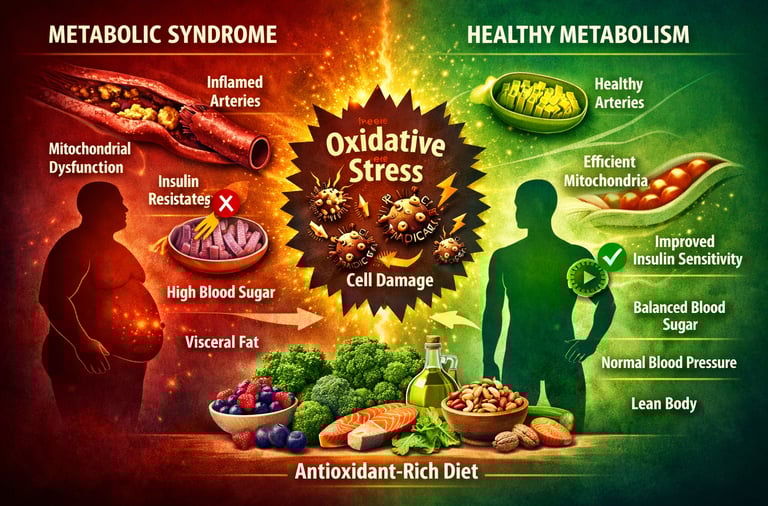
Imagine your metabolism as a finely tuned, high-performance engine. When it runs clean, fuel is efficiently converted into energy, pressure stays regulated, and the system lasts for decades. Metabolic syndrome represents what happens when that engine begins to corrode from the inside—slowly, silently, and relentlessly. This internal corrosion is not mechanical but biochemical, driven by chronic oxidative stress and low-grade inflammation that gradually erode insulin sensitivity, damage blood vessels, and destabilize blood pressure (Onu et al., 2025).
For years, metabolic syndrome has been described as a simple cluster of numbers—waist circumference, fasting glucose, triglycerides, HDL cholesterol, blood pressure. Yet mounting evidence suggests these are merely surface markers of a deeper pathology. At its core, metabolic syndrome is a state of redox imbalance, where excess free radical production overwhelms the body’s antioxidant defenses, triggering mitochondrial dysfunction, endothelial injury, and metabolic inflexibility (Castro-Barquero et al., 2020).
What makes this insight transformative is not the problem—but the solution. Unlike genetic risk or aging itself, oxidative stress is exquisitely sensitive to daily dietary choices. Large reviews and meta-analyses now demonstrate that specific dietary patterns can rapidly reduce oxidative stress biomarkers, suppress inflammatory signaling, and improve insulin sensitivity—often within weeks (Lv et al., 2025; Liu et al., 2021). Even more striking, fiber- and polyphenol-rich foods reshape the gut microbiome into a metabolically protective organ, generating postbiotics that actively counter inflammation and oxidative damage (Dubey & Singh, 2025).
This reframes diet entirely. Food is no longer just fuel or calories—it is molecular instruction. Every meal either accelerates metabolic corrosion or initiates cellular repair. Understanding this distinction marks the turning point between managing metabolic syndrome and reversing it at its biological root.
Clinical pearls
1. Think of Veggies as "Internal Sunscreen"
Just as sunscreen protects your skin from external damage, the antioxidants in colorful vegetables protect your internal cells from oxidative stress. Research (Onu et al., 2025) shows that dietary antioxidants work at a molecular level to neutralize "free radicals"—the tiny sparks that cause metabolic inflammation.
The Pearl: The deeper the color (purple cabbage, dark kale, beets), the stronger the protective "SPF" for your metabolism.
2. Your Gut Bacteria are "Postbiotic" Pharmacies
When you eat fiber-rich foods like lentils or oats, you aren't just feeding yourself; you are feeding a bacterial ecosystem. As highlighted by Dubey and Singh (2025), these bacteria ferment fiber into postbiotics, which act like natural anti-inflammatory medicine circulating in your blood.
The Pearl: Fiber isn't just for "regularity"; it’s the raw material your gut needs to manufacture its own metabolic healing compounds.
3. Extra Virgin Olive Oil is a Molecular "Off-Switch"
Metabolic syndrome is often a state of "chronic fire" (inflammation). Extra virgin olive oil (EVOO) contains unique polyphenols that specifically inhibit inflammatory enzymes. In the Mediterranean framework, EVOO isn't a condiment; it’s a primary delivery system for oxidative stress fighters.
The Pearl: To keep these "off-switches" intact, use your best olive oil raw—drizzled over food after cooking—as high heat can break down these delicate medicinal compounds.
4. Spikes in Blood Sugar are "Oxidative Storms"
Every time blood sugar spikes rapidly from refined carbs or sugar, it forces your mitochondria (your cell's power plants) to overwork, leading to a "leak" of free radicals. Choosing low-glycemic foods like beans and whole grains keeps the "engine" running smoothly without the exhaust of oxidative stress.
The Pearl: Stability is the goal. A steady blood sugar level prevents the "oxidative storms" that damage your arteries and insulin sensitivity.
5. Quality Outperforms the Calorie Count
For metabolic syndrome, a calorie is not just a calorie. The Dietary Inflammatory Index (Liu et al., 2021) proves that 500 calories of processed food actively promote disease, while 500 calories of a Mediterranean-style meal actively reverse it.
The Pearl: Focus on the source of the energy rather than the amount. High-quality, anti-inflammatory foods naturally signal "fullness" to your brain, making weight management a side effect of healing rather than a struggle of willpower.
Metabolic Syndrome Management: Dietary Solutions for Oxidative Stress Reduction and Long-Term Health
Before exploring solutions, it's crucial to understand why diet emerges as the dominant intervention. Metabolic syndrome represents more than just isolated risk factors—it's a systemic condition fundamentally rooted in oxidative stress and chronic inflammation. One critical mechanism driving metabolic dysfunction is the cellular imbalance between harmful free radicals and protective antioxidants in your body.
When oxidative stress increases, systemic inflammation follows. This inflammatory state perpetuates the cycle of metabolic dysfunction. Here's the critical insight: dietary choices directly control oxidative stress levels through the foods we consume. The foods you eat either generate free radicals and oxidative stress or provide antioxidant protection. Unlike exercise, which has indirect metabolic effects, dietary interventions work at the molecular level to immediately reduce oxidative stress through nutrient delivery.
This is why recent research has pivoted toward dietary strategies as primary interventions for metabolic syndrome management. The food on your plate is literally shaping your oxidative stress burden, inflammatory state, and metabolic health trajectory.
Key Research Findings on Dietary Interventions for Oxidative Stress
1. Integrative Strategies: The Foundational Role of Dietary Modification
Onu et al. (2025) published a comprehensive review in Life examining integrative strategies for preventing and managing metabolic syndrome with particular emphasis on how diet and exercise impact oxidative stress reduction. However, their analysis reveals a critical hierarchy: dietary modification emerges as the primary driver of oxidative stress reduction, with exercise providing complementary support.
Key Takeaways:
Dietary interventions are the primary mechanism for reducing oxidative stress markers in metabolic syndrome
Specific food choices directly suppress free radical production and enhance antioxidant capacity
Oxidative stress reduction through diet produces measurable improvements in metabolic parameters within weeks
Nutritional antioxidants from whole foods outperform exercise alone in combating oxidative stress
The synergistic effect occurs when dietary antioxidants combine with moderate exercise for maximum oxidative stress management
Long-term metabolic improvement depends primarily on sustained dietary modification and exercise consistency
This research establishes that the food you consume represents your most powerful weapon against the oxidative stress destroying your metabolic health. Every meal is an opportunity to reduce free radical burden or increase it—the choice is entirely yours through dietary selection.
2. Comprehensive Dietary Strategies: A Framework for Metabolic Recovery
Castro-Barquero et al. (2020) delivered a thorough examination of dietary strategies for metabolic syndrome in Nutrients, providing practitioners and patients with evidence-based nutritional frameworks that directly address oxidative stress and inflammation. This seminal work reveals that specific dietary patterns produce superior metabolic outcomes through targeted nutritional intervention.
Key Takeaways:
Dietary pattern selection is the foundational intervention for metabolic syndrome reversal
Whole food nutrition provides dense antioxidant and anti-inflammatory compounds unavailable in processed alternatives
Specific macronutrient ratios within dietary patterns directly influence metabolic syndrome component improvement
Plant-based foods rich in polyphenols act as powerful oxidative stress fighters within the metabolic syndrome pathway
Dietary choices directly modify inflammatory markers more effectively than any pharmaceutical intervention
Food quality and composition determine your metabolic trajectory more significantly than caloric content or exercise frequency
Their comprehensive review establishes dietary strategy as the primary, evidence-based pathway to metabolic health improvement, demonstrating that informed food choices represent the most accessible and sustainable intervention for reversing metabolic syndrome.
3. Gut Microbiome Health: How Diet Creates Metabolic Healing Through Bacterial Ecosystems
Dubey and Singh (2025) explored a revolutionary frontier in metabolic syndrome treatment through the lens of dietary impact on gut microbiome health, postbiotics, and innovative supplementation strategies in their chapter for Gut Health and Metabolic Syndrome. This research reveals a critical truth: your dietary choices directly shape your gut bacteria, and gut microbiome composition fundamentally determines your oxidative stress levels and metabolic health.
Key Takeaways:
Dietary composition directly determines gut microbiome diversity and bacterial species abundance
Fiber-rich dietary patterns feed beneficial bacteria that produce postbiotics, which reduce systemic oxidative stress
Polyphenol-rich foods (berries, tea, wine, vegetables) selectively nourish antioxidant-producing bacteria
Gut dysbiosis (bacterial imbalance) directly increases oxidative stress and metabolic dysfunction
Dietary strategies targeting gut health produce superior metabolic outcomes by addressing the gut-metabolism axis
Specific dietary components—particularly resistant starch and soluble fiber—feed bacteria that produce anti-inflammatory compounds
Postbiotic production through diet-driven bacterial metabolism directly reduces oxidative stress biomarkers
Food-based interventions for gut health outperform isolated probiotic supplements because they address root dietary causes
This groundbreaking research demonstrates that your dietary choices literally reshape the bacterial ecosystem in your gut. By selecting fiber-rich, polyphenol-dense foods, you're strategically cultivating a microbial community that produces compounds actively fighting oxidative stress and inflammation within your body. This represents a paradigm shift: diet doesn't just provide nutrients—it engineers your gut microbiome to produce additional metabolic healing compounds.
4. Comparative Effectiveness: Which Dietary Patterns Deliver Superior Oxidative Stress Reduction
Lv et al. (2025) conducted a sophisticated network meta-analysis published in Frontiers in Nutrition, comparing the effects of different dietary patterns on metabolic syndrome outcomes with rigorous statistical methodology. This advanced analytical approach reveals which specific dietary approaches deliver superior results for oxidative stress reduction and metabolic improvement.
Key Takeaways:
Network meta-analysis demonstrates that certain dietary patterns consistently outperform others in reducing oxidative stress markers
Plant-forward dietary approaches show superior effectiveness compared to restrictive or processed-food-based patterns
Whole food density within dietary patterns directly correlates with oxidative stress reduction success
Sustained dietary pattern adherence produces exponentially greater metabolic improvement than sporadic compliance
Dietary pattern selection based on comparative evidence rather than trends significantly improves outcomes
Anti-inflammatory food components within superior dietary patterns create measurable reductions in free radical burden
Nutritional density of chosen dietary pattern is the primary predictor of metabolic syndrome reversal success
This rigorous comparative analysis empowers individuals to select dietary approaches backed by the strongest evidence for oxidative stress reduction, rather than relying on popular trends or anecdotal claims. The research is unambiguous: certain dietary patterns consistently outperform others because they provide superior antioxidant and anti-inflammatory nutrient density.
5. Mediterranean Diet: The Gold Standard Dietary Approach for Oxidative Stress Management
Bruna-Mejías et al. (2025) published a systematic review and meta-analysis in the International Journal of Molecular Sciences comparing the Mediterranean diet against other therapeutic strategies for metabolic syndrome. Their comprehensive analysis positions the Mediterranean dietary approach as the evidence-supported gold standard, particularly for oxidative stress reduction and long-term metabolic improvement.
Key Takeaways:
The Mediterranean diet demonstrates superior outcomes in metabolic syndrome reversal compared to all alternative dietary approaches
Mediterranean dietary components directly target oxidative stress reduction through specific antioxidant-rich foods
Extra virgin olive oil (primary Mediterranean fat) contains polyphenols with proven oxidative stress-fighting capabilities
Fatty fish consumption provides omega-3 polyunsaturated fats that reduce inflammatory markers and oxidative stress
Whole grain emphasis in the Mediterranean approach supplies sustained energy while maintaining stable blood sugar and reducing oxidative burden
High vegetable and legume intake delivers dense antioxidant polyphenols, flavonoids, and phytochemicals that directly fight free radicals
Red wine polyphenols in moderation provide resveratrol and other compounds with documented oxidative stress reduction properties
Mediterranean dietary nuts (almonds, walnuts) provide vitamin E, polyphenols, and anti-inflammatory compounds
Long-term adherence to the Mediterranean diet produces sustained metabolic improvement and oxidative stress reduction
The Mediterranean pattern's cultural flexibility enables sustainable long-term dietary modification for diverse populations
This research validates the Mediterranean diet as the scientifically supported, oxidative-stress-fighting dietary approach with the strongest evidence base. It's not trendy—it's proven. The specific combination of olive oil, fish, vegetables, whole grains, legumes, and moderate wine consumption creates a synergistic effect where multiple antioxidant compounds work together to combat oxidative stress at multiple biological levels.
6. Dietary Inflammatory Index: Quantifying Your Food's Impact on Oxidative Stress
Liu et al. (2021) conducted an umbrella review in Frontiers in Nutrition examining the dietary inflammatory index and associated health outcomes across numerous observational studies. This meta-analytical approach reveals exactly how dietary choices either promote or suppress systemic inflammation and oxidative stress—quantifying the molecular impact of food selection.
Key Takeaways:
The dietary inflammatory index provides a scientific framework for evaluating whether specific foods increase or decrease oxidative stress
Anti-inflammatory dietary patterns (characterized by low dietary inflammatory index scores) significantly reduce metabolic syndrome risk
Specific foods have documented pro-inflammatory or anti-inflammatory effects measured through oxidative stress biomarkers
Processed foods, refined carbohydrates, and trans fats actively increase free radical production and oxidative stress burden
Whole foods, vegetables, fruits, nuts, and healthy oils actively suppress inflammation and reduce oxidative stress markers
Food combinations within meals influence their cumulative oxidative stress impact
Consistent dietary inflammatory index awareness enables daily food choices that systematically reduce oxidative burden
Individual food selection based on inflammatory index scores produces measurable reductions in circulating inflammatory markers
This comprehensive review demonstrates a revolutionary concept: food is literal medicine at the molecular level. Each food you consume has a documented inflammatory and oxidative stress effect. By understanding the dietary inflammatory index, you can make daily food choices that systematically reduce the oxidative stress destroying your metabolic health. This transforms eating from a habit into a targeted therapeutic intervention.
The Dietary Mechanisms of Oxidative Stress Reduction
To truly harness diet's power against metabolic syndrome, understanding the specific mechanisms is essential. Here's how dietary interventions combat oxidative stress:
1 .Antioxidant Nutrient Delivery
Dietary antioxidants—including vitamins C and E, beta-carotene, polyphenols, flavonoids, and minerals like selenium and zinc—directly neutralize free radicals. By consuming antioxidant-rich whole foods, you're literally supplying your cells with the compounds needed to suppress oxidative stress. A single serving of berries contains more antioxidant power than most supplements because whole foods provide nutrient combinations that work synergistically.
2 .Inflammation Suppression Through Polyphenol Density
Polyphenol-rich foods (berries, dark chocolate, tea, red wine, olive oil, nuts) contain hundreds of compounds with anti-inflammatory and antioxidant effects. These aren't just nutrients—they're bioactive plant compounds that actively suppress the inflammatory cascade driving metabolic syndrome. Research shows that high-polyphenol dietary patterns reduce inflammatory markers more effectively than anti-inflammatory medications for many individuals.
3 .Insulin Sensitivity and Metabolic Stability
Dietary fiber and low glycemic index foods maintain stable blood sugar, which directly reduces oxidative stress. High blood glucose produces excessive free radicals through multiple metabolic pathways. By consuming whole grains, legumes, and vegetables that maintain steady glucose levels, you're preventing the oxidative stress spike that refined carbohydrates trigger.
4 .Gut Microbiome Engineering for Oxidative Stress Reduction
As discussed earlier, specific dietary components (soluble fiber, resistant starch, polyphenols) feed beneficial bacteria that produce postbiotics and short-chain fatty acids. These bacterial metabolites directly reduce intestinal permeability, suppress systemic inflammation, and decrease circulating free radicals. Your dietary choices literally engineer a healing microbiome.
5 .Mitochondrial Function and Energy Production
Nutrient-dense whole foods (particularly those rich in B vitamins, magnesium, and CoQ10 precursors) optimize mitochondrial function. Healthy mitochondria produce energy efficiently with minimal free radical leakage. Conversely, processing nutrient-poor foods forces mitochondria into stressed states, generating excessive oxidative stress. Dietary quality directly determines mitochondrial health and oxidative burden.
Practical Dietary Implementation: Converting Science into Daily Action
The Antioxidant-Dense Plate Framework
Build every meal around these oxidative-stress-fighting food categories:
Vegetables Prioritize deep colors (dark leafy greens, purple cabbage, red peppers, orange carrots). These colors indicate high polyphenol and antioxidant density. Aim for 7-10 servings daily—vegetables are your primary oxidative stress-fighting tool. Include cruciferous vegetables (broccoli, Brussels sprouts) which activate cellular detoxification pathways.
Berries (Daily): Blueberries, raspberries, and blackberries rank among the highest in antioxidant capacity. Consume fresh or frozen daily (½-1 cup minimum). These small fruits pack tremendous antioxidant firepower for metabolic healing.
Fatty Fish (3+ Times Weekly): Salmon, mackerel, sardines, and herring provide omega-3 polyunsaturated fats and reduce inflammatory markers. These anti-inflammatory compounds directly combat oxidative stress in cardiovascular and metabolic tissues.
Extra Virgin Olive Oil (2-3 Tablespoons Daily): This polyphenol powerhouse provides compounds documented to reduce oxidative stress markers. Use as salad dressing base, drizzle on vegetables, or add to soups. Heat damages polyphenols, so prioritize raw olive oil consumption.
Nuts and Seeds (1 Ounce Daily): Almonds, walnuts, flaxseeds, and chia seeds provide vitamin E, polyphenols, and anti-inflammatory fats. These nutrient-dense foods support sustained oxidative stress reduction.
Whole Grains (3-4 Servings Daily): Oats, quinoa, brown rice, and whole wheat bread maintain stable blood glucose and provide antioxidant minerals like manganese. The fiber content feeds beneficial gut bacteria.
Legumes (4-5 Times Weekly): Beans, lentils, and chickpeas provide fiber, polyphenols, and resistant starch that feed oxidative-stress-reducing bacteria. These affordable proteins are among the most underutilised metabolic healing foods.
Tea and Coffee (Daily): Green and black tea contain powerful polyphenols and catechins. Coffee provides chlorogenic acid and polyphenols. Consume 2-4 cups daily without excessive sugar to harness their antioxidant benefits.
Dark Chocolate: 70% cacao or higher delivers epicatechin and polyphenols with documented oxidative stress reduction effects.
Foods to Minimize or Eliminate
These oxidative-stress-generating foods actively increase free radical burden:
Processed foods and ultra-processed products that contain seed oils, refined carbohydrates, and additives
Refined sugars and refined grains that spike blood glucose and generate oxidative stress
Trans fats and partially hydrogenated oils that increase free radical production
Charred or heavily cooked meats that produce advanced glycation end products (AGEs) and oxidative stress
High-sodium processed foods that increase the inflammatory burden
Excessive alcohol beyond moderate consumption
A Practical Day of Antioxidant Eating for Metabolic Healing
Breakfast: Oatmeal with blueberries, almonds, ground flaxseed, and a drizzle of raw honey. Green tea.
Mid-Morning Snack: Apple with almond butter.
Lunch: Large mixed-greens salad with grilled salmon, extra virgin olive oil and lemon dressing, whole grain bread.
Afternoon Snack: Berries and walnuts.
Dinner: Grilled white fish, roasted broccoli and purple cabbage with olive oil, quinoa, side salad.
Evening: Dark chocolate square (70% cacao) with herbal tea.
This pattern delivers dense antioxidant polyphenols, anti-inflammatory compounds, and oxidative-stress-fighting nutrients throughout the day, systematically reducing free radical burden and supporting metabolic recovery.
Dietary Timing and Metabolic Optimization
Beyond food selection, dietary timing influences oxidative stress:
Consistent meal timing maintains stable blood sugar and reduces metabolic stress
Earlier dinner consumption (2-3 hours before bed) allows optimal nighttime autophagy and cellular repair
Intermittent fasting (when appropriate for individuals) supports cellular oxidative stress management through autophagy activation
Avoid late-night eating, which disrupts circadian rhythms and impairs mitochondrial oxidative stress defense
The Complementary Role of Exercise
While dietary modification is the primary intervention for oxidative stress reduction, exercise provides important complementary benefits that enhance dietary effects:
Exercise benefits include improved mitochondrial antioxidant enzyme expression, enhanced insulin sensitivity, reduced inflammatory cytokines, and improved endothelial function. However, research demonstrates that these benefits are amplified when combined with antioxidant-rich dietary patterns.
The evidence suggests that individuals who combine antioxidant-dense dietary patterns (particularly Mediterranean approach) with regular physical activity achieve superior metabolic outcomes compared to those relying on exercise alone. Exercise accelerates the oxidative stress reduction initiated by diet but cannot compensate for poor dietary choices.
The practical implication: Dietary modification is non-negotiable for metabolic syndrome reversal. Exercise is the enhancement, not the foundation.
Key Takeaways for Dietary-Driven Metabolic Syndrome Success
Oxidative stress is the root cause of metabolic syndrome, and dietary choices directly control oxidative stress levels
The Mediterranean diet demonstrates superior evidence for oxidative stress reduction and metabolic improvement
Polyphenol-rich whole foods (vegetables, berries, olive oil, nuts, tea) directly suppress free radicals at molecular levels
Gut microbiome engineering through dietary fiber and polyphenols produces anti-inflammatory compounds that reduce oxidative stress
The dietary inflammatory index quantifies each food's oxidative stress impact, enabling targeted nutritional choices
Antioxidant-dense dietary patterns reduce inflammatory markers more effectively than exercise or many medications
Sustained dietary modification produces measurable metabolic improvements within 4-8 weeks and complete metabolic syndrome reversal within 3-6 months
Every meal represents an opportunity to reduce oxidative stress or increase it through conscious dietary selection
Frequently Asked Questions
Q: How quickly can dietary changes reduce oxidative stress markers in metabolic syndrome? A: Measurable reductions in inflammatory markers and oxidative stress biomarkers appear within 2-4 weeks of adopting antioxidant-rich dietary patterns. However, complete metabolic syndrome component reversal typically requires 3-6 months of sustained dietary modification as cellular healing progresses.
Q: Which single dietary change provides the greatest oxidative stress reduction? A: Increasing vegetable consumption (particularly dark leafy greens and colorful varieties) to 7-10 servings daily produces the most dramatic oxidative stress reduction. If you make only one change, make this one—vegetables provide the highest antioxidant polyphenol density of any food category.
Q: Can supplements replace dietary antioxidants for oxidative stress reduction? A: No. Whole food antioxidant polyphenols work through complex synergistic mechanisms unavailable in isolated supplements. Research consistently shows that whole-food antioxidants outperform isolated supplement forms. Real vegetables, berries, and fish are non-negotiable—supplements may complement but never replace dietary intervention.
Q: Is the Mediterranean diet too expensive for sustainable long-term use? A: Sustainable Mediterranean eating emphasizes affordable staples: dried beans, whole grains, seasonal vegetables, and budget-friendly fish like sardines and canned mackerel. Plant-based Mediterranean meals cost significantly less than processed foods or meat-heavy diets. Prioritize affordable antioxidant sources like beans, oats, seasonal produce, and frozen berries.
Q: How does the dietary inflammatory index help with daily food choices? A: The dietary inflammatory index scores foods on their inflammatory effect (negative scores are anti-inflammatory, positive are pro-inflammatory). Resources like the Dietary Inflammatory Index database help identify which foods reduce vs. increase oxidative stress. Prioritize foods with negative scores—most whole foods score negative while processed foods score positive.
Q: Does cooking method affect dietary antioxidants and oxidative stress-fighting capacity? A: Yes significantly. Raw or lightly steamed vegetables preserve more antioxidant polyphenols than boiling. Grilling and charring create harmful compounds (AGEs) that increase oxidative stress. Optimal methods: steaming, light sautéing with olive oil, roasting at moderate temperatures, and consuming raw vegetables in salads.
Q: Can I reverse metabolic syndrome through diet alone without exercise? A: Yes, research demonstrates that comprehensive dietary intervention alone can reverse metabolic syndrome components and reduce cardiovascular disease risk. However, adding even modest exercise (150 minutes weekly of moderate activity) accelerates metabolic improvement and provides additional cardiovascular benefits.
Q: How long until I see weight loss from dietary modifications for metabolic syndrome? A: Antioxidant-rich whole food diets naturally regulate appetite through improved satiety signaling and blood sugar stability. Most individuals experience gradual, sustainable weight loss within 4-8 weeks as the inflammatory state decreases and metabolic function improves. Rapid weight loss is less desirable than sustained metabolic healing.
Q: What's the best approach if I can't follow Mediterranean diet perfectly? A: Dietary adherence trumps perfection. The core principles—prioritize whole foods, emphasize vegetables and plants, choose healthy fats, minimize processed foods—can be adapted to any cuisine or culture. An 80% adherence to antioxidant-rich dietary principles beats 100% adherence to a rigid approach you'll abandon.
Q: Should I track calories or focus on food quality for metabolic syndrome reversal? A: Focus on food quality and antioxidant density rather than calorie counting. Nutrient-dense whole foods naturally self-regulate calorie intake through satiety signaling. A 500-calorie serving of vegetables and fish has vastly different metabolic effects than 500 calories of processed food—quality matters far more than quantity
Author’s Note
Metabolic syndrome is often discussed as a collection of abnormal numbers—blood glucose, cholesterol, blood pressure, and waist circumference. In clinical practice, however, these markers represent downstream signals of deeper biological dysfunction. The purpose of this article is to shift the conversation from surface metrics to underlying mechanisms, particularly oxidative stress, chronic inflammation, and metabolic inflexibility.
The dietary strategies discussed here are not based on trends, ideology, or anecdote. They reflect findings from high-quality systematic reviews, meta-analyses, and mechanistic studies examining how whole-food dietary patterns influence redox balance, mitochondrial function, insulin sensitivity, and gut microbiome health. Where possible, emphasis is placed on dietary patterns rather than isolated nutrients, as this approach most closely reflects real-world eating behavior and the current direction of nutritional science.
This article is intended to empower readers with a mechanistic understanding of how everyday food choices influence metabolic health at the cellular level. It does not promote dietary perfection or restrictive eating, but rather sustainable, evidence-based principles that can be adapted across cultures, cuisines, and individual preferences.
While diet alone cannot replace individualized medical care, the evidence is clear that dietary quality is a foundational determinant of metabolic health. When combined with appropriate medical guidance, physical activity, and long-term adherence, nutrition becomes not merely supportive—but therapeutic.
This article is written for educational purposes and is not a substitute for professional medical advice. Readers with metabolic conditions or those taking medications should consult qualified healthcare professionals before making significant dietary changes.
Disclaimer: This article is for informational purposes only and does not constitute medical advice. Individual circumstances vary, and treatment decisions should always be made in consultation with qualified healthcare professionals.
Related Articles
Can Plant-Based Polyphenols Lower Biological Age? | DR T S DIDWAL
Time-Restricted Eating: Metabolic Advantage or Just Fewer Calories? | DR T S DIDWAL
Can You Revitalize Your Immune System? 7 Science-Backed Longevity Strategies | DR T S DIDWAL
Exercise and Longevity: The Science of Protecting Brain and Heart Health as You Age | DR T S DIDWAL
Light and Longevity: Can Sunlight Slow Cellular Aging? | DR T S DIDWAL
References
Bruna-Mejías, A., San Martín, J., Arciniegas-Díaz, D., Meneses-Caroca, T., Salamanca-Cerda, A., Beas-Gambi, A., Paola-Loaiza-Giraldo, J., Ortiz-Ahumada, C., Nova-Baeza, P., Oyanedel-Amaro, G., Orellana-Donoso, M., Suazo-Santibáñez, A., Sanchis-Gimeno, J., & Valenzuela-Fuenzalida, J. J. (2025). Comparison of the Mediterranean diet and other therapeutic strategies in metabolic syndrome: A systematic review and meta-analysis. International Journal of Molecular Sciences, 26(12), 5887. https://doi.org/10.3390/ijms26125887
Castro-Barquero, S., Ruiz-León, A. M., Sierra-Pérez, M., Estruch, R., & Casas, R. (2020). Dietary strategies for metabolic syndrome: A comprehensive review. Nutrients, 12(10), 2983. https://doi.org/10.3390/nu12102983
Dubey, A. K., & Singh, S. K. (2025). Dietary strategies for metabolic syndrome: Enhancing gut microbiome health, postbiotics, and innovative supplements. In M. Nandave, R. Pati Pandey, & J. Upadhyay (Eds.), Gut health and metabolic syndrome (pp. ?). Springer. https://doi.org/10.1007/978-981-96-6246-3_4
Liu, F. H., Liu, C., Gong, T. T., Gao, S., Sun, H., Jiang, Y. T., Zhang, J. Y., Zhang, M., Gao, C., Li, X. Y., Zhao, Y. H., & Wu, Q. J. (2021). Dietary inflammatory index and health outcomes: An umbrella review of systematic review and meta-analyses of observational studies. Frontiers in Nutrition, 8, 647122. https://doi.org/10.3389/fnut.2021.647122
Lv, J., Jiao, S., Li, W., Ding, S., Ma, L., & Zhang, Q. (2025). Network meta-analysis of the effects of different dietary patterns on patients with metabolic syndrome. Frontiers in Nutrition, 12, 1634545. https://doi.org/10.3389/fnut.2025.1634545
Onu, A., Trofin, D.-M., Tutu, A., Onu, I., Galaction, A.-I., Sardaru, D.-P., Trofin, D., Onita, C. A., Iordan, D.-A., & Matei, D.-V. (2025). Integrative strategies for preventing and managing metabolic syndrome: The impact of exercise and diet on oxidative stress reduction—A review. Life, 15(5), 757. https://doi.org/10.3390/life15050757