Resistance Training, Cardiovascular Health, and Diabetes: Evidence-Based Guide
Improve heart health, insulin sensitivity, and body composition with resistance exercise. A complete science-based guide to strength training for cardiometabolic wellness.
EXERCISE
Dr. T.S. Didwal, M.D.
6/13/202622 min read
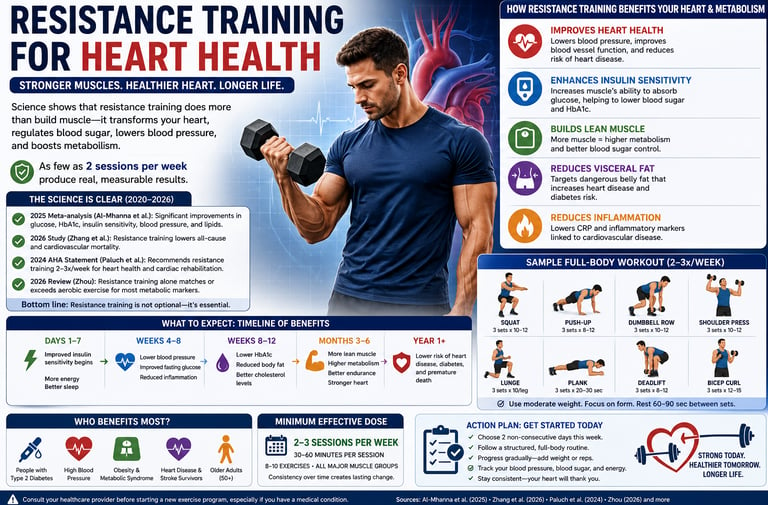
Resistance training improves heart health by lowering blood pressure 4–7 mmHg, reducing HbA1c, and increasing insulin sensitivity within 8–12 weeks. Just 2 sessions per week targeting all major muscle groups build lean muscle that acts as a "metabolic sink" for glucose. The American Heart Association and 2026 studies confirm it independently reduces cardiovascular mortality.
5 Evidence-Based Heart Benefits of Resistance Training:
Lowers blood pressure: Reduces systolic BP by 4–7 mmHg within 8 weeks
Improves blood sugar: Increases insulin sensitivity within days; lowers HbA1c in 8–12 weeks
Reduces mortality risk: A 2026 Harvard study shows an independent reduction in cardiovascular death
Decreases visceral fat: Burns metabolically harmful belly fat even without weight loss
Protects blood vessels: Improves endothelial function and reduces arterial stiffness
Resistance Training for Heart Health: Key Evidence-Based Points for Patients
1. Two sessions per week produce clinically meaningful cardiometabolic change
The science: Systematic reviews and the 2024 American Heart Association Scientific Statement confirm that 2–3 resistance training sessions weekly, targeting all major muscle groups, significantly lower blood pressure, fasting glucose, and HbA1c.
What this means for you: You do not need to live in the gym. A structured 30–45-minute session on Monday and Thursday is enough to start improving blood pressure and blood sugar within 4–8 weeks. Consistency beats frequency.
2. Muscle is a "metabolic sink" that directly improves blood sugar control
The science: Skeletal muscle accounts for about 80% of insulin-stimulated glucose uptake. Resistance training increases muscle mass and activates GLUT4 transporters that pull glucose from blood into muscle without needing insulin.
What this means for you: Every pound of muscle you build is more tissue working to lower your blood sugar 24 hours a day. This is why resistance training helps type 2 diabetes even before you lose weight.
3. Blood pressure drops through vascular and nervous system remodeling
The science: Meta-analyses show resistance training reduces systolic BP by 4–7 mmHg and diastolic BP by 2–4 mmHg. Mechanisms include improved endothelial function, reduced arterial stiffness, and rebalanced autonomic tone toward parasympathetic activity.
What this means for you: For Stage 1 hypertension, this reduction is often enough to delay or reduce medication. The effect begins in weeks, not months. Always exhale during the exertion phase and avoid breath-holding.
4. Insulin sensitivity improves within days; HbA1c improves within 8–12 weeks
The science: Short-term studies report increased insulin sensitivity after just 1–2 sessions. Longer trials show HbA1c reductions comparable to some oral diabetes drugs after 8–12 weeks of structured training.
What this means for you: If you take insulin or sulfonylureas, monitor glucose closely when starting. Your medication needs may change. The internal benefit starts before you see changes in the mirror.
5. Resistance training independently reduces risk of death from heart disease
The science: A 2026 prospective cohort study from Harvard found that resistance training alone is associated with lower all-cause and cardiovascular mortality. The dose-response is nonlinear: even modest amounts confer substantial early benefit.
What this means for you: Strength work is not just for function or appearance. It is life-extending medicine. Combined with aerobic activity, it is optimal, but resistance training alone still moves your longevity curve.
6. Beta-cell function in the pancreas may be preserved
The science: A 2026 systematic review reported that resistance training improves markers of pancreatic beta-cell function and first-phase insulin secretion, especially in people with longer-duration type 2 diabetes.
What this means for you: Most diabetes drugs work on insulin resistance. Resistance training may also help protect the cells that make insulin. This addresses the disease process, not just the symptoms.
7. It is safe and recommended for cardiac patients, including heart failure
The science: The AHA now explicitly recommends resistance training for cardiac rehabilitation in patients with coronary artery disease, heart failure, and post-stroke. Supervised initiation is key.
What this means for you: A prior heart attack or heart failure diagnosis is not a reason to avoid weights. It is a reason to do them, with medical clearance and proper progression. Start light, focus on form, and progress gradually.
8. Visceral fat decreases even without major weight loss
The science: Resistance training reduces metabolically dangerous visceral fat through hormonal shifts and increased resting metabolic rate, even when total body weight changes are small.
What this means for you: Scale weight is a poor marker of progress. Measure waist circumference instead. Losing 1–2 inches from your waist through resistance training lowers cardiovascular risk, even if your weight stays stable.
Introduction
What if the most powerful tool for protecting your heart, managing blood sugar, and living longer wasn't a pill or a diet — but picking up a pair of dumbbells twice a week?
For decades, cardiology guidelines pushed aerobic exercise — jogging, cycling, swimming — as the gold standard for heart health. Resistance training was an afterthought, something for bodybuilders, not for people trying to lower their blood pressure or control type 2 diabetes. That has changed dramatically.
A convergence of landmark research, including a 2025 meta-analysis in the British Journal of Sports Medicine (Al-Mhanna et al.) covering patients with type 2 diabetes and obesity, a 2026 mortality study by Zhang et al. in the same journal, and a 2024 American Heart Association Scientific Statement (Paluch et al.) — has redrawn the map. Resistance exercise is no longer supplementary. It is essential.
This guide gives you everything the science actually shows: how resistance training reshapes your cardiovascular system, resets your metabolism, lowers blood sugar, and reduces your risk of dying from heart disease — with specific workout recommendations, timelines for results, and answers to the questions patients and athletes ask most.
Resistance training improves cardiometabolic health by increasing lean muscle mass (which acts as a glucose sink), reducing arterial stiffness, lowering blood pressure, and improving insulin sensitivity — often within 8–12 weeks. As few as 2 sessions per week produce clinically meaningful results.
1. What Is Cardiometabolic Health — and Why Does It Matter?
Cardiometabolic health refers to the integrated state of your cardiovascular system and metabolic function. Rather than measuring a single number, it describes a cluster of risk factors that together predict your likelihood of developing:
Heart attack or stroke
Type 2 diabetes
Metabolic syndrome
Premature death from cardiovascular causes
The key markers include:
Marker Healthy Range (General) Fasting blood glucose < 100 mg/dL HbA1c < 5.7% Blood pressure < 120/80 mmHg LDL cholesterol < 100 mg/dL HDL cholesterol > 60 mg/dL (protective) Triglycerides < 150 mg/dL Waist circumference (men) < 40 inches Waist circumference (women) < 35 inches Fasting insulin 2–25 µIU/mL
Poor cardiometabolic health is not just a future risk. It affects your energy today, your cognitive function, your inflammatory burden, and your longevity trajectory. Improving these markers — even modestly — translates into meaningful reductions in disease risk and mortality.
2. How Resistance Training Improves Heart and Metabolic Health
The "Metabolic Sink" Effect
Your skeletal muscles are the largest glucose-consuming tissue in your body. When you build more muscle through resistance training, you expand your body's capacity to absorb glucose from the bloodstream — independent of insulin. This is why resistance training has such a profound effect on blood sugar control, even in people with insulin resistance.
Beyond Strength: A Systemic Intervention
Resistance training does not just make you stronger. It:
Lowers resting blood pressure through improved endothelial function and reduced arterial stiffness
Improves lipid profiles by increasing HDL ("good") cholesterol and decreasing LDL and triglycerides
Reduces visceral fat — the metabolically active fat surrounding organs — even with modest total weight loss
Decreases systemic inflammation by reducing C-reactive protein and pro-inflammatory cytokines
Rebalances the autonomic nervous system toward greater parasympathetic (rest-and-digest) tone
Speed of Results
One of the most clinically important findings from recent research: improvements in insulin sensitivity can begin within days of starting resistance training. Blood pressure reductions often appear within 4–8 weeks. Meaningful changes in fasting glucose and HbA1c are typically seen within 8–12 weeks.
You do not need to wait months to feel the difference.
3. The Science: Key Studies Explained (2020–2026)
Study 1: Al-Mhanna et al. (2025) — Resistance Training in Type 2 Diabetes and Obesity
Published in: British Journal of Sports Medicine Design: Systematic review and meta-analysis of randomized controlled trials Population: Adults with type 2 diabetes and overweight or obesity
This is one of the most rigorous syntheses of resistance training's metabolic effects in high-risk populations. Key findings:
Fasting glucose decreased significantly across intervention groups
HbA1c improved substantially — an effect that rivals some oral hypoglycemic agents
Waist circumference reduced meaningfully
Insulin sensitivity improved across multiple measured indices
Blood pressure dropped in hypertensive subgroups
Lipid profiles shifted favorably
Bottom line: For people with type 2 diabetes and obesity — the highest-risk group for cardiovascular complications — structured resistance training produces clinically significant improvements across nearly every cardiometabolic marker.
Study 2: Zhang et al. (2026) — Resistance Training and All-Cause Mortality
Published in: British Journal of Sports Medicine, 60(12), 874–882 Design: Prospective cohort study with dose-response analysis Key contribution: Examined the long-term mortality implications of resistance training and its interaction with aerobic activity
This 2026 study by Zhang, Lee, Rezende, Ma, and Giovannucci from Harvard directly addressed the question practitioners had been asking: does resistance training actually extend life? The answer was affirmative. The study assessed dose-response relationships and found that combining resistance training with aerobic physical activity produced the strongest mortality reduction, but resistance training alone conferred independent, statistically significant survival benefits.
Key finding: Even modest levels of resistance training — below current guidelines — were associated with reduced all-cause and cardiovascular-cause mortality. The dose-response relationship was nonlinear, suggesting that even small amounts of structured strength work produce substantial early-phase benefit.
Study 3: Paluch et al. (2024) — American Heart Association Scientific Statement
Published in: Circulation, 149(3), e217–e231 Type: Consensus scientific statement
The AHA's most comprehensive update on resistance training to date. Key clinical takeaways:
Adults should perform resistance training 2–3 days per week targeting all major muscle groups
Resistance training is now explicitly recommended for cardiac rehabilitation — not just prevention
Safe and beneficial for patients with heart failure, coronary artery disease, hypertension, and post-stroke recovery
Equipment-agnostic: free weights, machines, resistance bands, and bodyweight exercises all qualify
This statement marked a formal paradigm shift. Resistance training moved from a "nice to have" to an explicitly endorsed component of cardiovascular disease management.
Study 4: Ashton et al. (2020) — Short-, Medium-, and Long-Term Effects
Published in: British Journal of Sports Medicine, 54(6), 341–348 Design: Systematic review and meta-analysis with duration-based subgroup analysis
Short-Term Adaptations (≤8 Weeks)
Vascular Tone: Immediate reductions in both systolic and diastolic blood pressure, largely driven by acute improvements in endothelial nitric oxide production.
Glycemic Control: Rapid improvement in fasting blood glucose and enhanced whole-body insulin sensitivity, primarily via increased GLUT4 transporter translocation in skeletal muscle.
Lipid Clearance: Initial decreases in circulating triglycerides due to upregulated lipoprotein lipase activity.
Medium-Term Adaptations (9–26 Weeks)
Body Composition: Measurable expansion of skeletal muscle cross-sectional area (hypertrophy) paired with a distinct decrease in visceral adiposity.
Hemodynamics: More pronounced, stable reductions in resting blood pressure as structural vascular remodeling begins.
Lipid Optimization: Consistent, steady improvements across the entire lipid panel, including favorable shifts in atherogenic particle balance.
Long-Term Adaptations (≥27 Weeks)
Structural Vascular Remodeling: Enhanced endothelial function accompanied by structural improvements in arterial compliance (reduced arterial stiffness).
Systemic Resilience: Sustained, compounding metabolic improvements that maximize protection against cardiovascular events.
Behavioral Integration: Transition from structured intervention to deep-seated habitual adherence, cementing lifetime risk reduction.
Key insight: Metabolic benefits appear before visible changes in muscle mass. This is clinically important for patient motivation — the internal transformation is already happening even when the mirror hasn't changed yet.
Study 5: Zhou (2026) — Cardiovascular Benefits of Aerobic, Resistance, and Combined Training
Published in: Metabolism and Cardiovascular Diseases
This 2026 review by Zhou provided an updated head-to-head comparison of training modalities for cardiovascular outcomes. Combined aerobic and resistance training produced the most comprehensive improvements across all cardiometabolic markers. However, resistance training alone demonstrated non-inferior outcomes to aerobic training alone for blood pressure and glycemic control, while providing superior benefits for lean mass preservation and insulin sensitivity.
Study 6: Li, Fang & Zhang (2026) — Resistance Training and Beta-Cell Function
Published in: BMC Endocrine Disorders, 26, 127 Design: Systematic review and meta-analysis
This 2026 analysis broke new ground by examining resistance training's effect on pancreatic beta-cell function — the cells that produce insulin. Key findings:
Resistance training improved beta-cell function as measured by HOMA-B and first-phase insulin secretion indices
Effect was most pronounced in individuals with longer disease duration
Suggests resistance training may address the underlying pathophysiology of type 2 diabetes, not just manage symptoms
Why this matters: Most diabetes interventions improve peripheral insulin sensitivity (cells' response to insulin). This study suggests resistance training may also help preserve the pancreatic cells that produce insulin in the first place.
Study 7: Silva et al. (2026) — Epigenetic Regulation of Cardiovascular Health
Published in: Frontiers in Physiology, 16: 1701689
This 2026 paper from Silva and colleagues examined how resistance training affects epigenetic regulation — changes to gene expression that occur without altering DNA sequence. Findings suggest that resistance training modifies methylation patterns in genes involved in vascular inflammation, endothelial function, and cardiac remodeling. This epigenetic perspective helps explain why resistance training benefits persist even after periods of reduced activity and why long-term training produces progressively deeper cardiovascular adaptations.
4. Physiological Mechanisms: What Happens Inside Your Body
Understanding why resistance training works makes you more likely to trust it, stick with it, and prescribe it accurately.
4.1 Skeletal Muscle as a Metabolic Organ
Skeletal muscle is not just for movement. It is the body's largest metabolic tissue — responsible for approximately 80% of postprandial glucose uptake. When resistance training increases muscle mass:
Total glucose disposal capacity increases
Non-insulin-mediated glucose uptake through GLUT4 transporters improves
Mitochondrial density and oxidative capacity within muscle fibers increases
Intramuscular lipid metabolism improves
This is why building muscle through resistance training is one of the most effective non-pharmacological interventions for type 2 diabetes.
4.2 Vascular Adaptations
Resistance training improves the health of your blood vessels through multiple pathways:
Endothelial function: The inner lining of blood vessels becomes more responsive to vasodilatory signals, particularly nitric oxide
Arterial compliance: Blood vessels become less stiff and more elastic, reducing systolic blood pressure
Capillary density: Resistance training promotes capillary growth within muscle tissue, improving blood flow
Neurohormonal signaling: The renin-angiotensin-aldosterone system normalizes, supporting lower blood pressure
4.3 Autonomic Nervous System Balance
Chronic cardiovascular disease is associated with excessive sympathetic (stress) nervous system activity and reduced parasympathetic (recovery) tone. Resistance training:
Increases heart rate variability (a marker of parasympathetic health)
Reduces resting heart rate over time
Blunts exaggerated sympathetic responses to daily stressors
4.4 Hormonal Remodeling
A structured resistance training program favorably shifts the body's hormonal environment:
Insulin: Sensitivity improves, reducing the burden on the pancreas
Cortisol: Appropriate training normalizes chronic stress-induced cortisol elevation
IGF-1 and growth hormone: Short-term increases support lean tissue development and metabolic function
Inflammatory cytokines: IL-6, TNF-α, and CRP decrease with consistent training
4.5 Epigenetic Effects
As documented by Silva et al. (2026), resistance training induces epigenetic modifications — particularly in genes governing vascular inflammation and endothelial repair. These changes help explain why the cardiovascular benefits of resistance training can persist over months and years, and why people who have trained consistently throughout life have measurably different cardiovascular aging trajectories.
5. Resistance Training vs. Aerobic Exercise vs. Combined Modalities: What the Data Shows
How aerobic exercise, resistance training, and combined modalities compare across major cardiometabolic and functional outcomes.
Cardiorespiratory & Vascular Health
VO₂max / Cardiorespiratory Fitness: Aerobic and combined training provide superior, robust improvements. Resistance training offers only modest benefits.
Blood Pressure Reduction: Aerobic and resistance training show comparable reductions, while combined training yields the most pronounced effect.
Metabolic & Lipid Profiles
Fasting Glucose & HbA1c: Both individual modalities are effective, but combined training is comparable to or superior to either alone.
Insulin Sensitivity: Resistance training and combined protocols are superior, significantly enhancing non-insulin-dependent glucose uptake.
LDL & Triglyceride Reduction: Aerobic and combined training drive strong reductions; resistance training has a minor impact.
HDL Cholesterol Elevation: Aerobic and combined training are highly effective at raising cardioprotective HDL. Resistance training shows modest results.
Body Composition & Energy Expenditure
Lean Muscle Mass Preservation: Resistance and combined training are superior for building and retaining tissue. Purely aerobic training offers no preservation and may occasionally reduce lean mass.
Visceral Fat Reduction: All three modalities successfully reduce visceral adiposity, with combined training showing the most consistent impact.
Resting Metabolic Rate (RMR): Driven by muscle mass accretion, resistance and combined training provide superior elevations in RMR. Aerobic training shows modest results.
Functional & Structural Longevity
Functional Strength & Mobility: Resistance and combined training highly optimize physical function; aerobic training alone does not target these metrics.
Bone Mineral Density (BMD): Resistance and combined training are superior for structural skeletal loading. Aerobic exercise provides benefits only if it involves weight-bearing impact.
All-Cause Mortality Risk: Aerobic and combined training offer the highest risk reduction, while resistance training alone provides significant independent protection (Zhang et al., 2026).
Practical takeaway: If you can only do one type of exercise, resistance training provides broader cardiometabolic benefits than aerobic training alone for most metabolic markers. Combined training is optimal. But resistance training alone is never "not enough."
6. Who Benefits Most?
People with Type 2 Diabetes
Resistance training should be considered a first-line non-pharmacological intervention for type 2 diabetes. According to Al-Mhanna et al. (2025) and Li et al. (2026), structured resistance training:
Improves HbA1c to a degree comparable with some oral hypoglycemic drugs
Improves beta-cell function (Li et al., 2026)
Reduces medication requirements in some patients
Works synergistically with dietary modification
Important: If you use insulin or glucose-lowering medications, discuss resistance training with your provider before starting. Blood glucose can drop significantly during and after sessions.
People with Hypertension
Meta-analyses consistently show resistance training reduces systolic blood pressure by 4–7 mmHg and diastolic blood pressure by 2–4 mmHg. For many patients with Stage 1 hypertension, this is clinically meaningful and may reduce or delay medication needs.
Protocol note: Avoid breath-holding (Valsalva maneuver) during resistance exercise if you have hypertension. Exhale during the exertion phase of each repetition.
People with Cardiovascular Disease
Contrary to outdated clinical caution, the American Heart Association (Paluch et al., 2024) now explicitly endorses resistance training as part of comprehensive cardiac rehabilitation for patients with:
Heart failure (improves exercise capacity and quality of life)
Coronary artery disease (reduces recurrent event risk)
Post-stroke recovery (improves functional capacity)
Post-cardiac surgery (improves strength and metabolic function)
Always work within a medically supervised cardiac rehabilitation program initially.
Older Adults
Sarcopenia — age-related muscle loss — accelerates cardiometabolic risk in older adults. Studies show adults in their 70s and 80s respond robustly to resistance training. For this population, resistance training reduces fall risk, preserves metabolic rate, improves glucose regulation, and maintains cardiovascular health simultaneously.
Women
Women are often underrepresented in exercise research and underserved by exercise recommendations that overemphasize aerobic activity. Resistance training is particularly important for women because:
Hormonal changes during perimenopause increase visceral fat accumulation and insulin resistance
Bone mineral density declines accelerate after menopause; resistance training is among the most effective bone-protective interventions
Lean muscle mass preservation supports metabolic rate and insulin sensitivity
7. How to Design Your Resistance Training Program
Core Principles (Evidence-Based)
Frequency: 2–3 sessions per week. Research confirms that 2 sessions per week are sufficient for meaningful cardiometabolic improvement (Paluch et al., 2024; Ashton et al., 2020). Three sessions are optimal for most people. Allow at least 48 hours between sessions targeting the same muscle groups.
Intensity: Target a load that brings you to or near muscular fatigue within 8–15 repetitions. For cardiometabolic health specifically, moderate intensity (50–70% of one-rep maximum, or RPE 6–7 out of 10) is effective and safe.
Volume: 2–3 sets per exercise, 8–10 exercises per session targeting all major muscle groups (chest, back, shoulders, arms, core, quadriceps, hamstrings, glutes).
Session length: 30–60 minutes. Effective cardiometabolic training does not require hours.
Equipment: Any modality works — free weights, cable machines, resistance bands, or bodyweight exercises. Adherence matters more than equipment type.
Progressive overload: Gradually increase resistance or repetitions over time. Without progression, adaptations plateau.
Rest Periods and Cardiometabolic Focus
For cardiometabolic health specifically (as distinct from maximal strength), shorter rest periods (60–90 seconds between sets) maintain a modest cardiovascular stimulus and help sustain metabolic rate elevation during the session.
Warming Up and Cooling Down
Warm-up (5–10 minutes): Light aerobic activity (brisk walking, cycling) followed by dynamic movement preparation (leg swings, arm circles, bodyweight squats).
Cool-down (5–10 minutes): Light aerobic activity followed by static stretching. This is particularly important for individuals with cardiovascular disease as it prevents abrupt blood pressure and heart rate drops.
8. Sample 8-Week Starter Protocol
This protocol is consistent with AHA guidelines and the evidence reviewed above. It is designed for a beginner-to-intermediate individual. Always consult your physician before starting if you have any diagnosed cardiovascular or metabolic conditions.
Week 1–4: Foundation Phase (2 Days/Week)
Day A: Upper Body Focus
Dumbbell Chest Press or Push-up: 2 sets × 10–12 reps (75 sec rest)
Seated Cable Row or Resistance Band Row: 2 sets × 10–12 reps (75 sec rest)
Dumbbell Shoulder Press: 2 sets × 10–12 reps (75 sec rest)
Lat Pulldown or Assisted Pull-up: 2 sets × 10–12 reps (75 sec rest)
Dumbbell Bicep Curl: 2 sets × 12–15 reps (60 sec rest)
Tricep Pushdown: 2 sets × 12–15 reps (60 sec rest)
Plank Hold: 2 sets × 20–30 sec (60 sec rest)
Day B: Lower Body + Core Focus
Goblet Squat or Leg Press: 2 sets × 10–12 reps (75 sec rest)
Romanian Deadlift (Light): 2 sets × 10–12 reps (75 sec rest)
Walking Lunge: 2 sets × 10 reps per leg (75 sec rest)
Glute Bridge or Hip Thrust: 2 sets × 12–15 reps (60 sec rest)
Leg Curl (Machine or Band): 2 sets × 12–15 reps (60 sec rest)
Standing Calf Raise: 2 sets × 15–20 reps (60 sec rest)
Dead Bug or Bird-Dog: 2 sets × 8 reps per side (60 sec rest)
Week 5–8: Progression Phase (3 Days/Week)
Training Modifications
Frequency: Add a third training session per week.
Loading: Increase resistance by 5–10% if you can complete all prescribed repetitions with strict form.
Volume: Add one additional set to three selected exercises in each session.
Biomarker & Progress Tracking
Hemodynamics: Monitor resting blood pressure regularly.
Glycemic Control: Track fasting glucose.
Anthropometrics: Check waist circumference periodically.
Functional Recovery: Assess subjective metrics, including perceived daily energy and overnight sleep quality.
9. Evidence Summary Table
Here is a clean, structured distillation of the recent clinical data and scientific consensus on resistance training (RT) for metabolic and cardiovascular outcomes.
Al-Mhanna et al. (2025) | Meta-Analysis | Type 2 Diabetes & Obesity
Demonstrated that structured resistance training delivers widespread improvements across all primary metabolic markers, significantly reducing fasting glucose, HbA1c, systemic blood pressure, and circulating lipid fractions while increasing peripheral insulin sensitivity.
Zhang et al. (2026) | Prospective Cohort | General Adult Population
Confirmed a robust, independent inverse relationship between resistance training and all-cause as well as cardiovascular mortality. The data verified a distinct dose-response relationship, underscoring that regular lifting directly extends life expectancy.
Zhou (2026) | Narrative Review | Cardiovascular Patients
Highlighted that while combined training (RT + aerobic) yields optimal synergistic results, resistance training alone is non-inferior to pure aerobic training for managing the majority of metabolic risk markers.
Li et al (2026) | Meta-Analysis | Type 2 Diabetes
Uncovered a critical physiological insight: resistance training goes beyond simply improving peripheral insulin sensitivity; it directly improves pancreatic beta-cell function and insulin secretory capacity.
Silva et al. (2026) | Clinical Review | Cardiovascular Patients
Revealed that regular resistance training induces distinct epigenetic modifications (favorable gene expression changes) that provide long-term protection for vascular health and slow down endothelial aging.
Hao & Zhang (2026) | Clinical Review | Type 2 Diabetes
Established an updated, modern framework for clinical exercise prescription, positioning resistance training as an absolute baseline requirement for comprehensive type 2 diabetes management.
Mtshali & Sookan-Kassie (2026) | Review of RCTs | Type 2 Diabetes
Confirmed the universal efficacy of resistance training, showing consistent, predictable improvements in glycemic and metabolic outcomes across highly diverse patient populations globally.
Foundational Guidelines & Multi-Phase Evidence (2020–2024)
Paluch et al. / American Heart Association (2024) | Scientific Statement | General & CVD Populations
Issued official clinical guidance explicitly recommending dedicated resistance training 2 to 3 days per week as a primary intervention for cardiovascular disease prevention and formal cardiac rehabilitation.
Valenzuela et al. (2023) | Expert Review | Cardiovascular Patients
Detailed the deep physiological mechanisms of lifting, showing it directly improves endothelial nitric oxide function, increases arterial compliance (reduces stiffness), restores autonomic nervous system balance, and systematically lowers chronic low-grade inflammation.
Ashton et al. (2020) | Meta-Analysis | General Adults
Mapped the timeline of physical adaptation, proving that resistance training produces progressive, cumulative cardiometabolic benefits that scale from short-term acute changes into deep, permanent long-term systemic protection.
10. Common Myths and Mistakes
Myth 1: "Aerobic exercise is better for heart health than weight training."
Reality: The research no longer supports this hierarchy. Both modalities confer cardiovascular benefits through distinct mechanisms. Resistance training is superior for insulin sensitivity, lean mass preservation, and resting metabolic rate. Combined training is optimal, but resistance training alone is never inferior for cardiometabolic outcomes.
Myth 2: "Resistance training is dangerous if you have heart disease."
Reality: The AHA (Paluch et al., 2024) explicitly endorses resistance training for patients with heart failure, coronary artery disease, and post-stroke recovery, with appropriate supervision and progression. The risk of avoiding resistance training in these populations now outweighs the risk of including it.
Myth 3: "You need to lift heavy to see benefits."
Reality: Moderate intensity (50–70% of one-rep max) is sufficient for meaningful cardiometabolic adaptations. Higher loads are not required and may increase injury risk in beginners or clinical populations.
Myth 4: "I need to exercise every day to see results."
Reality: Two sessions per week produces clinically significant improvements (Paluch et al., 2024; Ashton et al., 2020). Consistency over time matters more than frequency in the early stages.
Myth 5: "Resistance training will make me bulky."
Reality: Significant muscle hypertrophy requires specific high-volume, high-calorie training protocols over extended periods. The moderate-intensity programs that produce cardiometabolic benefit typically result in modest lean mass increases — and favorable body composition changes without bulk.
Myth 6: "I need expensive gym equipment."
Reality: Resistance bands, bodyweight exercises (squats, push-ups, lunges, rows), and household items can all deliver the mechanical stimulus needed for cardiometabolic benefit. Equipment access is not a barrier.
Common Mistakes
Neglecting progressive overload: Using the same weight, reps, and sets indefinitely halts adaptation
Skipping lower body training: The large muscles of the legs (quadriceps, hamstrings, glutes) represent the greatest metabolic opportunity; training them drives the strongest systemic response
Breath-holding during exertion: Especially dangerous for hypertensive individuals; exhale during the effort phase
Stopping training after reaching a goal: Cardiometabolic benefits are maintained only with continued training
Comparing timelines to others: Individual response varies by age, genetics, baseline fitness, and metabolic health
11. Frequently Asked Questions
Q1: How quickly will I see improvements in blood sugar from resistance training?
Insulin sensitivity can improve within days of starting resistance training through non-insulin-mediated glucose uptake mechanisms. Measurable improvements in fasting glucose typically appear within 4–8 weeks. HbA1c, which reflects 3-month average blood glucose, meaningfully improves within 8–12 weeks of consistent training (Al-Mhanna et al., 2025).
Q2: Is resistance training safe for people with high blood pressure?
Yes, with appropriate technique. The key is to avoid the Valsalva maneuver — breathe continuously throughout each exercise, exhaling during the exertion phase. Moderate-intensity resistance training (50–70% of one-rep maximum) with controlled technique has been shown to lower both systolic and diastolic blood pressure within 4–8 weeks.
Q3: Can resistance training replace blood pressure or diabetes medication?
Resistance training can meaningfully reduce medication requirements for some individuals, particularly those in earlier stages of hypertension or prediabetes. However, medication adjustments should always be made in consultation with your physician. Never reduce or stop prescribed medications based on exercise alone without medical guidance.
Q4: What is the minimum effective dose of resistance training for cardiometabolic benefit?
Current evidence supports 2 sessions per week of moderate-intensity resistance training targeting all major muscle groups as the minimum effective dose (Paluch et al., 2024). More is generally better up to about 3–4 sessions per week; beyond that, recovery time becomes a limiting factor.
Q5: Should I do resistance training or aerobic exercise if I can only do one?
If improving insulin sensitivity, preserving lean mass, and managing blood glucose are priorities, resistance training may edge out aerobic exercise for your specific needs. For VO₂max and general cardiovascular fitness, aerobic training is superior. For most people, any exercise they will actually do consistently is the best choice. Both provide meaningful cardiometabolic benefit.
Q6: How does resistance training help with visceral fat?
Visceral fat — the metabolically harmful fat surrounding abdominal organs — is reduced by resistance training through multiple pathways: elevated post-exercise metabolic rate, favorable hormonal shifts (particularly reduced cortisol and improved insulin sensitivity), and increased lean mass that elevates baseline calorie expenditure. Studies show significant visceral fat reductions even without total weight loss (Al-Mhanna et al., 2025).
Q7: Can older adults really benefit from resistance training?
Studies consistently demonstrate robust cardiometabolic and functional adaptations to resistance training across all age groups, including adults in their 70s and 80s. Older adults may require longer recovery periods and benefit from lower-impact starting progressions, but the fundamental physiological response to resistance training does not diminish with age.
Q8: Is it safe to resistance train after a heart attack?
Yes, in most cases — but initially within a supervised cardiac rehabilitation program. The AHA explicitly endorses resistance training for post-cardiac event patients (Paluch et al., 2024). Beginning with low-to-moderate intensity and progressing under supervision ensures safe reintroduction of resistance exercise after a cardiac event.
Q9: Does resistance training improve cholesterol levels?
Yes. Structured resistance training programs increase HDL ("good") cholesterol and decrease LDL cholesterol and triglycerides. The effect is most pronounced in individuals with elevated baseline triglycerides and in programs of 12 weeks or longer.
Q10: Do I need a personal trainer to get cardiometabolic benefits from resistance training?
You do not need a personal trainer to benefit from resistance training. However, if you have a diagnosed cardiovascular or metabolic condition, or if you are new to resistance training, working with a qualified trainer for the first 4–8 weeks significantly reduces injury risk and improves technique. Many fitness professionals offer cardiac rehabilitation-appropriate programming.
Q11: What is the role of resistance training in preventing metabolic syndrome?
Metabolic syndrome — a cluster of risk factors including abdominal obesity, elevated fasting glucose, high triglycerides, low HDL, and hypertension — is directly addressed by resistance training's effects on nearly all five criteria. Regular resistance training is one of the most evidence-based non-pharmacological strategies for both preventing and reversing metabolic syndrome.
Q12: How does resistance training affect inflammation?
Resistance training reduces chronic low-grade inflammation — a key driver of cardiovascular disease and insulin resistance. Specifically, it lowers C-reactive protein (CRP), TNF-α, and IL-6 (pro-inflammatory cytokines) while supporting anti-inflammatory immune function. These effects appear within 8–12 weeks and expand with continued training.
12. Conclusion and Action Plan
The evidence from 2020 through 2026 is unambiguous: resistance training is a first-line, evidence-based intervention for cardiometabolic health. It lowers blood pressure, reduces blood sugar, improves insulin sensitivity, builds a metabolically active lean body, reduces visceral fat, decreases inflammation, and — according to Zhang et al. (2026) — reduces your risk of dying from all causes and cardiovascular causes specifically.
The American Heart Association has formalized what the research has been showing: resistance training is no longer optional in cardiovascular disease prevention or rehabilitation. It is essential.
Your Evidence-Based Action Plan
Week 1:
Choose 2 non-consecutive days for resistance training sessions
Select 8–10 exercises covering major muscle groups (see the starter protocol above)
Use resistance that challenges you to fatigue in 10–12 reps with good form
Perform 2 sets per exercise
Weeks 2–4:
Maintain 2 sessions per week; focus on learning correct form
Track fasting blood glucose (if relevant), blood pressure, and energy levels
Increase resistance modestly when you can complete all reps with effort remaining
Weeks 5–8:
Add a third session per week if schedule allows
Increase to 3 sets on most exercises
Reassess blood pressure and fasting glucose — expect measurable improvements
Months 3–6:
Continue progressive overload
Consider adding aerobic exercise (20–30 minutes, 3x/week) for additive cardiovascular benefit
Review cardiometabolic markers with your physician
Long-term:
Resistance training is lifelong medicine. The cardiometabolic benefits are maintained only with continued training. Make it a non-negotiable part of your routine.
Always consult your healthcare provider before starting a new exercise program, particularly if you are over 45, previously sedentary, or have a history of cardiovascular disease, hypertension, or diabetes. For individuals with established cardiovascular disease, initiate resistance training within a supervised cardiac rehabilitation program.
Related Articles
The Science of Healthy Brain Aging: Microglia, Metabolism & Cognitive Fitness | DR T S DIDWAL
Non-Negotiable Health: Why All Women Need Resistance Training, Not Just Cardio | DR T S DIDWAL
The Aging Muscle Paradox: How Senescent Cells Cause Insulin Resistance and The Strategies to Reverse It | DR T S DIDWAL
VO2 Max & Longevity: The Ultimate Guide to Living Longer | DR T S DIDWAL
Blue Zones Secrets: The 4 Pillars of Longevity for a Longer, Healthier Lifepost | DR T S DIDWAL
References
Al-Mhanna, S. B., Franklin, B. A., Jakicic, J. M., Stamatakis, E., Pescatello, L. S., Riebe, D., Thompson, W. R., Skinner, J., Colberg, S. R., Alkhamees, N. H., Bin Sheeha, B., Gülü, M., Alghannam, A. F., & Batrakoulis, A. (2025). Impact of resistance training on cardiometabolic health-related indices in patients with type 2 diabetes and overweight/obesity: A systematic review and meta-analysis of randomised controlled trials. British Journal of Sports Medicine, 59(10), 733–746. https://doi.org/10.1136/bjsports-2024-108947
American College of Sports Medicine. (2022). ACSM's guidelines for exercise testing and prescription (11th ed.). Wolters Kluwer.
Ashton, R. E., Tew, G. A., Aning, J. J., Gilbert, S. E., Lewis, L., & Saxton, J. M. (2020). Effects of short-term, medium-term and long-term resistance exercise training on cardiometabolic health outcomes in adults: Systematic review with meta-analysis. British Journal of Sports Medicine, 54(6), 341–348. https://doi.org/10.1136/bjsports-2017-098970
Colberg, S. R., Sigal, R. J., Yardley, J. E., Riddell, M. C., Dunstan, D. W., Dempsey, P. C., Horton, E. S., Castorino, K., & Tate, D. F. (2016). Physical activity/exercise and diabetes: A position statement of the American Diabetes Association. Diabetes Care, 39(11), 2065–2079. https://doi.org/10.2337/dc16-1728
Cornelissen, V. A., & Smart, N. A. (2013). Exercise training for blood pressure: A systematic review and meta-analysis. Journal of the American Heart Association, 2(1), Article e004473. https://doi.org/10.1161/JAHA.112.004473
García-Hermoso, A., Ceballos-Ceballos, R. J., Poblete-Aro, C. E., Hackney, A. C., Mota, J., & Ramírez-Vélez, R. (2017). Exercise, adipokines and pediatric obesity: A meta-analysis of randomized controlled trials. International Journal of Obesity, 41(4), 475–482. https://doi.org/10.1038/ijo.2016.230
Hao, J., & Zhang, H. (2026). Latest advances and controversies of exercise therapy in the management of type 2 diabetes. Frontiers in Endocrinology, 17, Article 1822069. https://doi.org/10.3389/fendo.2026.1822069
Li, H., Fang, Y., & Zhang, W. (2026). The role of resistance training in improving beta-cell function in type 2 diabetes: A systematic review and meta-analysis. BMC Endocrine Disorders, 26, Article 127. https://doi.org/10.1186/s12902-026-02286-y
Mtshali, N., & Sookan-Kassie, T. (2026). Effects of resistance training in adults with type-2 diabetes mellitus: A narrative review of randomised controlled trials. Journal of Endocrinology, Metabolism and Diabetes of South Africa, 1–6. https://doi.org/10.1080/16089677.2026.2641908
Paluch, A. E., Boyer, W. R., Franklin, B. A., Laddu, D., Lobelo, F., Lee, D. C., McDermott, M. M., Swift, D. L., Webel, A. R., Lane, A., & on behalf of the American Heart Association. (2024). Resistance exercise training in individuals with and without cardiovascular disease: 2023 update: A scientific statement from the American Heart Association. Circulation, 149(3), e217–e231. https://doi.org/10.1161/CIR.0000000000001189
Silva, J. G., Rodrigues, L. F., Torres, T., Improta-Caria, A. C., Oliveira, E. M., & Fernandes, T. (2026). Resistance training and cardiovascular health: Epigenetics regulation. Frontiers in Physiology, 16, Article 1701689. https://doi.org/10.3389/fphys.2025.1701689
Strasser, B., & Schobersberger, W. (2011). Evidence for resistance training as a treatment therapy in obesity. Journal of Obesity, 2011, Article 482564. https://doi.org/10.1155/2011/482564
Valenzuela, P. L., Ruilope, L. M., Santos-Lozano, A., Wilhelm, M., Kränkel, N., Fiuza-Luces, C., & Lucia, A. (2023). Exercise benefits in cardiovascular diseases: From mechanisms to clinical implementation. European Heart Journal, 44(21), 1874–1889. https://doi.org/10.1093/eurheartj/ehad170
Zhang, Y., Lee, D. H., Rezende, L. F. M., Ma, Y., & Giovannucci, E. (2026). Long-term resistance training with all-cause and cause-specific mortality: Assessing dose-response and joint associations with aerobic physical activity. British Journal of Sports Medicine, 60(12), 874–882. https://doi.org/10.1136/bjsports-2025-110503
Zhou, T. (2026). Cardiovascular health benefits of physical activity: Aerobic, resistance, and combined training. Metabolism and Cardiovascular Diseases. Advance online publication. https://doi.org/10.1016/j.metcd.2026.100204
© Dr. T.S. Didwal, M.D.