Non-Negotiable Health: Why All Women Need Resistance Training, Not Just Cardio
Break the myth! We detail the cardiovascular, metabolic, and hormonal evidence showing why resistance training is a non-negotiable part of women's health for independence and longevity.
EXERCISE
Dr. T.S. Didwal, M.D.
12/8/202514 min read

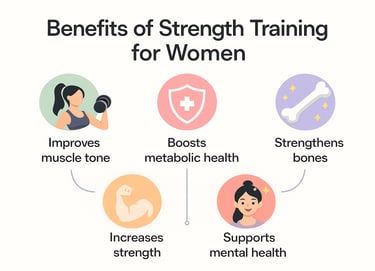
For decades, resistance training has been perceived as a male-dominated fitness domain. Yet emerging research reveals a transformative truth: strength training for women isn't just important—it's essential for optimal health across every life stage. Whether you're navigating menopause, building lean muscle mass, improving bone health, or enhancing cardiovascular function, resistance exercise offers scientifically-backed benefits that can literally change your life.
The statistics are compelling. Women who engage in regular weight training and strength-building exercises experience improvements in body composition, functional capacity, and long-term health outcomes that rival or exceed those of more traditional cardiovascular exercise. Yet many women remain hesitant, uncertain about how to start or unclear about what they'll gain.
This comprehensive guide explores the latest research on benefits of strength training for women, walks through cutting-edge studies, and provides practical insights to help you understand why incorporating resistance workouts into your routine matters now more than ever.
Clinical Pearls
1. Build Your Bone Bank with Mechanical Stress
The Science: Women face a high risk of osteoporosis, particularly after menopause. Resistance training directly combats this by applying mechanical stress to the bones, which stimulates specialized cells to increase bone mineral density (BMD). This physiological mechanism is a superior defense against fracture risk than dietary supplements alone (González-Gálvez et al., 2024). [Image illustrating muscle attachment to bone and the mechanical pull (stress) during lifting]
The Pearl: Your bones are living tissue that respond to demand. To strengthen them, you must load them consistently. Resistance exercise is a required investment that builds a strong "bone bank," helping sustain skeletal health through hormonal transitions and later life.
2. Hormonal Status Is Not a Barrier to Muscle Gain
The Science: Research comparing women across premenopausal, perimenopausal, and postmenopausal stages found that all groups achieved significant and comparable gains in lean muscle mass and improved body composition during structured resistance training trials (Isenmann et al., 2023; Svensen et al., 2024).
The Pearl: Don't let menopause myths hold you back. Regardless of your hormonal stage, your body is highly responsive to strength training. Starting or maintaining a resistance routine is the best way to actively counter the metabolic slowdown and muscle loss typically associated with midlife and beyond.
3. Functional Strength Drives Independence
The Science: Even short-term, structured resistance interventions in older women yield measurable gains in functional capacity, including improved balance, gait speed, and physical performance tasks (Akkuş Uçar et al., 2025). These gains directly reduce the risk of falls, the leading cause of injury in older adults.
The Pearl: Strength training isn't just about looking fit; it's about staying independent. The muscle you build today gives you the reserve capacity to stand up easily, recover from a stumble, and climb stairs without struggle, ensuring a higher quality of life for decades.
4. Optimize Heart Health Through Protocol
The Science: Resistance training is a powerful cardioprotective tool. Studies show that specific set configurations and protocols in resistance exercise can optimize cardiovascular responses—such as blood pressure regulation and heart rate variability—enhancing benefits comparable to aerobic exercise (Rúa-Alonso et al., 2025).
The Pearl: Your strength workout is also a heart workout. By focusing on proper technique, appropriate rest intervals, and challenging weights, you are strategically protecting your cardiovascular system, not just your muscles.
5. Strength is a Mental Health Multiplier
The Science: Beyond the physical, resistance training is consistently linked to enhanced psychological well-being, including improved self-esteem, reduced anxiety, and better body image (Kraemer et al., 2025). The sense of progressive mastery and capability translates directly to mental resilience. [Image illustrating a woman successfully lifting a weight with a look of accomplishment/confidence]
The Pearl: The confidence you build by lifting a weight is as important as the muscle you build. Strength training is a powerful, non-pharmaceutical intervention for mental health, offering tangible proof of your personal agency and capability over your body and your life.
Why Is Resistance Training Important for Women: The Complete Evidence-Based Guide
Breaking the Myth That Strength Training Isn't for Women
Resistance training, also called strength training or weight training, encompasses any exercise where your muscles work against a force to build strength and endurance. This can include dumbbells, barbells, resistance bands, machines, or even your own bodyweight. Unlike the stereotype of bulky muscles, resistance exercise for women focuses on sustainable strength gains, functional fitness improvements, and health optimization.
The beauty of resistance-based workouts is their versatility. You can perform weight lifting exercises in a gym, at home with minimal equipment, or in a group fitness class. The mechanism remains the same: you're applying progressive overload to challenge your muscles, triggering adaptive responses that build strength, bone density, and metabolic health.
The Game-Changing Research: What Modern Studies Reveal
Study 1: Body Composition Transformation Across Menopause
One groundbreaking investigation examined how resistance training effects differ based on menopausal status in middle-aged women. Researchers conducted a 20-week controlled resistance training trial comparing premenopausal, perimenopausal, and postmenopausal women engaged in systematic weight training programs.
The findings were striking: all groups experienced significant improvements in body composition and lean muscle mass, with approximately 2-3 kg increases in muscle tissue (Isenmann et al., 2023). This demonstrates that strength training benefits for women persist regardless of hormonal status—a crucial insight for women concerned about body changes during menopause. The research suggests that menopause and fitness aren't mutually exclusive; rather, targeted resistance exercise helps counteract the negative body composition changes typically associated with hormonal transitions.
Key Takeaway: Resistance training for menopausal women effectively builds muscle and improves body composition regardless of menopausal stage.
Study 2: Comprehensive Meta-Analysis of Postmenopausal Women
A recent systematic review with meta-analysis synthesized findings from multiple resistance training studies specifically examining effects in healthy postmenopausal women. This analysis consolidated evidence to provide definitive conclusions about strength training effectiveness in this population (González-Gálvez et al., 2024).
The meta-analytic findings revealed consistent improvements across multiple health markers. Postmenopausal women participating in structured resistance workouts demonstrated enhanced muscle strength, improved physical function, better bone mineral density, and favorable shifts in metabolic health markers. The pooled effect sizes were notably consistent and clinically meaningful, indicating that the benefits aren't marginal—they're substantial and reliable.
This meta-analysis is particularly valuable because it moves beyond single studies to synthesize evidence from dozens of investigations, providing high-level evidence that strength training offers genuine therapeutic value for women in this life stage. The consistency of findings across diverse populations and study designs strengthens confidence in the conclusions.
Key Takeaway: Resistance training for postmenopausal women produces reliable, clinically significant improvements in strength, function, bone health, and metabolism.
Study 3: Functional Enhancement in Older Women
Another recent investigation focused on functional fitness improvements in older women through short-term resistance exercise interventions. Researchers assessed how brief but structured strength training programs enhanced biomechanical markers, physiological function, and real-world mobility measures in aging women (Akkuş Uçar et al., 2025).
The results demonstrated that even short-duration resistance training yielded measurable enhancements in functional capacity, balance, walking speed, and physical performance tasks. These gains directly translate to reduced fall risk, improved independence, and better quality of life. The research emphasizes that resistance workouts for older women don't require extensive time commitments—focused, well-designed strength programs deliver meaningful functional benefits.
This study's findings address a critical concern: How can older women stay active and independent? By demonstrating that brief resistance training enhances functional markers essential for daily activities, the research provides a compelling answer that applies to virtually every older woman seeking to maintain vitality.
Key Takeaway: Even short-term resistance training programs significantly enhance functional capacity and physical performance in older women.
Study 4: Cardiovascular Response Optimization
An important randomized controlled investigation examined how different set configurations in resistance exercise influence cardiovascular responses in postmenopausal women (Rúa-Alonso et al., 2025). This sophisticated analysis recognized that strength training affects not just muscles but also the cardiovascular system—a connection many overlook.
The research found that specific resistance training protocols produce distinct cardiovascular responses, with certain set configurations optimizing heart rate response, blood pressure regulation, and overall cardiovascular adaptation. This finding is profound: it suggests that how you perform resistance exercises matters tremendously for cardiovascular health benefits. The study demonstrates that thoughtfully-designed strength training workouts provide cardioprotective effects comparable to traditional aerobic exercise.
For women concerned about heart health and cardiovascular disease prevention, this research reveals an often-overlooked truth: resistance training isn't merely skeletal; it's actively benefiting your cardiovascular system when performed strategically.
Key Takeaway: Resistance exercise protocol significantly influences cardiovascular responses, with optimized set configurations enhancing cardioprotective adaptations.
Study 5: Historical Perspective and Physiological Mechanisms
A comprehensive review examined the evolution of resistance training in women, tracing the historical development of women's strength training research while clarifying the physiological mechanisms underlying benefits (Kraemer et al., 2025). This historical perspective reveals that our current understanding of why resistance training matters for women has developed gradually, with many outdated myths persisting despite contradictory evidence.
The review established that physiological adaptations to strength training operate identically in women and men—muscles respond to progressive overload by developing strength and hypertrophy regardless of sex. However, women face distinct health challenges (like osteoporosis risk and hormonal transitions) where resistance training provides particularly valuable interventions. Understanding this distinction—that while mechanisms are similar, the health implications differ—helps explain why women-specific fitness strategies warrant specialized attention.
The research highlights that strength training for women's health represents not a separate category but rather a recognition that women's particular life experiences and health risks create unique opportunities for resistance exercise benefits.
Key Takeaway: Resistance training mechanisms operate identically in women and men, but women's distinct health challenges create particularly important opportunities for strength training benefits.
Study 6: Low-Impact Resistance Excellence Across Menopause
A particularly elegant study investigated whether low-impact resistance exercise produces consistent benefits across different menopausal statuses (Svensen et al., 2024). This research created a novel resistance training program specifically designed to be low-impact while delivering comprehensive strength and balance improvements.
The findings revealed that menopausal status did not predict training response—women across the menopausal spectrum responded similarly to the low-impact resistance protocol, demonstrating gains in lower body strength, upper body strength, balance, and functional capacity. This democratizes strength training benefits: regardless of your menopausal stage, whether you're premenopausal, perimenopausal, or postmenopausal, you'll experience comparable improvements from well-designed resistance workouts.
Furthermore, the low-impact nature addresses a common barrier: many women worry that strength training might be intimidating, painful, or inaccessible. This research confirms that gentle, effective resistance programs exist—proving that resistance training for women needn't involve heavy weights or high-impact movements to deliver genuine results.
Key Takeaway: Low-impact resistance training produces consistent improvements in strength, balance, and functional capacity regardless of menopausal status.
Five Critical Reasons Why Resistance Training Is Non-Negotiable for Women
1. Body Composition Optimization and Metabolic Health
Body composition changes represent one of the most visible and impactful benefits of resistance training for women. Multiple studies confirm that strength training increases lean muscle mass while reducing body fat percentage, creating a more favorable overall physique and, critically, enhancing metabolic function.
Muscle tissue is metabolically active—it burns calories at rest. By increasing muscle mass through resistance exercise, you're essentially upgrading your body's baseline energy expenditure. This metabolic advantage helps with weight management, blood sugar regulation, and long-term metabolic health. The research demonstrates that muscle-building exercises are among the most effective interventions for metabolic optimization, particularly for women navigating midlife transitions where metabolic slowdown typically occurs.
Beyond the scale, body composition improvements translate to enhanced confidence, functional capacity, and self-efficacy. Women report feeling stronger, more capable, and more satisfied with their physical appearance after consistent resistance training.
2. Bone Health and Fracture Prevention
Women face disproportionate osteoporosis risk, particularly after menopause when declining estrogen accelerates bone mineral loss. Resistance training addresses this fundamental health threat by stimulating osteoblast activity—the cells responsible for building bone tissue.
When you engage in weight-bearing resistance exercises, you apply mechanical stress to bones, triggering adaptive responses that increase bone density and bone mineral content. This physiological adaptation directly reduces fracture risk, one of the most serious health threats facing older women. A single hip fracture can trigger a cascade of health complications and loss of independence.
By starting resistance training in midlife or earlier, women can build and maintain bone density, creating a "bone bank" that sustains skeletal health through later decades. This makes strength training for bone health one of the most powerful preventive medicine interventions available.
3. Enhanced Functional Capacity and Independence
Functional fitness—your ability to perform everyday tasks—depends fundamentally on muscle strength and balance. Resistance training directly enhances both, translating to the ability to carry groceries, play with grandchildren, recover from stumbles, and maintain independence.
The research on older women reveals that strength training consistently improves walking speed, balance, stair climbing ability, and overall physical function. These aren't abstract laboratory measures; they're real-world capabilities that determine quality of life. Women who maintain muscle strength through resistance exercise remain active, engaged, and independent far longer than sedentary peers.
4. Cardiovascular Protection
Cardiovascular disease remains the leading cause of death for women globally, yet many women overlook resistance training as a cardioprotective intervention. The research clearly demonstrates that strength training enhances cardiovascular health through multiple mechanisms: improved blood pressure regulation, enhanced vascular function, better glucose metabolism, and favorable lipid profiles.
The study examining cardiovascular responses to different resistance protocols reveals that strategically designed strength training actively protects your heart. This makes resistance exercise a powerful complement to—or in some cases, alternative to—traditional aerobic exercise for cardiovascular disease prevention.
5. Psychological Well-Being and Mental Health
Beyond physical benefits, resistance training profoundly impacts mental health. Women consistently report enhanced self-esteem, confidence, body image, and sense of personal agency after beginning strength training. The experience of progressively lifting heavier weights, achieving previously impossible feats, and building visible strength creates tangible evidence of personal capability.
Resistance training also provides a meditative quality—focused attention on movement technique creates a present-moment awareness that reduces stress and anxiety. The social connections formed in group fitness or gym environments add another mental health layer through community and belonging.
The Menopausal Advantage: Why This Life Stage Is Perfect for Strength Training
Menopause represents a transition where body composition changes, bone loss acceleration, and metabolic shifts occur rapidly. Rather than viewing this as purely negative, emerging research positions resistance training as an optimal intervention specifically for this life stage.
The research on menopausal women and resistance training reveals that this population experiences robust responses to strength training, with benefits comparable to younger women. Hormonal changes don't diminish your capacity for muscle building or strength gains—if anything, menopause offers motivation to prioritize resistance exercise precisely because the health risks intensify.
Women navigating menopause who begin or maintain resistance training experience:
Reduced hot flash severity and frequency
Better mood stability and reduced depression/anxiety
Improved sleep quality
Enhanced energy levels
Maintained bone density rather than typical rapid loss
Preservation of lean muscle mass and metabolic rate
Rather than accepting menopause as a time of inevitable physical decline, resistance training offers a proactive path toward thriving through this transition.
Getting Started: Practical Guidance for Women New to Resistance Training
The Fundamentals
Beginning resistance training needn't be intimidating. Start with 2-3 sessions weekly, allowing 48 hours between sessions targeting the same muscle groups. Each session should include 8-12 exercises targeting major muscle groups: legs, back, chest, shoulders, and arms.
Progressive overload—gradually increasing weight, repetitions, or difficulty—is essential for continued gains. Begin conservatively, master proper form, then progress systematically. Many women find that starting with bodyweight exercises, resistance bands, or lighter weights builds confidence while establishing proper movement patterns.
Sample Beginner Program
Perform 3 sets of 10-15 repetitions for each exercise:
Bodyweight squats or goblet squats
Push-ups (modified on knees if needed)
Dumbbell rows
Dumbbell chest press
Overhead dumbbell press
Glute bridges or hip thrusts
Planks
Lateral lunges
Avoiding Common Mistakes
Mistake 1: Avoiding adequate weight. Women often underestimate their capacity, using weights too light to create adaptation. You should feel genuinely challenged by the final 2-3 repetitions.
Mistake 2: Inconsistency. Sporadic training produces minimal benefits. Consistent, progressive resistance training creates the adaptations revealed in the research.
Mistake 3: Neglecting form. Perfect form beats heavy weight every time. Poor form reduces effectiveness and increases injury risk.
Mistake 4: Ignoring recovery. Rest between sessions and adequate protein intake enable the muscle building process.
Frequently Asked Questions About Resistance Training for Women
Q: Will resistance training make me bulky? A: No. Women lack the testosterone levels necessary for significant hypertrophy. Resistance training creates lean, toned musculature, not bulk. Building visible muscle mass requires years of progressive training and specific nutritional support.
Q: Is resistance training safe during menopause? A: Absolutely. The research specifically examines menopausal women and consistently demonstrates safety and significant benefits. Proper form and progressive loading ensure safety at any life stage.
Q: How long until I see results? A: Initial strength improvements appear within 2-3 weeks. Visible body composition changes typically emerge after 6-8 weeks of consistent training. Bone health adaptations require 8-12 weeks or longer.
Q: Can I do resistance training if I have osteoporosis? A: Yes, and it's particularly beneficial. However, certain movements should be avoided (extreme spinal flexion/extension). Consult a qualified trainer or physical therapist for personalized guidance.
Q: How much weight should I use? A: Choose a weight where your final 2-3 repetitions feel genuinely challenging while maintaining perfect form. You should be unable to complete additional repetitions with good technique.
Q: Is resistance training appropriate for older women? A: The research specifically validates resistance training for older women, showing substantial improvements in strength, balance, and functional capacity. This population experiences particularly important benefits.
Q: Can I combine resistance training with cardio? A: Yes. Combining strength training and aerobic exercise produces comprehensive health benefits. Many experts recommend 2-3 resistance sessions and 150 minutes of moderate aerobic activity weekly.
Q: What if I don't have access to a gym? A: Bodyweight exercises, resistance bands, and basic dumbbells enable effective home resistance training. Many excellent online strength programs provide guidance without requiring gym access.
Key Takeaways: What the Research Actually Proves
Resistance training builds lean muscle mass and improves body composition across all menopausal stages, directly counteracting midlife metabolic changes.
Strength training enhances bone density and reduces fracture risk, addressing the primary skeletal threat facing women, particularly after menopause.
Short-term resistance programs improve functional capacity, including balance, strength, and mobility, enabling women to maintain independence and quality of life.
Strategically-designed resistance exercise produces cardiovascular benefits comparable to traditional aerobic exercise, protecting against cardiovascular disease.
Menopausal status does not diminish resistance training response—women across the menopausal spectrum respond similarly to progressive strength training.
Low-impact resistance training delivers comprehensive benefits without requiring intense or intimidating exercise modalities.
Resistance training benefits extend beyond physical health to enhance mental health, self-esteem, confidence, and psychological well-being.
Call to Action: Your Strength Journey Begins Now
The research is conclusive: resistance training represents one of the most powerful health interventions available specifically for women. Whether you're 25 or 75, navigating menopause or thriving in midlife, starting or advancing your strength training journey directly impacts your present health and future longevity.
Here's your action plan:
This week: Schedule your first resistance training session. Whether that's joining a gym, investing in home equipment, or trying a beginner strength class, take concrete action toward stronger health.
This month: Establish consistency with 2-3 weekly resistance sessions. Use this period to master fundamental movement patterns and build confidence.
This quarter: Progress systematically. Increase weight slightly, add repetitions, or try new exercises. Experience the tangible feeling of becoming stronger.
This year: Look back at your baseline strength and be amazed at your transformation. More importantly, notice improvements in energy, confidence, independence, and overall well-being.
You don't need permission or a perfect body to start. You don't need a fancy gym or complicated program. You simply need to begin—to take that first step toward the strong, capable, healthy woman the research confirms you can become.
Your future self will thank you. The science is clear. The benefits are proven. The time to start is now.
Disclaimer: This article is for informational purposes only and does not constitute medical advice. Before initiating any Resistance exercise program, particularly if you are previously sedentary, over the age of 45, or have a history of cardiovascular issues (including hypertension, high cholesterol, or diagnosed heart disease) or metabolic conditions (such as diabetes or metabolic syndrome), you must consult with a healthcare professional or a board-certified cardiologist
Related Articles
VO2 Max & Longevity: The Ultimate Guide to Living Longer | DR T S DIDWAL
Movement Snacks: How VILPA Delivers Max Health Benefits in Minutes | DR T S DIDWAL
Resistance Training, Cardiovascular Health, and Diabetes: Evidence-Based Guide | DR T S DIDWAL
References
Akkuş Uçar, M., Yılmaz, C., Soylu, H. H., Sarıakçalı, B., Budak, C., Kavuran, K., Durmuşoğlu, M. V., & Ceylan, L. (2025). Short-term resistance training enhances functional and physiological markers in older women: Implications for biomechanical and health interventions in aging. Frontiers in Public Health, 13, 1630525. https://doi.org/10.3389/fpubh.2025.1630525
González-Gálvez, N., Moreno-Torres, J. M., & Vaquero-Cristóbal, R. (2024). Resistance training effects on healthy postmenopausal women: A systematic review with meta-analysis. Climacteric: The Journal of the International Menopause Society, 27(3), 296–304. https://doi.org/10.1080/13697137.2024.2310521
Isenmann, E., Kaluza, D., Havers, T., Elbeshausen, A., Geisler, S., Hofmann, K., Flenker, U., Diel, P., & Gavanda, S. (2023). Resistance training alters body composition in middle-aged women depending on menopause - A 20-week control trial. BMC Women's Health, 23(1), 526. https://doi.org/10.1186/s12905-023-02671-y
Kraemer, W. J., Fragala, M. S., & Ratamess, N. A. (2025). Evolution of resistance training in women: History and mechanisms for health and performance. Sports Medicine and Health Science, 7(5), 351–365. https://doi.org/10.1016/j.smhs.2025.01.005
Rúa-Alonso, M., Rial-Vázquez, J., Nine, I., Fariñas, J., Revuelta-Lera, B., Giráldez-García, M. A., & Iglesias-Soler, E. (2025). Set configuration influences cardiovascular responses to resistance exercise in postmenopausal females in a randomized crossover trial from the CARE project. Scientific Reports, 15(1), 28373. https://doi.org/10.1038/s41598-025-14379-0
Svensen, E., Koscien, C. P., Alamdari, N., Wall, B. T., & Stephens, F. B. (2024). A novel low-impact resistance exercise program increases strength and balance in females irrespective of menopause status. Medicine & Science in Sports & Exercise, 57(3), 501–513. https://doi.org/10.1249/mss.0000000000003586