Not All Exercise Is Equal: Which Workout Is Best for Diabetes and Heart Health?
Aerobic exercise, HIIT, resistance training, or yoga—which works best for heart health and diabetes? Explore the latest 2026 evidence on lowering blood sugar, cholesterol, blood pressure, and cardiometabolic risk.
EXERCISE
Dr. T.S. Didwal, M.D.(Internal Medicine)
6/26/202623 min read
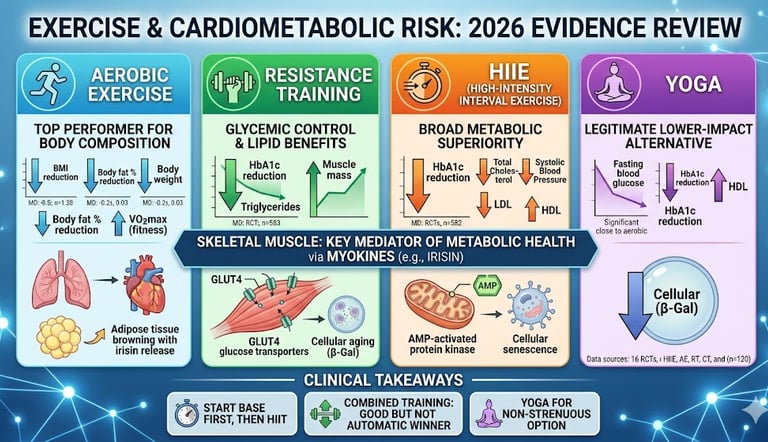
The latest 2026 evidence suggests that HIIT provides the greatest improvements in blood sugar, cholesterol, and blood pressure, while aerobic exercise is most effective for weight loss and cardiovascular fitness. Resistance training improves insulin sensitivity and muscle health, and yoga offers meaningful metabolic benefits for people who prefer lower-impact exercise.
Key takeaways :
HIIE is the Metabolic Powerhouse: High-intensity interval exercise (HIIE) dominates metabolic outcomes, ranking first for HbA1c reduction, fasting blood glucose control, waist circumference reduction, and blood pressure management.
Aerobic Exercise Rules Body Composition: For raw fat loss, weight reduction, and improving cardiorespiratory fitness, traditional aerobic exercise remains the gold-standard modality.
Strength Training is a Glycemic Heavyweight: Resistance training is highly effective for glycemic control, producing independent, significant reductions in HbA1c, fasting glucose, and triglycerides.
Yoga is a Legitimate Medical Intervention: Far from just a stretching routine, structured yoga performs comparably to traditional exercise modalities in lowering blood sugar and improving lipid profiles.
Exercise Combats Cellular "Zombie" Cells: All major modalities—aerobic, resistance, and yoga—significantly lower beta-galactosidase expression, a key biomarker of cellular senescence (accelerated molecular aging) caused by chronic hyperglycemia.
Muscles Function as Endocrine Organs: The metabolic benefits of exercise are driven by skeletal muscle contraction, which secretes signaling molecules called myokines (such as irisin) that communicate directly with the liver, pancreas, and fat tissue to maintain homeostasis.
More Complexity Doesn't Mean More Benefit: Despite intuitive assumptions, combined training (mixing modalities) does not automatically outperform single, dedicated modalities for specific goals like weight loss or body fat reduction.
Consistency Trumps Intensity on Day One: While high-intensity protocols deliver the most rapid metabolic improvements per minute, they pose safety and adherence challenges for sedentary individuals. Building a base with low-impact or resistance work is clinically recommended before escalating intensity.
Introduction
If you've been told to "just exercise more" to fix your blood sugar, blood pressure, or cholesterol, you've probably also been left wondering: which exercise, exactly? Walking? Lifting weights? Sprinting? Yoga?
That question matters more than it sounds. Cardiometabolic risk factors — the cluster of issues that includes high blood sugar, high blood pressure, abnormal cholesterol, excess abdominal fat, and insulin resistance — are the single biggest driver of heart disease, stroke, and type 2 diabetes worldwide. And not all exercise affects them the same way.
In this guide, you'll get a clear, evidence-based answer based on the newest research available, including a 2026 network meta-analysis that directly ranked aerobic exercise, resistance training, combined training, and high-intensity interval exercise (HIIE) against each other, a randomized controlled trial that measured exercise's effect on cellular aging in people with type 2 diabetes, and a Harvard symposium report on the biological mechanisms connecting muscle movement to metabolic health.
What Are Cardiometabolic Risk Factors?
"Cardiometabolic risk" isn't one thing — it's a bundle of related, overlapping conditions that together raise your risk of heart attack, stroke, and type 2 diabetes. Clinically, this usually includes:
Dyslipidemia — high total cholesterol and LDL ("bad" cholesterol), low HDL ("good" cholesterol), and elevated triglycerides
Hypertension — chronically elevated blood pressure
Abdominal obesity — excess visceral fat, often measured by waist circumference or BMI
Insulin resistance/hyperglycemia — including prediabetes and type 2 diabetes mellitus (T2DM)
Metabolic syndrome — a formal diagnosis when you have three or more of the above
These risk factors rarely travel alone. Someone with elevated fasting blood glucose is statistically far more likely to also have high blood pressure and an unfavorable lipid profile — which is exactly why researchers increasingly study them as a connected system rather than separate problems, and why exercise interventions are tested across all of these markers simultaneously rather than one at a time.
Cardiometabolic risk factors are a cluster of interrelated conditions — including high blood pressure, abnormal cholesterol, excess abdominal fat, and insulin resistance or high blood sugar — that together significantly raise the risk of cardiovascular disease and type 2 diabetes.
How Exercise Changes Your Metabolism: The Mechanisms
Here's the part most articles skip — and it's the part that actually matters for interpreting the results you're about to read.
A landmark 2026 report from the 26th Annual Harvard Nutrition Obesity Symposium, published in the American Journal of Clinical Nutrition, brought together leading exercise physiologists and metabolism researchers to lay out exactly why skeletal muscle is the central organ driving exercise's metabolic benefits. The authors state plainly that skeletal muscle is a crucial facilitator of many of the effects of exercise on metabolic health.
Three mechanisms matter most for your cardiometabolic risk:
1. Myokines — your muscles act like an endocrine organ
When you contract a muscle, it doesn't just burn fuel — it secretes signaling molecules called myokines (also called "exerkines") directly into your bloodstream. According to the Harvard symposium report, intrinsic myocellular mechanisms, exercise-induced myokine secretion, and crosstalk between multiple organ systems contribute to the maintenance of energy homeostasis, cardiovascular health, strength, cognition, and quality of life.
In plain terms: your muscle talks to your liver, your fat tissue, your pancreas, and your blood vessels every time you train. This is why exercise can lower blood sugar and improve cholesterol even before you lose a single pound of fat.
2. Irisin — a specific myokine tied to fat and metabolic health
One of the most-studied of these exercise-induced myokines is irisin, which researchers have proposed plays a direct role in metabolic health, including effects on fat tissue "browning" (converting energy-storing white fat toward more metabolically active brown-like fat). A 2026 systematic review and meta-analysis in Sports Medicine set out specifically to test how different training types affect circulating irisin in people with overweight or obesity, noting that irisin has been proposed to exert beneficial effects on metabolic health, although its response across different training types remains inconsistent — which is exactly why a dedicated meta-analysis was needed.
3. Cellular senescence — exercise at the molecular aging level
Chronic high blood sugar doesn't just damage blood vessels — it appears to accelerate cellular aging at the molecular level. A 2026 randomized controlled trial published in the Indian Journal of Physiology and Pharmacology tested this directly by measuring beta-galactosidase (β-Gal) gene expression, a well-established biomarker of cellular senescence, in people with type 2 diabetes before and after 16 weeks of structured exercise. We'll cover the striking results of this trial in detail below — but the takeaway up front is that exercise's benefits go deeper than the numbers on a lipid panel.
Clinical importance: Understanding these mechanisms matters because it explains why different exercise types produce different results. Aerobic exercise drives mitochondrial and cardiovascular adaptations; resistance training drives muscle mass and insulin-receptor changes; HIIT triggers a more concentrated metabolic stress response. None of them work through identical pathways — which is exactly why the comparative data below shows real, clinically meaningful differences between exercise types rather than "exercise is just exercise."
The Evidence: Exercise Type by Exercise Type
Let's get into the actual numbers. The most rigorous comparative data here comes from a 2026 network meta-analysis (NMA) published in Diabetology & Metabolic Syndrome, which pooled 16 randomized controlled trials and 582 participants with overweight or obesity and type 2 diabetes, comparing aerobic exercise (AE), resistance training (RT), combined training (CT), and high-intensity interval exercise (HIIE) against non-exercising control groups.
This is a genuinely useful study for clinical decision-making because, unlike a simple meta-analysis, a network meta-analysis can statistically rank multiple interventions against each other even when most individual trials only compared two groups directly. The certainty of evidence, assessed using the CINeMA framework, ranged from very low to moderate — an important caveat to keep in mind as you read the numbers, since no comparison reached high-certainty status.
Aerobic Exercise (AE)
Aerobic exercise — walking, cycling, jogging, swimming — was the strongest performer for body composition. Compared to control groups, aerobic exercise produced significant reductions in BMI and percentage body fat, ranking highest of all four exercise types for both outcomes.
Aerobic exercise also significantly reduced body weight compared to controls, and it was the top performer for cardiorespiratory fitness, significantly increasing VO₂max — the gold-standard measure of aerobic fitness and a strong independent predictor of cardiovascular mortality risk.
Clinical interpretation: If your primary concern is excess weight, body fat percentage, or low cardiovascular fitness, aerobic exercise has the strongest, most consistent evidence for those specific outcomes. The researchers suggest this likely works through increased superoxide dismutase activity and regulating growth hormone and adiponectin levels, thereby inhibiting adipose tissue accumulation.
Resistance Training (RT)
Resistance training — using weights, machines, or resistance bands — punched above its weight on glycemic control. It produced a significant reduction in HbA1c — numerically the largest HbA1c reduction of any single modality in this analysis, even ahead of aerobic exercise, though confidence intervals overlapped substantially across groups.
Resistance training also significantly reduced fasting blood glucose, total cholesterol, and triglycerides compared to controls.
Clinical interpretation: Don't discount strength training as "just for muscle." For people whose primary concern is blood sugar control rather than weight loss, resistance training delivers comparable — and by some metrics, slightly larger — glycemic benefits than aerobic exercise, while also building the muscle mass that protects against frailty and sarcopenia later in life.
Combined Training (CT)
Combined training (mixing aerobic and resistance work in the same program) significantly improved HbA1c and fasting blood glucose, but — somewhat surprisingly — it did not show a statistically significant advantage for weight loss or body fat reduction in this analysis. The researchers note this contrasts with the findings of at least one earlier systematic review, and suggest the discrepancy may be attributed to differences in intervention duration between the studies.
Clinical interpretation: Combined training is far from useless — it reliably improves glycemic markers — but if your specific goal is body composition change, this particular analysis suggests dedicated aerobic work may be more efficient than splitting your time between modalities. More long-duration trials are needed to confirm this.
High-Intensity Interval Exercise (HIIE/HIIT)
HIIE was the standout performer across the broadest range of outcomes. It produced the single largest HbA1c reduction of any modality. It also ranked first for fasting blood glucose, waist circumference, total cholesterol, triglycerides, HDL cholesterol increase, and systolic blood pressure reduction.
Mechanistically, the study authors point to AMPK activation and increased PGC-1α mRNA expression — key processes in mitochondrial biogenesis and fat metabolism that enhance insulin sensitivity as the likely driver behind HIIE's outsized glycemic effect, combined with the fact that it is more time-efficient than steady-state training.
Clinical interpretation: HIIE delivers the broadest metabolic benefit per minute of any exercise type studied here — but the researchers also flag an important caveat: its high intensity may pose challenges for individuals without prior exercise training experience. This isn't a modality to start with on day one if you're currently sedentary; it's one to work up to.
Yoga
Yoga doesn't appear in the network meta-analysis above, but a separate 2026 randomized controlled trial in the Indian Journal of Physiology and Pharmacology directly compared it to aerobic and resistance exercise in 120 people with type 2 diabetes. Yoga produced statistically significant improvements in fasting blood glucose, post-prandial glucose, HbA1c, LDL, and HDL — performing essentially in the same range as aerobic and resistance training across most markers, though aerobic exercise edged it out slightly on glycemic and lipid measures (more detail in the dedicated section below).
Clinical interpretation: For people who cannot tolerate higher-intensity training — due to joint issues, cardiovascular caution, advanced age, or simple preference — yoga is not a "lesser" option. It's a legitimate, evidence-backed alternative that the trial's authors specifically recommend as a lower-impact alternative or complement to traditional exercises—especially for individuals unable to engage in strenuous activity.
Head-to-Head: Which Exercise Wins for Which Outcome?
Key Findings by Clinical Outcome
* Glycemic Control (HbA1c & Fasting Glucose): High-Intensity Interval Exercise (HIIE) leads the pack, ranking first for HbA1c reduction (90.2% SUCRA) and fasting blood glucose control (88.2% SUCRA). Resistance Training (RT) ranks closely behind as a strong second for blood sugar management.
* Lipid Profile Optimization: HIIE delivers its most definitive statistical performance in lipid management, ranking first for both triglyceride reduction (96.4% SUCRA) and HDL ("good") cholesterol increases (95.0% SUCRA).
* Body Composition & Weight Management: Aerobic Exercise (AE) is the clear winner for structural changes, ranking highest for BMI reduction (92.0% SUCRA), body weight loss (83.4% SUCRA), and body fat percentage reduction (81.5% SUCRA). Notably, AE was the only modality to achieve statistical significance on its own against control groups for BMI changes.
* Cardiovascular Metrics: HIIE ranks first for systolic blood pressure reduction (91.1% SUCRA) and waist circumference reduction (91.8% SUCRA). For cardiorespiratory fitness, VO2max, Aerobic Exercise reclaims the top spot with an exceptional 96.4% SUCRA probability.
Crucial Clinical Patterns
* The HIIE vs. Aerobic Divide: A distinct functional split emerges from the data: HIIE heavily dominates metabolic, glycemic, and lipid markers, whereas traditional Aerobic Exercise clearly dominates body composition and raw cardiorespiratory fitness.
* Resistance Training as a Reliable Default: While Resistance Training rarely claims the absolute top spot for individual metabolic markers, it consistently performs as a strong, highly reliable "second place" without ever ranking last. This makes it an incredibly defensible, effective default protocol for individuals who cannot or will not perform high-intensity workouts.
* The Paradox of Combined Training: Despite the intuitive belief that mixing aerobic and resistance training yields "the best of both worlds," combined training failed to outperform single, dedicated modalities for body composition in this dataset. This serves as a vital clinical reminder that adding training complexity does not automatically translate to superior physiological benefits.
Deep Dive: Exercise and Type 2 Diabetes
Because three of the five studies behind this article focus specifically on type 2 diabetes mellitus (T2DM), it's worth examining one trial in detail — partly because it adds something the network meta-analysis above doesn't capture: a head-to-head comparison that includes yoga, and a second biological outcome beyond standard metabolic panels.
The trial design
Published in 2026 in the Indian Journal of Physiology and Pharmacology, this randomized controlled trial enrolled 120 patients, aged 25–40 years, diagnosed with T2DM, who were split into four equal groups: control, aerobic exercise, resistance exercise, and yoga. Each exercise group trained for 50-minute exercise sessions 3 times a week for 16 weeks. Researchers measured fasting blood glucose, post-prandial blood glucose, HbA1c, LDL, and HDL at baseline, 8 weeks, and 16 weeks.
The results, by marker
Fasting blood glucose: All three exercise types produced statistically significant reductions versus control by week 8, with continued improvement by week 16. The control group showed no significant change at any point.
HbA1c: The same pattern held — yoga (P = 0.013, 0.017), resistance (P = 0.020, 0.043) and aerobic (P = 0.022, 0.015) groups all improved significantly, with no change in controls.
Lipid profile: LDL cholesterol fell and HDL cholesterol rose significantly in all three exercise groups, with the largest LDL reduction and HDL increase occurring in the aerobic exercise group.
In the study's discussion, the authors highlight that aerobic exercise produced the most consistent advantage overall, reporting a 12.6% reduction in fasting and post-prandial glucose levels, as well as HbA1c by the end of the 16-week intervention, attributing this in part to AE's effect on inducing glucose transporter type 4 (GLUT4) translocation to the plasma membrane — a direct cellular mechanism for improved insulin sensitivity. Resistance training and yoga weren't far behind, producing roughly 13.1% and 10.4% reductions, respectively.
Clinical importance: This is a meaningful finding beyond the percentages. The study's authors point out that even modest HbA1c reductions have been shown to lower the risk of complications in T2DM by 21%, including nephropathy, neuropathy, and retinopathy — the major long-term complications that drive most of the disability associated with diabetes. In other words, these aren't just lab-value improvements; they translate to a meaningfully reduced risk of losing kidney function, nerve sensation, or eyesight over the long run.
The authors' clinical recommendation, stated directly in their conclusion: aerobic exercise emerged as the most effective and should be prioritized when feasible, with RE and yoga as supportive alternatives based on individual needs — an important, practical hierarchy for anyone managing T2DM who has to choose where to start.
Exercise and Cellular Aging: The Senescence Connection
This is the part of the evidence base that goes beyond standard "exercise lowers blood sugar" coverage, and it's worth understanding because it changes how you should think about why exercise matters for long-term health.
The same Indian RCT described above included a second, less commonly studied outcome: beta-galactosidase (β-Gal) gene expression, measured via reverse transcription quantitative PCR from blood samples. β-Gal is described in the literature as the most extensively used biomarker for detecting cellular senescence — essentially, a marker of how many of your cells have entered a "zombie" state where they no longer divide or function properly but also refuse to die, releasing inflammatory signals into surrounding tissue.
Why this matters for T2DM specifically
Chronic high blood sugar is believed to accelerate this cellular aging process through multiple pathways, and prior research cited in the study has shown that markers of cellular senescence are significantly increased in pancreatic β-cells in people with diabetes — meaning the very cells responsible for producing insulin may themselves be aging prematurely as a consequence of the disease they're trying to control.
What the trial found
All three exercise groups — aerobic, resistance, and yoga — produced a statistically significant reduction in β-Gal expression compared to control at both the 8-week and 16-week marks (P ≤ 0.01 for all comparisons), with the study authors noting that all groups were comparable in their effect on reduction — unlike the glycemic markers, where aerobic exercise had a slight edge, all three modalities appeared roughly equally effective at slowing this marker of cellular aging.
The researchers propose several plausible mechanisms behind this effect, including enhanced mitochondrial function, increased telomere length, and reduced oxidative stress, along with activation of key cellular regulatory pathways such as AMP-activated protein kinase and sirtuins — the same AMPK pathway, notably, that the separate network meta-analysis above credited with HIIE's glycemic benefits.
Clinical importance: This finding matters because it suggests exercise's protective effect in T2DM isn't limited to managing blood sugar day-to-day — it may also be slowing a biological aging process linked to the long-term complications of the disease, including cardiovascular disease and neurodegenerative disorders. It's also genuinely useful reassurance for patients who can't tolerate aerobic or resistance training at high volumes: yoga showed essentially equivalent anti-senescence benefit, even though it ranked slightly behind on raw glycemic numbers.
A caveat worth stating plainly: this is one trial, with 120 participants split across four groups, using a single senescence biomarker. It's a genuinely novel and clinically interesting result, but it needs replication in larger, more diverse populations before it should be treated as established fact rather than a promising signal.
How to Apply This: Practical Protocols
Theory and statistics are only useful if you can turn them into a Tuesday. Here's how to translate the evidence above into an actual weekly plan, based on your primary goal.
If your priority is blood sugar control (HbA1c, fasting glucose)
Best evidence-backed option: High-intensity interval exercise, 2–3x/week
Sample protocol: 5-minute warm-up, then 8–10 rounds of 1 minute hard effort (cycling, rowing, or fast walking on an incline) followed by 1–2 minutes easy recovery, then a 5-minute cool-down
Who should NOT start here: Anyone sedentary for 6+ months, anyone with uncontrolled hypertension, or anyone with diabetic complications affecting the eyes, kidneys, or feet — start with aerobic or resistance work first and build a base
Strong alternative: Resistance training 2–3x/week (full-body, 8–10 exercises, 2–3 sets of 8–12 reps)
If your priority is weight loss/body composition
Best evidence-backed option: Aerobic exercise, accumulated to at least 150 minutes/week of moderate intensity
Sample protocol: 30–50 minutes of brisk walking, cycling, or swimming, 4–5x/week, at an intensity where you can talk but not sing comfortably
Add this: Two resistance sessions/week to preserve muscle mass while losing fat — pure aerobic work without any resistance training risks losing muscle along with fat
If your priority is cardiovascular fitness (VO₂max)
Best evidence-backed option: Aerobic exercise as the base, with HIIE layered in 1x/week once you've built a consistent aerobic habit
If you have joint pain, advanced age, anxiety about high-intensity exercise, or simply prefer a gentler entry point
Best evidence-backed option: Yoga, 3x/week, 50-minute sessions
What the evidence supports: Comparable glycemic, lipid, and cellular-ageing benefits to aerobic and resistance training in people with T2DM — yoga is a legitimate primary intervention, not just a "warm-up" to real exercise
A reasonable default for most people with T2DM or metabolic syndrome
Based on the totality of the evidence above, a sensible weekly structure looks like:
2x/week: Resistance training (full body)
2–3x/week: Moderate aerobic exercise (30–45 minutes)
1x/week (once established): A HIIE session, swapped in for one aerobic session
Optional: Yoga on rest days for flexibility, stress reduction, and additional metabolic benefit without added joint stress
Safety note: If you have type 2 diabetes, cardiovascular disease, retinopathy, peripheral neuropathy, or any uncontrolled cardiometabolic condition, talk to your doctor before starting a new exercise program — especially before beginning high-intensity interval training. Your physician may want to adjust your medication timing (particularly insulin or sulfonylureas) around exercise to avoid hypoglycemia, and screen for any complications that would make certain exercise types unsafe (for example, high-impact activity with significant diabetic retinopathy).
Evidence Summary Table
1. Xiong, Hu, Liao, Mo et al., 2026 (Diabetology & Metabolic Syndrome)
Study Design: Network meta-analysis pooling 16 randomized controlled trials.
Population: Overweight or obese adults diagnosed with type 2 diabetes mellitus (T2DM).
Key Comparison: Aerobic Exercise (AE) vs. Resistance Training (RT) vs. Combined Training (CT) vs. High-Intensity Interval Exercise (HIIE) vs. non-exercising controls.
Headline Finding: HIIE emerged as the top performer for metabolic efficiency, ranking best for HbA1c reduction, lipid profile optimization, and blood pressure control. Conversely, traditional AE proved superior for changing body composition parameters and elevating VO2max
2. Subham, Jindal, Sharma et al., 2026 (Indian Journal of Physiology and Pharmacology)
Study Design: 16-week randomized controlled trial .
Population: Adults aged 25–40 years presenting with type 2 diabetes.
Key Comparison: Aerobic Exercise (AE) vs. Resistance Exercise (RT) vs. Yoga vs. non-exercising controls.
Headline Finding: All three active training modalities produced statistically significant drops in fasting glucose, HbA1c and harmful lipids, while simultaneously driving down beta Gal expression—a core biomarker of cellular senescence (molecular aging). While all were highly effective, AE maintained a slight performance edge over the others.
3. Hejazi, Mohammad Rahimi, Saeidi et al., 2026 (Sports Medicine)
Study Design: Systematic review and meta-analysis.
Population: Adults classified as overweight or obese.
Key Comparison: Aerobic Exercise (AE) vs. Resistance Training (RT) vs. Concurrent Training vs. High-Intensity Interval Training (HIIT).
Headline Finding: This review mapped out exactly how these distinct training styles alter circulating levels of irisin—a critical, muscle-derived myokine firmly linked to protective metabolic signaling and fat tissue adaptation.
4. Carollo, Lawson, Stanley et al., 2026 (American Journal of Clinical Nutrition)
Study Design: Narrative expert symposium report.
Population: N/A (mechanistic science review).
Key Comparison: Comprehensive synthesis of cutting-edge skeletal muscle physiology and exercise research.
Headline Finding: The report confirms that skeletal muscle operates essentially as an endocrine organ, driving the vast majority of exercise-induced metabolic benefits via targeted myokine secretion and rapid, protective crosstalk with distant organ systems.
5. Chatzi, Markozannes, Ntzani et al., 2026 (Journal of Diabetes and Its Complications)
Study Design: Umbrella review aggregating multiple systematic reviews and meta-analyses.
Population: Diverse adult populations presenting with established cardiometabolic risk factors.
Key Comparison: Broad evaluation of multiple exercise intervention frameworks against long-term clinical cardiometabolic outcomes.
Headline Finding: Provides a top-tier, umbrella-level structural synthesis of the broader global data on how targeted physical activity mitigates interconnected cardiometabolic risk metrics
Common Myths and Mistakes
Myth: "Cardio is the only exercise that matters for heart health." The evidence above directly contradicts this. Resistance training matched or exceeded aerobic exercise for HbA1c reduction in the 2026 network meta-analysis, and produced significant improvements in total cholesterol and triglycerides on its own.
Myth: "If it's not high-intensity, it's not doing anything." Yoga produced statistically significant improvements across glucose, HbA1c, lipids, and a cellular aging marker in a controlled trial against active comparators. Lower-intensity, consistently performed exercise is not a consolation prize.
Mistake: Jumping straight into HIIT without a base. The network meta-analysis authors specifically flagged that HIIE's high intensity may pose challenges for individuals without prior exercise training experience. Build an aerobic and resistance base first.
Mistake: Doing only aerobic work and assuming muscle loss doesn't matter. Losing muscle mass alongside fat mass can blunt long-term metabolic benefits and increase frailty risk, particularly in older adults. Pair aerobic work with resistance training.
Mistake: Expecting overnight results. In the T2DM trial above, statistically significant improvements were measurable at 8 weeks but continued to improve through 16 weeks. Cardiometabolic adaptation is a months-long process, not a days-long one.
Mistake: Stopping exercise once numbers improve. None of the studies reviewed here tested what happens after participants stopped training, but the broader literature on exercise and metabolic health consistently shows that benefits regress once training stops. This is a maintenance intervention, not a one-time fix.
Myth: "Combined training is automatically the best because it does everything." The 2026 network meta-analysis specifically found that combined training did not show a significant body composition advantage over single modalities in this dataset — a useful reminder that more complexity doesn't always equal more benefit, and that the consistency of doing one thing well may matter more than doing several things briefly.
Frequently Asked Questions
What is the best exercise for lowering cardiometabolic risk factors? There isn't one universal "best" — the evidence shows different exercise types excel at different outcomes. High-intensity interval exercise ranked best for blood sugar, cholesterol, triglycerides, and blood pressure in a 2026 network meta-analysis, while aerobic exercise ranked best for weight loss, body fat reduction, and cardiovascular fitness. Resistance training and yoga both produced significant, comparable improvements across most markers in people with type 2 diabetes.
Can yoga really lower blood sugar as effectively as aerobic exercise? In a 2026 randomized controlled trial of 120 people with type 2 diabetes, yoga produced statistically significant reductions in fasting blood glucose, HbA1c, and LDL cholesterol that were comparable to — though slightly smaller than — those seen with aerobic exercise. Yoga is a legitimate, evidence-supported option, especially for people who cannot tolerate higher-intensity training.
How quickly will exercise improve my cardiometabolic risk factors? In the studies reviewed here, statistically significant improvements in blood glucose and HbA1c were measurable as early as 8 weeks of consistent training (3 sessions/week), with continued improvement through 16 weeks. Don't expect dramatic change in the first two weeks — consistency over months is what the data supports.
Is high-intensity interval training (HIIT) safe for people with type 2 diabetes? HIIT showed strong benefits in the research reviewed, but the study authors specifically cautioned that its intensity can be challenging for people without prior exercise experience. If you're sedentary, have diabetic complications, or have uncontrolled blood pressure, build a base with moderate aerobic and resistance training first, and talk to your doctor before starting interval training.
Does resistance training really help with blood sugar as much as cardio? Yes — in the 2026 network meta-analysis, resistance training produced a numerically larger reduction in HbA1c than aerobic exercise (though the confidence intervals overlapped), and it significantly improved fasting blood glucose, total cholesterol, and triglycerides as well.
What is irisin, and does exercise actually increase it? Irisin is a myokine — a signaling molecule released by contracting muscle — that has been proposed to support metabolic health, partly through effects on fat tissue. A 2026 systematic review and meta-analysis specifically investigated how different exercise modalities (aerobic, resistance, concurrent, and HIIT) affect circulating irisin levels in adults with overweight or obesity, reflecting the growing scientific interest in how, not just whether, exercise improves metabolism.
Can exercise actually slow cellular aging, or is that an exaggeration? A 2026 randomized controlled trial measured beta-galactosidase gene expression — a recognized biomarker of cellular senescence — in people with type 2 diabetes before and after structured exercise. All three exercise groups (aerobic, resistance, and yoga) showed statistically significant reductions in this senescence marker compared to a non-exercising control group. This is a meaningful, biologically grounded finding, though it comes from a single trial and warrants replication before being treated as definitive.
Do I need to combine aerobic and resistance training, or is one enough? Combining both is generally recommended for comprehensive cardiometabolic and musculoskeletal health, but the evidence doesn't support assuming combined training automatically beats either modality alone for every outcome. If time is limited, doing one modality consistently and well may be more valuable than splitting limited time between several.
How much exercise do I need per week to see these benefits? The trials reviewed here used roughly 150 minutes per week (3 sessions of 50 minutes), which aligns with general public health exercise guidelines. The 2025 American Diabetes Association guidelines recommend 200–300 minutes of weekly exercise specifically for people with obesity and type 2 diabetes.
Will exercise alone fix my cardiometabolic risk factors, or do I need medication too? Exercise produces real, measurable, clinically meaningful improvements across blood sugar, lipids, blood pressure, and body composition — but it's one part of comprehensive management, alongside nutrition, sleep, and, when appropriate, medication. Don't stop or adjust prescribed medications based on exercise alone without talking to your doctor.
Is it better to exercise in the morning or evening for metabolic benefits? None of the five studies reviewed for this article specifically tested time-of-day effects, so this remains an open question best directed to your physician or a sports medicine specialist if timing is a specific concern — what the evidence consistently supports is that consistency (3+ sessions weekly, sustained over months) matters more than exact timing.
What if I have joint pain or can't do high-impact exercise? Yoga and resistance training (which can be performed with low-impact modifications) both showed strong, significant cardiometabolic benefits in the research reviewed here, making them solid options for people who need to avoid high-impact aerobic activity.
Conclusion and Action Steps
The clearest takeaway from the latest 2026 research is this: exercise type matters, but doing nothing is the only genuinely wrong answer. Every modality examined here — aerobic exercise, resistance training, combined training, high-intensity intervals, and yoga — produced statistically significant improvements in cardiometabolic risk factors compared to inactivity.
If you want to act on this today:
Identify your primary risk factor — is it blood sugar, weight, cholesterol, or blood pressure? Use the head-to-head table above to pick your best-matched modality.
Start where you actually are. If you're sedentary, begin with moderate aerobic exercise and basic resistance training before attempting HIIT.
Commit to at least 8 weeks before judging results — the research shows measurable change by week 8, with continued gains through week 16 and likely beyond.
Talk to your doctor before starting, especially if you have diagnosed type 2 diabetes, cardiovascular disease, or diabetic complications — they may need to adjust medications around your new activity level.
Don't abandon a modality you enjoy in favor of a "better-ranked" one you'll quit. Yoga's near-equivalent results to aerobic and resistance training in the T2DM trial above prove that consistency in something sustainable beats sporadic effort at something "optimal."
Cardiometabolic risk is manageable, and the evidence base behind exercise as a frontline intervention has never been stronger or more specific than it is right now.
This article is for informational purposes and does not replace personalized medical advice. Please consult your doctor before beginning any new exercise program, particularly if you have diagnosed cardiometabolic conditions.
Related Articles
Why Sitting All Day Is Quietly Damaging Your Heart — Even If You Exercise
Can Exercise Really Prevent Chronic Disease? What the Latest Science Actually Shows
Non-Negotiable Health: Why All Women Need Resistance Training, Not Just Cardio | DR T S DIDWAL
The Aging Muscle Paradox: How Senescent Cells Cause Insulin Resistance and The Strategies to Reverse It | DR T S DIDWAL
VO2 Max & Longevity: The Ultimate Guide to Living Longer | DR T S DIDWAL
References
American Diabetes Association. (2025). 5. Facilitating positive health behaviors and well-being to improve health outcomes: Standards of Care in Diabetes—2025. Diabetes Care, 48(Suppl. 1), S86–S127. https://doi.org/10.2337/dc25-S005
Bellicha, A., van Baak, M. A., Battista, F., Beaulieu, K., Blundell, J. E., Busetto, L., Carraça, E. V., Dicker, D., Encantado, J., Ermolao, A., Farpour-Lambert, N., Pramono, A., Woodward, E., & Oppert, J.-M. (2021). Effect of exercise training on weight loss, body composition changes, and weight maintenance in adults with overweight or obesity: An overview of 12 systematic reviews and 149 studies. Obesity Reviews, 22(Suppl. 4), Article e13256. https://doi.org/10.1111/obr.13256
Carapeto, P. V., & Aguayo-Mazzucato, C. (2021). Effects of exercise on cellular and tissue aging. Aging, 13(11), 14522–14543. https://doi.org/10.18632/aging.203051
Carollo, L., Lawson, E. A., Stanley, T. L., Wang, J., Bhattacharya, R., Bishop, DJ., Carmichael, O., Esser, K. A., Febbraio, M. A., Fielding, R. A., Fourman, L. T., Goodpaster, B. H., Goodyear, L. J., Guseh, J. S., Haines, M. S., Hawley, J. A., Heymsfield, S. B., Lindholm, M. E., Long, J. Z., . . . Grinspoon, S. K. (2026). Muscle movement and metabolism: Exercise and skeletal muscle as mediators of health—a report from the 26th Annual Harvard Nutrition Obesity Symposium, 2025. The American Journal of Clinical Nutrition, 123(5), Article 101262. https://doi.org/10.1016/j.ajcnut.2026.101262
Chatzi, C., Markozannes, G., Ntzani, E. E., Rizzo, M., Basios, A., Kalampoki, A., Tsilidis, K., Makrilakis, K., Milionis, H., Rapti, I., & Rizos, E. C. (2026). Effect of different types of exercise interventions on cardiometabolic risk factors: An umbrella review of systematic reviews and meta-analyses. Journal of Diabetes and Its Complications, 40(5), Article 109305. https://doi.org/10.1016/j.jdiacomp.2026.109305
Hejazi, K., Mohammad Rahimi, G. R., Saeidi, A., et al. (2026). Effects of different training modalities on circulating irisin levels in overweight and obesity adults: A systematic review and meta-analysis of randomized controlled trials. Sports Medicine. Advance online publication. https://doi.org/10.1007/s40279-026-02446-z
Iwasaki, K., Abarca, C., & Aguayo-Mazzucato, C. (2023). Regulation of cellular senescence in type 2 diabetes mellitus: From mechanisms to clinical applications. Diabetes & Metabolism Journal, 47(4), 441–453. https://doi.org/10.4093/dmj.2023.0069
Jansson, A. K., Chan, L. X., Lubans, D. R., Duncan, M. J., & Plotnikoff, R. C. (2022). Effect of resistance training on HbA1c in adults with type 2 diabetes mellitus and the moderating effect of changes in muscular strength: A systematic review and meta-analysis. BMJ Open Diabetes Research & Care, 10(2), Article e002595. https://doi.org/10.1136/bmjdrc-2021-002595
Joseph, J. J., Deedwania, P., Acharya, T., Aguilar, D., Bhatt, D. L., Chyun, D. A., Furie, K. L., Ichinsky, I. A., Kirkman, M. S., & Nathan, N. D. (2022). Comprehensive management of cardiovascular risk factors for adults with type 2 diabetes: A scientific statement from the American Heart Association. Circulation, 145(9), e722–e759. https://doi.org/10.1161/CIR.0000000000001040
Kanaley, J. A., Colberg, S. R., Corcoran, M. H., Malin, S. K., Rodriguez, N. R., Crespo, C. J., Kirwan, J. P., & Zierath, J. R. (2022). Exercise/physical activity in individuals with type 2 diabetes: A consensus statement from the American College of Sports Medicine. Medicine & Science in Sports & Exercise, 54(2), 353–368. https://doi.org/10.1249/MSS.0000000000002800
Kirwan, J. P., Sacks, J., & Nieuwoudt, S. (2017). The essential role of exercise in the management of type 2 diabetes. Cleveland Clinic Journal of Medicine, 84(12 Suppl. 1), S15–S21. https://doi.org/10.3949/ccjm.84.s1.03
Mann, S., Beedie, C., & Jimenez, A. (2014). Differential effects of aerobic exercise, resistance training and combined exercise modalities on cholesterol and the lipid profile: Review, synthesis and recommendations. Sports Medicine, 44(2), 211–221. https://doi.org/10.1007/s40279-013-0110-5
Mattioni Maturana, F., Martus, P., Zipfel, S., & Niess, A. M. (2021). Effectiveness of HIIE versus MICT in improving cardiometabolic risk factors in health and disease: A meta-analysis. Medicine & Science in Sports & Exercise, 53(3), 559–573. https://doi.org/10.1249/MSS.0000000000002506
Raveendran, A. V., Deshpandae, A., & Joshi, S. R. (2018). Therapeutic role of yoga in type 2 diabetes. Endocrinology and Metabolism, 33(3), 307–317. https://doi.org/10.3803/EnM.2018.33.307
Stratton, I. M., Adler, A. I., Neil, H. A. W., Matthews, D. R., Manley, S. E., Cull, C. A., Hadden, D., Turner, R. C., & Holman, R. R. (2000). Association of glycaemia with macrovascular and microvascular complications of type 2 diabetes (UKPDS 35): Prospective observational study. BMJ, 321(7258), 405–412. https://doi.org/10.1136/bmj.321.7258.405
Subham, Jindal, R., Sharma, S. S., Uppal, H., George, S., & Sharma, R. (2026). Comparative effects of aerobic exercise, resistance exercise and yoga on metabolic profile and cellular ageing in type 2 diabetes mellitus. Indian Journal of Physiology and Pharmacology, 70, 34–41. https://doi.org/10.25259/IJPP_406_2025
Sun, H., Saeedi, P., Karuranga, S., Pinkepank, M., Ogurtsova, K., Duncan, B. B., Stein, C., Basit, A., Mbanya, J. C., Pavkov, M. E., Ramachandran, A., Wild, S. H., Fleming, S., Zhang, P., & Magliano, D. J. (2022). IDF Diabetes Atlas: Global, regional and country-level diabetes prevalence estimates for 2021 and projections for 2045. Diabetes Research and Clinical Practice, 183, Article 109119. https://doi.org/10.1016/j.diabres.2021.109119
Xiong, P., Hu, M., Liao, X., Zhang, B., Mo, F., et al. (2026). Effects of different types of exercise on systemic metabolic health in overweight/obese patients with type 2 diabetes mellitus: A network meta-analysis. Diabetology & Metabolic Syndrome, 18, Article 132. https://doi.org/10.1186/s13098-026-02162-8