Low-Carb Diets Don't Just Lower Blood Sugar—They May Reduce Chronic Inflammation Too
Discover how carbohydrate restriction affects inflammation, insulin resistance, and immune health. Evidence-based analysis of the latest 2026 diabetes study.
NUTRITIONDIABETES
Dr. T.S. Didwal, M.D.(Internal Medicine)
7/25/202613 min read
How does a low-carb diet affect inflammation in Type 2 Diabetes?
A low-carb, nutritional ketosis diet significantly reduces systemic inflammation in Type 2 Diabetes. A landmark study found that carbohydrate restriction improved 19 out of 21 inflammatory and immune markers within one year, with benefits sustained through two years by reducing blood sugar spikes and producing anti-inflammatory ketone bodies.
Clinical Pearls
1. T2D is a Disease of Inflammation, Not Just High Blood Sugar
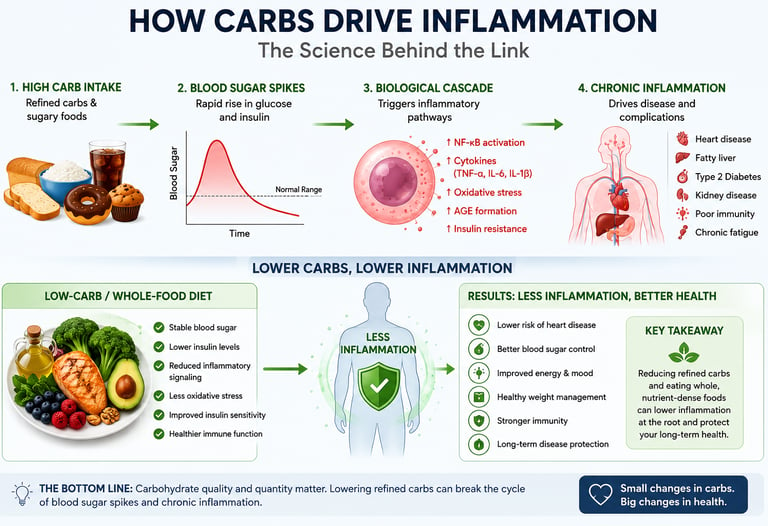
Type 2 diabetes isn't simply a problem with processing sugar; it's a chronic, low-grade inflammatory state. Immune cells infiltrate metabolic tissues like fat and the liver, releasing inflammatory signals (cytokines) that block insulin receptors, creating a cycle where insulin resistance worsens inflammation and vice versa.
2. Carbohydrate Reduction Calms Broad-Spectrum Immune Activation
A landmark 2026 study published in Endocrine Research tracked adults with T2D following a continuous-care, carbohydrate-restricted protocol over two years. 19 out of 21 inflammatory and immune markers significantly improved within one year. Most current anti-inflammatory medications only target a single immune pathway, making this broad-spectrum response unique.
3. Ketones Act as Direct Anti-Inflammatory Signaling Molecules
When you restrict carbohydrates enough to enter nutritional ketosis, your body produces a primary ketone body called beta-hydroxybutyrate (BHB). Beyond being an alternative fuel source, BHB actively suppresses the NLRP3 inflammasome—a molecular switch inside immune cells that triggers inflammatory signals.
4. Benefits Correlate with Adherence and Weight Loss, Not "All-or-Nothing"
The research revealed a clear dose-response relationship: patients who adhered more closely to carbohydrate reduction and lost more weight experienced larger decreases in inflammatory markers. However, partial adherence still provided partial anti-inflammatory benefits—it isn't an all-or-nothing threshold.
5. Fiber-Rich Carbs Support a Separate, Essential Immune Pathway
While reducing refined carbs and sugars cuts down on glucose spikes, you shouldn't fear all carbohydrates equally. Soluble dietary fiber feeds gut bacteria, which produce short-chain fatty acids (SCFAs) that suppress inflammatory pathways via distinct gut receptors. Balancing low-glycemic, fiber-rich foods alongside carb reduction supports multiple anti-inflammatory mechanisms.
6. These Gains Track Intermediate Markers, Not Final Clinical Endpoints
While seeing 19 out of 21 inflammatory markers drop is promising, it is important to treat this as strong preliminary evidence. The study measured surrogate biomarkers (like inflammatory proteins) rather than hard clinical outcomes like long-term reductions in heart attacks or kidney disease.
7. Immune Regulation Means Restoring Balance, Not "Shutting Down" Immunity
Type 2 diabetes creates a paradox where the immune system is hyperactive in damaging ways (causing chronic tissue inflammation) yet underactive against real threats (leading to poor wound healing and infection risk). Carbohydrate reduction helps restore overall immune crosstalk, aiming for balanced protection rather than suppressing necessary immune responses.
8. Medical Supervision is Essential to Avoid Hypoglycemia Risks
If you take blood glucose-lowering medications—especially insulin or sulfonylureas—reducing carbohydrates will rapidly change your insulin needs. Decreasing carbohydrate intake without adjusting medication doses under a doctor's care creates a high risk for hypoglycemia (dangerously low blood sugar).1. T2D is a Disease of Inflammation, Not Just High Blood Sugar
Introduction
If you're living with type 2 diabetes, you've probably been told to "watch your blood sugar." What almost nobody tells you is that chronic low-grade inflammation — not glucose alone — is quietly driving much of the damage: the fatigue, the slow-healing wounds, the rising cardiovascular risk, the sense that your body is working against you.
That's starting to change. A landmark 2026 study published in Endocrine Research by Athinarayanan, Phinney, Volek, and colleagues tracked 21 different inflammatory and immune markers in adults with type 2 diabetes (T2D) who followed a carbohydrate-restricted, nutritional ketosis protocol for two years. footnote The result: 19 of 21 markers significantly improved within one year, and most of those gains held steady through year two.
Why Inflammation Matters in Type 2 Diabetes
Type 2 diabetes isn't just a blood-sugar disorder. It's increasingly understood as a chronic inflammatory condition with metabolic consequences. Immune cells — particularly macrophages — infiltrate fat tissue, the liver, and pancreatic islets in people with insulin resistance, releasing cytokines like TNF-α, IL-6, and IL-1β that directly interfere with insulin signaling.
According to a 2025 review in ImmunoTargets and Therapy by Berbudi and colleagues, insulin itself is not just a glucose-regulating hormone — it's an active modulator of immune cell function. When insulin signaling breaks down (insulin resistance), the downstream PI3K/Akt and MAPK pathways that normally keep inflammatory responses in check also become dysregulated, creating a feedback loop: inflammation worsens insulin resistance, and insulin resistance worsens inflammation.
This matters clinically because inflammation isn't just a bystander marker — it's mechanistically tied to:
Cardiovascular disease — the leading cause of death in T2D
Diabetic nephropathy (kidney damage)
Non-alcoholic fatty liver disease
Impaired wound healing and infection risk
Beta-cell exhaustion, which accelerates disease progression
An estimated 125 million U.S. adults live with a chronic inflammatory condition, and inflammation is considered a central driver of both the onset and the complications of T2D. Yet conventional diabetes care overwhelmingly targets blood glucose numbers, largely leaving the inflammatory component unaddressed. That's the gap this new research starts to fill.
The 2026 Carbohydrate Reduction Study: What Was Actually Done
Athinarayanan et al., Endocrine Research, 2026)
Design: A post-hoc analysis of a two-year continuous remote-care intervention delivered by Virta Health, comparing:
195 adults with type 2 diabetes and 89 adults with prediabetes who followed an individualized, carbohydrate-restricted nutritional ketosis protocol with continuous clinical support
A usual care (UC) control group receiving standard diabetes management
Researchers measured 21 distinct inflammatory and immune markers at baseline, one year, and two years, including cytokines, acute-phase proteins, and immune cell activity indicators associated with chronic low-grade inflammation.
Key Results and How to Interpret Them Clinically
Here's what the study found, and — more importantly — what it means for someone managing T2D day to day.
The headline finding
19 of 21 inflammatory and immune markers significantly improved after one year, with most improvements largely sustained through two years. According to the study authors, no currently FDA-approved medication targets such a broad spectrum of inflammatory markers simultaneously — most anti-inflammatory drugs (like IL-1 receptor antagonists) act on a single pathway.
Clinically important secondary findings
Dose-response relationship: Higher adherence to the nutrition protocol and greater weight loss were each independently associated with larger reductions in inflammation. This is clinically significant because it suggests the effect isn't an all-or-nothing phenomenon — partial adherence still confers partial benefit, and the relationship appears graded.
Correlation with glycemic control: Improvements in several inflammatory markers tracked with improvements in blood sugar control and insulin sensitivity, supporting the idea of a shared underlying mechanism rather than two unrelated processes improving in parallel by chance.
No meaningful change in the usual care group, which strengthens confidence that the carbohydrate-restricted intervention — not simply time, disease-monitoring, or regression to the mean — drove the differences.
Durability: Sustained improvement at two years is clinically relevant because a common criticism of dietary interventions is that early gains fade. That the effects were "largely maintained" (though not perfectly identical to year-one levels) suggests a genuine physiological adaptation rather than a short-term novelty effect.
What "clinical importance" actually means here
A statistically significant change in a cytokine level doesn't automatically translate into fewer heart attacks or hospitalizations. This is the single most important interpretive caveat in the entire study. As senior author Dr. Vivian Fonseca of Tulane University noted, this is "exciting preliminary data", and future research needs to establish whether these anti-inflammatory changes actually translate into reduced rates of cardiovascular disease and diabetes-related complications — the outcomes patients truly care about.
In clinical epidemiology terms: this study demonstrates changes in surrogate/intermediate biomarkers, not yet hard clinical endpoints. That's a completely normal and valuable first step (this is how most therapies are validated), but it means you should interpret headlines like "carb restriction cures inflammation" with appropriate caution.
The Biology: How Carb Restriction Might Lower Inflammation {#the-biology}
Why would eating fewer carbohydrates calm the immune system? Several overlapping mechanisms are proposed in the literature.
1. Reduced glycemic variability and AGEs
Large blood sugar swings promote the formation of advanced glycation end-products (AGEs), which bind to receptors (RAGE) on immune cells and trigger NF-κB–driven inflammatory signaling. Stabilizing blood glucose through carbohydrate restriction reduces this trigger.
2. Weight loss and adipose tissue remodeling
Visceral fat is not inert storage — it's an active endocrine and immune organ. As fat mass shrinks, macrophage infiltration into adipose tissue decreases, and the balance shifts from pro-inflammatory (M1) to anti-inflammatory (M2) macrophage polarization. The Virta study specifically found weight loss was an independent predictor of inflammatory improvement — separate from ketosis itself.
3. Ketone bodies as signaling molecules
Beta-hydroxybutyrate (BHB), the primary ketone body produced during nutritional ketosis, is not just a fuel source — it directly inhibits the NLRP3 inflammasome, a protein complex responsible for activating IL-1β, one of the most potent pro-inflammatory cytokines in metabolic disease. This gives a plausible, mechanistic explanation for why ketosis specifically (not just calorie or carbohydrate reduction alone) may confer additional anti-inflammatory benefit.
4. Gut microbiota and short-chain fatty acids
Diet composition reshapes the gut microbiome, which produces short-chain fatty acids (SCFAs) — acetate, propionate, and butyrate — that signal through receptors on immune cells (GPR41/GPR43) to suppress NF-κB-driven cytokine production. Interestingly, this pathway is typically associated with fiber-rich, higher-carbohydrate dietary patterns, which is a useful nuance: the anti-inflammatory story in T2D is not simply "carbs bad." Fiber-driven SCFA production and ketone-driven inflammasome suppression are two distinct, sometimes competing, anti-inflammatory pathways — a point often lost in oversimplified diet content online.
5. Insulin signaling and immune cell crosstalk
Per Berbudi et al. (2025), impaired insulin signaling through PI3K/Akt and MAPK pathways doesn't just affect glucose uptake in muscle and fat — it alters how immune cells like macrophages, T cells, and dendritic cells behave, tilting the system toward chronic low-grade activation. Restoring insulin sensitivity, whichever dietary route achieves it, appears to partially restore normal immune cell regulation.
The Immune Dysregulation Side of the Story {#immune-dysregulation}
It's worth separating two related but distinct concepts that often get conflated in popular health content:
Concept What It Means Why It Matters Inflammation Elevated cytokines (TNF-α, IL-6, IL-1β, CRP) reflecting chronic low-grade immune activation Drives tissue damage, insulin resistance, cardiovascular risk Immune dysregulation Broader dysfunction of immune cell behavior — altered T-cell responses, impaired pathogen clearance, disrupted immune cell signaling Contributes to increased infection risk and poor wound healing seen in T2D
The Berbudi review emphasizes that T2D patients often show both heightened inflammatory signaling and impaired protective immune responses simultaneously — a paradox where the immune system is overactive in the wrong way (chronic low-grade cytokine release) and underactive in the right way (pathogen defense). This helps explain why people with poorly controlled T2D are both more inflamed and more prone to infections — two problems that look contradictory but share the same root cause: dysregulated insulin-immune crosstalk.
This is clinically important because it reframes the goal. The objective of dietary intervention isn't simply "reduce inflammation" — it's restoring balanced immune regulation, which may simultaneously lower chronic inflammatory markers while supporting normal protective immunity.
Evidence Summary
Here is the breakdown of the key data points, organized by study:
1. Athinarayanan et al., 2026 (Endocrine Research)
Design: Post-hoc analysis of a continuous care intervention (CCI) compared to usual care.
Population: 195 individuals with Type 2 Diabetes ($n=195$) and 89 with prediabetes ($n=89$).
Duration: 2 years.
Key Findings:
19 out of 21 measured inflammatory markers showed improvement at Year 1.
Improvements were largely sustained through Year 2.
Decreases in inflammation closely correlated with protocol adherence, weight loss, and glycemic control.
Strength of Evidence: Moderate to High (benefited from a 2-year duration and control group, though post-hoc and non-randomized for this specific outcome).
2. Berbudi, Khairani & Tjahjadi, 2025 (ImmunoTargets and Therapy)
Design: Narrative / mechanistic literature review.
Population & Duration: N/A (synthesis of existing basic science and clinical data).
Key Findings:
Establishes a bidirectional link between insulin resistance and immune system dysregulation.
Maps out the specific molecular pathways mediating this crosstalk: PI3K/Akt and MAPK signaling.
Strength of Evidence: Foundational Mechanistic (explains the underlying biological pathways rather than providing primary clinical outcomes).
3. Prior Virta Health Cohort Research (2019–2024)
Design: Prospective cohort studies (with control group comparisons in select analyses).
Population: Overlapping Indiana University Health / Continuous Care ($IUCP$) cohort.
Duration: 2 to 5 years follow-up.
Key Findings:
Long-term, sustained improvements in glycemic control and weight loss.
Consistent reductions in surrogate markers for cardiovascular disease and fatty liver disease.
Strength of Evidence: Moderate (robust multi-year longitudinal single-arm cohort with matched control analyses).
Interpretation note: No dedicated, large-scale, multi-center randomized controlled trial has yet tested carbohydrate restriction against a specific anti-inflammatory pharmaceutical head-to-head in T2D using hard clinical endpoints (heart attack, stroke, mortality). Until that exists, clinical guidelines should be interpreted as supportive of, not a replacement for, standard medical management.
Practical Application: A Framework for Reducing Inflammation Through Diet
This isn't a mandate to attempt strict ketosis unsupervised. It's a framework for discussing options with your care team.
Step 1: Establish your baseline with your physician
Before changing carbohydrate intake, ask your doctor to check:
HbA1c
Fasting insulin and glucose
hs-CRP (a practical, widely available inflammation marker)
Lipid panel (carb restriction can shift LDL particle patterns — worth monitoring)
Kidney function, especially if you have existing nephropathy
Step 2: Choose a carbohydrate-reduction approach that fits your life
Approach Typical Carb Range Best For Moderate low-carb 100–150g/day Beginners, those wanting flexibility Low-carb 50–100g/day Established T2D management goals Very low-carb/nutritional ketosis Under 50g/day (often 20–30g) Those under clinical supervision seeking the ketone-mediated anti-inflammatory pathway specifically studied
Step 3: Prioritize food quality, not just carb count
Favor non-starchy vegetables, quality proteins, and healthy fats (olive oil, avocado, nuts)
Don't neglect fiber — even on lower-carb plans, fiber-rich, low-glycemic vegetables support the SCFA/gut-microbiome anti-inflammatory pathway discussed above
Minimize ultra-processed foods and refined sugars specifically, rather than fearing all carbohydrates indiscriminately
Step 4: Monitor medication needs closely
If you take insulin or sulfonylureas, carbohydrate reduction will likely require dose adjustments to avoid hypoglycemia. This must be done with your prescriber — not independently.
Step 5: Track markers, not just weight
Because the research shows inflammatory improvement correlates with adherence and weight loss independently, re-check hs-CRP or other inflammatory markers at 3–6 months alongside HbA1c to see your individual response.
Step 6: Combine with movement
While outside the scope of the featured study, resistance and aerobic exercise independently reduce inflammatory cytokines and improve insulin sensitivity, and are considered complementary — not competing — strategies.
Common Myths and Mistakes
Myth 1: "All carbs cause inflammation." Not accurate. The anti-inflammatory effect appears most tied to reducing glycemic variability, achieving weight loss, and (in stricter protocols) ketone-mediated inflammasome suppression — not carbohydrates as a category. Fiber-rich carbohydrates support a separate, legitimate anti-inflammatory pathway via gut bacteria.
Myth 2: "If some carb restriction helps, extreme restriction helps more." The data show a dose-response relationship with adherence and weight loss, not necessarily with how extreme the carb restriction is. Sustainable, moderate approaches that you can maintain for years may outperform an unsustainable crash approach.
Myth 3: "This study proves low-carb diets prevent heart attacks in diabetics." It doesn't — yet. The study measured biomarkers, not cardiovascular events. The senior author explicitly called for future research to test that link.
Myth 4: "You'll get all these benefits without medical supervision." Especially for those on glucose-lowering medication, unsupervised carbohydrate restriction carries real hypoglycemia risk.
Myth 5: "Inflammation markers and weight loss are basically the same thing." The study found each was an independent predictor — meaning some of the anti-inflammatory benefit exists apart from pounds lost, likely via ketone/glycemic mechanisms.
Frequently Asked Questions
Does a low-carb diet reduce inflammation in type 2 diabetes? Emerging 2026 research shows that a carbohydrate-restricted, nutritional ketosis approach, delivered with structured clinical support, was associated with significant improvement in 19 of 21 inflammatory and immune markers after one year, sustained through two years, compared to usual care.
How long does it take to see reduced inflammation on a low-carb diet? In the featured study, significant improvements were measurable at the one-year mark, with adherence and weight loss linked to the degree of improvement — suggesting some individuals may see changes sooner, but a full year is a reasonable expectation for meaningful, sustained shifts.
What is nutritional ketosis, and is it different from a regular low-carb diet? Nutritional ketosis is a metabolic state (typically under ~50g net carbs/day) in which the body produces measurable ketone bodies like beta-hydroxybutyrate. A general "low-carb" diet may not reach this threshold; ketosis specifically appears linked to NLRP3 inflammasome suppression.
Can diet alone replace anti-inflammatory medication for diabetes? No. These findings are preliminary and biomarker-based. Diet should be discussed with your physician as a complementary strategy, not a replacement for prescribed treatment, especially for cardiovascular risk management.
What inflammatory markers should I ask my doctor to test? Common, clinically accessible options include hs-CRP, IL-6, and TNF-α, alongside standard metabolic labs like HbA1c and fasting insulin.
Is inflammation the cause or the result of insulin resistance? Current evidence, including the 2025 Berbudi review, supports a bidirectional relationship — inflammation worsens insulin signaling, and impaired insulin signaling promotes further inflammatory immune cell activity, creating a self-reinforcing cycle.
Are there risks to reducing carbohydrates with type 2 diabetes? Yes — primarily hypoglycemia risk if on insulin or sulfonylureas, potential changes in lipid particles, and the need for adjusted medical monitoring. It should be done under medical supervision.
Does weight loss alone explain the anti-inflammatory effect, or is it the diet itself? The 2026 study found that weight loss and adherence to the carbohydrate-restricted protocol were each independently associated with reduced inflammation, suggesting both matter, likely through overlapping but distinct mechanisms.
Will these anti-inflammatory changes reduce my risk of heart disease or diabetes complications? That link hasn't been directly proven yet. The study's senior author specifically identified this as the key next research question.
How does this compare to anti-inflammatory drugs for diabetes? Unlike most pharmaceutical anti-inflammatories, which typically target a single pathway (e.g., IL-1 receptor antagonists), this dietary approach was associated with broad, multi-marker improvements — but without the established, hard-endpoint clinical trial data that many approved drugs already have.
Do I need to be in full ketosis to get anti-inflammatory benefits? Unclear from current data. The featured study used a full nutritional ketosis protocol, so it can't confirm whether partial carbohydrate reduction produces proportionally smaller benefits or requires crossing a ketosis threshold.
Is fiber still important on a low-carb, anti-inflammatory diet? Yes. Fiber supports a separate anti-inflammatory pathway through gut bacteria and short-chain fatty acid production, and shouldn't be abandoned even on carbohydrate-restricted plans.
Conclusion and Next Steps
The 2026 Endocrine Research findings mark a genuine step forward in understanding type 2 diabetes as an inflammatory, immune-mediated condition — not just a blood sugar problem. Nineteen of 21 markers improving, and largely holding steady over two years, is a clinically meaningful signal that carbohydrate-restricted nutrition, delivered with real clinical support, can influence disease biology at a systemic level.
But the honest, clinically responsible takeaway is this: these are strong biomarker results, not yet proof of reduced heart attacks or complications. That distinction matters, and any resource that skips it isn't serving you well.
Your next steps:
Share this research with your physician or endocrinologist and ask whether a structured carbohydrate-reduction approach fits your individual risk profile.
Request baseline inflammatory and metabolic labs before making dietary changes.
If you take glucose-lowering medication, don't reduce carbohydrates significantly without a supervised medication adjustment plan.
Choose a sustainable carb-reduction strategy you can maintain for years, not weeks — durability, not extremity, appears to be what drives results.
Consult your physician or a registered dietitian before making significant changes to your diet, especially if you have type 2 diabetes and take glucose-lowering medications.
Related Articles
Visceral Fat Treatment: GLP-1, Semaglutide, and SGLT2 Explained
How to Lose Visceral Fat Fast: The Science of HIIT, Zone 2, and Strength Training
Is Your Muscle Insulin Resistant? 2026 Update | DR T S DIDWAL
Activate Your Brown Fat: A New Pathway to Longevity and Metabolic Health | DR T S DIDWAL
References
Athinarayanan, S. J., Phinney, S. D., Adams, R. N., Volek, J. S., Thurmond, D. C., McKenzie, A. L., Roberts, C. G. P., Ratner, R. E., Krauss, R. M., & Fonseca, V. A. (2026). Broad-Spectrum Effects of Carbohydrate Reduction on Inflammatory and Immune Mediators in Type 2 Diabetes. Endocrine Research, 51(2), 100–116. https://doi.org/10.1080/07435800.2026.2659579
Berbudi, A., Khairani, S., & Tjahjadi, A. I. (2025). Interplay Between Insulin Resistance and Immune Dysregulation in Type 2 Diabetes Mellitus: Implications for Therapeutic Interventions. ImmunoTargets and Therapy, 14, 359–382. https://doi.org/10.2147/ITT.S499605
Virta Health. (2026, May 12). Virta Health's Nutrition-Based Care Demonstrates Broad, Sustained Reductions in Chronic Inflammation [Press release]. https://www.virtahealth.com/press/virta-healths-nutrition-based-care-demonstrates-broad-sustained-reductions-in-chronic-inflammation
Fischer, J. S., et al., Donath, M. Y. (2026). Acute interleukin-1β antagonism decreases systemic inflammation, increases GLP-1 release, and modulates insulin secretion in individuals with prediabetes. American Journal of Physiology-Endocrinology and Metabolism, 330(4), E500–E509. https://doi.org/10.1152/ajpendo.00527.2025
Rydén, M. (2026). Perspectives on human adipose tissue: from cellular mechanisms to clinical complications. Diabetologia. https://doi.org/10.1007/s00125-026-06735-0
Volek, J. S., Phinney, S. D., Krauss, R. M., Johnson, R. J., Saslow, L. R., Gower, B., et al. (2021). Alternative dietary patterns for Americans: Low carbohydrate diets. Nutrients, 13(10), 3299.
Volek, J. S., Fernandez, M. L., Feinman, R. D., & Phinney, S. D. (2008). Dietary carbohydrate restriction induces a unique metabolic state positively affecting atherogenic dyslipidemia, fatty acid partitioning, and metabolic syndrome. Progress in Lipid Research, 47, 307–318.
Journal of Molecular Histology. (2026). The role of microbiota-derived metabolites in modulating diabetic inflammation: a systematic review. https://doi.org/10.1007/s10735-026-10775-6