How Much Leucine Is Too Much? Finding the Sweet Spot for Muscle Growth and Heart Health
Leucine builds muscle—but can too much harm your heart? Explore the science behind safe leucine dosing and the muscle–heart balance.
NUTRITIONHEART
Dr. T.S. Didwal, M.D.(Internal Medicine)
2/9/202614 min read
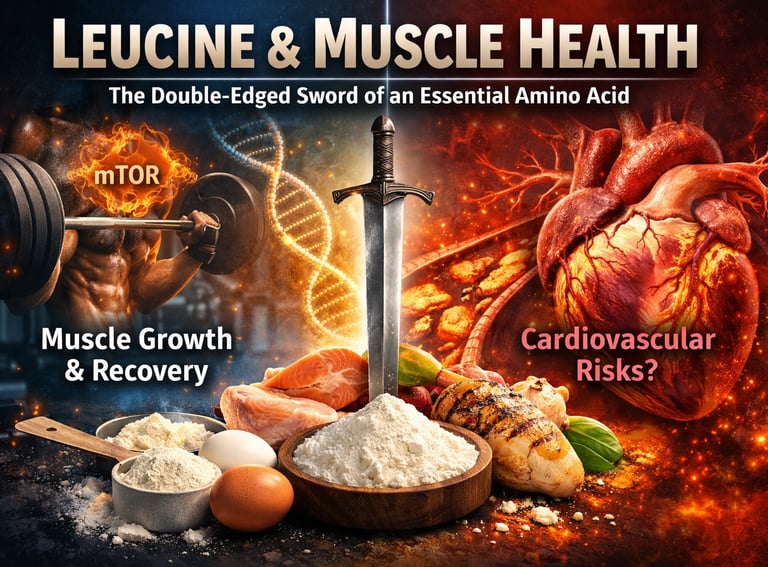
Leucine has long been hailed as the most anabolic amino acid, a nutritional trigger capable of switching on muscle growth with near-pharmaceutical precision. From bodybuilding forums to clinical nutrition guidelines, leucine is frequently portrayed as the master key to muscle protein synthesis—largely because of its unique ability to activate the mammalian target of rapamycin (mTOR), the central regulator of skeletal muscle anabolism. Yet emerging research suggests that this long-standing narrative is incomplete—and potentially misleading.
Recent studies published between 2023 and 2025 reveal a more nuanced reality: leucine’s benefits appear highly dose-dependent, context-specific, and biologically double-edged. While optimized leucine intake clearly enhances muscle protein synthesis, strength gains, and metabolic resilience—especially when paired with resistance training and adequate total protein—excessive or chronic high-dose exposure may activate the same mTOR pathway in non-muscle tissues, with unintended consequences for cardiovascular health (Rivera-Bermúdez et al., 2025; Rogers, 2025).
Most strikingly, mechanistic work in Nature Metabolism and Autophagy has identified a leucine-mediated threshold effect, whereby elevated circulating leucine stimulates mTOR signaling in macrophages, accelerating atherosclerotic plaque development in a dose-dependent manner (Zhang et al., 2024; Zhang et al., 2025). This finding challenges the widespread assumption that “more leucine is always better” and reframes leucine as a powerful metabolic signal rather than a harmless supplement.
Understanding where leucine shifts from muscle anabolism to cardiometabolic liability is now one of the most important questions in sports nutrition and preventive medicine. This article synthesizes the latest evidence to clarify how much leucine is optimal, for whom, and under what physiological conditions, bridging performance nutrition with long-term health outcomes.
Clinical pearls.
1. The "Anabolic Trigger" is a Threshold, Not a Ladder
The Science: Muscle Protein Synthesis (MPS) is not a linear response to leucine; it operates on a "trigger" mechanism. Once you reach the leucine threshold (approx.1.7--2.5 g per meal), the mTOR pathway is fully saturated.
More isn’t always better. Once you’ve eaten enough protein to "flip the switch" for muscle growth, adding more leucine won't build muscle faster—it just adds extra calories or, as recent studies suggest, potential health risks.
2. The Macrophage Paradox: Muscles vs. Arteries
The Science: While leucine stimulates mTOR in muscle cells to build tissue, chronic excess stimulates mTOR in macrophages (immune cells), which can promote inflammation and arterial plaque buildup (atherosclerosis).
Your muscles love leucine, but your arteries prefer moderation. Think of leucine like sunlight: a certain amount is vital for health, but overexposure can cause long-term damage.
3. "Metabolic Insurance" During Downtime
The Science: High leucine intake can mitigate inactivity-induced insulin dysfunction. It helps preserve insulin sensitivity and nitrogen balance even when the body is immobilized or sedentary.
If you’re sidelined by an injury or a busy travel schedule, don’t drop your protein intake. Keeping leucine levels steady can act as a "metabolic shield" to prevent your muscles from becoming less efficient while you're away from the gym.
4. The Anabolic Resistance of Aging
The Science: Older adults experience "anabolic resistance," requiring a higher concentration of leucine (up to 3.0 g per meal) to achieve the same mTOR activation as younger individuals.
As we get older, our "muscle-building machinery" gets a little rusty. To keep it moving, seniors actually need more high-quality protein per meal than twenty-somethings do to prevent age-related muscle loss.
5. Prioritize "Whole-Matrix" Delivery
The Science: Leucine functions best as a signaling molecule when the full spectrum of Essential Amino Acids (EAAs) is present. Isolated leucine can trigger the signal, but without the other "building blocks," the body cannot complete the protein synthesis process.
Don’t just take a leucine pill and call it a day. It’s like turning on a construction site's lights but having no bricks or mortar. Get your leucine from whole foods like eggs, dairy, or meat to ensure your body has all the materials it needs.
6. Chrono-Nutrition: Distribution Matters Most
The Science: Because of the transient nature of amino acid signaling, a single "megadose" of leucine in the evening is less effective for 24-hour muscle maintenance than bolus distribution across 3–4 meals.
Don't skip protein at breakfast and try to "make up for it" with a massive steak at dinner. To keep your muscles in an "auto-repair" mode all day, spread your protein out evenly across your meals.
The Leucine Controversy You Need to Know About
If you're serious about fitness, muscle growth, or sports nutrition, you've probably heard about leucine—the amino acid that fitness enthusiasts swear by. But here's what most people don't tell you: the science is far more complex than "more leucine equals bigger muscles." Recent 2025 research has revealed a fascinating paradox that every athlete and health-conscious individual should understand.
Leucine, a branched-chain amino acid (BCAA), has long been considered the gold standard for stimulating muscle protein synthesis. But groundbreaking new studies suggest that while leucine supplementation can indeed boost muscle growth and strength, there's a crucial threshold effect—exceed optimal levels, and you might be increasing cardiovascular risk instead. This blog post breaks down what seven peer-reviewed studies reveal about leucine supplementation, muscle recovery, and your long-term health.
What Is Leucine? Understanding This Critical Amino Acid
Leucine is one of three branched-chain amino acids (BCAAs)—along with isoleucine and valine—that play a central role in protein metabolism. Unlike most amino acids, leucine is metabolized directly in muscle tissue rather than the liver, making it uniquely important for muscle protein synthesis and exercise recovery.
The reason fitness enthusiasts are obsessed with leucine is simple: it activates mTOR (mammalian target of rapamycin), a cellular signaling pathway that essentially tells your muscles to grow. But as we'll see from recent 2025 research, this same pathway can have consequences beyond the gym.
Study 1: Rivera-Bermúdez et al. (2025)—The Comprehensive Systematic Review
Rivera-Bermúdez and colleagues conducted a systematic review of randomized controlled trials examining the effects of leucine intake on muscle growth, strength, and recovery in young active adults. This meta-analysis synthesized evidence from multiple studies to provide a comprehensive overview of leucine supplementation effectiveness.
Key Takeaways:
Leucine supplementation demonstrates measurable benefits for muscle growth in young, active populations when combined with resistance training
The most significant effects occur when leucine intake is optimized alongside protein consumption
Exercise recovery improvements are most notable in individuals engaged in high-intensity training
Individual variability exists—not everyone responds identically to leucine supplementation
If you're a young athlete or regular gym-goer, leucine intake from either whole protein sources or supplementation can contribute to improved muscle development and training adaptation. However, the review emphasizes that leucine works best as part of a comprehensive nutrition strategy, not as a standalone intervention.
Study 2: Beattie et al. (2023)—Preventing Metabolic Dysfunction During Inactivity
In an increasingly sedentary world, Beattie et al. (2023) investigated whether a high-protein diet with excess leucine could prevent the metabolic damage that occurs during periods of inactivity. Their findings highlight an often-overlooked benefit of leucine supplementation.
The study revealed that elevated leucine intake prevented the typical insulin resistance and metabolic deterioration that normally accompanies physical inactivity—a phenomenon called inactivity-induced insulin dysfunction.
Key Takeaways:
A high-protein diet with excess leucine can serve as a metabolic safeguard during unavoidable periods of reduced activity
Leucine helps maintain muscle mass and insulin sensitivity even when training volume decreases
This is particularly relevant for athletes recovering from injury or during off-season periods
Branched-chain amino acids, particularly leucine, play a protective role against metabolic decline
Whether you're injured, traveling, or dealing with life circumstances that reduce training frequency, maintaining leucine intake through high-protein nutrition can help prevent the typical metabolic slowdown. This suggests leucine supplementation isn't just about building muscle—it's also about preserving metabolic health during challenging periods.
Study 3: Rogers (2025)—Physiological Mechanisms and Evidence-Based Recommendations
Rogers (2025) has given the most practical guidance on leucine intake for different populations. This comprehensive review from Medtrics examines the physiological mechanisms by which leucine influences muscle metabolism, protein synthesis, and overall health outcomes.
The analysis consolidates current evidence on mTOR activation, amino acid signaling, and the dose-response relationship between leucine consumption and muscle protein synthesis rates.
Key Takeaways:
The optimal leucine dose for stimulating muscle protein synthesis is approximately 1.7-2.5g per meal for most adults
Leucine acts as a signaling molecule, not just a building block—its role in activating mTOR is as important as its contribution to muscle tissue
Age-related differences exist: older adults may require slightly higher leucine intake to achieve equivalent muscle protein synthesis
Individual factors like body weight, training status, and overall protein intake modify the optimal leucine threshold
Rather than obsessing over massive quantities of leucine supplementation, Rogers' research suggests strategic dosing—ensuring 1.7-2.5g of leucine per main meal is often more effective than sporadic high-dose supplementation. For most people, eating protein-rich meals, achieving this threshold happens naturally without supplementation.
Study 4: Ely et al. (2023)—Leucine in Different Physiological States
Ely et al. (2023) took a unique approach by examining how leucine functions across different physiological states: normal aging, exercise recovery, and muscle unloading (deconditioning). This comprehensive analysis reveals that leucine's role varies depending on what your body is experiencing.
Their research in Clinical Nutrition demonstrates that leucine supplementation becomes increasingly important as we age, particularly for combating age-related muscle loss (sarcopenia).
Key Takeaways:
Leucine plays a protective role during muscle unloading—the deconditioning that occurs with bed rest or reduced activity
In aging populations, leucine supplementation becomes more critical for maintaining skeletal muscle function
Exercise-induced muscle damage recovery is enhanced by adequate leucine intake
The regulatory role of leucine in skeletal muscle metabolism shifts across the lifespan
Whether you're aging, recovering from illness, or dealing with periods of reduced activity, leucine intake deserves special attention. The research suggests that while young athletes might benefit from optimization, older adults actively protecting against age-related muscle loss may derive even greater benefits from strategic leucine supplementation.
Study 5: Wunderle et al. (2025)—Clinical Outcomes in Vulnerable Populations
Wunderle et al. (2025) analysed leucine and other branched-chain amino acids in malnourished inpatients. This research shifts focus from healthy athletes to medically vulnerable populations—a crucial gap in our understanding.
The study investigated whether increasing leucine intake alongside BCAA supplementation could improve clinical outcomes in hospitalized patients with malnutrition.
Key Takeaways:
Leucine supplementation combined with BCAA therapy shows promise in improving clinical recovery in malnourished inpatients
Branched-chain amino acids, with leucine as the primary driver, support muscle preservation during acute medical conditions
The protective effects are most pronounced in patients with severe protein-energy malnutrition
Leucine-based interventions may reduce complications and accelerate recovery in clinical settings
If you're recovering from surgery, illness, or hospitalization, adequate leucine intake through high-protein nutrition or medical supplementation becomes genuinely therapeutic—not just performance optimization. This research validates what athletes intuitively know: amino acids, particularly leucine, are critical for tissue repair and recovery.
Study 6: Zhang et al. (2025)—The Cardiovascular Risk Discovery
This is where things get concerning. Zhang's 2025 study published in Autophagy revealed that leucine accelerates atherosclerosis through dose-dependent mTOR activation in macrophages—the immune cells involved in plaque formation.
Their research demonstrates a direct mechanistic link: excessive leucine intake activates mTOR signaling in macrophages, promoting the inflammatory processes that underlie atherosclerosis development.
Key Takeaways:
High leucine intake stimulates mTOR activation in macrophages, a key step in atherosclerosis progression
The effect is dose-dependent—meaning more leucine creates greater cardiovascular risk
This mechanism operates independently of general protein intake, suggesting leucine specifically (not just total protein) matters for cardiovascular health
Chronically elevated leucine supplementation may accelerate plaque formation in susceptible individuals
This research suggests that the popular practice of aggressive leucine supplementation—taking large doses throughout the day—may carry long-term cardiovascular costs. The study doesn't say leucine is bad; it suggests excessive intake might be harmful, particularly for individuals with cardiovascular risk factors.
Study 7: Zhang et al. (2024)—The Threshold Effect Explained
Zhang's 2024 study in Nature Metabolism provides crucial mechanistic detail: there's a leucine-mediated threshold effect governing macrophage mTOR signaling and cardiovascular risk. This is the most sophisticated analysis yet of how much leucine is too much.
The research identifies a specific threshold level of leucine beyond which mTOR activation in immune cells shifts from beneficial (supporting immune function) to harmful (promoting atherosclerosis).
Key Takeaways:
A threshold effect exists: modest leucine intake supports healthy mTOR signaling, while excessive intake promotes pathological mTOR activation
The threshold varies based on individual metabolic factors and cardiovascular risk status
Macrophage mTOR signaling represents a critical checkpoint—what helps muscles may harm arteries if overdone
Personalized leucine recommendations should account for individual cardiovascular risk profiles
This research provides the most evidence-based framework for understanding leucine: there's an optimal zone. Too little, and you miss out on muscle-building benefits. Too much, and you may accelerate cardiovascular disease. The key is finding your personal threshold—which depends on age, cardiovascular risk factors, training volume, and overall health status.
The Paradox Resolved: Muscle Growth vs. Cardiovascular Health
Here's what emerges when you synthesize all seven studies: Leucine is powerfully beneficial within an optimal range but potentially harmful when consumed excessively.
The early studies (Rivera-Bermúdez, Beattie, Rogers, Ely, Wunderle) establish that strategically timed leucine intake supports muscle growth, strength development, recovery, and metabolic health. The later studies (Zhang et al., 2025 and 2024) reveal that chronic excessive leucine supplementation may increase atherosclerosis risk through macrophage mTOR activation.
This isn't a contradiction—it's a dose-response relationship. Optimal leucine intake = muscle benefits without cardiovascular cost. Excessive leucine intake = muscle benefits + cardiovascular risk.
Practical Recommendations: How Much Leucine Is Right for You?
For Young, Healthy Athletes:
Target 1.7-2.5g of leucine per main meal (approximately 25-30g of high-quality protein)
Distribute across 3-4 meals rather than megadosing
Prioritize whole food protein sources: meat, fish, eggs, dairy, legumes
Supplementation is optional if meeting targets through food
For Older Adults or Those Combating Sarcopenia:
Target 2.5-3.0g of leucine per meal
Consider targeted leucine supplementation given the protective benefits against age-related muscle loss
The research supports more aggressive leucine intake in this population
For Those with Cardiovascular Risk Factors:
Stay closer to 1.7-2.0g of leucine per meal
Avoid mega-dosing or excessive supplementation
Focus on overall cardiovascular health alongside muscle building
Consider medical consultation before aggressive leucine supplementation
During Medical Recovery or Malnutrition:
Follow clinical nutrition guidance, which likely emphasizes adequate leucine intake
The research supports BCAA supplementation in medical contexts
Leucine's therapeutic benefits outweigh theoretical cardiovascular risks during acute illness
Frequently Asked Questions About Leucine
Q: Should I supplement with leucine, or can I get enough from food?
A: Most people can achieve optimal leucine intake through whole protein sources. A 3-oz serving of chicken provides ~1.8g of leucine; similar amounts come from fish, beef, eggs, and dairy. Supplementation makes sense if you struggle to consume adequate protein, follow a plant-based diet, or specifically need to maximize muscle-building stimulus during intense training phases. However, the research suggests supplementing strategically rather than megadosing.
Q: What's the difference between leucine and other amino acids?
A: Leucine uniquely activates mTOR signaling, making it particularly important for muscle protein synthesis. Other branched-chain amino acids (isoleucine and valine) play supporting roles. Complete proteins containing all amino acids are generally preferable to isolated leucine supplementation, as they provide synergistic benefits.
Q: Can I take too much leucine?
A: Yes. The 2025 Zhang research demonstrates that excessive leucine intake—beyond what's needed for optimal muscle protein synthesis—can promote atherosclerosis through mTOR activation in macrophages. The "sweet spot" appears to be 1.7-2.5g per meal for most adults, distributed across meals rather than megadosed.
Q: Is leucine safe for people with heart disease?
A: The recent research suggests those with existing cardiovascular disease should be cautious about aggressive leucine supplementation. However, maintaining adequate protein and leucine intake is still important for muscle health. Anyone with heart disease should consult their healthcare provider before supplementation—this isn't a reason to avoid protein, just a reason to optimize rather than maximize leucine intake.
Q: Do older people need more leucine?
A: Yes. The research suggests older adults require slightly higher leucine intake to achieve equivalent muscle protein synthesis rates compared to younger adults. Additionally, leucine's protective role against age-related muscle loss becomes increasingly important with age. Strategic leucine intake—even if slightly elevated—is justified in aging populations.
Q: How quickly does leucine affect muscle growth?
A: Leucine supplementation acutely stimulates muscle protein synthesis within hours of consumption, but visible muscle growth requires weeks to months of consistent training and nutrition. Think of leucine as optimizing the environment for muscle growth rather than directly building muscle.
Q: Can vegetarians and vegans get enough leucine?
A: Plant proteins are generally lower in leucine compared to animal proteins. Vegetarians and vegans can still meet leucine requirements through combinations of legumes (beans, lentils), soy products, nuts, and grains, but they may benefit more from targeted leucine supplementation if pursuing serious muscle-building goals.
Key Takeaways: The Bottom Line on Leucine
Leucine is genuinely beneficial for muscle growth and strength, particularly when combined with resistance training and adequate overall protein intake, as established by five recent studies.
Strategic leucine intake (1.7-2.5g per meal) appears optimal for most people, supporting muscle protein synthesis while avoiding potential cardiovascular risks.
Excessive leucine supplementation may promote atherosclerosis through mTOR activation in macrophages—a concerning finding that suggests "more is better" doesn't apply to this amino acid.
Older adults and those recovering from illness may derive particular benefit from elevated leucine intake, with therapeutic benefits outweighing theoretical risks.
Whole food protein sources are preferable to isolated leucine supplementation for most people, unless specific circumstances warrant supplementation.
Most individuals consuming whole foods alone rarely exceed leucine intakes associated with macrophage mTOR activation; risk likely concentrates in chronic isolated supplementation.
Individual variation exists—your optimal leucine intake depends on age, cardiovascular risk status, training volume, and overall health.
The future of leucine research is personalized: not "how much leucine should everyone take?" but "what's the optimal dose for this specific individual?"
Author’s Note
This article synthesizes recent peer-reviewed research examining the role of leucine in skeletal muscle metabolism, exercise adaptation, and cardiometabolic health. The evidence discussed spans controlled human trials, systematic reviews, and mechanistic studies published between 2023 and 2025. Particular emphasis is placed on emerging data that refine earlier assumptions about leucine as a purely anabolic nutrient, highlighting its function as a potent metabolic signal with dose-dependent and tissue-specific effects.
While the findings summarized here provide valuable insight into optimal leucine intake across different populations—including athletes, older adults, and clinically vulnerable individuals—they should be interpreted within the context of evolving research. Mechanistic studies, especially those exploring macrophage mTOR signaling and atherosclerosis, offer important biological plausibility but do not replace long-term outcome trials in humans.
This content is intended for educational purposes and reflects the current state of scientific understanding at the time of writing. It is not a substitute for individualized medical or nutritional advice. Readers with underlying cardiovascular disease, metabolic disorders, or those considering high-dose amino acid supplementation are encouraged to consult qualified healthcare professionals before making dietary changes.
Medical Disclaimer
This article is for educational purposes only and does not constitute medical advice, diagnosis, or treatment. Exercise and nutrition recommendations may not be appropriate for everyone and vary based on individual health status, medical history, and medications. Readers should consult a qualified healthcare professional before starting or changing any exercise or dietary program, especially if they have chronic medical conditions, are pregnant, or are recovering from illness or injury. The author and publisher are not responsible for any adverse outcomes resulting from the use of this information.
Related Articles
Why Metabolic Flexibility May Be the Missing Link in Longevity and Healthy Aging | DR T S DIDWAL
Your Body Fat Is an Endocrine Organ—And Its Hormones Shape Your Heart Health | DR T S DIDWAL
Movement Snacks: How VILPA Delivers Max Health Benefits in Minutes | DR T S DIDWAL
References
Beattie, C., Borislava, B., Smith, H. A., & Thomas, M. (2023). High-protein diet with excess leucine prevents inactivity-induced insulin dysfunction. Clinical Nutrition, 42(12), 2578–2587. https://doi.org/10.1016/j.clnu.2023.10.028
Ely, I. A., Phillips, B. E., Smith, K., Wilkinson, D. J., Piasecki, M., Breen, L., Larsen, M. S., & Atherton, P. J. (2023). A focus on leucine in the nutritional regulation of human skeletal muscle metabolism in ageing, exercise and unloading states. Clinical Nutrition, 42(10), 1849–1865. https://doi.org/10.1016/j.clnu.2023.08.010
Rivera-Bermúdez, G., Pizarro-Segura, M. F., Quesada-Quesada, D., et al. (2025). Effects of leucine intake on muscle growth, strength, and recovery in young active adults: A systematic review of randomized controlled trials. Nutrire, 50, 13. https://doi.org/10.1186/s41110-025-00311-z
Rogers, A. (2025, November 24). Leucine: Physiological mechanisms, anabolic role, and evidence-based intake recommendations. Medtrics. Retrieved from https://medtrics.org/leucine-physiological-mechanisms-anabolic-role-and-evidence-based-intake-recommendations/
Wunderle, C., Ciobanu, C., Ritz, J., et al. (2025). Association of leucine and other branched chain amino acids with clinical outcomes in malnourished inpatients: A secondary analysis of the randomized clinical trial EFFORT. European Journal of Clinical Nutrition, 79, 42–49. https://doi.org/10.1038/s41430-024-01507-8
Zhang, X., Ajam, A., Liu, Z., Peroumal, D., Khan, S. R., & Razani, B. (2025). Leucine accelerates atherosclerosis through dose-dependent mTOR activation in macrophages. Autophagy, 21(7), 1618–1620. https://doi.org/10.1080/15548627.2025.2474603
Zhang, X., Kapoor, D., Jeong, S. J., Fappi, A., Stitham, J., Shabrish, V., Sergin, I., Yousif, E., Rodriguez-Velez, A., Yeh, Y. S., Park, A., Yurdagul, A., Jr., Rom, O., Epelman, S., Schilling, J. D., Sardiello, M., Diwan, A., Cho, J., Stitziel, N. O., Javaheri, A., & Razani, B. (2024). Identification of a leucine-mediated threshold effect governing macrophage mTOR signalling and cardiovascular risk. Nature Metabolism, 6(2), 359–377. https://doi.org/10.1038/s42255-024-00984-2