Engineered to Overeat: The Science Behind Ultra-Processed Foods and Metabolic Breakdown
Find out how ultra-processed foods affect your metabolism, inflammation, and disease risk, according to the latest scientific evidence.
NUTRITIONMETABOLISM
Dr. T.S. Didwal, M.D.(Internal Medicine)
8/9/202616 min read
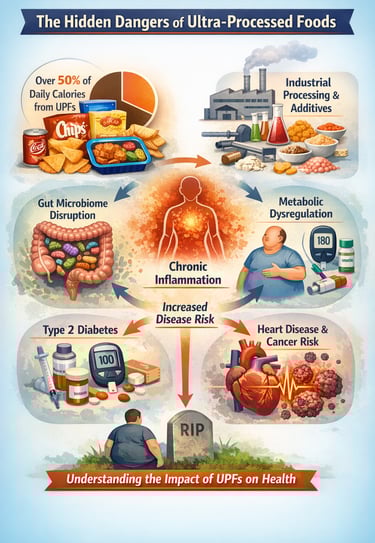
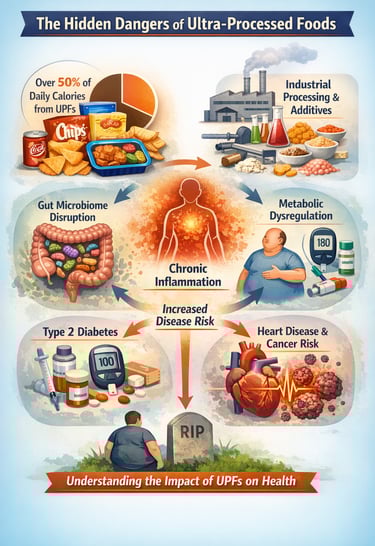
If you’ve ever wondered why certain packaged foods seem impossible to stop eating—or why they appear everywhere from school cafeterias to hospital vending machines—you’re not alone. Over the past decade, ultra-processed foods (UPFs) have quietly become the dominant source of calories in many countries, accounting for more than 50–60% of daily intake in some populations (National Center for Health Statistics, 2025). But recent research suggests that the impact of these foods extends far beyond weight gain or convenience. Emerging evidence from 2025 and early 2026 reveals that UPFs may influence metabolism, inflammation, heart health, and even cancer risk through mechanisms independent of calories or nutrients (Gou & Zheng, 2025; Monteiro et al., 2025).
Scientists now understand that UPFs are not harmful simply because they contain sugar, salt, or unhealthy fats. Instead, it is the industrial processing, additives, and altered food structure that appear to disrupt normal physiology. Studies show clear dose–response relationships, where higher UPF intake is linked to progressively greater risks of cardiometabolic disease, type 2 diabetes, and all-cause mortality (Vadiveloo et al., 2025).
Even more concerning, these foods may alter the gut microbiome, impair satiety signals, promote inflammation, and trigger long-term metabolic changes that make chronic disease more likely (Babalola et al., 2025). As the evidence grows, one thing is clear: understanding how and why UPFs affect the body is essential for making informed dietary decisions in a world where these products are nearly impossible to avoid.
Clinical pearls .
1. The "Cellular Speed" Pearl
Ultra-processed foods (UPFs) are essentially "pre-digested" by industrial machinery. In whole foods, nutrients are locked in a food matrix—a structure of fiber and protein that slows down absorption. When this matrix is destroyed, your body absorbs sugar and fats almost instantly, causing a massive insulin spike.
Clinical Insight: It isn't just what is in the food; it’s how fast it hits your bloodstream. Speed is a metabolic stressor.
2. The "Gut Barrier" Warning
Many UPFs contain emulsifiers (the "glues" that keep oil and water from separating in dressings or breads). 2025 studies have confirmed that these additives can act like detergents in your gut, thinning the protective mucus layer that keeps bacteria away from your intestinal wall.
Clinical Insight: A "leaky" gut barrier triggers low-grade chronic inflammation, which is the common denominator between heart disease and certain cancers.
3. The "Hidden Hyperpalatability" Trap
Industrial food scientists engineer UPFs to reach a "bliss point"—the perfect ratio of salt, sugar, and fat that overrides your brain's natural satiety (fullness) signals. This is why it is physically harder to stop eating a bag of chips than a bowl of salted potatoes.
Clinical Insight: Overeating UPFs is often a physiological response to food engineering, not a failure of willpower.
4. The "Neoformed Contaminant" Pearl
Processing isn't just about what is added; it’s about what is created. High-heat industrial processes (like extrusion for cereals or deep-frying for snacks) create Advanced Glycation End products (AGEs) and acrylamides. These compounds are "pro-aging" and can damage the lining of your blood vessels (the endothelium).
Clinical Insight: These "neoformed" compounds act as biological rust, accelerating the aging of your arteries and kidneys.
5. The "Replacement Effect"
The danger of a UPF-heavy diet is a "double-edged sword." While you are consuming harmful additives and refined sugars, you are simultaneously displacing the protective phytochemicals, fibers, and antioxidants found in whole plants.
Clinical Insight: Your body isn't just fighting the "bad" stuff; it is starving for the "good" stuff. To fix your WWI (Weight-Adjusted Waist Index), focusing on what you add (fiber/whole foods) is often more effective than just focusing on what you cut.
The Truth About Ultra-Processed Foods: What 2025 Research Reveals About Your Health
Understanding Ultra-Processed Foods: More Than Just “Junk Food”
Ultra-processed foods (UPFs) are far more than typical fast food or candy bars—they are industrial formulations designed for convenience, long shelf life, and hyperpalatability. According to the NOVA food classification system, UPFs usually contain five or more ingredients, including substances not used in home cooking, such as hydrogenated oils, high-fructose corn syrup, protein isolates, and additives like preservatives, emulsifiers, artificial sweeteners, and colorants (Monteiro et al., 2025).
Common Ultra-Processed Foods
Packaged breads and buns
Breakfast cereals and instant oatmeal packets
Sodas and energy drinks
Instant noodles and soups
Frozen meals and pizza
Processed meats (hot dogs, deli meats)
Packaged snacks (chips, cookies, crackers)
Ice cream and sweetened yogurts
Protein bars and meal replacement shakes
Key Features of UPFs
Industrial Ingredients: Substances like maltodextrin, whey protein isolates, or soy lecithin that aren’t found in a typical kitchen.
Cosmetic Additives: Emulsifiers, thickeners, artificial flavors, and colorants used to enhance taste, texture, or appearance.
Hyperpalatability: Engineered for the “bliss point,” a mix of sugar, salt, and fat that overrides natural satiety signals.
Pre-Digested Structure: Destroyed food matrix leads to rapid absorption, spiking blood sugar and insulin.
The 4 Levels of Food Processing (NOVA System)
Level 1: Unprocessed or minimally processed foods (fresh fruits, vegetables, plain milk)
Level 2: Processed culinary ingredients (oils, sugar, salt)
Level 3: Processed foods (canned vegetables, cheese, bread)
Level 4: Ultra-processed foods (sweets, frozen dinners, energy drinks)
Pro Tip for 2026: Use the “Kitchen Test”—if the ingredients list contains items you wouldn’t normally find in your pantry, like carboxymethylcellulose or soy lecithin, it’s almost certainly a ultra-processed food.
What Americans Are Actually Eating: CDC Data Reveals Concerning Patterns
The National Center for Health Statistics released eye-opening data in August 2025 examining ultra-processed food consumption among youth and adults in the United States from August 2021 to August 2023 (National Center for Health Statistics, 2025). This National Health and Nutrition Examination Survey (NHANES) data brief provides crucial baseline information about American dietary patterns.
Key Findings from the CDC Study:
The study analyzed dietary intake patterns across different age groups and demographics, revealing that UPF consumption remains remarkably high across the American population. The data showed significant variations based on:
Age groups: Different consumption patterns between children, adolescents, and adults
Socioeconomic status: Income levels influencing food choices
Geographic location: Regional differences in UPF availability and consumption
Educational attainment: Correlation between education levels and dietary quality
This foundational data is critical because it establishes the scope of UPF consumption in modern American diets, providing context for understanding the public health implications of the other studies we'll discuss.
Key Takeaway: The CDC data confirms that ultra-processed foods constitute a substantial portion of the American diet across all demographic groups, making the health implications of these foods a pressing public health concern.
The Nature Medicine Perspective: Strengthening the Evidence
In a compelling commentary published in Nature Medicine, Gou and Zheng (2025) provide an updated synthesis of the evidence linking ultra-processed foods to various health outcomes. This analysis is particularly valuable because it addresses recent criticisms and methodological concerns while highlighting the robustness of the association between UPF consumption and adverse health effects.
What This Study Tells Us:
The authors systematically reviewed recent epidemiological evidence and addressed common criticisms of UPF research, including:
Methodological rigor: The commentary emphasizes that despite some methodological limitations in individual studies, the consistency of findings across different populations, geographic regions, and study designs strengthens the overall evidence base.
Dose-response relationships: The research demonstrates clear dose-response patterns, meaning that higher UPF intake correlates with progressively worse health outcomes—a hallmark of causal relationships in epidemiology.
Biological plausibility: The authors discuss mechanisms through which UPFs may harm health, including their effects on the gut microbiome, inflammatory pathways, metabolic processes, and satiety signals.
Temporal relationships: Studies show that UPF consumption precedes the development of chronic diseases, supporting a potential causal relationship rather than mere association.
Key Takeaway: The evidence linking ultra-processed food consumption to poor health outcomes has strengthened considerably, with multiple lines of evidence pointing in the same direction despite ongoing debates about specific mechanisms.
Ultra-Processed Foods and Heart Health: What the Latest Reviews Show
Two comprehensive reviews published in 2025 specifically examined the relationship between ultra-processed foods and cardiometabolic health—a term encompassing both cardiovascular disease and metabolic disorders like diabetes and metabolic syndrome.
The Current Nutrition Reports Analysis
Gövez and Köksal (2025) conducted a thorough review of current evidence on UPFs and cardiometabolic health, published in Current Nutrition Reports. Their analysis synthesizes findings from numerous studies examining how food processing affects heart health and metabolic function.
Major Findings:
Cardiovascular disease risk: The review found consistent evidence that higher UPF consumption is associated with increased risk of cardiovascular disease, coronary heart disease, and cerebrovascular disease (stroke).
Metabolic syndrome: Ultra-processed food intake shows strong associations with components of metabolic syndrome, including abdominal obesity, elevated blood pressure, high blood sugar, and abnormal cholesterol levels.
Type 2 diabetes: Multiple studies demonstrate that greater UPF consumption correlates with higher type 2 diabetes risk, potentially through mechanisms involving insulin resistance, pancreatic stress, and inflammation.
Hypertension: The review highlights evidence linking UPFs to high blood pressure, possibly due to high sodium content, additives, and effects on vascular function.
Inflammatory markers: Research shows that UPF-heavy diets elevate inflammatory biomarkers like C-reactive protein (CRP) and interleukin-6 (IL-6), which are implicated in cardiovascular disease development.
Key Takeaway: The evidence strongly suggests that ultra-processed food consumption negatively impacts multiple aspects of cardiometabolic health, with effects extending beyond simple nutrient composition to include processing-related factors.
The American Heart Association Science Advisory
In perhaps the most authoritative statement to date, Vadiveloo et al. (2025) published a science advisory from the American Heart Association in Circulation, examining ultraprocessed foods and their association with cardiometabolic health.
What Makes This Study Important:
Authoritative source: As an American Heart Association advisory, this represents the considered judgment of leading cardiovascular health experts based on systematic evidence review.
Evidence quality assessment: The advisory carefully evaluated the quality of evidence, noting both strengths and limitations of current research while identifying gaps requiring further investigation.
Mechanistic insights: The authors explored multiple pathways through which UPFs may harm cardiovascular health:
Nutrient displacement: UPFs often replace nutrient-dense whole foods, leading to inadequate intake of fiber, vitamins, minerals, and phytochemicals
Excess calorie intake: The hyperpalatable nature of UPFs can promote overconsumption and weight gain
Harmful additives: Certain food additives may have direct adverse effects on vascular health and metabolism
Advanced glycation end products (AGEs): Formed during high-heat processing, AGEs may promote inflammation and oxidative stress
Microbiome disruption: UPFs can alter gut bacteria composition, affecting metabolic health and inflammation
Population-level concerns: The advisory emphasizes that given the high proportion of calories from UPFs in American diets, even modest individual health impacts could translate into significant population-level disease burden.
Future directions: The authors identify critical research gaps, including the need for randomized controlled trials, better understanding of specific harmful components, and investigation of individual variations in UPF sensitivity.
Key Takeaway: The American Heart Association acknowledges substantial evidence linking UPF consumption to cardiometabolic disease while calling for more research to refine recommendations and understand mechanisms.
The Lancet's Comprehensive Thesis: Ultra-Processed Foods and Human Health
Monteiro et al. (2025) published a landmark paper in The Lancet, presenting the main thesis regarding ultra-processed foods and human health along with comprehensive supporting evidence. This paper is particularly significant as it comes from the research group that developed the NOVA classification system.
Core Arguments and Evidence:
The processing matters paradigm: The authors argue that the degree of food processing itself—independent of nutrient composition—affects health outcomes. This challenges traditional nutritional science focused primarily on nutrients rather than food processing.
Global health burden: The paper presents evidence that UPF consumption contributes significantly to the global burden of non-communicable diseases, including obesity, type 2 diabetes, cardiovascular disease, and certain cancers.
Health outcome associations: Monteiro and colleagues synthesized evidence showing associations between high UPF intake and:
All-cause mortality: Increased risk of death from any cause
Cardiovascular mortality: Higher rates of death from heart disease and stroke
Cancer incidence: Elevated risk of certain cancer types
Mental health: Links to depression and cognitive decline
Gastrointestinal disorders: Associations with inflammatory bowel disease and other digestive conditions
Mechanistic framework: The authors propose that UPFs harm health through multiple interrelated mechanisms:
Nutritional degradation: Processing removes beneficial compounds while concentrating calories, sugar, unhealthy fats, and sodium
Additive effects: Emulsifiers, artificial sweeteners, and other additives may have direct toxic effects or disrupt metabolic processes
Physical structure alterations: Processing changes food matrix and texture, affecting digestion, absorption, and satiety
Neoformed contaminants: High-heat processing creates harmful compounds not present in original ingredients
Packaging migration: Substances from packaging materials can leach into foods
Socioeconomic implications: The paper highlights that UPFs are often cheaper and more accessible than whole foods, creating health inequities where lower-income populations face greater exposure to health risks.
Key Takeaway: The Lancet paper presents a comprehensive framework arguing that food processing itself—beyond just nutrient composition—represents a critical determinant of diet-related disease, requiring a paradigm shift in nutritional science and public health policy.
Not All Ultra-Processed Foods Are Equal: Important Nuances
One of the most important contributions to the 2025-2026 literature comes from Kahleova et al (2026), who published a critical review in BMJ Nutrition, Prevention & Health titled "Not all ultra-processed foods are created equal."
Why This Perspective Matters:
Heterogeneity within UPFs: The authors argue convincingly that lumping all ultra-processed foods together may obscure important distinctions. For example:
Whole grain breads may be classified as UPF but contain beneficial fiber and nutrients
Plant-based meat alternatives are typically ultra-processed but may offer advantages over processed meats
Some fortified cereals provide important micronutrients despite being ultra-processed
Pasteurized plant milks are technically UPF but can be part of healthy dietary patterns
Context-dependent health impacts: The review emphasizes that the health effects of specific UPFs depend on:
Overall dietary pattern: A few UPFs within an otherwise whole-food diet likely has different impacts than a UPF-dominant diet
Specific formulation: Ingredient quality, additive types, and processing methods vary widely even within UPF categories
Individual health status: People with certain medical conditions may be more or less sensitive to specific food components
Replacement foods: What UPFs replace in the diet matters—replacing fresh vegetables is different from replacing highly processed sweets
Practical implications: The authors suggest that:
Public health messaging should avoid oversimplification
Food policy might better target specific harmful UPF characteristics rather than all processed foods
Dietary guidance should help consumers distinguish between higher-risk and lower-risk processed foods
Research needs to examine specific UPF subtypes rather than treating all UPFs as equivalent
Avoiding unintended consequences: The review warns that blanket condemnation of all UPFs could:
Create unnecessary food anxiety and stress
Disadvantage people with limited food access or cooking resources
Overlook beneficial processed foods that support dietary quality
Miss opportunities for reformulation that could reduce harm
Key Takeaway: While most ultra-processed foods show associations with poor health outcomes, important variations exist within this category, and nuanced approaches may better serve public health goals than categorical rejection of all processed foods.
Cancer and Cardiovascular Disease: Mechanisms and Epidemiology
Babalola et al. (2025) published a comprehensive review in Aspects of Molecular Medicine examining the impact of ultra-processed foods on both cardiovascular diseases and cancer, providing crucial insights into both epidemiological patterns and biological mechanisms.
Epidemiological Evidence:
Cancer associations: The review synthesized evidence showing that high UPF consumption correlates with increased risk of:
Colorectal cancer: One of the strongest associations, possibly related to processed meat consumption and additives
Breast cancer: Particularly postmenopausal breast cancer, potentially linked to obesity and hormonal effects
Pancreatic cancer: Associated with high-sugar UPFs and metabolic dysfunction
Ovarian cancer: Emerging evidence suggests possible links
Gastric cancer: Related to certain preservatives and high salt content
Cardiovascular disease patterns: The authors reviewed evidence connecting UPFs to:
Coronary artery disease: Atherosclerotic disease affecting heart arteries
Heart failure: Progressive weakening of heart muscle
Atrial fibrillation: Irregular heart rhythms
Stroke: Both ischemic (clot-related) and hemorrhagic (bleeding) types
Peripheral artery disease: Atherosclerosis affecting limb circulation
Mechanistic Insights:
The review is particularly valuable for its detailed exploration of biological mechanisms linking UPFs to disease:
Oxidative stress: UPFs may promote free radical production and overwhelm antioxidant defenses, damaging DNA, proteins, and lipids.
Chronic inflammation: Multiple UPF components trigger inflammatory pathways, creating a state of chronic low-grade inflammation that promotes both cancer and cardiovascular disease.
Insulin resistance: High glycemic load and certain additives in UPFs can impair insulin signaling, contributing to metabolic dysfunction.
Endothelial dysfunction: The cells lining blood vessels are damaged by UPF-related factors, impairing vascular health and promoting atherosclerosis.
Dysbiosis: UPFs alter gut microbiome composition, reducing beneficial bacteria while promoting harmful species, affecting immune function, metabolism, and inflammation.
Epigenetic modifications: Some UPF components may alter gene expression without changing DNA sequences, potentially affecting cancer risk and metabolic health across generations.
Hormonal disruption: Certain additives and packaging compounds may act as endocrine disruptors, affecting hormone signaling relevant to both cancer and cardiovascular disease.
Advanced glycation end products (AGEs): Formed during high-temperature processing, AGEs accumulate in tissues, promoting inflammation and vascular damage.
Key Takeaway: Ultra-processed foods appear to promote both cancer and cardiovascular disease through multiple interconnected biological mechanisms, suggesting that addressing UPF consumption could have broad health benefits across disease types.
What Does This All Mean for You? Practical Implications
The convergence of evidence from these seven studies published between 2025 and early 2026 provides clear direction for both individual choices and public health policy.
Focus on whole foods: Prioritize minimally processed foods like fresh fruits, vegetables, whole grains, legumes, nuts, seeds, and unprocessed proteins.
Read ingredient lists: Foods with long lists of unfamiliar ingredients are typically ultra-processed. Choose products with ingredients you recognize and might use at home.
Cook more at home: Home cooking naturally reduces UPF consumption and gives you control over ingredients and processing methods.
Be discerning about processed foods: As Kahleova et al. (2026) emphasize, not all processed foods are equally harmful. Whole grain bread, plain yogurt, canned beans, and frozen vegetables can fit into healthy diets.
Don't aim for perfection: Complete avoidance of UPFs is unrealistic for most people. Focus on reducing the proportion of calories from UPFs rather than elimination.
Consider quality over quantity: When choosing processed foods, opt for products with:
Shorter ingredient lists
Recognizable ingredients
Lower sodium, added sugar, and unhealthy fats
Minimal artificial additives
Whole food-based formulations
To optimize your diet in 2026, shifting away from ultra-processed foods (UPFs) involves a gradual transition toward items that maintain their natural food matrix. Instead of reaching for sugary "fruit" yogurts, which are often loaded with thickeners and dyes, opt for plain Greek yogurt; better yet, satisfy that craving with fresh berries, which provide intact fiber and antioxidants. Similarly, replace mass-produced packaged sandwich bread—notorious for preservatives and emulsifiers—with a traditional sourdough from a local bakery, or move entirely toward whole grains like quinoa or brown rice to keep your blood sugar stable.
The same logic applies to protein and convenience meals. While plant-based "nuggets" are popular, they are often industrial formulations of soy isolates and oils; swapping them for canned chickpeas is a great middle ground, while using dry lentils or beans is the gold standard for metabolic health. Finally, you can dramatically reduce inflammation by trading instant noodle packets for whole wheat pasta, or ideally, nutrient-dense whole food bases like zucchini noodles or potatoes. These swaps aren't just about cutting calories; they are about removing the industrial "speed" and chemical stress that drive faster aging.
Frequently Asked Questions About Ultra-Processed Foods
Q: Are all processed foods bad for me?
No. There's an important distinction between processed and ultra-processed foods. Minimal processing like cutting, freezing, or pasteurizing can make nutritious foods more convenient without necessarily harming health. Canned tomatoes, frozen berries, olive oil, and plain yogurt are processed but can be part of healthy diets. Focus on reducing ultra-processed foods with multiple additives and industrial ingredients.
Q: What if I can't afford to buy mostly whole foods?
This is a valid concern, and the research acknowledges that UPFs are often cheaper and more accessible. However, some strategies can help: buy seasonal produce, choose frozen fruits and vegetables (often less expensive and equally nutritious), purchase dried beans and grains in bulk, compare unit prices, and prioritize replacing the most harmful UPFs (like sugary beverages and processed meats) even if you can't eliminate all processed foods.
Q: I don't have time to cook everything from scratch. What should I do?
You don't need to cook everything from scratch. Focus on batch cooking when you have time, use minimally processed convenience items (like pre-cut vegetables, canned beans, frozen fish), and choose better-quality processed foods when needed. Even replacing a few UPF-heavy meals per week with home-cooked options can make a difference.
Q: What about plant-based meat alternatives—are they healthy even though they're ultra-processed?
This is precisely the nuance that Kahleova et al. (2026) address. Plant-based alternatives are typically ultra-processed, but they may still offer advantages over conventional processed meats in terms of saturated fat, cholesterol, and potentially cancer risk. They're probably not as healthy as whole plant proteins like beans and lentils, but they can serve as transitional foods or occasional options within an overall healthy diet.
Q: Can I still have processed foods if I eat mostly healthy?
Yes. The research shows a dose-response relationship—more UPF consumption correlates with worse health outcomes. Having some processed foods within a predominantly whole-food diet is very different from a diet dominated by UPFs. Focus on the overall pattern rather than individual foods.
Q: How do I know if something is ultra-processed?
Check the ingredient list. UPFs typically contain ingredients not found in home kitchens, such as hydrogenated oils, high-fructose corn syrup, modified starches, protein isolates, and various additives (words you don't recognize or very long chemical names). If it has more than five ingredients and includes several unfamiliar substances, it's likely ultra-processed.
Q: What are the first steps I should take to reduce ultra-processed food consumption?
Start with:
Swap sugary beverages for water, unsweetened tea, or sparkling water
Replace breakfast cereals with oatmeal or whole grain toast with nut butter
Choose whole fruits over packaged snacks
Cook one or two additional meals at home each week
Read labels and gradually shift toward products with fewer, more recognizable ingredients
Key Takeaways: What 2025-2026 Research Tells Us
Ultra-processed food consumption remains high across the American population, as confirmed by CDC data, making this a significant public health issue.
The evidence linking UPF consumption to adverse health outcomes has strengthened considerably, with consistent findings across multiple populations and study types (Gou & Zheng, 2025).
Ultra-processed foods show strong associations with cardiovascular disease, metabolic syndrome, type 2 diabetes, and hypertension through multiple biological mechanisms (Gövez & Köksal, 2025; Vadiveloo et al., 2025).
The American Heart Association acknowledges substantial evidence of harm while calling for continued research to refine recommendations and understand mechanisms (Vadiveloo et al., 2025).
Food processing itself—independent of nutrient composition—appears to affect health outcomes, requiring a paradigm shift in nutritional science (Monteiro et al., 2025).
Important variations exist within the ultra-processed food category, and not all UPFs pose equal health risks (Kahleova et al., 2026).
Ultra-processed foods promote both cancer and cardiovascular disease through interconnected mechanisms including inflammation, oxidative stress, metabolic dysfunction, and microbiome disruption (Babalola et al., 2025).
Addressing UPF consumption requires both individual dietary changes and broader public health interventions to address food system factors and health inequities.
Author’s Note
As a clinician and medical researcher, my goal in writing this article is to bring clarity to a topic that has become increasingly relevant—and often misunderstood—in modern nutrition science: ultra-processed foods (UPFs). Over the past decade, evidence has grown rapidly, linking high UPF consumption to weight gain, metabolic dysfunction, cardiovascular disease, and even mental health concerns. My intention is to translate this evolving research into practical, patient-friendly guidance without oversimplifying the underlying biology.
While large cohort studies and randomized trials provide strong signals about the risks associated with UPFs, it is important to remember that every person’s nutritional needs, metabolic health, and lifestyle context are unique. The information provided is meant to raise awareness, support informed decision-making, and encourage readers to recognize how food quality—not just calories—shapes long-term health.
Please consult your healthcare provider or a trained nutrition professional before implementing major dietary changes, especially if you have chronic conditions such as diabetes, obesity, hypertension, or heart disease. My commitment is to continue updating and refining this guidance as new clinical evidence emerges, ensuring that science remains accessible, actionable, and deeply relevant to your daily life.
Disclaimer: This article is for informational purposes only and does not constitute medical advice. Individual circumstances vary, and treatment decisions should always be made in consultation with qualified healthcare professionals.
Related Articles
Time-Restricted Eating: Metabolic Advantage or Just Fewer Calories? | DR T S DIDWAL
Exercise and Longevity: The Science of Protecting Brain and Heart Health as You Age | DR T S DIDWAL
Light and Longevity: Can Sunlight Slow Cellular Aging? | DR T S DIDWAL
The Science of Healthy Brain Aging: Microglia, Metabolism & Cognitive Fitness | DR T S DIDWAL
You Are What You Eat: 5 Science-Backed Ways to Optimize Your Diet Now | DR T S DIDWAL
References
Babalola, O. O., Akinnusi, E., Ottu, P. O., Bridget, K., Oyubu, G., Ajiboye, S. A., Waheed, S. A., Collette, A. C., Adebimpe, H. O., Nwokafor, C. V., Oni, E. A., Aturamu, P. O., & Iwaloye, O. (2025). The impact of ultra-processed foods on cardiovascular diseases and cancer: Epidemiological and mechanistic insights. Aspects of Molecular Medicine, 5, 100072. https://doi.org/10.1016/j.amolm.2025.100072
Gou, W., & Zheng, J. S. (2025). Updating the evidence on ultra-processed foods and health. Nature Medicine, 31, 2119–2120. https://doi.org/10.1038/s41591-025-03782-9
Gövez, N. E., & Köksal, E. (2025). Ultra-processed foods and cardiometabolic health: A review of current evidence. Current Nutrition Reports, 14(1), 110. https://doi.org/10.1007/s13668-025-00703-7
Kahleova, H., Himmelfarb, J., & Barnard, N. D. (2026). Not all ultra-processed foods are created equal: A review. BMJ Nutrition, Prevention & Health, 0, e001358. https://doi.org/10.1136/bmjnph-2025-001358
Monteiro, C. A., et al. (2025). Ultra-processed foods and human health: The main thesis and the evidence. The Lancet. Advance online publication. https://doi.org/10.1016/S0140-6736(25)01565-X
National Center for Health Statistics. (2025). Ultra-processed food consumption in youth and adults: United States, August 2021-August 2023 (Data Brief No. 536). U.S. Centers for Disease Control and Prevention. https://www.cdc.gov/nchs/products/index.htm
Vadiveloo, M. K., Gardner, C. D., Bleich, S. N., Khandpur, N., Lichtenstein, A. H., Otten, J. J., Rebholz, C. M., Singleton, C. R., Vos, M. B., & Wang, S. (2025). Ultraprocessed foods and their association with cardiometabolic health: Evidence, gaps, and opportunities: A science advisory from the American Heart Association. Circulation, 152(12), e245–e263. https://doi.org/10.1161/CIR.0000000000001365