Can a Low-Carb Diet Improve Cholesterol and Diabetes? What the Latest Research Really Shows
A science-backed look at low-carbohydrate diets, featuring the latest evidence on cholesterol, diabetes management, and heart health
NUTRITIONMETABOLISM
5/16/202614 min read
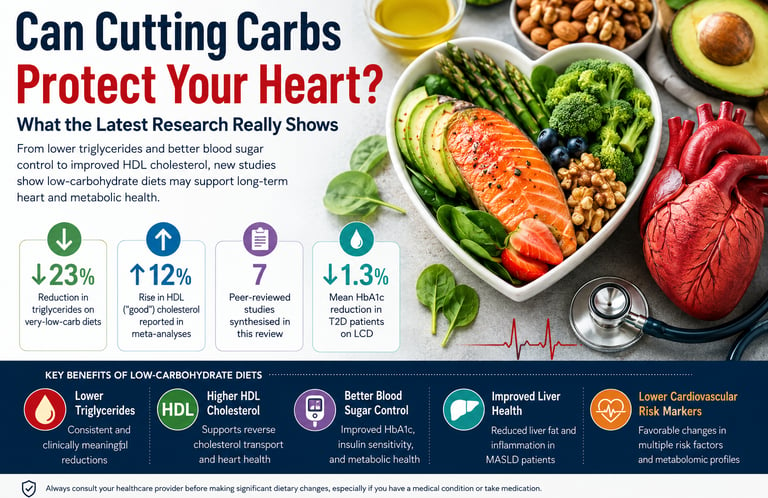
For decades, carbohydrates were treated as the unquestioned foundation of a “healthy” diet. Bread, rice, cereals, pasta, and low-fat snacks filled supermarket shelves while fat became the nutritional villain. Yet despite these recommendations, rates of obesity, type 2 diabetes, metabolic syndrome, and fatty liver disease continued to climb worldwide. Today, a growing body of research is forcing scientists and clinicians to ask a provocative question: could reducing carbohydrates actually improve heart and metabolic health in many people? Recent evidence suggests the answer may be more nuanced — and more promising — than previously believed (Liu et al., 2025; Tian et al., 2025).
Modern low-carbohydrate diets are no longer confined to celebrity trends or internet wellness forums. They are increasingly being studied in rigorous clinical trials involving patients with dyslipidemia, insulin resistance, obesity, metabolic-associated steatotic liver disease (MASLD), and type 2 diabetes (Pi et al., 2025; Collins et al., 2026). Researchers are now examining how carbohydrate restriction influences triglycerides, HDL cholesterol, LDL particle metabolism, HbA1c, inflammation, and even advanced metabolomic signatures linked to coronary heart disease risk (Wu et al., 2026).
The findings are striking. Multiple meta-analyses report that low-carbohydrate dietary patterns consistently lower triglycerides, improve blood sugar control, raise HDL (“good”) cholesterol, and reduce markers of insulin resistance — particularly when refined carbohydrates and added sugars are replaced with high-quality proteins, fibre-rich vegetables, legumes, and healthy fats (Aloraini et al., 2025; Luna-Castillo et al., 2022). At the same time, scientists caution that not all low-carb diets are created equal. The quality of carbohydrates, the types of fats consumed, and individual metabolic responses all appear to shape cardiovascular outcomes.
As nutritional science enters the era of personalised medicine, one thing is becoming increasingly clear: for many patients, carbohydrate reduction may represent far more than a weight-loss strategy — it may become a powerful therapeutic tool for protecting long-term cardiometabolic health.
↓23% Reduction in triglycerides on very-low-carb diets
↑12% Rise in HDL ("good") cholesterol reported in meta-analyses
↓1.3% Mean HbA1c reduction in T2D patients on LCD
Lipid Profiles and Cardiovascular Risk: What Changes — and What Doesn't
Cardiovascular disease remains the world's leading cause of death, and dyslipidemia — an abnormal concentration of lipids in the blood — is one of its most powerful modifiable risk factors. Understanding how diet shapes your cholesterol and triglyceride numbers is therefore not merely academic; it is potentially life-saving.
Triglycerides: The Clear Winner
Across multiple studies reviewed here, the most consistent finding is that low-carbohydrate diets reliably and significantly reduce fasting triglyceride levels. Since dietary carbohydrates — particularly refined sugars — are a primary driver of hepatic triglyceride synthesis, it follows logically that reducing carbohydrate intake lowers triglyceride output from the liver.
The 2022 narrative and systematic review by Luna-Castillo et al., published in Nutrients, examined dietary interventions specifically targeting hypertriglyceridemia, tracing the evidence from public health epidemiology all the way to molecular nutrition mechanisms (Luna-Castillo et al., 2022). Their analysis confirmed that carbohydrate restriction — alongside reductions in refined sugar and alcohol intake — consistently produced clinically meaningful reductions in serum triglycerides, with benefits detectable at both the cellular and population level.
HDL Cholesterol: The "Good" Cholesterol Benefit
High-density lipoprotein (HDL) cholesterol is your body's arterial clean-up crew — responsible for transporting excess cholesterol back to the liver. Low HDL is an independent cardiovascular risk factor. Here again, the research consistently favours low-carbohydrate eating. The Liu et al. (2025) meta-analysis reported meaningful increases in HDL cholesterol among individuals with dyslipidemia following carbohydrate-restricted diets, particularly at lower carbohydrate thresholds (Liu et al., 2025).
LDL Cholesterol: A More Nuanced Picture
The relationship between low-carbohydrate diets and LDL cholesterol — often labelled "bad" cholesterol — is more complex and continues to generate scientific debate. Some studies report modest increases in total LDL on very-low-carbohydrate diets. In contrast, others note shifts in LDL particle size towards larger, less atherogenic particles (which carry lower cardiovascular risk). The Liu et al. meta-analysis underscored this complexity, finding that the type and degree of carbohydrate restriction, as well as baseline lipid status, all influence LDL outcomes (Liu et al., 2025). This is why routine monitoring of your full lipid panel — not just total cholesterol — is essential when following any restrictive diet.
Increasingly, cardiologists are also focusing on Apolipoprotein B (ApoB) — a protein carried on potentially atherogenic lipoproteins, including LDL particles. Unlike traditional LDL-C, which measures the amount of cholesterol inside LDL particles, ApoB reflects the actual number of circulating atherogenic particles. This distinction matters because some individuals show “discordance” between LDL-C and ApoB, meaning LDL cholesterol may appear normal while LDL particle number — and potentially cardiovascular risk — remains elevated. Emerging evidence suggests ApoB may provide a more precise assessment of cardiovascular risk, particularly in patients with insulin resistance, metabolic syndrome, or type 2 diabetes.
Carbohydrate Quality Matters as Much as Quantity
One of the most significant advances in recent dietary research is the recognition that the quality of carbohydrates may be as clinically meaningful as their quantity. A 2025 study published in Nutrition Journal followed a large cohort of adults over time, examining how carbohydrate quality — measured using a validated Carbohydrate Quality Index that accounts for fibre intake, glycaemic index, and whole-grain versus refined-grain consumption — modified the association between low-carbohydrate diet scores and changes in cardiometabolic risk factors (Aloraini et al., 2025).
The findings were illuminating: participants consuming lower carbohydrate amounts but from high-quality sources (legumes, whole grains, non-starchy vegetables) experienced significantly greater improvements in insulin sensitivity, waist circumference, and inflammatory markers than those consuming equivalent carbohydrate amounts from refined, processed sources. In plain language: a handful of lentils and a handful of white bread are not nutritionally equivalent, even if they contain similar grams of carbohydrate.
High-Quality Carbohydrate Sources to Prioritise
Non-starchy vegetables (leafy greens, broccoli, courgette, peppers)
Legumes and pulses (lentils, chickpeas, black beans)
Intact whole grains (steel-cut oats, barley, quinoa, bulgur wheat)
Low-glycaemic fruits (berries, cherries, citrus, green apples)
Nuts and seeds (almonds, walnuts, chia, flaxseed)
Type 2 Diabetes: A Transformative Dietary Tool
Perhaps nowhere is the clinical evidence for low-carbohydrate diets more compelling than in type 2 diabetes management. Since dietary carbohydrates are the primary post-meal driver of blood glucose elevation, reducing their intake logically attenuates glycaemic excursions — and the evidence strongly supports this.
A 2025 meta-analysis in Frontiers in Nutrition pooled data from randomised controlled trials (RCTs) specifically examining the effects of low-carbohydrate diets in overweight or obese patients with T2D (Tian et al., 2025). The analysis found that, compared to higher-carbohydrate control diets, LCDs produced statistically significant reductions in fasting plasma glucose, HbA1c (the gold-standard 3-month blood sugar average), fasting insulin, and the HOMA-IR index of insulin resistance. Triglyceride levels also fell meaningfully, while HDL cholesterol rose.
These findings were substantially reinforced by a 2026 free-living prospective trial from the United Kingdom, published in BMJ Nutrition, Prevention & Health. Unlike tightly controlled metabolic ward studies, this trial followed real-world patients managing their own food choices, making the results particularly applicable to everyday life. Participants adhering to a low-carbohydrate dietary approach demonstrated significant improvements in glycaemic control — including HbA1c — over the follow-up period, with many reducing or eliminating diabetes medications under medical supervision (Collins et al., 2026).
"In type 2 diabetes, low-carbohydrate diets don't merely complement medication — in some patients, they may reduce the need for it."
Important: If you are currently taking glucose-lowering medications or insulin for type 2 diabetes, never modify your carbohydrate intake without first consulting your diabetes care team. Rapid reductions in carbohydrate intake can cause hypoglycaemia (dangerously low blood sugar) in medicated patients. Dietary changes must be supervised and medication adjusted accordingly.
Metabolic-Associated Liver Disease: An Emerging Frontier
Metabolic dysfunction-associated steatotic liver disease (MASLD) — formerly known as non-alcoholic fatty liver disease (NAFLD) — affects an estimated 25–30% of adults globally and is closely linked to insulin resistance, obesity, and dyslipidemia. Dietary carbohydrates, particularly fructose from added sugars, are a major contributor to hepatic fat accumulation. It follows that reducing dietary carbohydrates may represent a targeted and effective intervention.
A 2025 systematic review and meta-analysis in Frontiers in Nutrition, specifically examining RCT data in MASLD patients, confirmed that low-carbohydrate diets significantly reduced several cardiovascular risk factors in this population (Pi et al., 2025). Notably, the intervention group demonstrated improvements in body weight, triglycerides, fasting blood glucose, ALT (a marker of liver inflammation), and blood pressure — a comprehensive cardiometabolic benefit profile that extends well beyond simple weight loss.
Given the high cardiovascular mortality associated with MASLD, the potential of dietary carbohydrate restriction to simultaneously address liver fat, metabolic dysregulation, and cardiovascular risk represents a compelling and cost-effective therapeutic avenue.
The Metabolomics Revolution: Reading Your Body's Chemistry
Perhaps the most technologically sophisticated contribution to this body of evidence comes from a 2026 study published in the Journal of the American College of Cardiology. Researchers examined the impact of both low-carbohydrate and low-fat diets on metabolomic indices — the comprehensive biochemical fingerprints that reflect thousands of metabolic processes in the body — and linked these profiles to coronary heart disease risk in a large U.S.-based population (Wu et al., 2026).
Using advanced metabolomics profiling, the study demonstrated that low-carbohydrate diets shifted metabolomic signatures in a direction associated with lower coronary heart disease risk. Specifically, low-carbohydrate dietary patterns were linked to favourable changes in branched-chain amino acid metabolism, ketone body production, and glucose-related pathways — all of which are increasingly recognised as meaningful mediators of cardiovascular risk beyond traditional lipid markers. This work represents a new frontier in personalised nutrition, where metabolomic profiling could one day help clinicians identify which patients will benefit most from low-carbohydrate interventions.
Practical Applications: Translating Science into Everyday Life
All the clinical data in the world has limited value unless it can be translated into realistic, sustainable lifestyle changes. Below are evidence-aligned, patient-friendly strategies drawn from the findings reviewed above.
Start with a Plate Audit
Before eliminating any food group, track your current carbohydrate intake for five to seven days using a free nutrition app. Understanding your baseline makes any reduction feel intentional rather than depriving.
Swap Refined for Whole
Replace white bread, white rice, and sugary cereals with legumes, non-starchy vegetables, and intact whole grains. This single step improves carbohydrate quality — the most overlooked metric in most diets.
Prioritise Protein and Healthy Fats
When reducing carbohydrate calories, replace them with quality proteins (eggs, fish, poultry, legumes) and healthy unsaturated fats (avocado, olive oil, nuts) — not simply with more saturated fat.
Monitor Your Full Lipid Panel
Request a full fasting lipid profile — including triglycerides, HDL, LDL, and total cholesterol — before and 12 weeks after any significant dietary change. The numbers tell the real story.
Think Long-Term Adherence
Research consistently shows that the best diet is one you can maintain. If strict carbohydrate restriction feels unsustainable, a moderate reduction in refined carbohydrates may offer meaningful benefits with much higher adherence.
Work with Your Healthcare Team
Particularly for those managing T2D, hypertension, dyslipidemia, or liver disease, dietary changes should be supervised. Medication adjustments may be necessary as metabolic markers improve.
The Limitations: What the Evidence Does Not Yet Tell Us
It would be scientifically dishonest to present this evidence without acknowledging its limitations. Most of the included meta-analyses and RCTs have follow-up periods of six to twelve months — far shorter than the decades over which cardiovascular disease actually develops. Long-term adherence to very-low-carbohydrate diets remains challenging in free-living populations, and most studies report significant dropout rates. Furthermore, inter-individual variation in metabolic response to carbohydrate restriction is substantial; what delivers dramatic triglyceride reductions in one person may produce LDL elevation in another. Moreover, replacing carbohydrates with unsaturated fats differs metabolically from replacing them with processed meats and butter-heavy diets
The field of nutritional epidemiology also grapples with confounding — individuals who voluntarily adopt low-carbohydrate diets may also exercise more, smoke less, and engage in other health-positive behaviours. Randomised controlled trials attempt to control for this, but free-living trials inevitably carry residual confounding. Future research using metabolomics, microbiome profiling, and wearable glucose monitoring will help bridge the gap between population-level findings and truly personalised dietary prescriptions.
Your Questions Answered: FAQs on Low-Carbohydrate Diets and Heart Health
1. How many grams of carbohydrates count as “low-carbohydrate”?
There is no single universal definition, but most clinical studies classify low-carbohydrate diets along a spectrum. A moderate low-carbohydrate diet typically provides around 100–130 grams of carbohydrates per day, while a low-carb diet generally falls between 50–100 grams daily. A very-low-carbohydrate diet usually contains fewer than 50 grams per day, and ketogenic diets often restrict carbohydrates to 20–30 grams daily to promote nutritional ketosis.
Importantly, the “best” carbohydrate level depends on your goals, metabolic health, activity level, medications, and long-term adherence. For many people, simply reducing refined carbohydrates and added sugars produces meaningful metabolic benefits without extreme restriction.
2. Will a low-carbohydrate diet raise my LDL (“bad”) cholesterol?
It can occur in some individuals, particularly on very-low-carbohydrate or ketogenic diets high in saturated fat. However, the response is highly variable. Many studies show that low-carb diets consistently reduce triglycerides and increase HDL (“good”) cholesterol, while LDL responses range from neutral to mildly elevated depending on genetics, baseline metabolic status, and food quality.
Researchers also increasingly recognize that LDL particle size and ApoB levels may matter more than total LDL alone when assessing cardiovascular risk. This is why clinicians recommend monitoring a full lipid profile, including triglycerides, HDL, LDL, and ideally ApoB, after making major dietary changes.
3. Can a low-carbohydrate diet help me if I have been diagnosed with fatty liver disease?
Emerging evidence suggests it may. Metabolic-associated steatotic liver disease (MASLD), formerly called non-alcoholic fatty liver disease, is strongly linked to insulin resistance and excess liver fat accumulation. Reducing refined carbohydrates and added sugars — especially fructose-rich processed foods and sugary beverages — may help decrease liver fat, improve insulin sensitivity, and lower triglyceride levels.
Several randomized controlled trials and meta-analyses have reported improvements in liver enzymes, body weight, fasting glucose, and cardiometabolic risk markers in patients following carbohydrate-restricted dietary patterns. However, dietary approaches should always be individualized and supervised when liver disease is present.
4. Is a low-carbohydrate diet safe for people with type 2 diabetes?
For many individuals with type 2 diabetes, low-carbohydrate diets can significantly improve blood sugar control, HbA1c, insulin resistance, and triglyceride levels. Some patients even reduce or discontinue certain diabetes medications under medical supervision.
However, safety depends heavily on proper monitoring. People taking insulin or glucose-lowering medications are at risk of hypoglycaemia (dangerously low blood sugar) if carbohydrate intake is suddenly reduced without medication adjustment. Anyone with type 2 diabetes should consult their healthcare team before making major dietary changes.
5. What is the difference between a low-carbohydrate diet and a ketogenic diet?
A low-carbohydrate diet broadly refers to any eating pattern that reduces carbohydrate intake below standard dietary levels. A ketogenic diet is a much more restrictive subtype designed to induce ketosis, a metabolic state in which the body primarily burns fat and produces ketone bodies for energy.
Most ketogenic diets limit carbohydrates to around 20–30 grams daily, whereas standard low-carb diets may allow substantially more carbohydrates. Not everyone following a low-carb diet enters ketosis, and many metabolic benefits can occur even without strict ketogenic restriction.
6. Does the quality of carbohydrates I eat matter as much as the quantity?
Absolutely. Modern nutrition research increasingly shows that carbohydrate quality may be just as important as carbohydrate quantity. High-quality carbohydrates — including legumes, vegetables, intact whole grains, nuts, seeds, and low-glycaemic fruits — contain fibre, micronutrients, and bioactive compounds that support metabolic and cardiovascular health.
In contrast, refined carbohydrates and ultra-processed foods rapidly elevate blood glucose and may worsen insulin resistance, triglycerides, and inflammation. Replacing sugary beverages, white bread, sweets, and processed snacks with fibre-rich whole foods is often one of the most effective dietary changes people can make.
7. How long does it take to see improvements in lipid levels on a low-carbohydrate diet?
Many individuals begin seeing changes in triglycerides and blood sugar within a few weeks, especially when refined carbohydrates and added sugars are significantly reduced. Clinically meaningful improvements in triglycerides, HDL cholesterol, fasting glucose, and HbA1c are often measurable within 8–12 weeks.
However, lipid responses vary considerably between individuals. Some people experience transient LDL increases early during dietary adaptation, while others see overall improvements across multiple markers. This is why most clinicians recommend repeating a fasting lipid panel and metabolic testing approximately three months after starting a new dietary approach.
Clinical pearls
1. The Triglyceride-Carbohydrate Connection
Scientific Perspective: Dietary carbohydrates, particularly refined sugars and fructose, are the primary substrates for de novo lipogenesis (DNL) in the liver. Restricting carbohydrates downregulates the hepatic synthesis of VLDL particles, leading to a consistent and significant reduction in serum triglycerides.
Think of your liver like a factory that turns extra sugar and bread into fat (triglycerides) to store in your blood. When you eat fewer carbs, you essentially "cut the power" to that factory, which is why low-carb diets are one of the fastest ways to bring high triglyceride numbers down.
2. The "Quality Over Quantity" Mandate
Scientific Perspective: The Carbohydrate Quality Index (CQI) is a superior predictor of metabolic health than total carbohydrate mass. High-quality carbohydrates (low glycemic index, high fiber) mitigate postprandial insulin spikes and systemic inflammation, even when total intake remains constant.
Not all carbs are created equal. Eating 50g of carbs from lentils and broccoli affects your heart much differently than 50g of carbs from white toast. Focusing on "slow" carbs—those with fiber—protects your insulin levels and keeps your waistline smaller.
3. Precision in Lipid Monitoring (The LDL Nuance)
Scientific Perspective: While LCDs reliably increase HDL and lower triglycerides, the effect on LDL-C is highly heterogeneous. Practitioners should monitor LDL particle size or ApoB levels, as very-low-carb diets may shift profiles toward larger, more buoyant (less atherogenic) particles, even if the total LDL-C count rises slightly.
While your "good" cholesterol (HDL) will likely go up, your "bad" cholesterol (LDL) might behave unpredictably. It is important to look at the whole picture—not just the total number—because a low-carb diet can sometimes change your cholesterol into a "fluffier," less dangerous form.
4. Therapeutic Deprescribing in Type 2 Diabetes
Scientific Perspective: Low-carbohydrate interventions can produce rapid improvements in glycemic excursions and HbA1c. For patients on insulin or sulfonylureas, carbohydrate restriction necessitates immediate "therapeutic deprescribing" to prevent iatrogenic hypoglycemia as insulin sensitivity improves.
Cutting carbs is so effective at lowering blood sugar that your current diabetes medication might actually become too strong. Never start a strict low-carb diet without telling your doctor, as they will likely need to reduce your doses to keep your blood sugar from dropping too low.
5. Multi-Organ Benefit: The Liver-Heart Axis
Scientific Perspective: Carbohydrate restriction addresses the root pathophysiology of MASLD (fatty liver) by reducing hepatic fat accumulation and inflammation (ALT levels). Since MASLD is a major driver of cardiovascular risk, the benefits of an LCD extend from the liver to the entire vascular system.
A low-carb diet isn't just about weight; it’s a "two-for-one" deal for your organs. By clearing the fat out of your liver, you are simultaneously reducing your risk of heart disease and lowering your blood pressure.
Author’s Note
As a physician in internal medicine, I have watched the conversation around carbohydrates evolve dramatically over the past decade. For many years, nutritional advice was often reduced to simplistic slogans — “avoid fat,” “count calories,” or “eat less.” But modern metabolic research tells us that human physiology is far more complex. Blood sugar regulation, insulin resistance, triglyceride metabolism, liver fat accumulation, inflammation, and cardiovascular risk are deeply interconnected processes, and dietary carbohydrate intake plays a central role in many of them.
What makes this field both fascinating and challenging is that low-carbohydrate diets are neither a universal cure nor a dangerous fad, despite how they are sometimes portrayed online. The emerging scientific evidence suggests that carbohydrate restriction can be a powerful therapeutic strategy for selected individuals — particularly those living with type 2 diabetes, metabolic syndrome, obesity, hypertriglyceridemia, or metabolic-associated steatotic liver disease (MASLD). At the same time, not every patient responds identically, and dietary quality remains critically important.
My goal in this article was not to promote ideology, but to translate the latest peer-reviewed evidence into practical, clinically meaningful information that patients and healthcare professionals can both understand. Nutrition science should empower people, not confuse them. The best dietary approach is rarely the most extreme one — it is the one that improves metabolic health, supports long-term adherence, and fits safely within an individual’s medical context and lifestyle.
Disclaimer: This article is for informational purposes only and does not constitute medical advice. Individual circumstances vary, and treatment decisions should always be made in consultation with qualified healthcare professionals.
Related Articles
Carb Counting vs Low-Carb Diets: Which Controls Blood Sugar Better?
Low-Fat vs Low-Carb: Which Diet Is Best for Weight Loss?
Can a Low-Carb Diet Reverse Metabolic Syndrome? Latest Research Explained
The Best Dietary Fat Balance for Insulin Sensitivity, Inflammation, and Longevity
How Many Carbs Should Diabetics Eat? 2026 Evidence-Based Guidelines for Better Blood Sugar
Does Saturated Fat Cause Heart Disease? What the Latest Science Really Says
References
Aloraini, G. F., McKeown, N. M., Rogers, G. T., et al. (2025). Impact of carbohydrate quality on the association between low-carbohydrate diet scores and longitudinal changes of cardiometabolic risk factors. Nutrition Journal, 24, 127. https://doi.org/10.1186/s12937-025-01194-6
Collins, S., Ogden, J., Robertson, D., & Whyte, M. (2026). Effect of a low-carbohydrate diet on glycaemic control and disease management in type 2 diabetes: Results from a prospective free-living trial. BMJ Nutrition, Prevention & Health. Advance online publication. https://doi.org/10.1136/bmjnph-2025-001353
Liu, K., He, H., Liu, M., Hu, Y. Q., Lu, L. W., Liu, B., & Chen, J. H. (2025). Evaluating the differential benefits of varying carbohydrate-restricted diets on lipid profiles and cardiovascular risks in dyslipidemia: A meta-analysis and systematic review. Food & Function, 16(3), 831–852. https://doi.org/10.1039/d4fo05125d
Luna-Castillo, K. P., Olivares-Ochoa, X. C., Hernández-Ruiz, R. G., Llamas-Covarrubias, I. M., Rodríguez-Reyes, S. C., Betancourt-Núñez, A., Vizmanos, B., Martínez-López, E., Muñoz-Valle, J. F., Márquez-Sandoval, F., & López-Quintero, A. (2022). The effect of dietary interventions on hypertriglyceridemia: From public health to molecular nutrition evidence. Nutrients, 14(5), 1104. https://doi.org/10.3390/nu14051104
Pi, S., Zhang, S., Zhang, J., Guo, Y., Li, Y., Deng, J., & Du, H. (2025). Low-carbohydrate diets reduce cardiovascular risk factor levels in patients with metabolic dysfunction-associated steatotic liver disease: A systematic review and meta-analysis of randomized controlled trials. Frontiers in Nutrition, 12, 1626352. https://doi.org/10.3389/fnut.2025.1626352
Tian, W., Cao, S., Guan, Y., Zhang, Z., Liu, Q., Ju, J., Xi, R., & Bai, R. (2025). The effects of low-carbohydrate diet on glucose and lipid metabolism in overweight or obese patients with T2DM: A meta-analysis of randomized controlled trials. Frontiers in Nutrition, 11, 1516086. https://doi.org/10.3389/fnut.2024.1516086
Wu, Z., Liu, B., Wang, X., et al. (2026). Effect of low-carbohydrate and low-fat diets on metabolomic indices and coronary heart disease in U.S. individuals. Journal of the American College of Cardiology. Advance online publication. https://doi.org/10.1016/j.jacc.2025.12.038