15-Minute HIIT: The Science-Backed Metabolic Reset for Fat Loss & Insulin Sensitivity
Discover how a 15-minute HIIT workout can boost metabolism, accelerate fat loss, and improve insulin sensitivity. Learn the science behind this powerful, time-efficient “metabolic reset” for better cardiometabolic health.
EXERCISE
Dr. T.S. Didwal, M.D.(Internal Medicine)
3/18/202616 min read
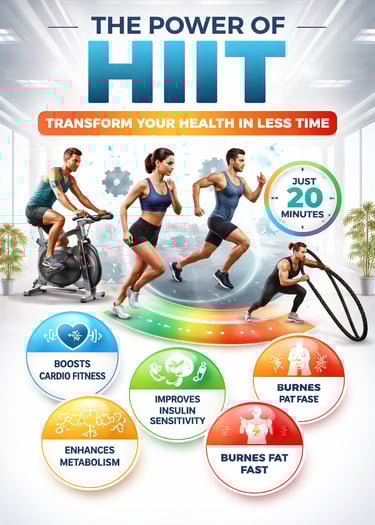
HIIT is a time-efficient exercise strategy alternating short bursts of high-intensity effort with recovery periods, shown to improve insulin sensitivity, mitochondrial function, and cardiovascular fitness in as little as 15 minutes.
HIIT delivers comparable or superior cardiometabolic benefits to traditional cardio in less time It is effective for weight loss, diabetes, and heart health when performed safely 2–3 times per week.
What if you could dramatically improve your cardiometabolic health, insulin sensitivity, and fat metabolism in less time than it takes to watch a television episode? This is not a fitness myth—it is the scientifically validated promise of high-intensity interval training (HIIT), one of the most powerful and time-efficient exercise strategies in modern preventive medicine.
In an era defined by rising rates of type 2 diabetes, obesity, metabolic syndrome, and cardiovascular disease, time has become one of the greatest barriers to consistent physical activity. HIIT directly addresses this challenge by delivering maximal physiological stimulus in minimal time, making it uniquely suited for both busy individuals and patients with chronic metabolic conditions. Unlike traditional moderate-intensity continuous training (MICT), HIIT alternates short bursts of near-maximal effort with recovery periods, triggering profound adaptations at the mitochondrial, vascular, and metabolic levels.
Emerging research shows that HIIT enhances mitochondrial biogenesis, glucose uptake via GLUT-4 translocation, and endothelial function, while simultaneously improving VO₂ max, insulin resistance, and body composition (Li et al., 2025; Poon et al., 2025; Ko et al., 2025). Remarkably, these benefits often occur with significantly shorter exercise durations compared to conventional aerobic training. In patients with type 2 diabetes, HIIT has demonstrated clinically meaningful reductions in HbA1c and fasting glucose levels, positioning it as a potent adjunct to pharmacotherapy (Poon et al., 2025).
Beyond metabolism, HIIT exerts protective effects on the cardiovascular system, including improved cardiac efficiency, blood pressure regulation, and resistance to ischemic injury (Wei et al., 2025). For clinicians and patients alike, this represents a paradigm shift—from exercise as a lifestyle recommendation to exercise as precision medicine.
This isn’t just exercise—it’s metabolic reprogramming in under 20 minutes.
↓ HbA1c by ~0.5–1%
↑ VO₂ max (strongest mortality predictor)
↑ fat oxidation within weeks
Clinical pearls.
1. Mitochondrial Quality Control (The Cellular Tune-Up)
Scientific Perspective: HIIT significantly upregulates markers of mitochondrial fusion and fission (Li et al., 2025). This enhances "mitophagy"—the removal of dysfunctional mitochondria—and promotes a more robust, interconnected mitochondrial network in skeletal muscle compared to steady-state exercise.
Think of your cells like a fleet of cars. Normal exercise keeps them running, but HIIT acts like a high-end service center. It helps your body get rid of "old, broken engines" and build newer, more powerful ones, making you more energetic at a cellular level.
2. Ischemic Preconditioning (The Heart’s Safety Net)
Scientific Perspective: HIIT improves mitochondrial function in cardiomyocytes and attenuates damage from ischemia-reperfusion injury (Wei et al., 2025). This suggests that HIIT may provide a "cardioprotective" effect by preparing the heart muscle to better survive a low-oxygen event, such as a myocardial infarction.
HIIT is like a "fire drill" for your heart. By pushing your heart safely for short bursts, you are teaching it how to handle stress. If a real emergency (like a blockage) ever happens, your heart muscle is better trained to survive the event with less damage.
Shutterstock
3. Non-Insulin Mediated Glucose Uptake
Scientific Perspective: HIIT enhances the density and translocation of GLUT-4 transporters (Poon et al., 2025). This facilitates glucose uptake into the muscle cells even in the presence of systemic insulin resistance, making it a potent adjunct for managing HbA1c in Type 2 Diabetes.
In Type 2 Diabetes, the "front door" for sugar to enter your muscles (insulin) is often stuck. HIIT creates "side doors" that let sugar in without needing as much insulin. This is why it is one of the fastest ways to lower your blood sugar levels naturally.
4. The EPOC Advantage (The "Afterburn" Effect)
Scientific Perspective: Different HIIT protocols yield distinct Excess Post-exercise Oxygen Consumption (EPOC) profiles. Higher-intensity bursts create a larger "oxygen debt," requiring the body to expend more energy during the recovery phase to restore homeostasis (BaiQuan et al., 2025).
With a normal walk, you stop burning extra calories the moment you stop moving. With HIIT, your metabolism stays "revved up" for hours after you finish. Your body is working overtime just to get back to its resting state, effectively burning calories while you sit on the couch.
5. Neuromuscular "Power" Preservation
Scientific Perspective: HIIT drives adaptations in motor unit recruitment and fast-twitch muscle fiber transitions (Hung et al., 2025). This is critical for combating sarcopenia and maintaining the "rate of force development," which is often lost faster than aerobic capacity in aging populations.
As we age, we don't just lose muscle; we lose "snap" and speed. HIIT trains your nerves and muscles to react quickly. This isn't just about fitness—it’s about balance and preventing falls, helping you stay independent and strong as you get older.
6. The Minimum Effective Dose (Time as a Catalyst)
Scientific Perspective: HIIT provides comparable (or superior) VO2 max and metabolic gains to MICT with 40-60% less time commitment (Franklin & Zhu, 2026). This addresses the primary psychosocial barrier to exercise—perceived time scarcity—without sacrificing clinical outcomes.
You don’t need an hour at the gym to change your health. Science shows that 20 minutes of "smart intensity" is often better for your heart and metabolism than a 45-minute jog. It’s about the quality of the effort, not just the minutes on the clock.
What Exactly Is HIIT?
HIIT is not one single workout. It is an umbrella term for any exercise protocol that alternates high-intensity work intervals — typically performed at 80–95% of maximum heart rate — with lower-intensity recovery periods. The work intervals can last anywhere from 10 seconds to 4 minutes, and the ratio of work to rest varies widely depending on the goal and the individual's fitness level.
Common HIIT formats include Tabata (20 seconds on, 10 seconds off), sprint interval training (SIT), and aerobic HIIT using cycling, rowing, or treadmill running. A 2025 study by BaiQuan et al. compared different HIIT protocols in obese adults and found that even within the HIIT category, the specific work-to-rest ratio meaningfully influences post-exercise energy metabolism, underscoring the importance of tailoring the protocol to the individual (BaiQuan et al., 2025).
The key differentiator between HIIT and steady-state moderate-intensity continuous training (MICT) is the physiological demand created during the high-effort intervals. These short, intense bursts push your body to recruit fast-twitch muscle fibres, dramatically elevate oxygen consumption, and trigger a cascade of cellular adaptations that continue long after the workout ends.
HIIT Benefits
1. Insulin Sensitivity & Glucose Control
Mechanism: ↑ GLUT-4 expression and translocation
Effect: ↑ Skeletal muscle glucose uptake
Clinical Outcome: ↓ HbA1c, ↓ fasting glucose, improved insulin sensitivity
2. Mitochondrial Function & Metabolic Efficiency
Mechanism: ↑ Mitochondrial biogenesis and dynamics (fusion/fission)
Effect: ↑ Cellular energy production and fat oxidation
Clinical Outcome: ↓ Metabolic dysfunction, ↑ endurance, improved metabolic flexibility
3. Cardiovascular Fitness & Longevity
Mechanism: ↑ VO₂ max and stroke volume
Effect: ↑ Cardiac efficiency and oxygen delivery
Clinical Outcome: ↓ Cardiovascular mortality, ↓ risk of heart disease and stroke
4. Fat Loss & Energy Expenditure
Mechanism: ↑ Excess Post-exercise Oxygen Consumption (EPOC)
Effect: ↑ Post-exercise calorie burn
Clinical Outcome: ↓ Body fat %, ↓ visceral adiposity
5. Neuromuscular Strength & Function
Mechanism: ↑ Fast-twitch muscle fiber recruitment
Effect: ↑ Strength, power, and coordination
Clinical Outcome: ↓ Fall risk, ↑ functional capacity, improved physical performance
Clinical Takeaway
HIIT drives multi-system adaptations—targeting metabolism, cardiovascular health, and neuromuscular function simultaneously—making it one of the most time-efficient and clinically powerful exercise interventions available.
Time-Efficient Metabolic Benefits of HIIT: More Results in Less Time
One of the most compelling advantages of high-intensity interval training (HIIT) is its ability to deliver powerful metabolic benefits in significantly less time compared to traditional moderate-intensity continuous training (MICT). In a world where “lack of time” remains the leading barrier to exercise adherence, HIIT offers a clinically practical and sustainable solution.
A comprehensive review by Franklin and Zhu (2026) highlights that HIIT is uniquely time-efficient for improving metabolic health, making it highly applicable not only for athletes but also for patients in cardiac rehabilitation, obesity, and chronic disease management (Franklin & Zhu, 2026). By compressing substantial physiological stimulus into shorter sessions, HIIT significantly improves long-term adherence, which is a key determinant of real-world outcomes.
A major contributor to this efficiency is excess post-exercise oxygen consumption (EPOC)—commonly known as the “afterburn effect.” Following a HIIT session, metabolic rate remains elevated for hours as the body restores homeostasis. BaiQuan et al. (2025) demonstrated that higher-intensity HIIT protocols produce greater and more sustained EPOC responses, particularly in individuals with obesity, enhancing total daily energy expenditure (BaiQuan et al., 2025).
Clinical Insight: When total exercise time is matched, HIIT provides a metabolic advantage over steady-state cardio, supporting fat loss and metabolic health over time.
Mitochondrial Adaptations: How HIIT Rebuilds Cellular Energy Systems
Mitochondrial dysfunction is a central feature of aging, insulin resistance, and cardiometabolic disease. HIIT has emerged as a potent stimulus for mitochondrial biogenesis and functional remodeling, making it a cornerstone intervention in metabolic medicine.
Li et al. (2025) demonstrated that HIIT induces superior improvements in mitochondrial dynamics—fusion and fission—compared to MICT, enhancing cellular efficiency and energy production (Li et al., 2025). These adaptations improve the muscle’s ability to oxidize fat, utilize glucose, and resist metabolic stress.
Importantly, HIIT also exerts cardioprotective effects at the cellular level. Wei et al. (2025) reported that HIIT enhances mitochondrial resilience in cardiomyocytes and reduces ischemia–reperfusion injury, a major contributor to myocardial damage during heart attacks (Wei et al., 2025).
Takeaway: HIIT acts as a form of cellular reprogramming, upgrading energy systems and improving metabolic resilience.
HIIT and Insulin Sensitivity: A Powerful Strategy for Diabetes and Metabolic Syndrome
Insulin resistance underpins major chronic diseases, including type 2 diabetes, metabolic syndrome, and PCOS. Among lifestyle interventions, HIIT is one of the most effective strategies for improving insulin sensitivity and glycaemic control.
An umbrella review by Poon et al. (2025) confirmed that HIIT significantly improves HbA1c, fasting glucose, and insulin sensitivity across diverse populations with type 2 diabetes (Poon et al., 2025). These findings support HIIT as a first-line adjunct to pharmacotherapy.
Mechanistically, HIIT:
Increases GLUT-4 transporter expression and translocation
Enhances insulin signaling pathways
Reduces visceral adiposity, a key driver of metabolic dysfunction
Notably, these benefits often occur independent of weight loss, emphasizing that HIIT improves metabolic health beyond the scale.
Clinical Insight: HIIT directly targets the root cause of metabolic disease—insulin resistance.
Cardiovascular Benefits of HIIT: Improving Heart Health and Longevity
HIIT is one of the most effective exercise modalities for improving cardiovascular fitness and reducing disease risk.
Ko et al. (2025) reported that HIIT significantly enhances:
VO₂ max (a key predictor of longevity)
Blood pressure and resting heart rate
Endothelial function and lipid profile (Ko et al., 2025)
These improvements translate into reduced risk of:
Coronary artery disease
Heart failure
Stroke
The unique advantage of HIIT lies in the alternating high-demand and recovery phases, which challenge cardiac output and improve stroke volume and cardiac efficiency.
In clinical populations, supervised HIIT has been safely implemented in patients recovering from myocardial infarction, heart failure, and bypass surgery (Franklin & Zhu, 2026).
Takeaway: HIIT acts as a form of cardiovascular conditioning and protection.
HIIT for Older Adults and Chronic Disease Patients
Contrary to popular belief, HIIT is not limited to athletes. Evidence strongly supports its use in middle-aged and elderly populations with chronic disease.
A meta-analysis by Li et al. (2025) found that HIIT improves:
Blood pressure
Glycaemic control
Aerobic capacity
Quality of life
These benefits make HIIT a valuable intervention in aging, diabetes, and cardiovascular disease management.
However, protocols should be:
Individualized
Initiated at lower intensity
Progressively advanced
Ideally supervised
Additionally, HIIT improves neuromuscular coordination, strength, and balance, reducing fall risk in older adults (Hung et al., 2025).
Clinical Insight: HIIT is safe, scalable, and highly effective when tailored appropriately.
HIIT for Fat Loss and Body Composition in Women
HIIT is highly effective for improving body composition, particularly in women.
Danković et al. (2025) demonstrated that HIIT leads to:
Reduced body fat percentage
Decreased waist circumference
Improved cardiorespiratory fitness
Importantly, these benefits occur even in recreationally active women, making HIIT a powerful progression strategy.
Combined with its EPOC effect and lean muscle preservation, HIIT supports long-term fat loss and metabolic health.
Takeaway: HIIT optimizes fat loss while preserving lean mass, making it superior to calorie-focused approaches alone.
Strength, Power, and Neuromuscular Benefits of HIIT
Beyond metabolic and cardiovascular benefits, HIIT also enhances muscle strength, power, and neuromuscular function.
Hung et al. (2025) found that HIIT:
Improves motor unit recruitment
Enhances fast-twitch muscle fiber activation
Increases rate of force development
These adaptations translate to:
Better functional performance
Improved athletic capacity
Reduced injury and fall risk
While resistance training remains essential for maximal hypertrophy, HIIT provides a powerful complementary stimulus.
Clinical Insight: HIIT delivers multisystem benefits—metabolic, cardiovascular, and neuromuscular.
Clinical Applications and Safety: What Every Patient Should Know
The expanding evidence base for HIIT is exciting, but responsible clinical application requires honest attention to both benefits and risks.
Franklin and Zhu (2026) provide the most comprehensive recent account of HIIT's clinical risk profile. Their review acknowledges that while HIIT is remarkably safe for most healthy adults and even for many patients with chronic disease when properly supervised, there is an acute transient increase in the risk of adverse cardiac events — including arrhythmia and, very rarely, cardiac arrest — during high-intensity exercise bouts. The absolute risk remains low, but it is not zero, particularly in individuals with known or undiagnosed cardiovascular disease.
Key safety principles for HIIT include:
A thorough medical evaluation before beginning a HIIT programme, particularly for individuals over 45, those with cardiovascular risk factors, or those with existing chronic disease.
Progressive intensity — starting at lower intensities and gradually increasing the effort level over several weeks.
Adequate warm-up and cool-down periods to reduce the risk of musculoskeletal injury and cardiovascular stress.
Appropriate recovery time between sessions — most evidence-based protocols recommend 2–3 HIIT sessions per week with rest or low-intensity exercise on other days.
Listening to your body and not exercising through warning symptoms such as chest pain, dizziness, unusual shortness of breath, or heart palpitations.
For patients in cardiac rehabilitation, oncology, or with severe respiratory conditions, HIIT should only be undertaken under direct clinical supervision with appropriate monitoring equipment.
Why HIIT Is Redefining Modern Exercise Medicine
1. Exercise Is No Longer Optional—It Is Therapeutic
The global rise in type 2 diabetes, obesity, and cardiovascular disease has shifted exercise from lifestyle advice to core medical intervention
High-Intensity Interval Training (HIIT) represents a paradigm shift: maximum physiological benefit in minimal time
It aligns with real-world constraints—time scarcity is the #1 barrier to adherence
2. Time Efficiency Meets Biological Potency
HIIT delivers comparable or superior outcomes to traditional cardio (MICT) in significantly less time
Mechanistically, it induces:
Excess Post-exercise Oxygen Consumption (EPOC) → prolonged calorie burn
Rapid cardiorespiratory stress-recovery cycles → superior adaptation
This makes HIIT uniquely positioned for high compliance and sustainability
3. Deep Cellular Reprogramming
HIIT is not just exercise—it is metabolic re-engineering
Drives:
Mitochondrial biogenesis and efficiency
Enhanced GLUT-4–mediated glucose uptake
Improved insulin signaling pathways
These adaptations directly target insulin resistance—the root of metabolic disease
4. Cardiovascular Protection Beyond Fitness
Improves:
VO₂ max (strongest predictor of longevity)
Endothelial function and arterial flexibility
Cardiac resilience to ischemic stress
Emerging evidence suggests HIIT may act as a form of “cardiac preconditioning”
5. Clinically Relevant Across Populations
Proven benefits in:
Type 2 diabetes (HbA1c reduction)
Hypertension and metabolic syndrome
Aging populations (functional capacity, fall risk)
Works even without significant weight loss, emphasizing metabolic over cosmetic outcomes
6. Powerful—But Requires Precision
HIIT is a high-yield intervention, not a casual workout
Requires:
Screening in high-risk individuals
Progressive overload
Adequate recovery (2–3 sessions/week)
Misuse can increase cardiac and musculoskeletal risk
7. The Future: Exercise as Precision Medicine
HIIT exemplifies a broader shift:
From generic advice → personalized exercise prescription
When applied correctly, it becomes:
A metabolic drug without side effects
A scalable solution for global cardiometabolic health
Bottom Line
HIIT is not just efficient—it is biologically transformative, clinically validated, and strategically essential in modern preventive and therapeutic medicine
15-Minute HIIT Workout Plan (Beginner-Friendly, Fat Loss & Insulin Sensitivity Optimized)
This science-backed 15-minute HIIT routine is designed to improve fat burning, insulin sensitivity, and cardiovascular fitness using simple bodyweight movements. Ideal for beginners and busy individuals, this structured circuit maximizes metabolic impact in minimal time.
HIIT Circuit Structure (Metabolic Reset Protocol)
Work Interval: 30 seconds
Rest Interval: 30 seconds (active recovery)
Exercises per Circuit: 4
Rest Between Circuits: 60 seconds
Total Rounds: 2–3
Total Time: ~12–15 minutes
Full-Body HIIT Exercises for Fat Loss & Metabolic Health
1. Bodyweight Squats (Lower Body + Glucose Uptake)
Work: 30 sec | Rest: 30 sec
Stand with feet shoulder-width apart
Lower hips back and down (chair-like motion)
Keep chest upright and knees aligned with toes
Drive through heels to return to standing
Clinical Benefit: Enhances GLUT-4 mediated glucose uptake and activates large muscle groups for higher caloric expenditure
2. Incline Push-Ups (Upper Body Strength + Insulin Sensitivity)
Work: 30 sec | Rest: 30 sec
Place hands on an elevated surface (wall, bench, or chair)
Lower chest toward surface with control
Push back to starting position
Clinical Benefit: Improves muscle insulin sensitivity and supports lean mass preservation
3. High Knees (Modified Cardio + EPOC Boost)
Work: 30 sec | Rest: 30 sec
March or jog in place
Lift knees toward chest with controlled rhythm
Maintain upright posture
Clinical Benefit: Elevates heart rate to 80–90% HRmax, enhancing EPOC (afterburn effect)
4. Forearm Plank (Core Stability + Metabolic Efficiency)
Work: 30 sec | Rest: 30 sec
Keep body in a straight line from head to heels
Engage core, avoid hip sagging
Maintain steady breathing
Clinical Benefit: Improves neuromuscular coordination and core stability, supporting functional fitness
Circuit Execution (How to Perform)
Complete all 4 exercises consecutively
Take 30 seconds active recovery between each movement
After one full round, rest for 60 seconds
Repeat for 2–3 total rounds
Cool-Down (Essential for Recovery & Cardiovascular Regulation)
3–5 Minute Cool-Down Routine
Slow walking or marching in place (1–2 minutes)
Gentle stretching:
Hamstrings
Quadriceps
Chest and shoulders
Clinical Insight: Supports parasympathetic activation, reduces heart rate gradually, and minimizes post-exercise hypotension
Why This 15-Minute HIIT Works
Boosts fat loss and metabolism
Improves insulin sensitivity naturally
Enhances cardiovascular fitness and VO₂ max
Increases calorie burn after exercise (EPOC)
Time-efficient solution for busy schedules
Pro Tip for Maximum Results
Perform this HIIT workout 2–3 times per week, combined with daily low-intensity activity (walking) and resistance training for optimal cardiometabolic health.
Frequently Asked Questions
1. How many times a week should I do HIIT?
Most research supports 2–3 HIIT sessions per week, with at least one full rest or light activity day in between. HIIT places significant demand on the cardiovascular system and muscles, so recovery time is not optional — it is when the adaptations actually occur. More is not better; overtraining with HIIT can increase injury risk and lead to burnout. Pair your HIIT days with moderate-intensity walking, yoga, or strength training on other days for a balanced programme.
2. Is HIIT safe if I have a heart condition?
For many patients with cardiovascular disease, supervised HIIT has been shown to be safe and effective — including those recovering from heart attacks, those with heart failure, and those who have undergone bypass surgery. However, 'supervised' is the operative word. You should always consult your cardiologist before beginning any HIIT programme, and your first sessions should take place in a setting where your heart rate and blood pressure can be monitored. Franklin and Zhu (2026) provide detailed guidance on safe HIIT implementation in cardiac populations.
3. Can HIIT help with type 2 diabetes management?
Yes — the evidence here is particularly strong. Poon et al. (2025) found consistent improvements in HbA1c and insulin sensitivity across multiple studies of type 2 diabetes patients. HIIT helps by increasing GLUT-4 transporter activity in muscle cells, reducing visceral fat, and improving insulin signalling pathways. Always check your blood glucose before and after exercise, and consult your diabetes care team to adjust medications if needed, as HIIT can significantly lower blood sugar during and after sessions.
4. Is HIIT suitable for older adults?
Absolutely, with appropriate modifications. Li et al. (2025, Frontiers in Physiology) confirmed that HIIT is safe and effective for middle-aged and elderly individuals with chronic diseases. The key is starting conservatively — lower intensities, longer rest periods, and ideally professional supervision at the start. Older adults often see particularly meaningful benefits in terms of blood pressure, cardiovascular fitness, fall prevention, and metabolic health, making HIIT an excellent investment at any age.
5. Will HIIT help me lose weight?
HIIT is a powerful tool for improving body composition — reducing fat mass while preserving or building lean muscle. Danković et al. (2025) and BaiQuan et al. (2025) both document significant reductions in body fat percentage and waist circumference with HIIT. However, exercise alone is rarely sufficient for significant weight loss without concurrent attention to nutrition. Think of HIIT as one highly effective piece of a comprehensive metabolic health strategy, not a standalone solution. Its EPOC effect does provide a genuine calorie-burning advantage beyond the workout itself.
6. What is the minimum effective dose of HIIT?
Research suggests that even very brief HIIT sessions — sometimes as short as 10–15 minutes including warm-up and cool-down — can produce meaningful health benefits when performed at genuinely high intensities. The Tabata protocol (just 4 minutes of 20-seconds-on/10-seconds-off intervals at maximal effort) has been extensively studied and shown to improve both aerobic and anaerobic fitness. That said, 20–30 minute sessions allow for more volume and are the most commonly studied duration in clinical trials. The best HIIT session is ultimately the one that fits your schedule and that you will actually do consistently.
7. How does HIIT compare to regular cardio (moderate-intensity continuous training)?
Both modalities have an important place in a well-rounded fitness programme. HIIT outperforms moderate-intensity continuous training (MICT) in mitochondrial adaptation, time efficiency, and EPOC effect. Li et al. (2025, Frontiers in Physiology) demonstrated HIIT's superiority in mitochondrial dynamics specifically. However, MICT is more appropriate for beginners, individuals with joint issues, and those in early-stage rehabilitation. Many exercise scientists recommend combining both — HIIT 2–3 times per week alongside 1–2 moderate-intensity sessions — for comprehensive cardiovascular and metabolic benefit.
Author’s Note
As a physician working at the intersection of metabolism, cardiovascular disease, and lifestyle medicine, I have witnessed a consistent pattern: patients do not fail because they lack knowledge—they struggle because traditional recommendations often fail to fit into real life. High-Intensity Interval Training (HIIT) addresses this gap by aligning biological effectiveness with practical feasibility.
From a clinical standpoint, HIIT represents more than a time-saving workout—it is a form of targeted metabolic therapy. The evidence is now robust that HIIT improves insulin sensitivity, mitochondrial function, and cardiovascular fitness, often with a lower time burden than conventional exercise. For patients with type 2 diabetes, metabolic syndrome, or early cardiovascular disease, this can translate into meaningful improvements in glycaemic control, functional capacity, and overall risk reduction—even before significant weight loss occurs.
However, it is equally important to emphasize that HIIT is not a one-size-fits-all intervention. Its benefits are intensity-dependent, but so are its risks. In individuals with known or suspected cardiovascular disease, advanced age, or multiple comorbidities, HIIT should be introduced gradually, individualized carefully, and ideally supervised—particularly in the early phases.
In my clinical practice, the most successful approach is not choosing between HIIT and traditional exercise, but integrating both strategically. A combination of 2–3 HIIT sessions per week, supported by moderate-intensity activity and resistance training, provides a balanced and sustainable model for long-term health.
Ultimately, the goal is not simply to exercise harder, but to exercise smarter—leveraging the growing science of HIIT to deliver maximum metabolic benefit with precision, safety, and consistency.
Medical Disclaimer
The information in this article, including the research findings, is for educational purposes only and does not constitute medical advice, diagnosis, or treatment. Before starting an HIIT program, you must consult with a qualified healthcare professional, especially if you have existing health conditions (such as cardiovascular disease, uncontrolled hypertension, or advanced metabolic disease). Exercise carries inherent risks, and you assume full responsibility for your actions. This article does not establish a doctor-patient relationship.
Related Articles
Why Aerobic Exercise Is the Most Powerful ‘Drug’ for Heart, Fat Loss & Longevity | DR T S DIDWAL
Exercise Unlocks a Hidden Glucose Pathway in Muscle — Independent of Insulin | DR T S DIDWAL
No Time to Train? Science-Backed Workouts That Deliver | DR T S DIDWAL
References
BaiQuan, Y., Meng, C., Congqing, Z., et al. (2025). The effects and post-exercise energy metabolism characteristics of different high-intensity interval training in obese adults. Scientific Reports, 15, 13770. https://doi.org/10.1038/s41598-025-98590-z
Danković, G., Lazić, A., Andrieieva, O., et al. (2025). Effects of high-intensity interval training on physical fitness and body composition in recreationally active females: A systematic review and meta-analysis. Scientific Reports, 15, 33982. C
Franklin, B. A., & Zhu, W. (2026). High-intensity interval training: Benefits, risks, and clinical implications. Journal of Science in Sport and Exercise, 8, 1–8. https://doi.org/10.1007/s42978-025-00352-w
Hung, C.-H., Su, C.-H., & Wang, D. (2025). The role of high-intensity interval training (HIIT) in neuromuscular adaptations: Implications for strength and power development — A review. Life, 15(4), 657. https://doi.org/10.3390/life15040657
Ko, J.-M., So, W.-Y., & Park, S.-E. (2025). Narrative review of high-intensity interval training: Positive impacts on cardiovascular health and disease prevention. Journal of Cardiovascular Development and Disease, 12(4), 158. https://doi.org/10.3390/jcdd12040158
Li, Q., Xu, G., Liu, C., Gao, L., & Yu, H. (2025). The effectiveness of high-intensity interval training on cardiometabolic outcomes in middle-aged and elderly populations with chronic diseases: A systematic review and meta-analysis. Frontiers in Physiology, 16, 1669941. https://doi.org/10.3389/fphys.2025.1669941
Li, Y., Zhao, W., & Yang, Q. (2025). Effects of high-intensity interval training and moderate-intensity continuous training on mitochondrial dynamics in human skeletal muscle. Frontiers in Physiology, 16, 1554222. https://doi.org/10.3389/fphys.2025.1554222
Poon, E. T.-C., Li, H.-Y., Kong, A. P. S., & Little, J. P. (2025). Efficacy of high-intensity interval training in individuals with type 2 diabetes mellitus: An umbrella review of systematic reviews and meta-analyses. Diabetes, Obesity and Metabolism, 27(4), 1719–1734. C
Wei, Z., Ahmad, M., Chen, R., Fatima, S., & Shah, S. (2025). High-intensity interval training improves mitochondrial function and attenuates cardiomyocyte damage in ischemia-reperfusion. IJC Heart & Vasculature, 60, 101756. https://doi.org/10.1016/j.ijcha.2025.101756