Why HIIT Preferentially Reduces Visceral Fat: Mechanisms, Evidence, and Clinical Implications
Discover how HIIT targets dangerous visceral fat, improves insulin sensitivity, boosts mitochondrial health, and reduces cardiometabolic risk. Evidence-based science from 2023–2026 explains why short, intense workouts may outperform traditional cardio for belly fat loss and metabolic health.
EXERCISEMETABOLISM
Dr. T.S. Didwal, M.D.(Internal Medicine)
5/18/202616 min read
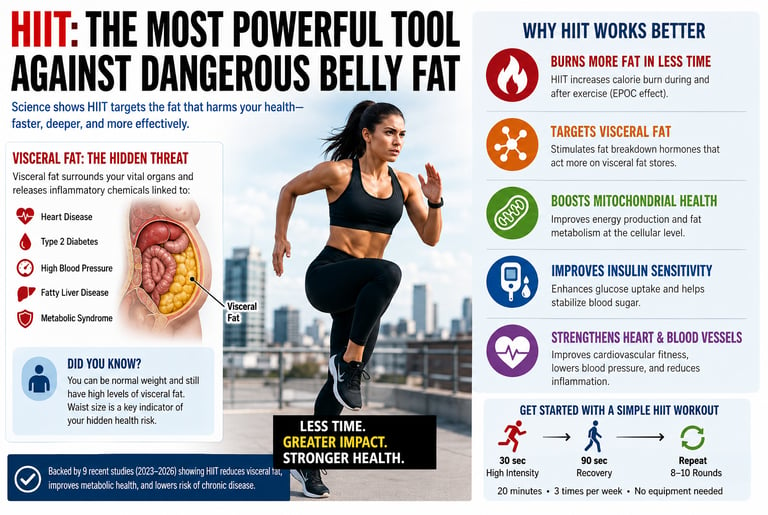
High-intensity interval training represents a departure from traditional steady-state cardio. Rather than maintaining a consistent moderate intensity for prolonged periods, HIIT alternates between brief bursts of maximum-effort exercise and recovery periods. This pattern—whether you're sprinting on a treadmill, cycling at near-maximum power, or performing explosive bodyweight movements—triggers unique physiological adaptations that distinguish it from conventional aerobic training.
Visceral fat is not the fat you see in the mirror — it is the fat silently surrounding your liver, pancreas, intestines, and heart. Unlike the soft fat beneath the skin, this deep abdominal fat behaves like an inflammatory organ, releasing chemicals that accelerate insulin resistance, high blood pressure, fatty liver disease, heart attacks, and type 2 diabetes (Poon et al., 2024; Ko et al., 2025). Even more concerning, research shows you can appear relatively lean while still carrying dangerous levels of visceral fat hidden inside the abdomen. Scientists increasingly recognize visceral adipose tissue as one of the strongest predictors of early cardiometabolic disease and premature mortality (Li et al., 2025).
A growing body of evidence now suggests that high-intensity interval training (HIIT) may reduce visceral fat more efficiently — and in far less time — than traditional moderate-intensity exercise (Zhu et al., 2025; Coates et al., 2023). In studies on obesity, metabolic syndrome, hypertension, and type 2 diabetes, HIIT consistently improves insulin sensitivity, cardiovascular fitness, mitochondrial function, and reduces abdominal fat (Delgado et al., 2025; Sert et al., 2025). The message from modern metabolic science is becoming increasingly difficult to ignore: brief bursts of intense exercise may trigger some of the most powerful anti-fat and anti-diabetic adaptations the human body can produce.
Key Points
1. HIIT Targets Dangerous Visceral Fat More Efficiently Than Traditional Cardio
Modern research shows high-intensity interval training (HIIT) may reduce deep abdominal visceral fat faster and more efficiently than moderate continuous exercise, especially in people with obesity, metabolic syndrome, and type 2 diabetes.
2. Visceral Fat Is a Major Driver of Diabetes and Heart Disease
Unlike subcutaneous fat, visceral fat surrounds vital organs and releases inflammatory chemicals linked to insulin resistance, hypertension, fatty liver disease, atherosclerosis, and premature cardiovascular death.
3. Short HIIT Workouts Produce Significant Metabolic Benefits
Studies published between 2023 and 2026 demonstrate that even low-volume HIIT sessions lasting 15–25 minutes can improve insulin sensitivity, blood sugar control, and abdominal fat reduction.
4. HIIT Improves Mitochondrial Function and Fat Burning
HIIT stimulates mitochondrial biogenesis and activates fat-oxidation pathways inside visceral fat tissue itself, helping convert metabolically harmful fat into a healthier, more active metabolic state.
5. HIIT Enhances Insulin Sensitivity Through GLUT4 Activation
High-intensity exercise increases GLUT4 transporter activity in skeletal muscle, allowing muscles to absorb glucose more effectively and reducing the hyperinsulinemia that promotes belly fat accumulation.
6. Older Adults and Chronic Disease Patients Can Benefit From HIIT
Evidence shows appropriately modified HIIT programs improve cardiovascular fitness, blood pressure, metabolic health, and quality of life even in older adults and people with chronic diseases.
7. Consistency Matters More Than Workout Duration
Research consistently shows that performing HIIT two to three times weekly with proper recovery can significantly reduce visceral fat and improve long-term cardiometabolic health.
The Belly Fat Nobody Talks About
Not all fat is equal. The soft fat you can pinch around your hips — subcutaneous fat — is largely cosmetic. But the fat you cannot see or feel, the fat wrapped around your liver, pancreas, intestines, and heart, is a metabolic time bomb. Scientists call it visceral adipose tissue (VAT), and its accumulation is one of the strongest predictors of cardiovascular disease, type 2 diabetes, metabolic syndrome, and all-cause mortality.
Here is the unsettling truth: you can be normal weight and still carry dangerous levels of visceral fat. You can look "fine" on the outside while inflammatory chemicals from your visceral fat quietly erode your insulin sensitivity, stiffen your arteries, and program your immune system toward chronic low-grade inflammation.
For decades, the recommended antidote was long, slow, steady-state cardio — 45 to 60 minutes of moderate-paced walking, jogging, or cycling, most days of the week. That advice is not wrong. But it is increasingly incomplete. A growing body of evidence, including multiple systematic reviews, meta-analyses, and animal mechanistic studies published as recently as 2026, now confirms that high-intensity interval training (HIIT) preferentially dismantles visceral fat through mechanisms that moderate exercise simply cannot replicate — and does so in a fraction of the time.
This article synthesizes nine peer-reviewed studies to give you a complete, clinically grounded, and practically actionable picture of how HIIT fights the fat that threatens your life.
The Research Landscape: Nine Studies, One Clear Message
1. HIIT Directly Reduces Visceral Fat in Type 2 Diabetes
One of the most targeted investigations into HIIT and visceral fat was conducted by Delgado, Delgado, and Burns (2025), published in the International Journal of Exercise Science. Their systematic review specifically examined the effect of HIIT on visceral adipose tissue in adults living with type 2 diabetes — a population in which visceral fat accumulation is both a cause and a consequence of metabolic dysfunction.
The findings were striking. Across the reviewed trials, HIIT interventions produced measurable and significant reductions in visceral adipose tissue in individuals with type 2 diabetes, a demographic historically cautioned against vigorous exercise. Crucially, these reductions in VAT were accompanied by improvements in glycemic control, reinforcing the bidirectional relationship between visceral fat loss and improved insulin sensitivity. This study positions HIIT not merely as an exercise strategy but as a targeted metabolic therapy for one of the most prevalent chronic diseases of our time.
2. Low-Volume HIIT Melts Abdominal Fat — Even in Obesity
The concern that HIIT requires large volumes of exercise to be effective was systematically dismantled by Zhu and colleagues (2025) in the Journal of Sports Sciences. Their meta-analysis examined the effect of low-volume interval training on whole-body fat, abdominal fat, and visceral fat specifically in adults living with overweight and obesity.
The results clarified something enormously practical: even short-duration, low-volume HIIT protocols — significantly less exercise than traditional guidelines recommend — produced meaningful reductions in abdominal and visceral fat. This is not a minor finding. It addresses the single most common barrier to exercise adherence: time. The study validates the biological efficiency of high-intensity intervals as a stimulus for visceral fat mobilization, independent of total caloric expenditure. For someone who can manage only 20 minutes of structured intervals three times per week, the evidence suggests those sessions carry outsized fat-loss benefits compared to the same time spent on moderate continuous exercise.
3. The Molecular Engine: What HIIT Does Inside Visceral Fat Cells
Perhaps the most mechanistically illuminating study in this review comes from Rahimi, Davies, Golpasandi, and colleagues (2026), published in Biology Research. This animal study compared the effects of moderate-intensity continuous training (MICT) and HIIT on mitochondrial dynamics-related proteins within visceral adipose tissue of type 2 diabetic rats.
The study found that HIIT produced superior upregulation of proteins governing mitochondrial biogenesis and dynamics within visceral fat cells themselves. This matters enormously because it reveals a previously underappreciated mechanism: HIIT does not merely burn visceral fat from the outside in — it remodels the internal biology of visceral adipose tissue, shifting it from an inflammatory, dysfunctional state toward a healthier metabolic phenotype. When mitochondrial function improves inside fat cells, those cells become less prone to inflammation and more responsive to metabolic signals. HIIT essentially reprograms visceral fat at the molecular level, something moderate-intensity exercise does to a lesser degree.
4. Metabolic Syndrome: HIIT as a Multi-Target Intervention
Poon and colleagues (2024), publishing in the British Journal of Sports Medicine, conducted an extensive systematic review and meta-analysis of randomized controlled trials examining HIIT specifically in adults with metabolic syndrome. This condition — defined by the clustering of central obesity, elevated blood pressure, dyslipidemia, and impaired fasting glucose — affects an estimated one in three adults in many countries.
HIIT participants with metabolic syndrome demonstrated significant improvements across every component of the syndrome, including reductions in abdominal adiposity, improvements in insulin sensitivity, better lipid profiles, and reduced blood pressure. The simultaneous multi-system improvement is particularly significant because metabolic syndrome components amplify each other — reducing one tends to improve others. HIIT appears to intervene at a level upstream enough to cascade benefits across the entire syndrome, making it a rare single intervention with multiplied effects.
5. HIIT for Older Adults: Safe, Effective, and Life-Enhancing
A persistent clinical myth holds that older adults — particularly those managing chronic conditions — should limit themselves to gentle, low-intensity activity. Sert and colleagues (2025), in a systematic review and meta-analysis published in BMC Sports Science, Medicine and Rehabilitation, evaluated the effectiveness of HIIT specifically in older populations.
The evidence was reassuring and empowering in equal measure. Older adults who participated in appropriately designed HIIT programs demonstrated significant improvements in cardiometabolic markers, including aerobic capacity, insulin sensitivity, and blood pressure, alongside meaningful improvements in quality of life. The safety profile, when programs were properly graduated and supervised, was acceptable. This study reframes aging not as a reason to reduce intensity, but as a context requiring careful individualization of it.
6. Bodyweight HIIT: No Gym Required, Full Benefits Delivered
Herawati and colleagues (2025), publishing in BMC Public Health, investigated a combination of high-intensity bodyweight interval training and structured breathing exercises in normal-weight, middle-aged adults with hypertension. The intervention required no equipment beyond a floor and sufficient motivation.
The combination produced synergistic improvements in vascular function, blood pressure, and metabolic parameters. Endothelial function — the responsiveness and health of blood vessel linings — improved meaningfully. This finding eliminates one of the most commonly cited barriers to HIIT: the assumption that it requires gym access, speciality equipment, or high fitness levels. Jumping jacks, mountain climbers, high-knee runs, and bodyweight squats performed in intervals are sufficient stimuli to drive real cardiometabolic adaptation.
7. The Cardiovascular Mechanisms: Why HIIT Protects the Heart
Ko, So, and Park (2025), in a narrative review published in the Journal of Cardiovascular Development and Disease, synthesized the mechanisms through which HIIT confers cardiovascular protection. They outlined several overlapping pathways: stimulation of angiogenesis (growth of new blood vessels), improvement in endothelial function, enhanced myocardial efficiency, reduction in arterial stiffness, and modulation of inflammatory and oxidative stress markers.
What distinguishes HIIT from moderate exercise in this regard is the magnitude of stimulus. High-intensity efforts create transient, controlled cardiovascular stress that activates adaptation pathways proportionally — the same principle through which resistance training builds stronger muscles. The heart and vasculature, when repeatedly challenged near their functional ceiling, adapt by becoming structurally and functionally more resilient.
8. HIIT and Chronic Disease: Bigger Benefits Where They Matter Most
Li and colleagues (2025), in a systematic review and meta-analysis published in Frontiers in Physiology, examined HIIT outcomes in middle-aged and elderly individuals with established chronic diseases, including type 2 diabetes, cardiovascular disease, and metabolic syndrome.
The counterintuitive finding: effect sizes for cardiometabolic improvement were larger in individuals with chronic disease than in healthy controls. This means HIIT works best precisely in those who need it most. Rather than being a fitness tool reserved for the already-healthy, HIIT appears to be a therapeutic agent whose potency scales with baseline disease burden. The clinical implication is profound — individuals with existing conditions should not be excluded from HIIT; with appropriate medical oversight, they may benefit the most from it.
9. The Dual Promise: Athletic Performance Meets Population Health
Coates, Joyner, Little, Jones, and Gibala (2023), writing in Sports Medicine, articulated why HIIT occupies a uniquely valuable position in exercise science. The same training stimulus that elevates VO₂max and competitive performance in athletes simultaneously improves insulin sensitivity, lipid profiles, and inflammatory markers in sedentary individuals.
The authors emphasized that both the high-intensity intervals and the recovery periods drive distinct adaptations — the contrast between effort and recovery is itself a biological signal. This insight explains why precise manipulation of work-to-rest ratios matters and why interval structure is fundamentally different from simply exercising harder within a continuous bout.
How HIIT Preferentially Reduces Visceral Fat: The Mechanisms
Several interlocking physiological mechanisms explain HIIT's selective impact on visceral adipose tissue.
Catecholamine surge and lipolysis: High-intensity efforts trigger a rapid and substantial release of adrenaline (epinephrine) and noradrenaline. Visceral fat is particularly dense in beta-adrenergic receptors — the molecular switches that catecholamines bind to to activate fat mobilisation. Subcutaneous fat has fewer of these receptors. When adrenaline surges during a HIIT interval, visceral fat responds disproportionately, releasing stored triglycerides into circulation for energy.
PGC-1α activation and mitochondrial biogenesis: Rapid glycogen depletion during high-intensity bouts activates PGC-1α, a master regulator of mitochondrial biogenesis. As confirmed by Rahimi et al. (2026), this activation occurs within visceral fat tissue itself, remodeling its internal metabolic machinery. More mitochondria in fat cells means greater capacity for fat oxidation, shifting visceral fat from an inflammatory reservoir toward a more metabolically active and less pathological state.
GLUT4 upregulation and insulin sensitivity: High-intensity exercise sharply upregulates GLUT4 transporter expression, enhancing skeletal muscle glucose uptake independent of insulin. This reduces the hyperinsulinemia that promotes visceral fat storage, creating a systemic environment less hospitable to VAT accumulation.
Excess post-exercise oxygen consumption (EPOC): HIIT produces a sustained elevation in metabolic rate for hours following the session. During this recovery window, fat oxidation predominates. Visceral fat, being more metabolically active and lipolytically responsive, contributes disproportionately to this prolonged post-exercise energy expenditure.
Reduced inflammatory cytokine secretion: As visceral fat mass decreases, its output of TNF-α, IL-6, and other pro-inflammatory signals diminishes in parallel. This creates a virtuous cycle: less visceral fat means less inflammation, which means improved insulin sensitivity, which further discourages visceral fat re-accumulation.
Practical Applications: Putting the Science to Work
Understanding the mechanism is only half the equation. Here is how to translate the evidence into action.
Starter Protocol (Weeks 1–4): Perform 20 minutes of interval work, three times per week. Alternate 30 seconds of vigorous effort (70–85% of perceived maximum) with 90 seconds of walking or light movement. Use bodyweight exercises — jumping jacks, high knees, mountain climbers, step-ups — to eliminate equipment barriers. This directly mirrors the accessible protocol validated by Herawati et al. (2025).
Intermediate Protocol (Weeks 5–12): Progress to 4–6 intervals of 40 seconds at high intensity, followed by 60 seconds of recovery. Total session time remains under 25 minutes. Consider cycling or stair climbing if joint stress from running is a concern.
For Older Adults: Follow the evidence of Sert et al. (2025) — extend recovery periods (2:1 or 3:1 rest-to-work ratio), choose low-impact modalities (cycling, swimming intervals, seated exercises), and progress gradually over 6 to 8 weeks before increasing intensity.
For Metabolic Syndrome or Type 2 Diabetes: Obtain medical clearance first. Begin with 15-minute sessions and monitor blood glucose responses. As established by Delgado et al. (2025) and Poon et al. (2024), the metabolic benefits in this population are significant — but supervision during the initial adaptation phase is advisable.
Frequency and Recovery: Two to three HIIT sessions per week, with at least 48 hours between sessions, is the evidence-supported standard. On non-HIIT days, moderate-intensity walking or light activity aids recovery while maintaining metabolic momentum.
Pair It With Breathing Work: The synergistic benefit documented by Herawati et al. (2025) is achievable by incorporating 5–10 minutes of structured diaphragmatic breathing before or after HIIT sessions. This activates the parasympathetic nervous system, enhances heart rate variability, and may amplify vascular adaptations.
Who Should Seek Medical Clearance Before Starting HIIT
HIIT is broadly safe and effective, but the following individuals should consult a physician or cardiologist before beginning:
Individuals with diagnosed cardiovascular disease, coronary artery disease, heart failure, or uncontrolled arrhythmias
Anyone with resting blood pressure at or above 160/100 mmHg
People with type 2 diabetes complicated by autonomic neuropathy, retinopathy, or severe hypoglycemic episodes
Those with advanced pulmonary disease (COPD, pulmonary hypertension)
Long-term sedentary individuals over 45 years old with multiple cardiovascular risk factors
Pregnant individuals, particularly in high-risk pregnancies
Anyone recovering from acute illness, surgery, or inflammatory flare
High intensity is relative, not absolute. "High intensity for you" is the operating principle — and with appropriate individualization, the evidence supports HIIT across a remarkably wide clinical spectrum.
Frequently Asked Questions
Q1. How quickly will I see a reduction in visceral fat with HIIT? Meaningful changes in visceral fat typically begin within 4 to 8 weeks of consistent HIIT participation (2–3 sessions per week). Imaging studies show measurable VAT reduction within 8–12 weeks. Early metabolic improvements — better blood glucose control and improved energy levels — often appear within the first 2–4 weeks, providing tangible motivation before visible changes emerge.
Q2. Is HIIT safe if I already have high blood pressure? Yes, when appropriately modified and medically supervised. Herawati et al. (2025) specifically studied HIIT in adults with hypertension and documented significant blood pressure improvements. Bodyweight intervals at a moderate starting intensity, combined with structured breathing exercises, appear particularly beneficial. Begin with lower intensities and longer recovery periods, and ensure your resting blood pressure is below 160/100 mmHg before starting.
Q3. Can I do HIIT if I have type 2 diabetes and am on medication? With medical clearance, yes — and the evidence suggests you will benefit significantly. Delgado et al. (2025) documented meaningful visceral fat reduction and glycemic improvement in diabetic participants undergoing HIIT. However, high-intensity exercise can acutely lower blood glucose; monitor your levels before and after sessions and work with your healthcare provider to adjust medication timing if needed.
Q4. Do I need to exercise for a long time to get these benefits? No. Zhu et al. (2025) demonstrated that low-volume interval training — well under 30 minutes per session — produces significant reductions in visceral and abdominal fat. The key is intensity within the interval, not total session duration. Quality of effort matters more than quantity of time.
Q5. Is running the only way to do HIIT? Absolutely not. Cycling, swimming, rowing, stair climbing, and bodyweight circuits are all validated modalities. Herawati et al. (2025) confirmed that bodyweight-only HIIT is sufficient to improve endothelial function and reduce arterial stiffness. If running causes joint pain, cycling or aquatic intervals are excellent alternatives with equivalent cardiometabolic benefit.
Q6. Will HIIT help if I already have a chronic disease? Evidence suggests it may help most in this group. Li et al. (2025) found that middle-aged and elderly individuals with chronic diseases achieved larger cardiometabolic effect sizes from HIIT than healthy controls. Rather than avoiding intensity, those with existing disease should seek appropriate supervision and a graduated program — the therapeutic return is highest precisely when the baseline metabolic burden is greatest.
Q7. How does HIIT compare to regular cardio for visceral fat loss? Both modalities reduce visceral fat, but HIIT produces comparable or superior results in less time. The molecular evidence from Rahimi et al. (2026) shows HIIT uniquely remodels mitochondrial dynamics within visceral fat tissue — a mechanism that moderate continuous training activates to a lesser degree. For individuals whose primary target is visceral fat reduction and cardiometabolic risk, HIIT's biological efficiency gives it a measurable advantage.
Clinical pearls
1. Metabolic Efficiency & Time
High-Intensity Interval Training (HIIT) yields a superior or equivalent VO 2 max and glycemic control compared to Moderate-Intensity Continuous Training (MICT), despite a significantly lower volume of total energy expenditure and time commitment.
You don't need to spend an hour on the treadmill to save your heart. Doing 20 minutes of "hard-and-fast" intervals gives your body the same—or better—health boost as a long, slow jog.
2. Visceral Adiposity & Systemic Inflammation
HIIT specifically targets the reduction of visceral adipose tissue (VAT), which lowers the secretion of pro-inflammatory cytokines and improves the profile of the metabolic syndrome.
HIIT is like a "guided missile" for the dangerous belly fat that surrounds your organs. Losing this specific type of fat is the fastest way to lower inflammation and protect yourself from heart disease.
3. Mitochondrial Biogenesis & Insulin Sensitivity
The rapid depletion of intramuscular glycogen during high-intensity bouts triggers PGC-1$\alpha$ activation, leading to enhanced mitochondrial biogenesis and a sharp upregulation of GLUT4 translocation, which significantly improves insulin sensitivity.
Sprinting "recharges" the batteries inside your cells (mitochondria). This makes your body much better at processing sugar, which keeps your blood sugar stable and helps prevent or manage Type 2 diabetes.
4. Therapeutic Value in Chronic Disease
Contrary to traditional sedentary prescriptions, the "effect size" (magnitude of improvement) for cardiometabolic markers following HIIT is statistically greater in populations with existing chronic disease (Type 2 Diabetes, Hypertension) than in healthy cohorts.
If you already have a health condition like high blood pressure or diabetes, HIIT actually works better for you than it does for a perfectly healthy person. It is a powerful medicine for reclaiming your health.
5. Barrier Removal (Equipment vs. Physiology)
Bodyweight-only HIIT protocols are a validated, equipment-free modality that successfully improves endothelial function and reduces arterial stiffness, ensuring that lack of facility access does not preclude clinical benefits.
You don't need a gym membership or fancy machines to fix your heart health. Using your own body weight for moves like jumping jacks or mountain climbers is just as effective at "softening" stiff arteries and lowering blood pressure.
Clinician’s Perspective
From a clinical standpoint, the growing evidence supporting high-intensity interval training (HIIT) represents an important shift in how physicians should think about exercise prescription for metabolic disease. Traditionally, many patients with obesity, type 2 diabetes, hypertension, or metabolic syndrome were advised to focus primarily on prolonged moderate-intensity activity. While that recommendation remains valuable, modern evidence suggests HIIT may provide superior metabolic efficiency — particularly for reducing visceral adipose tissue, the fat depot most strongly associated with cardiometabolic risk.
What makes HIIT clinically compelling is not simply calorie expenditure, but its multi-system physiological impact. Studies now demonstrate improvements in insulin sensitivity, endothelial function, mitochondrial health, blood pressure regulation, inflammatory signaling, and aerobic capacity occurring simultaneously after relatively short training sessions. In many patients, especially those with limited time, poor exercise adherence, or early metabolic dysfunction, this creates a practical and sustainable therapeutic opportunity.
Importantly, HIIT should not be interpreted as “all-out exercise.” Intensity is relative to the individual’s baseline fitness and medical status. Proper screening, gradual progression, and individualized programming remain essential — particularly in older adults and patients with cardiovascular disease or diabetes complications. When prescribed thoughtfully, HIIT can function as a powerful adjunct to lifestyle medicine, pharmacotherapy, and preventive cardiology strategies.
Clinicians should increasingly view structured exercise not merely as wellness advice, but as targeted metabolic therapy. Emerging evidence suggests HIIT may become one of the most time-efficient non-pharmacologic interventions available for reducing visceral fat and improving long-term cardiometabolic health.
Before initiating any High-Intensity Interval Training (HIIT) program, particularly if you are previously sedentary, over the age of 45, or have a history of cardiovascular issues (including hypertension, high cholesterol, or diagnosed heart disease) or metabolic conditions (such as diabetes or metabolic syndrome), you must consult with a healthcare professional or a board-certified cardiologist. Medical clearance ensures the safe and appropriate prescription of high-intensity efforts, confirming that this exercise modality is suitable for your current health status and preventing adverse cardiac events.
Related Articles
Why Strength Training Improves Running Economy and Late-Race Performance | DR T S DIDWAL
How Exercise Rewires Metabolism: Molecular Control of Lipolysis and Lipid Metabolism | DR T S DIDWAL
How to Build a Disease-Proof Body: Master Calories, Exercise & Longevity | DR T S DIDWAL
References
Coates, A. M., Joyner, M. J., Little, J. P., Jones, A. M., & Gibala, M. J. (2023). A perspective on high-intensity interval training for performance and health. Sports Medicine, 53(Suppl 1), 85–96. https://doi.org/10.1007/s40279-023-01938-6
Delgado, I. D., Delgado, J. C., & Burns, R. D. (2025). The effect of high-intensity interval training on visceral adipose tissue in type 2 diabetes: A systematic review. International Journal of Exercise Science, 18(5), 1321–1333. https://doi.org/10.70252/YEUF2363
Herawati, I., Mat Ludin, A. F., Ishak, I., Mutalazimah, M., & Farah, N. M. F. (2025). Impact of combined high-intensity bodyweight interval training and breathing exercise on cardiometabolic health in normal-weight middle-aged adults with hypertension. BMC Public Health, 25(1), 962. https://doi.org/10.1186/s12889-025-22139-y
Ko, J.-M., So, W.-Y., & Park, S.-E. (2025). Narrative review of high-intensity interval training: Positive impacts on cardiovascular health and disease prevention. Journal of Cardiovascular Development and Disease, 12(4), 158. https://doi.org/10.3390/jcdd12040158
Li, Q., Xu, G., Liu, C., Gao, L., & Yu, H. (2025). The effectiveness of high-intensity interval training on cardiometabolic outcomes in middle-aged and elderly populations with chronic diseases: A systematic review and meta-analysis. Frontiers in Physiology, 16, 1669941. https://doi.org/10.3389/fphys.2025.1669941
Poon, E. T., Wongpipit, W., Li, H. Y., Wong, S. H., Siu, P. M., Kong, A. P., & Johnson, N. A. (2024). High-intensity interval training for cardiometabolic health in adults with metabolic syndrome: A systematic review and meta-analysis of randomised controlled trials. British Journal of Sports Medicine, 58(21), 1267–1284. https://doi.org/10.1136/bjsports-2024-108481
Rahimi, M. R., Davies, I. G., Golpasandi, H., et al. (2026). Effects of MICT and HIIT on mitochondrial dynamics-related proteins in visceral adipose tissue of type 2 diabetic rats. Biology Research. https://doi.org/10.1186/s40659-026-00694-x
Sert, H., Gulbahar Eren, M., Gurcay, B., et al. (2025). The effectiveness of a high-intensity interval exercise on cardiometabolic health and quality of life in older adults: A systematic review and meta-analysis. BMC Sports Science, Medicine and Rehabilitation, 17, 128. https://doi.org/10.1186/s13102-025-01176-5
Zhu, X., Jiao, J., Liang, W., Wang, X., & Zhang, H. (2025). Effect of low-volume interval training on whole-body, abdominal and visceral fat in adults living with overweight and obesity: A systematic review and meta-analysis. Journal of Sports Sciences, 43(22), 2776–2808. https://doi.org/10.1080/02640414.2025.2559518