Ultra-Processed Foods & Heart Disease: The Hidden Risks Scientists Want You to Know
The latest evidence shows ultra-processed foods may drive inflammation, atherosclerosis, and cardiovascular disease. Learn how to reduce your risk.
NUTRITIONHEART
Dr. T.S. Didwal, M.D.(Internal Medicine)
6/3/202622 min read
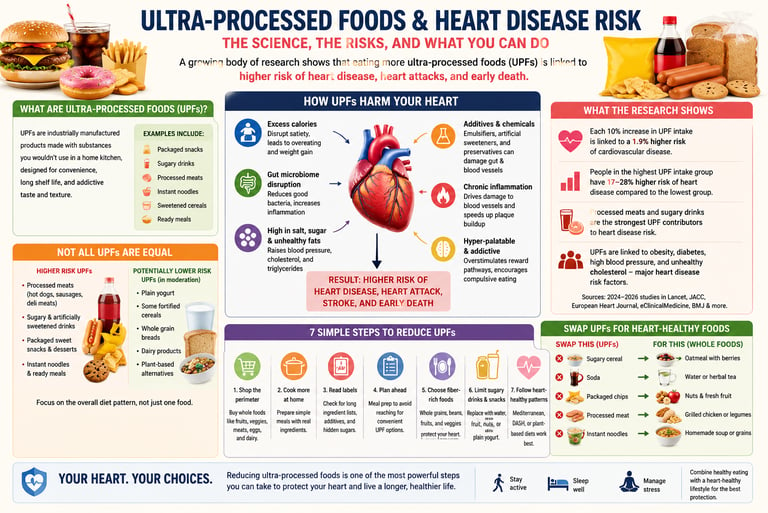
Do ultra-processed foods increase heart disease risk?
Yes. Research involving more than one million participants shows that higher consumption of ultra-processed foods is associated with increased risk of heart disease, heart attacks, stroke, and cardiovascular death. These foods may promote inflammation, gut microbiome disruption, obesity, hypertension, insulin resistance, and atherosclerosis. The strongest risks are linked to processed meats, sugary drinks, packaged snacks, and ready-made meals.
Clinical Pearls
1. It’s not just sugar and salt — it’s the processing itself
Your body handles an apple differently from apple-flavoured gummies, even if the sugar grams match. UPFs are engineered to be eaten fast and break down fast. That spikes blood sugar, confuses fullness signals, and triggers inflammation.
Pearl: If it has ingredients your grandma wouldn’t stock, your heart probably doesn’t recognize it either.
2. You ate 500 extra calories and didn’t even notice
In a controlled NIH study, people eating ultra-processed meals consumed ~500 more calories/day than people eating whole foods — with the same protein, fat, carbs, and taste ratings.
Pearl: UPFs are “stealth calories.” Swap one packaged meal per day, and your waistline + arteries will thank you.
3. Your gut bacteria are picky eaters
Emulsifiers, artificial sweeteners, and additives in UPFs can thin your gut’s protective lining and feed the “bad” bacteria. That creates “leaky gut” and low-grade inflammation, which damages blood vessels over time.
Pearl: Think of fiber-rich whole foods as fertilizer for your heart-protective gut bugs.
4. Processed meat + sugary drinks = the danger zone
Not all UPFs hit your heart equally. The 2024 Harvard cohorts with 200,000+ people found that hot dogs, deli meats, sodas, and sweetened drinks had the strongest link to heart attacks.
Pearl: If you cut only 2 UPFs, make it these two first.
5. Some “healthy” UPFs are less risky — but still not heroes
Fortified whole-grain cereals, plain yogurt, and some packaged breads didn’t raise heart risk in studies the way chips and soda did.
Pearl: Less harmful ≠ heart-healthy. Use them as stepping stones, not end goals.
6. There’s no “safe” threshold, but every swap helps
Research shows heart risk goes up linearly — each 10% more UPFs in your diet = ~2% higher cardiovascular risk. But it also works in reverse.
Pearl: You don’t need to be perfect. Replacing just 1 soda with water or 1 frozen meal with beans + rice is measurable heart protection.
7. Your fork beats your genes
UPFs raise blood pressure, LDL cholesterol, triglycerides, and blood sugar — all the big drivers of heart disease. The European Society of Cardiology now treats high UPF intake like smoking: a modifiable risk factor.
Pearl: You can’t change your age or family history, but you can change what’s on your plate starting today.
Bottom line in one sentence: Ultra-processed foods hurt your heart through your gut, your hormones, and your habits — but you get to vote with every meal.
Ultra-Processed Foods & Heart Disease Risk: What Science Says
Every time you reach for a packaged snack, a can of soda, or a drive-through meal, you are making a decision that affects your heart — often more than most people realize. Ultra-processed foods (UPFs) now make up more than half the daily calories consumed by adults in high-income countries, and a rapidly growing body of evidence links this dietary pattern to some of the most dangerous cardiovascular outcomes: heart attacks, coronary artery disease, heart failure, and early death.
This is not a fringe concern. In 2026, cardiologists, nutrition scientists, and public health policymakers across the world — from the European Society of Cardiology to Harvard's School of Public Health — are treating UPF consumption as a front-line cardiovascular risk factor, comparable in population impact to smoking and physical inactivity.
In this article, you will learn:
What ultra-processed foods actually are (the science-backed NOVA definition)
How UPFs damage your heart, step by step, through multiple biological pathways
What the latest 2024–2026 research really shows — from landmark meta-analyses to randomized controlled trials
Which ultra-processed foods are the most dangerous (and which may be less harmful)
Practical, evidence-based strategies to reduce your UPF intake without sacrificing convenience or budget
Answers to the most common myths and questions people ask about processed foods
Whether you are managing existing heart disease, trying to prevent it, or simply eating more intentionally, this guide gives you the most complete, up-to-date picture available.
1. What Are Ultra-Processed Foods? The NOVA Classification Explained
The term "ultra-processed food" is not just marketing jargon — it has a precise scientific definition rooted in the NOVA food classification system, developed by researchers at the University of São Paulo, Brazil. NOVA divides all foods into four groups based on the degree and purpose of processing, not on nutrient content alone.
The Four NOVA Groups
Group 1 — Unprocessed or Minimally Processed Foods These are foods in their natural state, or altered only minimally (cleaned, cut, dried, frozen, pasteurized). Examples:
Fresh and frozen fruits and vegetables
Plain meat, poultry, fish, and eggs
Plain whole grains (oats, brown rice, quinoa)
Unsweetened plain yogurt and milk
Legumes (lentils, chickpeas, beans)
Group 2 — Processed Culinary Ingredients Simple substances extracted from Group 1 foods and used in home cooking. Examples:
Olive oil, butter, vegetable oils
Salt, sugar, honey
Vinegar, spices in their pure form
Group 3 — Processed Foods Made by adding Group 2 ingredients to Group 1 foods, primarily to extend shelf life or enhance flavor. Examples:
Canned vegetables and legumes
Cheese and traditionally cured meats
Freshly baked bread (simple ingredients)
Salted nuts
Group 4 — Ultra-Processed Foods (UPFs) Industrially manufactured products formulated from substances derived from foods or synthesized in laboratories, combined with additives to improve palatability, shelf life, and appearance. Key markers of UPF status include:
Five or more ingredients on the label
Ingredients you would not find in a home kitchen (e.g., high-fructose corn syrup, soy protein isolate, maltodextrin, carrageenan, carboxymethylcellulose)
Artificial colors, flavors, and preservatives
Emulsifiers, artificial sweeteners, and thickeners
Common Ultra-Processed Foods
Packaged Snacks: Potato chips, crackers, candy bars, and cookies
Beverages: Sodas, energy drinks, flavored milk drinks, and fruit juices
Breakfast Items: Most breakfast cereals and instant oatmeal packets
Ready Meals: Frozen pizza, instant noodles, and packaged soups
Processed Meats: Hot dogs, chicken nuggets, and deli meats with additives
Bakery Products: Mass-produced breads, doughnuts, muffins, and pastries
Dairy Alternatives: Many flavored yogurts and processed cheese slices
A critical point: nutritional content alone does not determine UPF status. Some UPFs appear "healthy" on a nutrition label (e.g., a protein bar with 20g protein and low sugar) but still qualify as UPFs due to their industrial formulation and additive content. This distinction is at the heart of why UPF research has surprised many nutrition scientists.
2. How Common Is UPF Consumption?
The scale of UPF consumption in modern diets is staggering:
In the United States, UPFs account for approximately 57–60% of daily caloric intake among adults
In the United Kingdom, this figure reaches 54–57%
Even in countries with traditionally healthier diets, UPF consumption is rising rapidly — including Brazil (30%), Spain (32%), and France (35%)
Children and adolescents tend to consume even more: in some surveys, UPFs make up 65–67% of calories among American children
According to a 2024 umbrella review of 45 meta-analyses covering nearly 10 million people, diets high in UPFs are linked to 32 distinct health conditions — a finding that has alarmed public health authorities worldwide and accelerated policy discussions in Europe, Latin America, and North America.
3. The Science: How UPFs Raise Cardiovascular Risk
Understanding why UPFs harm the heart helps you make more motivated, lasting changes. Science has moved well beyond simple "junk food is bad" narratives. Multiple interconnected biological mechanisms are now documented.
Mechanism 1: Disrupted Satiety Signals and Excess Caloric Intake
One of the most compelling pieces of evidence comes from a landmark randomized controlled trial (Hall et al., 2019, Cell Metabolism) in which participants were given either an ultra-processed or a minimally processed diet for two weeks in a controlled inpatient setting, with both diets matched for macronutrients and palatability. The result: those eating ultra-processed foods consumed approximately 500 extra calories per day and gained weight — even though they reported equal enjoyment of both diets.
This caloric surplus appears to result from UPFs bypassing normal satiety hormones. UPFs are often engineered to be eaten quickly (they require less chewing), which means your gut doesn't have time to signal fullness before overconsumption occurs. The disruption of gut-brain signaling by certain additives compounds this effect.
Mechanism 2: Gut Microbiome Disruption and Systemic Inflammation.
This is one of the most active and alarming areas of UPF research. A 2025 review in Nutrients found that high UPF diets are associated with:
Decreased microbial diversity in the gut
Reduced levels of beneficial bacteria, including Akkermansia muciniphila and Faecalibacterium prausnitzii — both protective against inflammation and metabolic disease
Increased populations of pro-inflammatory bacteria
The consequences are systemic. As a March 2026 study published in Life described using a "Three-Layer Ecosystem Disruption" model, UPF-associated additives (emulsifiers, artificial sweeteners, preservatives) disrupt the gut through three converging pathways:
Structural impairment of the gut wall — including erosion of the protective mucus layer and destabilization of tight junctions, leading to "leaky gut"
Microbial metabolic shifts — including depletion of short-chain fatty acids (SCFAs) and altered bile acid signaling
Immune and inflammatory reprogramming — promoting chronic low-grade systemic inflammation
This chronic inflammation is directly atherogenic: it accelerates the formation of plaques in arterial walls, a core mechanism of cardiovascular disease.
Mechanism 3: Adverse Nutrient Profile
UPFs are typically:
High in sodium (raising blood pressure)
High in added sugars (driving insulin resistance and triglyceride elevation)
High in refined carbohydrates (spiking blood glucose)
High in trans fats and saturated fats (raising LDL cholesterol)
Low in fiber (reducing gut health and satiety)
Low in polyphenols and antioxidants (which have documented anti-inflammatory and cardioprotective effects)
This unfavorable nutrient constellation directly attacks multiple cardiovascular risk factors simultaneously.
Mechanism 4: Chemical Contaminants from Processing
Industrial food processing introduces compounds not present in whole foods:
Maillard reaction products (formed during high-heat processing) are associated with oxidative stress and insulin resistance
Acrylamide (formed in starchy foods cooked at high temperatures) has been linked to cardiovascular risk
Bisphenol A (BPA) and phthalates can leach from plastic packaging, disrupting hormonal and metabolic function
Advanced glycation end-products (AGEs) are elevated in processed foods and promote arterial stiffness
Mechanism 5: Hyper-Palatability and Addictive-Like Eating Patterns
UPFs are deliberately engineered to hit what food scientists call the "bliss point" — the optimal combination of salt, sugar, fat, and flavor that maximizes consumption. This hyper-palatability:
Overrides homeostatic eating signals
Drives reward-based eating independent of hunger
May create behavioral patterns that resemble addictive cycles — compulsive consumption despite negative health consequences
These mechanisms mean that the harm from UPFs is not simply reducible to their nutrient profile. Two foods can have identical macros and micronutrients, yet one (minimally processed) can be significantly healthier than the other (ultra-processed). This is why researchers argue the entire food matrix — its structure, processing compounds, and additive load — matters profoundly.
4. What the Latest Research Shows (2024–2026)
The evidence base on UPFs and cardiovascular health has expanded explosively in recent years. Here is a summary of the most important findings.
Major Cohort Studies and Meta-Analyses
Lancet Regional Health – Americas (2024): Three US Cohorts Researchers analyzed dietary data from three enormous prospective studies — the Nurses' Health Study (n=75,735), Nurses' Health Study II (n=90,813), and the Health Professionals Follow-Up Study (n=40,409) — with over 30 years of follow-up. They found:
Higher total UPF consumption was associated with increased risk of cardiovascular disease and coronary heart disease
Sugar-sweetened and artificially sweetened beverages and processed meats showed the strongest adverse associations
Interestingly, some UPF subcategories — including certain bread and cold cereals, yogurt, and dairy desserts — showed neutral or even inverse associations with CVD risk
This nuanced finding underscores that not all UPFs carry identical risk.
eClinicalMedicine Dose-Response Meta-Analysis (2024) A systematic review and dose-response meta-analysis of 20 observational studies from nine countries involving approximately 1.1 million participants found that:
Each 10% increase in UPF consumption by daily weight proportion was associated with a 1.9% increase in cardiovascular event risk
Each additional daily serving of UPF was linked to a 2.2% increase in cardiovascular event risk
The association followed a positive linear relationship — there was no apparent safe threshold
European Journal of Preventive Cardiology (2025): Australian Cohort A prospective study of 39,544 Australian adults found that the association between UPF consumption and cardiovascular mortality remained robust after accounting for overall diet quality and specific nutrients (saturated fat, sodium, sugar). This is a critical finding: it suggests that the harm of UPFs goes beyond their adverse nutrient profile — the processing itself is independently harmful.
npj Metabolic Health and Disease (2026): O'Neill Published just days before this article was written, this Comment in npj Metabolic Health and Disease synthesized evidence from controlled trials showing that UPF-rich diets increase energy intake and promote weight gain through multiple mechanisms — high energy density, disrupted food matrices, faster eating rates, additive effects on the gut, and hyper-palatable formulations. The author called for urgent policy strategies to reduce UPF exposure at the population level.
European Society of Cardiology Clinical Consensus Statement (2026) A landmark clinical consensus statement from the ESC Council for Cardiology Practice and the European Association of Preventive Cardiology — authored by 18 international experts — concluded that the associations between UPF intake and heart disease are "consistent and biologically plausible." The statement identified UPFs as raising cardiovascular risk primarily by promoting obesity, hypertension, dyslipidemia, and type 2 diabetes, while also exerting effects through inflammation, gut disruption, and food additives.
AHA Circulation Scientific Statement (2026) The American Heart Association issued a scientific statement on dietary patterns and cardiovascular health recommending reduced intake of ultra-processed foods as a key component of heart-healthy eating.
BMJ Nutrition, Prevention & Health (2026): Kahleova, Himmelfarb, Barnard This important review made the case that "not all ultra-processed foods are created equal" — highlighting that some fortified or plant-based UPFs (such as certain fortified cereals) may have different health implications than heavily processed meats or sugary drinks, calling for more granular research into specific UPF categories.
5. Not All UPFs Are Equal: High-Risk vs. Lower-Risk Categories
One of the most important scientific advances in 2024–2026 is the recognition that the UPF category is heterogeneous. Lumping all UPFs together may obscure important distinctions. Here is what current evidence suggests:
Highest Cardiovascular Risk
These UPF categories show the strongest and most consistent associations with heart disease:
Processed and reconstituted meats (hot dogs, chicken nuggets, deli meats, sausages): associated with higher CVD risk across multiple large cohorts; classified as Group 1 carcinogens by WHO for colorectal cancer
Sugar-sweetened beverages (sodas, fruit drinks, energy drinks): strongly linked to insulin resistance, weight gain, hypertriglyceridemia, and cardiovascular disease
Artificially sweetened beverages: increasingly associated with adverse metabolic outcomes, though research is still evolving
Packaged sweet snacks and desserts (cookies, cakes, pastries): high in refined sugars, trans fats, and calories
Moderate or Uncertain Risk
Mass-produced breads and cereals: some studies show neutral or even mildly protective associations — particularly whole-grain varieties, possibly because the fiber content partially offsets the processing
Flavoured yoghurts and dairy desserts: similarly variable findings; the fermented matrix may confer some benefit
Plant-based meat alternatives: contain multiple additives and are technically UPFs, but their health impact compared to processed red meat is still under active investigation
Potentially Lower Risk Within the UPF Category
Some fortified breakfast cereals: associated in some studies with improved micronutrient intake and even lower CVD markers, though this is debated
Plain protein powders (whey, plant-based): technically UPFs but often lack the sugar, sodium, and additive load of other Group 4 foods
⚠️ Caution: Classifying any UPF as "safe" is premature. The lower-risk designations above are relative, not absolute. The scientific consensus still favors minimizing UPF intake overall.
6. UPFs and Other Cardiometabolic Risks
Beyond direct cardiovascular disease, high UPF consumption is linked to a cascade of cardiometabolic conditions that together form a dangerous cluster:
Type 2 Diabetes Multiple meta-analyses confirm that higher UPF intake is associated with a 15–40% increased risk of developing type 2 diabetes, depending on the population and exposure level. The mechanisms overlap substantially with CVD risk: insulin resistance, gut dysbiosis, and chronic inflammation.
Obesity and Excess Body Weight: The controlled trial evidence (Hall et al.) is uniquely compelling here. The 500 extra calories per day consumed on an ultra-processed diet would, if sustained, translate to approximately 52 pounds of weight gain per year if fully retained — illustrating the massive caloric impact of UPF overconsumption.
Hypertension The high sodium content of most UPFs directly raises blood pressure. Additionally, the low potassium content (from minimal whole-food ingredients) further worsens the sodium-to-potassium ratio, a key driver of hypertension risk.
Dyslipidemia: Trans fats, saturated fats, and refined carbohydrates in UPFs raise LDL ("bad") cholesterol, lower HDL ("good") cholesterol, and increase triglycerides — a triple threat to cardiovascular health.
Non-Alcoholic Fatty Liver Disease (NAFLD): High fructose intake from sugary UPFs drives hepatic fat accumulation, increasingly recognized as an independent cardiovascular risk factor.
All-Cause Mortality A 2025 systematic review and dose-response meta-analysis confirmed that higher UPF consumption is associated with a statistically significant increase in all-cause mortality — with males showing somewhat higher risk than females, possibly due to differences in dietary patterns and comorbidity profiles.
7. Common Myths About Ultra-Processed Foods
Myth 1: "It's just about calories and macros — if the nutrition label looks good, it's fine."
Reality: Multiple studies now show that UPFs cause harm independent of their nutrient profile. Two diets matched for calories, protein, fat, fiber, and sugar can produce significantly different health outcomes if one consists of UPFs and the other of whole foods. The food matrix, additives, and processing compounds matter independently.
Myth 2: "Natural-sounding ingredients on the label mean it's minimally processed."
Reality: Food manufacturers are skilled at using terms like "natural flavors," "whole grain," "made with real fruit," and "no artificial preservatives" to create a health halo around products that are still deeply ultra-processed. Always look at the full ingredient list. If it contains emulsifiers (like carrageenan or polysorbate 80), flavor enhancers, or industrial sweeteners, it is almost certainly a UPF.
Myth 3: "Ultra-processed foods are only a problem if you're eating them every day."
Reality: The dose-response relationship documented in the 2024 eClinicalMedicine meta-analysis is linear — meaning risk increases with each additional serving or percentage of UPFs in the diet, with no clear safe threshold. Even modest increases in UPF consumption are associated with measurable increases in cardiovascular risk.
Myth 4: "Plant-based and vegan ultra-processed foods are heart-healthy."
Reality: Being plant-based does not automatically confer health benefits. Many plant-based "burgers," nuggets, dairy alternatives, and protein bars are Group 4 UPFs with lengthy ingredient lists, added sodium, and industrial additives. The evidence for their cardiovascular impact compared to whole-food plant-based diets is far less favorable.
Myth 5: "If I exercise enough, my UPF diet won't matter."
Reality: While exercise is critical for cardiovascular health, it does not neutralize the inflammatory, microbial, and metabolic effects of a high-UPF diet. Research consistently shows that diet and physical activity are complementary — not interchangeable — for heart health.
Myth 6: "Only cheap, low-income diets are full of ultra-processed foods."
Reality: UPFs are present at every price point — from dollar-store snacks to premium protein bars, expensive flavored yogurts, and artisan-sounding packaged foods. Price is not a reliable proxy for processing level.
8. Evidence Summary Table: Key Studies at a Glance
Dose-Response Effect (eClinicalMedicine, 2024): A massive meta-analysis of 1.1 million people found a steady, linear risk increase—every 10% increase in UPF intake raises your CVD risk by 1.9%.
Long-Term Impact (Mendoza et al., 2024): A 30-year study of 207,000 US adults tied higher UPF intake to elevated CVD and CHD risks, pointing to sugary drinks and processed meats as the worst offenders
.
Higher Mortality (Liang et al., 2025): An updated meta-analysis confirmed that high UPF intake significantly increases all-cause mortality, showing a stronger negative effect in men.
Flawed Diets Aren't the Only Culprit (Australian Cohort, 2025): A study of nearly 40,000 adults revealed that the link between UPFs and cardiovascular death holds regardless of your overall diet quality or specific nutrient intake.
🧬 The Biological "Why" (Mechanisms & Trials)
The 500-Calorie Spike (Hall et al., 2019): In a gold-standard randomized controlled trial, people on an ultra-processed diet automatically ate ~500 more calories per day and gained weight compared to those on a minimally processed diet.
Gut Microbiome Damage (Rondinella et al., 2025): A systematic review found that UPFs alter your gut health by reducing microbial diversity, wiping out helpful bacteria like Akkermansia muciniphila, and fueling pro-inflammatory bacteria.
📋 Expert Consensus & Policy Nuance
Clinical Warning (ESC Consensus Statement, 2026): A panel of 18 international experts declared the link between UPFs and heart disease to be "consistent and biologically plausible," officially recommending that doctors push to reduce UPF intake in clinical practice.
Call for Government Action (O'Neill, 2026): Pointing to clear clinical trial evidence on weight gain, this review calls for urgent policy action to regulate UPFs.
Not All UPFs are Equal (Kahleova et al., 2026): This review adds important nuance, noting that the UPF category is highly diverse. For instance, fortified plant-based UPFs may not carry the same health risks as ultra-processed meats or sodas.
9. Practical Guide: How to Reduce UPFs and Protect Your Heart
Reducing UPF intake does not require a perfect diet, expensive ingredients, or hours in the kitchen. Research consistently shows that even partial replacement of UPFs with minimally processed alternatives produces meaningful health benefits.
Step 1: Audit Your Current Diet
For one day, write down everything you eat and drink. Then check each item against the NOVA criteria. Most people are surprised to find UPFs accounting for 50–70% of their daily food intake. Awareness is the critical first step.
Step 2: Apply the "5-Ingredient Rule" as a First Filter
While not perfect, a quick heuristic is: if a product has more than five ingredients, and you cannot recognize most of them as real foods, it is likely a UPF. This is a starting filter, not an absolute rule.
Step 3: Tackle the Highest-Risk Items First
You do not need to eliminate all UPFs overnight. Priority targets — based on the strongest evidence for cardiovascular harm — are:
Sugar-sweetened beverages — replace with water, plain sparkling water, or unsweetened tea/coffee
Processed meats — replace with plain cooked chicken, fish, eggs, or legumes
Packaged sweet snacks — replace with fruit, plain nuts, or plain yogurt with fruit
Instant and packaged meals — replace with simple home-cooked alternatives using whole ingredients
Step 4: Build a UPF-Resistant Kitchen
Stock your pantry with whole grains (oats, brown rice, whole wheat pasta), canned legumes (no additives), canned tomatoes, olive oil, and spices
Keep the freezer stocked with frozen vegetables, plain frozen fish, and plain frozen fruit — all minimally processed and highly convenient
Batch cook on weekends: a pot of lentils, a tray of roasted vegetables, and some cooked grains can form the basis of five weekday meals
Step 5: Read Labels Strategically
When evaluating a product, scan the ingredient list for these red-flag additives:
Emulsifiers: carrageenan, polysorbate 80, carboxymethylcellulose
Flavor enhancers: monosodium glutamate (MSG), yeast extract (in large quantities)
Industrial sweeteners: aspartame, sucralose, saccharin, acesulfame K
Thickeners and stabilizers: xanthan gum (in excess), modified starch
Preservatives: sodium nitrite/nitrate (especially in meats), BHA, BHT
Step 6: Use the Mediterranean or DASH Framework
Both the Mediterranean diet and DASH diet are extensively validated for cardiovascular protection and naturally low in UPFs. They emphasize:
Abundant vegetables, fruits, and legumes
Whole grains
Olive oil as primary fat
Fish and seafood regularly
Moderate poultry and dairy
Limited red meat
Minimal processed foods
These patterns are not rigid meal plans — they are dietary frameworks that can be adapted to your culture, budget, and preferences.
Step 7: Address the Social and Structural Barriers
It is important to acknowledge that UPF reduction is not equally easy for everyone. Food insecurity, time constraints, cost, neighborhood food access, and marketing pressure (especially toward children) all make whole-food eating harder for many people. If budget is a concern:
Dried legumes, eggs, oats, and frozen vegetables are among the most affordable, nutritionally dense whole foods available
Canned fish (sardines, tuna, salmon) is a cost-effective source of omega-3 fatty acids with excellent cardiovascular credentials
Frozen fruit for smoothies or yogurt toppings costs a fraction of fresh and is nutritionally equivalent
10. 7-Day Heart-Healthy Meal Swap Checklist
Use this checklist to make one strategic swap per day. Each swap meaningfully reduces your UPF exposure and replaces it with a cardiovascular-protective alternative.
Monday
Swap Out (UPF): Sugary breakfast cereal
Swap In (Minimally Processed): Steel-cut oats with berries and walnuts
Tuesday
Swap Out (UPF): Packaged deli sandwich
Swap In (Minimally Processed): Whole grain bread + canned tuna + sliced vegetables
Wednesday
Swap Out (UPF): Afternoon soda
Swap In (Minimally Processed): Sparkling water with lemon or a herbal tea
Thursday
Swap Out (UPF): Frozen processed meal
Swap In (Minimally Processed): Stir-fried vegetables with tofu or chicken over brown rice (15 minutes)
Friday
Swap Out (UPF): Packaged chips as a snack
Swap In (Minimally Processed): Handful of plain mixed nuts + an apple
Saturday
Swap Out (UPF): Packaged cookies for dessert
Swap In (Minimally Processed): Plain Greek yogurt with honey and fresh fruit
Sunday
Swap Out (UPF): Processed breakfast sausages
Swap In (Minimally Processed): Scrambled eggs with sautéed spinach and whole grain toast
11. FAQs
Q1: What exactly qualifies as an ultra-processed food?
Ultra-processed foods (UPFs) are industrially manufactured products that contain five or more ingredients, including substances not found in home kitchens — such as high-fructose corn syrup, artificial flavors, emulsifiers, and preservatives. They are classified as Group 4 under the NOVA system. Examples include packaged snacks, sodas, instant noodles, most breakfast cereals, processed meats, and mass-produced breads.
Q2: How much do ultra-processed foods raise heart disease risk?
The risk elevation varies by study and exposure level, but the evidence is consistent. Higher UPF consumers face a 17–28% higher risk of cardiovascular disease compared to lower consumers in large cohort studies. Each additional daily serving of UPF is associated with approximately a 2.2% increase in cardiovascular event risk in dose-response analyses. The risk is highest for processed meats and sugary beverages.
Q3: Are all processed foods the same as ultra-processed foods?
No. Processing exists on a spectrum. NOVA Group 3 "processed foods" — like cheese, canned beans, or simple bread — are quite different from Group 4 UPFs. The key distinctions are the number and nature of ingredients, the presence of industrial additives, and whether the food has been fundamentally reformulated from its natural state. Not all processing is harmful.
Q4: Can I eat ultra-processed foods in moderation?
The current evidence shows a dose-response relationship — meaning risk increases progressively with UPF consumption, without a clearly defined "safe" threshold. However, moderation is a realistic and meaningful goal. Reducing UPF intake from very high (60% of calories) to moderate (30–40% of calories) likely produces significant health benefits, even if complete elimination is not achievable.
Q5: Are "healthy" ultra-processed foods like protein bars and green smoothies okay?
Many products marketed as health foods are technically UPFs due to their ingredient lists. Protein bars often contain multiple sweeteners, emulsifiers, and artificial flavors. However, the degree of harm likely varies by product. A plain protein powder with three ingredients is meaningfully different from a packaged bar with 25 ingredients. Focus on the ingredient list rather than marketing claims.
Q6: Do ultra-processed foods affect children differently than adults?
Children are particularly vulnerable because UPF consumption during developmental years may shape gut microbiome composition in ways that persist into adulthood — what some researchers call "microbiological scarring." Additionally, children in high-UPF-consuming households are also exposed to heavy marketing for these products. Early dietary habits also strongly predict adult eating patterns and long-term cardiovascular risk.
Q7: What is the evidence from randomized controlled trials vs. observational studies?
Most UPF research is observational (cohort studies, meta-analyses), which establishes association but not definitive causation. However, the Hall et al. (2019) randomized controlled trial in Cell Metabolism — the gold standard of evidence — demonstrated that an ultra-processed diet caused excess caloric intake and weight gain compared to a minimally processed diet under controlled conditions. Mechanistic studies on gut bacteria and inflammation further support biological plausibility. The totality of evidence is considered compelling by major cardiology bodies.
Q8: What should I eat instead of ultra-processed foods?
Focus on building meals around NOVA Group 1 foods: vegetables, fruits, legumes, whole grains, plain dairy, eggs, fish, and unprocessed meats. Use Group 2 ingredients (olive oil, herbs, spices) for cooking. Dietary patterns consistently associated with cardiovascular protection — Mediterranean, DASH, plant-based whole-food diets — naturally minimize UPF intake while emphasizing diverse, nutrient-dense whole foods.
Q9: Are there any ultra-processed foods that are actually heart-healthy?
Current evidence suggests that some UPF subcategories — particularly certain fortified whole-grain cereals, plain yogurts, and possibly some fermented dairy products — may carry lower or even neutral cardiovascular risk compared to the broader UPF category. However, "less harmful than processed meats" is not the same as "heart-healthy." No UPF is actively protective against cardiovascular disease in the way that whole foods like vegetables, olive oil, nuts, and fish are.
Q10: How do ultra-processed foods affect my gut health?
Extensively. High UPF diets are associated with decreased gut microbial diversity, reduced populations of beneficial bacteria (especially Akkermansia muciniphila and Faecalibacterium prausnitzii), increased gut permeability ("leaky gut"), and chronic low-grade systemic inflammation. These gut changes are a key bridge between UPF consumption and downstream cardiovascular risk.
Q11: Is ultra-processed food linked to mental health and brain health too?
Yes — and this is an area of rapidly growing research. The gut-brain axis connects gut health to brain function, mood, and cognition. Studies have associated high UPF consumption with increased risk of depression, anxiety, and cognitive decline. A 2025 study published in Neurology found associations between UPF intake and adverse cognitive outcomes. While this article focuses on cardiovascular health, the mental health implications are an additional compelling reason to reduce UPF consumption.
Q12: What do major health organizations say about ultra-processed foods?
As of 2026, multiple major health organizations have issued recommendations:
The European Society of Cardiology (2026 consensus statement) recommends reducing UPF intake as part of cardiovascular risk management
The American Heart Association has included UPF reduction in its dietary pattern recommendations
Brazil's national dietary guidelines explicitly advise avoiding ultra-processed foods
France's public health nutritional goals include reducing UPF consumption by 20%
The World Health Organization is increasingly incorporating UPF considerations into global nutrition policy frameworks
Q13: How do ultra-processed foods increase heart disease risk?
Ultra-processed foods increase heart disease risk through 5 main mechanisms: 1) They disrupt satiety signals, causing people to eat ∼500 extra calories per day. 2) Additives like emulsifiers damage gut bacteria and cause chronic inflammation. 3) They’re high in sodium, added sugar, and refined carbs while low in fiber. 4) Industrial processing creates harmful compounds like acrylamide and AGEs. 5) Hyper-palatability drives overconsumption. A 2024 meta-analysis of 1.1 million people found that each 10% increase in UPF intake raises cardiovascular event risk by 1.9%.
Q14: What are the worst ultra-processed foods for heart health?
Processed meats - hot dogs, deli meats, sausages, chicken nuggets
Sugar-sweetened beverages - sodas, energy drinks, fruit drinks
Artificially sweetened beverages - diet sodas and drinks
Packaged sweet snacks - cookies, cakes, pastries, candy bars
Instant/frozen ready meals - frozen pizza, instant noodles
12. Conclusion and Action Steps
The evidence against ultra-processed foods and cardiovascular disease is now substantial, consistent, and biologically grounded. This is no longer a hypothesis — it is a scientific consensus endorsed by cardiologists, nutritionists, and public health authorities from the American Heart Association to the European Society of Cardiology.
The key takeaways are clear:
UPFs are pervasive — they make up over half the calories in most Western diets
Their harm goes beyond nutrients — the food matrix, additives, and processing compounds are independently damaging
The cardiovascular risks are dose-dependent — every serving matters
Not all UPFs carry equal risk — processed meats and sugary beverages are the most dangerous; some categories carry lower (though not zero) risk
Reduction, not perfection, is the goal — meaningful health benefits come from partial, sustained improvements in dietary patterns
Your Action Steps
✅ This week: Identify the three UPF items you consume most frequently. Pick one to swap for a whole-food alternative.
✅ This month: Read ingredient labels on your five most common packaged foods. Use the NOVA criteria to assess them.
✅ Ongoing: Build meals around vegetables, legumes, whole grains, and unprocessed proteins. Cook one more meal from scratch per week than you currently do.
✅ Talk to your doctor: If you have existing cardiovascular disease, hypertension, diabetes, or obesity, discuss how dietary changes — including UPF reduction — can be integrated into your treatment plan.
The most important thing to understand is this: every meal is a cardiovascular decision. You do not need a perfect diet to protect your heart. You need a better one — and the evidence is clear on where the most impactful improvements lie.
This article is for educational purposes only and does not constitute medical advice. Always consult a qualified healthcare provider before making significant dietary changes or starting any supplement regimen, particularly if you have existing health conditions or take prescribed medications.
Related Articles
Carb Counting vs Low-Carb Diets: Which Controls Blood Sugar Better?
Low-Fat vs Low-Carb: Which Diet Is Best for Weight Loss?
Can a Low-Carb Diet Reverse Metabolic Syndrome? Latest Research Explained
References
American Heart Association. (2026). Dietary patterns and cardiovascular health scientific statement. Circulation. https://www.ahajournals.org/doi/10.1161/CIR.0000000000001365
Exposure to ultra-processed food and risk of cardiovascular mortality: A prospective cohort study. (2025). European Journal of Preventive Cardiology. Advance online publication. https://academic.oup.com/eurjpc/advance-article/8173892
Gövez, N., & Köksal, E. (2025). Ultra-processed foods and cardiometabolic health: A review of current evidence. Current Nutrition Reports, 14, Article 110. https://doi.org/10.1007/s13668-025-00703-7
Guasti, L., Bonaccio, M., Abreu, A., et al. (2026). Ultra-processed foods, lifestyle management, and cardiovascular diseases: A clinical consensus statement of the European Society of Cardiology. European Heart Journal. Advance online publication. https://doi.org/10.1093/eurheartj/ehag226
Haidar, A., Rikhi, R., Watson, K. E., Wood, A. C., & Shapiro, M. D. (2026). Association between ultraprocessed food consumption and cardiovascular disease risk. JACC: Advances. Advance online publication. https://doi.org/10.1016/j.jacadv.2025.102516
Hall, K. D., Ayuketah, A., Brychta, R., et al. (2019). Ultra-processed diets cause excess calorie intake and weight gain: An inpatient randomized controlled trial of ad libitum food intake. Cell Metabolism, 30(1), 67–77. https://doi.org/10.1016/j.cmet.2019.05.008
Johns Hopkins Bloomberg School of Public Health. (2025). What are ultra-processed foods? https://publichealth.jhu.edu/2025/what-are-ultra-processed-foods
Kahleova, H., Himmelfarb, J., & Barnard, N. D. (2026). Not all ultra-processed foods are created equal: A review. BMJ Nutrition, Prevention & Health. Advance online publication. https://doi.org/10.1136/bmjnph-2025-001358
Lane, M. M., Gamage, E., Du S., et al. (2024). Ultra-processed food exposure and adverse health outcomes: Umbrella review of systematic reviews and meta-analyses. BMJ, 384, Article e077310. https://doi.org/10.1136/bmj-2023-077310
Liang, et al. (2025). Ultra-processed foods and risk of all-cause mortality: An updated systematic review and dose-response meta-analysis of prospective cohort studies. Systematic Reviews, 14, Article 53. https://doi.org/10.1186/s13643-025-02800-8
Medin, A. C., Gulowsen, S. R., Groufh-Jacobsen, S., et al. (2025). Definitions of ultra-processed foods beyond NOVA: A systematic review and evaluation. Food & Nutrition Research, 69. https://doi.org/10.29219/fnr.v69.12217
Mendoza, K., Smith-Warner, A., Rossato, S. L., et al. (2024). Ultra-processed foods and cardiovascular disease: Analysis of three large US prospective cohorts and a systematic review and meta-analysis. The Lancet Regional Health – Americas, 37, Article 100859. https://doi.org/10.1016/j.lana.2024.100859
Monteiro, C. A., Cannon, G., Moubarac, J. C., et al. (2018). The UN Decade of Nutrition, the NOVA food classification and the trouble with ultra-processing. Public Health Nutrition, 21(1), 5–17. https://doi.org/10.1017/S1368980017000234
Our hidden enemy: Ultra-processed foods, inflammation, and the battle for heart health. (2023). PubMed Central (PMC). https://www.ncbi.nlm.nih.gov/pmc/articles/PMC10663139/
Processed diets and food additives shape the gut microbiota and chronic disease risk across the life course — A Three-Layer Ecosystem Disruption (TLED) Model. (2026). Life, 16(3), Article 505. https://doi.org/10.3390/life16030505
Rondinella, D., Raoul, P. C., Valeriani, E., et al. (2025). The detrimental impact of ultra-processed foods on the human gut microbiome and gut barrier. Nutrients, 17(5), Article 859. https://doi.org/10.3390/nu17050859
Srour, B., Fezeu, L. K., Kesse-Guyot, E., et al. (2019). Ultra-processed food intake and risk of cardiovascular disease: Prospective cohort study. BMJ, 365, Article l1451. https://doi.org/10.1136/bmj.l1451
Ultra-processed food consumption and risk of cardiovascular events: A systematic review and dose-response meta-analysis. (2024). eClinicalMedicine. Advance online publication. https://doi.org/10.1016/j.eclinm.2024.100634
Ultra-Processed Foods: The Enemy in the Food System? (2025). American College of Cardiology. https://www.acc.org/latest-in-cardiology/articles/2025/01/01/42/prioritizing-health-ultra-processed-foods-the-enemy-in-the-food-system