NLRP3 Inflammasome: The Hidden Inflammatory Switch Inside Your Cells Controlled by Food
Discover how the NLRP3 inflammasome acts as your body's inflammatory switch. Learn how sugar, uric acid, ketones, polyphenols, and diet influence chronic inflammation, diabetes, heart disease, and healthy aging.
NUTRITION
Dr. T.S. Didwal, M.D.(Internal Medicine)
6/4/202624 min read
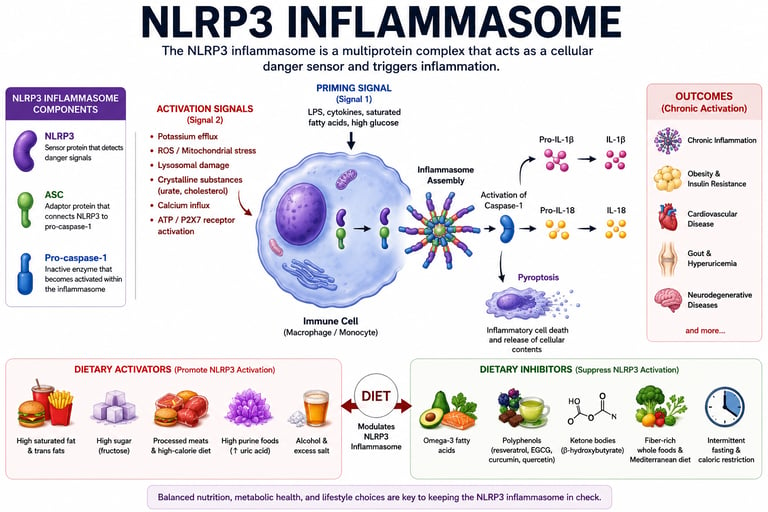
NLRP3 Inflammasome: The Body's Inflammatory Switch
The NLRP3 inflammasome is a cellular protein complex that detects danger signals and triggers inflammation. Chronic activation is linked to insulin resistance, obesity, heart disease, gout, and Alzheimer's disease. Scientific evidence shows that nutrition, ketones, polyphenols, and uric acid levels can significantly influence NLRP3 activity and overall inflammatory health.
Key Takeaways: Control Your Inflammatory Switch
1. Your Hidden Alarm System: NLRP3 inflammasome is the molecular switch inside immune cells that triggers inflammation. When stuck "on" from diet, it drives obesity, diabetes, gout, heart disease, and Alzheimer’s.
2. Sugar Is the #1 Trigger: Fructose from soda and processed foods spikes uric acid in 30 minutes. Elevated uric acid primes NLRP3 even before gout crystals form.
3. Ketones Are Your Off Switch: Beta-hydroxybutyrate from keto, fasting 16:8, or MCT oil directly blocks NLRP3 activation by stopping potassium efflux. You don’t need full ketosis.
4. Saturated Fat Primes the Fire: Palmitic acid from processed meat and fried foods activates NF-κB, loading the NLRP3 gun. Replace with olive oil and omega-3s to disarm it.
5. Polyphenols Are Nature’s Inhibitors: Quercetin, curcumin with black pepper, resveratrol, and EGCG from green tea all suppress NLRP3 at multiple steps. Food beats pills for synergy.
6. Cherries Beat Gout Attacks: Anthocyanins in tart cherries cut uric acid and block NLRP3. Clinical studies show 35% fewer gout flares with daily cherry intake.
7. Omega-3s Resolve Inflammation: EPA/DHA from salmon and sardines activate GPR120, shut down NF-κB, and produce resolvins that actively end NLRP3-driven inflammation.
8. You Can Flip the Switch in Days: Ditch sugary drinks today, add 3 cups of green tea, and fast for 12 hours overnight. Blood markers like CRP and IL-1β can drop measurably in 4 to 8 weeks.
Have you ever wondered why two people can eat the same meal, yet one develops diabetes, heart disease, or chronic inflammation while the other remains healthy? The answer may lie in a tiny molecular complex hidden deep inside your immune cells: the NLRP3 inflammasome.
Although few people have heard of it, scientists now consider the NLRP3 inflammasome one of the most important links between diet, metabolism, and chronic disease. Think of it as your body's internal inflammatory alarm system. When a genuine threat appears—such as an infection or tissue injury—this alarm helps coordinate a protective immune response. In the short term, this is beneficial and even essential for survival. Problems arise when the alarm becomes stuck in the "on" position (Kelley et al., 2019; Swanson et al., 2019).
Modern lifestyles appear to provide many signals that chronically activate this inflammatory switch. Excess sugar, ultra-processed foods, obesity, elevated uric acid, mitochondrial dysfunction, and metabolic stress can all stimulate NLRP3 activity, leading to persistent production of inflammatory molecules such as interleukin-1β (IL-1β) and interleukin-18 (IL-18) (Shin et al., 2026; Ye et al., 2021). Over time, this low-grade inflammation has been linked to insulin resistance, type 2 diabetes, cardiovascular disease, gout, fatty liver disease, neurodegenerative disorders, and even accelerated biological aging (Ridker et al., 2017; Franceschi et al., 2018).
The encouraging news is that the same pathway can often be influenced by everyday lifestyle choices. Emerging research shows that foods rich in polyphenols, omega-3 fatty acids, and dietary fiber may help calm NLRP3 activity, while ketone bodies generated during fasting or carbohydrate restriction can directly suppress inflammasome activation (Youm et al., 2015; van der Heiden & te Velde, 2026).
In other words, every meal may be sending signals that either amplify or quiet one of the body's most powerful inflammatory switches. Understanding how the NLRP3 inflammasome works could change the way we think about nutrition, chronic disease prevention, and healthy aging.
What Is the NLRP3 Inflammasome?
The NLRP3 inflammasome — full name Nucleotide-binding domain, Leucine-rich repeat, and Pyrin domain-containing protein 3 — is a multiprotein complex assembled inside the cytoplasm of immune cells (primarily macrophages and monocytes) in response to perceived danger signals.
Think of it as a molecular panic button. When your immune cells detect threats — whether bacterial toxins, viral particles, crystalline deposits, or metabolic debris — NLRP3 recruits the adaptor protein ASC and the enzyme pro-caspase-1 to form a large complex. This activates caspase-1, which then does two critical things:
Cleaves pro-IL-1β and pro-IL-18 into their active, pro-inflammatory forms
Triggers pyroptosis — a form of inflammatory cell death that releases cellular contents and amplifies the alarm signal
According to a landmark 2026 review in Experimental & Molecular Medicine, the NLRP3 inflammasome activation requires two distinct signals. The priming signal (Signal 1) switches on the genetic machinery to produce NLRP3 components. The activation signal (Signal 2) physically assembles the complex and fires it (Shin et al., 2026).
Two-Step Activation: Priming and Triggering
Signal 1 (Priming): Usually a pathogen-associated or damage-associated molecule that activates NF-κB, upregulating gene expression of NLRP3, pro-IL-1β, and other components. Common primers include lipopolysaccharide (LPS) from bacteria and saturated fatty acids from the diet.
Signal 2 (Activation): A secondary danger signal that physically triggers NLRP3 assembly. This is where diet becomes especially critical. Activation signals include:
Potassium efflux from cells (a universal NLRP3 activator)
Reactive oxygen species (ROS) from mitochondrial stress
Lysosomal rupture from crystalline deposits (uric acid, cholesterol)
Calcium dysregulation
How NLRP3 Gets Activated: The Molecular Triggers
Potassium Efflux: The Universal Trigger
Virtually all NLRP3 activators converge on one common cellular event: the rapid outflow of potassium from the cell interior. When intracellular potassium drops below a critical threshold, NLRP3 senses this and undergoes a conformational change that initiates oligomerization and complex assembly.
This explains why many dietary interventions that affect cell membrane stability or ion transport can modulate NLRP3 — including omega-3 fatty acids, polyphenols, and ketone bodies.
Mitochondrial Dysfunction: The Energy-Inflammation Link
One of the most diet-relevant activation pathways involves mitochondria. When cells experience metabolic stress — from nutrient excess, oxidative damage, or impaired mitochondrial biogenesis — they release mitochondrial DNA (mtDNA) and reactive oxygen species into the cytoplasm. Both of these are potent Signal 2 activators for NLRP3.
This is a key reason why high-calorie, ultra-processed diets that impair mitochondrial health create chronic low-grade NLRP3 activation. It's also why dietary strategies that improve mitochondrial function — like caloric restriction, ketogenic eating, and polyphenol-rich diets — tend to reduce inflammasome activity.
Cholesterol Crystals and Lipid Overload
When macrophages become overwhelmed by cholesterol — as happens in atherosclerotic plaques — they engulf cholesterol crystals. These crystals rupture the lysosome, releasing cathepsin B into the cytoplasm, which then activates NLRP3. This is a central mechanism linking dietary fat quality, lipid metabolism, and cardiovascular disease through NLRP3 inflammasome activation.
NLRP3 and Chronic Disease: Why This Matters
The NLRP3 inflammasome sits at the intersection of metabolism and immunity, which is precisely why its dysregulation has been linked to virtually every major chronic disease of modern civilization.
Obesity and Metabolic Syndrome
Adipose tissue — especially visceral fat — is not an inert storage depot. It's an active immune organ. Obese adipose tissue contains activated macrophages that exhibit chronic NLRP3 inflammasome activity. This drives the sustained IL-1β and IL-18 secretion that creates systemic insulin resistance.
A 2026 review in the International Journal of Food Sciences and Nutrition confirmed that in obesity and metabolic disorders, NLRP3-driven inflammation is a central pathogenic mechanism linking diet, adiposity, and cardiometabolic risk (Subaş et al., 2026).
Type 2 Diabetes
IL-1β — the primary cytokine released by NLRP3 — is directly toxic to pancreatic beta cells. It impairs insulin secretion, promotes beta cell apoptosis, and worsens peripheral insulin resistance simultaneously. Blocking IL-1β signaling has been shown in clinical trials to improve glycemic control in type 2 diabetes, which underlines just how central this inflammasome pathway is.
Gout and Crystal Arthropathy
Gout is, in many ways, a pure NLRP3 disease. Monosodium urate (MSU) crystals deposit in joints and surrounding tissues, where they are engulfed by macrophages and act as potent Signal 2 activators. The resulting IL-1β storm creates the excruciating joint inflammation characteristic of acute gout attacks.
Cardiovascular Disease
NLRP3-derived IL-1β drives vascular inflammation, endothelial dysfunction, and the macrophage-mediated instability of atherosclerotic plaques. The landmark CANTOS trial demonstrated that blocking IL-1β with canakinumab significantly reduced cardiovascular events — independent of cholesterol lowering — providing clinical proof that the NLRP3/IL-1β axis matters in human heart disease.
Neurodegenerative Diseases
Neuroinflammation mediated by microglial NLRP3 activation is increasingly recognized as a key driver in Alzheimer's disease, Parkinson's disease, and multiple sclerosis. Amyloid-beta plaques in Alzheimer's can act as NLRP3 activators — creating a vicious cycle of inflammation and further plaque deposition.
Uric Acid: The Dietary Trigger You're Probably Producing Too Much Of
Uric acid is the final breakdown product of purine metabolism in humans. Unlike most mammals, humans lack the enzyme uricase, which means we cannot break uric acid down further. When blood uric acid levels rise above approximately 6.8 mg/dL, crystals can form in joints and tissues.
But uric acid's relationship with NLRP3 goes beyond gout.
Soluble Uric Acid as a Priming Signal
Even before crystals form, soluble uric acid can act as a priming signal for NLRP3. It activates NF-κB and promotes the production of IL-1β precursors, setting the stage for rapid inflammasome activation when crystals eventually form. Research published in the Journal of Nutrition confirms that elevated serum urate correlates with systemic markers of NLRP3 activation even in the absence of clinical gout.
Crucially, hyperuricemia is also independently associated with insulin resistance, hypertension, and non-alcoholic fatty liver disease — conditions now understood to involve chronic NLRP3 overactivation.
Dietary Drivers of Uric Acid Elevation
The foods and beverages most consistently shown to raise uric acid include:
Fructose — especially high-fructose corn syrup in sweetened beverages. Fructose is the most potent dietary driver of uric acid production because its metabolism in the liver rapidly consumes ATP, releasing AMP that is catabolized to uric acid. A single large serving of a sugary drink can spike uric acid within 30 minutes.
Red meat and organ meats — high in purines (hypoxanthine, adenine) that are metabolized to uric acid
Shellfish — particularly mussels, anchovies, and sardines
Beer and spirits — alcohol both increases uric acid production and decreases renal clearance
Ultra-processed foods containing hidden fructose
Dietary Strategies to Lower Uric Acid
The single most impactful dietary change for uric acid control is eliminating sugar-sweetened beverages — replacing them with water, tea, or coffee. Coffee consumption is consistently associated with lower serum urate in epidemiological studies, likely through multiple mechanisms including reduced hepatic xanthine oxidase activity.
Other evidence-supported strategies include:
Cherries and tart cherry juice contain anthocyanins that inhibit xanthine oxidase and reduce uric acid production; clinical studies show cherry consumption lowers gout attack frequency by approximately 35%
Vitamin C supplementation (500–1500 mg/day) — increases renal uric acid excretion
Low-fat dairy products contain casein and lactalbumin proteins that promote uricosuric effects
Adequate hydration — supports renal urate clearance; aim for 2–3 litres of water daily
Limiting red meat to 2–3 servings per week maximum
⚠️ Medical note: If you have been diagnosed with gout or hyperuricemia, dietary changes are an important complement to — not a replacement for — prescribed medications. Always work with your healthcare provider.
Ketones: The Metabolic Signal That Silences Inflammation
Perhaps the most elegant recent discovery in NLRP3 biology is that ketone bodies — particularly beta-hydroxybutyrate (BHB) — are potent, direct inhibitors of NLRP3 inflammasome activation.
The BHB-NLRP3 Connection
In a landmark study, Youm and colleagues demonstrated that BHB directly inhibits NLRP3 inflammasome activation in macrophages. Critically, this effect was not mediated through metabolic effects on ATP production or ROS — BHB directly blocked the potassium efflux and ASC oligomerization steps that are essential for NLRP3 assembly.
The mechanism involves BHB inhibiting the NLRP3 inflammasome by preventing the efflux of potassium ions — the universal trigger described earlier. This suggests that even modest elevations in blood ketones, achievable through dietary modification short of full ketosis, may provide meaningful NLRP3 inhibition.
A 2026 review in Immuno confirmed that nutritional interventions capable of raising ketone bodies — including ketogenic diets, time-restricted eating, and extended fasting — consistently reduce biomarkers associated with NLRP3 activity (van der Heiden & te Velde, 2026).
How to Raise Ketones Through Diet
You don't necessarily need to follow a strict ketogenic diet to benefit from BHB's anti-inflammatory properties. Research suggests that various dietary approaches can meaningfully elevate ketone levels:
Full Ketogenic Diet (highest BHB elevation):
Fat: 70–80% of calories
Protein: 15–20% of calories
Carbohydrates: <50g net per day
Typically produces blood BHB levels of 0.5–3.0 mmol/L
Modified Low-Carbohydrate Diet:
Carbohydrates: 50–100g per day
May produce mild ketosis (0.2–0.5 mmol/L BHB), especially in the morning after an overnight fast
More sustainable long-term for most people
Time-Restricted Eating / Intermittent Fasting:
16:8 eating window (16 hours fasting, 8 hours eating) is the most studied protocol
Fasting periods reliably elevate BHB even without dietary carbohydrate restriction
A 2022 study in Cell Metabolism showed that 16:8 time-restricted eating significantly reduced inflammatory markers including IL-18 in patients with metabolic syndrome
Medium-Chain Triglycerides (MCTs):
MCT oil (particularly C8 caprylic acid) is rapidly converted to ketones in the liver
Adding 15–30g of MCT oil to meals can elevate BHB without requiring full dietary ketosis
Start with small doses to avoid gastrointestinal discomfort
Practical Ketone-Boosting Food Choices
Healthy Fats (Avocado, olive oil, coconut oil)
Mechanism: Directly supports fat oxidation and ketogenesis (the production of ketones).
MCT-Rich Foods (Coconut products, pure MCT oil)
Mechanism: Acts as direct, rapidly absorbed ketone precursors.
Non-Starchy Vegetables (Leafy greens, cruciferous vegetables)
Mechanism: Very low glycemic impact, which helps maintain and support state of ketosis.
Quality Proteins (Fatty fish, eggs, nuts)
Mechanism: Provides an adequate gluconeogenic substrate (materials to make necessary glucose) without spiking insulin levels.
Fermented Foods (Yogurt, kefir, kimchi)
Mechanism: Contains short-chain fatty acids (SCFAs) that may help modulate the NLRP3 inflammasome.
Polyphenols: Nature's NLRP3 Inhibitors
Plant foods contain thousands of bioactive compounds called polyphenols — a vast family that includes flavonoids, stilbenes, lignans, and phenolic acids. A growing body of research reveals that many polyphenols are remarkably effective at suppressing NLRP3 inflammasome activation through multiple complementary mechanisms.
A comprehensive 2026 review in the International Journal of Food Sciences and Nutrition examined the evidence for dietary polyphenols targeting NLRP3 in obesity and metabolic disorders, finding consistent preclinical evidence and growing clinical support for several key compounds (Subaş et al., 2026).
Quercetin
One of the most studied flavonols, quercetin, is found in onions, capers, apples, and green tea. It inhibits NLRP3 at multiple steps:
Reduces NF-κB activation (Signal 1 inhibition)
Scavenges ROS that would otherwise serve as Signal 2 activators
Directly inhibits caspase-1 activity
Suppresses IL-1β and IL-18 secretion
A 2021 meta-analysis found that quercetin supplementation significantly reduced serum IL-1β and TNF-α in patients with metabolic syndrome. Quercetin is also notable for its ability to inhibit xanthine oxidase — the enzyme that produces uric acid — giving it dual action against NLRP3 activation.
Practical sources: Capers (highest), red onion, apples (with skin), kale, green tea, elderberries
Resveratrol
This stilbene — found primarily in grape skins, red wine, and Japanese knotweed — gained fame through its activation of SIRT1 and effects on longevity pathways. Its NLRP3-relevant effects include:
SIRT1-mediated deacetylation of NLRP3, preventing its activation
Inhibition of NF-κB transcriptional activity
Reduction of mitochondrial ROS production
Direct inhibition of ASC oligomerization
A review published in Nutrients (2022) identified resveratrol as one of the most mechanistically well-characterized polyphenol inhibitors of NLRP3, with demonstrated efficacy in models of gout, metabolic syndrome, and neuroinflammation (Spano et al., 2022).
Important caveat: Resveratrol has poor bioavailability from wine — the amounts in a glass of red wine are pharmacologically insufficient to meaningfully inhibit NLRP3. Therapeutic studies typically use 500–1000 mg/day as a supplement. Trans-resveratrol with piperine (black pepper extract) has substantially improved bioavailability.
Practical sources: Red and purple grapes, peanuts, mulberries; supplemental trans-resveratrol for therapeutic intent
Curcumin
The principal bioactive compound of turmeric, curcumin, is perhaps the most extensively researched natural anti-inflammatory agent. It inhibits NLRP3 through:
Potent NF-κB suppression — curcumin directly inhibits IκB kinase, the enzyme that activates NF-κB
Nrf2 activation upregulates antioxidant defenses that neutralize ROS-mediated Signal 2
Direct NLRP3 protein interaction — molecular docking studies confirm curcumin binds to the NLRP3 NACHT domain
Gut microbiome modulation — curcumin favorably shifts microbial populations that influence systemic inflammation
A 2023 review in Frontiers in Nutrition highlighted curcumin's inflammasome-targeting activity across gastrointestinal and liver disease models, noting its ability to reduce IL-1β and IL-18 production through NLRP3 suppression (Nani & Tehami, 2023).
Bioavailability issue: Raw curcumin is poorly absorbed. Combining with piperine (black pepper) increases absorption by up to 2000%. Liposomal, nanoparticle, and phospholipid complex formulations also substantially improve bioavailability.
Practical sources: Turmeric (fresh or powder) with black pepper; golden milk; standardized curcumin supplements (500–1500 mg/day, with piperine or enhanced formulations)
EGCG (Epigallocatechin Gallate)
The primary catechin in green tea, EGCG is one of the most bioactive plant compounds known. Its NLRP3-relevant mechanisms include:
Mitochondrial protection — EGCG reduces mitochondrial ROS production
Potassium channel modulation — may attenuate potassium efflux
AMPK activation — metabolic sensor that cross-inhibits NLRP3 signaling
Inhibition of caspase-1 activity
NF-κB suppression
Regular green tea consumption (3–5 cups/day) is associated in epidemiological studies with lower inflammatory biomarkers and reduced risk of metabolic syndrome — effects partly attributable to EGCG's NLRP3-inhibitory properties.
Practical sources: High-quality green tea (matcha contains highest EGCG); green tea extract supplements
Anthocyanins
These red, purple, and blue pigments found in berries, cherries, purple cabbage, and red onions have demonstrated NLRP3-inhibitory effects in multiple studies. As mentioned above, cherry anthocyanins both inhibit xanthine oxidase (reducing uric acid) and directly suppress NLRP3 activation — making cherries particularly valuable for gout management.
Blueberries, strawberries, blackberries, and elderberries are all rich sources with meaningful anti-inflammatory activity.
Luteolin and Apigenin
These structurally related flavones, found in parsley, celery, artichokes, and chamomile tea, have shown particularly potent NLRP3 inhibitory effects in preclinical models. They appear to act directly on the NLRP3 protein and have shown promise in neuroinflammation models.
Other Dietary Factors That Influence NLRP3
Saturated Fatty Acids: Dietary Primers for Inflammation
Not everything in the diet suppresses NLRP3. Saturated fatty acids — particularly palmitic acid (C16:0), the most abundant saturated fat in Western diets — act as potent Signal 1 primers for NLRP3. They activate TLR4 and NF-κB, upregulating the genetic machinery for inflammasome components.
This doesn't mean avoiding all saturated fat — context matters enormously. But replacing a significant portion of saturated fat intake with monounsaturated (olive oil, avocados) and omega-3 polyunsaturated fats meaningfully reduces NLRP3 priming.
Omega-3 Fatty Acids: Anti-Inflammatory Modulators
EPA and DHA from fatty fish and fish oil exert multiple anti-NLRP3 effects:
Compete with arachidonic acid to reduce pro-inflammatory eicosanoid production
Activate GPR120 (omega-3 receptor), which suppresses NF-κB and NLRP3 expression
Reduce mitochondrial ROS production
Generate specialized pro-resolving mediators (SPMs) like resolvins and protectins that actively terminate inflammation
Target intake: 2–3 servings of fatty fish weekly, or 1–3g EPA+DHA daily from high-quality fish oil supplements.
The Gut Microbiome Connection
The gut microbiome is a critical intermediary between diet and NLRP3 inflammation. Short-chain fatty acids (SCFAs) — particularly butyrate — produced by gut bacteria fermenting dietary fiber activate NLRP3 in intestinal immune cells (a protective effect in the gut context) while simultaneously suppressing systemic NLRP3 through HDAC inhibition and AMPK activation.
Diets rich in diverse plant fibers (targeting 30+ different plant foods per week) promote a microbiome that generates beneficial SCFAs, supporting overall NLRP3 homeostasis.
Dietary Fiber and Resistant Starch
Beyond microbiome support, dietary fiber reduces postprandial glucose and insulin spikes, limiting the metabolic stress that drives NLRP3 priming. Resistant starch — found in cooled cooked potatoes, green bananas, and legumes — is particularly effective at promoting butyrate-producing bacteria.
Caloric Restriction and Meal Timing
Even without changing food quality, caloric restriction and time-restricted eating reduce NLRP3 activation through:
Lowering circulating glucose and insulin (reduces mTORC1-mediated NLRP3 priming)
Increasing NAD+ levels (supports SIRT1/2 deacetylation of NLRP3)
Elevating ketone bodies (direct NLRP3 inhibition via BHB)
Reducing adipose tissue mass (decreasing adipose macrophage NLRP3 activity)
Evidence Summary Table: Foods and NLRP3
dietary factors and their impact on the NLRP3 inflammasome, organized into clear, scannable points:
Factors that Activate/Increase (↑) NLRP3
Fructose & Sugar
Mechanism: Triggers uric acid production and causes metabolic stress.
Evidence Level & Source: Strong (human and animal studies) | Ye et al., 2021
Saturated Fat
Mechanism: Primes the system via TLR4 and NF-κB pathway activation.
Evidence Level & Source: Strong (human and animal studies) | Van der Heiden, 2026
Alcohol
Mechanism: Drives reactive oxygen species (ROS), uric acid production, and lipopolysaccharide (LPS) bacterial translocation.
Evidence Level & Source: Moderate–Strong | Multiple reviews
Factors that Inhibit/Decrease (↓) NLRP3
Beta-hydroxybutyrate (BHB)
Mechanism: Specifically blocks potassium (K+) efflux, preventing inflammasome assembly.
Evidence Level & Source: Strong (mechanistic data) | Van der Heiden, 2026
Omega-3 Fatty Acids (EPA/DHA)
Mechanism: Acts via GPR120 activation, produces specialized pro-resolving mediators (SPMs), and reduces ROS.
Evidence Level & Source: Moderate–Strong | Spano et al., 2022
Quercetin
Mechanism: Suppresses ROS generation, NF-κB activation, and caspase-1 activity.
Evidence Level & Source: Moderate (mostly preclinical) | Subaş et al., 2026
Curcumin
Mechanism: Downregulates NF-κB, activates the Nrf2 antioxidant pathway, and directly interferes with NLRP3 binding.
Evidence Level & Source: Moderate | Nani & Tehami, 2023
Resveratrol
Mechanism: Activates SIRT1, downregulates NF-κB, and suppresses ASC speck formation.
Evidence Level & Source: Moderate (mostly preclinical) | Spano et al., 2022
EGCG (Green Tea Extract)
Mechanism: Lowers ROS production, activates AMPK, and inhibits caspase-1.
Evidence Level & Source: Moderate | Multiple reviews
Cherries & Anthocyanins
Mechanism: Inhibits xanthine oxidase (lowering uric acid production) and suppresses NF-κB.
Evidence Level & Source: Moderate (clinical trials) | Multiple sources
Coffee
Mechanism: Inhibits xanthine oxidase and interacts with adenosine receptors.
Evidence Level & Source: Moderate (epidemiological data) | Multiple sources
Context-Dependent Factors
Dietary Fiber & Butyrate
Mechanism: Acts via histone deacetylase (HDAC) inhibition and AMPK activation; effects depend entirely on individual metabolic context and microbiome composition.
Evidence Level & Source: Moderate | Ye et al., 2021
Evidence levels: Strong = robust human trials + mechanistic data; Moderate = preclinical + some human data; Emerging = primarily in vitro/animal
Practical Anti-Inflammatory Nutrition Protocol
The NLRP3-Calming Plate
Based on the evidence above, here is how to structure your daily eating to minimize NLRP3 activation:
Foundation (fill half your plate):
Non-starchy, colorful vegetables — at minimum 5 varieties per day; aim for purple, red, orange, green
Leafy greens (spinach, kale, arugula) daily
Alliums: onions, garlic, leeks — rich in quercetin and organosulfur compounds
Quality Protein (quarter of plate):
Fatty fish (salmon, mackerel, sardines) 3× per week for omega-3s
Eggs 4–6 per week
Legumes (lentils, chickpeas, black beans) — provide fiber, plant protein, polyphenols
Healthy Fats:
Extra-virgin olive oil as primary cooking fat (2–4 tablespoons daily) — rich in oleocanthal, a natural NLRP3 inhibitor
Avocados 4–5× per week
A small handful (30g) of mixed nuts daily — walnuts are highest in anti-inflammatory ALA
Anti-Inflammatory Additions:
Berries (blueberries, strawberries, cherries) daily — at least a cup; fresh or frozen
Turmeric in cooking with black pepper regularly
Green tea: 3–5 cups daily
Dark chocolate (70%+ cocoa): 20–30g daily for flavanol content
What to Reduce or Eliminate
Minimize or avoid:
Sugar-sweetened beverages (the most important single change)
Ultra-processed foods and fast food
Refined grains (white bread, white rice in excess)
Industrial seed oils (soybean, corn, sunflower) as primary fats
Excessive alcohol (limit to 1 drink/day for women, 2 for men at most)
Processed meats (hot dogs, deli meats, bacon)
7-Day Sample Meal Plan (NLRP3-Calming Focus)
Monday
Breakfast: Greek yogurt + blueberries + walnuts + 1 tsp turmeric + green tea
Lunch: Large salad with leafy greens, red onion, chickpeas, olive oil & lemon dressing
Dinner: Baked salmon with roasted broccoli and quinoa; glass of tart cherry juice
Tuesday
Breakfast: 2 eggs + sautéed spinach with garlic; matcha latte
Lunch: Lentil soup with turmeric and cumin; side of purple cabbage slaw
Dinner: Grass-fed lamb stir-fry (small portion) with abundant mixed vegetables; green tea
Wednesday
Breakfast: Chia pudding with almond milk, mixed berries, cacao nibs; black coffee
Lunch: Tuna salad (olive oil-based) stuffed avocado with cherry tomatoes
Dinner: Mussels (in moderation) with garlic and white wine; rocket salad
Thursday
Breakfast: Smoothie — spinach, frozen cherries, flaxseed, coconut oil, plant protein
Lunch: Grilled sardines on whole grain toast with sliced tomato and extra-virgin olive oil
Dinner: Chicken thighs with turmeric-ginger sauce; roasted sweet potato; steamed kale
Friday
Breakfast: Overnight oats with apple slices, cinnamon, flaxseed; green tea
Lunch: Black bean tacos with purple cabbage, avocado, salsa, lime
Dinner: Shrimp and vegetable curry with turmeric, cumin, coconut milk; cauliflower rice
Saturday
Breakfast: Avocado toast on sourdough; 2 poached eggs; coffee with MCT oil
Lunch: Large mixed vegetable soup with beans; dark rye bread
Dinner: Wild salmon with asparagus and a large salad; 30g dark chocolate for dessert
Sunday
Breakfast: Shakshuka (eggs poached in spiced tomato sauce); herbal tea
Lunch: Falafel bowl with hummus, tabbouleh, olive oil
Dinner: Roasted mackerel; roasted beetroot, onion and walnuts; steamed green beans
NLRP3-Calming Supplement Considerations
While food-first is always the priority, the following supplements have reasonable evidence for NLRP3 modulation (always consult your healthcare provider before starting):
Curcumin (Form: with piperine or liposomal)
Suggested Dose: 500–1,500 mg/day
Evidence Level: Moderate–Strong
Notes: Best taken with food to optimize absorption.
Quercetin
Suggested Dose: 500–1,000 mg/day
Evidence Level: Moderate
Notes: Frequently co-formulated with bromelain to enhance bioavailability.
Trans-Resveratrol
Suggested Dose: 250–500 mg/day
Evidence Level: Moderate
Notes: Absorption can be enhanced when paired with piperine.
Fish Oil (EPA + DHA)
Suggested Dose: 2–3 g/day
Evidence Level: Strong
Notes: Look for IFOS-certified (International Fish Oil Standards) brands to ensure purity and potency.
Vitamin C
Suggested Dose: 500–1,000 mg/day
Evidence Level: Moderate
Notes: Provides the dual benefit of supporting uric acid excretion alongside its antioxidant profile.
MCT Oil (Pure C8 caprylic acid)
Suggested Dose: 15–30 mL/day
Evidence Level: Moderate
Notes: Crucial to start with a low dose and titrate upward slowly to minimize gastrointestinal upset.
⚠️ Safety note: Supplements are not regulated like pharmaceuticals. Always choose third-party tested brands (NSF, USP, Informed Sport certifications). Some supplements interact with medications — particularly blood thinners and immunosuppressants. Consult a qualified healthcare provider before beginning any supplement regimen.
Common Myths and Mistakes
Myth 1: "Inflammation Is Always Bad"
Reality: NLRP3-mediated inflammation is a critical protective mechanism. The goal is not to eliminate NLRP3 activity but to prevent its chronic, inappropriate overactivation. When you have an acute infection, you want your inflammasome firing. The problem is a switch that never turns off.
Myth 2: "Anti-Inflammatory Eating Means Avoiding All Fats"
Reality: Dietary fat quality matters far more than fat quantity for NLRP3 regulation. Extra-virgin olive oil, avocados, fatty fish, and nuts are among the most anti-inflammatory foods known — all of which are fat-rich. Replacing healthy fats with refined carbohydrates is actually pro-inflammatory.
Myth 3: "Red Wine Is Anti-Inflammatory Because of Resveratrol"
Reality: A glass of red wine contains approximately 1–2 mg of resveratrol. Studies demonstrating anti-inflammatory effects from resveratrol use doses of 250–1000 mg. The amounts in wine are pharmacologically irrelevant for NLRP3 modulation. Furthermore, alcohol itself is a direct NLRP3 activator — it increases gut permeability (allowing bacterial LPS to enter circulation) and promotes uric acid production.
Myth 4: "Supplements Alone Can Control Inflammation Without Dietary Change"
Reality: Supplements work best as an addition to, not a substitute for, a whole-food anti-inflammatory diet. Taking curcumin while consuming large quantities of sugar-sweetened beverages and ultra-processed food is unlikely to meaningfully shift NLRP3 activity.
Myth 5: "You Need to Go Keto to Benefit from BHB-Mediated NLRP3 Inhibition"
Reality: You don't need to reach full nutritional ketosis to benefit. Modest BHB elevation — achievable through overnight fasting, time-restricted eating, low-carb eating, or MCT supplementation — may provide meaningful NLRP3-inhibitory effects. Full ketosis produces more pronounced effects, but any strategy that raises BHB above baseline is beneficial.
Myth 6: "Gout Is Just About Purines — Avoid Meat, and You'll Be Fine"
Reality: While limiting high-purine animal foods matters, fructose (from sugary drinks and many processed foods) is often the bigger driver of hyperuricemia. The research is clear that dietary fructose raises uric acid more acutely than meat consumption. Additionally, alcohol — particularly beer — is a major trigger through multiple pathways. Managing all three dietary factors simultaneously is essential.
FAQs
Q: What is the NLRP3 inflammasome in simple terms?
The NLRP3 inflammasome is a molecular alarm system inside your immune cells that triggers inflammation when it detects danger signals. It's like a fire alarm for your cells — when it fires appropriately, it protects you; when it fires constantly in response to poor diet and lifestyle factors, it drives chronic disease.
Q: What foods trigger NLRP3 inflammasome activation?
The main dietary NLRP3 triggers are fructose (especially from sugary drinks), saturated fatty acids (particularly palmitic acid from processed foods and fatty meats), alcohol, and high-purine foods that raise uric acid. Ultra-processed foods are especially problematic because they often combine multiple NLRP3-activating factors simultaneously.
Q: Can a ketogenic diet reduce inflammation through NLRP3?
Yes — this is one of the best-established mechanisms behind the ketogenic diet's anti-inflammatory effects. The ketone body beta-hydroxybutyrate (BHB) directly inhibits NLRP3 inflammasome assembly by blocking potassium efflux, one of the essential triggers for NLRP3 activation. You can achieve meaningful BHB elevation through ketogenic dieting, low-carb eating, or intermittent fasting.
Q: Which polyphenol is best for blocking the NLRP3 inflammasome?
No single polyphenol is definitively "best" — but quercetin, curcumin, resveratrol, and EGCG from green tea have the most robust mechanistic evidence. Practically, a diet high in diverse plant foods delivers a synergistic mix of polyphenols that work better together than any single isolated compound. If supplementing, a combination of curcumin (with piperine) and quercetin is well-supported.
Q: Does uric acid activate NLRP3 even without gout?
Yes. Even soluble uric acid — before crystals form — can prime the NLRP3 pathway by activating NF-κB. High serum urate is associated with elevated inflammatory markers even in people without gout, and it's independently linked to insulin resistance and metabolic syndrome through NLRP3-mediated mechanisms.
Q: How quickly can dietary changes reduce NLRP3-driven inflammation?
Some improvements can be rapid: reducing fructose intake can lower uric acid within days; eliminating alcohol reduces gut permeability within 1–2 weeks. Markers like CRP (C-reactive protein) and IL-6 can improve significantly within 4–8 weeks of sustained dietary change. Long-term structural benefits (reduced visceral fat, improved insulin sensitivity) take 3–6+ months.
Q: Is there a simple blood test to check if my NLRP3 inflammasome is overactive?
There's no single "NLRP3 test" available clinically yet, but several standard blood markers can indicate inflammasome overactivity: high-sensitivity CRP (hsCRP), IL-6, serum uric acid, and IL-18 (available at some specialty labs). An hsCRP above 3 mg/L suggests elevated cardiovascular inflammatory risk, largely driven by IL-1β pathway activity.
Q: Can green tea alone reduce NLRP3 inflammasome activity?
Green tea's EGCG content does have meaningful NLRP3-inhibitory properties — but the effect from tea alone is modest. Studies suggest 3–5 cups daily provides measurable anti-inflammatory effects. For more potent NLRP3 modulation, green tea should be part of a broader dietary approach rather than relied on as a single intervention.
Q: Does alcohol activate NLRP3?
Yes, through multiple pathways. Alcohol increases intestinal permeability, allowing bacterial LPS to enter circulation and prime NLRP3 via TLR4. Alcohol metabolism generates reactive oxygen species that serve as Signal 2 activators. Alcohol also raises uric acid by both increasing production and decreasing renal clearance. Beer is particularly problematic because it contains purines as well.
Q: Are there NLRP3-targeting drugs in development?
Yes — NLRP3 is one of the most actively targeted proteins in drug development for inflammatory diseases. Several selective NLRP3 inhibitors (including MCC950/CMPD-4, dapansutrile, and OLT1177) are in clinical trials for gout, heart failure, type 2 diabetes, and neurodegenerative diseases. Canakinumab (an IL-1β antibody) is already FDA-approved and has demonstrated benefit in cardiovascular disease.
Q: Can children benefit from an NLRP3-reducing diet?
Absolutely. Childhood obesity and early metabolic syndrome already involve NLRP3 overactivation. Reducing sugar-sweetened beverages, increasing fruits, vegetables, and omega-3-rich fish, and encouraging dietary patterns rich in diverse plant polyphenols are all developmentally appropriate strategies that reduce NLRP3-driven inflammation from early life.
Q: Is NLRP3 relevant to autoimmune conditions like rheumatoid arthritis or lupus?
Yes — NLRP3 inflammasome activation has been documented in multiple autoimmune conditions, including rheumatoid arthritis, lupus (SLE), and multiple sclerosis. While the primary driver in these conditions is immune dysregulation rather than diet alone, anti-inflammatory dietary strategies that dampen NLRP3 activity can complement medical treatment and support quality of life.
Q: Can food turn inflammation on and off?
Yes. Research shows that the NLRP3 inflammasome functions as a master inflammatory switch controlled in part by diet. Sugary drinks, processed foods, and elevated uric acid promote activation, whereas berries, green tea, olive oil, omega-3 fats, and intermittent fasting help calm inflammation and support metabolic health.
Conclusion and Action Steps
The NLRP3 inflammasome is not just a laboratory curiosity — it's a central mechanism connecting your daily food choices to your long-term risk for nearly every major chronic disease. The exciting reality is that you have meaningful control over this inflammatory switch through nutrition.
The science tells a remarkably consistent story: a diet high in polyphenol-rich plant foods, omega-3 fatty acids, and fiber — while minimizing sugar, fructose, refined grains, and ultra-processed foods — consistently suppresses pathological NLRP3 activation. Strategies that raise ketone bodies — through low-carb eating, intermittent fasting, or MCT supplementation — add an additional powerful layer of NLRP3 inhibition. And managing uric acid through dietary choices (especially eliminating sugary drinks) targets a key metabolic driver of inflammasome activity.
Your 5 Immediate Action Steps
Eliminate sugar-sweetened beverages today. Replace with water, unsweetened green tea, or black coffee. This single change reduces both uric acid production and fructose-driven NLRP3 priming.
Add a daily polyphenol habit. Commit to at least one cup of mixed berries, one cup of green tea, and a tablespoon of extra-virgin olive oil daily — every day.
Eat fatty fish twice this week. Salmon, sardines, or mackerel provide the omega-3s that counteract NLRP3 priming by saturated fats and support resolution of inflammation.
Try a simple overnight fast. Extend the window between dinner and breakfast to 12–14 hours. This modest fasting period elevates BHB and reduces postprandial inflammatory stimuli.
Diversify your plants. Challenge yourself to eat 20–30 different plant foods this week. Variety is key to microbiome diversity and a broad spectrum of anti-inflammatory polyphenols.
You don't need to overhaul everything at once. Each step you take toward a more polyphenol-rich, lower-sugar, omega-3-adequate diet moves your NLRP3 inflammasome closer to appropriate regulation — and your body closer to lasting health.
Related Articles
Full-Fat Dairy Actually Good for You? The New Science on C15:0 & C17:0 and Heart Health
De Novo Lipogenesis Explained: How Sugar Turns Into Liver Fat and High Triglycerides
Rethinking Dietary Fats: What New Research Reveals About Plant vs. Animal Fats | DR T S DIDWAL
References
Franceschi, C., Garagnani, P., Parini, P., Giuliani, C., & Santoro, A. (2018). Inflammaging: A new immune–metabolic viewpoint for age-related diseases. Nature Reviews Endocrinology, 14(10), 576–590. https://doi.org/10.1038/s41574-018-0059-4
Herpich, C., Müller-Werdan, U., & Norman, K. (2021). Role of the gut microbiome in the development of obesity and NLRP3 inflammasome activation. International Journal of Molecular Sciences, 22(9), Article 4447. https://doi.org/10.3390/ijms22094447
Joosten, L. A., Netea, M. G., Mylona, E., Koenders, M. I., Malireddi, R. K. S., Oosting, M., Stienstra, R., van de Veerdonk, F. L., van der Meer, J. W. M., Kullberg, B. J., Ashkar, A. A., Kim, S., Dinarello, C. A., & Terkeltaub, R. (2010). Engagement of fatty acids with Toll-like receptor 2 drives interleukin-1$\beta$ production via the ASC/caspase 1 pathway in monosodium urate monohydrate crystal–induced gouty arthritis. Arthritis & Rheumatism, 62(11), 3237–3248. https://doi.org/10.1002/art.27668
Kelley, N., Jeltema, D., Duan, Y., & He, Y. (2019). The NLRP3 inflammasome: An overview of mechanisms of activation and regulation. International Journal of Molecular Sciences, 20(13), Article 3328. https://doi.org/10.3390/ijms20133328
Mantovani, A., Dalbeni, A., & Peserico, D. (2021). NLRP3 inflammasome as a druggable target in COVID-19 and NASH. Diagnostics, 11(3), Article 430. https://doi.org/10.3390/diagnostics11030430
Marchetti, P., Suleiman, M., De Luca, C., Marselli, L., & Masini, M. (2020). A direct look at the dysfunction and pathology of the $\beta$ cells in human type 2 diabetes. Seminars in Cell & Developmental Biology, 103, 83–93. https://doi.org/10.1016/j.semcdb.2020.04.005
Martinon, F., Pétrilli, V., Mayor, A., Tardivel, A., & Tschopp, J. (2006). Gout-associated uric acid crystals activate the NALP3 inflammasome. Nature, 440(7081), 237–241. https://doi.org/10.1038/nature04516
Mascaró, C. M., Bouzas, C., & Tur, J. A. (2021). Association between lifestyle and dietary patterns and adherence to the Mediterranean diet. Nutrients, 13(4), Article 1236. https://doi.org/10.3390/nu13041236
Menu, P., Mayor, A., Zhou, R., Tardivel, A., Ichijo, H., Mori, K., & Tschopp, J. (2012). ER stress activates the NLRP3 inflammasome via an UPR-independent pathway. Cell Death & Disease, 3(1), Article e261. https://doi.org/10.1038/cddis.2011.132
Nani, A., & Tehami, W. (2023). Targeting inflammasome pathway by polyphenols as a strategy for pancreatitis, gastrointestinal and liver diseases management: An updated review. Frontiers in Nutrition, 10, Article 1157572. https://doi.org/10.3389/fnut.2023.1157572
Nielsen, F. H., & Chajes, V. (2020). The relationship between dietary fat quality and inflammation. Journal of Nutrition, 150(10), 2490S–2496S. https://doi.org/10.1093/jn/nxaa141
Ridker, P. M., Everett, B. M., Thuren, T., MacFadyen, J. G., Chang, W. H., Ballantyne, C., Fonseca, F., Nicolau, J., Koenig, W., Anker, S. D., Kastelein, J. J. P., Cornel, J. H., Pais, P., Pella, D., Genest, J., Cifkova, R., Lorenzatti, A., Forster, T., Kobalava, Z., ... CANTOS Trial Group. (2017). Antiinflammatory therapy with canakinumab for atherosclerotic disease. New England Journal of Medicine, 377(12), 1119–1131. https://doi.org/10.1056/NEJMoa1707914
Shin, H. J., Kim, I. S., Kim, J. K., & et al. (2026). Molecular mechanisms of NLRP3 inflammasome activation. Experimental & Molecular Medicine, 58, 650–663. https://doi.org/10.1038/s12276-026-01656-9
Spano, M., Di Matteo, G., Ingallina, C., Ambroselli, D., Carradori, S., Gallorini, M., Giusti, A. M., Salvo, A., Grosso, M., & Mannina, L. (2022). Modulatory properties of food and nutraceutical components targeting NLRP3 inflammasome activation. Nutrients, 14(3), Article 490. https://doi.org/10.3390/nu14030490
Stienstra, R., van Diepen, J. A., Tack, C. J., Zaki, M. H., van de Veerdonk, F. L., Perera, D., Neale, G. A., Hoover, J. L., Rowland, C. L., van der Meer, J. W. M., Kanneganti, T. D., & Netea, M. G. (2011). Inflammasome is a central player in the induction of obesity and insulin resistance. Proceedings of the National Academy of Sciences, 108(37), 15324–15329. https://doi.org/10.1073/pnas.1107551108
Subaş, T., Çetinkaya, S., Şirin, S., Başer, T., & Süntar, I. (2026). Dietary polyphenols targeting NLRP3 inflammasome in obesity and metabolic disorders: A review on experimental and computational evidence. International Journal of Food Sciences and Nutrition, 77(2), 93–109. https://doi.org/10.1080/09637486.2026.2625829
Swanson, K. V., Deng, M., & Ting, J. P. Y. (2019). The NLRP3 inflammasome: Molecular activation and regulation to therapeutics. Nature Reviews Immunology, 19(8), 477–489. https://doi.org/10.1038/s41577-019-0165-0
van der Heiden, J. F., & te Velde, A. A. (2026). Balancing nutrition and inflammation: The role of a healthy diet in NLRP3 inflammasome activation. Immuno, 6(1), Article 13. https://doi.org/10.3390/immuno6010013
Ye, Q., Chen, S., & Wang, D. (2021). Metabolic regulation of the NLRP3 inflammasome. Infectious Microbes & Diseases, 3(4), 183–186. https://doi.org/10.1097/IM9.0000000000000057
Youm, Y. H., Nguyen, K. Y., Grant, R. W., Goldberg, E. L., Bodogai, M., Kim, D., D’Agostino, D., Planavsky, N., Lupfer, C., Kanneganti, T. D., Shadel, G. S., Szabo, G., Shaked, I., Fan, W., Evans, R. M., Dixit, V. D. (2015). The ketone metabolite $\beta$-hydroxybutyrate blocks NLRP3 inflammasome–mediated inflammatory disease. Nature Medicine, 21(3), 263–269. https://doi.org/10.1038/nm.3804329.
This article is intended for educational and informational purposes only. It does not constitute medical advice. Always consult with a qualified healthcare professional before making changes to your diet, supplement regimen, or treatment plan, particularly if you have an existing health condition or are taking medications.
Last reviewed and updated: June 2026