Is Full-Fat Dairy Actually Good for You? The New Science on C15:0, C17:0, and Heart Health
Discover how Odd-Chain Saturated Fatty Acids like C15:0 and C17:0 in full-fat dairy may support heart health, reduce inflammation, and improve metabolism.
NUTRITION
Dr. T.S. Didwal, M.D.(Internal Medicine)
5/23/202616 min read
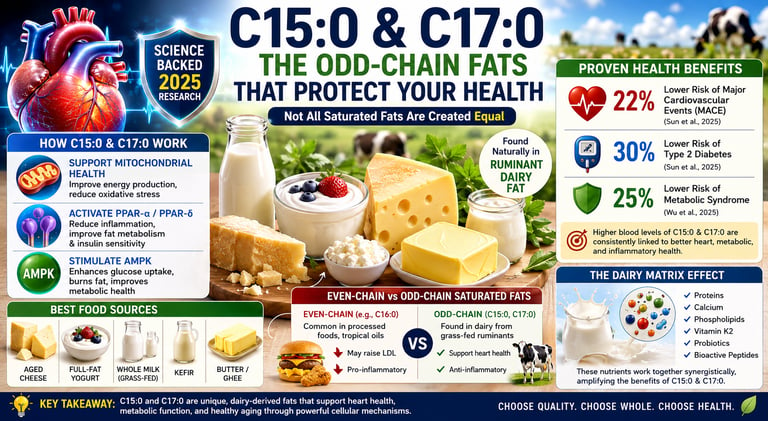
For more than 40 years, full-fat dairy has occupied a controversial place in nutrition science. Butter, cheese, and whole milk were widely portrayed as cardiovascular threats because they contain saturated fat — a nutrient long associated with elevated LDL cholesterol and coronary artery disease. Millions of people switched to low-fat yogurt, skim milk, and fat-free dairy products believing they were protecting their hearts. But an unexpected wave of metabolic and cardiovascular research is now challenging one of the most deeply entrenched assumptions in modern nutrition: not all saturated fats behave the same way inside the human body (Astrup et al., 2020; Forouhi et al., 2018).
At the center of this scientific shift are two little-known molecules found primarily in ruminant dairy fat: pentadecanoic acid (C15:0) and heptadecanoic acid (C17:0). These compounds belong to a rare class known as odd-chain saturated fatty acids (OCSFAs), and emerging evidence suggests they may exert anti-inflammatory, insulin-sensitizing, and even cardioprotective effects — the exact opposite of what conventional saturated fat theory would predict (Venn-Watson et al., 2020).
Large prospective cohort studies now show that people with higher circulating levels of C15:0 and C17:0 have lower risks of Type 2 diabetes, metabolic syndrome, ischemic heart disease, and stroke (Sun et al., 2025; Wu et al., 2025). Meanwhile, mechanistic studies reveal that these fatty acids interact directly with mitochondrial membranes, activate PPAR receptors involved in fat metabolism, and stimulate AMPK — the same master metabolic pathway targeted by metformin (Venn-Watson et al., 2020).
The implications are profound: avoiding full-fat fermented dairy may not always protect metabolic health — and in some individuals, it may even remove uniquely beneficial bioactive fats from the diet.
Clinical Pearls on C15:0 and C17:0 (Odd-Chain Saturated Fats):
1. Not all saturated fats are the same
While even-chain saturated fats (like C16:0) can raise LDL cholesterol, the odd-chain fats found in dairy — C15:0 (pentadecanoic acid) and C17:0 (heptadecanoic acid) — are associated with lower risks of heart disease, stroke, and Type 2 diabetes in large studies. They behave differently in the body and appear to offer protective effects.
2. Full-fat dairy may be metabolically friendlier than we thought
Higher blood levels of C15:0 and C17:0 (which come almost entirely from dairy fat) are linked to a 22–30% lower risk of major cardiovascular events and diabetes. Choosing full-fat over low-fat dairy preserves these beneficial compounds that get removed when fat is skimmed off.
3. Fermented dairy delivers the biggest benefit
Yogurt, kefir, and aged cheeses are excellent sources because fermentation improves the bioavailability of C15:0 and C17:0 while also providing beneficial bacteria, vitamin K2, and blood-pressure-lowering peptides. This “whole dairy matrix” often produces better health outcomes than the sum of its individual nutrients.
4. C15:0 supports your cells’ energy engines
At the cellular level, C15:0 helps protect mitochondria (the powerhouses of your cells), reduces inflammation through PPAR receptor activation, and improves insulin sensitivity via AMPK pathways — similar to how some diabetes medications work. This may explain its broad protective effects against metabolic diseases.
5. Aim for 2–3 servings of quality full-fat dairy daily
Most studies showing benefits compare people with the highest versus the lowest intake. A practical target for many adults is 2–3 servings of full-fat, preferably grass-fed and fermented dairy products. Grass-fed versions tend to contain higher levels of these odd-chain fats.
6. Think “food first,” not supplements
While C15:0 supplements exist, whole-food sources of dairy fat provide a complete matrix of nutrients that work together. Supplements may help people who cannot consume dairy, but they are not yet proven to be equivalent to real food. Always discuss major dietary changes with your doctor, especially if you have heart disease or lipid disorders.
These pearls reflect the evolving 2025 science while remaining practical for everyday patient counseling. The evidence is promising but still largely observational — personalized advice is key.
1. Not All Saturated Fats Are Equal
The conventional advice — "saturated fat raises LDL cholesterol, therefore it harms your heart" — was built largely on data from even-chain saturated fatty acids like palmitic acid (C16:0) and myristic acid (C14:0). These are the dominant fats in tropical oils, processed meats, and baked goods.
Odd-chain saturated fatty acids (OCSFAs) tell a very different biochemical story. They differ structurally in one key way: their carbon backbone contains an odd number of carbon atoms. This isn't a trivial detail — it changes how these fats are metabolized, which cellular receptors they activate, and how they integrate into membrane structures.
Even-Chain (C14, C16): Associated with raised LDL; derived from carbohydrate metabolism in the body; abundant in processed foods.
Odd-Chain (C15, C17): Derived almost exclusively from ruminant animals; activate anti-inflammatory receptors; protect mitochondrial function.
Key Distinction
Your body cannot synthesize significant amounts of C15:0 or C17:0 on its own. These fatty acids enter your bloodstream almost entirely through diet — making them uniquely reliable biomarkers of dairy fat intake.
2. The Biomarker Power of OCSFAs
One reason OCSFAs have become so scientifically useful is that blood levels of C15:0 and C17:0 serve as objective, quantifiable biomarkers of how much ruminant dairy fat a person actually consumes — eliminating the notoriously unreliable "food diary" problem that plagues most nutrition research.
When researchers measure circulating OCSFA levels in thousands of participants and track health outcomes over years, they're looking at biological evidence, not self-reported memory. This makes findings far more reliable than typical dietary questionnaire data.
According to a landmark 2020 paper in Scientific Reports by Venn-Watson and colleagues, pentadecanoic acid (C15:0) may qualify as a conditionally essential fatty acid — meaning the human body requires it for optimal function, yet cannot produce adequate amounts without dietary intake.
3. Protective Epidemiology: What the Data Show
The epidemiological evidence linking higher OCSFA levels to better health outcomes has grown substantially in recent years. Here are the most clinically significant findings:
↓ 30% Lower risk of Type 2 Diabetes with high C15:0 levels (meta-analysis data)
↓ 22% Reduced major adverse cardiovascular event (MACE) risk in prospective studies
↓ 25% Lower metabolic syndrome risk in those with highest C17:0 erythrocyte levels
The China Kadoorie Biobank: A Landmark 2025 Study
A major 2025 prospective study from the China Kadoorie Biobank Collaborative Group, published in the European Journal of Preventive Cardiology, measured erythrocyte (red blood cell) odd-chain fatty acid levels in a large Chinese population and tracked cardiometabolic disease incidence over many years.
The findings were striking: higher erythrocyte C15:0 and C17:0 levels were inversely associated with risks of ischaemic heart disease, ischaemic stroke, and Type 2 diabetes. This inverse relationship held even after adjusting for conventional cardiovascular risk factors such as blood pressure, BMI, smoking, and exercise habits.
Metabolic Syndrome: C17:0 Takes the Lead
A 2025 analysis published in the European Journal of Nutrition (Wu et al.) specifically compared the roles of C15:0 and C17:0 in metabolic syndrome risk. Using mediation analysis and joint effect models, the authors found that C17:0 — not C15:0 — was the primary driver of the protective association, particularly through improvements in triglyceride levels and waist circumference.
Important Note
While these associations are consistent and biologically plausible, most studies are observational. Higher dairy fat intake is associated with healthier metabolic outcomes — but confounders like overall diet quality, physical activity, and socioeconomic status must always be considered. Randomized trials are needed to confirm causality.
4. Cellular Mechanisms: How C15:0 Repairs Tissues
The epidemiological patterns would mean little without a credible biological explanation. Fortunately, cell biology research — much of it conducted in the last five years — has revealed several distinct mechanisms by which C15:0 exerts protective effects at the cellular level.
Mechanism 1: Mitochondrial Membrane Protection
Mitochondria — your cells' energy-producing "power plants" — are surrounded by lipid bilayer membranes. The composition of these membranes affects how efficiently mitochondria produce ATP and how much "proton leak" occurs (wasted energy that also generates damaging reactive oxygen species).
C15:0 integrates directly into mitochondrial membranes, where it appears to reduce abnormal proton leak and improve the efficiency of the electron transport chain. In practical terms, this means cells can produce more ATP with less oxidative stress — a critical factor in aging and metabolic disease.
Mechanism 2: PPAR-α and PPAR-δ Receptor Activation
Peroxisome proliferator-activated receptors (PPARs) are nuclear receptors that regulate inflammation, fat metabolism, and insulin sensitivity. C15:0 has been identified as a natural partial agonist of PPAR-α and PPAR-δ — meaning it activates these receptors in a controlled, balanced way.
Activation of these receptors leads to:
Downregulation of pro-inflammatory cytokines including IL-1β and TNF-α
Improved fatty acid oxidation (fat burning)
Enhanced insulin sensitivity in muscle and liver cells
Reduced hepatic lipid accumulation (important for fatty liver prevention)
Mechanism 3: AMPK Activation — The Metformin Parallel
AMP-activated protein kinase (AMPK) is often called the body's "master metabolic switch." When activated, AMPK stimulates glucose uptake, inhibits fat synthesis, and promotes mitochondrial biogenesis. Metformin — the world's most commonly prescribed diabetes medication — works primarily by activating AMPK.
Research suggests that C15:0 upregulates AMPK signaling through a similar pathway, potentially offering some of metformin's metabolic benefits through a dietary route. This is a remarkable finding that places a naturally occurring food fatty acid alongside a pharmaceutical agent in terms of its cellular target.
5. C17:0: The Emerging Metabolic Protector
While C15:0 has received most of the scientific spotlight, its slightly longer odd-chain cousin — heptadecanoic acid (C17:0) — is gaining rapidly in evidence. The 2025 Wu et al. study mentioned above suggests C17:0 may be more important than C15:0 for metabolic syndrome specifically.
C17:0 shares several mechanisms with C15:0 — PPAR activation, anti-inflammatory signaling — but may have distinct advantages in lipid metabolism:
Triglyceride reduction: Higher erythrocyte C17:0 is consistently associated with lower fasting triglycerides
HDL elevation: Some data suggest a positive correlation between C17:0 and HDL ("good") cholesterol
Insulin receptor sensitization: C17:0 may improve hepatic insulin signaling through mechanisms distinct from C15:0
Importantly, like C15:0, heptadecanoic acid cannot be significantly synthesized by the human body — making dietary intake from ruminant dairy essentially the only meaningful source.
6. The Whole Dairy Matrix Effect
One of the most important concepts emerging from modern food science is the "dairy matrix effect" — the idea that dairy's biological impact cannot be predicted by analyzing its individual components in isolation.
Yes, butter and cheese contain even-chain saturated fatty acids like palmitic acid (C16:0) that, in isolation, raise LDL cholesterol in lab studies. But when consumed as part of whole-food dairy — surrounded by protein, calcium, phospholipids, vitamins K2 and D, and the OCSFAs we've been discussing — the net effect on cardiovascular risk appears to be neutral or even favorable.
This helps explain a long-standing paradox in nutrition research: populations with high dairy fat consumption (like Scandinavia and the French) do not consistently show elevated cardiovascular mortality compared to populations avoiding dairy fat. The matrix matters.
Fermented Dairy: The Gold Standard
Fermented dairy products — yogurt, kefir, aged cheeses — appear to deliver the strongest benefits. Fermentation:
Generates bioactive peptides with ACE-inhibiting (blood pressure lowering) effects
Produces short-chain fatty acids (SCFAs) that feed gut microbiota
Concentrates fat-soluble vitamins including K2 (menaquinone), which independently supports vascular calcification prevention
May slightly increase the bioavailability of C15:0 and C17:0 relative to unfermented dairy
7. Best Food Sources of C15:0 and C17:0
The richest dietary sources of both odd-chain saturated fatty acids are animal products from ruminant animals (cattle, sheep, goats) — particularly their fat. Grass-fed dairy appears to contain higher OCSFA concentrations than conventional dairy, though both deliver meaningful amounts.
Here are the top dietary sources of odd-chain fatty acids (C15:0 and C17:0), ranked by concentration and practicality:
Aged Cheese — Highest C15:0 density
Hard cheeses like Parmigiano-Reggiano, Gouda, and Manchego are excellent choices.
Full-Fat Yogurt — Best everyday source
Greek or traditional full-fat yogurt; grass-fed preferred for higher odd-chain fats.
Whole Milk (3%+) — Reliable and consistent
Opt for grass-fed or pasture-raised when possible.
Kefir — Superior fermented option
Combines beneficial bacteria with high C15:0 and C17:0 content.
Butter & Ghee — Concentrated source
Use in moderation; grass-fed versions contain more odd-chain fatty acids.
Oily Fish — Minor contributor
Provides small amounts of C15:0 but not a primary source.
8. Evidence Summary Table
Venn-Watson et al., 2020 (Scientific Reports)
Study Design: Review & Analysis
Key Finding: C15:0 may function as a conditionally essential fatty acid with broad health benefits that align with epidemiological data.
Evidence Quality: High
Wu et al., 2025 (European Journal of Nutrition)
Study Design: Mediation Analysis
Key Finding: C17:0 is the primary driver of protection against metabolic syndrome among odd-chain saturated fatty acids.
Evidence Quality: High
Sun et al., 2025 (European Journal of Preventive Cardiology)
Study Design: Prospective Cohort + Meta-Analysis
Key Finding: Higher blood levels of C15:0 and C17:0 are associated with significantly lower risk of ischaemic heart disease, stroke, and Type 2 diabetes.
Evidence Quality: Very High
Dornan et al., 2021 (Journal of the American Oil Chemists’ Society)
Study Design: Review
Key Finding: Odd-chain fatty acids are likely essential in the human diet and deficiency may pose health risks.
Evidence Quality: Moderate
Timmers et al., 2026 (World Journal of Microbiology and Biotechnology)
Study Design: Review
Key Finding: Recent advances in microbial production of odd-chain fatty acids support their biological and nutritional relevance.
Evidence Quality: Moderate
Quick Summary:
The strongest evidence comes from the 2025 large-scale human studies (Sun et al. and Wu et al.), which show promising protective effects of C15:0 and C17:0 on heart and metabolic health.
9. Common Myths & Mistakes
Myth: “All saturated fat is bad for your heart.”
Reality: This outdated belief oversimplifies modern lipid science. Saturated fats are not metabolically identical, and their effects on cardiovascular health vary depending on chain length, food source, and biological context. Most early heart disease research focused on even-chain saturated fats such as palmitic acid (C16:0), commonly found in processed foods and refined diets.
However, emerging evidence shows that odd-chain saturated fatty acids (OCSFAs) — especially pentadecanoic acid (C15:0) and heptadecanoic acid (C17:0) — may have entirely different effects. Higher blood levels of these dairy-derived fats are consistently associated with lower risks of Type 2 diabetes, metabolic syndrome, inflammation, stroke, and cardiovascular disease in large prospective studies. Rather than promoting metabolic dysfunction, C15:0 and C17:0 appear to support mitochondrial health, insulin sensitivity, and anti-inflammatory signaling pathways.
Myth: “Low-fat dairy is always healthier than full-fat dairy.”
Reality: Removing fat from dairy also removes many of its most bioactive compounds — including C15:0 and C17:0, the odd-chain fatty acids increasingly linked to cardiometabolic protection. Full-fat fermented dairy products such as yogurt, kefir, and aged cheese naturally contain these beneficial fats within a complex nutritional structure known as the dairy matrix.
In contrast, many low-fat dairy products compensate for lost texture and flavor by adding sugars, starches, or artificial ingredients, potentially worsening blood glucose regulation and satiety. Modern nutrition research suggests that whole-food dairy may behave very differently from isolated saturated fat studied in older reductionist models.
Myth: “A C15:0 supplement works the same as eating full-fat dairy.”
Reality: While supplemental C15:0 is commercially available and scientifically interesting, it does not fully replicate the biological complexity of whole dairy foods. Full-fat dairy contains a synergistic combination of nutrients, including calcium, phospholipids, milk proteins, vitamin K2, probiotics, fermentation metabolites, and bioactive peptides, that interact to influence metabolism and cardiovascular function.
This is known as the dairy matrix effect — the concept that health outcomes cannot be predicted by studying nutrients in isolation. Current evidence suggests that fermented whole-food dairy remains the most physiologically complete source of odd-chain fatty acids for most individuals.
Myth: “Plant-based milk alternatives provide the same heart-protective fats as dairy.”
Reality Plant-based beverages such as almond milk, oat milk, rice milk, and soy milk contain virtually no C15:0 or C17:0. These odd-chain fatty acids are produced primarily through bacterial fermentation inside the rumen of grazing animals like cows, sheep, and goats — a unique biological process absent in plant agriculture.
Although plant-based alternatives may offer benefits for some individuals depending on allergies, ethics, or dietary preferences, they do not naturally provide the same odd-chain fatty acids, dairy phospholipids, or fermentation-derived bioactive compounds associated with the cardiometabolic benefits observed in full-fat fermented dairy research..
10. Frequently Asked Questions
What are odd-chain saturated fatty acids (OCSFAs)?
OCSFAs are saturated fats with an odd number of carbon atoms in their chain. The most nutritionally important are pentadecanoic acid (C15:0, 15 carbons) and heptadecanoic acid (C17:0, 17 carbons). They are found almost exclusively in the fat of ruminant animals like cows, sheep, and goats — and in some fish. Unlike even-chain saturated fats, they appear to have anti-inflammatory and cardioprotective properties.
Is C15:0 really an essential fatty acid?
Researchers including Dr. Stephanie Venn-Watson have proposed that C15:0 may be "conditionally essential" — meaning your body cannot produce sufficient amounts on its own and requires dietary intake to maintain optimal health. This hypothesis is supported by epidemiological data showing that low C15:0 levels are associated with increased disease risk. However, it has not yet been officially classified as essential by major nutrition bodies, and more clinical trials are needed.
How much full-fat dairy should I eat to benefit?
Current evidence does not establish a precise dose for C15:0 or C17:0. Most prospective studies compare the highest vs lowest quintiles of intake. As a practical guideline, consuming 2–3 servings of full-fat dairy per day — through a mix of yogurt, cheese, and milk — places most people in the range associated with favorable OCSFA levels. Quality matters: grass-fed and fermented options appear superior. Always discuss significant dietary changes with your healthcare provider, especially if you have existing cardiovascular conditions.
Will eating more full-fat dairy raise my cholesterol?
This is nuanced. Full-fat dairy does contain even-chain saturated fats that can raise LDL cholesterol in some individuals. However, the type of LDL particle matters: dairy fat tends to raise larger, less atherogenic LDL particles rather than the small, dense variety most strongly linked to arterial plaque. Furthermore, the net cardiovascular outcome in large prospective studies does not show harm from full-fat dairy consumption. If you have familial hypercholesterolemia or specific lipid disorders, consult your doctor before making changes.
Is kefir better than yogurt for getting OCSFAs?
Both are excellent sources. The fat content is what determines OCSFA delivery, so full-fat versions of both are preferable. Kefir has the advantage of a more diverse microbiome contribution, while Greek yogurt typically offers higher protein. For maximum benefit, rotating between different fermented full-fat dairy products is a reasonable approach.
Do C15:0 supplements work as well as food?
Supplemental pentadecanoic acid (available commercially) has shown promising results in early studies, but it lacks the broader dairy matrix benefits. Supplements may be useful for individuals who cannot consume dairy (lactose intolerance, veganism) or who have documented deficiency. They should not be considered a replacement for a balanced, whole-food approach to nutrition.
Are OCSFAs relevant for Type 2 Diabetes prevention?
Yes — this is one of the most consistent findings in the literature. Higher circulating C15:0 is associated with lower risk of developing Type 2 Diabetes in multiple large prospective cohorts. The AMPK activation mechanism described in this article provides a plausible explanation: improved cellular glucose uptake and reduced insulin resistance. This does not mean dairy is a diabetes treatment — but it does suggest full-fat fermented dairy can be part of a diabetic-friendly diet for many people.
What is the dairy matrix effect?
The dairy matrix effect refers to the way nutrients in whole dairy interact synergistically, producing health effects that cannot be predicted by analyzing individual components in isolation. Calcium, protein, phospholipids, vitamins D and K2, fermentation metabolites, and OCSFAs all interact within the food matrix in ways that appear to neutralize or even reverse the theoretical harm from dairy's even-chain saturated fat content.
Which is more important: C15:0 or C17:0?
Both have important roles, and the evidence suggests they are partially complementary rather than redundant. For metabolic syndrome specifically, a 2025 mediation analysis found C17:0 to be the more important driver. For broader cardioprotection and cellular repair mechanisms, C15:0 has the most mechanistic research. In practice, since both come from the same food sources (dairy fat), consuming adequate full-fat dairy delivers meaningful amounts of both.
11.Who Should Be Cautious With Full-Fat Dairy?
Although the emerging science surrounding C15:0 and C17:0 is promising, full-fat dairy is not universally beneficial for every individual. Cardiometabolic responses to dietary fat vary substantially based on genetics, baseline lipid metabolism, insulin sensitivity, and overall dietary context.
People with familial hypercholesterolemia (FH) — a genetic disorder characterized by markedly elevated LDL cholesterol and impaired LDL receptor function — should approach increased saturated fat intake cautiously, even from dairy sources. In these individuals, excessive LDL particle exposure over time significantly increases atherosclerotic cardiovascular disease risk, and personalized medical supervision is essential.
Similarly, some individuals appear to be ApoB or LDL hyper-responders, meaning their LDL-C and ApoB levels rise disproportionately in response to saturated fat intake, including dairy fat. While dairy may shift LDL particles toward larger, less dense forms in many people, a subset experiences clinically meaningful elevations in ApoB-containing lipoproteins, which remain strongly linked to cardiovascular risk.
Patients with severe baseline LDL elevation, established coronary artery disease, elevated lipoprotein(a), or high overall atherosclerotic burden should avoid assuming that “all dairy fat is protective.” Biomarkers matter more than ideology. Monitoring ApoB, LDL particle number, triglycerides, HDL-C, and inflammatory markers can help determine whether full-fat dairy is metabolically favorable for a given individual.
The key principle is individualized lipid response. Nutrition science is increasingly moving away from one-size-fits-all recommendations toward precision nutrition, where dietary choices are tailored to genetics, metabolic phenotype, insulin sensitivity, and cardiovascular risk profile. For many people, fermented full-fat dairy may support metabolic health — but the optimal amount and type should always be interpreted within the context of personal biomarkers and clinical history.
12. Conclusion & Action Steps
The narrative around saturated fat and dairy is being rewritten — not by industry lobbying, but by rigorous prospective data and mechanistic cell biology. Odd-chain saturated fatty acids C15:0 and C17:0 are emerging as genuine contributors to cardiometabolic health, functioning through multiple molecular pathways including mitochondrial protection, PPAR activation, and AMPK stimulation.
The practical implications are clear and actionable:
Choose full-fat over low-fat dairy where appropriate for your individual health context
Prioritize fermented dairy — yogurt, kefir, and aged cheeses deliver the most comprehensive benefits
Opt for grass-fed or pasture-raised dairy products when available — higher OCSFA concentration
Aim for 2–3 dairy servings daily as part of an overall balanced diet rich in vegetables, fibre, and healthy fats
Consult your doctor before making major dietary changes, especially if you have existing lipid disorders or cardiovascular disease
The science is not yet complete — we need more randomized controlled trials to confirm causality. But the weight of epidemiological and mechanistic evidence has shifted: avoiding full-fat dairy out of fear of saturated fat may be depriving you of some of the most bioactive protective compounds in the food supply.
Disclaimer: This article is for educational purposes only and does not constitute medical advice. Always consult a qualified healthcare professional before making significant changes to your diet, especially if you have existing health conditions or are taking medications.
Related Articles
Rethinking Dietary Fat Through a Longevity Lens: Mitochondria, Autophagy, and Aging
De Novo Lipogenesis Explained: How Sugar Turns Into Liver Fat and High Triglycerides
Rethinking Dietary Fats: What New Research Reveals About Plant vs. Animal Fats | DR T S DIDWAL
What’s New in the 2025 Blood Pressure Guidelines? A Complete Scientific Breakdown | DR T S DIDWAL
Low-Fat vs. Low-Carb: Which Diet is Best for Weight Loss? | DR T S DIDWAL
References
Astrup, A., Magkos, F., Bier, D. M., Brenna, J. T., de Oliveira Otto, M. C., Hill, J. O., King, J. C., Mente, A., Ordovas, J. M., Volek, J. S., Willett, W. C., & Krauss, R. M. (2020). Saturated fats and health: A reassessment and proposal for food-based recommendations. Journal of the American College of Cardiology, 76(7), 844–857. https://doi.org/10.1016/j.jacc.2020.05.077
Dehghan, M., Mente, A., Zhang, X., Swaminathan, S., Li, W., Mohan, V., Iqbal, R., Kumar, R., Wentzel-Viljoen, E., Rosengren, A., Amma, L. I., Avezum, A., Chifamba, J., Diaz, R., Khatib, R., Lear, S., Lopez-Jaramillo, P., Liu, X., Gupta, R., ... Yusuf, S. (2017). Associations of fats and carbohydrate intake with cardiovascular disease and mortality in 18 countries from five continents (PURE): A prospective cohort study. The Lancet, 390(10107), 2050–2062. https://doi.org/10.1016/S0140-6736(17)32252-3
Dornan, K., Gunenc, A., Oomah, B. D., & Hosseinian, F. (2021). Odd chain fatty acids and odd chain phenolic lipids (alkylresorcinols) are essential for diet. Journal of the American Oil Chemists' Society, 98(8), 813–824. https://doi.org/10.1002/aocs.12507
Drouin-Chartier, J. P., Côté, J. A., Labonté, M. È., Brassard, M. È., Tessier-Gagnon, S., Bouchard, S. È., Goulet, C., Couture, P., & Lamarche, B. (2016). Comprehensive review of the impact of dairy foods and dairy fat on cardiometabolic risk. Advances in Nutrition, 7(6), 1041–1051. https://doi.org/10.3945/an.115.011619
European Food Safety Authority. (2022). Scientific opinion on dietary fats and cardiovascular disease. EFSA Journal, 20(4), e07254. https://doi.org/10.2903/j.efsa.2022.7254
Forouhi, N. G., Krauss, R. M., Taubes, G., & Willett, W. C. (2018). Dietary fat and cardiometabolic health: Evidence, controversies, and consensus for guidance. BMJ, 361, k2139. https://doi.org/10.1136/bmj.k2139
Risérus, U., Willett, W. C., & Hu, F. B. (2009). Dietary fats and prevention of type 2 diabetes. Progress in Lipid Research, 48(1), 44–51. https://doi.org/10.1016/j.plipres.2008.10.002
Sun, L., Xu, X., Du, H., & China Kadoorie Biobank Collaborative Group. (2025). Erythrocyte odd-chain fatty acids and the risk of cardiometabolic diseases: A prospective study and updated meta-analysis. European Journal of Preventive Cardiology, Article zwaf601. https://doi.org/10.1093/eurjpc/zwaf601
Timmers, R. A., de Vicente, M., Rosa-Masegosa, A., & Tremblay, A. J. (2026). Recent advances in microbial production of odd-chain fatty acids. World Journal of Microbiology and Biotechnology, 42(1), 40. https://doi.org/10.1007/s11274-025-04769-x
Tremblay, A. J., & Rudkowska, I. (2023). Pentadecanoic acid and heptadecanoic acid — A review of potential roles in metabolic health. Nutrients, 15(14), 3122. https://doi.org/10.3390/nu15143122
Venn-Watson, S., Lumpkin, R., & Dennis, E. A. (2020). Efficacy of dietary odd-chain saturated fatty acid pentadecanoic acid parallels broad associated health benefits in humans: Could it be essential? Scientific Reports, 10, Article 8161. https://doi.org/10.1038/s41598-020-64960-y
Wu, S., Luo, H., Huang, R., & Tremblay, A. J. (2025). C17:0, rather than C15:0, drives the protective association of odd-chain saturated fatty acids with metabolic syndrome: Mediation and joint effect evidence. European Journal of Nutrition, 64(2), 320. https://doi.org/10.1007/s00394-025-03841-4