Tired All Day, Awake at Night? The Redox and Mitochondrial Link
Learn how mitochondrial dysfunction and oxidative stress affect redox balance, causing fatigue, insomnia, and poor energy regulation
METABOLISM
Dr. T.S. Didwal, M.D.(Internal Medicine)
3/1/202613 min read
The Architecture of Human Energy: ATP, Mitochondria, and Redox Balance
What if your fatigue, rising blood sugar, stubborn belly fat, or slowing metabolism isn’t simply about willpower, calories, or age — but about tiny energy factories inside your cells struggling to keep up?
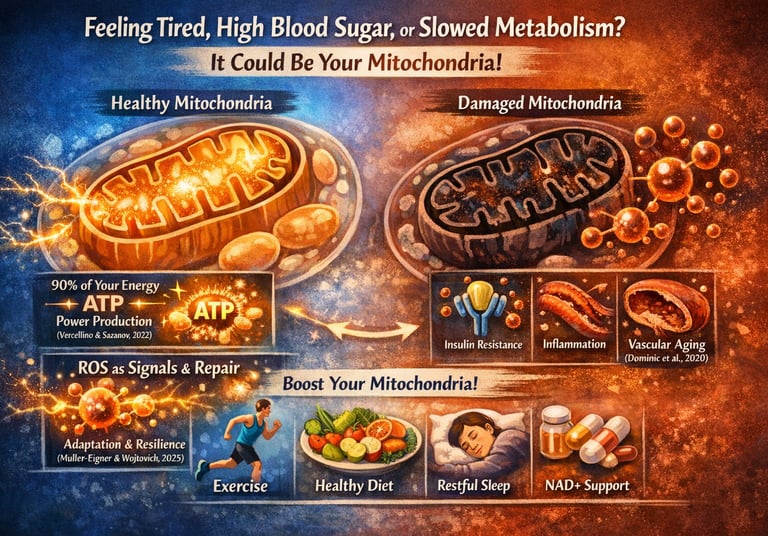
Inside nearly every cell in your body live structures called mitochondria. Think of them as microscopic power plants. Their job is to turn the food you eat and the oxygen you breathe into a molecule called ATP — the energy currency that powers everything from your heartbeat to your brain function. In fact, about 90% of your body’s usable energy is produced through mitochondrial oxidative phosphorylation under healthy conditions (Vercellino & Sazanov, 2022).
But mitochondria do more than make energy. They also control how your body handles stress. As they generate energy, they produce small amounts of reactive oxygen species (ROS). In the right amounts, these molecules act like helpful messengers — triggering repair, adaptation, and resilience (Müller-Eigner & Wojtovich, 2025). This is one reason exercise, which temporarily increases ROS, actually strengthens your cells over time.
Problems begin when this balance breaks down. If mitochondria become damaged — due to aging, inactivity, chronic overnutrition, or metabolic disease — they produce energy less efficiently and leak excess ROS. This can interfere with insulin signaling, promote inflammation, and accelerate vascular aging (Dominic et al., 2020). In conditions like type 2 diabetes, skeletal muscle — which normally clears most of your blood sugar — often shows reduced mitochondrial function and impaired energy production.
The encouraging news? Mitochondria are highly adaptable. Regular physical activity, proper nutrition, adequate sleep, and emerging therapies that support NAD+ metabolism can all improve mitochondrial health
Clinical pearls
1. The "Hormetic" Sweet Spot: ROS as a Signal
Reactive Oxygen Species (ROS) are not merely toxic byproducts; at low concentrations, they act as essential signaling molecules that trigger the Nrf2 pathway, upregulating endogenous antioxidant enzymes and mitochondrial repair.
Think of ROS like the "soreness" after a good workout. A little bit of stress tells your cells to get stronger. If you take high-dose antioxidant supplements (like Vitamin C or E) immediately around your workout, you might actually "muffle" the signal that tells your body to improve its fitness.
2. Metabolic Flexibility and the Randle Cycle
The Randle Cycle describes the metabolic competition between glucose and fatty acids for oxidation. Mitochondrial dysfunction in Type 2 Diabetes often manifests as "metabolic inflexibility," where the cell loses the ability to efficiently switch between fuel sources, leading to lipid intermediate accumulation.
Your mitochondria are like a hybrid engine that can run on sugar or fat. In healthy people, the engine switches gears easily. In metabolic disease, the "gears" get stuck, and the body starts storing "sludge" (unprocessed fats) inside the muscle cells, which blocks insulin from doing its job.
3. Use It or Lose It: Mitochondrial Biogenesis
Physical activity induces PGC-1α, the master regulator of mitochondrial biogenesis. This increases the "mitochondrial density" within myocytes, effectively lowering the individual workload (and ROS leak) of each mitochondrion during submaximal exertion.
Exercise is literally "mitochondrial medicine." It tells your cells to build more power plants. When you have more power plants sharing the load, each one runs cooler and cleaner, preventing the "overheating" (oxidative stress) that leads to aging and fatigue.
4. The NAD+ "Fuel Gauge" and DNA Repair
NAD+ serves as a vital co-factor for both energy production and PARP enzymes involved in DNA repair. As we age, chronic inflammation and DNA damage "drain" the NAD+ pool, leaving insufficient levels for sirtuin-mediated mitochondrial maintenance.
Think of NAD+ as the battery level on your phone. It’s needed for everything. As we get older, our "apps" (like DNA repair and energy production) stay open too long and drain the battery. Keeping your "battery" charged through good sleep, exercise, and proper nutrition helps the body repair itself while staying energized.
5. Mitophagy: Taking Out the Cellular Trash
Effective mitophagy (the selective autophagy of damaged mitochondria) is mediated by the PINK1/Parkin pathway. Failure to clear depolarized mitochondria leads to the release of mitochondrial DAMPs (Damage-Associated Molecular Patterns), which trigger the NLRP3 inflammasome.
Your cells have a "trash collection" system for broken power plants. If the trash isn't picked up, these broken parts leak "toxic chemicals" that cause inflammation throughout your body. Fasting and high-intensity exercise are two of the best ways to "call the garbage truck" and keep your cellular environment clean.
6: The Mitochondrial Clock (Circadian Rhythm)
Mitochondrial morphology and enzymatic activity (including PDH and Complex I) exhibit robust circadian oscillations regulated by the molecular clock (e.g., BMAL1 and CLOCK). Disruptions in light-dark cycles or nocturnal feeding lead to asynchronous redox signaling and a "stalling" of the TCA cycle, known as circadian metabolic asynchrony.
Your mitochondria have a "bedtime." They are programmed to burn fuel efficiently during the day and focus on "maintenance and repair" at night. When we eat late at night or stay under blue light, we force the power plants to stay online when they should be cleaning up. This "biological jetlag" is a hidden cause of stubborn weight gain and morning brain fog.
Your energy isn’t just about how much you eat. It’s about how well your cells convert that food into life-sustaining power.
I. How Your Body Makes Energy
Your body runs on energy. Every heartbeat, every breath, every thought depends on tiny power plants inside your cells called mitochondria. When they work well, you feel energetic, strong, and mentally sharp. When they don’t, fatigue, insulin resistance, muscle loss, and even heart disease can follow.
ATP: Your Body’s Energy Currency
Think of ATP (adenosine triphosphate) as your body’s rechargeable battery.
When ATP releases one phosphate group, it releases energy that your cells can use.
That energy powers:
Muscle contraction
Brain activity
Hormone production
Nutrient transport
Cellular repair
Low ATP production = fatigue, weakness, slower healing.
Glycolysis: Quick Energy Without Oxygen
When you eat carbohydrates, glucose enters your cells. In the first step of energy production (called glycolysis):
Glucose is split into smaller molecules
A small amount of ATP is produced
This process does not require oxygen
This is the system your body uses during sprinting or intense effort.
But glycolysis alone is inefficient. The real energy production happens inside mitochondria.
The Mitochondria: Your Cellular Power Plants
Inside mitochondria, glucose and fats are fully “burned” using oxygen.
This happens in two main stages:
1️⃣ The TCA (Krebs) Cycle
This prepares fuel molecules and loads energy onto carriers (NADH and FADH2).
2️⃣ Oxidative Phosphorylation (OXPHOS)
This is where 90% of your ATP is made.
Here’s the key idea:
Electrons move through a chain of protein complexes.
This movement creates a proton gradient.
That gradient powers ATP synthase — a molecular turbine that makes ATP.
When this system is efficient → you feel energetic.
When it breaks down → fatigue, metabolic disease, and inflammation rise.
II. Mitochondria Are Dynamic — Not Static
Mitochondria constantly change shape through:
Fusion (joining together to share resources)
Fission (splitting apart to remove damaged parts)
Damaged mitochondria are removed through a cleaning process called mitophagy.
If this quality control fails:
Damaged mitochondria accumulate
Reactive oxygen species (ROS) increase
Inflammation rises
Aging accelerates
This imbalance is seen in diabetes, heart disease, and neurodegeneration.
III. ROS: Harmful Toxins or Helpful Signals?
Mitochondria naturally produce reactive oxygen species (ROS).
Small amounts are actually beneficial:
They activate repair pathways
Stimulate adaptation to exercise
Support immune defense
But excess ROS causes oxidative stress, damaging:
DNA
Proteins
Cell membranes
The problem is not ROS itself — it’s imbalance.
IV. NAD⁺: The Anti-Aging Molecule
NAD⁺ is a critical molecule that:
Helps produce ATP
Activates longevity proteins (sirtuins)
Supports DNA repair
NAD⁺ levels decline with aging.
Low NAD⁺ contributes to:
Fatigue
Insulin resistance
Muscle loss
Cognitive decline
Exercise, caloric moderation, and possibly NAD⁺ precursors (like NMN and NR) may help restore levels.
V. What Happens When Mitochondria Fail?
Type 2 Diabetes
In insulin resistance:
Muscle mitochondria become less efficient
Fat breakdown becomes incomplete
ROS levels rise
Insulin signaling is impaired
Exercise improves mitochondrial function — which is why it’s often called “metabolic medicine.”
Sarcopenia (Age-Related Muscle Loss)
With aging:
Mitochondria decline in number and function
Energy production drops
Muscle fibers shrink
Inflammation increases
Resistance training remains the most powerful way to reverse this process.
Vascular Aging and Heart Disease
Poor blood flow patterns and metabolic stress can:
Increase mitochondrial ROS
Trigger inflammation in blood vessels
Accelerate atherosclerosis
This means heart disease is not just a cholesterol problem — it’s also an energy and redox problem.
Key Takeaways for Patients
✔ Your energy depends on mitochondrial health
✔ Small amounts of ROS are necessary — too much is harmful
✔ NAD⁺ declines with age but can be supported
✔ Exercise is the most powerful mitochondrial therapy
✔ Muscle health protects against diabetes and heart disease
The Bottom Line
If you feel chronically tired, metabolically sluggish, or are struggling with insulin resistance or muscle loss, the issue may lie deep inside your cells.
Mitochondrial health is not a fringe concept — it is central to modern medicine.
And the most powerful interventions remain simple:
Regular exercise (especially resistance + HIIT)
Adequate protein intake
Metabolic health optimization
Sleep restoration
Avoiding chronic overnutrition
Protect your mitochondria — and you protect your energy, metabolism, and longevity.
Study Summaries: Mitochondrial Function, Oxidative Phosphorylation, and Redox Signaling in Metabolic Disease
1️⃣ Nature Reviews Molecular Cell Biology
Vercellino & Sazanov (2022) — Respiratory Chain Assembly and Function
This landmark review explains how the mitochondrial electron transport chain (ETC) is assembled and regulated. The ETC is composed of Complexes I–IV plus ATP synthase, built from both nuclear and mitochondrial DNA–encoded subunits. Proper assembly requires specialized chaperones and structural lipids such as cardiolipin.
A major breakthrough highlighted in this review is the supercomplex hypothesis. Instead of functioning independently, Complexes I, III, and IV form higher-order assemblies known as supercomplexes, particularly the respirasome. These structures:
Improve electron transfer efficiency
Reduce reactive oxygen species (ROS) leak
Stabilize respiratory chain components
Disruption of supercomplex organization — through aging, cardiolipin deficiency, or genetic mutations — leads to impaired ATP production and increased oxidative stress.
Key Takeaway:
Mitochondrial efficiency depends not just on ETC components, but on their structural organization into supercomplexes. Structural breakdown increases ROS and reduces ATP output, contributing to mitochondrial disease and metabolic dysfunction.
2️⃣ Redox Biology
Müller-Eigner & Wojtovich (2025) — Mitochondrial Metabolism and Redox Signaling
This 2025 review reframes mitochondria as redox-signaling hubs, not merely energy factories. The authors identify specific ROS production sites within the ETC:
Complex I produces ROS primarily in the mitochondrial matrix
Complex III produces ROS toward both the matrix and the intermembrane space
Because of this compartmentalization, ROS from different complexes activate distinct signaling pathways.
The review also explores NAD⁺/NADH balance as a redox communication system linking mitochondrial metabolism with nuclear gene expression. Emerging therapies include:
Mitochondria-targeted antioxidants
NAD⁺ precursors (e.g., NMN, NR)
Site-specific redox modulators
Key Takeaway:
ROS are not universally harmful. Their biological effect depends on their source and location. Future metabolic therapies must target specific mitochondrial redox nodes rather than broadly suppressing oxidative stress.
3️⃣ Redox Biology
Dominic et al. (2020) — Vascular Aging and Mitochondrial ROS
This study investigates how mitochondrial oxidative stress contributes to endothelial aging and atherosclerosis.
The authors compare two mechanisms:
Replicative senescence (RS): Telomere shortening from repeated cell division
Disturbed flow–induced premature aging: Caused by oscillatory blood flow at arterial branch points
Disturbed blood flow activates NADPH oxidase pathways, increasing mitochondrial ROS and triggering a pro-inflammatory, pro-atherosclerotic phenotype — even without chronological aging.
This demonstrates that vascular aging can be driven by biomechanical stress, not just time.
Key Takeaway:
Abnormal blood flow patterns can induce mitochondrial oxidative stress and premature vascular aging independent of age. Targeted redox therapies and biomechanical interventions may outperform generic “anti-aging” antioxidant strategies.
Why This Matters for Metabolic Health
Across these studies, a consistent theme emerges:
Mitochondrial structure determines energetic efficiency.
Redox balance regulates cellular signaling and inflammation.
Disrupted mitochondrial function underlies insulin resistance, vascular aging, and chronic disease.
Precision therapies must target specific mitochondrial pathways rather than broadly suppressing oxidative stress.
Modern medicine is increasingly recognizing that metabolic disease is fundamentally an energetic disorder — rooted in mitochondrial architecture and redox regulation.
The Architecture of Human Energy: Why Mitochondria Define Modern Medicine
1. Energy Is the First Principle of Physiology
Every heartbeat, synaptic impulse, and muscle contraction depends on ATP. Approximately 90% of ATP in aerobic cells is generated through mitochondrial oxidative phosphorylation. When energy production falters, physiology does not merely slow — it destabilizes.
2. Mitochondria Are Signaling Organelles, Not Just Powerhouses
The traditional view of mitochondria as static “energy factories” is obsolete. They are dynamic regulators of cellular fate — integrating metabolism, redox biology, apoptosis, and inflammation. Their outputs extend beyond ATP to include reactive oxygen species (ROS) and metabolic intermediates that shape gene expression.
3. Redox Balance Is a Regulatory Language
ROS are not biochemical accidents. At physiological levels, they serve as adaptive signals that activate stress-response pathways, mitochondrial biogenesis, and immune modulation. Pathology arises not from ROS presence — but from loss of redox precision.
4. Structural Integrity Determines Energetic Efficiency
Electron transport chain complexes assemble into higher-order supercomplexes, improving electron flow and reducing leak. Disruption of this architecture — through aging, cardiolipin loss, or metabolic stress — increases oxidative damage while reducing ATP yield.
5. NAD+ Is the Metabolic Fulcrum of Aging
Declining NAD+ levels impair sirtuin activity, mitochondrial biogenesis, and DNA repair. The NAD+–SIRT–PGC-1α axis represents a central vulnerability in age-related metabolic decline. Restoration strategies are emerging as credible therapeutic frontiers.
6. Insulin Resistance Is Energetic Dysfunction
In type 2 diabetes, skeletal muscle mitochondria exhibit reduced oxidative capacity and increased ROS production. These disturbances directly impair insulin signaling via stress kinase activation. Metabolic disease is, at its core, mitochondrial inefficiency.
7. Exercise Is Mitochondrial Medicine
No pharmacological agent rivals exercise in its ability to stimulate mitochondrial biogenesis, enhance mitophagy, and recalibrate redox signaling. Physical activity remains the most powerful intervention for restoring energetic resilience.
8. The Future Is Precision Mitochondrial Therapy
Broad antioxidant strategies have failed because they ignore compartmentalized redox biology. The next era will target site-specific ROS, supercomplex stabilization, NAD+ metabolism, and mitophagic efficiency.
The architecture of human energy is not a peripheral concept — it is the foundation of preventive, metabolic, and regenerative medicine. To understand mitochondria is to understand the trajectory of aging and chronic disease itself.
Frequently Asked Questions (FAQs)
Q1: What exactly is the proton-motive force, and why does it matter for ATP production?
A: The proton-motive force (PMF) is an electrochemical gradient created when Complexes I, III, and IV pump protons from the mitochondrial matrix into the intermembrane space during electron transport. This gradient has two components: a chemical gradient (pH difference, ~0.5–1 units) and an electrical gradient (membrane potential, ~−180 mV). ATP synthase acts like a proton-driven turbine — protons flowing back down this gradient through its Fo subunit drive rotation of the F1 subunit, catalyzing ADP phosphorylation to ATP. Without a healthy PMF — disrupted by proton leak, damaged ETC complexes, or uncoupling proteins — ATP synthesis collapses even if the ETC is functioning.
Q2: Is ROS always bad? Can reactive oxygen species ever be beneficial?
A: Absolutely — this is one of the most important paradigm shifts in modern biology. At physiologically low concentrations, ROS like hydrogen peroxide (H2O2) function as intracellular signaling molecules. They activate protective pathways including Nrf2 (which induces antioxidant gene expression), HIF-1α (which mediates hypoxic adaptation), NF-κB (immune responses), and autophagy. The concept of 'hormesis' describes how low-dose oxidative stress from exercise or caloric restriction produces adaptive benefits. Problems arise only when ROS production overwhelms antioxidant defenses, resulting in indiscriminate oxidative damage. This is why broad antioxidant supplementation has sometimes failed in clinical trials — it suppresses both the harmful and beneficial ROS.
Q3: How does exercise improve mitochondrial health at the molecular level?
A: Exercise depletes ATP and raises AMP levels, activating AMP-activated protein kinase (AMPK). AMPK phosphorylates PGC-1α, the master regulator of mitochondrial biogenesis, which then co-activates transcription factors (NRF1, TFAM) that drive production of new mitochondrial proteins and mtDNA. Simultaneously, exercise-induced calcium release and transient ROS pulses stimulate mitophagy, clearing damaged mitochondria. The net result is a higher-quality, larger mitochondrial network with improved OXPHOS efficiency, better ROS management, and greater resilience to metabolic stress. Endurance training and HIIT are especially potent stimuli for these adaptations.
Q4: What is mitophagy and why is it important for cellular health?
A: Mitophagy is the selective autophagic degradation of damaged or dysfunctional mitochondria. When mitochondrial membrane potential collapses in damaged organelles, the PINK1 kinase accumulates on the outer mitochondrial membrane, recruits the E3 ubiquitin ligase Parkin, which tags the mitochondrion with ubiquitin chains. Autophagy receptors (NDP52, optineurin, OPTN) recognize these tags and recruit the autophagosome, which engulfs and delivers the mitochondrion to the lysosome for degradation. Without effective mitophagy, damaged mitochondria accumulate, leak ROS, release pro-apoptotic proteins like cytochrome c, and trigger inflammation. PINK1 and Parkin mutations cause familial Parkinson's disease, directly linking defective mitophagy to neurodegeneration.
Q5: Why does NAD+ decline with aging, and how does this affect metabolism?
A: NAD+ levels fall with age due to multiple converging factors: increased PARP activation in response to accumulating DNA damage consumes NAD+; chronic inflammation activates CD38, an NAD+ hydrolase; and declining expression of NAD+ biosynthetic enzymes (NAMPT in particular) reduces synthesis. Critically, NAD+ is required for sirtuin deacetylase activity. As NAD+ falls, SIRT1 and SIRT3 activity decline, reducing PGC-1α activity and mitochondrial biogenesis, impairing mitochondrial protein deacetylation, and disrupting mitophagy. SIRT1 also regulates DNA repair and circadian rhythms. This creates a degenerative cascade: less NAD+ → less sirtuin activity → worse mitochondrial quality → more ROS and DNA damage → more PARP activation → less NAD+.
Q6: How does mitochondrial dysfunction contribute to type 2 diabetes?
A: In type 2 diabetes, skeletal muscle (which normally handles ~80% of glucose uptake) shows reduced mitochondrial content, impaired OXPHOS, and accumulation of incompletely oxidized lipid metabolites. Elevated mitochondrial ROS activate stress kinases (JNK, IKKβ) that phosphorylate the insulin receptor substrate-1 (IRS-1) on inhibitory serine residues, physically disrupting the insulin signaling cascade — a process called serine phosphorylation-induced insulin resistance. Additionally, impaired fatty acid oxidation generates ceramides and diacylglycerols that further blunt insulin signaling. Exercise counteracts these effects by restoring mitochondrial capacity, reducing lipid intermediates, and improving insulin sensitivity through both metabolic and epigenetic mechanisms.
Q7: What are mitochondrial supercomplexes and why do they matter?
A: Mitochondrial supercomplexes are structural assemblies of individual ETC complexes — most notably the respirasome, which combines Complex I, two copies of Complex III, and one or more copies of Complex IV. First proposed through electron microscopy and blue-native gel electrophoresis, supercomplexes are now understood to facilitate substrate channeling: electrons move more efficiently between complexes when they are in close physical proximity, reducing the probability of electron leak to oxygen and thus limiting ROS generation. Supercomplex formation depends on cardiolipin, a unique phospholipid found almost exclusively in the IMM, and on dedicated assembly chaperones. Supercomplex disassembly — observed in aging, heart failure, and barth syndrome — correlates with reduced OXPHOS efficiency and elevated oxidative stress.
Disclaimer: This article is for informational purposes only and does not constitute medical advice. Individual circumstances vary, and treatment decisions should always be made in consultation with qualified healthcare professionals.
Related Articles
Think Insulin Controls Weight? The Liver Is the Real Metabolic Powerhouse | DR T S DIDWAL
Obesity and Fatty Liver Disease: What Science Says About Risk and Health | DR T S DIDWAL
Intermittent Fasting: Metabolic Health Benefits and the Evidence on Longevity | DR T S DIDWAL
Activate Your Brown Fat: A New Pathway to Longevity and Metabolic Health | DR T S DIDWAL
Leptin vs. Adiponectin: How Your Fat Hormones Control Weight and Metabolic Health | DR T S DIDWAL
Author’s Note
Energy is the first principle of life. Before hormones signal, before genes express, before organs fail — cells must produce ATP. This article was written to reconnect modern medicine with that foundational truth.
Over the past decade, mitochondrial biology has evolved from a niche field into a central framework for understanding aging, insulin resistance, cardiovascular disease, neurodegeneration, and even immune dysfunction. What was once described simply as “the powerhouse of the cell” is now understood as a dynamic signaling hub that integrates metabolism, redox balance, inflammation, and cellular survival.
As a clinician and academic deeply engaged in metabolic and exercise physiology research, I find that many chronic diseases we treat daily share a common energetic denominator. When mitochondrial architecture becomes inefficient — whether from sedentary living, nutrient excess, disturbed vascular flow, or chronological aging — the consequences ripple across tissues. ATP production declines. Reactive oxygen species lose signaling precision. NAD⁺ levels fall. Repair mechanisms weaken. Disease accelerates.
Yet there is a powerful and hopeful message embedded in this biology: mitochondrial systems are remarkably adaptable. Exercise stimulates biogenesis. Nutrient timing reshapes substrate flux. Sleep restores redox balance. Emerging therapies targeting NAD⁺ metabolism and mitophagy are expanding our therapeutic toolkit.
My intention in writing this piece was twofold:
To synthesize foundational bioenergetics with cutting-edge redox science in a clinically meaningful way.
To emphasize that prevention and performance medicine must be rooted in cellular energetics, not just symptom control.
Understanding mitochondria is not an abstract academic exercise. It is a practical lens through which we can reinterpret metabolic disease, aging, and resilience.
When we protect and optimize the architecture of human energy, we are not simply improving metabolism — we are safeguarding the biological infrastructure of life itself. .
References
Dominic, A., Banerjee, P., Hamilton, D. J., Le, N. T., & Abe, J. I. (2020). Time-dependent replicative senescence vs. disturbed flow-induced pre-mature aging in atherosclerosis. Redox Biology, 37, 101614. https://doi.org/10.1016/j.redox.2020.101614/
Müller-Eigner, A., & Wojtovich, A. P. (2025). Mitochondrial metabolism and redox signaling. Redox Biology, 79, 103448. https://doi.org/10.1016/j.redox.2024.103448
Vercellino, I., & Sazanov, L. A. (2022). The assembly, regulation and function of the mitochondrial respiratory chain. Nature Reviews Molecular Cell Biology, 23, 141–161. https://doi.org/10.1038/s41580-021-00415-0