Stopping GLP-1: Will the Weight Come Back?
Will your weight return after stopping anti-obesity drugs? Discover what long-term studies show about weight regain, clinical efficacy, and real-world risks
OBESITY
Dr. T.S. Didwal, M.D.(Internal Medicine)
2/25/202614 min read
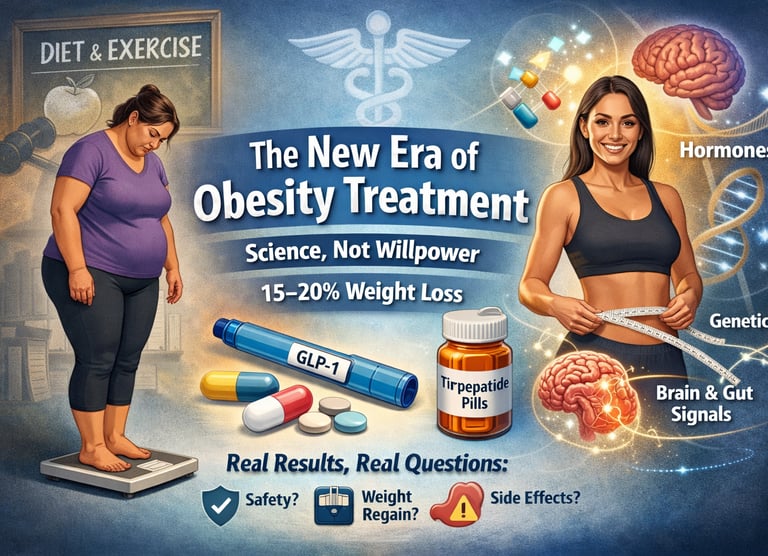
For decades, people living with obesity were told the same message: eat less, move more, try harder. When weight returned — as it often does — patients were blamed for a lack of willpower rather than offered medical treatment. But science has changed that narrative.
Today, a new generation of obesity medications — including GLP-1 receptor agonists like semaglutide and dual-agonist therapies like tirzepatide — are helping patients lose 15–20% of their body weight, results once achievable mainly through bariatric surgery (Henderson et al., 2024; Kim & Kim, 2025). These weight-loss medications work by targeting biological pathways that regulate appetite, insulin, and metabolism — not by simply “suppressing hunger,” but by recalibrating the body’s energy balance systems (Lu et al., 2025).
This shift marks a turning point in anti-obesity pharmacotherapy. Obesity is now recognized as a chronic, biologically driven disease influenced by hormones, genetics, gut signaling, and brain reward pathways — not a personal failure (Ziyadeh et al., 2026). As a result, treatment is evolving beyond diet advice toward evidence-based medical care.
At the same time, patients understandably have questions. Are these drugs safe long-term? Will the weight return if treatment stops? What about side effects like nausea, muscle loss, or rare complications? Large real-world studies are now helping doctors better understand both the benefits and risks of these therapies (Guglielmi, 2025).
We are entering a new era of obesity treatment — one grounded in science, guided by safety, and increasingly tailored to individual biology
Clinical pearls
1. The "Chronic Disease" Reality
Obesity pharmacotherapy must be viewed through a chronic disease management lens rather than a short-term intervention. Clinical data (STEP-4 and SURMOUNT-4 trials) confirm that GLP-1 and dual-agonist withdrawal leads to a rapid reversal of metabolic adaptations, resulting in significant weight regain and loss of glycemic improvements.
These medications are more like high-blood-pressure pills than an antibiotic. They don't "cure" obesity; they manage it. If you stop taking them, the biological "hunger signals" that the drug was keeping quiet will likely come back, and most people find the weight returns.
2. Guarding Lean Body Mass (LBM)
Rapid weight loss induced by potent incretin mimetics can result in a disproportionate loss of skeletal muscle mass (up to 25–40% of total weight lost). Clinicians should prioritize a high-protein diet 1.2 to 1.5 g/kg of ideal body weight) and structured resistance training to mitigate the risk of sarcopenic obesity.
When you lose weight very quickly on these shots, your body can accidentally burn muscle instead of just fat. To keep your metabolism strong and stay functional, it is vital to eat plenty of protein and do some form of strength training (like lifting weights or using resistance bands) while on the medication.
3. The "Slow and Low" Titration Strategy
Gastrointestinal (GI) adverse events—nausea, emesis, and delayed gastric emptying—are dose-dependent and most prevalent during the escalation phase. Utilising a "start low, go slow" titration schedule improves long-term adherence and reduces the risk of acute gallbladder disease or gastroparesis.
Your body needs time to get used to these hormones. Starting at a tiny dose and increasing it slowly over several months is the best way to avoid the "nasty" side effects like nausea or stomach cramps. Patience in the beginning leads to better success in the long run.
4. Beyond the Scale: Cardiometabolic Value
Weight loss is a proxy for the broader systemic benefits of GLP-1/GIP therapies. These agents provide independent nephroprotection, reduction in MACE (Major Adverse Cardiovascular Events), and improvement in NAFLD/MASH (liver disease) markers, often exceeding what would be expected from weight loss alone.
Don't just look at the number on the scale. These drugs are doing "invisible work" inside your body—lowering your risk of heart attacks, protecting your kidneys, and cleaning up fat in your liver. Even if the weight loss slows down, your internal health is still getting a major upgrade.
5. Precision Medicine and Non-Responders
There is significant inter-individual variability in drug response based on metabolic phenotypes (e.g., "Hungry Brain" vs. "Hungry Gut"). Approximately 10–15% of patients may be "non-responders" to a specific molecule. Identifying these patients early allows for a pivot to different pathways, such as triple agonists or amylin analogues.
Biology isn't one-size-fits-all. Just because a friend lost 50 pounds on one drug doesn't mean your body will react the same way. If one medication isn't working for you after a few months, don't lose hope—there are different types of "hormone recipes" in development that might be a better fit for your specific biology.
The Current Frontrunners: GLP-1 and Dual-Agonist Therapies
The story of modern obesity pharmacotherapy begins — and for now, largely continues — with glucagon-like peptide-1 (GLP-1) receptor agonists. These drugs, which mimic the action of a naturally occurring gut hormone that regulates appetite and insulin secretion, have demonstrated weight-loss outcomes once thought impossible outside of bariatric surgery.
Semaglutide (marketed as Wegovy for obesity and Ozempic for diabetes) has become the landmark molecule of this era. Clinical trials have shown that weekly subcutaneous injections can produce mean body weight reductions of 15–17%, a figure that fundamentally challenged existing assumptions about pharmacologically achievable weight loss. Tirzepatide (Zepbound/Mounjaro), which targets both GLP-1 and glucose-dependent insulinotropic polypeptide (GIP) receptors, has pushed even further, with trials demonstrating reductions exceeding 20% in some populations (Kim & Kim, 2025).
Henderson et al. (2024), in their landmark BMJ review of the effectiveness and safety of obesity drugs, provide an essential clinical lens on this transformation. Their analysis confirms that GLP-1 receptor agonists represent the most effective pharmacological options currently available, outperforming older agents like orlistat, phentermine-topiramate, and naltrexone-bupropion on both weight-loss magnitude and cardiometabolic outcomes. Crucially, the BMJ review also underscores that the benefits extend beyond weight reduction — these agents reduce blood pressure, improve glycemic control, and, in the case of semaglutide, have demonstrated cardiovascular mortality benefit in people with established cardiovascular disease.
Ziyadeh et al. (2026), writing in the Cleveland Clinic Journal of Medicine, offer one of the most clinically actionable overviews of current and emerging antiobesity options for adult patients. Their update notes that both semaglutide and tirzepatide are now FDA-approved specifically for chronic weight management in adults with obesity or overweight plus at least one weight-related comorbidity, marking a regulatory turning point in how obesity is formally treated as a medical disease. They also detail the growing importance of patient selection, contraindications (including a personal or family history of medullary thyroid carcinoma), and long-term adherence strategies, emphasizing that these medications require ongoing use to sustain their effects — discontinuation typically results in substantial weight regain.
Understanding the Mechanisms: Why These Drugs Work
Lu et al. (2025), in their comprehensive review published in the European Journal of Pharmacology, provide one of the most detailed mechanistic accounts available of how current and emerging obesity drugs operate at the molecular level. Their analysis covers the full spectrum of pharmacological targets — from well-established pathways to novel mechanisms being investigated in early-phase trials.
GLP-1 receptor agonists work principally through central and peripheral mechanisms: they suppress appetite by acting on hypothalamic neurons, slow gastric emptying to enhance satiety, and modulate the mesolimbic reward system to reduce hedonic eating. The dual GLP-1/GIP agonism of tirzepatide adds further metabolic benefit through enhanced insulin sensitivity and adipose tissue remodeling. Emerging triple agonists — targeting GLP-1, GIP, and glucagon receptors simultaneously — are now in advanced development, with retatrutide showing particularly striking results in early trials, including weight reductions approaching 25% (Lu et al., 2025).
Kim and Kim (2025) complement this mechanistic picture with a thorough clinical trials overview, parsing efficacy data and adverse effect profiles across drug classes with precision. Their Biomolecules & Therapeutics paper is especially useful for understanding the clinical translation of these mechanisms — how molecular targets map onto outcomes like body weight, waist circumference, blood glucose, lipid profiles, and quality of life. They also highlight the importance of combination strategies, noting that pairing pharmacotherapy with structured lifestyle interventions consistently produces superior and more durable outcomes than medication alone.
The Pipeline: Dozens of New Drugs Are Coming
If current GLP-1 therapies seem revolutionary, the next wave of obesity drugs may be even more transformative. Dolgin (2025), writing in Nature, reports that there are now dozens of new obesity drug candidates in various stages of development — a scale of pharmaceutical investment the field has never previously seen.
Among the most closely watched candidates are:
Oral GLP-1 agonists. Injectable medications have proven highly effective, but many patients prefer or require oral administration. Oral semaglutide is already approved for type 2 diabetes, and oral formulations for obesity are advancing in trials. Orforglipron, a small-molecule oral GLP-1 receptor agonist, is generating particular excitement, with Phase 3 data expected imminently (Dolgin, 2025).
Triple agonists (GLP-1/GIP/glucagon). Retatrutide, developed by Eli Lilly, sits at the forefront of this class. Phase 2 data showed average weight loss of approximately 24% over 48 weeks — a figure that rivals bariatric surgery outcomes in some cohorts. Phase 3 trials are ongoing.
Amylin analogs and co-agonists. Cagrilintide, an amylin analog, is being developed in combination with semaglutide (as CagriSema). Amylin works synergistically with GLP-1 to regulate satiety through complementary neural pathways, and early trial data suggest the combination may achieve greater weight loss than semaglutide alone.
Myostatin and activin inhibitors. These represent a genuinely novel approach: rather than focusing purely on fat reduction, they aim to preserve or build lean muscle mass during weight loss — addressing one of the most clinically significant concerns about GLP-1 therapy, namely the loss of muscle alongside fat. Bimagrumab is among the candidates in this emerging class (Dolgin, 2025).
Gut-hormone combinations and engineered peptides. Researchers are experimenting with increasingly sophisticated multi-target peptides designed to hit multiple obesity-related pathways simultaneously, potentially achieving superior efficacy with more targeted side effect profiles than current agents.
Ziyadeh et al. (2026) note that this pipeline activity reflects a broader shift: obesity is now widely recognized by pharmaceutical developers, regulatory agencies, and payers as a serious, chronic, biologically-driven disease — not a lifestyle failure — and that recognition is accelerating both research investment and clinical uptake.
The Safety Picture: New Evidence on Real-World Risks
No drug class of this scale and rapid adoption comes without questions about safety, and the obesity pharmacotherapy field is no exception. Guglielmi (2025), reporting in Nature on a large-scale real-world study, highlights newly identified health risks associated with GLP-1 receptor agonists that clinicians and patients should be aware of.
The study — one of the largest real-world analyses of GLP-1 drug outcomes to date — found that while these medications are associated with significant benefits across a range of cardiometabolic outcomes, they are also associated with elevated risks for certain adverse events. These include a higher incidence of gastrointestinal side effects (nausea, vomiting, diarrhea, and constipation are the most commonly reported), as well as rarer but more serious concerns such as gastroparesis, pancreatitis, and — in cases where patients have specific genetic susceptibilities — thyroid C-cell tumors. The study also reported associations with vision-related complications, including non-arteritic anterior ischemic optic neuropathy in some patients.
These findings are not cause for alarm, but they are cause for careful, individualized clinical decision-making. Henderson et al. (2024) contextualize the safety data effectively in their BMJ analysis, noting that the cardiovascular and metabolic benefits of these drugs generally outweigh the risks for high-risk populations, but that risk stratification, informed consent, and ongoing monitoring remain essential components of responsible prescribing.
Kim and Kim (2025) add important nuance by comparing safety profiles across drug classes. Older obesity medications — including phentermine-topiramate and naltrexone-bupropion — carry their own distinct risk profiles, including cardiovascular concerns, psychiatric side effects, and teratogenicity. The newer GLP-1 and dual-agonist therapies generally compare favorably on safety, though the long-term evidence base is still maturing, given their relatively recent widespread adoption.
Lu et al. (2025) also address the challenge of muscle loss, a concern gaining traction in both research and public discourse. Because GLP-1 drugs produce rapid, substantial weight loss, a significant portion of that loss can come from lean mass rather than fat alone — a pattern that has implications for metabolic health, functional capacity, and long-term weight maintenance. This finding is driving research into combination strategies, including resistance exercise protocols and, potentially, the muscle-sparing pharmacological agents described above.
Data Insight: Weight Regain & Demographics
The Regain Reality: In the STEP-4 trial, patients who stopped semaglutide after 20 weeks regained 11.6% of their body weight back within a year, while those who stayed on it lost an additional 6.7%.
Demographic Efficacy: Research suggests that while GLP-1s are effective across all groups, certain trials (like SURMOUNT-1) showed that Non-Hispanic White and Asian participants sometimes reached target weight loss percentages slightly faster than Black/African American participants, though all groups achieved clinically significant health benefits (over 15% loss).
The Obesity Drug Revolution: Key Points
1️⃣ Obesity Is Finally Being Treated as Biology — Not Behavior
For decades, obesity was framed as a lifestyle failure. Patients were told to “eat less and move more,” as if appetite regulation were purely voluntary. Modern science has dismantled that narrative. Obesity is a complex, chronic, biologically regulated disease driven by neurohormonal signaling, genetic susceptibility, metabolic adaptation, and environmental inputs. The rise of GLP-1–based therapies marks the formal medical acknowledgement of that reality.
2️⃣ The Magnitude of Weight Loss Has Redefined Expectations
With the advent of GLP-1 receptor agonists such as Semaglutide and dual agonists like Tirzepatide, mean weight reductions of 15–20% are now achievable in clinical trials. These outcomes approach the lower spectrum of bariatric surgery — a benchmark that, until recently, pharmacotherapy could not realistically touch. This is not cosmetic weight loss. It is a metabolically transformative reduction capable of reversing prediabetes, lowering blood pressure, and reducing cardiovascular risk.
3️⃣ Mechanism Matters: Appetite Is Regulated, Not Weak
These medications recalibrate appetite pathways in the hypothalamus, modulate gut-brain signaling, slow gastric emptying, and influence reward circuits that drive hedonic eating. The implication is profound: body weight is defended biologically. When we understand obesity as a disorder of energy regulation rather than moral discipline, treatment shifts from blame to physiology.
4️⃣ The Pipeline Signals a Pharmaceutical Arms Race
Emerging therapies, including triple agonists like Retatrutide and muscle-preserving strategies such as Bimagrumab, suggest that today’s results may only be the beginning. Oral GLP-1 agents, amylin co-agonists, and multi-receptor engineered peptides are advancing rapidly. The pharmaceutical investment scale reflects a paradigm shift: obesity is now recognized as a central driver of global morbidity.
5️⃣ Safety Requires Nuance, Not Fear
Widespread adoption has raised legitimate safety questions. Gastrointestinal side effects are common; rare complications such as pancreatitis or severe gastroparesis warrant vigilance. Long-term data continue to mature. Yet, risk must be contextualized. For patients with severe obesity and cardiometabolic disease, the benefit-to-risk ratio remains strongly favorable. Responsible prescribing — with screening, monitoring, and patient education — is the cornerstone of ethical implementation.
6️⃣ Muscle Loss Is the Next Frontier
Rapid weight reduction can include lean mass decline. This introduces new clinical priorities: resistance training integration, protein optimization, and potential co-therapies designed to preserve muscle. Future obesity care will not focus solely on fat reduction but on body composition quality.
7️⃣ Access Is the Moral Test of This Revolution
Scientific progress means little without equitable distribution. The high cost of GLP-1–based therapies risks widening health disparities. Obesity disproportionately affects lower-income populations, yet these therapies remain financially inaccessible for many. Policy reform, insurance coverage expansion, and biosimilar development will determine whether this revolution benefits populations or merely privileged individuals.
8️⃣ The Future Is Precision Medicine
The next era will integrate genetics, metabolic phenotyping, microbiome data, and digital biomarkers to individualize therapy. Not every patient responds equally. Matching biology to pharmacology represents the logical next step.
We are witnessing one of the most consequential therapeutic shifts in metabolic medicine. Obesity pharmacotherapy has moved from marginal efficacy to biologically targeted, clinically meaningful intervention. The challenge now is not whether these drugs work. It is how wisely, safely, and equitably we choose to use them.
Frequently Asked Questions (FAQs)
1. What are the most effective obesity drugs currently available? Based on current clinical trial data and real-world evidence, tirzepatide (a dual GLP-1/GIP agonist) and semaglutide (a GLP-1 receptor agonist) are the most effective FDA-approved pharmacotherapies for obesity, with tirzepatide demonstrating slightly greater average weight loss in head-to-head and independent trials (Kim & Kim, 2025; Ziyadeh et al., 2026).
2. Are GLP-1 obesity drugs safe for long-term use? Current evidence supports their safety for long-term use in appropriate patients, but real-world data have identified risks including gastrointestinal complications, rare cases of pancreatitis, and potential vision-related adverse events (Guglielmi, 2025). Long-term safety monitoring remains ongoing, and clinical decision-making should involve individualized risk-benefit assessment (Henderson et al., 2024).
3. Will I regain weight if I stop taking obesity medications? Yes — research consistently shows that discontinuing GLP-1 receptor agonists leads to significant weight regain, typically returning toward baseline over 12–52 weeks. This underscores the chronic disease model of obesity treatment; these drugs work while being taken but do not induce permanent physiological change (Ziyadeh et al., 2026).
4. What new obesity drugs are coming in the near future? The pipeline includes oral GLP-1 agonists (e.g., orforglipron), triple agonists targeting GLP-1, GIP, and glucagon (e.g., retatrutide), amylin co-agonists (e.g., CagriSema), and muscle-preserving agents targeting myostatin pathways (Dolgin, 2025). Several are already in Phase 3 trials with data expected in 2025–2026.
5. Do obesity drugs work the same for everyone? No. Response to pharmacotherapy varies significantly based on genetics, metabolic phenotype, gut microbiome composition, comorbidities, and behavioral factors. This variability is driving research into precision medicine approaches that match patients to the most suitable agent for their individual biology (Lu et al., 2025).
6. What is the difference between semaglutide and tirzepatide? Semaglutide acts on a single receptor (GLP-1), while tirzepatide is a dual agonist targeting both GLP-1 and GIP receptors. Both produce significant weight loss and cardiometabolic improvement, but tirzepatide's dual mechanism generally yields slightly greater weight reduction, averaging over 20% in some trials compared to 15–17% with semaglutide (Kim & Kim, 2025).
7. Can obesity drugs cause muscle loss? This is an active area of concern. Rapid weight loss from GLP-1 therapies can include loss of lean muscle mass alongside fat tissue, which may have implications for long-term metabolic health and functional strength. Clinicians increasingly recommend resistance exercise alongside pharmacotherapy, and new drug candidates are being specifically designed to preserve or build lean mass during weight loss (Dolgin, 2025; Lu et al., 2025).
Author’s Note
As a clinician in internal medicine, I have watched the conversation around obesity evolve — sometimes slowly, sometimes uncomfortably — from moral judgment to metabolic science. For years, patients sat across from us carrying not only excess weight, but also stigma. Many had tried structured diets, supervised exercise programs, behavioral therapy, and even older pharmacologic agents with modest or unsustained results. The frustration was palpable — for patients and physicians alike.
The emergence of GLP-1 receptor agonists and newer dual- and triple-agonist therapies represents more than a pharmaceutical milestone. It represents a conceptual correction. We now understand that appetite regulation, energy expenditure, adipose signaling, and reward circuitry are biologically governed systems. When these systems are dysregulated, sustained weight loss becomes physiologically difficult — not psychologically weak.
That said, scientific enthusiasm must be balanced with clinical responsibility. These therapies are powerful tools, not shortcuts. They require thoughtful patient selection, ongoing monitoring, lifestyle integration, and honest discussion of risks and limitations. Long-term data are still evolving. Muscle preservation, access inequities, and cost remain pressing challenges.
In writing this piece, my goal was not to promote a specific drug but to clarify the science behind a rapidly transforming field. Obesity is a chronic, relapsing metabolic disease. It deserves the same evidence-based rigor, therapeutic nuance, and patient-centred respect that we extend to hypertension, diabetes, or cardiovascular disease.
We are at the beginning of a new era — but how responsibly we navigate it will define its true impact.
Disclaimer: This article is for informational purposes only and does not constitute medical advice. Individual circumstances vary, and treatment decisions should always be made in consultation with qualified healthcare professionals.
Related Articles
GLP-1 Receptor Agonists and Cardiovascular Protection: Evidence from CVOT Trials Explained
Is Your Muscle Insulin Resistant? 2026 Update | DR T S DIDWAL
Activate Your Brown Fat: A New Pathway to Longevity and Metabolic Health | DR T S DIDWAL
Leptin vs. Adiponectin: How Your Fat Hormones Control Weight and Metabolic Health | DR T S DIDWAL
Lower Blood Pressure Naturally: Evidence-Based Exercise Guide for Metabolic Syndrome | DR T S DIDWAL
Movement Snacks: How VILPA Delivers Max Health Benefits in Minutes | DR T S DIDWAL
The BMI Paradox: Why "Normal Weight" People Still Get High Blood Pressure | DR T S DIDWAL
References
Dolgin, E. (2025, February 12). Dozens of new obesity drugs are coming: These are the ones to watch. Nature, 638(8050), 308–310. https://doi.org/10.1038/d41586-025-00404-9
Guglielmi, G. (2025, January 20). Obesity drugs: Huge study identifies new health risks. Nature, 637(8048), 1034. https://doi.org/10.1038/d41586-025-00173-5
Henderson, K., Lewis, Sloan, C. E., Bessesen, D. H., & Arterburn, D. (2024). Effectiveness and safety of drugs for obesity. BMJ (Clinical Research Ed.), 384, e072686. https://doi.org/10.1136/bmj-2022-072686
Kim, M. K., & Kim, H. S. (2025). An overview of existing and emerging weight-loss drugs to target obesity-related complications: Insights from clinical trials. Biomolecules & Therapeutics, 33(1), 5–17. https://doi.org/10.4062/biomolther.2024.228
Lu, J., Liu, P., Cai, M., Lv, T., Zhang, M., Yin, K., Cheng, J., & Zhang, G. (2025). Recent progress in the pharmacotherapy for obesity. European Journal of Pharmacology, 1002, Article 177850. https://doi.org/10.1016/j.ejphar.2025.177850
Ziyadeh, F., Saliba, S., Salih Bacha, D., Mauer, Y., Griebeler, M. L., & Burguera, B. (2026). Update on antiobesity pharmacotherapy in adults: Current and emerging options. Cleveland Clinic Journal of Medicine, 93(1), 36–46. https://doi.org/10.3949/ccjm.93a.24112