Statin Therapy and Dementia Risk: A Critical Review of Current Evidence
Statins and dementia explained. Discover what recent research says about memory loss, cognitive decline, and long-term brain health.
AGING
Dr. T.S. Didwal, M.D.(Internal Medicine)
2/12/202614 min read
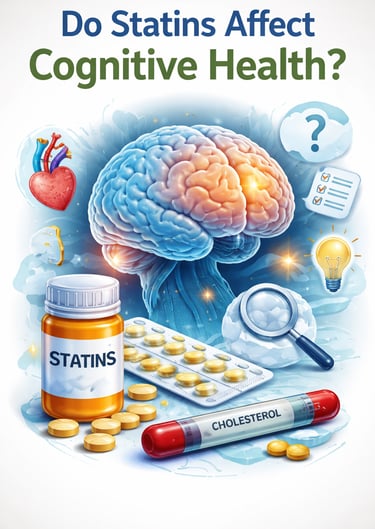
Statins are among the most extensively studied and widely prescribed medications in modern medicine, with hundreds of millions of prescriptions written annually to reduce cardiovascular morbidity and mortality. Their benefits in lowering low-density lipoprotein cholesterol (LDL-C) and preventing myocardial infarction and stroke are unequivocal. Yet despite this robust evidence base, few drug classes have generated as much patient anxiety as statins—particularly around their alleged effects on memory and cognition. Reports of “brain fog,” forgetfulness, and difficulty concentrating have become common in clinical practice, prompting some patients to discontinue therapy out of fear that cholesterol-lowering medications may be harming their brains.
These concerns are not trivial. The brain contains approximately one-quarter of the body’s total cholesterol, a molecule essential for synapse formation, myelin integrity, and neuronal signaling. The theoretical possibility that cholesterol-lowering drugs could impair cognitive function has therefore captured both public attention and scientific scrutiny. In response, regulatory agencies, including the U.S. Food and Drug Administration, have issued cautionary statements, further amplifying patient apprehension—often without clear context regarding the strength or consistency of the underlying evidence.
Over the past decade, however, this question has been rigorously examined through large observational cohorts, randomized controlled trials, and multiple high-quality systematic reviews and meta-analyses. Collectively, these investigations challenge the narrative that statins cause cognitive harm and instead suggest a far more reassuring—and potentially protective—relationship between statin therapy and brain health (Kazibwe et al., 2024; Reddin et al., 2025). Some studies even propose that by reducing vascular injury and improving cerebral perfusion, statins may lower the risk of dementia, particularly vascular cognitive impairment (Li et al., 2026).
This review critically examines the latest evidence to answer a question that matters deeply to patients and clinicians alike: do statins impair cognitive function, or does the science tell a very different story?
Clinical pearls
1. The Subjective-Objective Dissociation
Clinicians should distinguish between subjective cognitive complaints (SCC) and objective cognitive impairment. Meta-analyses indicate that while patients may report "brain fog," standardized neuropsychological batteries consistently fail to demonstrate measurable deficits in memory or executive function.
There is a "mismatch" between how people feel and how they test. You might feel a bit forgetful or "foggy," but when doctors use scientific tests to measure your memory and focus, people on statins perform just as well as those who aren't taking them.
2. The Nocebo Phenomenon
The "statin-associated cognitive side effect" may be largely driven by the nocebo effect. Extensive media coverage and patient labeling create negative expectations, leading patients to attribute age-related cognitive lapses or symptoms of comorbidities to their lipid-lowering therapy.
Sometimes, just knowing that a "possible side effect" exists makes us more likely to notice it. If you expect a pill to cause memory issues, you might blame the pill for a normal "senior moment" or a busy day, even if the medicine isn't actually causing it.
3. Preservation of Neural Cholesterol
Despite systemic LDL reduction, the brain’s cholesterol homeostasis remains largely autonomous. The blood-brain barrier (BBB) limits the transport of systemic cholesterol, and the brain relies on de novo synthesis by astrocytes. Therefore, lowering circulating lipids does not inherently "starve" the brain of structural cholesterol.
Your brain is a bit of a "walled city." It makes its own cholesterol and doesn't rely on the cholesterol floating in your blood. Taking a statin lowers the "bad" cholesterol in your arteries (which is good for your heart), but it doesn't "drain" the cholesterol your brain needs to function.
Shutterstock
4. Vascular Neuroprotection
Statins may provide a secondary neuroprotective benefit by mitigating vascular risk factors. By reducing the incidence of microvascular disease and silent lacunar infarcts, statin therapy may actually lower the long-term risk of vascular dementia.
What’s good for the heart is good for the brain. Statins keep your blood vessels clean and flexible. By preventing tiny "mini-strokes" and keeping blood flowing smoothly to your brain, these medications may actually help protect you from certain types of dementia as you age.
5. Lipophilicity vs. Hydrophilicity
While the "class effect" on cognition is neutral, individual variation may exist based on a statin's lipophilicity. Lipophilic statins (e.g., Simvastatin) cross the BBB more readily than hydrophilic ones (e.g., Pravastatin). If a patient reports persistent neurocognitive symptoms, switching to a hydrophilic agent is a reasonable clinical trial.
Not all statins are the same. Some can enter the brain more easily than others. If you truly feel that a specific statin is affecting your mood or mind, your doctor can often switch you to a "water-soluble" version that stays out of the brain while still protecting your heart.
6. The Primacy of Cardiovascular Risk
The Absolute Risk Reduction (ARR) for major adverse cardiovascular events (MACE) provided by statins significantly outweighs the statistically insignificant risk of cognitive decline. Discontinuation of therapy based on cognitive fears is generally clinically contraindicated in high-risk patients.
The benefits of preventing a heart attack or stroke are much higher than the very tiny (and unproven) risk of memory issues. Stopping your medication without a doctor's help could put your heart at risk for a problem that is much more dangerous than the "brain fog" you might be worried about.
Do Statins Affect Cognitive Health? A Comprehensive Review of the Latest Research Evidence
Statins are a class of medications that work by inhibiting an enzyme essential for cholesterol synthesis. By lowering LDL cholesterol (the "bad" cholesterol), statins reduce the risk of atherosclerosis, heart attack, and stroke. Common statins include atorvastatin, simvastatin, and rosuvastatin.
However, cholesterol isn't just a cardiovascular villain—it's also vital for brain function. The brain contains roughly 25% of the body's cholesterol, and this molecule plays crucial roles in:
Myelin formation (insulation around nerve fibers)
Synaptic plasticity (the ability of neurons to form new connections)
Neuroinflammation regulation (controlling immune responses in the brain)
Cognitive function (memory, learning, attention)
This brain-based chemistry led some researchers to hypothesize that cholesterol-lowering drugs might impair memory or other cognitive domains. But does the evidence support this concern? Let's examine what recent research reveals.
Overview of the Research Landscape
To properly understand the current evidence, it's helpful to know that most recent investigations use systematic review and meta-analysis methods. These approaches combine data from multiple studies to identify patterns and synthesize evidence at the highest level of scientific confidence. Six major studies have tackled this question recently, and their findings reveal a more reassuring picture than some patients might fear.
1. Kazibwe et al. (2024): Narrative Review and Critical Analysis
Kazibwe and colleagues conducted a comprehensive narrative review of the evidence linking statins to cognitive outcomes. Rather than pooling statistical data like a meta-analysis, the team critically evaluated and synthesized findings from multiple sources to answer whether statin use meaningfully affects brain health and neurocognitive function.
Key Findings:
This critical analysis revealed that while some patients report cognitive side effects—particularly memory loss and mental fog—the scientific evidence for a direct causal link remains limited. The authors emphasized the importance of distinguishing between:
Reported adverse effects (what patients describe)
Objectively measured cognitive decline (what testing reveals)
Association versus causation (correlation vs. cause-and-effect)
The review highlighted that many reported cognitive complaints associated with statin therapy lack objective evidence of impairment on neuropsychological testing. This distinction is crucial: patients may feel more forgetful while taking statins, but standardized cognitive assessments might not show measurable decline.
The authors also noted that individual variation in statin response is substantial, meaning some people may be more susceptible to cognitive effects than others.
2. Li et al. (2026): Systematic Review and Meta-Analysis
Li and colleagues performed a systematic review and meta-analysis examining how cholesterol-lowering drugs—particularly statins—affect neurocognitive function. They searched medical databases for randomized controlled trials and observational studies, extracting data on cognitive outcomes in statin users versus control groups.
Key Findings:
This analysis found no significant difference in cognitive function between people taking lipid-lowering therapy and those not taking these medications. The meta-analysis pooled results from multiple studies and found:
No increase in risk of dementia among statin users
No measurable decline in standard cognitive domains (memory, executive function, language)
No significant association between statin intensity (dose) and cognitive decline
Importantly, the study suggested that the cardiovascular benefits of statin therapy far outweigh any theoretical cognitive risks. In fact, by reducing cardiovascular disease risk, statins may actually protect the brain by preventing stroke and maintaining healthy blood flow.
3. Reddin et al. (2025): Lipid-Lowering Therapy and Dementia
This systematic review and meta-analysis, published in the prestigious journal Age and Ageing, specifically examined the relationship between lipid-lowering therapy and dementia risk in aging populations. The team analyzed studies investigating whether statin use associates with increased or decreased dementia incidence.
Key Findings:
Statin therapy was not associated with increased dementia risk
Some studies even suggested a potential protective effect of statins against cognitive decline and dementia
The association appeared particularly strong in studies with longer follow-up periods
This finding aligns with the protective cardiovascular effects of statins. Since vascular disease contributes significantly to cognitive decline and dementia (particularly vascular dementia), medications that improve cardiovascular health may secondarily protect brain function.
The authors emphasized that their evidence supports the cardiovascular benefits of lipid-lowering medications without raising serious cognitive safety concerns in older adults—a crucial message for an aging population.
4. Cordeiro Júnior et al. (2025): Statin Use and Cognitive Decline in Older Adults
Cordeiro Júnior et al. (2025) conducted a systematic review and meta-analysis specifically focused on older adults—the population most vulnerable to cognitive decline and most likely to take statins for cardiovascular protection. They examined whether statin use correlated with increased cognitive decline risk in this age group.
Key Findings:
No increased risk of cognitive decline associated with statin therapy in older adults
Cognitive function remained stable in statin users over follow-up periods
Some evidence suggested cognitive benefits in older adults taking statins, possibly due to improved cardiovascular health and cerebral blood flow
This finding is particularly important because older adults comprise the largest group taking statins. Many are concerned about medication side effects affecting their independence and mental sharpness. This research provides evidence that lipid-lowering therapy does not compromise—and may even support—cognitive health in this vulnerable population.
5. Mulchandani et al. (2025): Neuro-Cognitive Profile Study from Delhi
This clinical research study, conducted at a large tertiary care hospital in Delhi, India, directly assessed the neuro-cognitive profile of adult statin users. Rather than reviewing existing literature, the researchers evaluated patients currently taking statins, measuring their cognitive performance across multiple domains using standardized neuropsychological testing.
Key Findings:
Memory (short-term and long-term)
Executive function (planning, problem-solving)
Attention and concentration
Processing speed
Language function
Results showed that statin users performed comparably to control groups on standard cognitive assessments. The research found no significant neuro-cognitive impairment attributable to statin therapy. This direct clinical assessment adds important evidence, suggesting that despite patient concerns and anecdotal reports, objective cognitive testing doesn't reveal statin-related impairment in real-world clinical populations.
The study's geographic diversity also matters—findings from India support the generalizability of results across different populations and healthcare settings, strengthening confidence in the conclusions.
Synthesizing the Evidence: What Do All Six Studies Tell Us?
Consistent Finding #1: No Objective Cognitive Impairment
All studies, whether narrative reviews, meta-analyses, or direct clinical assessments, found no objective evidence that statins impair cognitive function. Standardized neuropsychological tests do not reveal cognitive decline in statin users.
Consistent Finding #2: Reported Side Effects vs. Measured Decline
Some patients report cognitive difficulties while taking statins, but this reported experience does not consistently correlate with objective cognitive impairment on testing. This disconnect raises important questions about:
Nocebo effect (expectation of harm causing perceived symptoms)
Natural cognitive aging (patients attributing age-related memory changes to medication)
Comorbid conditions (other health factors affecting cognition)
Individual genetic variation (some people metabolizing statins differently)
Consistent Finding #3: Potential Protective Effect
Multiple studies suggest statins may protect cognitive health by:
Reducing cardiovascular disease risk (preventing stroke)
Improving cerebral blood flow (maintaining oxygen delivery to brain)
Reducing neuroinflammation (lowering brain inflammation)
Managing vascular risk factors (which contribute to cognitive decline)
This protective mechanism may be particularly important for dementia prevention, especially vascular dementia.
Consistent Finding #4: Safety in Vulnerable Populations
Even in older adults—those most vulnerable to cognitive decline—statins show no measurable cognitive harm. This reassurance is crucial for patients and physicians considering cardiovascular protection.
Cholesterol, Brain Health, and Cardiovascular Risk Factors
It's worth noting that the relationship between cholesterol and brain health is more nuanced than "cholesterol is bad for the brain." Here's what research shows:
Very high cholesterol can contribute to atherosclerosis, which can lead to stroke and vascular cognitive impairment. However, cholesterol itself remains essential for brain structure and function. Statin medications reduce excess LDL cholesterol while preserving the cholesterol the brain needs—the liver and brain each independently manage their own cholesterol levels to some degree.
This biological sophistication helps explain why statin therapy doesn't impair cognition despite the brain's dependence on cholesterol: the body maintains brain cholesterol even as systemic cholesterol decreases.
Understanding Individual Variation in Statin Response
One important caveat: the evidence overwhelmingly supports statin safety for cognitive health, but individual responses do vary. Factors affecting statin metabolism and side effect risk include:
Genetic variations in drug-metabolizing enzymes (CYP3A4, others)
Age and liver function
Polypharmacy (taking multiple medications that interact)
Comorbid conditions (diabetes, thyroid disease, etc.)
Statin choice and dose
A small percentage of patients genuinely experience statin-related muscle pain, and some may experience other side effects. However, the six studies reviewed here collectively show that objective cognitive harm from statins is not supported by evidence, even in patients reporting subjective complaints.
Frequently Asked Questions (FAQs)
Q1: Should I stop taking my statin if I think it's affecting my memory?
A: No—don't discontinue medication without consulting your physician. If you experience new cognitive symptoms, discuss them with your doctor. Together, you can:
Rule out other causes (thyroid dysfunction, vitamin deficiency, depression, sleep disorders)
Consider whether your cognitive concerns correlate with medication start dates
Explore whether cognitive changes are objective (confirmed on testing) or subjective (felt but not measured)
Discuss potential medication adjustments if appropriate
The evidence strongly suggests statins are not the culprit, but individualized assessment is important.
Q2: Could my statin be causing memory problems?
A: It's unlikely based on current evidence. However, nocebo effects are real—if you expect a medication to harm cognition, you may attribute normal cognitive lapses to that medication. This is not a psychological weakness; it's a documented phenomenon. Multiple studies show that reported cognitive side effects often don't correlate with objective testing.
Q3: What cognitive domains might statins affect?
A: Based on the research, statins don't reliably affect any cognitive domains. Studies measuring memory, executive function, attention, language, and processing speed all show comparable performance between statin users and controls.
Q4: Are some statins worse for cognition than others?
A: The evidence doesn't clearly support differential cognitive effects among various statins. However, different statins have different pharmacokinetics and individual variation in response is real. If you experience persistent concerning symptoms with one statin, discussing alternatives with your physician is reasonable.
Q5: What about statin-related muscle pain (myalgia)?
A: This is a recognized, albeit uncommon, side effect—but it's distinct from cognitive effects. Muscle pain and cognitive problems are different phenomena. The research reviewed here specifically addresses cognition, not muscle symptoms.
Q6: Could statins prevent dementia?
A: This is plausible and supported by some research. By reducing cardiovascular disease and maintaining cerebral blood flow, statins may protect against vascular dementia and possibly other cognitive decline types. However, more research is needed to confirm this potential protective effect.
Q7: Should older adults take statins to protect their brains?
A: That's an individualized decision based on cardiovascular risk and preferences. The evidence clearly shows statins don't harm cognition in older adults and may provide cardiovascular benefits that indirectly support brain health. However, statin decisions should always involve shared decision-making with healthcare providers.
Key Takeaways: What You Should Know
Comprehensive evidence from six major research studies shows statins do not impair cognitive function in neuropsychological testing or objective cognitive assessments.
Patient-reported cognitive complaints are not correlated with measured cognitive decline in most cases, suggesting nocebo effects or attribution to medication of age-related cognitive changes.
Statins may actually protect cognition by reducing cardiovascular disease risk and maintaining cerebral blood flow, particularly helping prevent vascular dementia.
Older adults—the population most vulnerable to cognitive decline—show no cognitive harm from statin therapy, and some evidence suggests cognitive benefits.
Individual variation exists, but objective cognitive impairment from statins is not supported by evidence even in patients reporting subjective concerns.
The cardiovascular benefits of statin therapy substantially outweigh any theoretical cognitive risks—stopping statins to protect cognition is not supported by evidence.
If you experience new cognitive symptoms, work with your healthcare provider to investigate all potential causes rather than assuming medication is responsible.
What This Evidence Means for Your Health
For the millions taking statins daily, this research offers reassurance. Your medication is protecting your heart without harming your mind. While no medication is without individual variation, the collective evidence from these six major studies—including systematic reviews and meta-analyses, clinical assessments, and narrative reviews—provides strong confidence that statins don't compromise cognitive health.
That said, if you're experiencing genuine cognitive concerns, they deserve investigation. Multiple conditions can affect memory and cognitive function, including thyroid disease, vitamin B12 deficiency, depression, sleep disorders, and others. A thorough medical evaluation can identify the true cause and guide appropriate treatment.
The research also suggests an exciting possibility: statins may offer cognitive protection through their cardiovascular benefits. As we better understand the connections between heart health and brain health, medications that improve one may support the other.
Call to Action: Protect Your Cognitive Health
1. Keep Taking Your Prescribed Statin unless your physician advises otherwise. The cardiovascular benefits are well-established and cognitive safety is demonstrated.
2. Address Cognitive Concerns Appropriately by discussing them with your doctor rather than self-discontinuing medication. Together, you'll investigate the actual cause.
3. Maintain Brain Health Through Lifestyle by:
Exercising regularly (proven to support cognitive function)
Eating a heart-healthy diet (which also supports brain health)
Getting adequate sleep
Staying socially and mentally active
Managing stress
Controlling cardiovascular risk factors (blood pressure, cholesterol, blood sugar)
4. Stay Informed about your health by reading evidence-based information like this review, consulting reputable medical sources, and having regular conversations with your healthcare team.
5. Report Genuine Side Effects to your physician—if you experience objective cognitive changes, muscle pain, or other concerning symptoms, they should be evaluated and documented.
Author’s Note
This article was written to address persistent concerns among patients and clinicians regarding the potential cognitive effects of statin therapy. Despite the widespread use of statins and their well-established cardiovascular benefits, misconceptions surrounding memory loss and cognitive impairment continue to influence medication adherence and clinical decision-making. The goal of this review is to clarify the evidence by synthesizing findings from recent narrative reviews, systematic reviews, meta-analyses, and clinical assessments, with emphasis on objective neuropsychological outcomes rather than anecdotal reports.
The interpretation of the data presented reflects current peer-reviewed literature at the time of writing. While the preponderance of evidence indicates that statins do not impair cognitive function and may confer neuroprotective benefits through vascular risk reduction, individual patient responses can vary. Clinicians are encouraged to apply these findings within the context of personalized care, shared decision-making, and ongoing clinical evaluation.
This article is intended for educational purposes and should not be interpreted as a substitute for individualized medical advice. Patients experiencing cognitive concerns while receiving statin therapy should consult their healthcare provider to explore alternative explanations, confirm objective findings when appropriate, and determine the most suitable course of action.
Ongoing research will continue to refine our understanding of the relationship between lipid metabolism, vascular health, and cognitive aging, and future updates may be warranted as new evidence emerges.
Disclaimer: This article is for educational purposes only and should not be considered medical advice. Always consult with your healthcare provider before starting, stopping, or changing any medication. Individual responses to statin therapy vary, and treatment decisions should be personalized based on your unique health circumstances, risk factors, and medical history.
Related Articles
Uric Acid and Cardiovascular Aging: An Emerging Link in Metabolic Health | DR T S DIDWAL
How Exercise Lowers LDL and Raises HDL: A Science-Backed Plan for Heart Health | DR T S DIDWAL
Your Body Fat Is an Endocrine Organ—And Its Hormones Shape Your Heart Health | DR T S DIDWAL
hsCRP Explained: What Inflammation Means for Your Heart | DR T S DIDWAL
What’s New in the 2025 Blood Pressure Guidelines? A Complete Scientific Breakdown | DR T S DIDWAL
References
Cordeiro Júnior, C. W. L., Lobo, V. S., Freres, S. C., Severo-Santos, J. F., Dorneles Ferraz, M. E., dos Santos, J., Passos Pinto, C. J., & Silvestre, R. A. (2025). Statin use and risk of cognitive decline in older adults: Evidence from a systematic review and meta-analysis. Journal of Advances in Medicine and Medical Research, 37(11), 364–379. https://doi.org/10.9734/jammr/2025/v37i115991
Kazibwe, R., Rikhi, R., Mirzai, S., Ashburn, N. P., Schaich, C. L., & Shapiro, M. (2024). Do statins affect cognitive health? A narrative review and critical analysis of the evidence. Current Atherosclerosis Reports, 27(1), 2. https://doi.org/10.1007/s11883-024-01255-x
Li, K., Li, Y., Jiang, X., & Zhu, Y. (2026). The effects of cholesterol-lowering drugs on neurocognitive function: Systematic review and meta-analysis. Frontiers in Neurology, 17, Article 1696228. https://doi.org/10.3389/fneur.2026.1696228
Mulchandani R, Kakkar AK, Gandotra S, Isser H, Dhamija RK, Lyngdoh T. (2025). Neuro-cognitive profile of adult statin users at a large tertiary care hospital in Delhi, India. JRSM Cardiovascular Disease, 14. https://doi.org/10.1177/20480040251371770
Reddin, C., Stankard, A., Chan, K. Y., Krewer, F., Judge, C., Canavan, M., Davis, D. H. J., & O'Donnell, M. (2025). Association of lipid-lowering therapy with dementia and cognitive outcomes: a systematic review and meta-analysis. Age and Ageing, 54(8), afaf219. https://doi.org/10.1093/ageing/afaf219