Rethinking Dietary Fat Through a Longevity Lens: Mitochondria, Autophagy, and Aging
Discover how dietary fat affects mitochondrial health, autophagy, inflammation, and biological aging — and what emerging longevity science reveals about cellular repair.
NUTRITIONAGING
Dr. T.S. Didwal, M.D.(Internal Medicine)
5/24/202629 min read
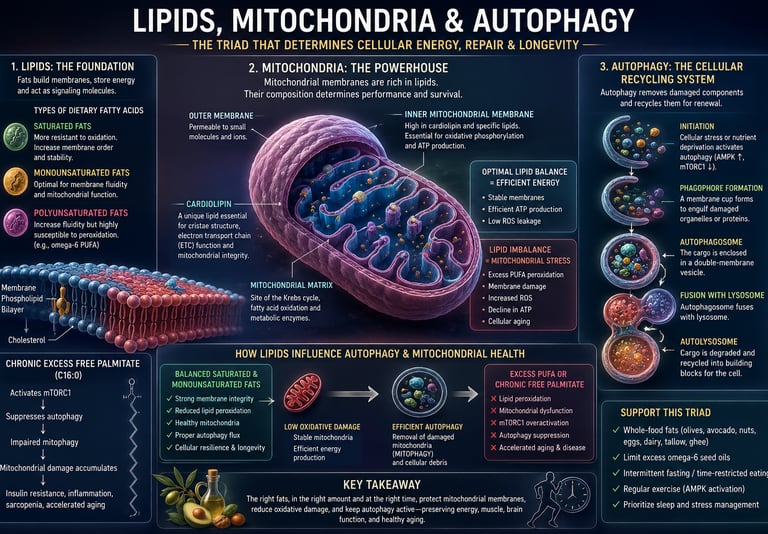
Modern longevity science reveals that aging is fundamentally driven by the progressive breakdown of internal cellular maintenance networks, rather than simple wear and tear over time (Levine & Kroemer, 2019). Central to this process is how specific dietary fats interact with the inner mitochondrial membrane (IMM) and cellular signaling pathways.
While polyunsaturated fatty acids (PUFAs) maintain necessary membrane flexibility, they are highly fragile. In ageing environments with depleted antioxidant defences, PUFAs undergo a self-amplifying process called lipid peroxidation, producing cytotoxic byproducts such as 4-HNE that directly poison mitochondrial energy production (Guimarães Cunha et al., 2024).
Conversely, an overload of long-chain saturated fats, such as palmitic acid, can cause excessive IMM rigidity, which slows mitochondrial worker proteins and triggers free radical leakage (Manzanero-Ortiz et al., 2023)
Beyond structural changes, excess free palmitate acts as a false nutrient sensor. It drives a destructive signaling cascade that locks the master growth switch, mTORC1, to the "ON" position (Zhao et al., 2024) This blockade completely stalls autophagy—the cell's vital waste-clearance system (Nguyen et al., 2025). When autophagy stalls in high-turnover tissues like skeletal muscle, damaged mitochondria rupture, leaking genetic material that sparks severe auto-inflammation and drives age-related muscle wasting, or sarcopenia (Rahman et al., 2025).
To combat this, strategic incorporation of monounsaturated fats like oleic oil protects muscle mass , while time-controlled fasting windows restore proper autophagic recycling rhythms to shield the body from dietary fat overload (Tassone et al., 2018; (Vergara Nieto et al., 2025).
Finding the Longevity Sweet Spot
When it comes to healthy aging and metabolic health, it’s all about balance. Your body needs a precise mix of different fats to maintain stable, fluid cell membranes while keeping its internal recycling systems running at peak performance.
By understanding how nutrition directly communicates with your cells, we can move away from old-school dieting mentalities and start eating for true, long-term longevity.
Clinical Pearls: Saturated Fat, Autophagy & Mitochondrial Health
1. Saturated fats can protect cell membranes — but context is everything.
Saturated fatty acids are chemically resistant to lipid peroxidation, providing structural stability to cell and mitochondrial membranes in aging tissues exposed to oxidative stress. When consumed in whole foods (like eggs, dairy, or unprocessed meat) by metabolically healthy individuals, they support membrane integrity. However, chronically elevated free palmitic acid (C16:0) in the bloodstream — common in insulin resistance — activates mTORC1 and suppresses autophagy.
2. The overnight fasting window is your most powerful tool for restoring autophagy.
A consistent 14–16 hour overnight fast (e.g., finishing dinner by 7 PM and eating again at 9–11 AM) lowers mTORC1 activity, allowing robust autophagic recycling of damaged cellular components. Consuming any significant fat — even “healthy” fats — during this window can blunt these benefits by providing palmitate signals that keep mTORC1 active.
3. Mitochondrial membrane fluidity follows the Goldilocks principle.
Your inner mitochondrial membrane needs the right balance: too rigid (excess long-chain saturated fats) impairs energy production and electron transport; too fluid (excess PUFAs) increases destructive lipid peroxidation. Optimal fluidity is supported by monounsaturated fats like oleic acid (from extra-virgin olive oil and avocado) alongside moderate saturated fats and linoleic acid-enriched cardiolipin.
4. Not all saturated fats behave the same way inside your cells.
While palmitic acid (C16:0) can drive mTORC1 activation and autophagy suppression when chronically elevated, stearic acid (C18:0) and short-chain fatty acids like butyrate (from fermented foods or fiber) have neutral or even beneficial effects. Butyrate, in particular, activates AMPK and inhibits HDACs, promoting autophagy and mitochondrial health.
5. Oleic acid is one of the most mitochondria-friendly fats for longevity.
Unlike palmitate, oleic acid (the main fat in olive oil) does not trigger the Tip60-Rheb-mTORC1 pathway. It supports optimal membrane fluidity, helps protect against sarcopenia, and can counteract some of palmitate’s negative effects. Making extra-virgin olive oil your primary dietary fat is one of the highest-impact dietary shifts for mitochondrial and autophagic health.
6. Exercise and fasting work together to maintain mitochondrial quality control.
Regular endurance and resistance training powerfully stimulates mitophagy (selective clearance of damaged mitochondria) and creates beneficial pulses of mTORC1 for muscle repair. Performing aerobic exercise in a fasted state further amplifies AMPK activation and autophagic flux, helping prevent the accumulation of dysfunctional mitochondria that drives sarcopenia and metabolic decline.
1. Rethinking Dietary Fat Through a Longevity Lens
Standard dietary guidance still categorises fats primarily by their cardiovascular effect on serum lipoproteins — a framework built largely on epidemiological associations from the mid-twentieth century. This is not wrong, but it is strikingly incomplete when viewed through the lens of cellular longevity.
A geroprotective understanding of dietary fat requires asking different questions:
What does this fat do inside a cell membrane, and does it make that membrane more or less vulnerable to oxidative destruction?
How does the fat type affect the structural architecture of the inner mitochondrial membrane — and therefore the efficiency of ATP synthesis and the rate of reactive oxygen species leakage?
Does this fat, particularly in its free, unesterified form in the bloodstream, send signals to nutrient-sensing pathways like mTORC1 that inappropriately suppress cellular recycling?
Answering these questions reframes the entire conversation. A small amount of dietary saturated fat, consumed within a whole-food matrix at the right time, may provide indispensable oxidative protection to cell membranes in aging tissues. The same fat, chronically elevated as a free fatty acid in the circulation — as occurs in insulin resistance, obesity, and metabolic syndrome — becomes a driver of mitochondrial dysfunction and a suppressor of the autophagy system your cells depend on for survival. Context, dose, timing, and membrane integration are everything.
2. Membrane Architecture 101: What Cells Actually Need From Fat
Every cell in your body is enclosed by a phospholipid bilayer — a structure that is two molecular sheets of phospholipids arranged tail-to-tail. Each phospholipid molecule consists of a glycerol backbone attached to a polar head group (the water-loving exterior) and two fatty acid tails (the water-repelling interior). The nature of those fatty acid tails — their length, their degree of saturation, and their geometric configuration — determines the physical properties of the membrane.
The Saturation Spectrum and What It Means
Saturated fatty acids (SFAs): No carbon-carbon double bonds in the fatty acid chain. Straight molecular geometry allows tight packing — contributing structural rigidity and reduced membrane permeability. Key dietary SFAs include palmitic acid (C16:0), stearic acid (C18:0), myristic acid (C14:0), and lauric acid (C12:0).
Monounsaturated fatty acids (MUFAs): One double bond, introducing a single "kink" in the chain. This disrupts tight packing and increases membrane fluidity. The most abundant dietary MUFA is oleic acid (C18:1n-9), the primary fat in olive oil.
Polyunsaturated fatty acids (PUFAs): Multiple double bonds, introducing multiple kinks. Maximally fluid membranes, highly responsive to signals, and richly bioactive — but the multiple double bonds create multiple sites of vulnerability to free radical attack.
Short-chain fatty acids (SCFAs): Short-chain saturated fats (butyrate C4:0, propionate C3:0, acetate C2:0) produced primarily by gut microbial fermentation of fibre. They do not integrate into membranes the same way as long-chain fats; instead, they serve primarily as signalling molecules and energy substrates, with distinct effects on mTOR and autophagy discussed below.
The Biological Imperative of Balance
Optimal membrane function is not achieved by any single fatty acid class in isolation — it requires a precisely regulated ratio of SFAs to unsaturated fats that varies by cell type, organelle, tissue, and even time of day.
In aging, this balance is progressively disrupted. Research has documented that cellular senescence leads to increased saturated fatty acid levels and decreased unsaturated fatty acid levels in membrane phospholipids — impairing fluidity and elevating oxidative stress simultaneously. This is the membrane equivalent of a city's roads becoming both more brittle and simultaneously more congested.
Understanding why requires a clear look at what happens when free radicals encounter a PUFA-rich membrane.
3. Lipid Peroxidation: The Chain Reaction That Ages You From Inside
When we think about healthy aging, we often focus on wrinkles or gray hair. But the most destructive aging process happens deep inside your cells, right in their protective walls.
It is a biochemical process called lipid peroxidation (the breakdown and rusting of cellular fats).
Think of it like metal rusting on an old car. When the healthy, flexible fats in your cell membranes "rust," it triggers a runaway chain reaction that damages your DNA, drains your energy, and accelerates aging.
Here is exactly how this hidden chain reaction works, why certain healthy fats are highly vulnerable, and how it creates an "aging loop" over the decades.
The 3 Steps of Cellular Rusting
Your cells are wrapped in membranes made of fats. Among these are polyunsaturated fatty acids (PUFAs)—healthy fats like Omega-3s and Omega-6s. While these fats are essential for keeping cells flexible, their chemical structure makes them highly fragile.
When unstable oxygen molecules called free radicals attack these fragile fats, it triggers a destructive three-stage process:
1. The Spark (Initiation)
The process starts when a highly aggressive free radical (specifically the hydroxyl radical) steals a piece from a healthy fat molecule. This single theft turns the healthy fat into a damaged, highly unstable lipid radical.
The Age Connection: This "spark" happens more often as we age because our bodies naturally accumulate excess iron in our cells. This iron reacts with hydrogen peroxide to create an endless supply of aggressive free radicals.
2. The Wildfire (Propagation)
This is where the real danger lies. The newly damaged fat molecule quickly grabs oxygen and attacks its nearest neighbor to steal what it lost. That neighbor then attacks the next fat molecule, and the next.
Because healthy fats like DHA (the Omega-3 found in fish oil) have multiple fragile links, a single spark can set off a massive, self-amplifying wildfire across the entire cell membrane.
3. The Toxic Ash (Termination)
The chain reaction finally stops when it hits a roadblock—like an antioxidant such as Vitamin E—or when two damaged fats collide.
However, before the fire is put out, it leaves behind highly toxic "ash" in the form of dangerous byproducts:
MDA (Malondialdehyde): A chemical that binds to your DNA and proteins, damaging your genetic code and changing how your cells function.
4-HNE (4-Hydroxynonenal): A highly toxic compound that acts like glue inside your cells. It shuts down your cell’s internal trash disposal system and breaks down its energy generators.
PLOOH (Phospholipid hydroperoxides): Chemicals that punch holes in your cell membranes, causing them to leak and leading to a specific type of cell death called ferroptosis.
The Aging Acceleration Loop
What makes lipid peroxidation so dangerous is that it creates a vicious, self-reinforcing loop. As we get older, this cycle spins faster and faster:
A fascinating 2024 study highlighted this exact issue. Researchers found that while high levels of PUFAs (like Omega-3s) are highly protective and healthy in young individuals, they were actually associated with higher levels of cellular damage (MDA) in older adults.
Why? Because as we age, our body's natural antioxidant shield weakens. Without enough antioxidants to act as a fire barrier, the fragile fats in our cells are left completely exposed to the wildfire of lipid peroxidation.
Protect Your Cells from the Inside Out
You cannot completely stop cellular aging, but you can give your body the tools to fight back against lipid peroxidation:
Boost Your Antioxidant Shield: Eat a colorful diet rich in antioxidants (like Vitamin E, Vitamin C, and polyphenols) to help quench free radicals before they can steal from your cell membranes.
Support Mitochondrial Health: Regular exercise, quality sleep, and managing metabolic health help keep your cellular powerplants running efficiently, reducing the amount of "spark" (free radicals) they leak.
Balance Your Fats: Work with a functional medicine doctor or nutrition specialist to ensure you are getting the right balance of healthy fats alongside the antioxidant protection your specific age group needs.
4. Saturated Fat as Cellular Armor
Conventional health advice often labels saturated fats as universally bad. However, from a chemistry standpoint, saturated fats have a massive superpower: they are completely immune to rusting (lipid peroxidation).
Because saturated fats have a sturdy, rigid chemical structure, they lack the weak spots that free radicals love to attack.
The Aging Shield: As we get older, our body’s natural antioxidant defenses decline. Membranes that include a healthy amount of saturated fat act as an irreplaceable anchor, stabilizing your cells in highly stressful, oxygen-rich environments like your aging muscles and heart.
The Whole-Food Difference: Context is everything. Saturated fat from a whole-food matrix (like eggs, high-quality dairy, or grass-fed meat) arrives packed with vitamins A, D, E, K, and protective cofactors. This is entirely different from the damaged, industrial saturated and trans fats found in ultra-processed junk food.
5. Mitochondria: Where Energy and Fat Meet
To understand why the type of fat you eat matters so much, we have to look inside the inner mitochondrial membrane (IMM). This is the most protein-dense wall in your entire body, and it acts as the assembly line for ATP (your cellular energy currency).
To generate energy efficiently, molecular workers must glide laterally along this membrane. If the membrane is too rigid or too fluid, the assembly line breaks down.
The Mitochondrial "Goldilocks Problem"
Your cell powerplants require a "just right" balance of fats to keep energy flowing without leaking toxic waste.
Too Rigid
The Cause: Chronically high intake of industrial, long-chain saturated fats (like palmitate).
The Problem: Cellular workers get stuck. Energy production plummets, and your cellular powerplants (mitochondria) start to leak aging free radicals.
Too Fluid
The Cause: An overload of fragile polyunsaturated fats (PUFAs, like heavy fish oil or seed oils) without proper antioxidant protection.
The Problem: The cell membrane becomes hyper-vulnerable to "rusting." This creates a toxic chemical ash (4-HNE) that poisons your internal energy assembly line.
Just Right
The Cause: A healthy balance of stable saturated fats, monounsaturated fats (like olive oil), and a unique cellular fat called cardiolipin enriched with linoleic acid.
The Problem: None! This is the ideal state that provides maximum energy efficiency, a stable defense structure, and minimal free radical leaks
.
6. The Palmitate Trap: How Excess Fat Shuts Down Cellular Cleanup
One of the most groundbreaking discoveries in longevity science is the palmitate-mTORC1 axis. This is a literal molecular switch where a specific type of fat stalls your body's anti-aging mechanisms.
mTORC1 is your cell's master nutrient sensor. When it is turned on, your cells focus on growth. When it is turned off, your cells activate autophagy—the vital self-cleaning process that clears out damaged proteins and cellular garbage.
The Runaway Nutrient Signal
The Saturated Fat Trigger: When a specific saturated fat called palmitic acid builds up in your bloodstream, it misleads your cells by mimicking a state of constant nutrient overflow.
The Runaway Chain Reaction: This buildup locks your cellular growth switch (mTORC1) into the permanent "ON" position through a specific chemical pathway:
$$\text{Excess Free Palmitate} \longrightarrow \text{High Acetyl-CoA} \longrightarrow \text{Tip60/Rheb Activation} \longrightarrow \text{mTORC1 Locked "ON"}$$
The Total Cleanup Blockade: With the switch locked "ON," your body completely halts autophagy—the vital self-cleaning process your cells use to clear out damaged proteins and cellular trash.
The Damage: Because cells can no longer clean themselves, this blockage directly causes severe cellular stress, insulin resistance, and accelerated aging.
The Crucial Clinical Distinction: This cleanup blockade is not caused by eating normal amounts of whole-food saturated fats if you are active and healthy. Instead, it is a metabolic danger generated by chronically elevated free fatty acids floating in the blood due to insulin resistance, obesity, or a sedentary lifestyle.
Chronically elevated free palmitate is the hallmark of:
Insulin resistance and type 2 diabetes: Impaired insulin suppression of adipose tissue lipolysis → continuous high free fatty acid release
Obesity, particularly visceral adiposity: Increased lipolytic rate from dysfunctional adipose tissue
Excessive dietary fat overload combined with sedentary lifestyle: Overwhelmed lipid clearance capacity
Metabolic syndrome: The combination of all of the above
This context matters enormously. The autophagy-suppressive risk of palmitate is not primarily a risk from eating whole-food saturated fat sources in a metabolically healthy person — it is a metabolic risk generated by the systemic lipotoxic environment of chronic metabolic dysfunction.
7. The Longevity Solutions: Oleic Acid, Stearic Acid, and SCFAs
Fortunately, nature provides a powerful counter-regulatory toolkit to protect your cells, reverse lipotoxicity, and keep your internal cleaning crew active.
Oleic Acid (The Olive Oil Solution)
Unlike palmitic acid, oleic acid (the primary monounsaturated fat in extra-virgin olive oil, avocados, and nuts) does not lock the growth switch on. In fact, it actively rescues your cells by sweeping excess palmitate safely into storage droplets, fluidizing stiff membranes, and protecting against age-related muscle loss.
Short-Chain Fatty Acids (The Gut Health Gift)
When your gut microbes ferment dietary fiber, they produce short-chain fatty acids (SCFAs) like butyrate. Even though butyrate is technically a saturated fat, it acts completely differently. It triggers AMPK (the longevity engine) and turns off mTORC1, directly activating cellular cleanup and lowering age-related inflammation.
Stearic Acid (The Dark Chocolate Exception)
Found in dark chocolate and beef fat, stearic acid is an 18-carbon saturated fat that behaves beautifully. Your liver rapidly converts it into healthy oleic acid. It doesn't block cellular cleanup, has a neutral effect on cholesterol, and supports healthy mitochondrial function.
Actionable Takeaways for Cellular Longevity
To optimize your cellular architecture for a long, vibrant life, focus on these foundational nutrition habits:
Build Your Base with MUFAs: Make extra-virgin olive oil, avocados, and raw nuts your primary fat sources to keep mitochondrial membranes perfectly fluid.
Choose Whole Saturated Fats: Enjoy saturated fats strictly from whole foods (pastured eggs, high-quality dairy, dark chocolate) rather than industrial, ultra-processed foods.
Feed Your Gut Microbiome: Eat plenty of diverse dietary fiber to maximize butyrate production, which signals your cells to clean house.
Protect Your Fragile Fats: If you consume high amounts of polyunsaturated fats (like fish oil), ensure your diet is packed with colorful, antioxidant-rich vegetables to prevent cellular rusting.
8 .Sarcopenia: What Happens to Your Muscles When Cellular Cleanup Shuts Down
As we get older, one of the biggest threats to our independence, strength, and mobility is a condition called sarcopenia—the progressive loss of muscle mass and physical function.
Sarcopenia affects up to 27% of adults over the age of 60 worldwide. It is a leading cause of frailty, accidental falls, slow metabolism, and loss of independence.
While most people think muscle loss is just caused by a lack of protein or not lifting weights, modern longevity science reveals a deeper, hidden culprit: the chronic shutdown of your cells' internal recycling system.
Why Your Muscles Depend on Cellular Cleanup
Your muscles are incredibly busy. They are your body's largest burners of sugar and fat, and they are constantly under physical stress. Because of this high workload, the proteins inside your muscle fibers get damaged and worn out rapidly.
To stay strong, your muscles rely on two internal cleanup crews:
The Garbage Disposal (The Proteasome System): Choops up individual, tiny damaged proteins.
The Recycling Plant (Autophagy & Mitophagy): Swallows up massive cellular trash, like broken cell structures and burned-out cellular powerplants (mitochondria).
When you suffer from metabolic issues—like having too much free palmitate (unhealthy fat) floating in your blood due to a sedentary lifestyle or insulin resistance—your cellular growth switch stays permanently stuck to "ON." This completely stalls your recycling plant.
The 4 Ways Broken Cleanup Destroys Muscle
When your muscles can no longer clean themselves, a destructive chain reaction begins:
1. A Buildup of "Burned-Out" Powerplants
When old, damaged mitochondria cannot be recycled, they eventually rupture. They leak their internal genetic material directly into the cell. Your body mistakes this leak for a viral attack, triggering a wave of chronic, hidden inflammation that actively wastes away your muscle tissue.
2. Cellular "Clutter" Weakens Muscle Fibers
Misfolded and broken muscle proteins accumulate like clutter in a hallway. This physical buildup makes it much harder for your muscle fibers to contract properly, meaning you lose physical strength even if the muscle looks the same size.
3. Muscle Stem Cells Fall Asleep
Your muscles have a built-in repair crew of stem cells (called satellite cells) that wake up to rebuild your muscles after exercise or injury. These stem cells require autophagy to activate. Without it, they get stuck in a deep sleep, and your body loses its ability to repair and maintain muscle tissue.
4. Toxic Inflammation Shuts Down Growth
The pile-up of un-recycled cellular trash sounds a chemical alarm. Your immune system floods the muscle with inflammatory chemicals (like IL-6 and TNF-α). These specific chemicals block your body’s ability to build new muscle protein, shifting your body into a permanent state of muscle loss
.
The Practical Longevity Takeaway
A landmark 2025 medical review confirmed this exact breakdown, showing that boosting your cells' recycling efficiency significantly protects against muscle degeneration as we age.
This means that protecting your physical strength over the decades isn't just about eating more protein or lifting weights. It requires keeping your internal cellular cleanup crew active.
To prevent sarcopenia, we must protect our metabolism by avoiding the exact conditions—like chronic insulin resistance, high circulating free fats, and a sedentary lifestyle—that lock our cellular recycling plants in the "OFF" position.
9. The Practical Protocol: Fat Timing and Fasting Windows
Integrating the science above into a practical daily framework requires addressing three questions simultaneously:
How do I maintain robust autophagic flux while consuming adequate dietary fat for membrane health?
How do I optimise my membrane lipid composition for mitochondrial efficiency and oxidative protection?
How do I prevent chronically elevated free palmitate from acting as a false nutrient signal that locks mTORC1 in the "on" position?
The answers converge on a coherent framework of fat quality selection, fat timing, and fasting window design.
Principle 1 — Fasting Window First: Create the Autophagic Space
mTORC1 suppression requires a meaningful break from nutrient input. With fat being the most mTOR-relevant macronutrient in the context of palmitate signalling, any dietary fat consumed during the fasting window blunts the autophagic benefits of fasting.
Practical targets:
Maintain a minimum 14–16 hour overnight fast (e.g., finish eating by 7 PM, first meal at 9–11 AM)
Black coffee, plain green or black tea, and water only during the fasting window — these do not raise insulin or meaningfully activate mTORC1
The fasting window is the period during which your cells — freed from mTORC1 suppression — engage maximum autophagic recycling of damaged proteins, dysfunctional mitochondria, and lipid aggregates
A 2018 study on time-controlled fasting (TCF) in the context of high-fat diet demonstrated directly that weekly fasting cycles prevented the aging-like mitochondrial changes induced by persistent dietary fat overload in skeletal muscle — maintaining efficient mitochondrial respiration, preserving adipose triglyceride lipase (Atgl) expression, and improving blood glucose and lipid profiles compared to continuous high-fat feeding.
Principle 2 — The Eating Window: Optimise Fat Quality, Not Just Quantity
When you break your fast, the fats you consume directly influence:
The membrane phospholipid composition of every cell you build in the hours that follow
The circulating free fatty acid pool and its mTOR signalling valence
The substrate available for mitochondrial oxidation
Priority fat hierarchy for the eating window:
Highest Priority: Oleic acid (C18:1)
Best Sources: Extra-virgin olive oil, avocados, almonds, and macadamia nuts.
Primary Longevity Benefit: It is completely mTOR$-neutral (doesn't block cellular cleanup), fights age-related muscle loss (anti-sarcopenic), and provides optimal flexibility to your cell membranes.
High Priority: Stearic acid (C18:0)
Best Sources: Dark chocolate (85\%), high-quality beef tallow, and shea butter.
Primary Longevity Benefit: Your body rapidly converts it into healthy oleic acid, making it highly neutral and safe for cell membranes.
High Priority: Short-chain fats (Butyrate & Propionate)
Best Sources: Fermented dairy (like grass-fed butter or ghee) and the natural fermentation of resistant starches in your gut.
Primary Longevity Benefit: Activates AMPK(the longevity engine), shuts down cellular stress pathways, and directly triggers anti-aging cellular cleanup (autophagy).
Moderate-to-High Priority: Omega-3 PUFAs ($EPA/DHA$)
Best Sources: Wild-caught fatty fish (salmon, sardines) and krill oil.
Primary Longevity Benefit: Essential for ultimate brain and cell membrane fluidity and acts as a powerful anti-inflammatory. Crucial Tip: Always consume these alongside antioxidant-rich foods (like Vitamin E) to protect them from "rusting" (oxidizing).
Moderate Priority: Palmitic acid ($C16:0$)
Best Sources: Natural animal fats and palm oil. (Avoid the versions found in heavily processed foods).
Primary Longevity Benefit: Serves an important structural role in your cell membranes. However, you should only get this from whole foods, as it can block cellular cleanup if it becomes chronically elevated in your bloodstream due to a poor lifestyle.
Strictly Avoid: Industrial trans fats
Best Sources: Partially hydrogenated oils and a massive amount of packaged, ultra-processed junk foods.
The Danger: Destroys the healthy geometry of your cell membranes, dramatically spikes inflammation, and heavily increases your risk of cardiovascular disease.
Principle 3 — Sequence Fat Timing Within the Eating Window
Even within the eating window, fat timing relative to protein and carbohydrate intake influences the mTOR response:
Avoid high-fat meals late in the evening: The circadian regulation of lipid metabolism means that fat consumed late at night is more likely to remain as circulating free fatty acid overnight — precisely when you want low mTORC1 activity to permit early-morning autophagic flux
Pair fat with fibre: The combination of healthy fats with dietary fibre slows gastric emptying, moderates the rate of fatty acid absorption and chylomicron production, and feeds SCFA-producing bacteria that actively counteract mTOR overactivation
Front-load your eating: Consuming the majority of your calories, including fat, earlier in the day synchronises with circadian insulin sensitivity and reduces overnight free fatty acid exposure
Principle 4 — Membrane Support Supplementation
Beyond dietary fat selection, specific nutrients actively support optimal membrane lipid composition and protect against lipid peroxidation in aging tissues:
Here is the nutrient guide broken down into clear, easy-to-read bullet points for patient use:
Vitamin E (Mixed Tocopherols)
The Mechanism: Acts as a powerful radical chain-breaker. It physically steps in to stop the "wildfire" chain reaction of lipid peroxidation before it can destroy your cell membranes.
Source / Dose: 100–200{ IU/day} of mixed tocopherols. You can find this naturally in nuts, seeds, and extra-virgin olive oil.
Coenzyme Q10 (Ubiquinol)
The Mechanism: This antioxidant lives right inside the inner mitochondrial membrane. It acts as an on-site security guard, directly quenching dangerous free radicals at the energy source before they can cause damage. Your natural levels decline sharply with age.
Source / Dose: 100–200 mg/day in the highly absorbable Ubiquinol form.
Omega-3s paired with Antioxidant Co-factors
The Mechanism: Provides your cell membranes with the healthy, flexible fats they need to function while simultaneously surrounding them with an antioxidant shield to prevent those same fragile fats from rusting.
Source / Dose: Eat wild-caught fatty fish (or take a high-quality fish oil supplement) at the exact same meal you consume Vitamin E-rich foods.
Urolithin A
The Mechanism: Acts as a highly selective trigger for mitophagy—your body's internal recycling system for cellular powerplants. It seeks out and safely clears away broken, burned-out mitochondria before they can leak toxic waste into your cells.
Source / Dose: 500–1,000 mg/day (usually via a supplement, as natural conversion from foods like pomegranates and walnuts varies greatly from person to person).
NMN / NR (NAD⁺ Precursors)
The Mechanism: Restores your body’s crashing levels of NAD^+.This essential molecule turns on vital anti-aging enzymes (like SIRT3) inside your mitochondria, effectively supercharging your cells' built-in antioxidant defenses.
Source / Dose: 250–500mg/day of NMN or NR.
Magnesium
The Mechanism: An essential helper molecule required by your cellular powerplants to safely process energy (Complex I) and generate ATP. This critical mineral is frequently depleted in individuals with metabolic issues or high stress.
Source / Dose: 200–400 mg/day, ideally in the highly absorbable Glycinate or Malate forms.
Principle 5 — Exercise: The Mandatory Mitochondrial Maintenance Programme
No dietary strategy fully substitutes for the irreplaceable role of regular physical exercise in maintaining both mitochondrial membrane health and autophagic flux:
Endurance exercise (cycling, running, swimming — 30–60 min at 65–80% max heart rate, 3–5 days/week): induces mitophagy via PINK1/Parkin pathway, stimulates mitochondrial biogenesis (PGC-1α), increases cardiolipin content, and reduces the proportion of dysfunctional mitochondria in muscle tissue
Resistance training (2–3 days/week): maintains satellite cell function, stimulates mTORC1 in a beneficial, acute pulse (for muscle protein synthesis) that is followed by an autophagic rebound during the recovery period — a fundamentally different mTORC1 pattern from the chronic mTORC1 activation of free palmitate lipotoxicity
Fasted exercise: Performing aerobic exercise 2–4 hours into your fasting window maximises AMPK activation and autophagic flux simultaneously — potentially the most potent single longevity intervention available without pharmacological intervention
10.Evidence Summary
Here is the breakdown of the scientific studies and their clinical findings, rewritten in clear, patient-friendly bullet points:
The Scientific Power of Fasting (Vergara Nieto et al., 2025)
The Discovery: This research proved that Intermittent Fasting (IF) and Time-Restricted Feeding (TRF) activate anti-aging pathways ($AMPK$ and sirtuins) and produce ketones ($BHB$). This naturally preserves your body's internal 24-hour cellular cleanup clock.
What it Means for You: It provides the scientific evidence base for why giving your body a daily break from eating is essential for cellular longevity.
Protecting Your Muscles from High-Fat Overload (Aging, 2018)
The Discovery: Animal models showed that incorporating weekly fasting cycles completely prevented the mitochondrial damage usually caused by a high-fat diet, specifically protecting muscle-preserving enzymes.
What it Means for You: It proves that when you eat is just as vital as what you eat. Strategic fasting windows can shield your muscles from the collateral damage of dietary fat overload.
The Changing Fat Rules for Older Adults (ScienceDirect, 2024)
The Discovery: Researchers found a fascinating paradox: while high levels of polyunsaturated fats (PUFAs) are highly protective in youth, they are associated with higher amounts of cellular damage (MDA) in older adults.
What it Means for You: As you age and your body's natural antioxidant shield weakens, fragile fats like heavy seed oils and unprotected fish oils leave your cell walls completely exposed to "rusting." The older we get, the more we must carefully balance our fat intake with antioxidant protection.
How Excess Saturated Fat Shuts Down Cellular Cleanup (Zhao et al., 2024)
The Discovery: This study found that a specific saturated fat—palmitate—elevates a chemical called acetyl-CoA. This triggers a molecular domino effect that forces your cellular growth switch (mTORC1) into the permanent "ON" position, leading to insulin resistance. Crucially, healthy fats like olive oil or nut oils do not cause this.
What it Means for You: It proves that the type of saturated fat you eat, rather than just the amount, is what jams your body's anti-aging cellular recycling system.
The Hidden Trap in Your Pancreas (Nguyen et al., 2025)
The Discovery: Researchers found that chronic exposure to excess palmitate causes severe oxidative stress in the pancreas. This triggers a calcium overload in your cells' "trash disposal units" (lysosomes), completely blocking them from breaking down cellular waste.
What it Means for You: This reveals that bad metabolic environments don't just stop your cells from starting a cleanup; they physically break the cellular trash compactors themselves.
Real-Time Proof That Cellular Fluidity Drives Energy (Manzanero-Ortiz et al., 2023)
The Discovery: Using advanced live-cell imaging, this study provided the first direct, real-time proof that the thickness (viscosity) of the inner mitochondrial membrane dictates how well your cells breathe and create energy.
What it Means for You: It confirms that if your internal powerplant walls become too stiff or too leaky because of a poor diet, your body's ability to produce energy collapses.
How "Zombie Cells" Stiffen Your Tissues (Frontiers in Nutrition, 2023)
The Discovery: As cells age and become senescent ("zombie cells" that refuse to die), they actively alter their own walls—increasing rigid saturated fats and slashing flexible unsaturated fats.
What it Means for You: This structural remodeling makes cell walls stiff and highly vulnerable to age-accelerating oxidative stress.
Olive Oil Protects Aging Muscle Mass (EJCN, 2023 Meta-Analysis)
The Discovery: A massive population review confirmed that a high intake of monounsaturated fatty acids (MUFAs, like the oleic acid in extra-virgin olive oil) is strongly linked to a significantly lower risk of sarcopenia (age-related muscle wasting).
What it Means for You: Real-world data proves that making healthy, single-double-bond fats your primary fuel source directly helps preserve your physical strength and independence as you age.
How Broken Cleanup Causes Muscle Atrophy (Frontiers in Cell & Developmental Biology, 2025)
The Discovery: When your body fails to recycle damaged mitochondria, those powerplants rupture and leak their internal DNA into the muscle cell. The muscle mistakes this for a viral infection, triggering a massive wave of auto-inflammation that physically shrinks the muscle.
What it Means for You: It uncovers the exact smoking gun connecting a broken cellular cleanup crew directly to severe muscle wasting and frailty.
.Where Free Radicals Are Born (Jia et al., 2025)
The Discovery: This study mapped exactly where cellular aging takes place, showing that toxic free radicals are primarily leaked from specific stations (Complexes I and III) in your cellular powerplants. It also confirmed that aging naturally degrades your energy stations.
What it Means for You: It pinpoints the exact locations we need to protect with targeted antioxidants to prevent mitochondrial burnout.
11. Common Myths and Mistakes
Myth 1: "All saturated fat suppresses autophagy."
The evidence shows that autophagy suppression via mTORC1 is specific to free, unesterified palmitic acid (C16:0) in the context of chronic metabolic overload — not dietary saturated fat consumed in a whole-food matrix by a metabolically healthy person. Stearic acid (C18:0) does not activate the Tip60/Rheb mechanism. Butyrate (a short-chain saturated fat) actively induces autophagy. Conflating all saturated fats as equivalent autophagy suppressors is a fundamental molecular error.
Myth 2: "Eating fat during your fasting window won't affect autophagy because fat doesn't spike insulin."
While fat has a lower insulin response than carbohydrates or protein, dietary fat absolutely activates mTORC1 — particularly palmitate, via the Tip60/Rheb mechanism. Adding fat (including "healthy" fats like MCT oil or butter in "bulletproof coffee") to your fasting window introduces palmitate to the circulation and potentially triggers mTORC1 activation. If autophagic flux is your goal during the fasting window, only water, black coffee, and plain tea should be consumed.
Myth 3: "If omega-3 PUFAs are anti-inflammatory, more is always better for mitochondrial health."
Omega-3 PUFAs are genuinely beneficial for membrane function and inflammation resolution — but in the mitochondrial context, their extraordinary degree of unsaturation creates proportional oxidative vulnerability. DHA (22:6) has six double bonds — six potential peroxidation initiation sites. In aging tissues with declining antioxidant capacity, a membrane dominated by DHA is a membrane at high peroxidation risk. The optimal strategy is moderate omega-3 intake (from whole-food sources like fatty fish) combined with adequate vitamin E and antioxidant cofactors, rather than high-dose PUFA supplementation in isolation.
Myth 4: "The mTOR-activating effect of palmitate makes whole-food animal fats dangerous for longevity."
This conflates two different biological scenarios. The mTOR-activating, autophagy-suppressing danger of palmitate is a risk of chronic, high circulating free fatty acid levels — the metabolic signature of insulin resistance and visceral obesity, not of occasional whole-food fat consumption. A metabolically healthy person eating eggs, full-fat dairy, or unprocessed meat does not have chronically elevated free palmitate. The biology only becomes damaging in the context of persistent lipotoxicity.
Myth 5: "Autophagy and muscle growth are incompatible — you can't do both."
This is a timing misconception. Resistance exercise creates an acute, beneficial pulse of mTORC1 activation that drives muscle protein synthesis and hypertrophy — followed by a recovery period during which autophagy resets and clears the cellular debris generated by muscle contraction. These two processes are temporally separated and mutually supportive in a well-designed training and nutrition programme. The problem arises only when mTORC1 is chronically activated without the autophagic rebound — as occurs with sedentary lipotoxicity, not with appropriately periodised training.
Myth 6: "Short-chain fatty acids in butter will spike mTOR because they're saturated fats."
Butyric acid (C4:0), which gives butter much of its characteristic flavour and aroma, behaves completely differently from long-chain saturated fats. As a Class I HDAC inhibitor and AMPK activator, it actively promotes autophagic signalling. This is one of the mechanistic reasons why fermented dairy (butter, ghee, certain aged cheeses) has been associated with metabolic benefits distinct from non-fermented dairy fat — the SCFA content creates a genuine geroprotective signal.
12. Frequently Asked Questions
Q: Does eating fat before exercise block autophagy during the workout? Aerobic exercise robustly activates AMPK regardless of fed/fasted state — this AMPK activation drives autophagy independently of mTORC1. However, exercising in a fasted state (12–16 hours post-meal) maximises the amplitude of AMPK activation and autophagic induction simultaneously. If consuming fat before exercise for performance reasons, favour oleic acid-dominant sources (a small portion of avocado or olive oil) over high-palmitate foods, and consider a 2–3 hour gap between eating and commencing the session.
Q: Is coconut oil safe from the mTOR-activation perspective? Coconut oil is rich in medium-chain triglycerides (MCTs), particularly lauric acid (C12:0) and caprylic acid (C8:0). MCTs are absorbed directly into the portal vein (bypassing chylomicron packaging) and rapidly converted to ketones in the liver. Ketones — particularly β-hydroxybutyrate (BHB) — actually suppress mTORC1 activity and support autophagy via HDAC inhibition. This makes MCTs metabolically quite different from dietary palmitate (C16:0). Small amounts of MCT oil are unlikely to activate mTOR in the way that palmitate does — though the research remains evolving and dose-dependent effects matter.
Q: How quickly does mitochondrial membrane composition change with dietary fat shifts? Membrane phospholipid fatty acid composition turns over within 1–4 weeks in most tissues, depending on the rate of cell turnover and the degree of dietary change. Measurable shifts in erythrocyte membrane composition (a practical proxy) typically occur within 4–8 weeks of sustained dietary fat modification. This is why consistent, sustained dietary patterns matter more than individual meals.
Q: Does the type of saturated fat in dairy differ from that in processed foods? Significantly. Dairy fat contains a complex mixture of short-chain (butyrate, caproate), medium-chain (caprylate, caprate), and long-chain (palmitate, stearate) saturated fats — as well as trans-vaccenic acid and CLA (conjugated linoleic acid), which have distinct, often beneficial metabolic effects. Industrial processed foods are typically dominated by palm oil (high in C16:0 palmitate), often in the company of refined carbohydrates that exacerbate insulin resistance and free fatty acid elevation. The dairy fat matrix is a fundamentally different biological entity.
Q: What blood tests can indicate whether my free fatty acid levels are problematic? Non-esterified fatty acid (NEFA) levels can be directly measured on a fasting blood panel and provide an indication of adipose lipolytic activity and the degree of free fatty acid flux. Fasting insulin and HOMA-IR (a calculated measure of insulin resistance) are practical indirect indicators — high fasting insulin reflects the degree to which the body is failing to suppress adipose tissue lipolysis. Elevated fasting triglycerides (above 1.5 mmol/L) suggest lipid clearance impairment. Discuss these tests with your physician in the context of your overall cardiometabolic picture.
Q: Can I take omega-3 supplements during the fasting window? Omega-3 fish oil capsules contain fat and therefore do break the strict metabolic fast. However, the mTOR signal generated by a 1–2 g fish oil dose is modest compared to a full meal, and some longevity practitioners consider this an acceptable trade-off for the membrane health benefits. If you prefer to maintain maximal autophagic flux during your fasting window, take omega-3 supplements with your first meal of the eating window.
Q: Does coffee with butter (bulletproof coffee) support or undermine autophagy? Adding butter to coffee introduces palmitic acid (C16:0) and other long-chain fatty acids, which have potential mTORC1-activating effects at the molecular level discussed in this article. While the dose from a tablespoon of butter is modest, it is not zero. From a strict autophagic optimisation standpoint, black coffee is superior to bulletproof coffee during the fasting window. If you find the addition of fat makes your fast more sustainable, consider this a pragmatic compromise — the consistency of fasting matters more than perfection — and discuss with your clinician.
Q: What is the single most important dietary change for improving both mitochondrial membrane health and autophagic flux? Replacing processed food sources of palmitate (palm oil, industrial seed oils, ultra-processed snack foods) with extra-virgin olive oil as your primary cooking and finishing fat. This simultaneously reduces the mTOR-activating free palmitate burden, provides oleic acid for optimal membrane fluidity, contributes polyphenols (oleocanthal, oleuropein) that activate AMPK and SIRT1, and reduces the dietary pattern most associated with chronic free fatty acid elevation. This single substitution, sustained consistently, is supported by more convergent evidence than virtually any other dietary fat intervention in the literature.
13. Conclusion and Action Steps
The relationship between dietary fat and cellular aging is neither "saturated fat is always bad" nor "fat is irrelevant to longevity." It is a sophisticated, mechanistically rich interaction that plays out at the level of membrane architecture, mitochondrial electron transport, lysosomal function, and nutrient-sensing signalling cascades.
The key scientific takeaways are:
Lipid peroxidation selectively destroys polyunsaturated membrane fatty acids through a self-amplifying radical chain reaction — generating 4-HNE, MDA, and phospholipid hydroperoxides that inhibit mitochondrial function, impair autophagy machinery, and accelerate cellular senescence
Membrane saturated fatty acids are chemically immune to peroxidative attack — providing indispensable structural protection to cell and mitochondrial membranes in oxidatively hostile aging tissues, provided they are incorporated at the right ratio
The inner mitochondrial membrane demands a precise fluidity balance: too saturated → impaired electron carrier mobility → reduced ATP output and increased proton leak; too unsaturated → maximal lipid peroxidation vulnerability. Cardiolipin-enriched MUFA-supported membranes represent the longevity optimum
Free palmitic acid (C16:0), when chronically elevated as in insulin resistance and metabolic syndrome, acts as a false nutrient sensor — activating mTORC1 via the Tip60/Rheb acetylation mechanism and suppressing autophagy at both initiation and lysosomal termination stages, driving sarcopenia, protein aggregate accumulation, and accelerated cellular aging
Oleic acid, short-chain fats, and the overnight fasting window are the counter-regulatory triad: oleic acid provides membrane fluidity without mTOR activation; butyrate and SCFAs activate AMPK and HDAC inhibition to induce autophagy; and a 14–16 hour fasting window removes the entire nutrient signal landscape that maintains mTORC1 activation, allowing cellular recycling to run unimpeded
Your Three Immediate Action Steps
Action Step 1: Switch your primary cooking fat to extra-virgin olive oil for all applications below ~180°C (355°F), and use it as a finishing oil generously. Use avocado oil (also MUFA-dominant, higher smoke point) for higher-temperature cooking. This single substitution immediately alters the fatty acid balance your cells encounter with every meal.
Action Step 2: Design your day around a 14–16 hour fasting window, committing to water, black coffee, and plain tea only during that window. Begin with finishing your evening meal by 7 PM and breaking your fast at 9–11 AM. Track consistency rather than perfection — sustained practice matters more than occasional perfect days.
Action Step 3: Prioritise a 200 mg ubiquinol (CoQ10) supplement with your first meal of the eating window. As both an IMM-resident antioxidant and an ETC component that declines with age, ubiquinol directly addresses the mitochondrial membrane vulnerability to lipid peroxidation while supporting the energy production efficiency that makes everything else in this protocol possible.
The biology of dietary fat and longevity is nuanced — but it is not mysterious. Understanding the molecular terrain allows you to make dietary choices that actively support the cellular machinery of healthy aging rather than inadvertently undermining it.
Disclaimer: This article is for informational purposes only and does not constitute medical advice. Individual circumstances vary, and treatment decisions should always be made in consultation with qualified healthcare professionals.
Related ArticlesIs
Full-Fat Dairy Actually Good for You? The New Science on C15:0 & C17:0 and Heart Health
De Novo Lipogenesis Explained: How Sugar Turns Into Liver Fat and High Triglycerides
Rethinking Dietary Fats: What New Research Reveals About Plant vs. Animal Fats | DR T S DIDWAL
What’s New in the 2025 Blood Pressure Guidelines? A Complete Scientific Breakdown | DR T S DIDWAL
Low-Fat vs. Low-Carb: Which Diet is Best for Weight Loss? | DR T S DIDWAL
References
Bektas, A., et al. (2025). Preservation of autophagy may be a mechanism behind healthy aging. Aging Cell. Advance online publication. https://doi.org/10.1111/acel.70246
Cencioni, C., et al. (2023). Frontiers in Nutrition: Lipid and glucose metabolism in senescence. Frontiers in Nutrition. Advance online publication. https://doi.org/10.3389/fnut.2023.1157352
De Cabo, R., & Mattson, M.P. (2019). Effects of intermittent fasting on health, aging, and disease. New England Journal of Medicine, 381(26), 2541–2551. https://doi.org/10.1056/NEJMra1905136
Den Hartogh, D. J., et al. (2020). Attenuation of FFA-induced skeletal muscle cell insulin resistance by resveratrol is linked to activation of AMPK and inhibition of mTOR and p70 S6K. International Journal of Molecular Sciences, 21(14), Article 4900. https://doi.org/10.3390/ijms21144900
Guimarães Cunha, L. A., et al. (2024). Polyunsaturated fatty acid status and markers of oxidative stress and inflammation across the lifespan. Mechanisms of Ageing and Development, Article 111953. https://doi.org/10.1016/j.mad.2024.111953
Jalouli, M., et al. (2026). Mechanistic modulation of autophagy by bioactive natural products: Implications for human aging and longevity. Nutrients, 18(5), Article 863. https://doi.org/10.3390/nu18050863
Jia, Y., et al. (2025). Mitochondrial dysfunction in aging: Future therapies and precision medicine approaches. MedComm – Future Medicine. Advance online publication. https://doi.org/10.1002/mef2.70026
Levine, B., & Kroemer, G. (2019). Biological functions of autophagy genes: A disease perspective. Cell, 176(1–2), 11–42. https://doi.org/10.1016/j.cell.2018.09.048
Madeo, F., et al. (2018). Spermidine in health and disease. Science, 359(6374), Article eaan2788. https://doi.org/10.1126/science.aan2788
Manzanero-Ortiz, S., et al. (2023). A molecular rotor FLIM probe reveals dynamic coupling between mitochondrial inner membrane fluidity and cellular respiration. Proceedings of the National Academy of Sciences (PNAS), 120(23), Article e2213241120. https://doi.org/10.1073/pnas.2213241120
Modulation of autophagy by free fatty acids. (2015). In Cell Death — Autophagy, Apoptosis and Necrosis. IntechOpen. https://doi.org/10.5772/61022
Nguyen, H. T., et al. (2025). Palmitate impairs autophagic degradation via oxidative stress/perilysosomal Ca²⁺ overload/mTORC1 activation pathway in pancreatic β cells. JCI Insight. Advance online publication. https://doi.org/10.1172/jci.insight.192827
Paradies, G., et al. (2019). Mitochondrial bioenergetics and cardiolipin in aging. Biochimica et Biophysica Acta (BBA) – Bioenergetics. Advance online publication. https://doi.org/10.1016/j.bbabio.2019.02.004
Rahman, M., et al. (2025). Mitochondrial dysfunction in age-related sarcopenia: Mechanistic insights, diagnostic advances, and therapeutic prospects. Frontiers in Cell and Developmental Biology. Advance online publication. https://doi.org/10.3389/fcell.2025.1590524
Relationship between monounsaturated fatty acids and sarcopenia: A systematic review and meta-analysis. (2023). European Journal of Clinical Nutrition. Advance online publication. https://doi.org/10.1038/s41430-023-01319-4
Schriner, S. E., & Kaeberlein, M. (2023). Frontiers in lipid droplets and polyunsaturated fatty acid trafficking. Frontiers in Cell and Developmental Biology. Advance online publication. https://doi.org/10.3389/fcell.2023.1104725
Tassone, B., et al. (2018). Time-controlled fasting prevents aging-like mitochondrial changes induced by persistent dietary fat overload in skeletal muscle. Aging. Advance online publication. https://doi.org/10.18632/aging.101254
Vergara Nieto, Á. A., et al. (2025). A narrative review about metabolic pathways, molecular mechanisms and clinical implications of intermittent fasting as autophagy promotor. Current Nutrition Reports, 14, Article 78. https://doi.org/10.1007/s13668-025-00666-9
Wang, et al. (2021). Activation of mTORC1 by free fatty acids suppresses LAMP2 and autophagy function via ER stress in alcohol-related liver disease. Hepatology Communications. Advance online publication. https://doi.org/10.1002/hep4.1774
Zhao, Z., et al. (2024). Tip60-mediated Rheb acetylation links palmitic acid with mTORC1 activation and insulin resistance. Journal of Cell Biology, 223(12), Article e202309090. https://doi.org/10.1083/jcb.202309090