Plant Protein vs. Animal Protein: Can Switching Help You Live Longer? What Research Reveals
Discover what large studies reveal about plant protein vs. animal protein. Learn how protein choices affect heart disease, cancer risk, longevity, and overall health.
NUTRITION
Dr. T.S. Didwal, M.D.(Internal Medicine)
6/20/202619 min read
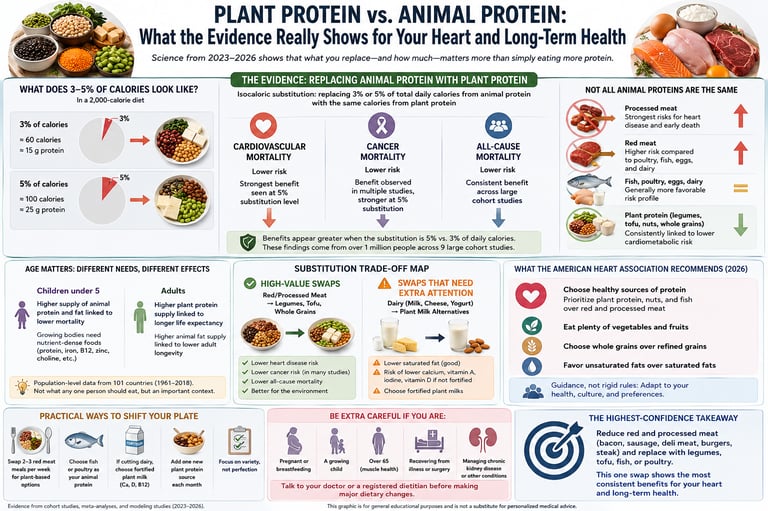
Plant vs. Animal Protein: What the Evidence Shows
Recent 2025–2026 data shows that swapping 3% to 5% of daily calories from animal protein—specifically red and processed meats—for plant proteins (like beans, tofu, and lentils) significantly lowers the risk of heart disease, cancer, and overall mortality.
Key health trade-offs include:
Heart Health: Risks are driven almost entirely by red and processed meats; fish, poultry, eggs, and dairy do not carry the same risk profile.
Life Stage Matters: Plant proteins strongly support adult longevity, but animal proteins remain highly protective for the nutritional needs of growing children and older adults.
Nutritional Gaps: Replacing dairy requires deliberate planning; you must choose fortified plant milks to prevent calcium, vitamin D, and iodine deficiencies.
Key Takeaways
1. What does the latest research say about swapping animal protein for plant protein?
Shifting just 3% to 5% of your daily calorie intake away from animal protein in favor of plant sources—such as beans, lentils, nuts, and tofu—is associated with a measurable reduction in cardiovascular disease, cancer risk, and all-cause mortality. Robust 2025–2026 meta-analyses tracking millions of person-years reveal a dose-response relationship: making a larger 5% swap yields a significantly stronger protective effect than a minor 3% change.
2. Is animal protein inherently harmful to your cardiovascular health?
No, the evidence does not support a blanket condemnation of animal foods. The elevated risk of heart disease and metabolic complications is driven almost entirely by red and processed meats (like bacon, sausage, deli meat, and steak). Other lean animal proteins—specifically oily fish, poultry, eggs, and moderate dairy—exhibit a vastly different, often neutral or favorable risk profile, meaning you don't need to adopt a strict vegan diet to preserve your heart health.
3. What are the biological mechanisms that explain why plant protein lowers disease risk?
Plant proteins are naturally packaged without the heme iron and preservative compounds (like nitrates and nitrites) found in red and processed meats, both of which are linked to oxidative stress and cellular damage in the gut. Instead, plant sources arrive rich in dietary fiber and unsaturated fats. This combination actively lowers LDL ("bad") cholesterol, reduces systemic inflammation, and nourishes beneficial gut bacteria that produce cardioprotective short-chain fatty acids.
4. What are the hidden nutritional risks of cutting out dairy protein?
While swapping out full-fat dairy for plant alternatives successfully reduces your intake of saturated fat, it is not a free trade-off. Large-scale dietary modeling reviews show that eliminating dairy frequently causes unintended drop-offs in calcium, vitamin A, iodine, and vitamin D. To avoid trading a cardiovascular benefit for a bone-density or thyroid risk, you must explicitly select plant milks (like soy or pea milk) that have been fortified with these specific micronutrients.
5. Does the recommendation to prioritize plant protein change based on age?
Yes, dietary priorities reverse depending on your life stage. Landmark population data shows that for adults, a higher supply of plant-based protein strongly predicts a longer life expectancy. However, for children under the age of five, a robust supply of animal-based protein and fat is directly linked to lower mortality. Growing toddlers, pregnant individuals, and older adults fighting age-related muscle wasting (sarcopenia) have dense, highly efficient nutrient needs that animal foods meet easily, but poorly planned plant diets can miss.
6. What do major health organizations like the American Heart Association officially recommend?
The American Heart Association’s 2026 scientific statement urges individuals to prioritize plant protein sources (legumes, soy, and nuts) and seafood over red and processed meats. Crucially, the guidelines are framed as flexible, directional principles rather than a rigid, plant-only mandate. The goal is to shift the overall balance and frequency of what is on your plate, allowing for cultural preferences while cutting back heavily on the highest-risk meat categories.
7. What is the single most evidence-backed dietary change a person can make?
The highest-confidence swap supported by the literature is replacing red and processed meats with legumes, tofu, fish, or poultry a few nights a week. Because this specific substitution targets the precise source of chronic disease risk while introducing protective fiber and healthy fats, it yields the most consistent, predictable improvements to your cardiovascular health and overall lifespan without requiring extreme dietary restrictions.
8. What are the inherent limitations of the scientific data on protein sources?
While the correlation between plant protein and longer life is highly consistent, it relies on observational cohort data and ecological tracking, not decades-long randomized clinical trials. People who naturally eat more plant protein also tend to smoke less, exercise more, and have higher incomes. While researchers use advanced statistical models to adjust for these lifestyle variations, residual confounding can never be completely eliminated—meaning the data show a strong, reliable association, not absolute proof of cause and effect.
Introduction
If you've Googled “plant protein vs animal protein,” you've probably hit a wall of contradictory headlines. One says swapping meat for beans will save your heart. Another says protein is protein, and the source doesn't matter much. A few warn that cutting animal foods too aggressively could backfire, especially for kids or older adults trying to keep muscle.
The honest answer is more interesting than any single headline: it depends on what you're replacing, how much you're replacing, and which health outcome you care about most.
This guide walks through what large, recent cohort studies, meta-analyses, and the 2026 American Heart Association dietary guidance actually found — including the parts that complicate the simple “plants good, meat bad” narrative. You'll learn:
• What “isocaloric substitution” research actually measures, and why it's more useful than simple high-protein-diet comparisons
• What happens to cardiovascular risk, cancer risk, and all-cause mortality when plant protein replaces animal protein
• Where the evidence is strong, where it's shaky, and where age and life stage change the picture entirely
• A practical, non-extreme way to shift your plate without guesswork
1. What “Substituting” Protein Actually Means
Most nutrition headlines about protein come from studies that ask a fairly blunt question: do people who eat more total protein, or more animal protein, live longer or shorter lives than people who eat less?
That question has a hidden flaw. If you eat less animal protein, you have to eat something instead. The health effect you're measuring depends entirely on what that “something” is.
Isocaloric substitution studies fix this by modeling a specific swap: replacing a fixed share of daily calories from animal protein (commonly 3% or 5% of total energy) with the same number of calories from plant protein, while holding everything else constant. This is a more realistic stand-in for what an actual dietary change looks like — trading a portion of meat, eggs, or dairy for a portion of beans, lentils, tofu, or whole grains.
It's a more rigorous lens, but it's still built on observational cohort data, not randomized trials. People who naturally eat more plant protein also tend to exercise more, smoke less, and have higher incomes and education — all things that independently affect health. Researchers adjust statistically for these factors, but adjustment is never perfect. Keep that caveat in mind as you read the numbers below.
2. The Cardiometabolic Evidence: Heart Disease and Cardiovascular Risk
A 2026 systematic review and meta-analysis in Clinical Nutrition pooled nine prospective cohort studies covering over one million participants and roughly 19.9 million person-years of follow-up. The researchers modeled what happens when 3% or 5% of total energy intake shifts from animal protein to plant protein.
The result: isocaloric substitution of animal protein with plant protein was associated with lower all-cause, cardiovascular, and cancer mortality, with the strongest benefit showing up for cardiovascular mortality, and a larger effect at the 5% substitution level than at 3%. In plain terms, the bigger the swap, the bigger the apparent benefit — at least within the range these studies tested.
A separate 2023 cross-sectional analysis of more than 9,000 adults in the Singapore Multi-Ethnic Cohort found a complementary pattern at the level of individual risk markers rather than mortality. Replacing animal-based protein sources with total plant-based protein was associated with lower BMI, smaller waist circumference, and lower LDL cholesterol. The clearest benefit came from replacing processed meat and processed seafood specifically — not every animal protein source carried the same risk.
That detail matters. It suggests the cardiovascular story isn't really “animal protein bad,” but more precisely “processed and red meat protein carries more risk than fish, poultry, eggs, or dairy protein, and plant protein swaps in well for the riskiest sources.”
The Singapore study also found a trade-off worth noting: replacing oily fish specifically with legume protein was associated with lower HDL cholesterol and higher triglycerides — a reminder that fish isn't in the same risk category as red or processed meat, and substitution effects aren't uniform across every animal food.
3. The Cancer Evidence: What Substitution Studies Show
A 2025 systematic review in Current Nutrition Reports examined 17 studies — 14 cohort studies, one case-cohort study, and two pooled cohort analyses — looking specifically at replacing animal foods (eggs, red meat, processed meat, poultry, fish, dairy) with plant foods (fruits, vegetables, nuts, whole grains, soy, and other legumes) in relation to cancer risk, cancer mortality, and all-cause mortality.
The review found that replacing animal foods or animal protein with plant foods or plant protein was associated with reduced cancer risk in six of the included studies. That's a meaningful but not universal signal: roughly a third of the studies in the review showed a clear cancer-risk benefit, which tells you the relationship exists but isn't yet uniform across cancer types, populations, or study designs.
This is a place where the research is genuinely still developing. Cancer is not one disease, and “replacing animal protein with plant protein” can mean very different things depending on which animal food and which plant food are involved. A like-for-like comparison — say, swapping red meat for legumes — has more consistent mechanistic support (less heme iron, fewer nitrosamine-forming compounds from processed meat) than a blanket “plant protein lowers cancer risk” claim.
4. All-Cause Mortality: The Big Picture Across Studies
When you zoom out to all-cause mortality — death from any cause, not just heart disease or cancer — the picture from the Clinical Nutrition meta-analysis lines up with the cardiovascular-specific finding: isocaloric substitution of animal protein with plant protein was associated with lower all-cause mortality, with the effect appearing stronger at higher substitution levels.
This is consistent with a broader pattern documented across multiple systematic reviews over the past several years on substituting animal-based foods generally (not just protein) with plant-based foods: most reviews report a modest reduction in all-cause mortality risk associated with the substitution, though the size of the effect and statistical certainty vary by study and by which specific foods are being swapped.
A few things keep this from being an open-and-shut case:
• Risk of bias. The Clinical Nutrition meta-analysis itself rated all nine included cohorts as having moderate risk of bias, largely due to residual confounding — the statistical adjustment for lifestyle and health factors can reduce, but not eliminate, the influence of those factors.
• These are observational studies. No randomized controlled trial has run for decades to directly test whether shifting your diet this way changes when you die. We're working from correlation, adjusted as carefully as the data allows.
• Effect sizes are modest, not dramatic. These are population-level hazard ratio shifts, not “you will personally add X years” guarantees.
5. The Complication Nobody Mentions: Age Changes Everything
Here's the finding that complicates the simple “plant protein wins” narrative, and it's important enough that any honest summary of this topic needs to include it.
A 2025 study in Nature Communications, led by researchers at the University of Sydney, analyzed national food supply and demographic data from 101 countries between 1961 and 2018, looking at how national-level protein and fat supply patterns related to age-specific mortality.
The finding was genuinely two-sided: for children under five, a higher national supply of animal-based protein and fat — meat, dairy, eggs — was associated with lower mortality. For adults, the pattern reversed: higher availability of plant-based protein was associated with longer life expectancy, while higher fat supply (largely from animal sources) was associated with reduced adult longevity.
The lead author summarized it directly: the data suggests a mixed picture, where animal protein and fat support survival in early childhood, while a shift toward plant protein appears more beneficial later in adult life.
Why this matters for you: this is a population-level, ecological study — it describes country-level food supply, not what any one person eats, and it can't fully account for other factors that differ between richer and poorer nations. But it's a useful corrective to any version of this topic that treats animal protein as uniformly harmful at every life stage. Growing children, pregnant women, and people recovering from illness or surgery have real protein and nutrient needs that animal foods meet efficiently and that an under-planned plant-based diet can miss.
6. Environmental and Nutritional Trade-Offs
A 2026 systematic review in the Journal of Cleaner Production, led by researchers including Olivia Auclair, reviewed modeling studies on substituting animal with plant protein foods in adults' self-selected diets, looking at environmental, nutritional, and health outcomes together rather than in isolation.
The review's overall takeaway: replacing red and processed meat with plant protein foods produced the greatest share of environmental benefit, while also modestly improving nutrient intake and reducing modeled deaths. But the review also flagged real trade-offs. When dairy was the food being replaced, the modeled diets showed reduced saturated fat — a benefit — but also reduced calcium and vitamin A, and, depending on whether the plant-based replacement foods were fortified, lower iodine and vitamin D too.
This is a genuinely useful nuance: not all substitutions are nutritionally “free.” Swapping out red or processed meat for legumes, tofu, or whole grains looks like a win across the board in this research. Swapping out dairy specifically requires more planning — fortified plant milks, attention to calcium and vitamin D sources, and possibly a supplement — to avoid trading one risk for another.
Visual suggestion: A “substitution trade-off map” showing which swaps (red/processed meat → legumes; dairy → fortified plant milk) carry which benefits and which require extra nutritional attention.
7. What the American Heart Association Actually Recommends
The AHA's 2026 scientific statement on dietary guidance for cardiovascular health — an update to its 2021 guidance — doesn't ask people to eliminate animal protein. Instead, it recommends choosing healthy sources of protein, prioritizing plant protein sources (legumes, nuts, soy) and fish over red and processed meat, as one of several pillars of a heart-healthy eating pattern, alongside eating plenty of vegetables and fruits, choosing whole grains over refined grains, and favoring unsaturated fats over saturated fats.
The statement is explicitly framed as guidance, not a rigid prescription — the AHA describes it as neither restrictive nor a strict meal plan, but a set of directional principles meant to be adapted to individual circumstances, cultures, and preferences.
This is a useful real-world anchor: the major cardiology professional body isn't recommending a binary “plant protein only” approach. It's recommending a shift in emphasis and frequency, with red and processed meat specifically flagged as the category to cut back on, not all animal protein indiscriminately.
8. How Mechanisms Might Explain the Findings
Understanding why these patterns might exist helps you make sense of the evidence rather than just memorizing it.
• Heme iron and processed meat compounds. Red and processed meats contain heme iron and, in processed forms, nitrates and nitrites used in curing. Some research links these compounds to oxidative stress and the formation of carcinogenic byproducts in the gut — a plausible mechanism for the cancer associations seen in substitution studies, though mechanism research and population-level outcome research are two different types of evidence, and a plausible pathway isn't the same as proof of cause and effect in humans.
• Saturated fat and LDL cholesterol. Many animal protein sources, especially red meat and full-fat dairy, come packaged with saturated fat. Plant protein sources are typically lower in saturated fat and often bring fiber along with them, which can modestly lower LDL cholesterol — a known driver of atherosclerosis and cardiovascular risk.
• Fiber and the gut microbiome. Plant proteins from legumes, whole grains, and nuts arrive with fiber that animal protein doesn't have. Fiber feeds beneficial gut bacteria, which produce short-chain fatty acids associated with reduced inflammation and improved metabolic markers — part of why a 2026 Frontiers in Nutrition review on plant-based diets highlighted gut microbiome effects as a plausible contributor to the cardiometabolic benefits observed in epidemiological studies.
What this doesn't explain. None of these mechanisms fully account for the early-childhood finding from the Nature Communications study, where animal protein and fat predicted lower mortality. The leading explanation there is more basic: growing bodies have high, concentrated nutrient needs — complete protein, iron, zinc, vitamin B12, choline — that are harder to meet in adequate density from plant foods alone without careful planning, particularly in lower-resource settings where fortified or diverse plant foods aren't always accessible.
9. Practical Application: How to Shift Your Protein Sources
You don't need to become vegetarian or vegan to act on this evidence. The research most consistently supports directional swaps, not categorical elimination.
Start with the highest-confidence swap. Replace red and processed meat — bacon, sausage, deli meat, burgers, steak — with legumes, tofu, tempeh, or a mix of beans and a smaller portion of poultry or fish. This is the swap with the most consistent support across the cardiovascular, cancer, and mortality research above.
Treat dairy substitution differently. If you cut dairy, choose fortified plant milks (calcium- and vitamin D-fortified soy or pea milk, specifically) rather than assuming any plant milk is nutritionally equivalent. Pay attention to iodine too — it's easy to under-consume if dairy was your main source and you don't eat much seafood or iodized salt.
Don't over-restrict if you're in a high-need life stage. Pregnant women, growing children, older adults at risk of muscle loss (sarcopenia), and anyone recovering from illness or surgery have higher or more concentrated protein needs. This is not the population the “shift toward plant protein” research is most relevant to, and aggressive restriction without planning can create real deficits in this group.
A simple weekly framework:
• Pick 2–3 dinners a week to swap red or processed meat for a legume- or tofu-based main dish
• Keep fish and poultry as your “animal protein” default the rest of the week if you're not ready to go further
• If cutting dairy, choose one fortified plant milk and check the label for calcium, vitamin D, and B12
• Add one new plant protein source a month (lentils, edamame, tempeh, seitan, hemp seeds) to build variety rather than relying on one substitute
A note on supplements and medical context. If you have anemia, are pregnant, are over 65, or manage a chronic condition like chronic kidney disease (where protein intake is often medically restricted and individualized), talk to a doctor or registered dietitian before making a significant protein-source shift. This article is general information, not a personalized medical or nutrition plan.
10 Evidence summary
Barrantes-Espinola et al., 2026 (Clinical Nutrition)
Design & Population: Meta-analysis of 9 prospective cohorts comprising 1,036,799 participants.
Key Findings: Replacing 3% to 5% of daily animal protein calories with plant protein (isocaloric substitution) was significantly associated with lower all-cause, cardiovascular, and cancer mortality. The long-term protective health effects were notably stronger at the 5% substitution level than at 3%
Lee et al., 2023 (The Journal of Nutrition)
Design & Population: Cross-sectional analysis of 9,211 adults in a multiethnic Singapore population.
Key Findings: Shifting to plant protein was tied to better cardiometabolic markers, including lower BMI, smaller waist circumference, and reduced LDL ("bad") cholesterol. Swapping out processed meats and processed seafood showed the clearest benefits, whereas swapping out healthy oily fish resulted in a less favorable trade-off (lower HDL "good" cholesterol and higher triglycerides).
Fernández-Fígares Jiménez & Storz, 2025 (Current Nutrition Reports)
Design & Population: Systematic review of 17 distinct papers (14 cohort studies, 1 case-cohort study, and 2 pooled cohort analyses).
Key Findings: Substituting animal-based foods or proteins with whole plant alternatives was associated with a clear reduction in cancer risk in 6 out of the 17 reviewed studies. The results suggest a meaningful protective link, though the data is still developing and not yet entirely uniform across all populations or cancer types.
Andrews et al., 2025 (Nature Communications)
Design & Population: Large-scale ecological study evaluating national food supply data and demographics across 101 countries from 1961 to 2018.
Key Findings: Discovered a distinct age-specific split in optimal nutrition. A higher national supply of animal-based protein and fat strongly predicted lower mortality rates in children under five. Conversely, for adult populations, higher plant-based protein availability was closely linked to enhanced life expectancy and longevity.
Auclair et al., 2026 (Journal of Cleaner Production)
Design & Population: Systematic review compiling various dietary modeling studies in adults' self-selected diets.
Key Findings: Replacing red and processed meats with plant protein yielded the greatest trifecta of benefits: environmental improvement, upgraded nutritional quality, and decreased modeled mortality. However, replacing dairy came with sharp trade-offs, successfully dropping saturated fat but creating high risks for calcium, vitamin A, iodine, and vitamin D shortfalls if the replacements weren't heavily fortified.
Alblaji, 2026 (Frontiers in Nutrition)
Design & Population: Narrative clinical review.
Key Findings: Highlighted a strong connection between well-managed plant-based diets, improved cardiovascular health markers, and beneficial gut microbiome adjustments (such as the production of anti-inflammatory short-chain fatty acids). The review emphasizes that long-term nutritional adequacy depends heavily on deliberate, careful dietary planning.
American Heart Association (AHA) Scientific Statement, 2026 (Circulation)
Design & Population: Evidence-based clinical guidance and expert consensus statement published online March 31, 2026.
Key Findings: Strongly recommends prioritizing plant-based proteins (such as legumes, nuts, and soy) alongside seafood over red and processed meats as a foundational pillar of cardiovascular health. The guidelines represent a flexible, directional roadmap aimed at food quality rather than a rigid, all-or-nothing vegan mandate.
11. Common Myths and Mistakes
Myth: “Animal protein is bad for you.” The evidence doesn't support this blanket claim. The strongest, most consistent risk signal is specifically tied to red and processed meat, not to animal protein broadly. Fish, poultry, eggs, and dairy don't carry the same risk profile in this research, and in early childhood, animal protein and fat are linked to better, not worse, survival.
Myth: “More protein is always better.” Substitution research isn't about eating more protein overall — it's about which calories you're already eating coming from plant versus animal sources. Total protein intake and protein source are two different variables.
Mistake: Replacing meat with refined carbs instead of plant protein. If you cut red meat but replace it with white bread, chips, or sugary snacks instead of legumes, tofu, or whole grains, you lose the benefit these studies measured. The substitution has to be protein-for-protein (or at least whole-food-for-whole-food) to match the research.
Mistake: Assuming all plant milks are nutritionally interchangeable with dairy. Unfortified almond or oat milk is not a calcium or vitamin D match for dairy. Check labels.
Mistake: Applying adult-longevity research to children's diets. The Nature Communications findings are a direct caution here — what appears beneficial for adult longevity is not the same recommendation that applies to a growing toddler's nutrient needs.
Myth: “This research proves causation.” Every major study referenced here is observational (cohort, cross-sectional, or ecological data) or a model built from such data. Observational research, even very large and well-adjusted, shows association, not proof of direct cause and effect. That's a real limitation, not a minor footnote.
12. FAQs
Is plant protein as good as animal protein for building muscle? Plant proteins are generally lower in certain essential amino acids (especially leucine) per serving and may be somewhat less efficiently absorbed than animal proteins, but eating a varied mix of plant proteins across the day (legumes, grains, soy, nuts) can close most of this gap. This article focuses on cardiovascular, cancer, and mortality outcomes rather than muscle-building research specifically, so if your main goal is muscle gain, that's a related but separate question worth researching on its own.
Do I need to go fully vegetarian or vegan to get these benefits? No. The research described above models partial substitution — typically 3–5% of total calories — not full elimination of animal protein. Directional shifts, especially away from red and processed meat, are what the evidence actually tested.
Is fish protein the same as red meat for these health outcomes? No. Across the studies reviewed here, fish and poultry consistently show a different, generally more favorable risk profile than red and processed meat. The AHA's 2026 guidance explicitly favors fish over red and processed meat.
What about eggs? Egg protein wasn't broken out as a major risk factor in the substitution studies covered here. Some other cohort research (not covered in this article) finds modest associations between egg intake and specific outcomes, and the picture is genuinely mixed in the broader literature — this is an area where you may see conflicting headlines depending on which specific study is cited.
Is soy protein safe, including for people with a history of hormone-sensitive cancer? This is a common concern, but it's a nuanced clinical question that depends on individual history and current evidence on soy isoflavones, and it's best directed to your oncologist or treating physician rather than answered generically here.
Will cutting dairy hurt my bone health? It can, if you don't replace the calcium and vitamin D dairy was providing. The research reviewed above specifically flags this trade-off. Choose fortified plant milks and consider discussing calcium/vitamin D intake with a doctor or dietitian if dairy was a major source for you.
Why do some studies show bigger benefits than others? Differences in population, which specific foods were substituted, how big the substitution was (3% vs. 5% of calories, for example), and how long the follow-up period was can all change the size of the measured effect. This is normal in nutrition epidemiology and is part of why single studies shouldn't be over-interpreted in isolation.
Is red meat fine in small amounts? The research generally points to a dose-response relationship — more substitution (5% vs. 3% of energy) showed larger associated benefits in the largest meta-analysis reviewed here, which implies the reverse is also plausible: smaller amounts of red/processed meat likely carry smaller, not zero, risk. No study reviewed here establishes a specific “safe threshold” amount.
Does this apply to me if I'm older and trying to maintain muscle mass? Possibly with modification. Older adults often need more total protein per meal to maintain muscle (a concept called the “anabolic threshold”), and animal proteins are often easier to get this from in concentrated amounts. If you're in this group, focus on total protein adequacy first, then consider source as a secondary lever — and loop in a doctor or dietitian, especially if you have other health conditions.
What's the single highest-confidence change I can make based on this evidence? Reducing red and processed meat specifically — bacon, deli meat, sausage, hot dogs, frequent red meat — and replacing it with legumes, tofu, fish, or poultry. This swap shows up as beneficial across the cardiovascular, cancer, and all-cause mortality research covered here, with the least controversy among the findings.
13. Conclusion and Action Steps
The honest summary of where the science stands: shifting some of your protein intake from animal sources — particularly red and processed meat — toward plant sources like legumes, tofu, and whole grains is associated with measurably lower cardiovascular mortality, lower all-cause mortality, and likely lower cancer risk in large observational studies. The biggest, most consistent benefit tracks specifically to cutting red and processed meat, not animal protein as a category.
At the same time, the evidence has real limits. It's observational, not experimental. The benefit doesn't apply uniformly across every life stage — animal protein and fat appear protective in early childhood specifically. And not every substitution is nutritionally free; cutting dairy without a replacement plan can create new gaps in calcium, vitamin D, and iodine.
Three steps to take this week:
1. Pick one red-meat meal in your week and swap it for a legume-, tofu-, or fish-based dish.
2. If you drink dairy milk and want to reduce it, choose a calcium- and vitamin D-fortified plant alternative, not an unfortified one.
3. If you're pregnant, growing, over 65, or managing a chronic illness, talk to a doctor or registered dietitian before making a significant dietary shift — the population-level research above isn't a substitute for individualized guidance.
Disclaimer: This article is for informational purposes only and does not constitute medical advice. Individual circumstances vary, and treatment decisions should always be made in consultation with qualified healthcare professionals. That it's not personalized medical advice. If you're implementing changes, consult a doctor/dietitian as emphasized
Related Articles
Why Muscle Health Controls Blood Sugar in Type 2 Diabetes (The Science Explained)
Feed Your Gut, Fuel Your Health: Diet, Microbiota, and Systemic Health | DR T S DIDWAL
What’s New in the 2025 Blood Pressure Guidelines? A Complete Scientific Breakdown | DR T S DIDWAL
Low-Fat vs. Low-Carb: Which Diet is Best for Weight Loss? | DR T S DIDWAL
5 Steps to Reverse Metabolic Syndrome: Diet, Habit, & Lifestyle Plan | DR T S DIDWAL
Sources
Alblaji, M. (2026). Plant-based diets for human health with implications for cardiometabolic health, gut microbiome, and nutritional adequacy. Frontiers in Nutrition, 13, Article 1830797. https://doi.org/10.3389/fnut.2026.1830797
Andrews, C. J., Raubenheimer, D., Simpson, S. J., & Senior, A. M. (2025). Associations between national plant-based vs animal-based protein supplies and age-specific mortality in human populations. Nature Communications, 16, Article 3431. https://doi.org/10.1038/s41467-025-3431-x
Auclair, O., Jin, Y., & Burgos, S. A. (2026). The impact of substituting animal with plant protein foods in adults' self-selected diets on environmental, nutritional, and health outcomes: A systematic review of modelling studies. Journal of Cleaner Production, 538, Article 147386. https://doi.org/10.1016/j.jclepro.2026.147386
Barrantes-Espinola, G., Alberti, P., Jaramillo-Morales, E., et al. (2026). Isocaloric substitution of animal protein with plant protein and its impact on all-cause, cardiovascular, and cancer mortality: A systematic review and meta-analysis. Clinical Nutrition, 61, Article 106654. https://doi.org/10.1016/j.clnu.2026.106654
Fernández-Fígares Jiménez, M. D. C., & Storz, M. A. (2025). Cancer risk and mortality following substitution of animal foods with plant foods: A systematic review. Current Nutrition Reports, 14, Article 99. https://doi.org/10.1007/s13668-025-00099-x
Lee, Y. Q., Chia, A., Whitton, C., et al. (2023). Isocaloric substitution of plant-based protein for animal-based protein and cardiometabolic risk factors in a multiethnic Asian population. The Journal of Nutrition, 153(5), 1555–1566. https://doi.org/10.1016/j.tjnut.2023.03.018
Lichtenstein, A. H., Khera, A., Anderson, C. A. M., Appel, L. J., DeSilva, D. M., Gardner, C. D., Hu, F. B., Jones, D. W., & Petersen, K. S. (2026). 2026 Dietary guidance to improve cardiovascular health: A scientific statement from the American Heart Association. Circulation. Advance online publication. https://doi.org/10.1161/CIR.0000000000001234