Ketone Bodies Explained: Are They the Missing Link Between Fasting, Longevity, and Better Health?
Discover how ketone bodies influence fat burning, brain function, inflammation, heart health, and longevity through powerful metabolic signaling.
METABOLISM
Dr. T.S. Didwal, M.D.(Internal Medicine)
6/9/202633 min read
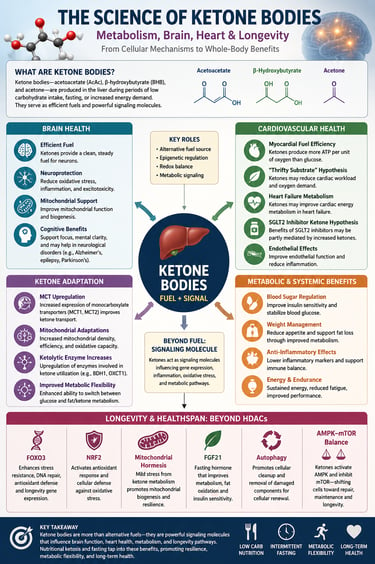
What are ketone bodies?
Ketone bodies are small molecules your liver makes from fat when carbohydrates are low, like during fasting or a low-carb diet. The main one is BHB. They serve as backup fuel for your brain, heart, and muscles, and also act as signaling molecules that reduce inflammation and influence gene activity.
Key Takeaways:
1. Ketones are more than backup fuel
Your liver makes ketones from fat when carbs run low — during fasting, low-carb eating, or long exercise. But they aren’t just energy. They act like messengers that tell your cells to calm inflammation and protect themselves.
2. BHB is the main player
Of the three ketones your body makes, β-hydroxybutyrate (BHB) does most of the work. Blood ketone meters measure BHB. Levels of 0.5 to 3.0 mmol/L are the “nutritional ketosis” range where research shows benefits for most people.
3. Ketones help put out the fire of inflammation
BHB directly blocks a key inflammation switch in your immune cells called NLRP3. Chronic, low-grade NLRP3 activity is linked to diabetes, heart disease, and Alzheimer’s. This is why fasting and ketogenic approaches often reduce inflammatory symptoms.
4. Your genes listen to ketones
BHB changes how your DNA is read, without altering the DNA itself. It turns up genes that help your cells resist stress and clean up damage. This is the same mechanism triggered by caloric restriction, which is tied to healthy aging.
5. The brain loves ketones
When glucose is scarce, your brain can get 60 to 70% of its energy from ketones. They burn cleaner than glucose and may help with mental clarity, focus, and protecting brain cells. This is why ketones are being studied for epilepsy, Alzheimer’s, and Parkinson’s.
6. You don’t need a strict keto diet to benefit
Intermittent fasting for 16 to 18 hours, regular exercise over 60 minutes, cutting ultra-processed carbs, and using MCT oil can all raise ketones. A strict ketogenic diet is one option, not the only option.
7. Ketosis and ketoacidosis are not the same
Nutritional ketosis is a safe, controlled state with BHB at 0.5 to 3 mmol/L. Diabetic ketoacidosis is a medical emergency with BHB over 10 mmol/L that happens mainly in type 1 diabetes when insulin is missing. Healthy people with normal insulin cannot get DKA from diet or fasting.
8. Check with your doctor before you dive in
Ketogenic diets and fasting can be powerful. But they’re not for everyone. If you have type 1 or type 2 diabetes, kidney or liver disease, are pregnant, or take medications like insulin or SGLT2 inhibitors, talk to your healthcare provider first. Medication adjustments are often needed.
Remember: Small, consistent changes work best. Start with a 12 to 16-hour overnight fast, swap sugary snacks for nuts or avocado, and add a brisk walk. Track how you feel, not just the numbers.
Introduction
If you've ever wondered why fasting makes you feel sharper, why a low-carb diet seems to reduce inflammation, or why researchers are increasingly excited about a molecule your liver makes from fat — the answer is ketone bodies.
Once dismissed as metabolic waste products or dangerous byproducts of poorly managed diabetes, ketone bodies have undergone a quiet revolution in scientific understanding. We now know they are far more than fuel. They are signaling molecules that directly influence gene expression, immune function, brain health, insulin secretion, and even how quickly you age.
In this guide, you'll learn:
What ketone bodies are and how your body makes them
The three major ketones and what makes each one unique
How ketones act as anti-inflammatory signaling molecules
Their surprising role in epigenetic and longevity pathways
What the latest 2025–2026 research says about ketones and disease
Practical, evidence-based strategies to optimize your ketone levels safely
Whether you're curious about fasting, considering a ketogenic diet, exploring exogenous ketone supplements, or simply want to understand your own metabolic health at a deeper level — this is the most complete guide you'll find anywhere.
What Are Ketone Bodies?
Ketone bodies are small, water-soluble molecules produced primarily in the liver when carbohydrate availability is low. They serve as an alternative fuel source — particularly for the brain, heart, and muscles — when glucose is scarce.
Your body enters a state of ketosis when it shifts from burning glucose (from carbohydrates) to burning fat as its primary energy source. During this process, fatty acids are broken down in the liver through a process called beta-oxidation, and the resulting acetyl-CoA is converted into ketone bodies, which are then exported to other tissues for energy.
This shift happens naturally during:
Prolonged fasting (typically after 12–16 hours for most people)
Low-carbohydrate or ketogenic diets
Intense, sustained exercise
The neonatal period (newborns rely heavily on ketones for brain development)
Pregnancy (particularly in later stages)
Physiologically, circulating ketone concentrations range from approximately 0.05–0.4 mmol/L in a fed, resting state and rise to 1–2 mmol/L during prolonged fasting or carbohydrate restriction. In therapeutic ketogenic diets, levels can reach 3–6 mmol/L, while diabetic ketoacidosis — a dangerous medical emergency distinct from nutritional ketosis — involves levels exceeding 10–15 mmol/L.
A landmark 2026 review by Liu & Xia in Metabolism and Diseases noted that "ketone bodies, long viewed through the lens of the ketotoxic paradigm, are now being recognized as multifaceted molecules with roles extending far beyond energy substrates."
The Three Types of Ketone Bodies
Not all ketones are the same. There are three main ketone bodies in humans, each with distinct properties and physiological roles.
β-Hydroxybutyrate (BHB) — The Star Molecule
BHB is the most abundant ketone body and the one that has attracted the most scientific interest. Technically, BHB is not a ketone in the strictest chemical sense (it lacks a ketone functional group), but it is grouped with ketone bodies based on its metabolic origins and functions.
BHB is the primary form that circulates in the bloodstream, making up roughly 70–75% of total circulating ketones during ketosis. It is the main ketone measured by blood ketone meters.
Beyond its role as fuel, BHB is now recognized as a potent signaling molecule that:
Activates and inhibits specific G-protein coupled receptors (GPCRs)
Inhibits inflammatory pathways (NLRP3 inflammasome)
Acts as an endogenous epigenetic modifier (HDAC inhibitor)
Influences gene expression related to oxidative stress resistance
Acetoacetate (AcAc) — The Primary Synthesis Product
Acetoacetate is the first ketone body produced during ketogenesis. The liver synthesizes it directly, and it can then be either used for energy or spontaneously converted to acetone.
AcAc is the form cells actually use when "burning" ketones for ATP production. It is also the primary substrate for the synthesis of BHB (which is a reduced form of AcAc).
Acetone — The Volatile Byproduct
Acetone is formed through the non-enzymatic decarboxylation of acetoacetate. It is the least metabolically significant of the three — your body exhales most of it through the lungs, which is why people in ketosis sometimes notice a sweet or fruity odor on their breath.
Interestingly, acetone is not entirely inert metabolically; a small proportion is converted back to pyruvate and can contribute to gluconeogenesis. Breathalyser-style ketone breath meters detect acetone as a proxy for ketosis.
Here is the breakdown of the three major ketone bodies, structured for quick reference:
beta-Hydroxybutyrate (BHB)
Proportion in Blood: ~70–75% (the most abundant circulating ketone).
Primary Role: Serves as a highly efficient energy substrate for the brain and muscles and acts as a powerful signaling molecule (e.g., inhibiting the NLRP3 inflammasome and acting as an endogenous HDAC inhibitor to reduce oxidative stress).
Detection Method: Blood ketone meter (provides the most accurate, real-time reflection of systemic ketosis).
Acetoacetate (AcAc)
Proportion in Blood: ~20–25%.
Primary Role: The initial energy substrate produced in the liver during ketogenesis, which can either be converted into BHB or utilized directly by peripheral tissues for ATP production.
Detection Method: Urine reagent strips (measures excess excreted AcAc, though it can lag behind real-time blood levels as hydration state changes).
Acetone
Proportion in Blood: ~2–5% (minimal systemic accumulation).
Primary Role: A metabolic byproduct created when acetoacetate spontaneously loses a carbon atom (decarboxylation). It cannot be converted back into a usable fuel source.
Detection Method: Breath acetone meter (measures the highly volatile gas as it is excreted through the lungs).
How Ketogenesis Works: The Biochemistry Explained
Understanding how ketone bodies are made helps you understand how to optimize their production and why they appear in certain conditions.
The Ketogenesis Pathway
Ketogenesis occurs primarily in liver mitochondria and follows these key steps:
Step 1 — Fatty Acid Mobilization: When insulin levels fall (due to fasting or carbohydrate restriction), adipose tissue releases stored triglycerides via lipolysis. Free fatty acids travel to the liver.
Step 2 — Beta-Oxidation: Inside liver mitochondria, fatty acids undergo beta-oxidation, generating large quantities of acetyl-CoA.
Step 3 — HMG-CoA Synthesis: When acetyl-CoA exceeds the liver's capacity to process it through the TCA cycle, it accumulates and is condensed into HMG-CoA (3-hydroxy-3-methylglutaryl-CoA) by the rate-limiting enzyme HMGCS2 (HMG-CoA synthase 2).
Step 4 — Ketone Synthesis: HMG-CoA is cleaved by HMG-CoA lyase to produce acetoacetate, which is then either used directly or reduced to BHB by the enzyme BDH1 (β-hydroxybutyrate dehydrogenase).
Step 5 — Export and Utilization: Ketones are released into the bloodstream and taken up by tissues (brain, heart, muscle, kidney) where they are converted back to acetyl-CoA and fed into the TCA cycle to generate ATP.
What Controls Ketogenesis?
The rate of ketogenesis is regulated by several hormonal and metabolic signals:
Insulin suppresses ketogenesis — by inhibiting lipolysis and suppressing HMGCS2 transcription through the PI3K/Akt pathway and mTORC1-mediated PPARα inhibition
Glucagon promotes ketogenesis — by activating PPARα and HMGCS2
Fasting and exercise deplete liver glycogen and lower insulin, creating conditions favorable for ketogenesis
SGLT2 inhibitors (a class of diabetes medications) increase ketogenesis by lowering insulin and glycogen levels
Ketone Bodies as Signaling Molecules (Not Just Fuel)
This is where the science gets genuinely exciting and where the old textbook understanding of ketones falls dramatically short.
For decades, ketone bodies were viewed almost exclusively as emergency fuel a backup energy system for when glucose runs low. The new paradigm, supported by an expanding body of research, is that ketones are metabolic messengers that actively communicate with cells and influence health at a fundamental level.
G-Protein Coupled Receptor Signaling
BHB acts as a ligand for specific G-protein coupled receptors (GPCRs), triggering downstream signaling cascades:
GPR109A (HCA2): BHB binds to GPR109A, originally identified as the nicotinic acid receptor. This has multiple downstream effects:
Inhibits adipocyte lipolysis — creating a feedback mechanism that prevents runaway fat breakdown
Reduces growth hormone-releasing hormone synthesis in the hypothalamus
Promotes macrophage-associated neuroprotection
Linked to anti-inflammatory effects in the gut and colon
GPR41 (FFA3): Also activated by BHB, this receptor is involved in sympathetic nervous system regulation and energy homeostasis.
The NFκB Pathway
BHB has been shown to inhibit NF-κB, the master transcription factor that controls inflammatory gene expression. This suggests ketones can directly dampen the inflammatory cascade at the genetic level — independent of their effects on the NLRP3 inflammasome.
Sirtuins and AMPK
Ketosis activates SIRT1 and SIRT3 (NAD+-dependent deacetylases) and AMPK (AMP-activated protein kinase) — both of which are central regulators of cellular metabolism, mitochondrial biogenesis, and longevity pathways. These overlapping mechanisms help explain why caloric restriction, fasting, and ketogenic diets share so many beneficial effects.
Ketones and Inflammation: The NLRP3 Connection
One of the most clinically significant discoveries in ketone biology over the past decade is BHB's ability to directly block the NLRP3 inflammasome.
What Is the NLRP3 Inflammasome?
The NLRP3 inflammasome is a multi-protein complex in immune cells (particularly macrophages) that acts as an alarm system for cellular damage and infection. When activated, it triggers the release of potent pro-inflammatory cytokines including interleukin-1β (IL-1β) and IL-18.
While essential for fighting infections, chronic, low-grade NLRP3 overactivation is now implicated in a wide range of inflammatory and metabolic diseases, including:
Type 2 diabetes
Obesity
Atherosclerosis and cardiovascular disease
Alzheimer's disease
Parkinson's disease
Gout
Inflammatory bowel disease
How BHB Blocks NLRP3
In a landmark 2015 study published in Nature Medicine, researchers led by Vishwa Deep Dixit at Yale University demonstrated that BHB directly inhibits NLRP3 inflammasome activation. Subsequent research has solidified and extended these findings.
The mechanism involves BHB blocking the assembly of the NLRP3 complex itself — specifically preventing the potassium efflux that normally triggers NLRP3 activation. This is a direct molecular action, not simply a consequence of reduced glucose or caloric restriction.
A 2023 narrative review in ScienceDirect confirmed that "emerging evidence, mostly from cell and animal models, supports a role for ketosis in general, and BHB in particular, in reducing NLRP3 inflammasome activation to improve chronic inflammation."
This is why interventions that raise BHB — fasting, ketogenic diets, and exogenous ketone supplementation — all show anti-inflammatory effects, and why researchers are actively investigating them as adjunct therapies for inflammatory conditions.
Ketones, Epigenetics, and Longevity
Perhaps the most far-reaching implication of ketone body research is their role as epigenetic regulators — molecules that influence which genes are turned on or off without changing the underlying DNA sequence.
BHB as an HDAC Inhibitor
Histone deacetylases (HDACs) are enzymes that remove acetyl groups from histone proteins, compacting chromatin and reducing gene expression. By inhibiting HDACs, BHB promotes histone acetylation — making DNA more "open" and transcriptionally active in specific regions.
A 2013 study in Science by Shimazu and colleagues was the first to demonstrate that BHB acts as an endogenous HDAC inhibitor at physiological concentrations, increasing the expression of oxidative stress resistance genes including FOXO3A and MT2. These genes are directly implicated in cellular protection and longevity.
Importantly, research has since shown that BHB exerts epigenetic effects through a unique histone modification called β-hydroxybutyrylation (Kbhb) — a novel post-translational modification that is distinct from simple acetylation. This Kbhb mark appears on histones at gene promoters involved in metabolic adaptation, offering a dedicated epigenetic "channel" linking metabolic state directly to gene expression.
Longevity Pathways
HDACs regulate multiple pathways implicated in aging:
Autophagy (cellular recycling and cleanup)
IGF-1/mTOR signaling (growth vs. maintenance trade-offs)
Oxidative stress response (protection against free radical damage)
Mitochondrial biogenesis (production of new, healthy mitochondria)
By modulating HDACs, BHB acts similarly to caloric restriction at the molecular level. This is a compelling explanation for why fasting and ketogenic diets share so many effects with caloric restriction — even when total calorie intake is not dramatically reduced.
A 2026 analysis noted that ketone bodies are "emerging as crucial regulators of metabolic health and longevity via their ability to regulate HDAC activity and thereby epigenetic gene regulation."
Beyond HDACs: Additional Longevity Pathways Influenced by Ketone Bodies
While HDAC inhibition and β-hydroxybutyrylation are among the best-studied longevity mechanisms of ketone bodies, emerging research suggests that β-hydroxybutyrate (BHB) interacts with several other cellular pathways that regulate aging, stress resistance, and metabolic health.
FOXO3: The Longevity Transcription Factor
FOXO3 is one of the most extensively studied longevity-associated genes in humans. Variants of the FOXO3 gene are consistently linked to exceptional longevity across multiple populations. Through HDAC inhibition, SIRT1 activation, and reduced oxidative stress, BHB may enhance FOXO3 activity, promoting the expression of genes involved in antioxidant defense, DNA repair, cellular maintenance, and stress resistance.
NRF2 and Cellular Antioxidant Defense
Nuclear factor erythroid 2-related factor 2 (NRF2) is often described as the master regulator of antioxidant protection. When activated, NRF2 increases the production of endogenous antioxidant enzymes such as superoxide dismutase (SOD), catalase, and glutathione-related enzymes. Evidence suggests ketosis and BHB signaling may enhance NRF2 activity, helping cells better withstand oxidative stress, a major contributor to aging and chronic disease.
Mitochondrial Hormesis (Mitohormesis)
Aging is closely associated with declining mitochondrial function. Ketosis appears to induce a phenomenon known as mitohormesis, in which mild metabolic stress triggers adaptive responses that ultimately strengthen mitochondrial resilience. Rather than eliminating all reactive oxygen species (ROS), ketone metabolism may generate low levels of signaling ROS that stimulate cellular repair pathways, mitochondrial biogenesis, and stress resistance mechanisms.
FGF21: The Fasting Hormone
Fibroblast Growth Factor 21 (FGF21) is a metabolic hormone strongly induced during fasting and prolonged carbohydrate restriction. FGF21 coordinates adaptations to nutrient scarcity by promoting fat oxidation, ketogenesis, insulin sensitivity, and energy homeostasis. Animal studies suggest FGF21 may contribute to some of the lifespan-extending effects of fasting-like metabolic states, although its role in human longevity remains under investigation.
Autophagy and Cellular Housekeeping
Autophagy is the process by which cells identify, recycle, and remove damaged proteins, dysfunctional mitochondria, and other cellular debris. Impaired autophagy is increasingly recognized as a hallmark of aging. Ketosis, fasting, and elevated BHB levels are associated with enhanced autophagic activity through multiple pathways, helping maintain cellular quality control and metabolic efficiency.
AMPK-mTOR Interactions
Longevity research frequently focuses on the balance between AMPK and mTOR, two nutrient-sensing pathways that regulate growth and maintenance.
AMPK is activated during energy scarcity and promotes fat oxidation, mitochondrial biogenesis, autophagy, and cellular repair.
mTOR stimulates growth, protein synthesis, and nutrient-driven anabolic processes.
Ketosis tends to shift this balance toward AMPK activation and relative mTOR suppression, creating a metabolic environment that favors maintenance and repair rather than continuous growth. This pattern resembles many of the molecular adaptations observed during caloric restriction, the most consistently life-extending intervention in experimental biology.
Key Takeaway
Modern longevity research suggests that ketone bodies are not merely alternative fuels but powerful metabolic signals that influence multiple hallmarks of aging. Through interactions with FOXO3, NRF2, FGF21, autophagy pathways, mitochondrial hormesis, and the AMPK-mTOR network, ketones may help coordinate a cellular program focused on stress resistance, repair, metabolic flexibility, and healthy aging. While definitive human lifespan data are lacking, these mechanisms provide a biologically plausible explanation for many of the health benefits observed during fasting and nutritional ketosis.
Ketones and the Brain
The brain has a special relationship with ketone bodies. While most other organs can switch between multiple fuel sources, the brain depends heavily on glucose under normal conditions. However, it can efficiently adapt to use ketones — and this metabolic flexibility has profound implications for brain health.
Ketones as "Super Fuel" for the Brain
Researchers from Harvard, Oxford, and the NIH have proposed that BHB is a metabolically superior fuel compared to glucose for certain tissues. Ketones produce more ATP per unit of oxygen consumed, generate less oxidative byproduct, and bypass some of the enzymatic steps that can become impaired in metabolic disease.
For the brain specifically:
Ketones can supply up to 60–70% of the brain's energy needs during prolonged fasting
They cross the blood-brain barrier via monocarboxylate transporters (MCTs)
They are preferentially taken up by neurons under energy stress
BHB appears to enhance mitochondrial function in neural tissue
Cognitive Benefits: What the Research Shows
A 2026 systematic review and meta-analysis published in Frontiers in Nutrition provided the most comprehensive assessment to date of exogenous ketones and cognitive performance. The meta-analysis found support for cognitive benefits of endogenous and exogenous ketones, with effects on memory, processing speed, and attention — particularly in older adults and those with metabolic dysfunction.
Neuroprotection and Neuroinflammation
Through its NLRP3 inhibition and HDAC activity, BHB exerts neuroprotective effects that are increasingly relevant to neurodegenerative disease research:
Alzheimer's disease: The brain in Alzheimer's shows impaired glucose metabolism — sometimes called "type 3 diabetes." Ketones offer an alternative energy pathway that bypasses this impairment. Research is ongoing on ketogenic interventions and MCT oil supplementation in early and mid-stage Alzheimer's.
Parkinson's disease: Ketogenic diet studies have shown improvements in motor symptoms, potentially via mitochondrial support and reduced neuroinflammation.
Epilepsy: The most well-established clinical application of ketogenic diets — used for drug-resistant epilepsy since the 1920s — with a robust evidence base confirming significant seizure reduction in children and adults.
Ketones and Pancreatic β-Cell Function
One of the most intriguing and paradoxical aspects of ketone body biology involves the pancreatic β cells — the cells that produce insulin.
The Paradox: Ketosis Is Low-Insulin, Yet Ketones Stimulate Insulin
Here is the apparent contradiction: ketosis occurs when insulin is low, yet emerging research shows that ketone bodies themselves can stimulate insulin secretion from β cells.
A 2025 review in the Journal of the Endocrine Society described this as "a paradoxical interplay," noting that more recent investigations confirm an insulin-stimulatory effect of ketones in isolated islets, rodent models, and human participants — though the effect appears dependent on the metabolic context, including glucose availability and duration of exposure.
This has important clinical implications:
Endogenous ketosis (from fasting or low-carb diets) occurs in a context of low glucose → low insulin → β cells remain relatively quiescent despite elevated BHB
Exogenous ketones (supplements) can raise BHB in the context of normal glucose availability → BHB may then act directly on β cells to stimulate insulin, potentially improving glucose control
Implications for Diabetes Research
A 2026 review by Liu & Xia highlighted the emerging evidence that ketones modulate β-cell activity, offering "insights into diabetes pathophysiology and potential therapeutic alternatives." This dovetails with the growing clinical evidence for SGLT2 inhibitors (a class of diabetes drugs that raises circulating ketones as a secondary effect) showing substantial cardiovascular and renal benefits beyond their glucose-lowering effect.
Researchers now suspect some of the benefits of SGLT2 inhibitors may be mediated — at least partially — by their ability to elevate ketone bodies, reframing these medications as "metabolic reprogramming" agents rather than simple glucose-lowering drugs.
Ketones in Exercise and Athletic Performance
Exercise is one of the most powerful natural stimuli for ketone production — and the relationship between ketones and physical performance is an area of active and growing research.
How Exercise Raises Ketone Levels
During exercise, particularly prolonged aerobic exercise at moderate intensity:
Muscle glycogen is depleted
Fatty acid oxidation increases
Liver ketogenesis accelerates
Circulating BHB rises, particularly after the first hour
High-intensity exercise can also transiently raise ketones, though the effect is more pronounced and sustained with longer-duration, moderate-intensity work.
Ketones and Athletic Performance: What the Evidence Shows
A 2025 review by Li and colleagues in Advanced Exercise and Health Science provided a comprehensive analysis of ketones in exercise contexts, finding evidence for several performance-relevant effects:
Potential Benefits:
Enhanced fat oxidation — reducing reliance on limited glycogen stores
Reduced muscle glycogen depletion — potentially extending endurance capacity
Attenuated exercise-induced inflammation — supporting faster recovery
Reduced perceived exertion — some athletes report training feeling easier in ketosis
Areas Where Evidence Is Mixed or Preliminary:
Peak power output and high-intensity interval performance
Sprint speed and explosive strength
Performance benefits in already-trained elite athletes (compared to recreational exercisers)
A notable 2026 study found that exogenous ketone supplements may reduce reaction time decrements during team sports — a potentially significant finding for games requiring sustained decision-making.
Practical Protocol for Athletes Interested in Ketones
If you're an endurance athlete considering ketones, here is a reasonable, evidence-based starting framework:
Start with dietary optimization: Reduce refined carbohydrates and increase healthy fats over 4–6 weeks before trialing exogenous supplements
Train fasted (occasionally): 2–3 fasted morning sessions per week can train metabolic flexibility
Time carbohydrates strategically: Consider carbohydrate periodization — higher carbs around key training sessions, lower between
Consider exogenous ketones for long events: 20–25 g BHB salts or ketone esters 30–45 minutes before events lasting >2 hours
Track performance objectively: Use a blood ketone meter and log perceived exertion, times, and recovery quality
Ketones and Autoimmune/Inflammatory Diseases
A 2026 review by Gong and colleagues in the Journal of Translational Medicine made a compelling case for targeting ketone body metabolism as a therapeutic strategy in inflammatory and autoimmune diseases.
The Ketone-Immune System Interface
Immune cells — particularly macrophages, T cells, and innate lymphoid cells — express receptors for ketones and can metabolize them. BHB appears to shift immune cells toward anti-inflammatory phenotypes:
Promotes regulatory T cells (Treg) — which suppress excessive immune responses
Reduces Th17 cells — pro-inflammatory cells implicated in autoimmune conditions
Supports type 2 innate lymphoid cells (ILC2) — involved in immune tolerance
Inhibits macrophage-driven NLRP3 inflammation
Specific Conditions Under Investigation
Rheumatoid Arthritis: Animal models show ketogenic diets reduce joint inflammation and bone erosion, with pilot human trials ongoing.
Multiple Sclerosis: Ketogenic diet interventions have shown improvement in fatigue, quality of life, and some neurological markers in small human studies.
Lupus (SLE): Animal data suggests BHB may reduce kidney inflammation and autoantibody production; human data is limited but promising.
Inflammatory Bowel Disease (Crohn's and Ulcerative Colitis): GPR109A on colonocytes and immune cells in the colon is activated by BHB, reducing local inflammation. This may also partially explain why short-chain fatty acids (like butyrate from fiber fermentation) benefit gut health.
Type 1 Diabetes: An area of particular research interest — since β-cell destruction is an autoimmune process. Preliminary evidence suggests ketones may reduce the inflammatory environment that destroys β cells, though this remains highly preliminary.
A Tiered Clinical Framework
The 2026 Gong et al. review proposed a useful three-tier therapeutic framework for ketone-based interventions in inflammatory disease:
Tier 1 (High Potency): Exogenous ketone supplementation + ketogenic diet with intermittent fasting + SGLT2 inhibitors — for rapid, robust elevation of circulating ketones.
Tier 2 (Moderate): Ketogenic diet alone, or intermittent fasting alone — producing meaningful but more modest increases in ketones over weeks.
Tier 3 (Supportive): Low-carbohydrate diets, time-restricted eating, and moderate exercise — producing mild ketosis and metabolic benefits without dramatic ketone elevation.
Ketone Bodies and Cardiovascular Health
One of the most exciting areas of ketone research involves the heart. Emerging evidence suggests that ketone bodies are not merely alternative fuels during fasting or carbohydrate restriction—they may play an important role in cardiovascular metabolism, particularly in conditions such as heart failure and diabetes.
Myocardial Fuel Efficiency
The heart is a highly energy-demanding organ capable of using multiple fuels, including fatty acids, glucose, lactate, and ketone bodies. During ketosis, the heart readily oxidizes β-hydroxybutyrate (BHB) and acetoacetate. Some studies suggest ketone bodies may provide an energetically favorable fuel under certain conditions, supporting ATP production while potentially reducing oxidative stress. This has led researchers to investigate ketones as a metabolic support mechanism in cardiovascular disease.
The "Thrifty Substrate" Hypothesis
A prominent theory proposed following major SGLT2 inhibitor trials is the "thrifty substrate" hypothesis. According to this concept, mild elevations in circulating ketone bodies provide the heart with a readily usable, energy-efficient fuel source. By shifting cardiac metabolism toward ketone utilization, the failing or stressed heart may generate energy more effectively, contributing to improved cardiac performance and clinical outcomes.
Heart Failure and Ketone Metabolism
Heart failure is increasingly recognized as a disease of impaired energy metabolism. Studies have shown that failing hearts increase the expression of ketone transporters and ketolytic enzymes, suggesting a greater reliance on ketones as an adaptive response. Some researchers have described ketones as a potential "rescue fuel" for the energy-starved myocardium. This observation has generated significant interest in whether therapeutic ketosis or ketone-based interventions could complement conventional heart failure treatments.
The SGLT2 Inhibitor–Ketone Connection
SGLT2 inhibitors, widely used for Type 2 diabetes, heart failure, and chronic kidney disease, consistently increase circulating ketone levels. Remarkably, these drugs reduce cardiovascular mortality and heart failure hospitalizations beyond what would be expected from glucose lowering alone. While multiple mechanisms are involved, many investigators believe that modest ketone elevation contributes to these benefits by improving cardiac energetics, reducing inflammation, and enhancing metabolic flexibility.
Endothelial and Vascular Effects
Ketone bodies may also influence vascular health. Experimental studies suggest that BHB can reduce oxidative stress, suppress inflammatory signaling pathways such as NF-κB and NLRP3, and improve endothelial cell function. Since endothelial dysfunction is a key early step in atherosclerosis and cardiovascular disease, these anti-inflammatory and antioxidant actions may partially explain the cardioprotective effects observed in ketosis-related interventions.
The cardiovascular effects of ketone bodies extend far beyond their role as an alternative fuel. Emerging evidence suggests that ketones may improve cardiac energy metabolism, support the failing heart, reduce vascular inflammation, and contribute to the remarkable cardiovascular benefits observed with SGLT2 inhibitors. While many mechanistic questions remain under investigation, ketone metabolism has become a major focus of modern cardiovascular research.
Gut Microbiota and Ketone Production
The relationship between the gut microbiome and ketone metabolism is an emerging and fascinating area of research that complicates the simple view of ketogenesis as a purely liver-based process.
Fasting, Ketones, and the Microbiome
A 2025 advance publication by Ashique and colleagues in Medicine in Microecology examined how different fasting regimens modulate gut microbiota — and their downstream impact on metabolic health including ketone production.
Key findings:
Fasting and time-restricted eating shifts the microbiome toward populations that produce short-chain fatty acids (SCFAs), particularly butyrate
Butyrate and BHB share certain molecular similarities and overlapping mechanisms — both inhibit HDACs, both activate GPR109A
Ketogenic diets significantly alter the microbiome composition, with complex bidirectional effects
Certain gut bacteria produce molecules that influence liver ketogenesis rates
Why This Matters
The gut microbiome is increasingly recognized as a key regulator of metabolic health. Dysbiosis (imbalanced microbiome) correlates with impaired metabolic flexibility and reduced capacity for adaptive ketogenesis. Optimizing the microbiome through dietary fiber, fermented foods, and strategic fasting may support the body's natural ketone production.
This also suggests that ketogenic diets should not be undertaken at the expense of fiber intake — a common mistake that starves beneficial gut bacteria and may undermine the long-term benefits of the dietary approach.
How to Increase Ketone Bodies: A Practical Guide
Here are the best evidence-based methods to raise your ketone levels, ranked from most to least potent.
Method 1: Prolonged Fasting (Most Potent)
How it works: After 12–16 hours without eating, liver glycogen is depleted and ketogenesis accelerates. BHB levels can reach 1–3 mmol/L after 24 hours of fasting.
Best for: Rapid ketosis entry, metabolic reset, people with metabolic disease (under medical supervision)
Practical tips:
Start with a 16:8 intermittent fasting pattern (16 hours fasting, 8 hours eating window)
Gradually extend fasting windows as your body adapts
Stay hydrated; electrolytes (sodium, potassium, magnesium) are crucial during extended fasts
Break fasts gently with protein + fat before reintroducing carbohydrates
Method 2: Ketogenic Diet
How it works: Restricting carbohydrates to typically <20–50g/day shifts the body's metabolism toward fat oxidation and ketogenesis within 2–4 days.
A typical ketogenic macro split:
Fat: 70–75% of calories
Protein: 20–25% of calories
Carbohydrates: 5–10% of calories (net)
Ketogenic Diet Food Checklist: ✅ Fatty fish (salmon, mackerel, sardines) ✅ Eggs and full-fat dairy ✅ Avocados and olive oil ✅ Nuts and seeds (macadamia, almonds, chia) ✅ Non-starchy vegetables (leafy greens, broccoli, cauliflower) ✅ Grass-fed meats and poultry
❌ Bread, pasta, rice, and grains ❌ Sugary foods and beverages ❌ Most fruits (except berries in small amounts) ❌ Legumes and starchy vegetables in large quantities ❌ Ultra-processed "keto" products (read labels carefully)
Method 3: Intermittent Fasting
Time-restricted eating (TRE) of 16–18 hours daily can produce moderate ketosis, especially when combined with a lower-carbohydrate baseline diet. This is more sustainable for most people than strict ketogenic eating.
Method 4: Exercise
Moderate-intensity aerobic exercise (60+ minutes) combined with a lower-carbohydrate state is one of the most effective ways to naturally raise ketones without dietary restriction.
Method 5: MCT Oil
Medium-chain triglycerides (MCTs) — particularly C8 (caprylic acid) — are rapidly absorbed and converted to ketones in the liver, independent of overall carbohydrate intake. MCT oil can raise BHB levels even in the absence of ketosis-inducing diets.
Dose: Start with 1 teaspoon per day to assess GI tolerance; work up to 1–2 tablespoons as desired.
⚠️ Safety Note: MCT oil can cause GI distress (nausea, cramping, diarrhoea) if introduced too quickly. Always start low and go slow.
Exogenous Ketone Supplements: Do They Work?
Exogenous ketone supplements have exploded in popularity over the past few years. But the evidence is more nuanced than the marketing suggests.
Types of Exogenous Ketone Supplements
Ketone Salts (BHB Salts): BHB bound to mineral ions (sodium, calcium, magnesium, potassium). More affordable but produce lower peak BHB levels (~0.5–1.0 mmol/L) and have a high salt load.
Ketone Esters: BHB or acetoacetate bound to a ketone precursor. Produce higher BHB levels (~3–5 mmol/L) and are used in most research studies. They are expensive and have a notoriously unpleasant taste.
Ketone Precursors (1,3-Butanediol): A diol that is converted to BHB in the liver. Research shows acute supplementation can raise BHB levels and may support mental clarity and endurance performance.
What the Research Shows
Here is a streamlined, scannable breakdown of the current clinical evidence for exogenous ketone application, categorized by therapeutic targets:
Cognitive Function
Evidence Strength: Emerging
Clinical Notes: Supported by a major 2026 systematic review and meta-analysis (Bonnechère et al.). The most pronounced cognitive benefits are observed in older individuals or those with underlying metabolic impairment (e.g., mild cognitive impairment or early-stage Alzheimer's), where glucose hypometabolism limits brain energy supply.
Endurance Performance
Evidence Strength: Moderate
Clinical Notes: Shows the highest efficacy in ultra-endurance events lasting longer than 2 hours by acting as an alternative, oxygen-efficient fuel source that preserves glycogen stores. Data remains mixed for shorter, high-intensity performance where glycolytic pathways dominate.
Anti-Inflammation
Evidence Strength: Moderate
Clinical Notes: Mechanistically robust, with strong laboratory and animal data showing that $\beta$-hydroxybutyrate (BHB) actively suppresses the NLRP3 inflammasome. However, large-scale human clinical translation is still ongoing to confirm these anti-inflammatory effects in systemic human pathology.
Blood Glucose Reduction (T2D)
Evidence Strength: Preliminary
Clinical Notes: Exogenous ketones can induce an acute lowering of blood glucose, but establishing this as a sustainable, long-term therapeutic tool for Type 2 Diabetes requires more high-quality, long-duration human Randomized Controlled Trials (RCTs).
Seizure Control
Evidence Strength: Insufficient (compared to diet)
Clinical Notes: While the classic endogenous ketogenic diet is a gold-standard intervention for refractory epilepsy, exogenous supplements alone do not match its efficacy. The strict metabolic shifts of dietary ketosis remain the primary clinical approach.
Weight Loss
Evidence Strength: Weak / Indirect
Clinical Notes: Supplements may offer temporary appetite suppression by modulating ghrelin, but they do not automatically trigger fat oxidation or calorie deficits. They cannot replace the structural caloric and metabolic shifts of dietary modification.Bottom Line on Exogenous Ketones
Exogenous ketone supplements are not a shortcut to the benefits of ketosis. They raise circulating BHB without changing the underlying metabolic state. They may offer specific, targeted benefits — particularly for cognitive performance, endurance athletes, and as an adjunct in metabolic disease — but they should be viewed as a tool in the toolkit, not a replacement for dietary and lifestyle optimization.
Keto-Adaptation: How the Body Becomes Efficient at Using Ketones
Entering ketosis and becoming fully keto-adapted are not the same thing. While blood ketone levels may rise within a few days of fasting or carbohydrate restriction, the body's ability to efficiently produce and utilize ketones continues to improve over several weeks.
Monocarboxylate Transporter (MCT) Upregulation
Ketone bodies enter cells through specialized proteins called monocarboxylate transporters (MCTs). During sustained ketosis, the expression of MCT1 and MCT2 increases in tissues such as the brain, skeletal muscle, and heart. This adaptation improves ketone uptake and utilization, allowing tissues to access ketones more efficiently as an energy source.
Mitochondrial Adaptations
Longer-term ketosis stimulates changes within mitochondria, the cell's energy-producing organelles. Studies suggest ketogenic diets and fasting can enhance mitochondrial biogenesis, improve respiratory efficiency, and reduce oxidative stress. These adaptations may contribute to the increased energy stability and endurance often reported by keto-adapted individuals.
Increased Ketolytic Enzyme Activity
As ketosis continues, tissues increase the expression of enzymes involved in ketone metabolism, including succinyl-CoA:3-ketoacid CoA transferase (SCOT/OXCT1) and β-hydroxybutyrate dehydrogenase (BDH1). These enzymes enable cells to convert ketones back into acetyl-CoA for ATP production more efficiently, enhancing the body's ability to use ketones as fuel.
Improved Metabolic Flexibility
Perhaps the most important adaptation is enhanced metabolic flexibility—the ability to switch efficiently between glucose and fat-derived fuels depending on physiological needs. Keto-adapted individuals often demonstrate greater reliance on fat oxidation during fasting and exercise while retaining the capacity to utilize carbohydrates when available. This flexibility may improve energy stability, reduce hunger, and support long-term metabolic health.
Timeline of Keto-Adaptation
Days 2–7: Initial ketosis develops; fatigue and "keto flu" symptoms may occur.
Weeks 2–4: Improved ketone production and utilisation; exercise performance begins to recover.
Weeks 4–8: Enhanced mitochondrial function, transporter expression, and ketolytic enzyme activity.
Beyond 8 weeks: Full metabolic adaptation in many individuals, with improved fat oxidation and energy efficiency.
Importantly, keto-adaptation is a dynamic process rather than a fixed state. Regular physical activity, fasting, and dietary patterns all influence the degree to which the body maintains its ability to efficiently utilize ketone bodies.
Evidence Summary
Here is the updated research data structured into clear bullet points, grouped by therapeutic mechanisms and outcomes:
Inflammatory & Epigenetic Mechanisms
NLRP3 Inflammasome Inhibition
Key Findings: beta-hydroxybutyrate (BHB) directly blocks the assembly and activation of the NLRP3 inflammasome, dampening the production of pro-inflammatory cytokines like IL-1beta and IL-18.
Evidence Level: Strong (validated across extensive animal models and human cell lines).
Key Studies: multiple recent follow-up validation studies.
HDAC Inhibition & Epigenetic Modifications
Key Findings: BHB acts as an endogenous inhibitor of Class I histone deacetylases (HDACs), which upregulates genes protecting against oxidative stress. It also drives a novel epigenetic modification known as lysine $\beta$-hydroxybutyralation ($K_{bhb}$).
Evidence Level: Moderate (highly robust mechanistic clarity).
Key Studies: Shimazu et al. (Science, 2012) and subsequent mechanistic extension trials.
Neurological & Cognitive Outcomes
Brain & Cognitive Function
Key Findings: Ketone bodies provide an alternative energetic fuel that circumvents glucose hypometabolism, preserving neuroplasticity and improving cognitive scores in older adults.
Evidence Level: Emerging.
Key Studies: Bonnechère et al. (Frontiers in Nutrition, 2026 systematic review and meta-analysis).
Epilepsy & Seizure Control
Key Findings: Sustained ketosis modifies neurotransmitter synthesis (favoring GABA over glutamate) and stabilizes neuronal hyper-excitability to significantly reduce seizure frequency.
Evidence Level: Strong (supported by decades of clinical application).
Key Studies: Multiple Cochrane systematic reviews and robust randomized controlled trials (RCTs).
Metabolic & Organ System Regulation
Cardiovascular Protection
Key Findings: Utilization of ketones improves myocardial metabolic efficiency (acting as a "thrifty fuel") and reduces systemic endothelial inflammation.
Evidence Level: Moderate (heavily supported by downstream data from SGLT2 inhibitor trials).
Key Studies: Multiple large cardiovascular outcome RCTs.
beta-Cell Function & Insulin Dynamics
Key Findings: Ketones exert a nuanced, context-dependent regulatory effect on pancreatic $\beta$-cells, stimulating targeted insulin secretion under specific metabolic conditions.
Evidence Level: Preliminary to Moderate.
Key Studies: Multiple comprehensive 2025–2026 metabolic reviews.
Autoimmune Disease Modulation
Key Findings: Elevated ketone concentrations promote a phenotypic shift in immune cells, steering T-cells and macrophages away from pro-inflammatory lineages toward regulatory, anti-inflammatory states.
Evidence Level: Preliminary (largely animal models with early pilot human data).
Key Studies: Gong et al. (Journal of Translational Medicine, 2026).
Performance & Environmental Factors
Exercise & Athletic Performance
Key Findings: Ketone availability yields mixed outcomes for pure endurance capacity but appears to support glycogen sparing and preserve cognitive metrics like reaction time during exhaustive exertion.
Evidence Level: Mixed / Emerging.
Key Studies: Li et al. (2025) and various early 2026 performance studies.
Gut Microbiome Interactions
Key Findings: Fasting and ketogenic regimens alter the intestinal environment, shifts that favor microbial taxa associated with enhanced metabolic health and reinforced gut barrier integrity.
Evidence Level: Emerging.
Key Studies: Ashique et al. (Medicine in Microecology, 2025).
Common Myths & Mistakes About Ketone Bodies
Myth #1: "Ketosis Is the Same as Diabetic Ketoacidosis (DKA)"
This is perhaps the most dangerous misconception. Nutritional ketosis (BHB: 0.5–3 mmol/L) is a normal, controlled physiological state. Diabetic ketoacidosis (BHB: >10–15 mmol/L) is a life-threatening emergency that occurs in the context of insulin deficiency — a completely different situation. Healthy individuals with functioning insulin systems cannot develop DKA from dietary ketosis.
Myth #2: "Ketogenic Diets Are Just High-Protein Diets"
Actually, excessive protein on a ketogenic diet can be counterproductive. High protein raises insulin and glucagon, and excess amino acids can be converted to glucose (gluconeogenesis), potentially kicking you out of ketosis. A proper ketogenic diet is high-fat, moderate-protein, very-low-carbohydrate.
Myth #3: "Urine Ketone Strips Give You an Accurate Reading"
Urine strips measure acetoacetate excreted in the urine. In early ketosis, they work reasonably well. However, as the body becomes more efficient at using ketones, less AcAc is spilled into urine, making strips less reliable over time. Blood ketone meters measuring BHB are the gold standard for accuracy.
Myth #4: "More Ketones Always Means More Benefits"
This is not supported by evidence. There appears to be a dose-response curve with a plateau — mild to moderate ketosis (0.5–3 mmol/L) produces the signaling and metabolic benefits documented in research. Trying to push ketone levels higher does not appear to produce proportionally greater benefits and increases the burden on the body.
Myth #5: "A Ketogenic Diet Is the Only Way to Get Ketone Benefits"
Not true. Intermittent fasting, time-restricted eating, moderate low-carbohydrate diets, exercise, MCT oil, and exogenous ketone supplements can all raise BHB to physiologically meaningful levels. A strict ketogenic diet is one tool among many.
Myth #6: "Ketogenic Diets Are Safe for Everyone"
Ketogenic diets are contraindicated or require careful medical supervision in people with: pyruvate carboxylase deficiency, porphyria, fatty acid oxidation disorders, pancreatitis, liver failure, carnitine deficiency, and certain other metabolic conditions. People with type 1 diabetes or who take certain diabetes medications should only attempt ketogenic diets under close medical supervision.
Safety Considerations & Who Should Be Careful
Ketone bodies are produced naturally by every healthy human body and are not inherently dangerous. However, certain populations should exercise caution:
Consult your doctor before significantly raising ketone levels if you:
Have Type 1 or Type 2 diabetes (especially if on insulin or SGLT2 inhibitors)
Have kidney disease (high-protein variants of keto diets may be problematic)
Are you pregnant or breastfeeding
Have a history of eating disorders
Have liver disease or pancreatitis
Are currently on certain medications (anticoagulants, thyroid medications, lithium)
Common side effects of transitioning to ketosis ("keto flu"):
Fatigue, headache, brain fog (usually 3–7 days)
Muscle cramps (electrolyte imbalance — increase sodium, potassium, magnesium)
Nausea (often improves once adapted)
Constipation (increase fiber from non-starchy vegetables)
These side effects are generally transient and manageable with proper electrolyte supplementation and gradual dietary transition.
FAQs
Q1: How long does it take to enter ketosis?
Most people enter mild ketosis (BHB >0.5 mmol/L) within 24–72 hours of significantly reducing carbohydrate intake to below 20–30g per day. The process is faster with concurrent fasting or exercise. Full metabolic adaptation — where the body becomes truly efficient at using ketones — takes 3–6 weeks.
Q2: What is the ideal blood ketone level?
For general health benefits, the "nutritional ketosis" range of 0.5–3.0 mmol/L BHB is the target most researchers and clinicians use. Therapeutic ketosis for conditions like epilepsy may target 2–5 mmol/L. There is no evidence that levels above 3 mmol/L provide additional benefits for most people.
Q3: Can I be in ketosis without following a strict ketogenic diet?
Yes. Intermittent fasting, moderate carbohydrate restriction (under 75–100g per day for some people), regular aerobic exercise, and MCT oil supplementation can all produce mild to moderate ketosis without strict keto dieting.
Q4: Do ketones help with weight loss?
Ketones themselves don't directly cause weight loss. However, the metabolic state of ketosis — achieved through caloric and carbohydrate restriction — consistently produces significant weight loss in clinical trials, especially in people with obesity and Type 2 diabetes. This appears to work through multiple mechanisms: reduced appetite, lower insulin levels, increased fat oxidation, and preservation of muscle mass.
Q5: Are exogenous ketone supplements worth the money?
For most healthy people, they are not necessary. The benefits documented in research are largely achievable through dietary and lifestyle approaches at a fraction of the cost. They may have specific utility for endurance athletes wanting to extend energy availability, people with neurological conditions exploring ketones therapeutically, and individuals who cannot follow a ketogenic diet but want some of the signaling benefits.
Q6: Can ketones help with brain fog?
Many people report significant improvements in mental clarity when in ketosis. The evidence base is growing: a 2026 meta-analysis found cognitive performance benefits from ketones, particularly in older adults. Ketones appear to offer a more stable and efficient fuel source for the brain, avoiding the glucose fluctuations that can contribute to brain fog.
Q7: Is the ketogenic diet safe long-term?
This is an active area of research. Short-to-medium-term studies (up to 2 years) generally show the ketogenic diet is safe and beneficial for metabolic health markers in most people. Long-term data beyond 2–5 years is limited. Potential concerns include effects on gut microbiome diversity (due to low fiber intake), bone density, and cardiovascular risk factors in some individuals — though the latter is highly dependent on the quality and type of fats consumed. Working with a healthcare provider and dietitian is recommended for long-term ketogenic eating.
Q8: Can vegetarians or vegans follow a ketogenic diet?
Yes, though it requires careful planning. Plant-based high-fat foods include avocados, nuts, seeds, olives, and coconut. Protein sources on a vegan keto diet include tofu, tempeh, seitan (limit — higher carb), and protein powders. Supplementation with B12, iron, and omega-3 fatty acids (DHA/EPA from algae) is particularly important.
Q9: How do ketones interact with intermittent fasting?
They work synergistically. Intermittent fasting accelerates entry into ketosis, and the resulting ketones help suppress hunger signals — making fasting easier. Together, ketogenic diets and intermittent fasting produce higher ketone levels than either approach alone, and the combination has been associated with amplified metabolic and health benefits.
Q10: What's the difference between beta-hydroxybutyrate (BHB) and ketone salts?
BHB is the primary ketone body molecule. Ketone salts are supplements where BHB is bound to a mineral (sodium, calcium, magnesium). Ingesting ketone salts raises circulating BHB, but the mineral load (especially sodium) is a practical consideration at higher doses. Ketone esters deliver BHB in a different chemical form and produce higher blood levels without the mineral load.
Q11: Can ketones help with Type 2 diabetes?
Growing evidence suggests yes, through multiple mechanisms: improved insulin sensitivity, reduced blood glucose, anti-inflammatory effects, and potentially direct effects on β-cell function. The ketogenic diet has shown remission of Type 2 diabetes in controlled clinical trials. However, people with diabetes on medications must work closely with their doctor, as medication adjustments will be needed to avoid dangerous hypoglycemia.
Q12: What foods are highest in ketone-producing nutrients?
No food contains ketone bodies directly (except in trace amounts in some dairy products). The best foods for promoting ketogenesis are high-fat, low-carbohydrate foods: coconut oil and MCT oil (most potent), butter and ghee, fatty fish, eggs, avocados, macadamia nuts, and full-fat dairy in moderation.
Conclusion & Action Steps
Ketone bodies represent one of the new frontiers in metabolic science. What was once understood as a simple fuel of last resort has revealed itself to be a sophisticated biological communication system — influencing inflammation, gene expression, brain function, immune health, and possibly even the rate at which we age.
The science is clear on several points:
BHB is a genuine signaling molecule that acts on receptors, transcription factors, and the epigenome
NLRP3 inflammasome inhibition by BHB offers a credible mechanism for the anti-inflammatory benefits of fasting and ketogenic diets
Epigenetic effects through HDAC inhibition and β-hydroxybutyrylation link metabolic state to gene expression in ways relevant to longevity
Cognitive and neurological benefits are increasingly supported by clinical evidence
The β-cell and diabetes story is still unfolding but highly promising
The practical takeaway is empowering: you do not need to follow a strict ketogenic diet to access many of these benefits. Strategic fasting, reduced refined carbohydrate intake, regular exercise, and a whole-food dietary pattern can produce meaningful ketosis and the associated health benefits.
Your 5-Step Action Plan
Step 1: Get a baseline blood ketone reading (use a BHB blood meter; these cost under $30). Measure after an overnight fast to understand your current metabolic flexibility.
Step 2: Try a 16:8 intermittent fasting protocol for 4 weeks and track how your energy, cognitive function, and hunger patterns change.
Step 3: Reduce ultra-processed carbohydrates and increase healthy fats (avocado, olive oil, nuts, fatty fish) you don't need to go fully keto to see metabolic improvements.
Step 4: Add regular aerobic exercise (30–60 minutes at moderate intensity, 3–5x per week) — this is one of the most powerful natural ketone-boosting strategies available.
Step 5: Track your biomarkers over 8–12 weeks: fasting glucose, fasting insulin, HbA1c, inflammatory markers (CRP, IL-6), lipids, and ketones. Adjust your approach based on real data.
One final reminder: If you have any chronic health condition, always work with a qualified healthcare provider before making significant dietary changes. The benefits of ketone optimization are real, but so are the individual differences in how people respond.Always consult your healthcare provider before making significant changes to your diet or lifestyle, especially if you have underlying health conditions
Disclaimer: This article is for informational purposes only and does not constitute medical advice. Individual circumstances vary, and treatment decisions should always be made in consultation with qualified healthcare professionals.
Related Articles
How Exercise Reverses Leptin Resistance and Restores Metabolic Health | DR T S DIDWAL
Your Body Fat Is an Endocrine Organ—And Its Hormones Shape Your Heart Health | DR T S DIDWAL
hsCRP Explained: What Inflammation Means for Your Heart | DR T S DIDWAL
What’s New in the 2025 Blood Pressure Guidelines? A Complete Scientific Breakdown | DR T S DIDWAL
Low-Fat vs. Low-Carb: Which Diet is Best for Weight Loss? | DR T S DIDWAL
5 Steps to Reverse Metabolic Syndrome: Diet, Habit, & Lifestyle Plan | DR T S DIDWAL
The Role of Cholesterol in Health and Disease: Beyond the "Bad" Label | DR T S DIDWA
References
Ashique, S., Kumar, S., Hussain, A., Mishra, G., Sharma, A., & Kamal, M. A. (2025). Gut microbiota modulation and health benefits of various fasting regimens. Medicine in Microecology, 23, Article 100042. https://doi.org/10.1016/j.medmic.2025.100042
Bendridi, N., Selmi, A., Balcerczyk, A., & Pirola, L. (2022). Ketone bodies as metabolites and signalling molecules at the crossroad between inflammation and epigenetic control of cardiometabolic disorders. International Journal of Molecular Sciences, 23(23), Article 14564. https://doi.org/10.3390/ijms232314564
Bonnechère, B., Sholokhova, A., & Meeusen, R. (2026). The effect of exogenous ketone bodies on cognition across health and disease: A systematic review and meta-analysis. Frontiers in Nutrition, 13, Article 1802531. https://doi.org/10.3389/fnut.2026.1802531
Bough, K. J., & Rho, J. M. (2007). Anticonvulsant mechanisms of the ketogenic diet. Epilepsia, 48(1), 43–58. https://doi.org/10.1111/j.1528-1167.2007.00915.x
Dhillon, K. K., & Gupta, S. (2023). Ketone bodies as chemical signals for the immune system. American Journal of Physiology-Cell Physiology, 325(3), C601–C612. https://doi.org/10.1152/ajpcell.00478.2023
Feinman, R. D., Pogozelski, W. K., Astrup, A., Bernstein, R. K., Fine, E. J., Westman, E. C., Accurso, A., Frassetto, L., Gower, B. A., McFarlane, S. I., Nielsen, J. V., Krarup, T., Nielsen, R., Ulrich, C., Jung, M. C., Martinez, R., Ameer, F., Bhavsar, B., Noakes, T. D., . . . Wortman, J. (2015). Dietary carbohydrate restriction as the first approach in diabetes management: Critical review and evidence base. Nutrition, 31(1), 1–13. https://doi.org/10.1016/j.nut.2014.06.011
Ferrannini, E., Mark, M., & Mayoux, E. (2016). CV protection in the EMPA-REG OUTCOME trial: A "thrifty substrate" hypothesis. Diabetes Care, 39(7), 1108–1114. https://doi.org/10.2337/dc16-0330
Gong, Y., Wei, Y., Liu, Y., Zhang, J., & Wang, X. (2026). The value of targeting ketone body metabolism in inflammatory and autoimmune diseases. Journal of Translational Medicine, 24, Article 558. https://doi.org/10.1186/s12967-026-07884-x
Henderson, S. T. (2008). Ketone bodies as a therapeutic for Alzheimer's disease. Neurotherapeutics, 5(3), 470–480. https://doi.org/10.1016/j.nurt.2008.05.004
Kolb, H., Kempf, K., Röhling, M., & Martin, S. (2021). Insulin: Too much of a good thing is bad. BMC Medicine, 19, Article 213. https://doi.org/10.1186/s12916-021-02130-1
Li, Y., Liu, Q., Jia, Z., & Guo, B. (2025). Ketone bodies in exercise, health and disease: Metabolic mechanisms, pathophysiology, and therapeutic implications. Advanced Exercise and Health Science, 2(2), 65–78. https://doi.org/10.1016/j.aehs.2025.100293
Liu, J.-L., & Xia, L. (2026). Ketone bodies in metabolism and signaling: Revisiting the paradigm from biochemistry to pancreatic β-cell regulation. Metabolism and Diseases. Advance online publication. https://doi.org/10.1016/j.metd.2026.100004
McCreath, G., Horne, J. G., & Rawat, P. (2023). Impact of fasting and ketogenic interventions on the NLRP3 inflammasome: A narrative review. Nutrition, 114, Article 112161. https://doi.org/10.1016/j.nut.2023.112161
Müller, T. D., Tschoep, M. H., & Schriever, S. C. (2024). Ketone body metabolism and cardiometabolic implications for cognitive health. npj Metabolic Health and Disease, 2, Article 14. https://doi.org/10.1038/s44324-024-00029-y
Newman, J. C., & Verdin, E. (2014). Ketone bodies as signaling metabolites. Trends in Endocrinology & Metabolism, 25(1), 42–52. https://doi.org/10.1016/j.tem.2013.09.002
Paoli, A., Bosco, G., Camporesi, E. M., & Mangar, D. (2019). Ketosis, ketogenic diet and food intake control: A complex relationship. Frontiers in Psychology, 10, Article 27. https://doi.org/10.3389/fpsyg.2019.00027
Puchalska, P., & Crawford, P. A. (2017). Multi-dimensional roles of ketone bodies in fuel metabolism, signaling, and therapeutics. Cell Metabolism, 25(2), 262–284. https://doi.org/10.1016/j.cmet.2016.12.022
Rojas-Morales, P., Tapia, E., & Pedraza-Chaverri, J. (2023). The evolution of ketosis: Potential impact on clinical conditions. Nutrients, 15(9), Article 2112. https://doi.org/10.3390/nu15092112
Shimazu, T., Hirschey, M. D., Newman, J., He, W., Shirakawa, K., Leidecker, N., Alie, O., Zhang, M., de Cabo, R., & Verdin, E. (2013). Suppression of oxidative stress by β-hydroxybutyrate, an endogenous histone deacetylase inhibitor. Science, 339(6116), 211–214. https://doi.org/10.1126/science.1227166
Stubbs, B. J., Koutnik, A. P., & Goldberg, E. L. (2025). Ketones and insulin: A paradoxical interplay with implications for glucose metabolism. Journal of the Endocrine Society, 9(8), Article bvae101. https://doi.org/10.1210/jendso/bvae101
Tabatabaei Dakhili, S. A., Yang, K., Stenlund, M. J., & Ussher, J. R. (2026). The multifaceted roles of ketones in physiology. Experimental Physiology, 111(1), 1–13. https://doi.org/10.1113/EP092243
Volek, J. S., & Phinney, S. D. (2012). The art and science of low carbohydrate performance. Beyond Obesity LLC.
Youm, Y.-H., Nguyen, K. Y., Grant, R. W., Goldberg, E. L., Bodogai, M., Kim, D., D'Agostino, D., Planavsky, N., Lupfer, C., Kanneganti, T. D., Shakerju, S., Szabo, G., Biragyn, A., De Cabo, R., Rogers, A. E., & Dixit, V. D. (2015). The ketone metabolite β-hydroxybutyrate blocks NLRP3 inflammasome-mediated inflammatory disease. Nature Medicine, 21(3), 263–269. https://doi.org/10.1038/nm.3804
Youm, Y.-H., Rhodes, C. H., & Dixit, V. D. (2017). Ketogenic diet reduces midlife mortality and improves memory in aging mice. Cell Metabolism, 26(3), 539–546. https://doi.org/10.1016/j.cmet.2017.08.004