Jump Higher. Run Faster. Recover Smarter. The 2026 Science of Plyometric Training
Discover what 2026 research reveals about plyometric training for explosive power, sprint speed, ACL rehab, adolescent athletes, and metabolic health.
EXERCISE
Dr. T.S. Didwal, M.D.(Internal Medicine)
2/28/202615 min read
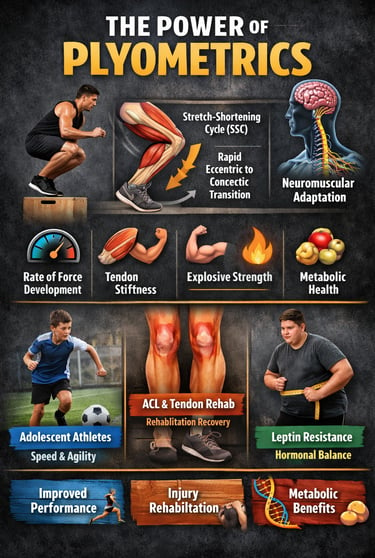
What if the difference between an average athlete and an explosive one is not just muscle size, but the speed at which force is produced?
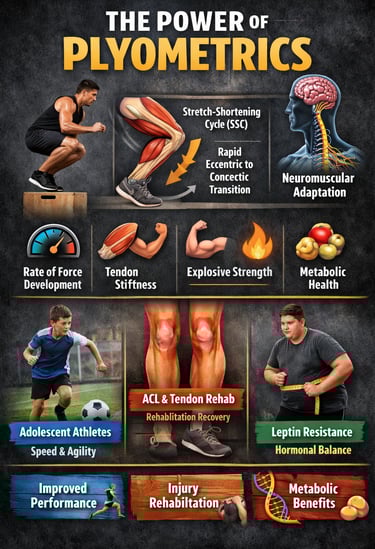
Plyometric training, built around the stretch-shortening cycle (SSC), represents one of the most powerful methods for enhancing rate of force development (RFD), neuromuscular efficiency, tendon stiffness, reactive strength, and metabolic conditioning. When an athlete lands from a jump and immediately rebounds upward, elastic energy stored in the musculotendinous unit is rapidly released, amplifying power output in milliseconds. This rapid eccentric-to-concentric transition trains the nervous system as much as the muscle, improving motor unit recruitment, intermuscular coordination, and explosive performance.
For decades, plyometrics were considered a performance tool for sprinters and jump athletes primarily. But emerging 2025–2026 research reveals a broader story. Systematic reviews and meta-analyses now demonstrate that plyometric training improves lower limb strength, jump height, sprint performance, agility, and body composition in trained adults (Sun et al., 2025; Song et al., 2026). In adolescent team-sport athletes, structured plyometric programs significantly enhance speed and reactive power while supporting safe neuromuscular development when properly dosed (Zhang et al., 2026).
Even more compelling, recent evidence suggests plyometric-style exercise may influence hormonal and metabolic health, improving leptin sensitivity in adolescents with obesity and leptin resistance (Jeong et al., 2026). Meanwhile, in rehabilitation settings, progressive plyometric loading is being integrated into ACL reconstruction recovery and tendinopathy management, restoring landing biomechanics and reactive strength critical for return to sport (Ballerini et al., 2026).
In short, plyometrics are no longer just about jumping higher. They represent a convergence of performance science, tendon physiology, neuromuscular adaptation, and metabolic regulation — making them one of the most versatile and evidence-supported training modalities of the modern era.
Clinical pearls
1. The "Biological Age" Over the "Birthday" Rule
Chronological age is a poor predictor of musculoskeletal readiness for high-impact plyometrics. Practitioners should instead assess biological maturation status (e.g., Peak Height Velocity) to mitigate the risk of apophyseal injuries during rapid growth phases.
Just because two kids are 14 doesn't mean their bones and tendons are at the same stage. If a teenager is in the middle of a massive growth spurt, we should "dial back" the intensity of jumping to protect their joints while their body catches up to its new height.
2. Tendons Love "Fast" Loading (Eventually)
While Heavy Slow Resistance (HSR) is the gold standard for tendon remodeling, plyometrics are essential for restoring the tendon’s spring-like capacity (stiffness). Integration should be staged to ensure the rate of loading does not exceed the tissue's current tolerance.
Lifting heavy weights makes your tendons strong, but jumping teaches them how to be "springy." If you’re recovering from an Achilles or knee issue, you eventually need to add quick, bouncy movements so your legs can handle the "snap" of running and jumping again.
3. The "Sand vs. Hard Court" Strategy
Surface compliance functions as a mechanical filter. Sand plyometrics attenuate impact peaks and increase metabolic cost, making them ideal for early-phase rehab or conditioning, whereas firmer surfaces maximize the reactive strength index (RSI).
Where you jump changes what you’re training. Jumping on sand is harder on your muscles but easier on your joints—great for getting fit or coming back from injury. Jumping on a hard floor is "snappier" and better for pure speed, but it puts more stress on your bones.
4. Exercise as a "Hormone Thermostat"
High-intensity explosive training can help downregulate leptin resistance in adolescent populations. This suggests that the metabolic "shocks" provided by plyometric-style movements may help reset appetite signaling and energy expenditure pathways.
Doing "explosive" exercises—like quick jumps or sprints—does more than just burn calories; it actually helps fix the chemical signals in your body that tell you when you're full and how much energy you should be burning. It’s like a "reset button" for your metabolism.
5. The "Minimum Dose" for Maximum Power
The dose-response relationship for neuromuscular power peaks at 2–3 sessions per week over an 8–12 week macrocycle. Increasing frequency beyond this often yields diminishing returns and elevates the risk of "overreaching" or neural fatigue.
More isn't always better. Your nervous system needs time to "upload" the patterns from your jump training. Sticking to two or three solid sessions a week is the "sweet spot"—any more than that, and you're just wearing yourself out without getting faster.
Why Plyometrics Are Having a Research Renaissance
If you have ever watched an athlete explode off the starting blocks, leap above a defender for a header, or sprint through an agility course with astonishing precision, you have witnessed the output of well-trained stretch-shortening cycles — the physiological foundation of plyometric training. Yet despite decades of anecdotal support from coaches and athletes alike, the scientific community continues to sharpen its understanding of exactly who benefits from plyometrics, how much, and under what conditions.
Study Summaries and Key Takeaways
Study 1 — Plyometrics and Lower Limb Strength, Power, Agility, and Body Composition in Adults
This systematic review and meta-analysis by Sun et al.(2025) set out to comprehensively quantify the effects of plyometric training on four outcome domains — lower limb muscular strength, explosive power, agility, and body composition — in athletically trained adult populations. By pooling data across multiple controlled trials, the authors were able to provide effect size estimates with substantially greater statistical power than any individual study could achieve.
The findings confirmed meaningful improvements across all four domains following structured plyometric training protocols. Explosive power — most commonly assessed through vertical jump height or standing broad jump — showed the largest pooled effect sizes, consistent with the theoretical premise that plyometrics directly trains the stretch-shortening cycle responsible for rapid force production. Lower limb strength gains were also statistically significant, indicating that plyometric loading provides sufficient mechanical stimulus to drive muscular adaptations even in already-trained individuals. Agility improvements were notable as well, reflecting plyometrics' impact on neuromuscular coordination and reactive capacity.
Importantly, body composition changes were modest but present, suggesting that high-intensity plyometric sessions carry enough metabolic demand to influence fat-free mass ratios over time. The authors emphasised that training volume, intensity progression, and surface type moderated outcomes, pointing toward the need for individualised program design.
In athletically trained adults, plyometric training produces significant improvements in explosive power, lower limb strength, agility, and body composition — with explosive power showing the greatest effect. Training variables such as volume and intensity must be carefully periodised to maximise benefit.
Study 2 — Jump, Sprint, and Agility Across Surface Types
One of the most practically relevant questions in applied plyometrics is whether the surface on which training is performed matters — and if so, how. This meta-analysis by Song et al. (2026) addressed that question directly, examining whether jump height, sprint speed, and agility gains differed depending on whether training was conducted on grass, artificial turf, sand, wooden floors, or other surfaces.
The overarching finding was reassuring: plyometric training produced significant gains in jump, sprint, and agility performance regardless of surface type. This suggests that practitioners do not need access to a specific surface to implement effective plyometric programming, a finding with clear implications for resource-limited settings such as community sport programmes or schools. However, subgroup analyses indicated that certain surfaces may confer specific advantages — sand plyometrics, for example, appeared to provide additional resistance that enhanced muscular endurance alongside explosive capacity, while firmer surfaces may be more appropriate when pure speed and reactive stiffness are the training goals.
The review also highlighted that surface compliance influences injury risk profiles, an important consideration when working with youth or injury-returning athletes. Softer surfaces attenuate impact forces and may be preferable during early-phase plyometric training, before progressing to harder surfaces as tolerance develops.
Plyometric training improves jump, sprint, and agility performance across all surface types studied, providing practitioners with flexibility in programming. Surface selection should be guided by the athlete's training phase, injury history, and specific performance goals rather than rigid prescription.
Study 3 — Plyometrics in Musculoskeletal Rehabilitation
While plyometric training is most commonly associated with performance enhancement, this scoping review by Ballerini et al.(2026) explored a less-discussed application: its use as a therapeutic modality for people living with musculoskeletal disorders. The authors systematically mapped the available evidence on plyometrics across a range of conditions including anterior cruciate ligament (ACL) injury rehabilitation, osteoarthritis, patellofemoral pain syndrome, and tendinopathy.
The review found growing evidence that appropriately dosed plyometric exercises can form a valuable component of rehabilitation programmes for several musculoskeletal conditions. For ACL rehabilitation in particular, progressive plyometric loading has been shown to restore neuromuscular control, reactive strength, and landing biomechanics — outcomes that are critical for safe return to sport. For tendinopathies, plyometrics appear to complement heavy slow resistance training by introducing the rapid loading demands that tendons must ultimately tolerate in sport.
However, the scoping review also highlighted significant gaps in the literature: heterogeneity in dosing protocols, lack of standardised outcome measures, and limited long-term follow-up studies. Ballerini and colleagues cautioned that plyometric rehabilitation must be carefully staged and supervised, particularly in populations with acute or subacute pathology, given that poorly progressed plyometric loading can exacerbate pain or increase re-injury risk.
Plyometric training shows therapeutic promise for musculoskeletal disorders, particularly ACL rehabilitation and tendinopathy management, but evidence quality is variable. Careful staging, appropriate dosing, and clinical supervision are essential — plyometrics in rehabilitation are not a one-size-fits-all solution.
Study 4 — Muscle Power and Physical Performance in Athletes: A PRISMA-Based Review
This systematic literature review by Susanti et al. (2026) applied the Preferred Reporting Items for Systematic Reviews and Meta-Analyses (PRISMA) methodology to synthesise evidence on the effects of plyometric training on muscle power and overall physical performance across a range of athletic disciplines. By adhering to rigorous search and inclusion criteria, the authors aimed to provide a transparent and reproducible synthesis of the existing evidence base.
Across the studies reviewed, plyometric training consistently produced significant improvements in muscle power, with effect sizes varying depending on training duration, frequency, and the baseline training status of participants. Athletes in sports requiring repeated explosive efforts — such as basketball, volleyball, and soccer — demonstrated particularly robust adaptations. The review also examined the dose-response relationship between training load and performance outcomes, finding that protocols ranging from six to twelve weeks, with two to three sessions per week, produced the most consistent positive results.
Importantly, the PRISMA-guided methodology allowed the authors to critically evaluate the methodological quality of included studies, identifying common limitations such as small sample sizes, absence of control groups, and insufficient reporting of training specifics. These observations provide a useful roadmap for future researchers designing plyometric training studies.
Plyometric training reliably improves muscle power and physical performance across athletic disciplines when protocols are six to twelve weeks in duration at two to three sessions per week. Methodological quality in primary studies remains variable, and future research should prioritise larger samples and standardised reporting.
Study 5 — Hormonal Responses to Exercise in Adolescents with Obesity and Leptin Resistance
While not exclusively a plyometrics study, this randomised trial is highly relevant to practitioners designing plyometric programs for adolescent populations — particularly those in which obesity and hormonal dysregulation are clinical concerns. The study by Jeong et al. (2026) examined how structured exercise interventions, including components commonly incorporated into plyometric-style training, influenced key hormonal markers in adolescents diagnosed with obesity and leptin resistance.
Leptin resistance — a state in which adipose-derived leptin signals fail to effectively suppress appetite and stimulate energy expenditure — is increasingly recognised as a barrier to weight management in obese youth. The trial found that structured exercise produced meaningful changes in leptin sensitivity and associated hormonal profiles, suggesting that physical training can partially reverse the hormonal milieu that perpetuates obesity in adolescents. These findings carry direct implications for plyometric training programme design: explosive training modalities that recruit large muscle masses and stimulate anabolic and metabolic hormonal responses may be particularly well-suited for improving body composition and metabolic health in this population.
The randomised design and adolescent-specific focus of this trial fill an important gap in the literature, often dominated by adult and elite-athlete samples.
Exercise interventions can positively modulate leptin sensitivity and hormonal profiles in obese adolescents with leptin resistance, providing a physiological rationale for incorporating high-intensity, metabolically demanding modalities — such as plyometrics — into youth health and fitness programmes targeting metabolic dysfunction.
Study 6 — Plyometric Training and Physical Fitness in Adolescent Team Sports
This systematic review and meta-analysis by Zhang et al. (2026) focused specifically on adolescent athletes competing in team sports — a population of enormous practical importance given the global prevalence of youth football, basketball, volleyball, and handball. The authors synthesised evidence on how plyometric training influenced a comprehensive battery of physical fitness outcomes, including sprint performance, jumping ability, agility, strength, and aerobic capacity.
The results were strongly positive: plyometric training produced significant improvements across nearly all fitness domains in adolescent team sport athletes. Jump performance and sprint speed showed the largest effect sizes, consistent with findings from adult populations. Agility improvements were also substantial, reinforcing the multi-dimensional nature of plyometric adaptation. Notably, the review found that training programmes of at least eight weeks produced more consistent results than shorter interventions, and that twice-weekly sessions appeared to optimally balance training stimulus with recovery in developing athletes.
A particularly important contribution of this review was its attention to the developmental considerations of adolescent athletes. The authors discussed how the rapid growth phases of adolescence influence musculotendinous tissue properties and neuromuscular coordination, suggesting that plyometric program design for youth must account for biological maturation status rather than chronological age alone.
Plyometric training is highly effective for improving physical fitness in adolescent team sport athletes, with especially strong effects on jump height and sprint speed. Programs should run a minimum of eight weeks at twice-weekly frequency, and training prescription must be adapted to biological maturation status rather than age alone.
Synthesising the Evidence: Broad Themes
1️⃣ Plyometrics are no longer “just jump training.”
Modern evidence positions plyometric training as a neuromuscular performance amplifier. By targeting the stretch-shortening cycle (SSC), it enhances the rate of force development (RFD), reactive strength, tendon stiffness, and motor unit recruitment efficiency. These are foundational drivers of elite athletic output.
2️⃣ Explosive power adaptations are robust and reproducible.
Recent systematic reviews and meta-analyses (2025–2026) confirm consistent improvements in jump height, sprint speed, agility, and lower-limb strength across trained adult populations. Effect sizes are strongest for explosive performance — precisely where SSC efficiency matters most.
3️⃣ Dose and progression determine success.
The emerging consensus: 6–12 weeks, 2–3 sessions per week, progressive overload, and surface-appropriate loading. Mode matters less than programming integrity. Plyometrics fail not because they are ineffective, but because they are poorly periodized.
4️⃣ Adolescents are not miniature adults.
Youth athletes demonstrate significant gains in speed and power, but biological maturation — not chronological age — must guide programming. Tendon compliance, growth velocity, and neuromuscular coordination shift rapidly during adolescence, demanding intelligent supervision.
5️⃣ Rehabilitation science is catching up.
Evidence now supports staged plyometric integration in ACL reconstruction recovery, tendinopathy management, and return-to-sport protocols. Reactive strength restoration is not optional — it is central to safe reintegration into sport.
6️⃣ Metabolic implications are emerging.
Randomized trials in adolescents with obesity suggest that high-intensity, explosive exercise may improve leptin sensitivity and hormonal responsiveness. Plyometrics may represent a bridge between performance physiology and metabolic medicine.
7️⃣ The field is maturing — but not complete.
Methodological rigor is improving. PRISMA frameworks and larger pooled analyses are strengthening conclusions. Yet longer follow-up data, sex-specific analysis, and standardized loading metrics remain necessary.
Bottom Line
Plyometric training in 2026 stands at the intersection of performance science, tendon physiology, neuromuscular adaptation, and metabolic health. When intelligently prescribed, it is not a niche modality — it is a foundational one.
Practical Implications for Coaches, Physiotherapists, and Athletes
The collective evidence from these six studies translates into several actionable recommendations:
For strength and conditioning coaches working with adult athletes, plyometric training should be periodised as a core component of both in-season and off-season programming, with particular attention to explosive power and agility outcomes. Surface variation can be used strategically to target different adaptation profiles.
For physiotherapists and rehabilitation specialists, the emerging evidence supporting plyometrics in musculoskeletal disorder management is compelling, but must be applied with careful staging, patient education, and progressive loading protocols. ACL rehabilitation and tendinopathy programmes stand to benefit most from well-dosed plyometric integration.
For youth sport coaches and school physical education professionals, the adolescent-specific evidence strongly supports plyometric training as a safe and highly effective method for improving athletic performance, provided that biological maturation is accounted for and sessions are appropriately supervised.
For public health and clinical practitioners working with obese or metabolically at-risk youth, the hormonal evidence from Jeong et al. (2026) suggests that incorporating high-intensity, explosive exercise modalities into therapeutic exercise programmes may offer hormonal and metabolic benefits that complement body composition goals.
Safe Progression in Action
As noted in Study 3 (Rehab) and the clinical pearls, plyometrics must be staged. A standard "staged" approach looks like this:
Stage 1 (Stabilisation): Focusing on the landing (e.g., Box Jumps, focusing on the stick).
Stage 2 (Strength): Traditional jumping (e.g., Squat Jumps).
Stage 3 (Power/SSC): True plyometrics (e.g., Depth Jumps, where the floor contact time is minimized).
Frequently Asked Questions (FAQs)
Q1: How often should I do plyometric training per week? Based on the most consistent findings across the reviewed studies, two to three sessions per week appears to be the optimal frequency for most populations. This frequency provides sufficient stimulus for neuromuscular adaptation while allowing adequate recovery between sessions — particularly important for youth athletes and those in rehabilitation contexts.
Q2: How long does a plyometric training program need to be to see results? Most studies found that meaningful improvements were observed after six weeks at minimum, with the most robust and consistent effects emerging after eight to twelve weeks of structured training. Short programmes of four weeks or fewer showed inconsistent results and are unlikely to produce lasting adaptations.
Q3: Is plyometric training safe for adolescents? Yes, when appropriately designed and supervised. The evidence reviewed by Zhang et al. (2026) and supported by the hormonal data from Jeong et al. (2026) indicates that plyometric training can be both safe and highly beneficial for young athletes. Key safeguards include accounting for biological maturation rather than chronological age, beginning with lower-intensity drills, and ensuring qualified supervision throughout the program.
Q4: Can plyometric training be used during rehabilitation from injury? The scoping review by Ballerini et al. (2026) indicates growing evidence that plyometrics can be incorporated into rehabilitation for conditions including ACL injury, tendinopathy, and patellofemoral pain syndrome. However, plyometric rehabilitation must be carefully staged, beginning with low-intensity introductory exercises and progressing only as pain, strength, and neuromuscular control improve. Clinical supervision is strongly recommended.
Q5: Does the surface I train on matter for plyometric outcomes? Song et al. (2026) found that significant performance gains occur across all surface types, meaning you do not need access to a specific surface to benefit from plyometric training. That said, surface compliance influences impact forces and injury risk, so softer surfaces may be more appropriate during early training phases or for higher-risk populations, with progression to firmer surfaces as tolerance improves.
Q6: Can plyometric training help with weight loss or body composition? Sun et al. (2025) found modest but meaningful body composition improvements in trained adults following plyometric training. Combined with the hormonal and metabolic evidence from Jeong et al. (2026) in obese adolescents, the data suggest that plyometrics' high metabolic demand and muscle recruitment make it a useful component of body composition management programmes, particularly when combined with appropriate nutritional strategies.
Q7: What does plyometric training do to hormones? Jeong et al. (2026) demonstrated that structured exercise including explosive modalities can improve leptin sensitivity in obese adolescents with leptin resistance. More broadly, plyometric training has been associated in the literature with favourable anabolic hormonal responses including growth hormone and testosterone release, particularly during high-volume sessions. These hormonal effects may partly explain the body composition and power adaptations observed across the performance studies reviewed here.
Author’s Note
As a clinician and long-standing student of exercise physiology, I have watched the evolution of plyometric training with particular interest. What was once viewed primarily as a performance enhancement tool for elite sprinters and jump athletes has matured into a scientifically supported, multi-dimensional training modality with implications that extend far beyond the track or court.
The 2025–2026 research cycle marks an important inflection point. We now have high-quality systematic reviews, meta-analyses, and randomized trials examining plyometrics across adult athletes, adolescent team sports, rehabilitation settings, and even metabolically vulnerable youth populations. This convergence of evidence allows us to move beyond anecdote and into precision programming — where volume, surface, maturation status, and progression are deliberately matched to physiology.
However, it is equally important to maintain intellectual humility. While explosive power gains are consistently demonstrated, and rehabilitation applications show promise, the field still requires longer follow-up studies, standardized reporting of loading parameters, and deeper mechanistic exploration of tendon remodeling, rate of force development, and hormonal adaptations. Evidence-based enthusiasm must always be balanced with clinical judgment.
My goal in synthesizing this body of work is not to advocate indiscriminate high-intensity training, but rather to encourage thoughtful integration. Plyometrics, when intelligently prescribed and appropriately supervised, represent a powerful stimulus for neuromuscular adaptation, functional resilience, and potentially metabolic health. When misapplied, they carry unnecessary risk.
As with all training modalities, context is paramount. Individual goals, injury history, biological maturation, and recovery capacity must guide implementation.
I hope this synthesis supports coaches, physiotherapists, clinicians, and athletes in making informed, evidence-driven decisions — and contributes to a broader conversation about how performance science and medical science increasingly intersect.
Disclaimer: Before initiating any High-Intensity Interval Training (HIIT) program, like plometrics particularly if you are previously sedentary, over the age of 45, or have a history of cardiovascular issues (including hypertension, high cholesterol, or diagnosed heart disease) or metabolic conditions (such as diabetes or metabolic syndrome), you must consult with a healthcare professional or a board-certified cardiologist. Medical clearance ensures the safe and appropriate prescription of high-intensity efforts, confirming that this exercise modality is suitable for your current health status and preventing adverse cardiac events.
Related Articles
Why Strength Training Improves Running Economy and Late-Race Performance | DR T S DIDWAL
How Exercise Rewires Metabolism: Molecular Control of Lipolysis and Lipid Metabolism | DR T S DIDWAL
Why Strength Training Improves Running Economy and Late-Race Performance | DR T S DIDWAL
How Exercise Rewires Metabolism: Molecular Control of Lipolysis and Lipid Metabolism | DR T S DIDWAL
How to Build a Disease-Proof Body: Master Calories, Exercise & Longevity | DR T S DIDWAL
References
Ballerini, S., Schneebeli, A., & New, K. (2026). Plyometric training in musculoskeletal disorders: A scoping review. Clinical Journal of Sport Medicine, 36(1), 66–86. https://doi.org/10.1097/JSM.0000000000001375
Jeong, D., Valentine, R. J., Park, K., Jeong, H., Hong, J., & Kang, S. (2026). Effect of exercise on hormonal responses in adolescents with obesity and leptin resistance: A randomized trial. Scientific Reports, 16(1), 4099. https://doi.org/10.1038/s41598-026-36045-9
Song, I., Kwon, J., Kyun, I., Lee, D. H., & Lee, S. Y. (2026). Plyometric training enhances jump, sprint, and agility performance across different surface types: A systematic review and meta-analysis. The Journal of Sports Medicine and Physical Fitness, 66(2), 232–243. https://doi.org/10.23736/S0022-4707.25.16880-1
Sun, J., Sun, J., Shaharudin, S., et al. (2025). Effects of plyometrics training on lower limb strength, power, agility, and body composition in athletically trained adults: Systematic review and meta-analysis. Scientific Reports, 15, 34146. https://doi.org/10.1038/s41598-025-10652-4
Susanti et al. (2026). Effects of plyometric training on muscle power and physical performance of athletes: A systematic literature review based on PRISMA method. International Journal of Multidisciplinary Research and Analysis, 9(1), 257–263. https://doi.org/10.47191/ijmra/v9-i1-35
Zhang, F., Liu, Y., Liu, J., Yeremenko, O., & Shi, L. (2026). The effects of plyometric training on physical fitness in adolescent team sports: A systematic review and meta-analysis. Frontiers in Physiology, 17, 1760239. https://doi.org/10.3389/fphys.2026.1760239