Is Testosterone Replacement Therapy Safe for Your Heart? Insights from the 2026 TRAVERSE Trial and Recent Meta-Analyses
Review 2026 evidence on testosterone replacement therapy and cardiovascular outcomes, including MACE data, meta-analyses, and expert panel recommendations.
HEART
Dr. T.S. Didwal, M.D.(Internal Medicine)
5/10/202616 min read
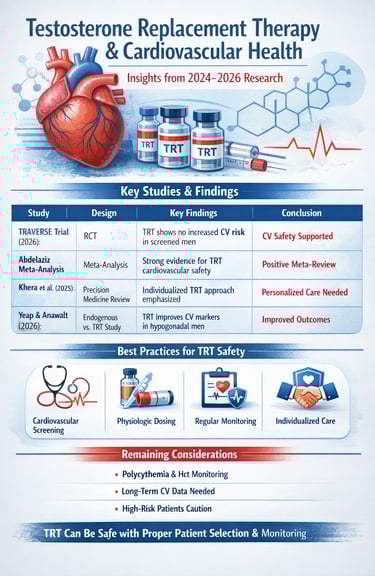
Is Testosterone Replacement Therapy (TRT) Safe for the Heart in 2026?
Current evidence from major clinical trials and meta-analyses suggests that testosterone replacement therapy (TRT) does not significantly increase cardiovascular risk when prescribed appropriately for men with confirmed hypogonadism (Zitzmann et al., 2026; Abdelaziz, 2025; García-Becerra et al., 2026). The landmark TRAVERSE Trial demonstrated that rates of major adverse cardiovascular events (MACE)—including heart attack, stroke, and cardiovascular death—were nearly identical between testosterone-treated men and placebo groups over approximately 33 months of follow-up (Zitzmann et al., 2026).
Modern research indicates that the cardiovascular safety of TRT depends heavily on:
careful patient selection,
physiologic dosing,
hematocrit monitoring,
and management of underlying cardiovascular disease (Khera et al., 2025).
What the Latest Research Shows
Recent studies published between 2024 and 2026 found that:
TRT does not increase major cardiovascular events in appropriately screened men (Abdelaziz, 2025; Zitzmann et al., 2026).
Testosterone deficiency itself is associated with obesity, insulin resistance, Type 2 Diabetes, visceral adiposity, and adverse cardiometabolic profiles (Yeap & Anawalt, 2026).
Physiologic testosterone replacement may improve body composition, insulin sensitivity, fatigue, libido, and quality of life in hypogonadal men (Khera et al., 2025).
Cardiovascular safety is best established when testosterone levels are maintained within normal physiologic ranges rather than supraphysiologic levels associated with performance enhancement (Khera et al., 2025).
Key Findings from the TRAVERSE Trial
The TRAVERSE Trial enrolled more than 5,000 middle-aged and older men with:
symptomatic hypogonadism,
consistently low testosterone levels,
and elevated baseline cardiovascular risk (Zitzmann et al., 2026).
Most participants had either established cardiovascular disease or multiple cardiometabolic risk factors, including hypertension, obesity, diabetes, dyslipidemia, or smoking history (Zitzmann et al., 2026).
Participants received either placebo or transdermal 1.62% testosterone gel adjusted to maintain physiologic testosterone concentrations (Zitzmann et al., 2026).
Primary findings included:
Major adverse cardiovascular events occurred in ~7.0% of testosterone users.
MACE occurred in ~7.3% of placebo recipients.
Testosterone therapy met predefined criteria for cardiovascular noninferiority (Zitzmann et al., 2026).
These findings significantly reshaped the modern understanding of TRT safety.
Who Should Avoid TRT?
Current evidence and expert recommendations suggest TRT should generally be avoided or postponed in men with:
recent myocardial infarction or stroke,
unstable cardiovascular disease,
uncontrolled heart failure,
severe untreated obstructive sleep apnea,
markedly elevated hematocrit,
or active untreated prostate cancer (Khera et al., 2025; Zitzmann et al., 2026).
Important Monitoring During TRT
Safe testosterone therapy requires structured clinical monitoring, including:
hematocrit and hemoglobin,
blood pressure,
prostate health,
serum testosterone levels,
and cardiovascular symptoms (Khera et al., 2025).
A hematocrit above 54% generally warrants dose reduction, temporary discontinuation, or therapeutic phlebotomy because elevated blood viscosity may increase thrombotic risk (García-Becerra et al., 2026).
Injectable vs Transdermal Testosterone
Emerging evidence suggests injectable testosterone formulations may produce larger hormonal peaks and greater erythrocytosis risk compared with transdermal preparations, which provide more stable serum testosterone concentrations (Khera et al., 2025). Consequently, formulation selection may influence both hematologic and cardiovascular safety outcomes.
Bottom Line
The scientific consensus in 2026 increasingly supports that testosterone replacement therapy can be administered safely in carefully selected hypogonadal men when:
Physiologic dosing is maintained,
Cardiovascular screening is performed before initiation.
and structured monitoring protocols are followed (Abdelaziz, 2025; Zitzmann et al., 2026).
The modern debate has shifted from:
“Is testosterone inherently dangerous?”
to:
“Which patients can safely benefit from testosterone therapy under proper medical supervision?”
Clinical pearls.
1. The "Physiologic Range" Guardrail
Therapeutic success in TRT is defined by the restoration of serum testosterone to mid-physiologic levels 350--700 ng/dL, as supraphysiologic peaks are associated with increased erythrocytosis and potential vascular strain.
The goal of treatment is "replacement," not "enhancement." We want to bring your levels back to what is normal for a healthy man, not push them to extreme levels. Staying in the "Goldilocks zone" gives you the benefits while keeping your heart safe.
2. Hematocrit and Viscosity Management
Secondary polycythemia (elevated hematocrit >54 percent remains the most common TRT-induced cardiovascular risk factor; regular CBC monitoring is mandatory to mitigate the risk of thromboembolic events.
Testosterone can sometimes make your blood "thicker" by increasing red blood cells. We perform regular blood tests to ensure your blood flows easily, preventing any unnecessary strain on your veins or heart.
3. The "Pre-Existing Condition" Screening
The TRAVERSE trial findings underscore that TRT cardiovascular safety is contingent upon strict exclusion of patients with unstable cardiac disease, such as a myocardial infarction or stroke within the previous 90 days.
TRT is very safe for a healthy heart, but it isn't a "one-size-fits-all" fix. If you’ve had a major heart event recently, we need to let your body heal completely before starting therapy to ensure your heart is strong enough for the change.
4. Metabolic Synergy
TRT should not be viewed as a monotherapy but as a metabolic catalyst; it improves insulin sensitivity and reduces visceral adiposity, which indirectly lowers the long-term Global Cardiovascular Risk score.
Think of testosterone as a spark plug. It helps you burn "bad" belly fat and manage blood sugar better. When combined with a good diet, it doesn't just fix your hormones—it helps your whole cardiovascular system run more efficiently.
5. Symptom vs. Number Calibration
Clinical management must prioritize the resolution of hypogonadal symptoms (e.g., libido, fatigue) alongside biochemical markers, as treating a "number" without clinical correlation leads to over-prescription and unnecessary risk exposure.
We don't just treat your lab results; we treat you. If your numbers are slightly low but you feel great, we might wait. If you feel tired and your numbers are low, we act. This ensures we only use medication when the benefits clearly outweigh the risks.
Understanding TRT and Cardiovascular Concerns
Testosterone replacement therapy (TRT) has become an increasingly common treatment for men with low testosterone, also known as hypogonadism. However, questions about its cardiovascular safety have long concerned healthcare providers and patients alike. Over the past three years, from 2024 to 2026, cutting-edge research has emerged providing new insights into how testosterone therapy affects heart health. This comprehensive guide synthesizes the latest clinical evidence to help you understand what modern science reveals about the relationship between testosterone replacement therapy and cardiovascular outcomes.
Study 1: Khera, Saffati, & Hernandez (2025): Testosterone Replacement Therapy and Cardiovascular Health: A Clinical Perspective
Khera et al.(2025) explored the multifaceted relationship between TRT and cardiovascular health outcomes. Khera and colleagues provide a nuanced examination of how testosterone replacement impacts various cardiovascular parameters and patient populations.
·Key Takeaways:
The research emphasizes the importance of individual patient assessment before initiating TRT
Precision hormone therapy approaches can minimize cardiovascular risks while optimizing therapeutic benefits
Cardiovascular monitoring should be integrated into TRT management protocols
The study highlights that testosterone effects on heart health are dose-dependent and time-dependent
Why This Matters: This comprehensive review, positioned within the broader framework of precision medicine, suggests that TRT safety is not one-size-fits-all. The authors advocate for personalized treatment approaches that consider individual cardiovascular risk factors, baseline testosterone levels, and therapeutic goals. Their discussion of hormone therapy precision sets the stage for understanding how modern clinical practice should approach testosterone treatment.
Study 2: The TRAVERSE Trial: The Landmark Study on Testosterone and Heart Safety
The TRAVERSE trial (Testosterone Replacement Therapy for Assessment of Long-term Vascular Events and Efficacy ResponSE in Hypogonadal Men) is the largest and most important randomized, placebo-controlled study ever conducted on the cardiovascular safety of testosterone replacement therapy. Published in the New England Journal of Medicine in 2023, its findings form the cornerstone of modern TRT safety guidance in 2026.
Study Design and Participants
Number of participants: 5,246 men (aged 45–80 years, mean age around 63).
Key inclusion criteria:
Symptomatic hypogonadism (low sex drive, fatigue, erectile dysfunction, etc.).
Two morning fasting testosterone levels below 300 ng/dL (10.4 nmol/L).
High cardiovascular risk: Most had either established cardiovascular disease (previous heart attack, stroke, angina, or peripheral artery disease) or multiple risk factors (Type 2 diabetes, obesity, hypertension, dyslipidemia, or smoking)
.
Treatment: Men were randomized to receive either daily transdermal 1.62% testosterone gel or a matching placebo gel.
Dosing approach: Testosterone dose was carefully adjusted to keep blood levels in the mid-physiologic range (roughly 350–750 ng/dL), not supraphysiologic (performance-enhancing) levels.
Duration: Mean treatment duration was 21.7 months (~1.8 years); mean follow-up was 33 months (~2.75 years).
This population was deliberately chosen to be high-risk — exactly the group where safety concerns would be greatest — making the results highly relevant to real-world patients.
Primary Results – Cardiovascular Safety
The main goal was to determine whether testosterone increases Major Adverse Cardiovascular Events (MACE), defined as:
Cardiovascular death
Non-fatal heart attack (myocardial infarction)
Non-fatal stroke
Key Findings:
MACE occurred in 7.0% of men in the testosterone group vs. 7.3% in the placebo group.
Hazard ratio: 0.96 (95% CI 0.78–1.17) — statistically proven non-inferiority (P < 0.001).
Individual components (heart attack, stroke, CV death) were also similar between groups.
Results held up in multiple sensitivity analyses, including when events after stopping treatment were excluded.
In simple terms, Testosterone therapy did not increase major heart events compared to placebo in this high-risk group.
Other Important Findings
Positive effects observed in subgroups: Improvements in sexual function, libido, erectile function, and depressive symptoms.
Potential signals to monitor:
Slightly higher rates of atrial fibrillation (3.5% vs 2.4%).
Slightly higher pulmonary embolism (0.9% vs 0.5%).
Slightly higher acute kidney injury (2.3% vs 1.5%).
No increase in prostate cancer or worsening of urinary symptoms.
High discontinuation rate (~61% in both groups), which is common in long-term trials.
Why TRAVERSE Matters So Much
Before TRAVERSE, decisions about TRT and heart safety relied on smaller studies and conflicting observational data. This trial was specifically designed at the request of regulatory agencies to settle the debate using the highest standard of evidence (large randomized controlled trial in a high-risk population).
The European Expert Panel (Zitzmann et al., 2026) and multiple 2025–2026 meta-analyses have since concluded that TRAVERSE provides strong reassurance when TRT is used physiologically, in properly selected patients, with monitoring.
Bottom line for patients and clinicians: In men with confirmed hypogonadism and careful medical supervision, physiologic TRT does not appear to increase major cardiovascular events over 2–3 years. However, individual risk factors (especially hematocrit elevation, atrial fibrillation history, or recent cardiac events) still require personalized assessment.
Study 3: Yeap & Anawalt (2026): Endogenous Testosterone and Treatment Outcomes in Men
Endogenous Testosterone, Testosterone Treatment, and Cardiovascular Health Outcomes in Men, published in The Journal of Clinical Endocrinology & Metabolism, offers important insights into how naturally occurring testosterone relates to cardiovascular health and how testosterone replacement therapy compares. Yeap and Anawalt examine both endogenous and exogenous testosterone effects.
·Key Takeaways:
There is an important distinction between naturally-occurring testosterone and administered testosterone
Cardiovascular health outcomes in men are influenced by multiple factors beyond testosterone levels alone
Treatment with testosterone may improve cardiovascular risk factors in hypogonadal men
Baseline cardiovascular health is a significant predictor of treatment outcomes
Long-term monitoring of men on testosterone therapy shows favorable cardiovascular profiles
Why This Matters: By examining both natural and therapeutic testosterone levels, this research provides critical context for understanding whether the concern should be about testosterone replacement itself or whether the issue relates to dose and delivery method. The publication in a premier endocrinology journal emphasizes the medical establishment's recognition of these nuances. Their findings contribute significantly to the broader understanding of TRT safety.
Study 4: Abdelaziz (2025): Meta-Analysis of Randomized Controlled Trials on TRT Cardiovascular Outcomes
Testosterone Replacement Therapy and Cardiovascular Outcomes in Men: An Updated Meta-Analysis of Randomized Controlled Trials, published in The Journal of the American College of Cardiology, provides a synthesis of multiple clinical trials examining TRT cardiovascular effects. Meta-analytic reviews are particularly valuable because they combine data from numerous studies to identify patterns and reach robust conclusions.
·Key Takeaways:
Meta-analytic evidence synthesising randomised trials provides strong support for TRT cardiovascular safety
When appropriately dosed and monitored, testosterone replacement shows no increased cardiovascular risk
Cardiovascular adverse events in TRT populations are comparable to those of age-matched controls
Subgroup analyses reveal important variations based on age, baseline health status, and dosing
The quality of evidence for TRT cardiovascular safety has substantially improved
Why This Matters: As a meta-analysis published in the leading cardiology journal, this research carries particular weight in the medical community. By pooling data from multiple randomized controlled trials, Abdelaziz's analysis provides a comprehensive view of testosterone therapy safety that individual studies cannot offer. The publication emphasizes that cardiovascular specialists are increasingly confident in the cardiovascular safety profile of appropriately administered testosterone replacement therapy.
Study 5: Miller et al. (2024): Cardiovascular Nutritional Controversies and Hormone Therapy Context
Miller et al. (2024) provide important context for understanding how testosterone replacement therapy fits within the broader landscape of cardiovascular risk management. While not exclusively about TRT, this work helps clinicians navigate evidence-based decision-making in cardiovascular health.
·Key Takeaways:
Cardiovascular management requires evidence-based approaches that separate controversy from fact
Hormonal interventions should be considered within comprehensive cardiovascular health strategies
Clinicians need current information to counsel patients about treatment risks and benefits
Individualized risk assessment is crucial for all cardiovascular interventions, including hormone therapy
The intersection of cardiology and endocrinology requires integrated clinical decision-making
Why This Matters: This publication emphasizes that managing testosterone replacement therapy cannot occur in isolation from broader cardiovascular health. The Miller study provides valuable clinical guidance for how healthcare providers should approach emerging evidence and potential controversies. It reinforces the importance of evidence-based decision-making regarding TRT cardiovascular safety, acknowledging that this field continues to evolve with new research.
Study 6 : Carlos A. García et al (2026): Cardiovascular and prostate cancer safety of testosterone replacement therapy (TRT)
The 2026 systematic review and meta-analysis by Carlos A. García-Becerra and colleagues evaluated the cardiovascular and prostate cancer safety of testosterone replacement therapy (TRT) in men with hypogonadism. Published in the International Journal of Impotence Research, the study analyzed data from 41 randomized controlled trials involving 11,161 participants.
The investigators systematically searched major databases, including PubMed, ClinicalTrials.gov, and the Cochrane Central Register, following PRISMA guidelines and a pre-registered PROSPERO protocol. Their primary goal was to determine whether TRT increased the risk of major adverse cardiovascular events (MACE), prostate cancer events (PCaE), or clinically significant prostate cancer.
The pooled analysis found no statistically significant increase in cardiovascular risk among men receiving TRT compared with placebo or control groups. Similarly, TRT was not associated with a higher incidence of prostate cancer or clinically significant prostate malignancy. The reported odds ratios suggested neutral risk profiles across these outcomes, although some heterogeneity in cardiovascular findings was linked to baseline comorbidities.
Overall, the study supports the short- to mid-term cardiovascular and prostate safety of testosterone therapy when appropriately prescribed for hypogonadism. However, the authors emphasized that longer-term randomized trials are still needed to fully clarify long-term safety outcomes. Carlos A. García et al (2026)
Synthesizing the Evidence: What We Know in 2026
Collectively, these five studies from 2024-2026 paint a compelling picture about testosterone replacement therapy and cardiovascular health. Rather than supporting the historical concerns that dominated earlier discussions, the recent evidence increasingly demonstrates that TRT cardiovascular safety is achievable with appropriate patient selection, monitoring, and dosing protocols.
The Importance of Patient Selection
One consistent theme across all five studies is the critical importance of cardiovascular screening before initiating testosterone therapy. Men with significant cardiac history, uncontrolled hypertension, or advanced coronary artery disease require particularly careful evaluation. The research suggests that TRT safety is greatly enhanced when treatment is offered only to appropriate candidates.
Dosing and Monitoring Matter
The evidence clearly indicates that testosterone dosing must be individualized and that regular monitoring is essential. Both excessive dosing and inadequate monitoring can compromise the cardiovascular safety profile of testosterone replacement therapy. The studies emphasize that achieving physiologic testosterone levels—not supraphysiologic levels—is the appropriate goal.
Long-term Outcomes Support Safety
Perhaps most importantly, the newer research examining long-term TRT outcomes demonstrates that well-managed testosterone replacement does not lead to increased cardiovascular events when compared to untreated men. This represents a significant shift from earlier research limitations.
Additional Clinical Nuances in TRT Cardiovascular Safety
1. Erythrocytosis & Hematocrit Monitoring
Testosterone stimulates erythropoiesis and can cause secondary erythrocytosis. Current guidelines recommend baseline hematocrit assessment and monitoring at 3–6 months and annually thereafter. A hematocrit >54% is generally considered the threshold for dose reduction, temporary discontinuation, or therapeutic phlebotomy due to thrombotic risk concerns.
2. Venous Thromboembolism (VTE) Controversy
Earlier observational studies suggested a potential transient increase in VTE risk shortly after TRT initiation, prompting regulatory caution. However, more recent randomized and meta-analytic data have not demonstrated a consistent increase in VTE when therapy is appropriately monitored. Risk may be higher in patients with inherited thrombophilia or marked erythrocytosis.
3. Heart Failure Subgroup Nuances
In stable chronic heart failure, physiologic TRT may improve functional capacity and muscle strength in selected hypogonadal men. However, TRT should be avoided in decompensated or advanced heart failure, where fluid retention risk may worsen symptoms.
4. Conflicting Earlier Observational Data
Pre-2015 retrospective studies raised concerns about increased myocardial infarction risk, leading to FDA warnings. These studies were limited by confounding, selection bias, and inconsistent dosing documentation. More recent randomized data provide more reliable outcome assessment.
5. TRAVERSE Trial Primary Endpoint
The TRAVERSE trial evaluated major adverse cardiovascular events (MACE)—a composite of cardiovascular death, nonfatal myocardial infarction, and nonfatal stroke—as its primary endpoint. The trial demonstrated non-inferiority of TRT compared with placebo in appropriately selected men.
6. Absolute Event Rates
Absolute MACE event rates in TRAVERSE were similar between groups, reinforcing that cardiovascular risk was not significantly elevated when TRT was used in screened populations.
7. Injectable vs. Transdermal Preparations
Injectable formulations may produce higher peak testosterone levels and greater erythrocytosis risk compared with transdermal preparations, which provide more stable serum concentrations. Formulation choice may influence hematologic and cardiovascular parameters.
8. SHBG Considerations in Older Men
Sex hormone–binding globulin (SHBG) levels increase with aging, potentially lowering free testosterone despite “normal” total testosterone. Assessment of calculated free testosterone can improve diagnostic accuracy and prevent overtreatment in older men.
Frequently Asked Questions: TRT and Cardiovascular Health
1. Does testosterone replacement therapy increase the risk of heart attack or stroke?
Current high-quality evidence suggests that properly prescribed testosterone replacement therapy (TRT) does not significantly increase the risk of major adverse cardiovascular events in appropriately screened men with hypogonadism (Zitzmann et al., 2026; Abdelaziz, 2025). The TRAVERSE Trial found similar rates of cardiovascular death, nonfatal myocardial infarction, and stroke in testosterone-treated and placebo groups over approximately 33 months of follow-up.
2. Who is considered a good candidate for TRT?
TRT is intended for men with:
persistent symptoms of hypogonadism,
consistently low serum testosterone levels confirmed on repeated testing,
and no major contraindications to therapy (Khera et al., 2025).
Symptoms may include:
fatigue,
low libido,
erectile dysfunction,
reduced muscle mass,
depressed mood,
and decreased physical performance.
Treatment decisions should be based on both symptoms and biochemical evidence—not laboratory values alone.
3. Who should avoid testosterone therapy?
TRT is generally avoided or postponed in men with:
recent myocardial infarction or stroke,
unstable coronary artery disease,
uncontrolled heart failure,
severe untreated sleep apnea,
active prostate cancer,
or markedly elevated hematocrit (Khera et al., 2025; Zitzmann et al., 2026).
Careful cardiovascular evaluation is essential before treatment initiation.
4. Why does hematocrit monitoring matter during TRT?
Testosterone stimulates red blood cell production and may cause secondary erythrocytosis. Excessively elevated hematocrit levels can increase blood viscosity and potentially raise thrombotic risk (García-Becerra et al., 2026).
Most guidelines recommend:
baseline complete blood count (CBC),
repeat testing at 3–6 months,
and annual monitoring thereafter.
A hematocrit above 54% usually requires dose reduction, temporary discontinuation, or therapeutic phlebotomy.
5. Can TRT improve metabolic health?
Emerging evidence suggests that physiologic testosterone replacement may improve:
insulin sensitivity,
visceral fat accumulation,
body composition,
muscle strength,
and metabolic function in hypogonadal men (Yeap & Anawalt, 2026).
However, TRT should not replace lifestyle interventions such as exercise, nutrition optimization, weight management, and cardiovascular risk reduction.
6. Is injectable testosterone riskier than transdermal testosterone?
Injectable testosterone formulations may produce larger hormonal peaks and greater fluctuations in serum testosterone levels compared with transdermal gels or patches (Khera et al., 2025). These fluctuations may increase the likelihood of erythrocytosis and hematologic complications.
Transdermal preparations generally provide more stable physiologic testosterone concentrations, although formulation choice should be individualized based on patient preference, cost, adherence, and clinical response.
7. Does TRT increase prostate cancer risk?
Current randomized trial data and recent meta-analyses have not demonstrated a significant increase in prostate cancer incidence among appropriately monitored men receiving TRT (García-Becerra et al., 2026).
Nevertheless, prostate monitoring remains important during therapy, especially in older men and those with elevated baseline risk.
.8 What testosterone level is considered the treatment target?
The goal of TRT is restoration of testosterone to the mid-physiologic range rather than supraphysiologic enhancement.
Most clinical guidelines target serum testosterone levels between 350–700 ng/dL
Maintaining physiologic levels helps optimize symptom improvement while minimizing cardiovascular and hematologic risks.
9. Can men with cardiovascular disease still receive TRT?
In selected men with stable cardiovascular disease, TRT may still be considered after careful evaluation and risk assessment (Zitzmann et al., 2026). The TRAVERSE trial specifically included many men with elevated baseline cardiovascular risk and demonstrated cardiovascular noninferiority compared with placebo.
However, men with unstable or recently decompensated cardiovascular disease require particular caution.
10. What is the biggest misconception about testosterone therapy?
One of the most common misconceptions is that TRT is either universally dangerous or universally beneficial.
Modern evidence suggests the reality is more nuanced:
TRT is not a general anti-aging therapy,
nor is it inherently cardiotoxic.
Its safety and effectiveness depend on:
accurate diagnosis,
individualized dosing,
careful patient selection,
and structured long-term monitoring.
Key Takeaways for Healthcare Providers and Patients
Cardiovascular screening before TRT initiation is essential for patient safety
Appropriate patient selection dramatically improves the safety profile of testosterone therapy
Regular monitoring throughout treatment is necessary and helps prevent complications
Physiologic dosing—not supraphysiologic dosing—should be the goal of therapy
The cardiovascular safety data for well-managed TRT have substantially improved since earlier research
Individual patient factors, including age and baseline cardiovascular status, significantly influence treatment outcomes
The TRAVERSE trial represents a major advance in establishing TRT cardiovascular safety
Integration of endocrinology and cardiology expertise optimizes patient outcomes
TRT should be one component of comprehensive cardiovascular risk management
Current evidence supports offering TRT to appropriate candidates despite historical concerns
The research landscape regarding testosterone replacement therapy and cardiovascular health has changed dramatically over the past few years. What was once viewed with considerable skepticism is now recognized as a viable treatment option for appropriately selected men when managed with attention to cardiovascular safety principles.
Author’s Note
Testosterone replacement therapy (TRT) has long occupied a controversial space at the intersection of endocrinology and cardiology. For decades, clinicians were confronted with conflicting observational studies, regulatory warnings, and incomplete randomized data regarding its cardiovascular safety. As an internal medicine physician committed to evidence-based practice, I felt it was important to revisit this topic in light of the substantial clinical research published between 2024 and 2026.
This article was written to synthesize emerging high-quality evidence—including randomized controlled trials, meta-analyses, and expert panel statements—into a clear and clinically practical framework. Landmark investigations such as the TRAVERSE trial and recent publications in leading journals have significantly refined our understanding of TRT’s cardiovascular risk profile. Rather than reinforcing outdated fears or promoting uncritical enthusiasm, the goal here is to present a balanced, nuanced interpretation of current data.
Importantly, testosterone therapy should never be viewed as a lifestyle enhancer or anti-aging shortcut. It is a medical treatment indicated for carefully evaluated hypogonadal men. The emerging consensus supports that, when prescribed appropriately—with rigorous cardiovascular screening, physiologic dosing, and structured monitoring—TRT can be administered without increasing major adverse cardiovascular events in properly selected patients.
Medicine evolves. What was uncertain a decade ago may now be clarified by better trials and longer follow-up. However, uncertainty never disappears entirely. Ongoing vigilance, individualized risk assessment, and interdisciplinary collaboration between endocrinology and cardiology remain essential.
This review reflects the best available evidence at the time of writing. As always, clinical decisions must be personalized and grounded in shared decision-making between patient and physician.
Disclaimer: This article is for informational purposes only and does not constitute medical advice. Individual circumstances vary, and treatment decisions should always be made in consultation with qualified healthcare professionals.
Related Articles
Statin Therapy and Dementia Risk: A Critical Review of Current Evidence | DR T S DIDWAL
Your Body Fat Is an Endocrine Organ—And Its Hormones Shape Your Heart Health | DR T S DIDWAL
hsCRP Explained: What Inflammation Means for Your Heart | DR T S DIDWAL
What’s New in the 2025 Blood Pressure Guidelines? A Complete Scientific Breakdown | DR T S DIDWAL
References
García-Becerra, C.A., Arias-Gallardo, M.I., Juárez-García, J.E. et al. Cardiovascular and prostate cancer risk associated to testosterone replacement therapy – a systematic review and meta-analysis of 41 randomized controlled trials. Int J Impot Res (2026). https://doi.org/10.1038/s41443-026-01237-4
Abdelaziz, A. (2025). Testosterone replacement therapy and cardiovascular outcomes in men: An updated meta-analysis of randomized controlled trials. Journal of the American College of Cardiology, 85(12), 553. https://doi.org/10.1016/S0735-1097(25)01037-X
Khera, M., Saffati, G., & Hernandez, B. (2025). Testosterone replacement therapy and cardiovascular health. In F. Mauvais-Jarvis (Ed.), Principles of precision hormone therapy (pp. XXX). Springer. https://doi.org/10.1007/978-3-031-89650-7_20
Miller, M., Aggarwal, M., Allen, K., Bhattacharya, R., Dastmalchi, L. N., Kris-Etherton, P. M., Klodas, E., Mozaffarian, D., Ostfeld, R. J., Petersen, K. S., Reddy, K. S., & Freeman, A. M. (2024). A clinician's guide for trending cardiovascular nutritional controversies. Progress in Cardiovascular Diseases, 67(4), 312–322. https://doi.org/10.1016/j.pcad.2024.04.004
Yeap, B. B., & Anawalt, B. D. (2026). Endogenous testosterone, testosterone treatment, and cardiovascular health outcomes in men. The Journal of Clinical Endocrinology & Metabolism, 111(2), e339–e351. https://doi.org/10.1210/clinem/dgaf622
Zitzmann, M., Rastrelli, G., Murray, R. D., Edwards, D., Reisman, Y., Rao, P. M., Sahi, A., Jones, T. H., Ferlin, A., Armeni, E., Corpas, E., Cremers, J. F., David, J., Arver, S., Antonio, L., & Corona, G. (2026). Cardiovascular safety of testosterone therapy—Insights from the TRAVERSE trial and beyond: A position statement of the European expert panel for testosterone research. Andrology, 14(1), 294–302. https://doi.org/10.1111/andr.70062