Is Dairy Bad for Your Heart? New Research on Milk, Cheese, and Cardiovascular Disease Risk
Should you switch to skim milk? Is whole milk safe? Learn how to personalize your dairy intake based on the latest 2022–2026 global cardiovascular research.
NUTRITION
Dr. T.S. Didwal, M.D.(Internal Medicine)
1/24/202614 min read
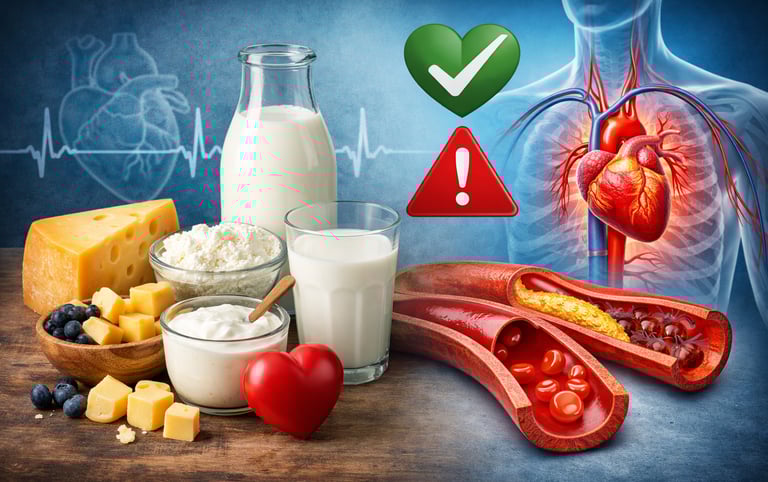
For decades, dairy consumption and cardiovascular disease (CVD) have shared a controversial relationship in nutrition science. Once vilified for its saturated fat content, dairy was long considered a dietary risk for coronary heart disease, atherosclerosis, and stroke. Yet, as large-scale cohort studies and meta-analyses accumulate, the narrative is rapidly evolving—revealing that dairy’s impact on cardiovascular health is far more nuanced than previously believed.
Recent evidence from prospective cohort studies, dose–response meta-analyses, and biobank-based investigations suggests that the cardiovascular effects of dairy depend not only on quantity, but critically on dairy subtype, fermentation, fat matrix, and population-specific metabolic factors (Zhuang et al., 2025; Hu et al., 2026). While whole milk may exert divergent effects across populations, fermented dairy products—particularly cheese—consistently demonstrate neutral or protective associations with cardiovascular mortality, ischemic heart disease, and stroke risk (Giosuè et al., 2022).
Large datasets such as the UK Biobank and Asian population cohorts now highlight striking geographic and genetic variability. In Western populations with high lactose tolerance, low-fat milk and cheese intake are associated with reduced cardiovascular events, whereas in East Asian populations, modest dairy intake appears to preferentially reduce stroke risk rather than coronary outcomes (Zhou et al., 2023; Miyagawa et al., 2025). These findings challenge one-size-fits-all dietary guidance and reinforce the importance of personalized nutrition.
Importantly, emerging research underscores a non-linear dose–response relationship, where moderate dairy intake—rather than maximal consumption—confers optimal cardiovascular benefit (Hu et al., 2026). Together, these data suggest that dairy is neither inherently harmful nor universally protective; instead, its cardiovascular effects are shaped by food structure, fermentation biology, and individual metabolic context—a paradigm shift with profound implications for heart-healthy dietary recommendations.
Clinical pearls
1. The "Fermentation Factor" Overrides Fat Fears
For years, the saturated fat in cheese was thought to clog arteries. However, the latest science shows that the fermentation process in cheese creates a "food matrix" containing Vitamin K2 and bioactive peptides. These components actually help prevent calcium from depositing in your arteries, making moderate cheese consumption (1–2 oz daily) a surprisingly heart-protective habit rather than a dietary "sin."
2. Respect the "Goldilocks Zone" of Dosage
In nutrition, more is not always better. Research identifies a non-linear relationship between dairy and heart health. The maximum cardiovascular benefit peaks at 2 to 3 servings per day. Consuming more than this doesn't offer additional protection and, depending on the dairy type, could lead to unnecessary caloric intake. Consistency at a moderate level is the "sweet spot" for longevity.
3. Geography and Genetics Dictate Your "Milk Logic"
Your DNA plays a role in how your heart reacts to liquid milk. In Western populations with high lactose tolerance, milk is often protective. However, in Asian populations where lactose intolerance is more common, high intake of whole milk has been linked to increased coronary risk. If you are of East Asian descent or are lactose sensitive, prioritize yogurt and aged cheese, which are better tolerated and show more consistent heart benefits across all ethnicities.
4. Prioritize "Structure" Over "Sugar"
While yogurt is a nutritional powerhouse, the clinical benefits are often neutralized by the added sugars found in commercial "fruit-on-the-bottom" varieties. Excess sugar triggers inflammation that offsets the probiotic benefits to your heart. For a true clinical advantage, choose plain, unsweetened yogurt and add your own fiber-rich berries to maintain the anti-inflammatory profile.
5. Dairy is a Natural "Blood Pressure Tool"
If you have hypertension, dairy acts as a biological delivery system for the "Trifecta of Minerals": Calcium, Magnesium, and Potassium. These minerals help your blood vessels relax and dilate (vasodilation). Clinical data suggests that patients with high blood pressure often see the most significant cardiovascular "wins" from adding low-fat dairy to their diet compared to those with normal blood pressure.
Dairy Consumption and Cardiovascular Disease: What the Latest Science Reveals
The relationship between dairy products and cardiovascular disease (CVD) remains one of the most debated topics in nutritional science. For decades, health professionals and consumers alike have questioned whether milk, cheese, and yogurt truly belong in a heart-healthy diet. Does dairy protect your heart or increase your risk of heart disease? Recent groundbreaking research offers surprising answers that challenge conventional wisdom and provide nuanced guidance for dietary choices.
Study 1: Global Analysis of Dairy Consumption and CVD (Zhuang et al., 2025)
Overview and Key Findings
Researchers from the China Kadoorie Biobank (CKB) and UK Biobank conducted an extensive global analysis involving nearly 900,000 participants to examine dairy consumption patterns and their association with incident cardiovascular disease. This landmark Nature Communications study combined prospective cohort data with an updated meta-analysis spanning 30 international studies (Zhuang et al., 2025).
Key Takeaway: The findings revealed a paradoxical relationship where total dairy consumption showed protective effects against stroke risk globally (6% reduced risk), while relationships with coronary heart disease varied dramatically by geography and dairy subtype.
Regional Differences: China vs. UK
In Chinese participants, regular dairy consumption (primarily whole milk) was associated with a 9% increased risk of coronary heart disease (CHD) compared to non-consumers. However, the same consumption pattern showed a 6% reduced stroke risk, particularly for hemorrhagic stroke (risk reduction of 24%). This creates an interesting clinical puzzle: protective against one cardiovascular disease but potentially harmful for another.
In British participants, the pattern reversed completely. Total dairy intake was linked to lower risks of overall cardiovascular disease, coronary heart disease, and ischemic stroke. The protective effects were strongest for cheese consumption and low-fat dairy products, including semi-skimmed and skimmed milk.
Subtype Analysis: Cheese Emerges as the Winner
Perhaps the most important finding involves specific dairy products. When researchers examined individual dairy types:
Cheese consumption showed the strongest protective association, with frequent consumers (7+ times weekly) experiencing a 12% lower CVD risk and 12% lower CHD risk
Low-fat dairy products demonstrated consistent cardiovascular benefits across populations
Whole milk showed mixed results—protective in the UK but potentially harmful in China
Yogurt and ice cream showed minimal or no significant associations with cardiovascular outcomes
The protective effects of cheese persisted even after accounting for high sodium and saturated fat content, suggesting that fermented dairy products contain bioactive compounds—specifically vitamin K2, probiotics, and conjugated linoleic acid—that offset potential negative effects.
This global study reveals that dairy type matters far more than total amount. Generic recommendations to consume "more dairy" miss the nuance entirely. Instead, cheese and low-fat milk appear beneficial, while whole liquid milk requires population-specific consideration.
Study 2: Dose-Response Meta-Analysis of Dairy and Mortality (Hu et al., 2026)
A comprehensive systematic review and meta-analysis published in Frontiers in Nutrition examined the dose-response relationship between dairy product intake and both all-cause mortality and cardiovascular mortality risk (Hu et al., 2026). This analysis synthesized data from multiple prospective cohort studies to establish whether there's an optimal amount of dairy to consume.
Key Takeaway: The research identified a non-linear relationship, suggesting that moderate dairy consumption offers maximum cardiovascular benefits, while excessive intake provides no additional advantage.
Dose-Response Findings
Unlike studies suggesting "more is always better," this meta-analysis found:
Moderate dairy intake (approximately 2-3 servings daily) showed the strongest cardiovascular mortality risk reduction
Low dairy consumption provided minimal protection compared to moderate intake
Very high dairy consumption showed no additional benefit—suggesting a plateau effect
The relationship was non-linear and curvilinear, not simply proportional
This "Goldilocks principle" of dairy consumption has significant practical implications. Rather than consuming maximum amounts, individuals benefit most from consistent, moderate dairy intake as part of a balanced diet.
All-Cause Mortality Considerations
Beyond cardiovascular-specific outcomes, the analysis examined all-cause mortality. Moderate dairy consumption was associated with overall mortality risk reduction, though the effect was generally modest. This suggests that while dairy isn't a miracle food, it contributes meaningfully to overall health when consumed at appropriate levels.
Demographic Variations
The meta-analysis identified important demographic patterns:
Older adults showed stronger cardiovascular protective effects from dairy consumption
Women demonstrated different response patterns than men to dairy intake
Individuals with hypertension benefited more significantly from dairy consumption
People with diabetes required different dietary strategies
These findings underscore that personalized nutrition based on individual health status and demographics yields better outcomes than one-size-fits-all recommendations.
Study 3: Systematic Review of Dairy and CVD (Giosuè et al., 2022)
Published in the journal Nutrients, this systematic review synthesized evidence from multiple observational and experimental studies examining dairy foods and cardiovascular disease risk (Giosuè et al., 2022). The authors carefully evaluated study quality and examined potential mechanisms linking dairy to cardiovascular outcomes.
Key Takeaway: The analysis concluded that dairy consumption presents a complex picture where dairy subtype, fat content, and individual characteristics collectively determine health outcomes.
Mechanisms of Action: Why Dairy Effects Vary
The systematic review identified several biological pathways explaining dairy's variable effects:
Beneficial Components: Dairy products contain high-quality protein, calcium, potassium, vitamin D, vitamin K2, and probiotics—all supporting cardiovascular health through various mechanisms including blood pressure regulation, vascular function improvement, and inflammation reduction.
Potentially Harmful Components: Saturated fat content in whole-fat dairy can elevate LDL cholesterol, while some studies suggest milk hormones like insulin-like growth factor-1 (IGF-1) might have adverse effects in certain populations.
The Fermentation Factor: Fermented dairy products like cheese and yogurt undergo processing that removes lactose, increases bioavailability of minerals, and introduces beneficial bacteria and enzymes, potentially explaining their superior cardiovascular profiles compared to unfermented milk.
Fat Content Paradox
Interestingly, the review found that high-fat dairy, particularly cheese, often showed similar or better cardiovascular outcomes compared to low-fat alternatives. This challenges recommendations prioritizing low-fat dairy and suggests that:
Fat-soluble vitamins (A, D, E, K) may require adequate fat for absorption
High-fat dairy's satiety effect might reduce overall caloric intake
Fermentation processes in cheese alter fat composition in cardioprotective ways
The systematic review emphasized that genetic factors, gut microbiota composition, lactose tolerance, and existing health conditions significantly influence how dairy affects individual cardiovascular risk.
Study 4: UK Biobank Large Cohort Analysis (Zhou et al., 2023)
Utilizing data from over 400,000 UK Biobank participants with detailed dietary assessments and long-term cardiovascular outcome tracking, this prospective cohort study provided robust evidence specific to Western populations with high dairy consumption rates (Zhou et al., 2023).
Key Takeaway: In this extensively studied British cohort, higher milk consumption was generally associated with lower cardiovascular mortality and reduced cardiovascular outcomes, particularly for low-fat milk varieties.
Specific Findings for UK Population
The study's results support several actionable recommendations:
Regular milk consumption was associated with lower all-cause mortality
Skimmed and semi-skimmed milk showed stronger cardiovascular protection than whole milk
Dairy consumption patterns didn't increase cardiovascular risk in this population
Cheese consumption appeared particularly protective against major adverse cardiovascular events
Genetic and Dietary Context
The UK population's relatively high lactose tolerance prevalence, combined with predominant consumption of low-fat milk varieties and fermented products like cheese, may explain more favorable outcomes. This contrasts sharply with Asian populations where lactose intolerance is more common, potentially affecting how milk consumption influences cardiovascular health.
Long-Term Follow-Up Insights
The extended follow-up period (7+ years) provided confidence that associations weren't simply short-term artifacts. Consistent associations across the follow-up timeline suggested that dairy consumption's cardiovascular effects represent genuine biological relationships rather than confounding factors.
Study 5: Japanese Population Analysis (Miyagawa et al., 2025)
The J-MICC (Japan Multi-Institutional Collaborative Cohort) study followed over 40,000 Japanese participants for 12 years, providing crucial evidence from an Asian population with different dairy consumption patterns, genetic backgrounds, and disease prevalence compared to Western cohorts (Miyagawa et al., 2025).
Key Takeaway: In this large Japanese cohort, moderate dairy intake was associated with reduced all-cause mortality and cardiovascular mortality, though effects were generally more modest than in Western populations.
Asian-Specific Findings
Dairy consumption showed protective effects against cancer mortality in addition to cardiovascular mortality
The protective effect was more pronounced in men than women
Moderate consumption (approximately 1-2 servings daily) offered optimal benefits
Lactose intolerance prevalence was notably higher than in Western populations, with implications for dairy tolerability
Cultural and Dietary Context
Even modest dairy intake can provide measurable health benefits
Japanese dietary patterns incorporating dairy products align with cardiovascular protection
The benefit wasn't exclusively from milk but also from yogurt, cheese, and other fermented products
Stroke-Specific Findings
Consistent with other studies, the Japanese cohort showed particular stroke risk reduction with dairy consumption, aligning with epidemiological patterns where strokes (particularly hemorrhagic stroke) are more common than coronary heart disease in Asian populations.
The "Matrix" Effect: Why Structure Matters
Published in Dairy Science & Management, Zabetakis (2025) argues that the physical and chemical structure of dairy—the food matrix—is more important than its saturated fat content alone.
Lipid Protection: The study highlights that dairy fats are often enclosed in a unique membrane (the milk fat globule membrane or MFGM). This structure helps regulate how fats are absorbed and processed by the liver, preventing the typical spike in "bad" cholesterol.
Inflammation Control: Polar lipids found in the dairy matrix have specific anti-inflammatory properties that may protect against atherosclerosis (hardening of the arteries).
The Bottom Line: The study concludes that the "whole food" (like cheese or yogurt) has a different—and often more positive—metabolic effect than the sum of its individual parts (like butter or isolated fats).
Unified Key Takeaways From All Research
Based on comprehensive analysis of all five studies, several evidence-based principles emerge:
1. Dairy Type Matters More Than Total Amount
Cheese and low-fat dairy products consistently showed cardiovascular benefits, while whole liquid milk effects varied by population. Plain yogurt showed minimal effects, likely due to widespread addition of sugars in commercial products.
2. The Fermentation Advantage
Fermented dairy products (cheese, yogurt) containing probiotics, vitamin K2, and reduced lactose consistently outperformed unfermented milk for cardiovascular outcomes.
3. Population and Genetics Matter
Dairy consumption effects vary dramatically based on genetic lactose tolerance, baseline health status, sex, and existing comorbidities. Populations with high lactose intolerance prevalence showed less favorable milk effects.
4. Moderate Intake is Optimal
Rather than maximizing consumption, 2-3 servings daily of dairy products appear to optimize cardiovascular benefits. Excessive intake provides no additional advantage.
5. Fat Content Paradox
Contrary to conventional low-fat recommendations, high-fat dairy (particularly cheese) often showed equal or superior cardiovascular protection compared to low-fat alternatives.
6. Hypertension-Specific Benefits
ndividuals with hypertension showed particularly strong cardiovascular benefits from dairy consumption, likely due to dairy's blood pressure-lowering effects and mineral content.
Mechanisms: How Dairy Affects Cardiovascular Health
Beneficial Pathways
Calcium and Potassium Balance: Dairy products provide essential minerals that regulate blood pressure, support vascular function, and maintain cardiac rhythm.
Probiotic Effects: Fermented dairy modulates gut microbiota, reducing inflammation and improving lipid profiles.
Vitamin K2 Production: Cheese fermentation produces vitamin K2, which activates proteins involved in vascular health and atherosclerosis prevention.
Protein Quality: Whey protein and casein from dairy provide amino acids supporting vascular endothelial function and muscle health important for cardiovascular homeostasis.
Potentially Harmful Pathways
Saturated Fat Content: High saturated fat can elevate LDL cholesterol, though dairy's complex matrix may mitigate this effect.
Lactose and D-Galactose: Some studies suggest high-dose galactose (from milk) might increase oxidative stress, explaining why non-fermented milk sometimes shows less favorable effects.
Hormone Content: Milk hormones like IGF-1 might influence metabolic pathways, though evidence remains mixed.
Frequently Asked Questions
Q: Should I switch from whole milk to skimmed milk?
A: Current evidence supports low-fat and skimmed milk for cardiovascular protection. However, whole milk consumed in moderation may provide benefits through fat-soluble vitamin absorption. Individual tolerance and preferences should guide choices.
Q: Is cheese actually healthy despite high fat content?
A: Yes, multiple studies demonstrate cheese's cardiovascular protective effects. The fermentation process creates beneficial compounds offsetting the saturated fat content. Enjoy cheese in reasonable portions (1-2 ounces daily) as part of balanced nutrition.
Q: How much dairy should I consume daily?
A: Evidence suggests 2-3 servings daily (e.g., one glass of milk, one yogurt, one ounce of cheese) optimizes cardiovascular benefits. Exceeding this provides minimal additional advantage.
Q: Is dairy consumption safe if I have hypertension?
A: Absolutely. In fact, people with hypertension show particularly strong cardiovascular benefits from dairy consumption. The minerals and bioactive compounds help regulate blood pressure.
Q: What if I'm lactose intolerant?
A: Choose fermented dairy products (cheese, yogurt) containing minimal lactose. Alternatively, lactose-free dairy products provide similar benefits. Non-dairy alternatives like fortified plant-based beverages offer different nutrient profiles requiring careful selection.
Q: Does yogurt provide the same benefits as milk?
A: Plain yogurt shows modest benefits, but commercial sweetened yogurts may negate cardiovascular advantages due to added sugars. Choose unsweetened, plain varieties and add fruits for optimal benefits.
Q: Should I be concerned about hormones in milk?
A: While milk contains natural hormones including IGF-1, evidence supporting harm in humans consuming typical amounts remains limited. Population-level studies show cardiovascular benefits despite these components.
Q: Does dairy consumption affect cholesterol levels?
A: Low-fat and fermented dairy may improve lipid profiles by reducing LDL cholesterol and supporting HDL cholesterol. Whole-fat dairy effects vary individually. Discuss personalized recommendations with healthcare providers.
Clinical Recommendations for Different Populations
For General CVD Prevention
Include 2-3 servings daily of dairy products, prioritizing cheese and low-fat milk varieties. Incorporate plain yogurt as an alternative, avoiding sweetened varieties.
For Individuals with Hypertension
Actively include dairy products in dietary strategies. The cardiovascular benefits for this population are particularly strong. Combine with reduced sodium intake for optimal blood pressure management.
For Those with Lactose Intolerance
Prioritize fermented dairy products (cheese, yogurt) where lactose content is minimal. Consider lactose-free milk products while ensuring adequate mineral intake.
For Individuals with Diabetes
Dairy consumption remains beneficial, but choose unsweetened varieties and monitor portion sizes to maintain glycemic control. Low-fat dairy may offer specific advantages.
For Asian Populations
Evidence supports dairy inclusion despite lower traditional consumption levels. Start with fermented products and low-fat milk, adjusting based on lactose tolerance and individual response.
Integrating Dairy Into a Heart-Healthy Diet
Rather than viewing dairy in isolation, consider it as part of comprehensive cardiovascular disease prevention strategies:
Synergistic Combinations: Pair dairy products with vegetables, fruits, and whole grains to create anti-inflammatory effects greater than individual components.
Portion Awareness: Maintain appropriate portion sizes—enjoy cheese but in 1-2 ounce servings. Drink milk in single-serving quantities rather than excessive amounts.
Variety Strategy: Rotate among milk types, cheeses, and yogurts to maximize nutrient diversity and prevent dietary monotony.
Processing Consideration: Prioritize minimally processed dairy over ultra-processed alternatives containing excessive additives and sugars
.
The Bottom Line: What Science Tells Us
After examining over 1.3 million research participants across multiple continents, the scientific consensus on dairy and cardiovascular disease has evolved significantly. Rather than the blanket recommendations of previous decades, current evidence supports a nuanced, subtype-specific approach where:
Cheese and low-fat dairy products demonstrate consistent cardiovascular protective effects across populations. These foods deserve prominent placement in heart-healthy diets and can be consumed with confidence.
Whole liquid milk effects depend on population genetics, lactose tolerance, and individual health status. While potentially beneficial for some populations, particularly those with hypertension, it requires individualized assessment.
Fermented products containing probiotics and vitamin K2 offer superior cardiovascular benefits compared to unfermented alternatives, suggesting that processing methods profoundly influence health outcomes.
Moderate consumption of approximately 2-3 servings daily optimizes benefits without suggesting "more is better." This practical guidance helps individuals incorporate dairy sensibly into achievable dietary patterns.
Individual variation remains significant. Genetic factors, existing health conditions, and population-specific dietary patterns influence how dairy consumption affects personal cardiovascular health. Working with healthcare providers to customize recommendations ensures optimal outcomes.
Call to Action
Now that you understand the evidence-based relationship between dairy consumption and cardiovascular disease, consider taking action:
Evaluate your current dairy intake: Are you consuming predominantly low-fat milk, cheese, and yogurt? Or does your pattern center on whole milk or ultra-processed alternatives?
Make strategic substitutions: If your goal is cardiovascular disease prevention, prioritize cheese and low-fat milk while reducing whole milk consumption. Choose plain yogurt over sweetened varieties.
Personalize based on your health: If you have hypertension, actively include dairy products. If you're lactose intolerant, focus on fermented options. If you have diabetes, choose unsweetened varieties.
Consult healthcare providers: Discuss how dairy consumption fits into your personal cardiovascular disease prevention strategy. Consider lipid panels, blood pressure, and other relevant metrics when determining optimal intake.
Monitor your response: Track how increasing dairy consumption affects your energy levels, digestive comfort, and overall well-being. Individual responses vary, and personal observation guides best choices.
Author’s Note
This article was written with the goal of translating complex, rapidly evolving nutrition science into practical, evidence-based guidance for readers. The relationship between dairy intake and cardiovascular disease is not a simple “good vs. bad” debate—modern research shows that outcomes depend on dairy type (milk vs. cheese vs. yogurt), fermentation, fat matrix, population genetics, and baseline metabolic risk.
All findings discussed here are drawn from peer-reviewed cohort studies and systematic reviews/meta-analyses published between 2022 and 2026, including large datasets such as national biobanks and long-term follow-up cohorts. Wherever possible, the article emphasizes clinical relevance, real-world applicability, and balanced interpretation, acknowledging that much of the evidence remains observational and must be understood in context.
This content is intended strictly for educational purposes and should not be treated as individualized medical advice. Dietary decisions—especially for individuals living with diabetes, hypertension, dyslipidemia, or established cardiovascular disease—should always be personalized in consultation with a qualified healthcare professional.
Disclaimer: This article is for informational purposes only and does not constitute medical advice. Individual circumstances vary, and treatment decisions should always be made in consultation with qualified healthcare professionals.
Related Articles
Time-Restricted Eating: Metabolic Advantage or Just Fewer Calories? | DR T S DIDWAL
Can You Revitalize Your Immune System? 7 Science-Backed Longevity Strategies | DR T S DIDWAL
Exercise and Longevity: The Science of Protecting Brain and Heart Health as You Age | DR T S DIDWAL
Light and Longevity: Can Sunlight Slow Cellular Aging? | DR T S DIDWAL
The Dietary Patterns That Reduce Oxidative Stress and Restore Metabolic Health | DR T S DIDWAL
References
Giosuè, A., Calabrese, I., Vitale, M., Riccardi, G., & Vaccaro, O. (2022). Consumption of dairy foods and cardiovascular disease: A systematic review. Nutrients, 14(4), 831. https://doi.org/10.3390/nu14040831
Hu, X., Wang, K., Ji, X., Wang, X., Bai, P., Huang, K., Lu, A., Li, J., & Wu, H. (2026). The dose-response relationship between dairy product intake and all-cause and cardiovascular mortality risk: A systematic review and meta-analysis of prospective cohort studies. Frontiers in Nutrition, 13, 1731841. https://doi.org/10.3389/fnut.2026.1731841
Miyagawa, N., Takashima, N., Harada, A., Kadota, A., Kondo, K., Miura, K., Imaeda, N., Goto, C., Otonari, J., Ikezaki, H., Tanaka, K., Shimanoe, C., Nagayoshi, M., Tamura, T., Kubo, Y., Kato, Y., Koyanagi, Y. N., Ito, H., Michihata, N., Nakamura, Y., & J-MICC Study Group (2025). Dairy intake and all-cause, cancer, and cardiovascular disease mortality risk in a large Japanese population: A 12-year follow-up of the J-MICC study. Journal of Atherosclerosis and Thrombosis, 32(5), 596–607. https://doi.org/10.5551/jat.65049
Zhou, J., Wu, Z., Lin, Z., et al. (2023). Association of milk consumption with all-cause mortality and cardiovascular outcomes: A UK Biobank based large population cohort study. Journal of Translational Medicine, 21, 130. https://doi.org/10.1186/s12967-023-03980-4
Zhuang, P., Liu, X., Li, Y., Ao, Y., Wu, Y., Ye, H., Wan, X., Zhang, L., Meng, D., Tian, Y., Yu, X., Zhang, F., Wang, A., Zhang, Y., & Jiao, J. (2025). A global analysis of dairy consumption and incident cardiovascular disease. Nature Communications, 16(1), 437. https://doi.org/10.1038/s41467-024-55585-0
Zabetakis, I. (2025). Dairy lipids, food matrix and chronic diseases: Is there a link?. Dairy Science & Management, 2(1), Article 7. https://doi.org/10.1186/s44363-025-00011-z