Incretin Therapy Explained: GLP-1, Tirzepatide & Next-Gen Drugs for Diabetes, Weight Loss, Heart & Kidney Health
Discover how incretin-based therapies like Semaglutide and Tirzepatide are transforming the treatment of Type 2 Diabetes Mellitus and Obesity—with proven benefits for heart, kidney, and metabolic health.
DIABETESOBESITY
Dr. T.S. Didwal, M.D.(Internal Medicine)
5/14/202614 min read
What are incretin-based therapies, and how do they benefit health?
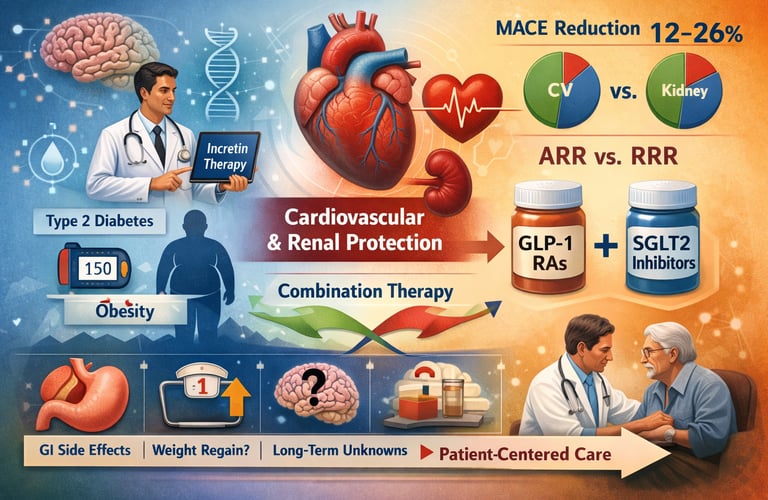
Incretin-based therapies, including GLP-1 receptor agonists and dual agonists like tirzepatide, are medications used to treat Type 2 Diabetes Mellitus and Obesity. They work by mimicking gut hormones that enhance insulin secretion, reduce appetite, and slow gastric emptying. Beyond blood sugar control, these drugs significantly reduce the risk of heart attack, stroke, and kidney disease, with major trials showing a 12–26% reduction in major cardiovascular events. They are now considered foundational therapies for improving long-term metabolic, cardiovascular, and renal health.
LEADER trial (liraglutide): Demonstrated a 13% reduction in major adverse cardiovascular events (MACE) and a significant reduction in cardiovascular mortality in patients with type 2 diabetes at high CV risk.
SUSTAIN-6 trial (semaglutide): Showed a 26% reduction in MACE, with notable reductions in nonfatal stroke and favorable cardiovascular risk
profile.
Clinician’s Perspective: Incretin Therapy in Modern Practice
Shift from glucocentric to organ-protective care: Management of Type 2 Diabetes Mellitus now prioritises reducing cardiovascular, renal, and metabolic risk—not just HbA1c lowering. Incretin-based therapies are central to this paradigm shift.
Early use in high-risk patients: In individuals with established ASCVD, heart failure risk, or Chronic Kidney Disease, initiate GLP-1 RAs early—independent of baseline HbA1c—aligned with ADA/EASD recommendations.
Agent selection matters: Choose agents with proven CVOT benefit (e.g., semaglutide, liraglutide, dulaglutide). Consider dual agonists like tirzepatide for patients prioritizing weight reduction and deeper glycemic control.
Weight-centric approach: For patients with Obesity, these agents function as primary therapies—not adjuncts—often achieving 10–20% weight loss with downstream metabolic benefits.
Incretin therapies are no longer optional add-ons—they are foundational, disease-modifying agents in cardio-renal-metabolic medicine, requiring early, individualized, and sustained use.For decades, the treatment of Type 2 Diabetes Mellitus (T2DM) revolved around a relatively simple objective: lower blood glucose. Physicians focused heavily on glycated haemoglobin (HbA1c), while complications such as heart disease, kidney failure, obesity, and fatty liver disease were often managed separately after they developed. Today, that framework is rapidly changing.
A new generation of metabolic therapies—known as incretin-based therapies—is reshaping modern medicine. Drugs such as semaglutide, liraglutide, dulaglutide, and tirzepatide are no longer viewed merely as glucose-lowering agents. They are increasingly recognized as disease-modifying therapies capable of improving metabolic health, reducing cardiovascular risk, protecting kidney function, and producing clinically meaningful weight loss (Nauck et al., 2026).
The impact has been so profound that many endocrinologists now describe incretin medicine as one of the most important therapeutic revolutions since the introduction of statins for cardiovascular disease. In clinical trials, these agents have reduced major adverse cardiovascular events (MACE), improved obesity-related complications, slowed progression of diabetic kidney disease, and demonstrated early promise in neurodegenerative disorders such as Alzheimer’s disease (Avogaro, 2025; Giofrè et al., 2025).
This shift reflects a deeper understanding of human metabolism itself. Scientists now recognize that obesity, insulin resistance, appetite regulation, inflammation, and cardiovascular disease are biologically interconnected through hormonal signaling pathways originating in the gut and brain. At the center of this system are incretin hormones.
What Are Incretins?
Incretins are hormones released from the intestine after eating. Their primary role is to help the body regulate blood sugar and energy balance after meals. The two most important incretin hormones are:
GLP-1 (Glucagon-Like Peptide-1)
GIP (Glucose-Dependent Insulinotropic Polypeptide)
These hormones are released rapidly when nutrients enter the gastrointestinal tract. They stimulate insulin secretion in a glucose-dependent manner, suppress excess glucagon release, slow gastric emptying, and signal satiety to the brain.
In healthy individuals, incretins account for as much as 50–70% of insulin secretion after meals—a phenomenon known as the incretin effect (Grespan et al., 2022).
The biology can be summarized through the following core physiological relationship:
Meal-Stimulated Insulin Release ∝ GLP-1 Signaling+GIP Signaling
This gut-pancreas communication system is remarkably sophisticated. After eating, incretin hormones essentially “prepare” the pancreas for incoming glucose, helping prevent excessive post-meal blood sugar spikes. At the same time, these hormones communicate with appetite centers in the hypothalamus, influencing hunger, satiety, and food reward behavior. However, in Type 2 Diabetes Mellitus, this system becomes impaired.
The Incretin Defect in Type 2 Diabetes
One of the most important discoveries in modern diabetology is that people with T2DM have a markedly reduced incretin effect. The hormones may still be released, but the pancreatic response to them becomes blunted.
A landmark meta-analysis by Grespan et al. (2022) demonstrated that individuals with T2DM experience a profound loss of incretin-mediated insulin secretion compared with metabolically healthy individuals.
Clinically, this contributes to:
Higher post-meal glucose excursions
Persistent hyperglycemia
Excess glucagon secretion
Increased hepatic glucose production
Impaired satiety signaling
Progressive insulin resistance
In practical terms, the gut and pancreas stop “communicating” efficiently.
This insight fundamentally changed the therapeutic strategy for diabetes. Rather than simply replacing insulin from outside the body, researchers began asking whether restoring incretin signaling itself could correct the underlying metabolic dysfunction.
That question led directly to the development of GLP-1 receptor agonists and newer dual- and triple-agonist therapies.
GLP-1 Receptor Agonists: The First Major Breakthrough
GLP-1 receptor agonists (GLP-1 RAs) are medications designed to mimic the action of natural GLP-1 while resisting rapid enzymatic breakdown. Native GLP-1 survives only a few minutes in circulation. Pharmaceutical engineering extended this activity to days.
Common GLP-1 receptor agonists include:
Semaglutide
Liraglutide
Dulaglutide
Exenatide
These medications activate GLP-1 receptors throughout the body, including the pancreas, gastrointestinal tract, cardiovascular system, kidneys, and brain. Their therapeutic effects include:
Enhanced insulin secretion
Reduced glucagon release
Slower gastric emptying
Reduced appetite
Lower caloric intake
Improved insulin sensitivity
Weight reduction
Lower blood pressure
Reduced systemic inflammation
The clinical consequences have been extraordinary. According to Nauck et al. (2026), modern GLP-1 therapies can lower HbA1c significantly while simultaneously producing sustained weight loss ranging from 5% to more than 15% depending on the agent and dose. The glucose-lowering relationship is central to their mechanism: HbA1c Reduction∝ ∝ GLP-1 Receptor Stimulation
Importantly, these medications stimulate insulin only when glucose levels are elevated, which substantially lowers the risk of severe hypoglycemia compared with insulin or sulfonylureas.
Semaglutide: The Drug That Changed Obesity Medicine
Among incretin therapies, semaglutide has become the most recognized globally. Marketed as Ozempic for diabetes and Wegovy for obesity, semaglutide demonstrated that pharmacologic weight loss could approach results historically achievable only with bariatric surgery.
The STEP clinical trial program showed average body weight reductions of approximately 15% with semaglutide 2.4 mg in patients with obesity (Ansari et al., 2024). This degree of weight loss is medically transformative.
Even a 5–10% reduction in body weight can improve:
Insulin resistance
Blood pressure
Fatty liver disease
Sleep apnea
Joint pain
Inflammatory markers
Cardiovascular risk
At 15–20% weight reduction, many patients experience dramatic metabolic improvement.
The effect on appetite regulation is particularly striking. Many patients describe a reduction in “food noise”—the constant intrusive thoughts about eating. This reflects direct actions within the mesolimbic reward pathways of the brain.
Semaglutide effectively alters the neurobiology of appetite.
Tirzepatide: Dual Agonism and the Next Generation
If one incretin receptor produced major benefits, researchers wondered whether activating multiple receptors simultaneously could produce even greater metabolic effects.
That hypothesis led to tirzepatide. Tirzepatide is a dual GLP-1/GIP receptor agonist. Unlike semaglutide, which targets only GLP-1 receptors, tirzepatide activates both GLP-1 and GIP signaling pathways simultaneously.
This dual mechanism enhances:
Insulin secretion
Appetite suppression
Energy balance
Weight reduction
Glycemic control
The relationship can be conceptualized as:
Overall Metabolic Improvement = GLP-1 Signalling + GIP Signalling
Clinical trials have shown remarkable efficacy.
In the SURMOUNT-1 trial, tirzepatide achieved average weight reductions exceeding 20% in some patients—results previously considered impossible without bariatric surgery (Podder et al., 2026).
HbA1c reductions were also superior to many existing therapies.
The emergence of tirzepatide has accelerated the transition from glucose-centered diabetology toward comprehensive cardiometabolic medicine.
Triple Agonists and the Future of Metabolic Therapy
The incretin revolution is still in its early stages.
Researchers are now developing triple agonists that simultaneously target:
GLP-1 receptors
GIP receptors
Glucagon receptors
One of the most promising agents is retatrutide.
Although glucagon is traditionally associated with raising blood sugar, controlled glucagon receptor activation also appears to enhance energy expenditure and fat oxidation.
The biological concept is elegant:
Weight Loss ∝ Satiety + Energy Expenditure − Caloric Intake
Early retatrutide studies suggest body weight reductions approaching 24–25%, potentially redefining obesity treatment entirely (Podder et al., 2026).
Other next-generation therapies include:
CagriSema (cagrilintide + semaglutide)
Oral GLP-1 agonists
Multi-hormone peptide combinations
FGF21 and incretin co-targeted therapies
Metabolic medicine is rapidly evolving from single-pathway intervention toward integrated hormonal modulation.
Why These Drugs Protect the Heart
Perhaps the most surprising development in incretin medicine has been cardiovascular protection.
Historically, diabetes drugs were judged mainly by their ability to lower glucose. However, cardiovascular outcome trials (CVOTs) unexpectedly revealed that several GLP-1 receptor agonists reduced heart attack, stroke, and cardiovascular mortality.
The LEADER trial showed liraglutide reduced major cardiovascular events by 13%.
The SUSTAIN-6 trial demonstrated semaglutide reduced MACE by 26%.
These findings fundamentally changed diabetes guidelines.
Today, professional societies such as the American Diabetes Association (ADA) recommend GLP-1 receptor agonists for patients with established atherosclerotic cardiovascular disease—even independent of HbA1c targets.
Mechanistically, GLP-1 therapies improve cardiovascular health through several pathways:
1. Anti-inflammatory Effects
Chronic inflammation drives atherosclerosis. GLP-1 agonists reduce inflammatory cytokines and oxidative stress within vascular tissue.
2. Endothelial Protection
The endothelium—the inner lining of blood vessels—functions more effectively with GLP-1 therapy, improving vascular relaxation and blood flow.
3. Blood Pressure Reduction
Weight loss, natriuresis, and vascular effects collectively lower blood pressure.
The hemodynamic relationship can be simplified as:
Cardiovascular Risk ∝ Inflammation + Insulin Resistance+Obesity
By targeting all three simultaneously, incretin therapies provide multidimensional cardiovascular protection.
Kidney Protection: A Major Therapeutic Advance
Diabetic kidney disease remains one of the leading causes of dialysis worldwide. Historically, treatment options were limited.
Incretin therapies are now changing renal medicine as well.
The FLOW trial demonstrated that semaglutide reduced major kidney disease outcomes by approximately 24%, including progression to kidney failure and kidney-related death.
Several mechanisms contribute:
Reduced glomerular hyperfiltration
Lower intraglomerular pressure
Reduced albuminuria
Suppression of inflammatory pathways
Improved metabolic control
Blood pressure reduction
Protein leakage into urine—albuminuria—is particularly important because it reflects ongoing kidney damage.
As a result, these medications are increasingly viewed not merely as antidiabetic drugs but as cardio-renal-metabolic therapies.
Obesity Is No Longer Viewed as a Lifestyle Failure
One of the most important societal consequences of incretin therapy is the reframing of obesity itself.
Modern obesity science now recognizes that body weight regulation is heavily influenced by neurohormonal pathways involving appetite signaling, satiety regulation, energy expenditure, genetics, and reward circuitry.
GLP-1 and GIP pathways are central to these mechanisms. This means obesity is not simply a failure of willpower.
Instead, it is a chronic biologic disease involving dysregulated metabolic signaling. Incretin therapies help normalize that signaling.
This paradigm shift matters clinically because obesity drives:
Type 2 diabetes
Hypertension
Sleep apnea
Fatty liver disease
Cardiovascular disease
Osteoarthritis
Chronic inflammation
Treating obesity effectively therefore improves multiple downstream diseases simultaneously.
The Brain Connection: Incretins and Cognitive Health
Perhaps the most fascinating frontier in incretin medicine involves the brain.
GLP-1 receptors exist throughout the central nervous system, including regions involved in:
Memory
Learning
Appetite
Reward
Neuroprotection
Preclinical studies suggest GLP-1 receptor agonists may:
Reduce amyloid-beta plaque accumulation
Lower tau protein aggregation
Reduce neuroinflammation
Improve mitochondrial function
Enhance synaptic signaling
Giofrè et al. (2025) reviewed growing evidence suggesting potential neuroprotective effects in Alzheimer’s disease and Parkinson’s disease. Although these therapies are not yet approved specifically for dementia prevention, large clinical trials are underway. The gut-brain axis has emerged as one of the most exciting areas in modern neuroscience.
Real-World Limitations and Challenges
Despite their extraordinary benefits, incretin therapies are not perfect.
Gastrointestinal Side Effects
Nausea, vomiting, bloating, diarrhoea, and early satiety are common during initiation. These effects are usually temporary and improve with slow dose escalation.
Weight Regain After Discontinuation
Many patients regain weight after stopping therapy. This reinforces the reality that obesity is a chronic disease requiring long-term management.
Cost and Access
Insurance coverage remains inconsistent globally, limiting access for many patients.
Long-Term Safety
Current medium-term safety data are reassuring, but lifelong outcomes beyond 10–15 years remain under study.
Who Should Avoid GLP-1 Therapies?
GLP-1 receptor agonists are generally safe, but important contraindications exist.
These include:
Medullary thyroid carcinoma
MEN2 syndrome
Severe gastroparesis
Pregnancy
Certain severe gastrointestinal disorders
Patients with a history of pancreatitis require careful individualized assessment.
Clinical pearls
The "Incretin Defect" Correction
Scientific Perspective: In T2DM, the "incretin effect" (the insulin response to oral vs. IV glucose) is severely blunted. GLP-1 RAs do not just "add" a hormone; they restore a signaling pathway that accounts for up to 70% of postprandial insulin secretion.
Think of your gut and pancreas like a radio and a receiver. In diabetes, the volume is turned so low that they can’t hear each other. This medicine doesn't just lower sugar; it "fixes the volume" so your body can communicate properly again.
2. Weight Loss vs. Muscle Preservation
Scientific Perspective: High-potency incretins (like tirzepatide and retatrutide) can cause rapid weight loss, where 20-40% of the weight lost can be lean muscle mass if not managed. This is critical for metabolic rate and "geroscience" outcomes.
Losing weight is great, but losing muscle is not. To get the best results, you must pair these medications with resistance training and high protein intake to ensure you are losing fat, not the "engine" (muscle) that keeps you strong.
3. Beyond the A1c: Organ Protection
Scientific Perspective: GLP-1 RAs provide cardiovascular (CV) and renal benefits that are often independent of glucose lowering. Receptors in the heart and kidneys reduce systemic inflammation and oxidative stress directly.
This isn't just a "sugar pill." Even if your blood sugar numbers look perfect, the medicine is working "behind the scenes" like a shield, protecting your heart from inflammation and your kidneys from scarring.
4. Managing the "Appetite Window"
Scientific Perspective: These medications shift the "hedonic" value of food. By modulating the brain's reward centres (the mesolimbic system), they reduce "food noise"—the intrusive, obsessive thoughts about eating.
One of the biggest changes you'll feel is that the "voice" in your head constantly telling you to snack goes quiet. Use this quiet period to build a healthy relationship with food, rather than just eating less of the same processed items.
5. Gastrointestinal Titration & Tolerance
Scientific Perspective: GLP-1-induced
nausea is primarily due to a transient delay in gastric emptying and central nervous system signaling. Slow upward titration (the "Start Low, Go Slow" approach) allows the brainstem receptors to desensitize.
If you feel nauseous early on, it’s usually because your stomach is moving slower than your brain is used to. Eating smaller, more frequent meals and avoiding high-fat foods during the first few weeks can help your body "calibrate" to the new hormone levels
.
The Future of Precision Metabolic Medicine
The future of incretin therapy is likely to involve increasingly personalized metabolic care.
Researchers are exploring:
Oral non-peptide GLP-1 drugs
Precision obesity medicine
Combined incretin and anti-inflammatory therapies
Fatty liver disease therapeutics
Neuroprotective metabolic agents
Personalized multi-agonist regimens
The field is evolving extraordinarily quickly. What began as the discovery of gut hormones has evolved into a therapeutic platform capable of influencing nearly every major organ system involved in metabolic disease.
Final Thoughts
Incretin-based therapies represent one of the most transformative advances in modern medicine.
They are redefining how clinicians think about:
Diabetes
Obesity
Cardiovascular disease
Kidney disease
Metabolic inflammation
Brain health
The most important conceptual shift is this: treatment is no longer focused solely on lowering glucose. The new objective is comprehensive organ protection and long-term metabolic healthspan. For patients living with obesity or Type 2 Diabetes Mellitus, these therapies offer something medicine has historically struggled to provide—meaningful improvement across multiple diseases simultaneously.
For clinicians, the challenge is no longer whether these therapies work. The challenge is integrating them thoughtfully, safely, and equitably into long-term patient care.
The incretin era has arrived, and it is fundamentally changing the future of cardiometabolic medicine.
Frequently Asked Questions
❓ FAQ 1: Are GLP-1 medications safe for long-term use?
Yes, based on current evidence. Multiple large clinical trials with follow-up periods of 2–5 years have demonstrated an excellent safety profile for GLP-1 receptor agonists. Common side effects include nausea, vomiting, and diarrhea — particularly when starting or increasing doses — but serious adverse events are rare. Concerns about pancreatitis and thyroid cancer, raised in early animal studies, have not been borne out in large human trials. As Nauck et al. (2026) note, the benefit-risk profile of these agents is clearly favorable across their approved indications. Ongoing long-term registry studies continue to monitor safety in real-world populations.
❓ FAQ 2: What is the difference between semaglutide and tirzepatide?
Semaglutide (Ozempic for diabetes, Wegovy for obesity) is a GLP-1 receptor agonist — it targets one receptor. Tirzepatide (Mounjaro for diabetes, Zepbound for obesity) is a dual GLP-1/GIP receptor co-agonist — it targets two incretin receptors simultaneously. Head-to-head trials (SURPASS-6) have shown tirzepatide achieves greater HbA1c reduction and greater weight loss than semaglutide. Both are excellent medications; the choice depends on individual patient factors, tolerability, cost, and treatment goals.
❓ FAQ 3: Can these medications really protect my kidneys?
Yes — and this is one of the most important recent discoveries. The FLOW trial of semaglutide demonstrated a 24% reduction in major kidney disease events in people with T2DM and chronic kidney disease (Nauck et al., 2026; Miramontes-González et al., 2026). GLP-1 RAs reduce kidney-damaging inflammation, lower blood pressure, decrease albuminuria, and normalize hyperfiltration — multiple protective mechanisms working together. They are now recommended alongside SGLT-2 inhibitors as preferred agents in diabetic kidney disease.
❓ FAQ 4: I've heard these drugs can help with dementia. Is that true?
The evidence is exciting but still developing. Preclinical studies are very promising, showing reductions in Alzheimer's-related proteins, reduced neuroinflammation, and improved memory in animal models (Giofrè et al., 2025). In humans, observational studies show lower dementia rates in GLP-1 RA users, and Phase 3 clinical trials specifically targeting Alzheimer's disease are currently underway. It is not yet established practice to prescribe these drugs specifically for dementia prevention, but the signals are compelling enough to factor into treatment decisions for patients with both T2DM and dementia risk.
❓ FAQ 5: I don't have diabetes — can I still take these medications for weight loss?
Yes, if you meet the criteria. Semaglutide 2.4mg (Wegovy) and tirzepatide 15mg (Zepbound) are FDA-approved for chronic weight management in adults with a BMI of ≥30 kg/m², or ≥27 kg/m² with at least one weight-related condition (such as hypertension, sleep apnea, or high cholesterol) — regardless of diabetes status. As Ansari et al. (2024) outline in Nature Reviews Endocrinology, the incretin system is the central biological target for obesity pharmacotherapy, and these medications produce clinically meaningful, sustained weight loss that improves multiple aspects of health.
❓ FAQ 6: What does "loss of incretin effect" mean for someone with diabetes?
It means a key natural blood sugar control system is impaired. In healthy individuals, gut hormones (GLP-1 and GIP) released after meals account for 50–70% of insulin secretion. In people with T2DM, this gut-to-pancreas signaling is substantially blunted — the pancreas is far less responsive to these hormones than it should be (Grespan et al., 2022). This contributes to higher post-meal blood sugar spikes, excess glucagon, and progressive metabolic deterioration. GLP-1 receptor agonists bypass this defect by providing pharmacological doses of GLP-1 activity that overcome the pancreatic resistance.
❓ FAQ 7: Are there newer medications coming that are even more powerful?
Absolutely — and they are arriving soon. Retatrutide (a triple GLP-1/GIP/glucagon receptor agonist) has shown weight loss approaching 25% in Phase 2 trials and is in advanced Phase 3 development. CagriSema (cagrilintide + semaglutide) combines complementary appetite pathways for superior outcomes. Orforglipron — a once-daily oral (pill) GLP-1 RA — could eliminate the need for injections. As Podder et al. (2026) detail, the pipeline of incretin-based multi-agonist therapies is extraordinarily rich, and the next 5 years will likely see multiple new agents reach patients with even greater efficacy and more convenient delivery.
Comparison of Incretin Generations
First Generation
Agents: Liraglutide, Exenatide
Key Benefit: Effective blood sugar control with modest weight loss
Second Generation
Agent: Semaglutide (Ozempic/Wegovy)
Key Benefit: Significant cardiovascular protection with ~15% weight loss
Third Generation
Agents: Tirzepatide, Retatrutide
Key Benefit: Dual/triple receptor action, >20% weight loss, and potential improvement or reversal of Nonalcoholic Fatty Liver Disease
Takeaway: Each generation represents a step forward—from glucose control → cardiovascular protection → comprehensive metabolic disease modification.
Author’s Note
The field of incretin-based therapy is evolving at an extraordinary pace, reshaping how we understand and manage Type 2 Diabetes Mellitus, Obesity, and their complications. What was once considered a niche hormonal pathway has now emerged as a central therapeutic axis influencing the heart, kidneys, and potentially even the brain.
This article reflects a synthesis of the most current evidence available at the time of writing (2026), including large cardiovascular outcomes trials, renal studies, and emerging data on multi-agonist therapies. However, medicine is dynamic. Ongoing trials and real-world data will continue to refine our understanding of long-term safety, optimal patient selection, and broader applications—particularly in neurodegenerative disease and precision metabolic care.
For clinicians, the challenge is no longer whether to use incretin-based therapies, but how to integrate them thoughtfully into individualized treatment plans—balancing efficacy, safety, cost, and patient preference. For patients, these therapies represent an opportunity not just for better numbers, but for meaningful reductions in long-term health risks.
Disclaimer: This article is for educational purposes only and does not constitute medical advice. Always consult a qualified healthcare provider before starting, stopping, or adjusting any medication. Individual risk profiles and treatment decisions must be individualised.
Related Articles:
Obesity is a Disease: How GLP-1 Medications Are Changing Treatment Forever
Do You Need to Go Low-Carb for Diabetes? Mediterranean vs Low-Carb Explained (Doctor’s Guide)
Can You Reverse Type 2 Diabetes with Diet? Science-Based Guide 2026
Your Cholesterol Isn’t the Whole Story: The Hormone Imbalances Driving Heart Disease
Can GLP-1 Drugs Prevent Heart Attacks? New Trial Data Changes Everything
ApoB vs LDL Cholesterol: Which Is the Most Accurate Predictor of Heart Disease?
Remnant Cholesterol: The Hidden Link Between Insulin Resistance, Type 2 Diabetes, and Heart Disease
References
Ansari, S., Khoo, B., & Tan, T. (2024). Targeting the incretin system in obesity and type 2 diabetes mellitus. Nature Reviews Endocrinology, 20, 447–459. https://doi.org/10.1038/s41574-024-00979-9
Avogaro, A. (2025). Incretins and the cardiovascular system: Bridging digestion with metabolism. The Lancet Diabetes & Endocrinology, 13(9), 790–802. https://doi.org/10.1016/S2213-8587(25)00166-4
Giofrè, F., Zaffina, I., Pelle, M. C., & Arturi, F. (2025). Recent advances in incretin-based therapy for the treatment of cognitive impairment associated to the type 2 diabetes mellitus: Preclinical and clinical studies — a narrative review. Frontiers in Endocrinology, 16, 1696419. https://doi.org/10.3389/fendo.2025.1696419
Grespan, E., Guolo, A., Muscelli, E., Ferrannini, E., & Mari, A. (2022). Loss of the incretin effect in type 2 diabetes: A systematic review and meta-analysis. The Journal of Clinical Endocrinology & Metabolism, 107(7), 2092–2100. https://doi.org/10.1210/clinem/dgac213
Miramontes-González, J. P., Rodrigo-Alaíz, Á., Gabella-Martín, M., et al. (2026). Rewriting diabetes therapy: How incretin modulation is transforming cardiovascular and renal outcomes. Diabetes Therapy, 17, 317–330. https://doi.org/10.1007/s13300-025-01829-1
Nauck, M. A., Tuttle, K. R., Tschöp, M. H., & Blüher, M. (2026). GLP-1 receptor agonists and next-generation incretin-based medications: Metabolic, cardiovascular, and renal benefits. The Lancet, 407(10531), 892–90C8. https://doi.org/10.1016/S0140-6736(25)02105-1
Podder, D., Stala, O., Miah, A., Agyapong, A., Moore, M. E., Hirani, R., Diegisser, D., Garcia, V., & Etienne, M. (2026). Incretin-based multi-agonist therapies for type 2 diabetes mellitus and obesity: Mechanisms, clinical efficacy, and future directions. Diabetology, 7(3), 46. https://doi.org/10.3390/diabetology7030046