Exercise for Type 2 Diabetes: 3 Types of Exercise That Lower Blood Sugar
Can exercise control blood sugar? Discover the 3 most effective exercises for type 2 diabetes, including post-meal walking and resistance training
DIABETESEXERCISE
Dr. T.S. Didwal, M.D.(Internal Medicine)
5/8/202618 min read
What Is the Best Exercise for Type 2 Diabetes?
Walking after meals, aerobic exercise, and resistance training are among the most effective exercises for lowering blood sugar in type 2 diabetes. Exercise helps muscles absorb glucose through insulin-independent pathways involving GLUT-4 transporters and AMPK activation. Research shows that even a 10-minute walk after meals can significantly reduce post-meal glucose spikes and improve insulin sensitivity over time.
1. Post-Meal Walking
Main benefit: Reduces post-meal glucose spikes
Best timing: Within 30 minutes after meals
Evidence-based effect: Improves postprandial glucose control and reduces glucose variability
2. Aerobic Exercise
Examples: Brisk walking, cycling, swimming, jogging
Main benefit: Improves insulin sensitivity and glucose utilization
Best timing: Morning or afternoon sessions
Evidence-based effect: Helps lower HbA1c and improves overall metabolic health
3. Resistance Training
Examples: Weight training, resistance bands, bodyweight exercises
Main benefit: Builds muscle mass and increases glucose storage capacity
Best timing: 2–3 sessions per week
Evidence-based effect: Improves long-term glucose control and insulin sensitivity
4. Combined Training (Aerobic + Resistance)
Main benefit: Produces the most comprehensive metabolic benefits
Best timing: Combine aerobic and strength training throughout the week
Evidence-based effect: Superior HbA1c reduction compared with either exercise type alone
Simple Daily Exercise Plan for Blood Sugar Control
Morning
20–30 minutes brisk walking
After Meals
10-minute walk within 30 minutes after eating
2–3 Times Weekly
Resistance training targeting major muscle groups
Weekly Goal
At least 150 minutes of moderate exercise lowers blood sugar by allowing muscles to absorb glucose directly from the bloodstream through insulin-independent pathways.
What Is Insulin Resistance?
Insulin resistance occurs when muscle, liver, and fat cells respond poorly to insulin, leading to elevated blood glucose.
What Is GLUT-4?
GLUT-4 is a glucose transport protein that moves sugar from the bloodstream into muscle cells during exercise and insulin signaling.
What Is Postprandial Glucose?
Postprandial glucose refers to the rise in blood sugar that occurs after eating.
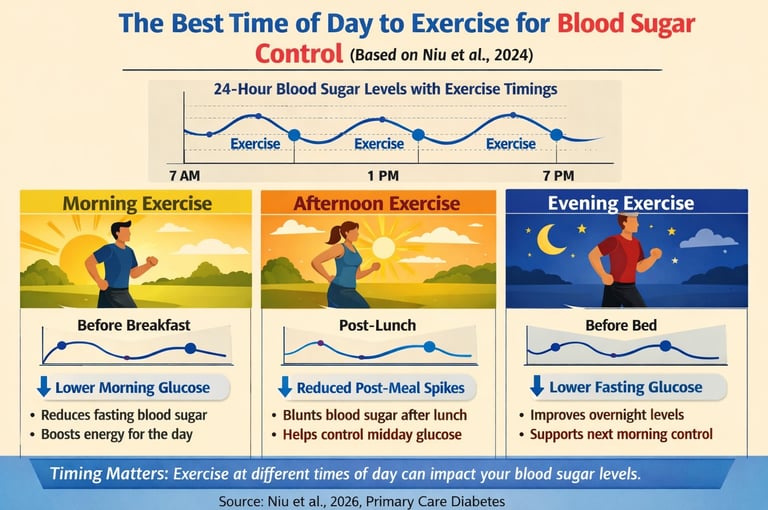
Even a 10-minute walk after meals can significantly reduce post-meal glucose spikes and improve long-term insulin sensitivity. Research suggests that exercising 30–90 minutes after meals may be one of the most effective strategies for lowering blood sugar spikes. Afternoon or post-meal exercise can significantly reduce glucose excursions, while evening exercise may improve fasting glucose the next morning (Niu et al., 2024).
Imagine checking your blood sugar after a meal and seeing the number rise higher than expected. For millions of people living with prediabetes, insulin resistance, or type 2 diabetes, this daily pattern can feel frustrating and confusing. Many patients are told to “exercise more,” but few are given a clear explanation of why movement works so powerfully to control blood sugar. The truth is that physical activity acts like a natural metabolic medicine, helping your body manage glucose in ways that medications alone cannot fully replicate.
When you move your body—whether through walking, cycling, resistance training, or even light activity after meals—your muscles begin to pull glucose directly from the bloodstream to use as fuel. This process is especially important for people with insulin resistance because working muscles can absorb glucose without relying entirely on insulin, using specialized transport proteins such as GLUT-4 that move to the muscle cell surface during exercise (Peng et al., 2024). In practical terms, this means that a simple walk can immediately help lower blood sugar levels, often within minutes of starting physical activity.
But the benefits of exercise go far beyond the immediate drop in glucose. Regular physical activity improves insulin sensitivity, strengthens skeletal muscle (the body’s largest glucose-using tissue), enhances mitochondrial function, and reduces chronic inflammation—one of the key drivers of metabolic disease (Xing et al., 2025). Over time, these changes can translate into lower HbA1c levels, better glucose stability, and a reduced risk of complications associated with diabetes.
Recent research has also shown that when and how you exercise matters. For example, short post-meal walks can significantly reduce blood sugar spikes, while resistance training can increase the body’s capacity to store glucose safely in muscle tissue (Bellini et al., 2022; Hashimoto et al., 2025).
In this guide, we will explore how exercise lowers blood sugar, the best time to move for glucose control, and why even small amounts of daily movement can transform metabolic health.
Key Takeaways
Muscles absorb glucose without insulin during exercise
Post-meal walking (10 minutes) lowers glucose spikes
Resistance training builds glucose storage capacity
Consistency matters more than timing
Movement Transforms Your Blood Sugar, Insulin Sensitivity, and Long-Term Health
If you have been told that exercise is important for managing blood sugar or type 2 diabetes, you have almost certainly received that advice without a full explanation of why it works. The reality is that physical activity is one of the most powerful metabolic medicines available — and unlike many medications, it carries side effects that are almost entirely positive: better sleep, improved mood, stronger muscles, and a longer life.
This blog post dives into the science of exercise and metabolic health, drawing on the latest peer-reviewed research to explain exactly how different forms of movement affect your blood glucose, your insulin sensitivity, and your risk for conditions like type 2 diabetes mellitus (T2DM). Whether you are newly diagnosed, managing prediabetes, or simply curious about optimizing your health, this guide is written for you — in plain language, backed by science.
We will cover four major topics: the physiological mechanisms by which exercise lowers blood sugar; the best time of day to exercise for maximum glucose control; how resistance training builds insulin sensitivity in your muscles; and why a simple walk after meals could be one of the most impactful habits you ever adopt.
1. How Does Exercise Lower Blood Sugar in Type 2 Diabetes?
To understand why exercise lowers blood sugar, it helps to first understand the problem. In type 2 diabetes and prediabetes, the body's cells become resistant to insulin — the hormone that acts like a key to unlock cells and allow glucose (sugar) to enter from the bloodstream. When cells ignore insulin's signal, glucose piles up in the blood, leading to the elevated readings that define diabetes.
The Muscle Connection
Skeletal muscle is the largest glucose-consuming organ in the body. When you exercise, your muscles need fuel — and they pull that fuel directly from the bloodstream in the form of glucose. But here is what makes exercise particularly powerful: active muscles do not need insulin to absorb glucose. They activate a separate glucose-transport pathway through a protein called GLUT-4, which moves to the cell surface during exercise and lets glucose in regardless of insulin levels.
A comprehensive 2025 meta-analysis by Xing et al., published in Frontiers in Endocrinology, reviewed multiple exercise interventions in patients with T2DM and confirmed that aerobic exercise, resistance training, and combined exercise all produce significant reductions in HbA1c (the three-month blood sugar average) and fasting blood glucose. Importantly, the study found that different exercise types provide complementary benefits — meaning that no single form of exercise captures all the metabolic advantages available to you.
Beyond Glucose: Systemic Metabolic Effects
Peng et al. (2024), writing in the World Journal of Diabetes, summarized several important mechanisms through which exercise combats type 2 diabetes:
Activation of AMPK (AMP-activated protein kinase): This enzyme, often called the body's 'energy sensor,' is switched on during exercise and triggers a cascade that improves glucose uptake, reduces liver glucose production, and enhances fat metabolism.
Reduction of chronic inflammation: Low-grade inflammation is a key driver of insulin resistance. Exercise reduces inflammatory markers like TNF-alpha and IL-6 over time, helping cells regain their sensitivity to insulin.
Improved mitochondrial function: Mitochondria are the energy factories inside your cells. Exercise, particularly endurance training, increases both the number and efficiency of mitochondria, which improves the body's ability to process glucose and fats.
Enhanced pancreatic beta-cell function: Regular exercise may help preserve the insulin-producing cells of the pancreas, slowing the progression of diabetes.
What this means for you is that exercise is not just a way to 'burn off' glucose in the short term. It fundamentally changes how your body handles energy — and the more consistently you engage in physical activity, the more your baseline metabolic health improves.
2.What Is the Best Time to Exercise for Blood Sugar Control?
One of the most common questions patients ask is: 'Does it matter when I exercise?' The short answer is yes — the time of day you choose to exercise can meaningfully affect your blood glucose outcomes, especially if you have diabetes or insulin resistance.
Morning vs. Afternoon vs. Evening Exercise
A 2024 study by Niu et al., published in Primary Care Diabetes, examined how different exercise timing affects 24-hour blood glucose fluctuations in people with type 2 diabetes. The researchers used continuous glucose monitoring (CGM) to track participants across the day and found nuanced differences depending on the time of exercise:
Morning exercise (before breakfast): Associated with larger immediate glucose reductions, but may cause more variability in blood sugar for individuals on certain medications or insulin.
Afternoon exercise (post-lunch): Demonstrated favorable effects on post-meal blood glucose spikes, which tend to be the highest readings of the day for most people with T2DM.
Evening exercise: Helped lower fasting blood glucose the following morning, potentially by improving overnight metabolic regulation.
The study highlights that blood glucose is a dynamic system — it fluctuates continuously in response to food, stress, activity, and sleep. Timing exercise to coincide with your naturally highest-glucose periods (typically 1–2 hours after meals) appears to provide the greatest benefit for smoothing out these peaks.
The Practical Takeaway
For most people, the best time to exercise is simply the time they will actually do it consistently. However, if you are looking to target post-meal glucose spikes — one of the most damaging patterns in diabetes management — exercising within 30 to 90 minutes after eating appears to be particularly effective. This is supported by both the Niu et al. findings and the postprandial walking research discussed below.
It is also worth noting that your circadian rhythm (your body's internal clock) plays a role in metabolic function. Insulin sensitivity naturally varies throughout the day, often peaking in the morning and declining toward evening. For individuals without strict medication constraints, morning or mid-day exercise may offer slightly superior insulin-sensitizing effects — but again, regularity matters far more than perfection of timing.
3. Why Does Resistance Training Improve Insulin Sensitivity?
When most people think of exercise for blood sugar, they picture brisk walking or cycling — aerobic activities. Yet resistance training (also called strength training or weight training) is increasingly recognized as one of the most potent tools available for improving insulin sensitivity and long-term metabolic health.
Building the Body's Largest Glucose Sink
Here is a key insight: the more muscle mass you have, the more 'storage space' your body has for glucose. Muscle tissue acts as a glycogen (stored glucose) reservoir. When you build muscle through resistance training, you increase the total capacity of your body to pull glucose from the blood and store it safely. This structural change in body composition is one reason why resistance training provides long-lasting benefits that persist even on rest days.
The meta-analysis by Xing et al. (2025) found that resistance training alone significantly improves glycemic control in T2DM patients. When combined with aerobic exercise — a 'combined exercise' protocol — the results were even more impressive, outperforming either modality in isolation for several key metabolic markers.
The Molecular Machinery: Phosphoproteomics and Personalized Exercise
A fascinating 2025 paper by Masuda and Matsuzaka, published in the Journal of Diabetes Investigation, explores the molecular mechanisms behind exercise-induced insulin sensitization in skeletal muscle using personalized phosphoproteomics — the study of protein activity patterns in individual patients.
The research reveals that exercise activates a complex network of proteins involved in insulin signaling — including key molecules in the PI3K/Akt pathway, which is the central route through which insulin tells cells to absorb glucose. In insulin-resistant individuals, this pathway is disrupted. Exercise — particularly resistance exercise — appears to restore and amplify this signaling network.
Crucially, the phosphoproteomic approach used by Masuda and Matsuzaka suggests that responses to exercise vary between individuals at a molecular level. This supports the emerging concept of personalized exercise medicine — the idea that different people may respond differently to specific types, intensities, and durations of exercise, and that tailoring programs to the individual may optimize metabolic outcomes.
Practical Resistance Training Guidance
You do not need to become a competitive weightlifter to reap these benefits. Research-supported recommendations for people with T2DM or prediabetes include:
2–3 sessions per week of resistance training targeting major muscle groups (legs, back, chest, arms, core).
8–12 repetitions per set at moderate intensity (enough to feel challenged but not unable to complete the set).
Bodyweight exercises such as squats, lunges, and push-ups are effective starting points for those new to resistance training.
Progress gradually — increasing resistance, sets, or frequency as strength improves.
Always consult with your healthcare provider before beginning a new resistance training program, especially if you have existing complications from diabetes, such as neuropathy, retinopathy, or cardiovascular disease.
4. Walking After Meals and Glucose Control
Of all the exercise strategies discussed in this article, postprandial walking — taking a walk after eating — may be the simplest, most accessible, and most underutilized intervention available for blood sugar management. You do not need equipment, a gym membership, or even athletic shoes. A comfortable pair of walking shoes and ten minutes of free time after a meal may be enough to meaningfully change your metabolic trajectory.
10 Minutes Is Enough
A landmark 2025 study by Hashimoto, Dora, Murakami, and colleagues, published in Scientific Reports, found that a 10-minute walk taken immediately after glucose intake produced a significant positive impact on postprandial (post-meal) blood glucose levels. The study specifically examined the timing of walking relative to glucose ingestion and found that walking immediately after eating — rather than waiting — was the most effective approach.
This matters enormously for patients who may feel limited by fatigue, time constraints, or physical ability. The threshold for meaningful benefit is low. Even brief, gentle movement is metabolically active, mobilizing muscle glucose uptake and blunting the blood sugar peak that follows a meal.
Meal Composition and Walking Effectiveness
Not all meals are metabolically equal, and a 2022 study by Bellini, Nicolo, Bazzucchi, and Sacchetti, published in Nutrients, investigated whether postprandial walking is equally effective after meals with different nutritional profiles.
The research found that postprandial walking consistently lowered the post-meal glucose response, but the magnitude of the effect varied depending on meal composition:
High-glycemic meals (those rich in rapidly digested carbohydrates): Postprandial walking produced the most dramatic reductions in blood glucose peaks, as there is more glucose entering the bloodstream quickly to be intercepted by active muscles.
Mixed meals (containing protein, fat, and fiber alongside carbohydrates): Still benefited from postprandial walking, but the baseline glucose excursion was smaller — meaning the improvement was from a lower starting point.
High-fat meals: Walking after high-fat meals also improved glucose metrics, suggesting benefit across diverse eating patterns.
The practical implication is clear: regardless of what you eat, a short walk afterward helps your body handle the glucose load more effectively. Combined with a mindful approach to meal composition — including more fiber, protein, and healthy fats — postprandial walking becomes part of a comprehensive glucose management strategy.
Why Postprandial Walking Works: The Physiology
During a walk, the large muscles of the legs — the quadriceps, hamstrings, calves, and glutes — are continuously contracting. This sustained contraction activates the insulin-independent GLUT-4 glucose transport system described earlier. Glucose that would otherwise accumulate in the bloodstream after a meal is diverted into working muscles, where it is used as immediate fuel or stored as glycogen for later use.
Additionally, walking increases blood flow to peripheral tissues, improving the distribution and clearance of glucose from the circulation. For individuals who struggle with the dramatic post-meal glucose spikes that characterize uncontrolled T2DM, this simple habit can represent a clinically meaningful intervention.
Exercise Types and Their Effects on Blood Sugar
• Walking
Blood sugar benefit: Helps reduce post-meal glucose spikes by allowing muscles to use circulating glucose for energy.
Best timing: Immediately after meals, when blood glucose levels are rising.
• Aerobic Exercise (e.g., brisk walking, cycling, swimming)
Blood sugar benefit: Improves overall insulin sensitivity and helps the body use glucose more efficiently over time.
Best timing: Morning or afternoon sessions are often effective for improving daily glucose regulation.
• Resistance Training (strength or weight training)
Blood sugar benefit: Increases muscle mass, which expands the body’s capacity to store glucose as glycogen and improves long-term metabolic control.
Best timing: Perform 2–3 sessions per week, targeting major muscle groups.
• Post-Meal Walking
Blood sugar benefit: Blunts postprandial glucose peaks by activating skeletal muscles that absorb glucose from the bloodstream.
Best timing: Start walking within 30 minutes after eating for maximum glucose-lowering effect.
Bringing It All Together: A Practical Exercise Framework
• Exercise is not just physical activity — it is metabolic therapy.
Growing evidence shows that regular movement directly improves glucose metabolism, insulin sensitivity, and long-term metabolic health. For people living with prediabetes, insulin resistance, or type 2 diabetes, exercise functions almost like a biological drug that activates multiple glucose-lowering pathways simultaneously
• Muscle is the body’s largest glucose-consuming organ.
When skeletal muscles contract during walking, cycling, or resistance training, they absorb glucose from the bloodstream to produce energy. Importantly, this process can occur independently of insulin through activation of GLUT-4 transporters, allowing glucose to enter muscle cells even in individuals with insulin resistance
• Exercise improves the root causes of metabolic disease.
Beyond lowering blood sugar in the short term, regular physical activity triggers deeper metabolic adaptations. These include improved mitochondrial function, reduced chronic inflammation, increased fat oxidation, and enhanced insulin signaling pathways within skeletal muscle cells (Peng et al., 2024).
• Timing of exercise can influence glucose control.
Emerging research suggests that when you exercise may matter almost as much as how you exercise. Continuous glucose monitoring studies indicate that afternoon or post-meal activity can significantly reduce postprandial glucose spikes, which are increasingly recognized as a major driver of diabetes complications
• Even small amounts of movement produce measurable benefits.
Recent clinical studies show that a simple 10-minute walk immediately after meals can significantly blunt post-meal glucose spikes, making postprandial walking one of the most accessible strategies for blood sugar management
• Resistance training adds a long-term metabolic advantage.
Strength training increases skeletal muscle mass, effectively expanding the body’s capacity to store glucose as glycogen. Over time, this structural adaptation improves baseline insulin sensitivity and reduces long-term glucose variability
• The most important principle remains consistency.
While exercise timing and type can influence metabolic outcomes, the strongest predictor of improved glucose control is regular, sustained physical activity integrated into daily life.
• In metabolic health, movement truly is medicine.
Frequently Asked Questions
Q1. How quickly does exercise lower blood sugar?
Blood sugar begins to decrease almost immediately during physical activity. Within 10–30 minutes of moderate exercise, muscles are actively pulling glucose from the bloodstream. The effect can last for several hours after exercise ends, as muscles continue to replenish glycogen stores using circulating glucose. For sustained glucose improvements, regular exercise over weeks and months produces the most significant change, particularly in HbA1c levels.
Q2. Is it safe to exercise if I have type 2 diabetes?
For the vast majority of people with T2DM, regular exercise is not only safe but strongly recommended by health organizations worldwide. However, certain precautions are important. If you are on insulin or sulfonylureas, exercise can sometimes cause blood sugar to drop too low (hypoglycemia), so monitoring glucose before, during, and after activity is wise. Always check with your doctor or diabetes educator before starting a new exercise program, especially if you have complications such as heart disease, kidney disease, or foot problems.
Q3. What is better for blood sugar: walking or weightlifting?
Both walking and weightlifting offer distinct and complementary benefits. Walking (aerobic exercise) is excellent for immediate glucose clearance and cardiovascular health. Weightlifting (resistance training) builds muscle mass, which creates a larger long-term 'sink' for glucose and improves basal insulin sensitivity. Research consistently shows that combined exercise programs produce the best results. If you can only choose one, start with what you enjoy most and are most likely to sustain — and then gradually incorporate the other.
Q4. How long should I walk after eating to control my blood sugar?
Research by Hashimoto et al. (2025) demonstrates that as little as 10 minutes of walking immediately after eating produces meaningful glucose benefits. Starting your walk within 30 minutes of finishing a meal appears to be most effective for blunting the glucose peak. Longer walks of 20–30 minutes provide additional benefit. The most important factor is immediacy — walking sooner after eating is more effective than waiting an hour or two.
Q5. Can exercise replace diabetes medication?
Exercise is a cornerstone of diabetes management, but medication decisions should always be made in collaboration with your healthcare provider. For some individuals in the early stages of prediabetes or T2DM, lifestyle changes including regular exercise and dietary improvements, can delay or even prevent the need for medication. For others, exercise works best as a complement to medication, enhancing its effects and potentially allowing dose reductions over time. Never stop or reduce medication without medical supervision.
Q6. Does the type of food I eat affect how well postprandial walking works?
Yes. Bellini et al. (2022) found that postprandial walking is effective after meals of varying compositions, but the benefit is most dramatic after high-glycemic meals that cause large, rapid glucose spikes. That said, walking after any meal — even a balanced, low-glycemic one — contributes to better overall glucose management. Ideally, combine postprandial walking with meals that include plenty of fiber, lean protein, and healthy fats to get the best of both worlds.
Q7. Why do some people respond differently to exercise than others?
This is an exciting frontier in metabolic research. Masuda and Matsuzaka (2025) explored this question using personalized phosphoproteomics — analyzing individual patterns of protein activity in skeletal muscle — and found that exercise-induced insulin sensitization varies between people at a molecular level. Factors such as genetics, baseline muscle mass, current medication, fitness level, sleep quality, and stress hormones all interact to shape the individual response. This is why a personalized approach to exercise prescription, ideally with professional guidance, tends to deliver better outcomes than a one-size-fits-all program.
Clinical pearls.
1. The "Insulin-Independent" Shortcut
Scientific Perspective: Exercise triggers the translocation of GLUT-4 transport proteins to the muscle cell membrane via the AMPK pathway, bypassing the need for insulin signaling.
Think of exercise as a "back door" into your cells. Even if your "front door" (insulin sensitivity) is stuck or broken, movement allows sugar to leave your blood and enter your muscles for fuel without needing a key.
2. The "Goldilocks" Post-Meal Window
Scientific Perspective: Timing physical activity 30–90 minutes post-ingestion aligns with the peak of postprandial glycemic excursion, maximizing Don't wait for your food to "settle" for two hours. The best time to move is right when your blood sugar is starting to climb—usually about half an hour after you finish your last bite.
Don't wait for your food to "settle" for two hours. The best time to move is right when your blood sugar is starting to climb—usually about half an hour after you finish your last bite.
3. Muscle as a "Metabolic Sink"
Scientific Perspective: Skeletal muscle accounts for approximately 80% of postprandial glucose clearance. Hypertrophy via resistance training increases the total storage volume for muscle glycogen.
Every pound of muscle you build is like buying a bigger sponge. The more muscle you have, the more sugar your body can soak up and store safely, even while you are sleeping or sitting at a desk.
4. The 10-Minute Minimum Viable Dose
Scientific Perspective: As evidenced by Hashimoto et al. (2025), a brief 10-minute bout of immediate postprandial walking is sufficient to significantly reduce glucose variability and mean amplitude of glycemic excursions (MAGE).
You don’t need a gym membership or an hour of cardio to see results. A simple 10-minute stroll around the block after dinner is a legitimate medical intervention that changes your lab results.
5. The Synergy of "Combined Modality"
Scientific Perspective: Meta-analyses (e.g., Xing et al., 2025) indicate that "Combined Exercise" (Aerobic + Resistance) is superior to either alone for reducing HbA1c, as they target different physiological pathways (mitochondrial density vs. glucose storage capacity).
Variety isn't just for fun; it's more effective. Walking helps clear sugar now, while lifting weights helps your body handle sugar better later. Doing both gives you the best defense against diabetes.
6. The Evening Exercise "Afterglow"
Scientific Perspective: Evening activity can improve overnight hepatic glucose regulation, leading to lower fasting blood glucose levels the following morning by modulating the circadian rhythm of insulin sensitivity.
If you struggle with high blood sugar readings first thing in the morning (the "dawn phenomenon"), a walk or light activity after dinner can help "tuck your blood sugar in" for the night, leading to a better number when you wake up
Author’s Note
This article was written to translate emerging scientific research on exercise physiology and metabolic health into clear, practical insights for patients, caregivers, and health-conscious readers. The goal is not only to explain what research shows, but also why movement plays such a powerful role in regulating blood sugar, insulin sensitivity, and long-term metabolic health.In clinical practice, many patients notice lower glucose readings within days of adding post-meal walking
In recent years, a growing body of research has demonstrated that physical activity influences multiple biological systems simultaneously—from skeletal muscle glucose uptake and mitochondrial function to inflammation and insulin signaling pathways. Studies published in journals such as Primary Care Diabetes, Frontiers in Endocrinology, Scientific Reports, and Nutrients continue to deepen our understanding of how different forms of exercise—including aerobic activity, resistance training, and post-meal walking—affect blood glucose dynamics and diabetes risk.
While the science is complex, the practical message is remarkably simple: consistent movement can profoundly improve metabolic health. Even modest changes—such as short walks after meals or adding resistance exercises a few times per week—may contribute to meaningful improvements in glucose regulation over time.
The information presented here is intended for educational purposes and reflects evidence available at the time of writing. Individual responses to exercise may vary depending on factors such as age, medications, underlying health conditions, and baseline fitness level. Readers living with diabetes, cardiovascular disease, or other chronic conditions should consult their healthcare provider before making significant changes to their physical activity routine.
Final Takeaway
Exercise is one of the most effective non-pharmacologic therapies for type 2 diabetes. Walking after meals, aerobic exercise, and resistance training each improve blood sugar through distinct physiological mechanisms involving GLUT-4 activation, insulin sensitivity, and skeletal muscle glucose uptake. Even small amounts of daily movement can significantly improve glucose control, reduce insulin resistance, and support long-term metabolic health.
Disclaimer: This article is for informational purposes only and does not constitute medical advice. Individual circumstances vary, and treatment decisions should always be made in consultation with qualified healthcare professionals.
Related Articles
Managing Diabesity: A Complete Guide to Weight Loss and Blood Sugar Control | DR T S DIDWAL
The BMI Paradox: Why "Normal Weight" People Still Get High Blood Pressure | DR T S DIDWAL
Breakthrough Research: Leptin Reduction is Required for Sustained Weight Loss | DR T S DIDWAL
References
Bellini, A., Nicolo, A., Bazzucchi, I., & Sacchetti, M. (2022). The effects of postprandial walking on the glucose response after meals with different characteristics. Nutrients, 14(5), 1080. https://doi.org/10.3390/nu14051080
Hashimoto, K., Dora, K., Murakami, Y., et al. (2025). Positive impact of a 10-min walk immediately after glucose intake on postprandial glucose levels. Scientific Reports, 15, 22662. https://doi.org/10.1038/s41598-025-07312-y
Masuda, S., & Matsuzaka, T. (2025). Insulin resistance and exercise-induced insulin sensitization in skeletal muscle: Insights from personalized phosphoproteomics. Journal of Diabetes Investigation, 16, 1583–1585. https://doi.org/10.1111/jdi.70113
Niu, W. C., Liu, C., Liu, K., Fang, W. J., Liu, X. Q., Liang, X. L., Yuan, H. P., Jia, H. M., Peng, H. F., Jiang, H. W., & Jia, Z. M. (2024). The effect of different times of day for exercise on blood glucose fluctuations. Primary Care Diabetes, 18(4), 427–434. https://doi.org/10.1016/j.pcd.2024.06.004
Peng, C. J., Chen, S., Yan, S. Y., Zhao, J. N., Luo, Z. W., Qian, Y., & Zhao, G. L. (2024). Mechanism underlying the effects of exercise against type 2 diabetes: A review on research progress. World Journal of Diabetes, 15(8), 1704–1711. https://doi.org/10.4239/wjd.v15.i8.1704
Xing, S., Zhang, Y., Chen, Y., Feng, S., Zhang, Y., & Moreira, P. (2025). Comparing the impacts of different exercise interventions on patients with type 2 diabetes mellitus: A literature review and meta-analysis. Frontiers in Endocrinology, 16, 1495131. https://doi.org/10.3389/fendo.2025.1495131