Eggs, Choline & TMAO: The Latest Science on Heart Disease, Diabetes & Brain Health
Explore the latest evidence on TMAO, choline metabolism, cardiovascular disease, diabetes, osteoporosis, brain health, and personalized nutrition
NUTRITION
Dr. T.S. Didwal, M.D.(Internal Medicine)
7/26/202624 min read
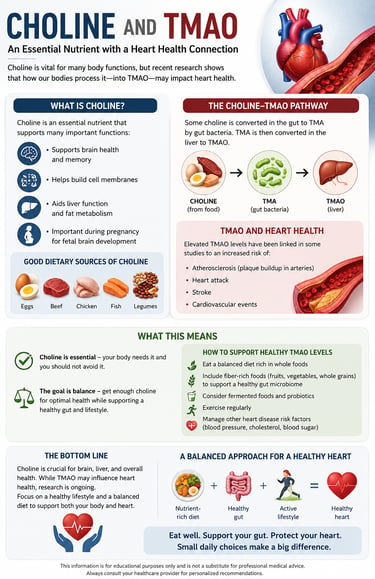
Should you worry about eggs, choline, and TMAO? Current evidence suggests that choline is an essential nutrient, while TMAO is a gut microbiome-derived metabolite associated with cardiovascular risk but not conclusively proven to cause disease. A 2026 randomized clinical trial found that raising TMAO with choline supplementation did not impair blood sugar control in healthy adults.
Clinical pearls
1. Microbiome Gene Abundance (cutC/D Enzymes)
Not all gut bacteria convert choline into trimethylamine (TMA). Production depends on specific bacterial species possessing the choline utilization gene cluster (cutC/D) (such as certain Firmicutes or Proteobacteria). If your microbiome harbors a higher population of these specific strains, you will generate significantly more TMA from the same meal.
2. Kidney Clearance Efficiency
TMAO is cleared from the bloodstream primarily through renal excretion. Even minor variations in glomerular filtration rate (GFR) or kidney function change how rapidly TMAO is removed. A person with slightly lower renal clearance will maintain higher circulating TMAO levels than someone with optimal kidney function, regardless of diet.
3. Hepatic FMO3 Activity & Genetics
Once gut bacteria turn choline into TMA gas, it travels to the liver, where the enzyme flavin-containing monooxygenase 3 (FMO3) oxidizes it into TMAO. Genetic variations in the FMO3 gene—as well as hormonal influences like estrogen levels—alter how efficiently your liver performs this conversion.
4. Gut Transit Time & Motility
Slower intestinal transit gives gut microbes more time to interact with and ferment undigested choline and carnitine. Individuals with longer gut transit times often show higher TMA generation compared to those with rapid motility.
5. Food Matrix and Nutrient Solubility
How choline is packaged in food alters how much of it reaches the lower gut bacteria versus being absorbed early in the small intestine. Free choline, phosphatidylcholine (in egg yolks), and L-carnitine (in red meat) have different absorption rates. Co-ingesting dietary fiber can also physically trap nutrients, changing their availability to gut microbes.
6. Chronic "Microbial Priming"
Your long-term baseline diet trains your microbiome. Individuals who regularly consume high amounts of carnitine or choline supplements select for and expand TMA-producing bacterial colonies over time. This means a long-term omnivore and a long-term vegan given the exact same choline challenge will produce vastly different amounts of TMA.
7. Endogenous Cell Turnover
Your intestine constantly sheds its own mucosal cells into the digestive tract. These shed cells contain phosphatidylcholine from cell membranes. As a result, gut bacteria continuously convert your body's own internal compounds into TMAO, creating a baseline level that exists independently of external food intake.
8. Direct Preformed TMAO Intake (The "Fish Paradox")
Deep-sea marine fish (like cod, halibut, and seafood) naturally contain high levels of preformed TMAO, which they use for osmoregulation in cold water. Eating fish spikes blood TMAO directly without needing any bacterial conversion in the gut at all, causing temporary spikes that reflect healthy seafood consumption rather than gut dysbiosis.
Introduction
If you've searched for "TMAO," "choline," or "trimethylamine N-oxide," you've probably landed on a wall of contradictory headlines. One article tells you eggs and red meat are quietly wrecking your arteries. Another says choline is an essential nutrient your brain can't live without. A third claims a gut bacteria byproduct is aging your bones and shrinking your hippocampus.
The truth is more nuanced — and far more useful — than any single headline suggests.
Trimethylamine N-oxide (TMAO) is a molecule your gut bacteria make when you eat choline-rich foods like eggs, liver, and fish, or carnitine-rich foods like red meat. For over a decade, elevated TMAO has been treated as a red flag for cardiovascular risk. But a wave of new research published in 2025 and 2026 — including a rigorously controlled human trial on glucose metabolism, a cohort study separating "TMAO-associated" from "non-TMAO-associated" choline pathways, and mechanistic studies on bone and brain tissue — is reshaping how scientists interpret this metabolite.
1. What Is TMAO? The Gut-Liver Metabolite Explained
Trimethylamine N-oxide, or TMAO, is a small, water-soluble compound produced through a two-step process that involves both your gut bacteria and your liver.
It starts with specific nutrients in food:
Choline — abundant in eggs, liver, poultry, dairy, and soybeans
Phosphatidylcholine — a phospholipid form of choline found in egg yolks and organ meats
L-carnitine — concentrated in red meat
Betaine — found in beets, wheat bran, and spinach
Certain gut bacteria strains break these compounds down into a gas called trimethylamine (TMA). TMA is absorbed into your bloodstream and travels to your liver, where an enzyme called flavin-containing monooxygenase 3 (FMO3) converts it into TMAO <cite index="4-1">a gut microbiota-derived metabolite that has been linked to impaired glucose homeostasis and type 2 diabetes in prior research, although causality has remained unclear</cite>.
Why does this matter clinically? Because TMAO doesn't just sit passively in your blood. Research over the past decade has connected elevated circulating TMAO with atherosclerosis, insulin resistance, kidney strain, and — as you'll see below — emerging concerns about bone and brain tissue. But elevated TMAO is not automatically dangerous for everyone, and the newest human data complicate the simple "TMAO = bad" narrative in important ways.
2. How Your Gut Microbiome Turns Choline Into TMAO
Not everyone converts choline into TMAO at the same rate. This is one of the most clinically important — and most overlooked — facts in this entire field.
Individual bacterial composition drives TMA production
A 2026 mechanistic study in the Journal of Nutritional Biochemistry examined how bacterial community dynamics govern the trajectory of choline-derived trimethylamine production over time. The researchers found that TMA generation isn't a fixed, linear response to how much choline you eat — it depends heavily on which bacterial species are present, how they interact, and how the microbial community shifts as it grows and adapts to substrate availability.
Clinical takeaway: Two people can eat the same choline-rich meal and produce dramatically different amounts of TMAO, depending entirely on their gut microbiome composition. This helps explain why some high-choline-food eaters have low TMAO and some low-choline-food eaters still test high — kidney function, bacterial strains, and even genetics (via FMO3 gene variants) all shape the outcome independently of diet alone.
Basal production even without supplementation
Some TMA and TMAO production occurs even without deliberate dietary choline loading, because the gut microbiota also metabolizes choline and phosphatidylcholine that the body itself sheds into the intestinal tract. This means TMAO is never truly at "zero" — it's a normal background metabolite, not solely a marker of dietary excess.
Source and solubility matter, not just amount
A large 2026 prospective cohort study published in The American Journal of Clinical Nutrition took this one step further. Rather than treating "total dietary choline" as one variable, researchers separated choline intake by food source and by water-solubility of the choline compound, then examined which patterns tracked with TMAO levels versus which tracked with dyslipidemia risk independently of TMAO. Their findings suggest that not all dietary choline behaves the same way in the body — some choline-rich eating patterns raised TMAO and dyslipidemia risk together, while others were associated with dyslipidemia through pathways that appeared unrelated to TMAO at all.
What this means for you: Blanket advice to "avoid choline" oversimplifies a genuinely complex picture. The type of food you're getting choline from — and what else is in that food — may matter as much as the choline itself.
3. TMAO and Blood Sugar: What the 2026 Human Trial Actually Found
This is arguably the most important — and most reassuring — new finding in this space, so it deserves its own section with careful interpretation.
The study design
Published in the American Journal of Physiology-Endocrinology and Metabolism in mid-2026, researchers led by Laskaridou and colleagues at Virginia Tech ran two randomized, double-blind, placebo-controlled crossover trials in healthy, sedentary adults. Participants took a 1,000 mg dose of choline bitartrate (a well-absorbed choline supplement) or a placebo, either:
Acutely — the night before a metabolic testing session, or
Short-term — daily for four weeks
The researchers then measured insulin sensitivity, glucose tolerance, and fasting glucose and insulin levels before and after choline exposure — directly testing whether raising TMAO in real people impairs glucose control the way animal studies had suggested.
The results
Trimethylamine N-oxide has been linked to impaired glucose homeostasis and type 2 diabetes in earlier research, but causality was unclear. In these two randomized, placebo-controlled human studies, both acute and short-term dietary choline increased TMAO levels without affecting insulin sensitivity, glucose tolerance, or fasting glucose and insulin. The authors concluded that these findings do not support a causal role for TMAO in impaired glucose regulation, though they noted that longer-term studies are still needed to confirm this in populations with existing metabolic dysfunction.</cite>
Why this matters clinically
For years, rodent studies showed that TMAO could directly impair pancreatic beta-cell function — the insulin-producing cells in your pancreas — through mechanisms involving cellular stress and inflammation. This created understandable concern that dietary choline might be a hidden driver of type 2 diabetes risk in humans.
This new trial is important precisely because it's a controlled human intervention, not an observational association or an animal model. It directly raised TMAO through diet and then measured whether real metabolic harm followed — and in healthy people over these timeframes, it did not.
Clinical interpretation for your own results: If you've seen an elevated TMAO level on a lab panel and you're otherwise metabolically healthy, this study is reassuring evidence that TMAO alone, at diet-achievable levels, is unlikely to be actively damaging your blood sugar control in the short-to-medium term. It does not mean TMAO is irrelevant to metabolic health in every context — people with kidney impairment, pre-existing diabetes, or long-term chronic elevation may respond differently, and the study's authors were explicit that longer-duration research is still needed.
4. TMAO and Heart Health: Separating Correlation From Causation {#tmao-heart}
Cardiovascular disease is where the TMAO story originally began, and it remains the area with the most data — and the most genuine scientific debate.
The case for concern
Multiple meta-analyses have found a dose-dependent relationship between higher circulating TMAO and adverse cardiovascular events, including heart attack, stroke, and cardiovascular mortality. Mechanistically, elevated TMAO has been shown in preclinical models to promote cholesterol accumulation in blood vessel walls, increase platelet clumping (raising clot risk), and drive vascular inflammation.
The case for caution in interpretation
Here's where it gets more complicated, and where good clinical reasoning matters. A Mendelian randomization study — a genetic method used to test whether an association is likely causal — found that genetically predicted higher TMAO levels were not causally associated with cardiovascular disease. This raises the possibility that TMAO may be a marker of cardiovascular risk (something that rises alongside the real problem) rather than a direct driver of it.
Kidney function is a major confounder here. TMAO is cleared primarily by the kidneys, so poor kidney function raises TMAO levels for reasons that have nothing to do with diet — and poor kidney function is independently linked to worse cardiovascular outcomes. This overlap can make TMAO look more causally dangerous in observational data than it may actually be.
A related human trial testing vascular function directly — measuring flow-mediated dilation (a marker of blood vessel health) and arterial stiffness after acute and short-term choline dosing — adds to this same nuanced picture, examining whether raising TMAO through diet measurably impairs how well blood vessels function in real people, rather than relying solely on population associations.
Clinical takeaway: TMAO is a legitimate cardiovascular risk marker worth monitoring, especially if you have other cardiometabolic risk factors, but it is not settled science that TMAO itself directly causes heart disease in isolation. Kidney function, overall dietary pattern, and existing cardiovascular risk should all be part of how you and your doctor interpret an elevated result — not TMAO in a vacuum.
5. TMAO, Choline Source, and Cholesterol: The 2026 Cohort Data
The prospective cohort study from Zhang and colleagues, published in The American Journal of Clinical Nutrition, offers one of the most clinically useful frameworks to emerge from this research area in 2026.
Two distinct pathways to dyslipidemia risk
Rather than lumping all choline intake together, the researchers distinguished:
TMAO-associated choline patterns — choline sources whose relationship with dyslipidemia risk appeared to run through elevated TMAO production
Non-TMAO-associated choline patterns — choline sources whose relationship with dyslipidemia risk appeared independent of TMAO, likely reflecting other nutritional or food-matrix factors (such as saturated fat content, overall dietary pattern, or co-occurring nutrients)
This distinction matters because it means not all elevated-choline diets carry the same risk profile, and a person's dyslipidemia risk from choline-rich eating may not be fully explained — or predicted — by their TMAO level alone.
Solubility as an overlooked variable
The researchers also examined choline's solubility — essentially, the chemical form in which choline appears in different foods — finding that this property tracked differently with TMAO generation and lipid outcomes depending on the source. This is a newer and more mechanistically precise way of thinking about choline than simply counting total milligrams consumed.
Clinical takeaway: If your lipid panel shows dyslipidemia and you also have elevated TMAO, it's reasonable to review your choline sources with a clinician or dietitian — but if your TMAO is normal and your lipids are still elevated, don't assume choline is off the hook, or that TMAO testing alone will explain your cardiometabolic risk.
6. TMAO and Bone Health: Lessons From Ovariectomized Mouse Models
Bone health is a newer, rapidly growing area of TMAO research, and it's especially relevant for postmenopausal women, who experience both estrogen decline and, independently, changes in gut microbiota composition.
Why ovariectomized mice are used to model this
Researchers use ovariectomized (estrogen-deficient) mice to simulate the bone loss that occurs after menopause. A 2026 study in Life Sciences by Hu and colleagues examined whether targeting the gut-microbiota-dependent choline metabolite TMAO could improve bone health outcomes in this model — building on a growing body of mechanistic evidence that gut dysbiosis and elevated TMAO contribute meaningfully to bone loss.
The proposed mechanisms
Related mechanistic work has identified at least two distinct pathways by which TMAO appears to damage bone tissue:
Impaired osteoblast function (bone-building cells). TMAO has been shown to activate cellular stress pathways inside bone-forming cells — involving a stress-response protein called PERK and downstream effects on mitochondrial quality control — that suppress the cell's ability to clear damaged components. This chain of events can impair osteoblast energy production and function, ultimately slowing new bone formation.
Increased osteoclast activity (bone-resorbing cells). Separately, TMAO has been shown to enhance the formation and activity of osteoclasts — the cells that break down bone tissue — partly through oxidative stress and inflammatory signaling (an NF-κB-dependent pathway). More active osteoclasts combined with less active osteoblasts is a recipe for net bone loss over time.
Importantly, interventions that restore healthy gut microbiota — such as fecal microbiota transplantation from healthy donors in animal models — have been shown to counteract TMAO overproduction linked to estrogen deficiency and mitigate key features of bone loss, suggesting the gut-bone axis may be a modifiable target rather than a fixed risk.
Clinical takeaway: This research is still preclinical (animal-model based), so it should not be over-extrapolated into treatment decisions. But for postmenopausal women already managing bone density concerns, it strengthens the rationale for a broader conversation with your physician about gut health, diet quality, and standard bone-protective strategies (calcium, vitamin D, resistance training, and, where appropriate, pharmacologic therapy) rather than viewing TMAO as an isolated variable to fix on its own.
7. TMAO and Brain Health: PANoptosis and Hippocampal Function
Perhaps the most striking new mechanistic finding comes from neuroscience.
What the 2025 npj Science of Food study found
Wang, Shen, Sun, and colleagues investigated <cite index="26-1">whether chronic systemic TMAO exposure in mice induces cognitive impairment, using a battery of behavioral tests including novel object recognition, the Y-maze, and the Morris water maze.They found significant deficits across these tests, associated with severe hippocampal neurodegeneration — including roughly a 20% loss of pyramidal neurons in the CA1 subregion of the hippocampus — along with marked mitochondrial damage.
The mechanism: PANoptosis
The researchers linked this neuronal damage to a process called PANoptosis — a form of programmed cell death that combines features of three distinct cell-death pathways (pyroptosis, apoptosis, and necroptosis) into one coordinated inflammatory response.</cite> <cite index="26-1">Mechanistically, they observed activation of a sensor protein called ZBP1, along with downstream executioner proteins including specific caspases and a protein called MLKL, ultimately leading to pore formation in the cell membrane — a hallmark of this coordinated cell-death process.</cite>
Because TMAO is known to cross the blood-brain barrier, this gives researchers a plausible biological route by which a gut-derived, diet-influenced metabolite could directly contribute to neuronal loss in a brain region — the hippocampus — that is central to memory formation.
Context from human cohort research
This animal-model mechanism is consistent with human observational data. Separate research using a large prospective cohort found that higher dietary choline intake tracked with better cognitive function and slower cognitive decline over more than two decades of follow-up — an important reminder that choline itself is a beneficial, even essential, nutrient for brain development and function. The concern in the newer mechanistic studies centers specifically on TMAO, the downstream bacterial metabolite, not on choline as a nutrient.
Clinical takeaway: This is animal-model evidence of a specific, biologically plausible harm pathway — not proof that dietary choline causes dementia in humans. It should be read as a reason for continued research and thoughtful moderation, not as a reason to eliminate a nutrient your brain genuinely requires, especially given separate evidence that adequate choline intake supports cognitive health across the lifespan.
8. Why Individual Gut Bacteria Matter More Than the Food Itself
It's worth returning to this point because it's the thread that ties every section of this article together: your personal gut microbiome is the single biggest variable determining how much TMAO you produce from any given amount of choline.
The 2026 Journal of Nutritional Biochemistry study on bacterial dynamics found that TMA production trajectories are shaped by which bacterial species dominate the gut community and how that community shifts over time — not simply by how much substrate (choline) is available. This has three practical implications:
Two people on identical diets can have very different TMAO levels. This is normal biological variation, not necessarily a sign that one person is "doing something wrong."
Interventions that reshape the microbiome (dietary fiber changes, fermented foods, or in research settings, targeted probiotics or fecal microbiota transplantation) may lower TMAO production more effectively than simply removing choline-containing foods.
A single TMAO blood test is a snapshot, not a diagnosis. Levels can shift with recent meals, hydration, kidney function, and microbiome changes, so trends over time — interpreted by a clinician — are more meaningful than one isolated number.
9. Interpreting Your Own TMAO or Choline Results: Clinical Context
If you've had TMAO measured (increasingly available through specialty and cardiovascular risk panels) or you're simply trying to make sense of your choline intake, here's how to think about it responsibly.
Questions to discuss with your doctor or dietitian
Is my kidney function normal? Since the kidneys clear TMAO, impaired kidney function can elevate levels independent of diet.
What is the broader clinical picture? TMAO should be interpreted alongside standard cardiovascular risk factors (LDL cholesterol, blood pressure, HbA1c), not as a standalone verdict.
Where is my choline coming from? A diet built around fatty red meat and processed meat differs meaningfully from one built around eggs, fish, and legumes, even if total choline intake looks similar on paper.
Do I have other risk factors that change the interpretation? Postmenopausal status, pre-existing diabetes, or established cardiovascular disease may warrant more caution around chronically elevated TMAO than the same level would in an otherwise healthy young adult.
Is this a single measurement or a trend? One elevated reading after a choline-heavy meal is very different from a persistently high fasting level across multiple tests.
What the evidence does NOT support
It does not support that a single high TMAO reading means you are on a fixed path toward diabetes, heart disease, or dementia.
It does not support eliminating choline from your diet — choline is an essential nutrient required for liver function, cell membrane structure, and neurotransmitter production, and deficiency carries its own well-documented risks, including fatty liver disease.
It does not support relying on TMAO as a substitute for standard, validated cardiometabolic testing.
10. How to Manage Choline Intake and TMAO Levels Practically
Managing TMAO is not about avoiding choline, an essential nutrient required for normal liver function, brain development, and cell membrane integrity. Instead, current evidence suggests focusing on reducing excessive microbial TMA production, supporting a healthy gut microbiome, and maintaining efficient renal clearance.
1. Meet—But Do Not Excessively Exceed—Your Daily Choline Requirements
Aim to consume approximately:
Men: 550 mg/day
Women: 425 mg/day
Pregnancy: 450 mg/day
Lactation: 550 mg/day
Moderate dietary choline intake from whole foods is safe and necessary. A 2026 randomized clinical trial showed that even 1,000 mg/day of supplemental choline for four weeks increased TMAO without impairing insulin sensitivity or glucose metabolism in healthy adults.
2. Choose Whole-Food Sources of Choline
Prefer obtaining choline from nutrient-dense foods rather than high-dose supplements.
Good dietary sources include:
Eggs
Fish
Poultry
Legumes
Soy foods
Nuts
Whole grains
Whole foods provide choline within a beneficial food matrix containing protein, fiber, vitamins, minerals, and healthy fats that may influence metabolic responses.
3. Favor Plant-Based Choline Sources More Often
Increasing plant-derived choline can help maintain adequate intake while reducing microbial TMA production.
Examples include:
Lentils
Chickpeas
Soybeans
Broccoli
Brussels sprouts
Cauliflower
Quinoa
Whole grains
Nuts and seeds
Cruciferous vegetables also contain bioactive compounds such as indole-3-carbinol, which may influence hepatic FMO3 activity, although clinical evidence is still emerging.
4. Balance Animal Foods Instead of Eliminating Them
Current evidence does not support avoiding eggs or fish solely because they contain choline.
Instead:
Consume eggs and fish in moderation.
Pair animal proteins with fiber-rich vegetables, legumes, or whole grains.
Limit frequent intake of processed meats and excessive red meat.
A fiber-rich meal slows digestion, alters microbial metabolism, and may reduce the proportion of dietary choline converted into TMA.
5. Avoid Unnecessary High-Dose Choline or Carnitine Supplements
Unless medically indicated:
Avoid large doses of choline bitartrate.
Avoid high-dose L-carnitine supplements.
Discuss supplementation with your physician if you have cardiovascular or kidney disease.
Excess unabsorbed choline and carnitine provide additional substrate for bacterial TMA production.
6. Support a Healthy Gut Microbiome
Because gut bacteria determine how much TMA is produced, maintaining microbial diversity is one of the most effective long-term strategies.
Increase intake of:
Vegetables
Fruits
Legumes
Whole grains
Resistant starch
Fermented foods
These foods encourage beneficial bacteria while reducing the relative abundance of TMA-producing organisms.
7. Increase Prebiotic Fiber
Aim to consume a variety of soluble and fermentable fibers, including:
Inulin
Resistant starch
Pectin
Oats
Barley
Beans
Green bananas
Fermentation of these fibers produces short-chain fatty acids (SCFAs) that lower colonic pH and promote beneficial bacteria, making the intestinal environment less favorable for TMA-producing microbes.
8. Eat Polyphenol-Rich Foods
Polyphenols may reduce microbial TMA formation while improving overall gut health.
Regularly include:
Berries
Grapes
Green or black tea
Cocoa
Extra virgin olive oil
Pomegranate
Experimental studies suggest compounds such as resveratrol and berberine may suppress bacterial TMA-lyase activity, although large human trials are still needed before routine supplementation can be recommended.
9. Adopt a Mediterranean-Style Dietary Pattern
A Mediterranean-style diet naturally combines several strategies associated with lower TMA production.
It emphasizes:
Extra virgin olive oil
Vegetables
Fruits
Legumes
Whole grains
Fish
Nuts
Experimental research also suggests naturally occurring 3,3-dimethyl-1-butanol (DMB), found in foods such as extra virgin olive oil, balsamic vinegar, grape products, and red wine, may inhibit bacterial TMA formation. However, current evidence is largely preclinical, and these foods should not be consumed solely as a source of DMB.
10. Support Normal Kidney Function
Since TMAO is eliminated primarily through the kidneys:
Stay adequately hydrated.
Maintain healthy blood pressure.
Control diabetes if present.
Monitor kidney function regularly, especially if you have chronic kidney disease.
Reduced renal clearance can increase circulating TMAO independent of diet.
11. Stay Physically Active
Regular exercise supports:
Healthy gut motility
Improved insulin sensitivity
Better kidney and cardiovascular function
Overall metabolic health
Shorter intestinal transit time may reduce prolonged microbial fermentation of dietary precursors.
12. Focus on Overall Cardiometabolic Health
Do not interpret TMAO in isolation.
Instead, prioritize established risk factors by:
Maintaining a healthy body weight
Exercising regularly
Sleeping adequately
Controlling LDL cholesterol
Managing blood pressure
Optimizing blood glucose
Avoiding smoking
These interventions have substantially stronger evidence for reducing cardiovascular risk than targeting TMAO alone.
Sample Balanced Choline Meal Plan
Breakfast: Two eggs with spinach and whole-grain toast
Lunch: Salmon salad with mixed greens, legumes, and extra virgin olive oil
Snack: Greek yogurt with berries and walnuts
Dinner: Grilled chicken breast with quinoa, broccoli, and roasted vegetables
This dietary pattern provides adequate choline while supporting microbial diversity, fiber intake, and overall cardiometabolic health.
Clinical Pearl: The current evidence suggests that the healthiest approach is not to eliminate choline, but to obtain it from a balanced whole-food diet, maintain a diverse gut microbiome, preserve kidney function, and optimize overall lifestyle factors. TMAO should be interpreted as one component of a much broader cardiometabolic risk profile rather than an isolated treatment target.
11. Evidence Summary Table
1. Glucose Homeostasis (Blood Sugar)
Study Type: Randomized controlled trial (crossover in humans) — Laskaridou et al., 2026
Key Finding: Elevating TMAO via choline supplementation did not impair insulin sensitivity, glucose tolerance, or fasting glucose and insulin levels.
Strength of Evidence: High (controlled human intervention).
Clinical Confidence: Reassuring in the short-to-medium term, though longer-term data in metabolic disease populations are still needed.
2. Cardiovascular Disease (Heart Health)
Study Type: Meta-analyses & Mendelian randomization studies.
Key Finding: Observational studies consistently show a dose-dependent association with heart events, but genetic (causal) evidence remains inconsistent.
Strength of Evidence: Moderate (causality is actively debated; kidney function is a key confounder).
Clinical Confidence: Treat TMAO as a useful cardiovascular risk marker rather than a standalone causal diagnosis.
3. Dyslipidemia (Cholesterol & Lipids)
Study Type: Prospective cohort study — Zhang et al., 2026
Key Finding: Not all choline behaves identically; some choline-lipid relationships run through TMAO pathways, while others are driven by non-TMAO mechanisms (like food matrix and lipid content).
Strength of Evidence: Moderate (large observational cohort).
Clinical Confidence: The specific food source and chemical solubility of choline matter more than total choline intake alone.
4. Bone Health (Osteoblasts & Osteoclasts)
Study Type: Mechanistic studies in estrogen-deficient (ovariectomized) mouse models — Hu et al., 2026 and related
Key Finding: TMAO suppresses bone-building osteoblast activity and accelerates bone-resorbing osteoclast activity, tipping the balance toward net bone loss.
Strength of Evidence: Preclinical (animal models).
Clinical Confidence: Biologically plausible mechanism, but human clinical trial data are still emerging.
5. Cognitive & Brain Health (Hippocampus)
Study Type: Mechanistic neuroscience mouse study — Wang et al., 2025
Key Finding: Chronic, elevated TMAO exposure triggered a coordinated inflammatory cell-death pathway (PANoptosis), leading to hippocampal neuron loss and cognitive deficits in mice.
Strength of Evidence: Preclinical (animal model).
Clinical Confidence: Mechanistically strong route for tissue damage, but not yet confirmed at typical dietary levels in human populations.
6. Gut Bacterial Dynamics
Study Type: Mechanistic microbiome study — Tang et al., 2026
Key Finding: The specific species composition and growth dynamics of a person's gut microbiota—rather than dietary choline volume alone—determine how much TMA gas is generated.
Strength of Evidence: Preclinical / Mechanistic.
Clinical Confidence: High explanatory power for why two individuals eating the same diet can show drastically different TMAO blood levels
12. Common Myths and Mistakes About TMAO and Choline
Myth: "TMAO is always bad, so I should avoid all choline." Choline is an essential nutrient. Deficiency is linked to fatty liver disease and impaired brain development. The goal is informed moderation and food-quality awareness, not elimination.
Myth: "If my TMAO is high, I'm guaranteed to develop diabetes." The newest randomized controlled human trial found no causal effect of choline-driven TMAO elevation on glucose regulation. A single elevated reading is not a diagnosis.
Myth: "Eggs are the main problem." Research increasingly distinguishes between choline sources and forms. Whole-food choline sources like eggs come packaged with other nutrients that may modify their net metabolic effect — this is different from concentrated supplemental choline or carnitine intake.
Myth: "TMAO and cardiovascular disease is settled, causal science." Genetic (Mendelian randomization) studies have not consistently confirmed causality, and kidney function is a major confounder. TMAO remains a useful risk marker, not a proven independent cause.
Mistake: Testing TMAO once and assuming it's a fixed trait. TMAO fluctuates with recent meals, hydration, and kidney function. Trends over time, interpreted by a clinician, matter more than a single number.
Mistake: Ignoring gut microbiome diversity. Since bacterial composition — not diet alone — determines how much TMAO you produce from choline, supporting a diverse, fiber-rich microbiome may be as important as adjusting specific foods.
13. Frequently Asked Questions
1. What foods raise TMAO the most? Foods rich in choline (eggs, liver, poultry) and L-carnitine (red meat) are the primary dietary contributors, since gut bacteria convert these compounds into TMA, which the liver then oxidizes into TMAO. Fish also contains preformed TMAO directly, which can transiently raise blood levels without involving gut bacterial conversion at all.
2. Does eating eggs cause high TMAO? Egg consumption can raise TMAO in some people, but the response varies significantly based on individual gut microbiome composition, and clinical trial data on eggs specifically has shown more modest or inconsistent effects on TMAO compared with concentrated choline supplements.
3. Is TMAO the same as choline? No. Choline is a nutrient you consume from food. TMAO is a downstream metabolite your gut bacteria and liver produce after you digest choline (or carnitine or betaine). They are related but distinct, and choline itself has established health benefits independent of TMAO.
4. Can I test my TMAO level? Yes, TMAO can be measured through specialty blood tests, sometimes included in advanced cardiovascular risk panels. Discuss with your physician whether testing is clinically indicated for you, since interpretation depends on kidney function and overall risk profile.
5. Does TMAO cause type 2 diabetes? The most recent, methodologically rigorous human evidence — a 2026 randomized controlled trial — found that raising TMAO through dietary choline did not impair insulin sensitivity or glucose tolerance in healthy adults over four weeks, which does not support a direct causal role in diabetes development at diet-achievable levels.
6. Is a low-choline diet healthier for my heart? Not necessarily. Choline deficiency carries its own risks, including fatty liver disease, and observational links between TMAO and cardiovascular disease have not been consistently confirmed as causal in genetic studies. A balanced, whole-food diet is generally more protective than choline restriction alone.
7. How does TMAO affect bone density? Preclinical research in estrogen-deficient (ovariectomized) mouse models suggests TMAO can suppress bone-building osteoblast activity while promoting bone-resorbing osteoclast activity, contributing to bone loss. This mechanism is still being confirmed in human studies.
8. Can TMAO affect memory or brain health? A 2025 mechanistic study found that chronic TMAO exposure caused significant hippocampal neuron loss and cognitive deficits in mice through a cell-death process called PANoptosis. This is preclinical evidence of a plausible pathway, not confirmed proof of harm in humans at typical dietary exposure levels.
9. Should I stop taking a choline supplement? This depends on your individual health status, dose, and reason for supplementing. Concentrated supplemental doses (such as 1,000 mg/day) have been tested in controlled human trials without evidence of glucose-related harm over four weeks, but you should discuss supplement use with your doctor, particularly if you have kidney disease or cardiovascular risk factors.
10. Why do some people have higher TMAO than others on the same diet? Individual gut bacterial composition is the primary driver of variability in TMA and TMAO production, according to 2026 mechanistic research. Kidney function, genetics (FMO3 activity), and overall dietary pattern also contribute.
11. Is fish a major source of TMAO? Yes — unlike choline-rich foods, fish contains preformed TMAO directly (not just precursors), so fish consumption can raise measured blood TMAO levels through a different route than the gut-bacteria-mediated pathway from choline or carnitine.
12. What's the safest way to lower TMAO if my doctor recommends it? Approaches supported by current evidence include supporting a diverse, fiber-rich gut microbiome, moderating (not eliminating) concentrated choline/carnitine supplement use, managing kidney health, and prioritizing whole-food choline sources over isolated supplements — always under the guidance of your physician or registered dietitian.
14. Conclusion and Action Steps
The science on TMAO and choline in 2026 tells a more balanced story than most headlines suggest. Elevated TMAO remains a legitimate marker worth monitoring for cardiovascular and metabolic risk, and emerging mechanistic research raises genuine, biologically plausible concerns about bone and brain tissue. But the newest, most rigorous human evidence — a controlled randomized trial — found no causal harm to blood sugar regulation from diet-driven TMAO elevation, and choline itself remains an essential nutrient your body cannot function well without.
Your action steps:
Meet your daily choline needs through varied whole-food sources rather than either avoiding choline or relying heavily on concentrated supplements.
If you have known cardiovascular disease, kidney disease, diabetes, or are postmenopausal, discuss TMAO testing and interpretation with your physician rather than self-diagnosing from a single lab value.
Support your gut microbiome with fiber-rich, diverse foods, since bacterial composition — not diet alone — determines how much TMAO you produce.
Don't let a single elevated TMAO reading drive drastic dietary changes; look at trends, kidney function, and your full cardiometabolic picture together.
Stay current on this research — it is evolving quickly, and 2026 alone has already reshaped several assumptions that stood for over a decade.
This article is for informational purposes only and does not replace personalized medical advice. Individuals with diabetes, dyslipidemia, or existing cardiovascular disease should consult a healthcare provider before making significant dietary changes.
Related Articles
Which Fats Are Best for Heart Health? What Modern Cardiometabolic Science Reveals
Can Plant-Based Polyphenols Lower Biological Age? | DR T S DIDWAL
Time-Restricted Eating: Metabolic Advantage or Just Fewer Calories? | DR T S DIDWAL
References
Laskaridou E, Steele CN, Reid GR, et al. Gut microbiota-generated trimethylamine N-oxide from dietary choline and glucose homeostasis in humans. Am J Physiol Endocrinol Metab. 2026;331(2):E148-E153. doi:10.1152/ajpendo.00160.2026
Laskaridou E, Steele CN, Reid GR, et al. Gut microbiota-generated trimethylamine N-oxide from dietary choline and vascular function in humans. J Nutr Physiol. 2025. https://doi.org/10.1016/j.jnutphys.2025.09.001
Hu H, Dai X, Yang J, et al. Targeting gut-microbiota-dependent choline metabolite trimethylamine N-oxide ameliorates bone health in ovariectomized mice. Life Sciences. 2026;392:124310. https://doi.org/10.1016/j.lfs.2026.124310
Zhang X, Jia X, Zhang J, et al. Source- and solubility-specific choline, gut microbiota, and dyslipidemia risk: TMAO-associated and non-TMAO-associated patterns in a prospective cohort study. Am J Clin Nutr. 2026. https://doi.org/10.1016/j.ajcnut.2026.101440
Wang Y, Shen S, Sun Y, et al. Dietary choline-derived Trimethylamine N-oxide impairs hippocampal neuronal function via PANoptosis activation. npj Sci Food. 2025;9:235. https://doi.org/10.1038/s41538-025-00599-1
Paules EM, Petry HG, Sprinkles JK, Trujillo-Gonzalez I. Future Directions in Choline: From Neurodevelopment to Cardiometabolic Health. Nutrients. 2025;17(22):3618. https://doi.org/10.3390/nu17223618
Tang J, Boudreau AD, Bryan JA, et al. Bacterial dynamics govern growth trajectories and choline-derived trimethylamine production. J Nutr Biochem. 2026;155:110371. https://doi.org/10.1016/j.jnutbio.2026.110371
Lin YH, Lian WS, Wu RW, et al. Trimethylamine-N-oxide accelerates osteoporosis by PERK activation of ATF5 unfolding. Cell Mol Life Sci. 2024;82(1):13. doi:10.1007/s00018-024-05501-y
Wang N, Hao Y, Fu L. Trimethylamine-N-Oxide Promotes Osteoclast Differentiation and Bone Loss via Activating ROS-Dependent NF-κB Signaling Pathway. Nutrients. 2022;14(19):3955. doi:10.3390/nu14193955
Lin, et al. The role of gut microbiota metabolite trimethylamine N-oxide in functional impairment of bone marrow mesenchymal stem cells in osteoporosis disease. Ann Transl Med.
Zhou T, Heianza Y, Chen Y, et al. Circulating Gut Microbiota Metabolite Trimethylamine N-Oxide (TMAO) and Changes in Bone Density in Response to Weight Loss Diets: The POUNDS Lost Trial. Diabetes Care. 2019;42:1365-71.
Yang Q, et al. Trimethylamine N-oxide impairs β-cell function and glucose tolerance. Nat Commun. 2024. https://www.nature.com/articles/s41467-024-46829-0
Li X, Ren Y, Gao X, et al. Gut microbiota-mediated choline metabolism exacerbates cognitive impairment induced by chronic cerebral hypoperfusion. J Cereb Blood Flow Metab. 2025. https://doi.org/10.1177/0271678X241309777
Huang F, Guan F, Jia X, et al. Dietary Choline Intake Is Beneficial for Cognitive Function and Delays Cognitive Decline: A 22-Year Large-Scale Prospective Cohort Study from China Health and Nutrition Survey. Nutrients. 2024;16(17):2845.
Jia X, et al. TMAO and its precursors in relation to host genetics, gut microbial composition, diet, and clinical outcomes: Meta-analysis of 5 prospective population-based cohorts. medRxiv preprint.
Systematic review: Gut Microbiota-Derived Metabolites and Cardiovascular Disease Risk: A Systematic Review of Prospective Cohort Studies. Nutrients. 2022;14(13):2654.
Tang WHW, Wang Z, Kennedy DJ, et al. Gut microbiota-dependent trimethylamine N-oxide (TMAO) pathway contributes to both development of renal insufficiency and mortality risk in chronic kidney disease. Circ Res. 2015;116(3):448-455.
Wang Z, Klipfell E, Bennett BJ, et al. Gut flora metabolism of phosphatidylcholine promotes cardiovascular disease. Nature. 2011;472:57-63.
Koeth RA, et al. Intestinal microbiota metabolism of L-carnitine, a nutrient in red meat, promotes atherosclerosis. Nat Med. 2013;19(5):576-585.
Janeiro MH, Ramírez MJ, Milagro FI, Martínez JA, Solas M. Implication of Trimethylamine N-Oxide (TMAO) in Disease: Potential Biomarker or New Therapeutic Target. Nutrients. 2018;10(10):1398.
Wu Y, Bai H, Lu Y, et al. Associations of Plasma Gut Microbiota-Derived TMAO and Precursors in Early Pregnancy with Gestational Diabetes Mellitus Risk: A Nested Case-Control Study. Nutrients. 2025;17(5):810.
Zhu W, Gregory JC, Org E, et al. Gut microbial metabolite TMAO enhances platelet hyperreactivity and thrombosis risk. Cell. 2016;165(1):111-124.
Yang W, Zhang S, Zhu J, et al. Gut microbe-derived metabolite trimethylamine N-oxide accelerates fibroblast-myofibroblast differentiation and induces cardiac fibrosis. J Mol Cell Cardiol. 2019;134:119-130.
Olek RA, Radak Z. Trimethylamine N-oxide in exercise physiology: a gut microbiota-derived signal linking metabolic stress, redox balance and cardiometabolic health. Eur J Appl Physiol. 2026. https://doi.org/10.1007/s00421-026-06297-4
Burns KF, LaMonte MJ, Blair RH, et al. Developing and evaluating the construct validity of a dietary pattern predictive of plasma TMAO and choline. Nutr Metab Cardiovasc Dis. 2024;34(9):2190-2202.
Burns KF, Blair RH, Mares JA, et al. Gut bacteria associated with an atherogenic TMAO-dietary pattern and choline-rich foods among aging women. Nutr Metab Cardiovasc Dis. 2026;36(7):104635.
Understanding Choline Bioavailability and Utilization: First Step Toward Personalizing Choline Nutrition. J Agric Food Chem.
American Journal of Medicine. Dietary Choline Supplements, but Not Eggs, Raise Fasting TMAO Levels in Participants with Normal Renal Function: A Randomized Clinical Trial.
National Institutes of Health, Office of Dietary Supplements. Choline Fact Sheet for Health Professionals. (ods.od.nih.gov)
American Heart Association. Understanding cardiovascular risk biomarkers. (heart.org)