Can the Fasting-Mimicking Diet Reset Your Metabolism and Slow Biological Aging?
Discover how the fasting-mimicking diet (FMD) may activate autophagy, improve insulin sensitivity, reduce liver fat, and potentially lower biological age. Evidence-based guide.
NUTRITION
Dr. T.S. Didwal, M.D.(Internal Medicine)
6/1/202623 min read
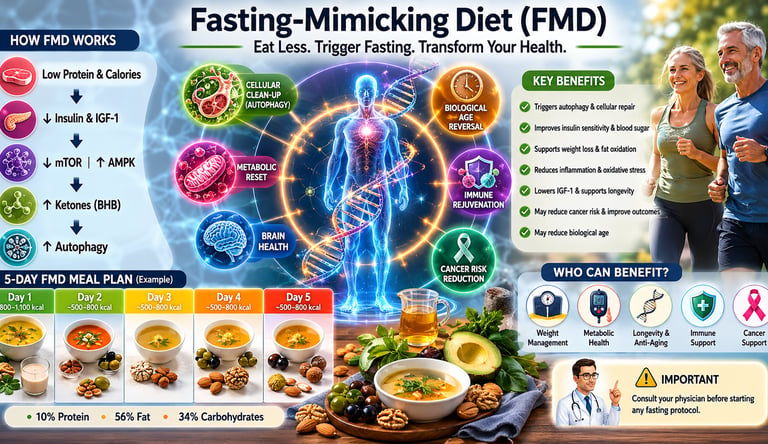
A fasting-mimicking diet (FMD) is a 5-day, low-calorie, low-protein eating plan designed to trigger many of the same biological processes activated during fasting while still allowing food intake. Research suggests FMD may promote autophagy, improve insulin sensitivity, reduce liver fat, lower IGF-1 levels, and potentially support healthy aging and metabolic health.
The Fasting-Mimicking Diet: A Strategic Pause, Not a Panacea
The fasting-mimicking diet (FMD) has moved from longevity lab curiosity to a clinically credible tool for metabolic reset. By delivering 500–1,100 kcal/day with ~10% protein, 56% fat, and 34% carbs for five consecutive days, FMD lowers insulin and IGF-1, suppresses mTOR, and elevates ketones—conditions that reliably trigger autophagy and metabolic adaptation (Longo & Mattson, 2014).
What makes 2025–2026 data notable is human validation. A Cedars-Sinai RCT directly measured autophagic flux in blood cells and found significant increases versus control, alongside reduced glucose and HOMA-IR after a single 6-day FMD cycle (Espinoza et al., 2025). More provocatively, two independent trials showed three monthly FMD cycles correlated with a 2.5-year reduction in biological age, less hepatic fat on MRI, and a more youthful lymphoid: myeloid immune ratio (Brandhorst et al., 2024). A 2025 review affirmed consistent fat loss, especially visceral, with lean mass largely preserved (Wang et al., 2025).
Yet elite performance demands context. FMD is periodic, not perpetual. Overuse risks nutrient deficits and muscle catabolism. Cancer applications are mechanistically sound—FMD may sensitise tumours by exploiting their glucose dependence (Pereira et al., 2026)—but remain investigational and require oncologist oversight.
The verdict: FMD is not a crash diet or aging “cure.” It’s a precise, intermittent metabolic intervention that, when medically vetted and paired with exercise, sleep, and whole-food nutrition, can meaningfully shift biomarkers of aging and disease risk. Use it as a strategic pause button—3–4 times yearly for most healthy adults—not as a lifestyle substitute (de Cabo & Mattson, 2019). Consult your physician before starting.
Key Takeaways
What it is: A 5-day, very-low-calorie protocol (~500–1,100 kcal/day) with 10% protein, 56% fat, 34% carbs designed to mimic fasting’s biology while allowing food.
Core mechanisms: Drops insulin + IGF-1, suppresses mTOR, raises ketones, and induces autophagy—the cellular “clean-up” system that declines with age.
Proven metabolic wins: Human trials show reduced fasting glucose, lower insulin resistance (HOMA-IR), less liver fat on MRI, and improved immune profile after 1–3 cycles.
Longevity signal: Three-monthly FMD cycles were associated with a median 2.5-year reduction in biological age across two independent RCTs.
Fat loss, not just weight: Consistently reduces visceral fat while better preserving muscle vs. continuous calorie restriction.
Cancer research is promising but early: May reprogram tumor metabolism and enhance therapy sensitivity; must only be done with oncologist supervision.
How often: Most studies use once per month for 3 months, then quarterly for maintenance. More than monthly is not evidence-based.
Not for everyone: Avoid if pregnant, underweight, type 1 diabetic, have a history, or on meds requiring food. Always consult your physician first.
What Is the Fasting-Mimicking Diet?
The fasting-mimicking diet (FMD) is a short-term, cyclic eating protocol designed to create the physiological conditions of fasting — including cellular clean-up, hormonal shifts, and metabolic adaptation — while still allowing a precisely calibrated amount of food. Rather than stopping eating entirely, you follow a specific pattern of very-low-calorie, low-protein, low-carbohydrate, and relatively high-healthy-fat nutrition for five consecutive days, typically once a month or once every three months.
The concept was pioneered by Professor Valter Longo, Director of the Longevity Institute at the University of Southern California and one of the world's leading longevity researchers. His team developed the protocol after decades of studying how caloric restriction and fasting affect aging and disease in animal models, then translating those findings into human clinical trials.
The most studied commercial formulation is ProLon (developed by L-Nutra), though the scientific literature now includes investigations of other FMD formulations and do-it-yourself approaches as well.
FMD vs. Other Fasting Approaches
1. Fasting-Mimicking Diet (FMD)
Duration: 5 consecutive days per month.
Food Allowed: Yes (a structured, precise, low-calorie, low-protein, plant-based meal plan).
Main Benefit Focus: Systemic autophagy, cellular clean-up, metabolic reset, and longevity support.
Practical Difficulty: Moderate.
2. Intermittent Fasting (16:8)
Duration: Daily (16 hours of fasting with an 8-hour eating window).
Food Allowed: Yes, but strictly restricted to the designated time window.
Main Benefit Focus: Routine weight management, caloric control, and optimized blood sugar regulation.
Practical Difficulty: Low to Moderate.
3. Extended Water Fast
Duration: 3 to 7 consecutive days.
Food Allowed: No food allowed; strictly water, non-caloric electrolytes, and black coffee/tea.
Main Benefit Focus: Deep, systemic macro-autophagy, rapid therapeutic ketosis, and intense cellular repair.
Practical Difficulty: Very High (requires medical clearance/supervision).
4. Alternate-Day Fasting (ADF)
Duration: Every other day.
Food Allowed: Yes, alternating between normal eating days and fasting days (which allow 0–500 calories).
Main Benefit Focus: Robust weight loss, fat mass reduction, and downregulation of chronic inflammation.
Practical Difficulty: High.
5. The 5:2 Diet
Duration: 2 days per week (non-consecutive fasting days, 5 normal days).
Food Allowed: Yes, capping intake at roughly 500–600 calories on the two designated fasting days.
Main Benefit Focus: Sustainable weight loss, improved insulin sensitivity, and cardiovascular health markers.
Practical Difficulty: Moderate.
How It Works: The Biology Behind FMD
Understanding why the fasting-mimicking diet works requires a brief look at how your body responds to nutrient scarcity. When food — particularly protein and carbohydrates — is significantly reduced, a cascade of hormonal and cellular events unfolds:
Key Biological Mechanisms
Insulin drops sharply. Lower insulin signals your body to stop storing energy and start using stored fuel. This improves insulin sensitivity over time.
IGF-1 (Insulin-Like Growth Factor 1) declines. High IGF-1 is associated with accelerated aging and increased cancer risk. Even short periods of protein restriction cause measurable drops in this hormone.
Ketone bodies rise. As glycogen stores deplete, your liver produces ketones (particularly beta-hydroxybutyrate, or BHB) from fat. Ketones serve as clean-burning fuel for your brain and muscles, and they are potent signaling molecules that activate longevity pathways.
mTOR is suppressed. The nutrient-sensing protein mTOR (mechanistic target of rapamycin) acts as a cellular growth switch. Suppressing it with low protein and calories triggers autophagy and cellular repair.
AMPK is activated. This "energy sensor" enzyme promotes fat burning and mitochondrial biogenesis (the creation of new, healthier mitochondria).
Autophagy is induced. Perhaps the most celebrated effect: the cellular recycling process called autophagy ramps up, clearing damaged proteins and organelles.
Critically, the FMD achieves these effects with a specific macronutrient ratio, not merely calorie restriction. Research shows the ratio of carbohydrates, fats, and proteins — not just total calories — determines how strongly these pathways are activated. A typical FMD provides roughly 800–1,100 kilocalories on day 1 and 500–800 kilocalories on days 2 through 5, composed of approximately 10% protein, 56% fat, and 34% carbohydrates.
FMD and Autophagy: Your Body's Built-In Clean-Up System
Autophagy — from the Greek words for "self" (auto) and "eating" (phagy) — is the process by which your cells identify, dismantle, and recycle damaged or dysfunctional components. Think of it as a quality-control system: worn-out proteins, malfunctioning mitochondria, and potentially pre-cancerous cells get tagged, broken down, and either recycled for energy or replaced with fresh components.
Declining autophagy is one of the hallmarks of aging. Research published in Nature Cell Biology has identified impaired autophagic flux as a contributor to neurodegenerative diseases, cancer, cardiometabolic conditions, and general cellular aging.1
What a Landmark 2025 Clinical Trial Found
One of the most directly relevant human studies to date was published in GeroScience in 2025 by Espinoza, Park, Connolly, and colleagues at Cedars-Sinai Health Sciences Center. This pilot randomized controlled trial enrolled 30 healthy adults (average age 49) who were randomly assigned to one of two FMD formulations (ProLon or FMD2) or a control group for 8 days.
Study Spotlight: GeroScience (2025)
Researchers measured autophagic flux — the actual rate at which autophagy is occurring — directly in white blood cells (peripheral blood mononuclear cells, or PBMCs) collected from participants. They found statistically significant differences between FMD groups and the control group in autophagic flux by the end of the 6-day intervention (p < 0.05). Alongside autophagy improvements, FMD participants showed meaningful reductions in body weight, fasting glucose, insulin resistance (HOMA-IR), and increases in the ketone BHB — all markers of improved metabolic health.
While the authors appropriately noted that larger-scale studies are needed to confirm and extend these findings, this study represents a significant step forward: it is among the first to directly measure autophagic flux in human blood cells during FMD, rather than relying on proxy markers alone.
↑ Autophagic flux improved vs. control (p < 0.05)
↓ Fasting glucose was significantly reduced
↓ HOMA-IR (insulin resistance) reduced
↑ BHB (ketones) are elevated during FMD
Metabolic Health Benefits: Blood Sugar, Insulin Resistance & More
Beyond its cellular effects, the FMD produces measurable improvements in markers of metabolic health — outcomes that matter enormously given that metabolic dysfunction underlies heart disease, type 2 diabetes, fatty liver, and many cancers.
Reduced Insulin Resistance and Pre-Diabetes Markers
A landmark 2024 study published in Nature Communications — led by Brandhorst, Levine, Wei, Longo, and colleagues — analyzed blood samples from two separate randomized clinical trials. Their analysis showed that three cycles of FMD were associated with meaningful reductions in insulin resistance and other pre-diabetes markers.2
This is particularly important because insulin resistance is the root driver of type 2 diabetes, and it significantly increases risk for heart disease, certain cancers, and Alzheimer's disease. Achieving improvements without medication — purely through a dietary protocol used only a few days per month — represents a compelling clinical tool.
Reduced Liver Fat
Non-alcoholic fatty liver disease (NAFLD) affects an estimated one-quarter of the global adult population and is closely tied to metabolic syndrome. The same Nature Communications study found that FMD cycles were associated with reduced hepatic (liver) fat as measured by magnetic resonance imaging — one of the most accurate non-invasive methods available.2
Improved Immune System Profile
The Nature Communications study also reported an increased lymphoid-to-myeloid ratio in participants following FMD cycles. This ratio is considered a meaningful indicator of immune system age: as we get older, our immune systems tend to shift toward a pro-inflammatory myeloid-dominant profile. A higher lymphoid-to-myeloid ratio suggests a more youthful, responsive immune system — meaning FMD may contribute to immune rejuvenation.
Weight and Body Composition
Multiple FMD trials have documented reductions in body weight and fat mass. A comprehensive 2025 narrative review published in Nutrition Reviews — analyzing data across numerous FMD studies — confirmed consistent evidence for fat mass reduction, particularly visceral (belly) fat, following periodic FMD cycles.3 Notably, muscle mass tends to be preserved better than with equivalent caloric restriction maintained continuously, likely because the periodic nature of FMD allows full recovery between cycles.
"Periodic FMD cycles appear to simultaneously address weight, blood sugar, liver health, and immune aging — benefits typically requiring multiple separate interventions."
Does the Fasting-Mimicking Diet Reduce Biological Age?
This is the question that has generated enormous excitement — and warranted skepticism — in longevity research circles. The short answer, based on current evidence: promising, but not definitive.
The 2.5-Year Biological Age Reduction Finding
The 2024 Nature Communications study by Brandhorst, Levine, and Longo used a validated computational measure of biological age — one that has been shown to predict morbidity and mortality — and found that three FMD cycles were associated with a median decrease of 2.5 years in biological age, independent of weight loss.2 A second independent clinical trial reported nearly identical findings, strengthening the signal considerably.
Biological age (as opposed to chronological age) reflects how your body's cells and systems are actually functioning. Someone with a biological age 5 years younger than their chronological age statistically has lower risk of age-related diseases and longer expected healthspan.
Important Context
Biological age measurements are still an evolving science. The specific algorithms used to compute biological age vary across studies, and their predictive validity continues to be refined. The 2.5-year reduction finding is compelling and emerged from two independent trials, but should be interpreted as an initial signal rather than a guaranteed outcome for every individual.
Hepatic Biomarkers of Aging
The same study examined liver-specific biomarkers and found that FMD cycles produced changes in hepatic markers consistent with reduced disease risk. Since the liver is central to metabolic regulation, inflammation, and detoxification, improvements here have broad implications for overall health and longevity.
FMD and Cancer: Emerging Evidence and Mechanisms
Perhaps the most ambitious area of FMD research concerns its potential role in cancer prevention and treatment support. The science here is promising but early, and the discussion requires careful nuance.
Why Fasting and Cancer Cells Interact
Cancer cells and normal cells respond very differently to nutrient deprivation. Normal cells can shift their metabolism during fasting — burning ketones and fatty acids — while many cancer cells remain addicted to glucose and cannot make this shift efficiently. This metabolic difference, sometimes called the "differential stress response," forms the theoretical basis for combining FMD with cancer therapies.
In animal studies, Longo's laboratory has demonstrated that FMD cycles can selectively kill or sensitize cancer cells while protecting healthy cells — particularly when used alongside chemotherapy or immunotherapy. This protective "fasting-differentiates cancer from normal cells" effect has been replicated across multiple cancer models.
A 2026 Systematic Review on Tumor Metabolism
A systematic review published in the European Journal of Nutrition in 2026 by Pereira, Martins, de Sousa, and colleagues specifically examined whether FMD can reprogram tumor metabolism.5 The review analyzed data from preclinical and early-phase human studies and found consistent evidence that FMD reduces circulating factors (such as IGF-1, insulin, and glucose) that fuel tumor growth, and may enhance the efficacy of certain cancer therapies by making cancer cells more vulnerable.
⚠️ CRITICAL SAFETY WARNING
If you have been diagnosed with cancer or are undergoing cancer treatment, do not begin any fasting protocol without explicit guidance from your oncologist. FMD during chemotherapy or immunotherapy must be supervised by a medical professional. Fasting affects drug metabolism, treatment tolerability, and nutritional status in ways that require individualized clinical assessment. The research is promising, but not yet at the stage of an established clinical protocol for cancer patients.
Cancer Prevention: The Plausible Pathways
For cancer prevention specifically, FMD's potential benefits operate through multiple mechanisms that are well-established in the scientific literature:
Reduced IGF-1: Lower IGF-1 is consistently associated with reduced cancer incidence in epidemiological studies.
Enhanced autophagy: Efficient autophagy helps clear pre-cancerous, damaged cells before they can proliferate.
Reduced inflammation: Chronic low-grade inflammation is a recognized driver of cancer development.
Improved immune surveillance: A more youthful immune profile (evidenced by better lymphoid-to-myeloid ratio) may improve the body's ability to detect and destroy emerging cancer cells.
Evidence Summary: Key FMD Studies at a Glance
1. Espinoza et al. (2025)
Journal: GeroScience
Participants: 30 healthy adults
Duration: 8 days (including a 6-day Fasting-Mimicking Diet cycle)
Key Findings: Significant increase in autophagic flux (cellular clean-up); marked reductions in fasting glucose, HOMA-IR (insulin resistance), and body weight; substantial elevation in beta-hydroxybutyrate (BHB) ketones compared to the control group.
Study Quality: Randomized Controlled Trial (pilot RCT).
2. Brandhorst, Levine, Wei et al. (2024)
Journal: Nature Communications
Participants: Two clinical RCT cohorts
Duration: 3 consecutive FMD cycles
Key Findings: A 2.5-year reduction in median biological age; visible reductions in hepatic fat fractions via MRI; reversal of insulin resistance markers; favorable rejuvenation of the immune system (increased lymphoid-to-myeloid ratio).
Study Quality: RCT secondary analysis.
3. Wang, Lv, Xu et al. (2025)
Journal: Nutrition Reviews
Participants: Multiple human trials and animal models
Duration: Periodic, repeating FMD cycles
Key Findings: Demonstrated consistent improvements across diverse cardiometabolic risk markers; verified significant healthspan and lifespan extensions in animal models; highlighted an overall systemic reduction in chronic disease risk factors.
Study Quality: Narrative review.
4. Pereira, Martins, de Sousa et al. (2026)
Journal: European Journal of Nutrition
Participants: A combination of preclinical models and human clinical data
Duration: Varies by trial design
Key Findings: Revealed that FMD directly reprograms tumor metabolism; successfully lowered circulating IGF-1, insulin, and glucose levels within the tumor microenvironment; indicated strong potential synergy when paired alongside standard cancer therapies.
Study Quality: Systematic review.Abbreviations: RCT = randomized controlled trial; HOMA-IR = homeostatic model assessment of insulin resistance; BHB = beta-hydroxybutyrate; MRI = magnetic resonance imaging; IGF-1 = insulin-like growth factor 1.
How to Do the Fasting-Mimicking Diet: A Step-by-Step Protocol
There are two main approaches to FMD: using a commercially prepared kit (such as ProLon) or building your own FMD from whole foods following the macronutrient guidelines established in the research. Each has advantages and drawbacks.
1. The ProLon Kit Approach
Pros: Uses a clinically validated formula backed by extensive trial data; highly convenient as everything is pre-packaged; entirely removes nutritional guesswork; ensures precise macronutrient tracking without effort.
Cons: Expensive, costing roughly $200–$250 per cycle; offers limited food variety and fixed flavor options; some individuals find the small portion sizes unsatisfying.
Best For: First-time fasters, busy individuals, and those who want the exact, most heavily researched formulation for longevity.
2. The Do-It-Yourself (DIY) FMD Approach
Pros: Significantly cheaper than commercial kits; allows you to eat fresh, real, whole foods; offers maximum dietary flexibility to swap ingredients based on personal taste or allergies.
Cons: Requires meticulous tracking of exact macronutrient and caloric ratios; does not use the precisely patented, clinically tested ingredients; leaves a much higher margin for error if macros are miscalculated.
Best For: Experienced fasters, individuals on a budget, and those who are already highly comfortable with advanced digital nutrition tracking.
The FMD Protocol: Day-by-Day
Preparation Week (Days −7 to −1)
Gradually reduce caffeine, alcohol, and heavily processed foods. Increase water intake to at least 2.5 litres per day. Confirm with your doctor that FMD is appropriate for you. Clear your social calendar for the 5 days — dining out while on FMD is very difficult.
Day 1 — Transition Day (~1,000–1,100 kcal)
Higher calorie day to ease the transition. Composition: approximately 10% protein, 56% fat, 34% carbohydrates. Examples include olives, nuts, vegetable soups, and herbal teas. Limit strenuous exercise. Expect mild hunger by evening.
Days 2–5 — Fasting Phase (~700–800 kcal/day)
Significantly reduced intake following the same macronutrient ratios. Typical foods: vegetable broth, small amounts of nuts, olives, vegetable-based soups, herbal teas, and black coffee (limited). Drink at least 2 litres of water. Light walking is fine; avoid intense workouts. Most people experience significant hunger on Days 2 and 3, with ketone-driven energy and mental clarity improving on Days 4 and 5.
Day 6 — Refeeding Day
Your 5 days are complete. Do not immediately eat a large meal — your digestive system needs gentle reintroduction to normal eating. Start with easily digestible foods: fruit, yogurt, vegetable soup, and whole-grain toast. Avoid processed foods, alcohol, and large meals for at least 24 hours after completing the FMD.
Recovery Week (Days 7–14)
Return gradually to your normal eating pattern. This is an excellent time to establish healthier long-term habits, as your taste preferences and hunger signals are often reset after FMD. Most people report reduced cravings for processed foods and sugar in the days following FMD.
How Often Should You Do FMD?
Research protocols have most commonly tested FMD performed once per month for three consecutive months, then reassessed. For maintenance in healthy individuals, once every one to three months appears to be a reasonable frequency based on the current literature. Those with specific metabolic or longevity goals may benefit from monthly cycles, while those using FMD preventatively may find quarterly cycles sufficient.
⚠️ Frequency Warning
Performing FMD more frequently than once per month is not supported by current evidence and may be counterproductive or harmful, particularly regarding muscle mass, nutrient status, and metabolic adaptation. More is not better with fasting interventions.
Sample DIY FMD Meal Plan (5-Day Example)
The following meal plan approximates the macronutrient ratios used in clinical FMD research. Total calories and macros should be adjusted based on your body size and medical history. Always consult a registered dietitian or your physician before attempting a DIY FMD.
Day 1 — Transition Day~1,000–1,100 kcal | Protein ≤10% | Fat ~56% | Carbs ~34%
BREAKFAST Handful of mixed nuts (almonds, walnuts) + black coffee or herbal tea
Lunch Vegetable minestrone (olive oil-based, no legumes) + 2 rye crackers + small portion of olives
Snack Celery sticks + 1 tbsp almond butter + chamomile tea
Dinner Zucchini and tomato soup + 1 small handful of walnuts + herbal tea
Fluids 2+ liters water; unlimited herbal teas; 1 black coffee maximum
Days 2–5 — Fasting Phase (Repeat this structure)~700–800 kcal/day | Same macro ratios
Morning Herbal tea (peppermint or chamomile) + small handful of macadamia nuts or almonds (~15g)
Midday Clear vegetable broth or low-calorie vegetable soup (avoid starchy vegetables; favour zucchini, celery, tomato, kale); 5–6 olives
Afternoon Herbal tea + small amount of dark chocolate (85%+ cacao, ~10g) if needed for mental clarity
Dinner Kale and tomato soup with a drizzle of extra-virgin olive oil; 1 small handful mixed seeds
NoteDays 3 and 4 are typically the most mentally clear as ketone production peaks. Hunger often decreases after Day 2.
✓ Extra-virgin olive oil✓ All non-starchy vegetables✓ Nuts & seeds (small portions)✓ Olives✓ Herbal teas✓ Clear vegetable broth✗ Meat/poultry/fish✗ Dairy✗ Refined sugar✗ Alcohol✗ Legumes
Who Should (and Should Not) Try the Fasting-Mimicking Diet
FMD May Be Particularly Beneficial For:
Adults aged 30–70 who are otherwise healthy and want to support longevity and metabolic health
People with pre-diabetes, insulin resistance, or metabolic syndrome (under medical supervision)
Individuals with elevated inflammatory markers or at increased risk for cardiometabolic disease
Those who find daily caloric restriction or intermittent fasting difficult to sustain long-term
People interested in supporting cellular health and healthy aging as part of a broader lifestyle strategy
FMD is Not Appropriate For:
Pregnant or breastfeeding women
Children and adolescents under 18
People with a current or past eating disorder
Those with type 1 diabetes or insulin-dependent type 2 diabetes (risk of hypoglycemia without close medical supervision)
Anyone who is underweight or malnourished
People with severe kidney or liver disease
Anyone on medications requiring food for absorption or that affect blood sugar (consult your doctor)
Athletes during competitive season or periods of high physical demand
⚠️ Always Consult Your Physician
This guide is for informational purposes only and does not constitute medical advice. Before starting any fasting or significant dietary restriction protocol — including the fasting-mimicking diet — consult your primary care physician, and where relevant, a registered dietitian and/or relevant specialist. This is especially important if you have any existing health conditions or take prescription medications.
Muscle Preservation and Healthy Aging
One important consideration is muscle health, particularly in older adults. Because the fasting-mimicking diet is intentionally low in protein for five days, some researchers have raised concerns about whether repeated cycles could contribute to age-related muscle loss (sarcopenia) or worsen anabolic resistance—the reduced ability of aging muscle to respond to dietary protein. Current clinical studies have generally shown preservation of lean mass during periodic FMD cycles, but long-term data in adults over age 65 remain limited. To minimize risk, experts recommend maintaining adequate protein intake during non-FMD periods and engaging in regular resistance training. For older adults, preserving muscle mass should remain a priority alongside any longevity-focused dietary strategy.
Common FMD Myths, Misconceptions & Mistakes
❌ Myth: "FMD is just another crash diet."
✅ Fact FMD is a periodic protocol with specific macronutrient ratios designed to activate biological pathways — not a weight-loss diet per se. Its effects at the cellular level are fundamentally different from simple caloric restriction.
❌ Myth: "You can do FMD every week for faster results."
✅ Fact: The research does not support this. Cycling between FMD and normal eating is essential. The recovery period allows muscle protein synthesis, metabolic rebalancing, and full cellular recovery. Over-fasting can be harmful.
❌ Myth: "Only the ProLon kit works."
✅ Fact: ProLon is the most rigorously studied formulation, but research also supports DIY FMD protocols that match its macronutrient ratios. The key is accurate tracking and consistency, not a specific commercial product.
❌ Myth: "FMD causes significant muscle loss."
✅ Fact: Five days of significantly reduced protein intake causes some muscle protein turnover, but research suggests periodic FMD preserves lean mass better than continuous caloric restriction. The regenerative refeeding phase stimulates muscle protein synthesis. Resistance exercise in the days before and after FMD further mitigates any muscle loss.
❌ Myth: "FMD eliminates the need for a healthy lifestyle."
✅ Fact: FMD is most effective as part of a broader healthy lifestyle including regular physical activity, adequate sleep, stress management, and a nutrient-rich baseline diet. It is not a substitute for these fundamentals.
❌ Myth: "The science is settled — FMD definitely reverses aging."
✅ Fact: Age-reduction findings need to be replicated. The evidence is promising and growing, but human longevity research takes decades to mature. Current findings are compelling signals, not confirmed causal proof. The biological age reduction findings need replication in larger, longer, more diverse trials.
Frequently Asked Questions About the Fasting-Mimicking Diet
What is a fasting-mimicking diet in simple terms?
A fasting-mimicking diet is a 5-day eating plan that provides very low calories — typically 500–1,100 per day — with a specific ratio of macronutrients designed to trick your body into the same biological state as a multi-day water fast. You still eat food, but in amounts small enough that your body activates the same cellular clean-up and metabolic repair pathways triggered by true fasting.
How many calories do you eat on a fasting-mimicking diet?
On Day 1, approximately 1,000–1,100 kilocalories. On Days 2 through 5, approximately 700–800 kilocalories. The calorie range is less important than the macronutrient ratio: roughly 10% protein, 56% fat, and 34% carbohydrates. This specific ratio is what suppresses the key nutrient-sensing pathways (particularly mTOR and IGF-1) that need to be downregulated to activate autophagy.
How often should you do a fasting-mimicking diet?
Most research has tested one FMD cycle per month for three consecutive months, followed by reassessment. For long-term maintenance, anywhere from once per month to once per quarter appears reasonable, depending on your health goals. Never perform FMD more frequently than once per month without medical supervision.
What are the side effects of the fasting-mimicking diet?
Common side effects include hunger (especially on Days 2 and 3), fatigue, mild headaches, irritability, difficulty concentrating, and light-headedness — particularly in the first one to two FMD cycles. These typically diminish with subsequent cycles as your body adapts. More serious side effects, such as fainting, heart palpitations, or severe weakness, warrant stopping the protocol immediately and consulting a doctor.
Can you exercise during a fasting-mimicking diet?
Light to moderate exercise — walking, gentle yoga, light stretching — is generally fine during FMD. Intense exercise (high-intensity interval training, heavy resistance training, competitive sport) is not advisable during the 5 days, as your caloric and carbohydrate intake is too low to support high-performance output or adequate recovery. Resume normal training one to two days after completing the FMD.
Does the fasting-mimicking diet work for weight loss?
Yes, weight loss is a consistent finding in FMD trials — primarily fat mass, with relative preservation of lean mass. However, weight lost during the 5 days partially reflects water and glycogen depletion in addition to fat loss. Net fat loss over multiple FMD cycles is real but modest (approximately 1–2 kg per cycle in most studies). For significant weight loss, FMD is most effective as one component of a broader healthy lifestyle strategy, not a standalone approach.
Can the fasting-mimicking diet reduce your biological age?
Preliminary evidence from a 2024 Nature Communications study suggests that three FMD cycles are associated with a reduction of approximately 2.5 years in biological age (using a validated biomarker-based algorithm). This is an exciting finding replicated across two independent clinical trials. However, biological age measurement remains an evolving science, and longer-term studies in larger, more diverse populations are needed before this can be stated as a robust, universal outcome.
Is FMD safe for people with diabetes?
This depends critically on diabetes type and treatment. People with type 1 diabetes or insulin-dependent type 2 diabetes face real risks of hypoglycemia (dangerously low blood sugar) during FMD and should only attempt it under close medical supervision with glucose monitoring and medication adjustment. People with diet-controlled or metformin-managed type 2 diabetes may be appropriate candidates under physician guidance, given FMD's evidence for improving insulin resistance.
What can you drink during a fasting-mimicking diet?
Water (at least 2 liters daily), herbal teas (chamomile, peppermint, hibiscus — without added sugar), and limited black coffee (one cup per day maximum) are all suitable. Avoid all fruit juices, sodas, sweetened beverages, dairy products, and alcohol during the 5 days.
What is the difference between ProLon and a DIY fasting-mimicking diet?
ProLon is a commercially prepared FMD kit developed by L-Nutra based on Valter Longo's research protocols, and it is the formulation used in most clinical trials — meaning its specific effects are the best characterized. A DIY FMD attempts to replicate the macronutrient ratios using whole foods. ProLon offers convenience and validated composition; a DIY approach offers flexibility and significant cost savings, but requires careful nutritional tracking and is not the formula tested in trials.
What does the research say about FMD and cancer?
Preclinical research (animal studies and cell lines) consistently shows that fasting and FMD can sensitize cancer cells to chemotherapy while protecting normal cells. A 2026 systematic review found evidence that FMD reduces tumour-promoting factors such as IGF-1, insulin, and glucose. Early-phase human trials are underway. The evidence is promising but not yet at a level where FMD can be recommended as a standalone cancer treatment. It should only be explored by cancer patients in a clinical setting with oncologist involvement.
Does the Fasting-Mimicking Diet Activate Autophagy?
Yes. Emerging human clinical research suggests that the fasting-mimicking diet can activate autophagy, the body's cellular recycling process. By reducing calories and protein intake for five days, FMD lowers insulin, IGF-1, and mTOR activity while increasing ketone production and AMPK activation, creating conditions that favor cellular repair and renewal.
Conclusion: Is the Fasting-Mimicking Diet Right for You?
The fasting-mimicking diet stands at a genuinely exciting frontier of nutrition and longevity science. Unlike many dietary trends built on anecdote and marketing, the FMD has accumulated a meaningful body of human clinical trial evidence — and the quality of that evidence has improved substantially between 2024 and 2026.
The key findings worth taking seriously:
FMD measurably activates autophagy in human white blood cells, confirmed by a 2025 randomised trial.
Three FMD cycles are associated with reduced biological age by approximately 2.5 years, reduced liver fat, improved insulin resistance, and a more youthful immune profile — findings replicated across two independent clinical trials.
FMD shows consistent benefits for cardiometabolic markers, including blood glucose, insulin, and body composition.
Emerging evidence suggests FMD may reprogram tumor metabolism and enhance cancer therapy outcomes, though this area requires substantially more human evidence.
At the same time, honesty demands acknowledging what the evidence does not yet establish: that FMD definitively extends human lifespan, that it is superior to other dietary patterns for long-term outcomes, or that its effects are identical across all ages, sexes, and health conditions. These questions are actively being studied.
Your Action Steps
Talk to your doctor before starting FMD — particularly if you have any underlying health conditions or take medications.
Decide between ProLon and DIY based on your budget, comfort with nutritional tracking, and preference for the most-studied formulation vs. flexibility.
Prepare properly. Week-before preparation — reducing caffeine and alcohol, increasing hydration, and clearing your schedule — dramatically improves the FMD experience.
Commit to three cycles. Most research benefits have been observed after three monthly cycles. One cycle gives you a taste; three cycles give you measurable outcomes.
Pair FMD with healthy fundamentals. Regular movement, quality sleep, stress management, and a plant-rich baseline diet amplify FMD's effects. It is a powerful tool — not a magic bullet.
Track your biomarkers. Get baseline blood work (fasting glucose, HbA1c, insulin, a lipid panel, CRP, IGF-1) before starting and recheck after three cycles to see your personal response.
Related Articles
Circadian Rhythm Diet: Eat Earlier, Live Healthier With Science-Based Meal Timing | DR T S DIDWAL
Full-Fat Dairy Actually Good for You? The New Science on C15:0 & C17:0 and Heart Health
De Novo Lipogenesis Explained: How Sugar Turns Into Liver Fat and High Triglycerides
Rethinking Dietary Fats: What New Research Reveals About Plant vs. Animal Fats | DR T S DIDWAL
What’s New in the 2025 Blood Pressure Guidelines? A Complete Scientific Breakdown | DR T S DIDWAL
Low-Fat vs. Low-Carb: Which Diet is Best for Weight Loss? | DR T S DIDWAL
Sources & References
Alirezaei, M., Kemball, C. C., Flynn, C. T., Wood, M. R., Whitton, J. L., & Bhatt, D. L. (2010). Short-term fasting induces profound neuronal autophagy. Autophagy, 6(6), 702–710. https://doi.org/10.4161/auto.6.6.12376
Anton, S. D., Moehl, K., Donahoo, W. T., Marosi, K., Lee, S. A., Mainous, A. G., III, Leeuwenburgh, C., & Mattson, M. P. (2018). Flipping the metabolic switch: Understanding and applying the health benefits of fasting. Obesity, 26(2), 254–268. https://doi.org/10.1002/oby.22065
Brandhorst, S., Levine, M. E., Wei, M., Shelehchi, M., & et al. (2024). Fasting-mimicking diet causes hepatic and blood markers changes indicating reduced biological age and disease risk. Nature Communications, 15, Article 1309. https://doi.org/10.1038/s41467-024-45260-9
Cheng, C.-W., Adams, G. B., Perin, L., Wei, M., Zhou, X., Lam, B. S., Da Sacco, S., Mirisola, M., Quinn, D. I., Dorff, T. B., Kopchick, J. J., & Longo, V. D. (2014). Prolonged fasting reduces IGF-1/PKA to promote hematopoietic-stem-cell-based regeneration and reverse immunosuppression. Cell Stem Cell, 14(6), 810–823. https://doi.org/10.1016/j.stem.2014.04.014
de Cabo, R., & Mattson, M. P. (2019). Effects of intermittent fasting on health, aging, and disease. New England Journal of Medicine, 381(26), 2541–2551. https://doi.org/10.1056/NEJMra1905136
Di Biase, S., Lee, C., Brandhorst, S., Manchetti, B., Buono, R., Cheng, C.-W., Caffa, I., Han, P., Sucaet, C., Mischitelli, M., Vernieri, C., Piccardi, M., Cortellino S., Wei, M., Moro, G., Croff, O., De Juan, F., Longo, V. D., & et al. (2016). Fasting-mimicking diet reduces HO-1 to promote T cell-mediated tumor cytotoxicity. Cancer Cell, 30(1), 136–146. https://doi.org/10.1016/j.ccell.2016.06.005
Espinoza, S. E., Park, S., Connolly, G., & et al. (2025). Effect of fasting-mimicking diet on markers of autophagy and metabolic health in human subjects. GeroScience. Advance online publication. https://doi.org/10.1007/s11357-025-02035-4
Leidal, A. M., Levine, B., & Debnath, J. (2018). Autophagy and the cell biology of age-related disease. Nature Cell Biology, 20(12), 1338–1348. https://doi.org/10.1038/s41556-018-0229-2
Levine, M. E., Suarez, J. A., Brandhorst, S., Balasubramanian, P., Cheng, C.-W., Schalm, F., Fontana, L., Mirisola, M. G., Guevara-Aguirre, J., Wan, J., Passarino, G., Kennedy, B. K., Wei, M., Cohen, P., Crimmins, E. M., & Longo, V. D. (2014). Low protein intake is associated with a major reduction in IGF-1, cancer, and overall mortality in the 65 and younger but not older population. Cell Metabolism, 19(3), 407–417. https://doi.org/10.1016/j.cmet.2014.02.006
Longo, V. D. (2019). Dietary strategies to extend life and protect against diseases: A summary of current evidence. Annual Review of Nutrition, 39, 237–258. https://doi.org/10.1146/annurev-nutr-082018-124228
Longo, V. D., & Mattson, M. P. (2014). Fasting: Molecular mechanisms and clinical applications. Cell Metabolism, 19(2), 181–192. https://doi.org/10.1016/j.cmet.2013.12.008
Longo, V. D., & Panda, S. (2016). Fasting, circadian rhythms, and time-restricted feeding in healthy lifespan. Cell Metabolism, 23(6), 1048–1059. https://doi.org/10.1016/j.cmet.2016.06.001
Mihaylova, M. M., Sabatini, D. M., & Bhatt, D. L. (2014). Dietary and metabolic control of stem cell function in physiology and cancer. Cell Stem Cell, 14(3), 292–305. https://doi.org/10.1016/j.stem.2014.02.008
Nencioni, A., Caffa, I., Cortellino, S., & Longo, V. D. (2018). Fasting and cancer: Molecular mechanisms and clinical application. Nature Reviews Cancer, 18(11), 707–719. https://doi.org/10.1038/s41568-018-0061-0
Pereira, I. C., Martins, J. A., de Sousa, D. J. M., & et al. (2026). Fasting-mimicking diets as a strategy to reprogram tumor metabolism: A systematic review. European Journal of Nutrition, 65, Article 44. https://doi.org/10.1007/s00394-026-03891-2
Pietrocola, F., Malik, S. A., Mariño, G., Castoldi, F., Levesque, S., Sukkurwala, A. Q., Washington, M. N., Chaba, K., Niso-Santano, M., Ouimet, M., Penninger, J. M., Kroemer, G., & et al. (2014). Coffee induces autophagy in vivo. Cell Cycle, 13(12), 1987–1994. https://doi.org/10.4161/cc.28929
Sabatini, D. M. (2017). Twenty-five years of mTOR: Uncovering the link from nutrients to growth. Proceedings of the National Academy of Sciences, 114(45), 11818–11825. https://doi.org/10.1073/pnas.1716173114
Testa, G., Biasi, F., Poli, G., & Chiarpotto, E. (2014). Calorie restriction and dietary restriction mimetics: A strategy for improving healthy aging and longevity. Current Pharmaceutical Design, 20(18), 2950–2977. https://doi.org/10.2174/13816128113199990498
Wang, R., Lv, X., Xu, W., & et al. (2025). Effects of the periodic fasting-mimicking diet on health, lifespan, and multiple diseases: A narrative review and clinical implications. Nutrition Reviews, 83(2), e412–e426. https://doi.org/10.1093/nutrit/nuae003
Wei, M., Brandhorst, S., Shelehchi, M., Mirzaei, H., Cheng, C.-W., Budniak, J., Groshen, S., Mack, W. J., Guen, E., Di Biase, S., Cohen, P., Morgan, T. E., Dorff, T., Hong, J. A., Michalsen, A., Laviano, A., & Longo, V. D. (2017). Fasting-mimicking diet and markers/risk factors for aging, diabetes, cancer, and cardiovascular disease. Science Translational Medicine, 9(377), Article eaai8700. https://doi.org/10.1126/scitranslmed.aai8700
This article is for educational purposes only and does not constitute medical advice. Always consult a qualified healthcare provider before making significant dietary changes or starting any supplement regimen, particularly if you have existing health conditions or take prescribed medications.