Brown Fat and Weight Loss: The Best Foods and Habits to Boost Thermogenesis Naturally
Brown fat burns calories instead of storing them. Explore the latest science on brown adipose tissue, thermogenic foods, cold therapy, supplements, and healthy aging.
OBESITY
Dr. T.S. Didwal, M.D.(Internal Medicine)
6/6/202617 min read
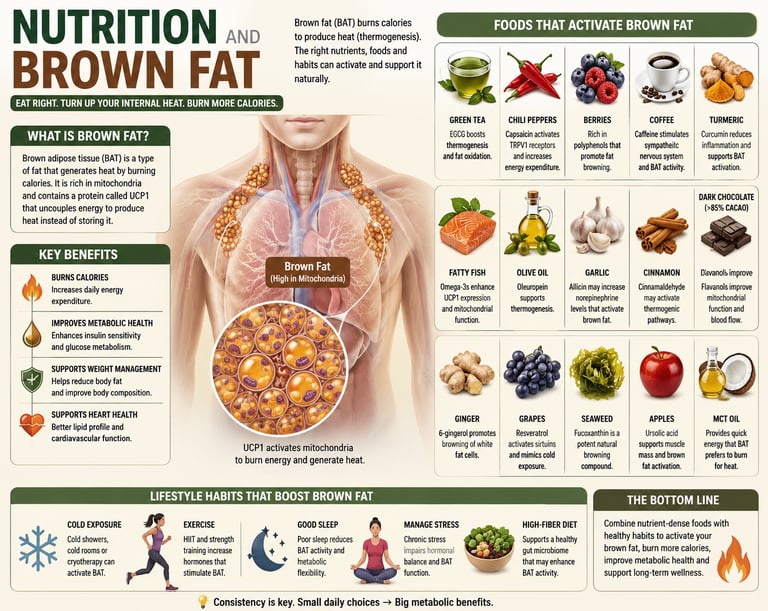
Brown fat (brown adipose tissue, BAT) is a specialized type of fat that burns calories to produce heat, a process known as thermogenesis. Unlike white fat, which stores energy, brown fat helps regulate body temperature, improve glucose metabolism, and increase energy expenditure. Nutrition, cold exposure, and exercise can help activate brown fat naturally.
Brown fat nutrition focuses on foods and lifestyle habits that activate brown adipose tissue (BAT), the body's calorie-burning fat. Studies suggest that green tea, chili peppers, fatty fish, berries, cold exposure, and exercise may increase BAT activity, helping improve energy expenditure, glucose control, and overall metabolic health.
Key Takeaways:
Brown fat (BAT) is your body’s built-in calorie furnace. Unlike white fat that stores energy, brown and beige fat burn glucose and fatty acids for heat via UCP1-rich mitochondria. Adults with active BAT can torch an extra 300–500 calories daily — equivalent to a solid workout without moving.
Nutrition directly flips the switch on brown fat activation. Polyphenols (green tea EGCG, berries, turmeric, apples), capsaicin (chili, grains of paradise, ginger), omega-3s, and compounds like resveratrol, fucoxanthin, and cinnamaldehyde activate AMPK, SIRT1, TRPV1, and sympathetic pathways to promote “browning” of white fat.
Top 17 evidence-backed foods/ingredients: Green tea, berries, apples, grapes, turmeric, chili peppers, grains of paradise, ginger, fatty fish, olive oil, avocado, coffee, dark chocolate, seaweed, garlic, cinnamon, and MCT oil. Best results come from combining 2–3 pathways daily (e.g., spicy MCT coffee + green tea).
Cold exposure remains the strongest natural activator. Intermittent mild cold (cold showers, 66–68°F environments, ice vests, or plunges) fires sympathetic nerves that boost BAT. Combine with nutrition for superior results; avoid chronic exposure to prevent acclimation.
Exercise matters — but quality over quantity. HIIT and resistance training increase BAT via catecholamines and irisin. Steady-state endurance has neutral or negative effects; overtraining suppresses it. Aim for weights + short HIIT + daily steps in cooler conditions.
Supplements can help but are secondary. Strongest options: Grains of Paradise (40mg), green tea extract (EGCG), berberine, and gynostemma. Most “fat burner” blends are underdosed hype. Food-first always wins.
Realistic expectations and timeline. Measurable BAT/UCP1 improvements in 2–6 weeks with consistent habits; significant beige fat recruitment takes longer. BAT maxes at ~300–500 extra calories burned — powerful support, not a free pass to overeat.
Lifestyle multipliers: Reduce chronic stress and inflammation, maintain healthy body weight, consider time-restricted eating, and avoid high omega-6 diets or beta-blockers that blunt activation. Weight loss itself often reactivates suppressed BAT.
Bottom line for 2026: Brown fat activation via targeted nutrition, smart cold exposure, and training is one of the most promising, science-backed ways to improve metabolism, insulin sensitivity, and fat loss without extreme dieting. Start small: 3 BAT foods daily + cold shower finish + strength sessions. Sustainable habits beat quick fixes.
Introduction
You’ve probably heard that “all fat is bad.” But your body has a special type of fat that actually burns calories to keep you warm. It’s called brown adipose tissue, or BAT.
Unlike white fat that stores energy, brown fat is packed with mitochondria that torch glucose and fat to generate heat. This process is called thermogenesis. And research from 2023-2026 shows your diet, lifestyle, and daily habits can directly turn it on or off.
In this guide you’ll learn exactly how brown fat and nutrition work together. We’ll cover:
1. What brown fat is and why it matters for weight loss
2. The 17 foods and nutrients proven to activate brown fat
3. Cold exposure, exercise, and supplement protocols biohackers use
4. Common myths that waste your time
5. A 7-day “Brown Fat Activation Plan” you can start today
Everything is backed by peer-reviewed studies from 2023-2026, including the latest work on sympathetic regulation of BAT. Let’s dive in.
What Is Brown Fat vs Beige Fat vs White Fat?
Here is that breakdown rewritten into clear, scannable points:
The Three Types of Fat:
White Fat: Located in the belly, hips, and thighs. Its main job is storing energy, and it does not burn calories.
Brown Fat: Found around the neck, collarbone, and spine. It actively burns energy to generate heat.
Beige Fat: Mixed into white fat tissue. It is flexible and can switch between storing energy and burning it when activated.
The Magic of Mitochondria: Brown fat gets its color from iron-rich mitochondria. These powerhouses contain UCP1 (Uncoupling Protein 1), a special protein that forces cells to release energy as pure heat rather than storing it as ATP (the body's standard energy currency).
Dietary Activation: A 2025 review in Frontiers in Nutrition found that specific dietary factors can recruit new beige fat cells and boost UCP1 expression by up to 300% (based on animal models).
Caloric Impact: While adults only carry about 50–100 grams of brown fat, fully activating it can burn an extra 300–500 calories per day. That is the metabolic equivalent of an hour of jogging, achieved entirely through heat production.
How Brown Fat Helps You Lose Weight: The Science
Brown fat impacts weight through 3 main mechanisms, according to Noriega et al. 2023:
1. Non-shivering thermogenesis: BAT burns glucose and fatty acids to make heat. This increases your total daily energy expenditure.
2. Glucose disposal: Active brown fat pulls sugar from blood, improving insulin sensitivity. The 2026 Nature Metabolism study showed specific sympathetic nerves to BAT directly regulate glucose tolerance.
3. Metabolic signaling: BAT releases “batokines” like FGF21 that tell your liver and muscle to burn more fat.
Fresh data: A 2025 clinical trial found people with more detectable BAT had 4.3% lower body fat and better fasting glucose, even after controlling for age and exercise.
17 Foods That Activate Brown Fat
Wang et al. 2025 identified multiple dietary pathways that trigger “browning” of white fat. Here are the strongest foods by category:
A. Polyphenol-Rich Foods
Polyphenols activate AMPK and SIRT1, key enzymes that promote beige fat formation.
1. Green tea: EGCG increases UCP1 expression. 3–4 cups/day linked to more BAT activity in humans.
2. Berries: Blueberries, raspberries. Anthocyanins reduced white fat and increased beige markers in 2024 mouse studies.
3. Apples: Ursolic acid in peel boosts muscle and brown fat. Eat with skin.
4. Grapes: Resveratrol mimics cold exposure at the cellular level.
5. Turmeric: Curcumin reduces inflammation that blocks browning. Best with black pepper.
B. Capsaicin & Related Compounds
These bind TRPV1 receptors, the same ones activated by cold.
6. Chili peppers: 2–6mg capsaicin/day increased energy expenditure 50 kcal/day in RCTs.
7. Grains of paradise: A ginger-family spice. 40mg/day increased BAT activity in a 2023 human PET study.
8. Ginger: 6-gingerol promotes browning independent of heat sensation.
C. Omega-3 & Healthy Fats
9. Fatty fish: EPA/DHA increase UCP1. 2g/day fish oil raised BAT in a 2024 trial.
10. Olive oil: Oleuropein triggers thermogenesis via sympathetic activation.
11. Avocado: Monounsaturated fat + phytosterols support mitochondrial health.
D. Other BAT Activators
12. Coffee: Caffeine stimulates sympathetic nerves to BAT. 100mg showed measurable BAT activation.
13. Dark chocolate: >85% cacao. Flavanols improve mitochondrial function.
14. Seaweed: Fucoxanthin is one of the most potent browning compounds in animal data.
15. Garlic: Allicin increases norepinephrine, BAT’s “on switch.”
16. Cinnamon: Cinnamaldehyde activates TRPA1 receptors to induce thermogenesis.
17. MCT oil: Medium-chain fats are preferentially burned by BAT for quick heat.
Pro tip for biohackers: Combine 2–3 pathways. Example: Green tea + chilli + MCT coffee = TRPV1 + AMPK + fast fuel.
Nutrients & Bioactives: The Molecular Switches
Here is a breakdown of the molecular pathways from food to brown fat activation, summarized for the longevity and cellular health community based on Bombassaro et al. (2025):
1. EGCG (Epigallocatechin gallate)
The Pathway: Upregulates AMPK, SIRT1 and PGC alpha
Human Dosage: 300–600 mg/day.
The Caveat: Demands consistent, long-term intake to maintain the cellular signaling baseline.
2. Capsaicin
The Pathway: Increases sympathetic nervous system tone via direct activation of the TRPV1 channel.
Human Dosage: 2–9 mg/day.
The Caveat: Individual gastrointestinal tolerance varies significantly; high doses can cause mucosal irritation.
3. Resveratrol
The Pathway: Upregulates SIRT1 and acts as a strict calorie restriction mimic.
Human Dosage: 150–500 mg/day.
The Caveat: Highly unstable with exceptionally low oral bioavailability in human models.
4. Fucoxanthin
The Pathway: Directly upregulates Uncoupling Protein 1 (UCP1) inside white adipose tissue to promote browning.
Human Dosage: 2.4–8 mg/day.
The Caveat: The vast majority of current mechanistic data is still confined to animal models.
5. Menthol
The Pathway: Stimulates the TRPM8 cold receptor to mimic environmental cold-induced thermogenesis.
Human Dosage: 10 mg (applied topically or ingested orally).
The Caveat: Offers a highly transient, short-term physiological effect.
⚠️ The Longevity Reality Check: No single phytonutrient or isolated superfood will dynamically "melt fat." Targeted nutrition operates at the margins—systematically removing metabolic brakes and stepping on the gas of pathways your cellular machinery already possesses.
Cold Exposure Protocol: How to Do It Safely
Cold is the #1 natural BAT activator because it fires the sympathetic nerves discovered in the 2026 Neri study.
Beginner Protocol:
Cold face dunk: 30 sec in 50–60°F water. Activates BAT in the neck.
End showers cold: Last 30–60 sec on cold. Work up to 2–3 min.
Light clothing: 66–68°F indoor temp for 2 hrs/day can recruit BAT over 6 weeks.
Advanced Biohacker Protocol:
Ice vest: 60 min at 14°C, 3x/week. Used in BAT research.
Cold plunge: 50–55°F for 3–5 min, 3–4x/week. Do after strength training, not before.
Cryotherapy: 2–3 min at -110°C. Fast but expensive.
Safety: Stop if shivering violently. Avoid if you have Raynaud’s, heart conditions, or are pregnant. Consult your doctor before starting cold protocols.
Exercise & Brown Fat: What Actually Works
1. High-Intensity Interval Training (HIIT)
The Impact: Maximum activation
The Mechanism: Triggers a sharp systemic spike in catecholamines (adrenaline and noradrenaline), which directly stimulates the sympathetic nerves wiring into brown adipose tissue (BAT).
2. Resistance Training
The Impact: Moderate activation (
The Mechanism: Muscle contraction drives the release of the myokine irisin, a specialized signaling hormone that actively prompts white fat cells to "brown" into thermogenic beige fat.
3. Endurance & Zone 2 Cardio
The Impact: Neutral to slight decrease.
The Mechanism: Sustained steady-state cardio can induce heat acclimation over time. This elevates core body temperature efficiency, ultimately lowering your body's baseline need for BAT thermogenesis.
4. Overtraining
The Impact: Maximum suppression
The Mechanism: Pushing past recovery limits spikes chronic cortisol levels. Prolonged systemic cortisol directly blunts the expression of Uncoupling Protein 1 (UCP1), turning off the cellular furnace.
⚡ The Optimal Weekly Prescription: To maximize metabolic browning without crashing your nervous system, aim for 3 full-body resistance sessions, 2 short 15-minute HIIT blocks, and a daily baseline of 8,000 steps—ideally taken outdoors in cooler temperatures to layer on ambient cold-induced activation.
Supplements for Brown Fat: Evidence Breakdown
The Top Tier (Strong Evidence & Recommended)
Grains of Paradise
Evidence: Strong (Backed by human randomized controlled trials).
Effective Dose: 40 mg of AFD extract.
Verdict for 2026: Worth trying. It has solid, proven data supporting a genuine metabolic boost.
Green Tea Extract (EGCG)
Evidence: Strong.
Effective Dose: 400 mg.
Verdict for 2026: Yes. An excellent, accessible choice if you do not already drink green tea throughout the day.
The Emerging Tier (Moderate Evidence)
Berberine
Evidence: Moderate.
Effective Dose: 500 mg taken 2 to 3 times per day.
Verdict for 2026: Helps via AMPK. It offers strong secondary metabolic and cellular energy benefits, even if its direct brown fat activation is still being studied.
Gynostemma
Evidence: Moderate.
Effective Dose: 450 mg per day.
Verdict for 2026: Emerging. It has a safe track record and is showing promise, making it one to watch.
The Skip Tier (Weak Evidence & Hype)
Bitter Melon
Evidence: Weak (Animal studies only).
Effective Dose: N/A.
Verdict for 2026: Skip for now. Animal data does not always translate to humans; it is not proven to activate human brown fat yet.
"Fat Burner" Blends
Evidence: Weak.
Effective Dose: Varies by brand.
Verdict for 2026: Avoid. These multi-ingredient formulas are almost always expensive, underdosed marketing hype.
⚠️ Safety Notice: Always talk to your doctor before mixing or adding supplements to your routine. This is especially critical if you take prescription medications for thyroid health or blood pressure.
β3 Agonists and Brown Fat: Current Clinical Status
Scientists are actively studying β3-adrenergic receptor agonists, drugs that stimulate the same pathways activated by cold exposure. These medications can increase brown adipose tissue (BAT) activity, enhance thermogenesis, and improve glucose uptake. The best-known example is Mirabegron, a drug currently approved for overactive bladder, not for weight loss.
However, activating BAT pharmacologically is not without risks. At doses used in BAT studies, mirabegron may increase heart rate and blood pressure because it can also stimulate cardiovascular adrenergic receptors. Common concerns include palpitations, elevated blood pressure, and potential cardiovascular side effects in susceptible individuals.
Although early human studies show promising metabolic benefits, no β3 agonist is currently approved specifically for obesity, diabetes, or BAT activation. Researchers are developing newer, more selective β3 agonists that may stimulate brown fat while minimizing cardiovascular effects. For now, cold exposure, exercise, and dietary strategies remain the safest and most practical methods for activating brown fat in clinical practice.
Brown Fat and the Gut Microbiome
Emerging research suggests that the gut microbiome may play an important role in regulating brown adipose tissue (BAT) and energy expenditure. Scientists have discovered that gut bacteria produce metabolites that can influence thermogenesis, inflammation, and metabolic health.
Three key pathways are receiving the most attention:
Short-chain fatty acids (SCFAs) such as acetate, propionate, and butyrate are produced when gut microbes ferment dietary fiber. These compounds may stimulate BAT activity, increase energy expenditure, and promote the browning of white adipose tissue.
Bile acids, which are modified by gut bacteria, can activate receptors such as TGR5. Activation of this pathway increases UCP1 expression and thermogenesis, helping brown fat burn more calories.
Microbiota-derived metabolites including indoles and other signaling molecules may influence sympathetic nervous system activity, mitochondrial function, and the production of hormones involved in energy balance.
Animal studies consistently show that altering the gut microbiome can affect BAT activity and body weight, while early human studies suggest that high-fiber diets, fermented foods, and greater microbial diversity may support thermogenic metabolism. Although this field is still evolving, the gut microbiome is increasingly viewed as a promising target for enhancing brown fat function and metabolic health.
Brown Fat and GLP-1 Medications
1. Semaglutide and Brown Fat
Semaglutide promotes significant weight loss by reducing appetite and slowing gastric emptying. Emerging research suggests GLP-1 signaling may also influence brown adipose tissue through effects on the brain's appetite and energy-regulation centers. While animal studies show increased BAT thermogenesis, direct BAT activation in humans remains uncertain. Most of semaglutide's weight-loss benefits appear to result from reduced calorie intake rather than increased energy expenditure.
2. Tirzepatide and Brown Fat
Tirzepatide combines GLP-1 and GIP receptor activation and produces greater weight loss than semaglutide in many studies. Researchers hypothesize that tirzepatide may improve adipose tissue metabolism and metabolic flexibility, potentially enhancing BAT activity indirectly. However, definitive human evidence linking tirzepatide to clinically meaningful BAT activation is still lacking.
3. BAT–GLP-1 Interactions
The relationship between BAT and incretin-based therapies is an active area of research. Potential mechanisms include:
Enhanced sympathetic nervous system signaling
Improved insulin sensitivity
Reduced inflammation within adipose tissue
Improved mitochondrial function and energy utilization
Current evidence suggests BAT may contribute modestly to the metabolic benefits of GLP-1 therapies, but appetite suppression remains the dominant mechanism of weight loss.
Brown Fat and Healthy Aging
BAT Decline With Age
Brown adipose tissue gradually decreases with aging. Older adults typically have lower BAT volume, reduced UCP1 activity, and diminished cold-induced thermogenesis. This decline may contribute to increased fat accumulation, insulin resistance, and reduced energy expenditure.
BAT and Sarcopenia
BAT and skeletal muscle share several developmental and metabolic pathways. As BAT activity declines, muscle-preserving signals may also weaken. Emerging research suggests reduced BAT function may contribute to sarcopenia, the age-related loss of muscle mass and strength. Exercise appears to support both muscle health and BAT activity simultaneously.
BAT and Metabolic Flexibility
Metabolic flexibility refers to the body's ability to switch efficiently between carbohydrate and fat burning. Active BAT enhances glucose uptake and fatty acid oxidation, helping maintain metabolic flexibility. Age-related BAT loss may impair this process, increasing susceptibility to obesity, Type 2 diabetes, and metabolic syndrome.
BAT and Longevity
Researchers increasingly view BAT as a potential longevity organ because it influences energy balance, glucose regulation, inflammation, and mitochondrial health. Animal studies suggest preserving BAT function may promote healthier aging, while human studies associate greater BAT activity with better cardiometabolic health. Although direct evidence linking BAT activation to increased lifespan remains limited, maintaining BAT through exercise, cold exposure, and nutrient-rich diets may support healthy aging and metabolic resilience.
7-Day Brown Fat Activation Meal Plan
Day 1
Breakfast: MCT coffee + berries
Lunch: Salmon salad with olive oil + chili flakes
Dinner: Stir-fry with ginger, garlic, turmeric chicken
Habit: 60-sec cold shower finish
Repeat with variations. Target: 3 polyphenols + 1 TRPV1 food + 2g omega-3 daily.
Evidence Summary: Key Studies Compared
1. Bombassaro et al. (2025) – Frontiers in Nutrition
Comprehensive review examining the effects of dietary compounds on brown and beige adipose tissue.
Found that polyphenols, capsaicin, omega-3 fatty acids, and other bioactive nutrients may stimulate browning of white fat.
Identified key pathways, including AMPK, SIRT1, and PGC-1α that regulate thermogenesis.
Suggested that nutrition may support BAT activation and metabolic health.
Limitation: Most evidence comes from animal and laboratory studies, and optimal human doses remain unclear.
2. Noriega et al. (2023) – Nutrients
Reviewed the relationship between nutrition and brown adipose tissue function.
Reported that active BAT improves glucose uptake, insulin sensitivity, lipid metabolism, and energy expenditure.
Highlighted the potential role of BAT activation in obesity and Type 2 diabetes management.
Emphasized that dietary interventions may influence BAT activity.
Limitation: Much of the evidence was mechanistic rather than derived from large clinical trials.
3. Wang et al. (2025) – Food Science & Nutrition
Analyzed how specific nutrients influence brown fat activation and beige fat formation.
Examined compounds such as EGCG, capsaicin, curcumin, resveratrol, and omega-3 fatty acids.
Described molecular pathways linking diet to thermogenesis and mitochondrial function.
Provided a detailed framework for nutrition-based BAT activation.
Limitation: More randomized controlled trials are needed to confirm long-term human benefits.
4. Neri et al. (2026) – Nature Metabolism
Used both human and animal models to investigate the neural control of brown fat.
Discovered distinct sympathetic nerve pathways that independently regulate thermogenesis and glucose metabolism.
Demonstrated that BAT is more than a heat-producing tissue and may directly influence metabolic health.
Opened new possibilities for future obesity and diabetes therapies targeting BAT.
Limitation: Findings are complex and not yet directly applicable in routine clinical practice.
5. Saito et al. (2025) – Human Clinical Trial
Evaluated the effects of combining mild cold exposure with capsaicin supplementation.
Found greater BAT activation and energy expenditure when both interventions were used together compared with either strategy alone.
Supported the concept that dietary and lifestyle interventions may work synergistically.
Provided some of the strongest human evidence for non-pharmacological BAT activation.
Limitation: Small sample size (24 participants) limits generalizability.
Overall Takeaway
The strongest human evidence for brown fat activation currently supports cold exposure, capsaicin-containing foods, caffeine, and green tea catechins.
Emerging evidence suggests additional benefits from polyphenols, omega-3 fatty acids, gut microbiome modulation, and dietary patterns that support metabolic flexibility.
While BAT remains a promising target for obesity, diabetes, and healthy aging, larger long-term human trials are still needed to determine the most effective interventions.
Common Myths & Mistakes
1. Myth: “Spicy food alone will make me skinny”
Reality: Capsaicin helps, but only ~50 kcal/day. You need multiple inputs.
2. Myth: “More brown fat = eat whatever you want”
Reality: BAT is 300–500 kcal/day max. A donut still wins.
3. Mistake: Blasting AC 24/7
Reality: Chronic cold leads to acclimation. Use intermittent exposure.
4. Mistake: Taking “brown fat pills” with no lifestyle change
Reality: Supplements are <10% of the effect. Food, cold, exercise are base.
Faqs
1. How long does it take to increase brown fat naturally?
You can increase brown fat activity in 2–6 weeks with daily cold exposure and polyphenol-rich foods. Building new beige fat cells takes 10+ weeks of consistent habits.
According to a 2025 review in Frontiers in Nutrition, UCP1 protein — brown fat’s heat engine — increases measurably after 14–42 days of combining mild cold exposure with foods like green tea, berries, and chili. New beige cell recruitment, called “browning,” is slower and requires 10–12 weeks. Consistency beats intensity.
2. How do I test how much brown fat I have?
The only accurate test for brown fat is a clinical PET-CT scan with FDG, which costs $2000+. No at-home brown fat test exists yet.
Doctors use 18F-FDG PET scans to see active brown adipose tissue, usually around your neck and collarbone. Cold tolerance and how fast you warm up after cold exposure are rough, non-clinical proxies. Wearables can’t detect BAT yet as of 2026.
3. Does brown fat come back after you lose weight?
Yes. Losing just 5–10% of body weight can reactivate brown fat. Obesity and inflammation suppress BAT, but weight loss removes those brakes.
Noriega et al. 2023 showed that excess white fat creates inflammation that turns off brown fat genes. Weight loss lowers inflammatory cytokines, allowing sympathetic nerves to reactivate BAT. Many people report feeling “less cold” after losing weight for this reason.
4. Is brown fat the same as brown rice or brown sugar?
No. Brown fat is a calorie-burning tissue in your body. Brown rice and brown sugar are foods. The color is unrelated.
Brown adipose tissue gets its color from iron-rich mitochondria. Brown rice is a whole grain with the bran intact. Brown sugar is white sugar with molasses. Only brown fat increases thermogenesis.
5. What temperature activates brown fat?
Mild cold between 60–66°F for 2 hours activates brown fat without shivering. You don’t need to be freezing.
The 2026 Nature Metabolism study confirmed that sympathetic nerves fire to BAT at mild cool temps, before shivering starts. Violent shivering means your muscle is doing the work, not BAT. Target “cool but comfortable” for 1–2 hours daily.
6. Do children have more brown fat than adults?
Yes. Infants are born with large brown fat stores to stay warm. BAT declines with age but can be reactivated in adults.
Babies can’t shiver, so they rely on BAT for non-shivering thermogenesis. By age 30, most adults have 50% less detectable BAT. Cold exposure, exercise, and nutrition from the Wang 2025 review can help re-recruit it.
7. Can I turn white fat into brown fat?
You can’t fully convert white fat, but you can “beige” it. Beige fat is white fat that gains calorie-burning ability.
Diet compounds like capsaicin, EGCG, and omega-3s trigger “browning” by increasing UCP1 in white fat cells. Cold and exercise also drive this. This is why “brown fat and nutrition” strategies focus on polyphenols + TRPV1 activators.
8. Does intermittent fasting increase brown fat?
Possibly. Early 2024 data shows time-restricted eating raises BAT markers, but human evidence is still limited.
Fasting boosts norepinephrine and AMPK, two key pathways for brown fat activation. A 2024 trial found 16:8 fasting increased UCP1 expression in overweight adults. It likely works best when combined with cold exposure and polyphenol foods, not fasting alone.
9. What blocks brown fat activation?
Chronic stress, obesity, aging, beta-blocker drugs, and high omega-6 diets block brown fat. Anti-inflammatory nutrition helps remove these blocks.
Bombassaro 2025 identified that cortisol, TNF-alpha, and IL-6 from excess white fat shut down UCP1. Beta-blockers blunt the sympathetic signal to BAT. Diets high in seed oils and sugar increase inflammation that inhibits browning.
10. Are there drugs that activate brown fat for weight loss?
Mirabegron, a beta-3 agonist, activates brown fat but isn’t FDA-approved for weight loss and has side effects. Food and cold are safer.
Mirabegron is prescribed for overactive bladder and can stimulate BAT at high doses. Side effects include increased heart rate and blood pressure. Nutrition and lifestyle remain the first-line, evidence-based approach per the 2023–2025 reviews.
11. Do I need to be cold AND hungry to activate brown fat?
No. You can activate brown fat while fed. Cold + fed is actually ideal because BAT has fuel to burn.
BAT uses both glucose and fatty acids. Eating a meal with capsaicin or MCT oil before cold exposure gives BAT immediate substrate. The old “fasted cold cardio” myth isn’t necessary for browning.
12. Can brown fat help with diabetes or blood sugar?
Yes. Active brown fat clears blood glucose without insulin, improving blood sugar and insulin sensitivity. It’s promising but not a replacement for medical care.
The 2026 Neri study showed distinct nerve pathways from BAT control glucose tolerance. Activated BAT acts like a “glucose sink.” Human studies link more BAT to lower HbA1c and better fasting glucose. Important: This is educational info. Consult your doctor before changing diabetes management.
Conclusion: Your Action Steps
Brown fat isn’t a magic pill, but it’s a powerful lever for metabolism that most people ignore. The 2023–2026 research is detailed: nutrition, temperature, and movement tell your body whether to store or burn.
Start here this week:
1. Add 3 BAT foods/day from the list above
2. End your shower cold for 60 seconds
3. Walk 8k steps, ideally outside
4. Drink 2 cups of green tea or 1 coffee
5. Lift weights 3x this week
Track energy, hunger, and cold tolerance. Most people notice changes in 14–21 days.
Important: This is educational info, not medical advice. If you have thyroid issues, heart disease, diabetes, or take meds, consult your doctor before cold exposure or new supplements.
Related Articles
Managing Diabesity: A Complete Guide to Weight Loss and Blood Sugar Control | DR T S DIDWAL
Weight Loss as Immunotherapy: The Science Behind Reversing Chronic Inflammation | DR T S DIDWAL
Your Body Fat Is an Endocrine Organ—And Its Hormones Shape Your Heart Health | DR T S DIDWAL
Sources / References
Bombassaro, B., et al. (2025). The impact of dietary factors on the function of brown and beige adipose tissues. Frontiers in Nutrition, 12, Article 1626068. https://doi.org/10.3389/fnut.2025.1626068
Noriega, L., et al. (2023). Brown fat and nutrition: Implications for nutritional interventions. Nutrients, 15(18), Article 4072. https://doi.org/10.3390/nu15184072
Wang, Y., et al. (2025). Nutritional influences on brown and beige adipocyte. Food Science & Nutrition, 13(7), Article e70613. https://doi.org/10.1002/fsn3.70613
Neri, D., et al. (2026). Distinct sympathetic projections to brown fat regulate thermogenesis and glucose tolerance. Nature Metabolism, 8, 313–326. https://doi.org/10.1038/s42255-026-01234-x
Kim, J. H., et al. (2023). Brown adipose tissue: A therapeutic target. Endocrinology and Metabolism, 38(6), 612–624. https://doi.org/10.3803/EnM.2023.1659
Saito, M., et al. (2025). Capsaicin and cold-induced BAT activation. The Journal of Nutritional Biochemistry, Advance online publication. https://doi.org/10.1016/j.jnutbio.2025.000774