Virgin Coconut Oil Benefits: Superfood, Saturated Fat, or Both? What the Latest Research Shows
Discover the latest science on virgin coconut oil benefits. Learn how VCO affects cholesterol, brain health, fatty liver disease, inflammation, and metabolism based on recent research.
NUTRITION
Dr. T.S. Didwal, M.D.(Internal Medicine)
6/7/202626 min read
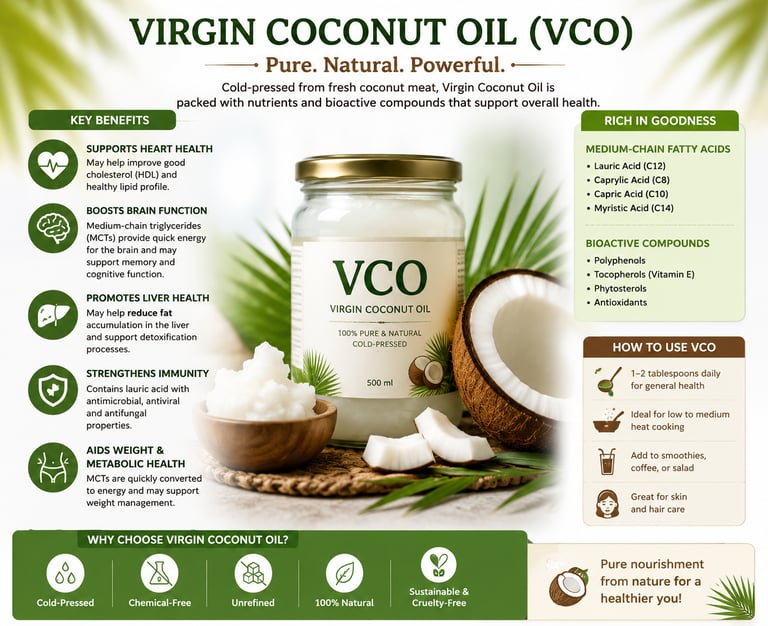
What are the proven benefits of virgin coconut oil?
2025 research shows virgin coconut oil may lower triglycerides by ∼12 mg/dL and raise HDL “good” cholesterol by ∼8 mg/dL. It contains MCTs that support brain and liver health in animal studies. It does not significantly lower LDL, blood sugar, or body weight. Benefits apply to virgin, not refined, coconut oil.
Key Takeaways
1. Virgin is different from refined — and it matters
Virgin coconut oil (VCO) is cold-pressed from fresh coconut meat. That keeps the polyphenols and vitamin E intact. Refined coconut oil loses most of those compounds. When studies show benefits, they’re usually testing virgin oil, not the processed kind on many grocery shelves.
2. Your heart: Better triglycerides and HDL, but watch the full picture
The largest 2025 meta-analysis of 14 trials found VCO lowered triglycerides by about 12 mg/dL and raised HDL “good” cholesterol by about 8 mg/dL.
What it didn’t do: No significant change in LDL “bad” cholesterol overall, blood sugar, weight, or blood pressure.
Bottom line: It may help two specific lipid markers. It is not a replacement for statins, blood pressure meds, or a heart-healthy diet.
3. LDL depends on what you’re swapping out
VCO’s effect on LDL is context-driven.
Replace butter or lard with VCO → LDL often stays neutral or drops.
Replace olive oil or canola with VCO → LDL may rise.
So think substitution, not addition. Adding VCO on top of your usual fats just adds calories.
4. Your brain: MCTs show real promise, especially via the gut
A 2025 study in Alzheimer’s mouse models found coconut-derived MCTs reduced brain plaques, calmed neuroinflammation, and improved memory. The surprise: part of the benefit came from gut bacteria. MCTs increased Akkermansia and short-chain fatty acids that nourish brain cells.
Important nuance: Pure MCT oil outperformed VCO in the study. If brain support is your goal, MCT oil gives a higher dose of the active C8/C10 fats.
5. Your liver: MCTs may protect against fat buildup
Mice fed coconut oil vs lard for 12 weeks had less liver fat, better glucose tolerance, and lower liver inflammation. Medium-chain fats go straight to the liver and get burned for energy instead of stored. Human trials are still limited, so don’t use VCO to self-treat fatty liver. Talk to your hepatologist first.
6. Weight loss: Not a magic bullet
The 2025 meta-analysis found no meaningful effect on body weight, BMI, or waist size. MCTs do burn slightly faster than other fats, but a tablespoon is still 120 calories. VCO can support weight goals only if it replaces a less healthy fat and you’re in a calorie deficit.
7. How to use it smartly
Dose used in studies: 1 to 2 tablespoons per day, 15 to 30 mL.
Best uses: Medium-heat sautéing, baking, smoothies, or blended into coffee. Smoke point is ~350°F, so skip high-heat frying.
Smart swap: Use it in place of butter or refined vegetable oils. Don’t add it to an already high-fat diet.
For cognitive/keto goals: Consider MCT oil instead of VCO for a more concentrated dose.
8. Who should be cautious
If you have high LDL or familial hypercholesterolemia: Monitor your lipid panel 8 to 12 weeks after starting VCO. Some people see LDL rise.
If you’re under 50: The meta-analysis noted that total cholesterol rose more in this group.
If you have heart disease or are on medication, discuss with your doctor before making big fat changes.
If you have liver or pancreatic disease: MCTs are processed differently. Get medical guidance.
9. Buying tips: Check the label
Choose “virgin” or “extra virgin,” cold-pressed, organic if possible. It should smell like fresh coconut and be white when solid, clear when liquid. Avoid “RBD” or just “coconut oil” without virgin — that’s usually refined.
10. The big picture
VCO is a useful tool, not a superfood miracle. Its real strengths are triglyceride/HDL support and MCT-driven metabolism. It shines when it replaces worse fats in an overall Mediterranean-style or anti-inflammatory diet rich in vegetables, fish, olive oil, and fiber.
> ⚕ Quick consult tip: If you decide to try VCO, recheck your fasting lipids after 2 to 3 months. That tells you how your body responds, which is what matters most.
Who Should Use VCO?" Who May Benefit Most?
Individuals with elevated triglycerides
People replacing butter or lard
Ketogenic diet users
Individuals seeking additional dietary MCTs
Who Should Be Cautious?
ApoE4 carriers
Familial hypercholesterolemia
Established ASCVD
Individuals with unexplained LDL elevations
.
Introduction
You've probably seen virgin coconut oil touted as a "superfood" on one website and condemned as "pure saturated fat" on another. Both extremes miss the truth — and the latest science, published in 2025, is finally helping us find it.
Virgin coconut oil (VCO) is not the same as the refined coconut oil sitting on supermarket shelves, and that distinction matters enormously. A 2025 meta-analysis published in Diabetology & Metabolic Syndrome — the most comprehensive clinical analysis of VCO to date — synthesized data from 14 randomized controlled trials and over 1,000 participants across 11 countries. The findings were nuanced, specific, and genuinely useful.
In this guide, you'll learn exactly what the latest research shows about virgin coconut oil's effects on your heart, brain, liver, and metabolism. You'll also learn how to use it intelligently — and what the myths get wrong.
What you'll discover:
The critical difference between virgin and refined coconut oil
Specific, evidence-backed benefits confirmed by 2025 RCTs
The brain-gut connection that makes MCTs uniquely powerful
Who benefits most — and who should be cautious
Practical tips for incorporating VCO into your diet
What Is Virgin Coconut Oil — And Why Does It Differ From Regular Coconut Oil?
If you're evaluating coconut oil for health purposes, the type you choose matters more than almost any other factor.
Virgin coconut oil (VCO) is extracted from fresh coconut meat through cold-pressing or natural fermentation — no heat, no chemicals, no bleaching or deodorizing. This gentle process preserves the oil's full spectrum of polyphenols, vitamin E, and other bioactive compounds that give VCO its biological activity.
Refined coconut oil (RBD — Refined, Bleached, Deodorized) is typically made from dried copra and processed with chemical solvents and high heat. Most of the beneficial phenolic compounds are destroyed in this process. The fatty acid profile remains largely the same, but the antioxidant and anti-inflammatory potential is dramatically reduced.
This is not a trivial distinction. A 2025 animal study published in Frontiers in Nutrition (Chen et al.) directly compared VCO, refined coconut oil, and MCT oil in an Alzheimer's disease mouse model — and found meaningfully different outcomes between the three. Research that doesn't separate these two types muddies the waters significantly.
Key Takeaway: When you see a health claim about "coconut oil," always ask: which type? Most positive findings apply specifically to virgin (unrefined) coconut oil.
The Science of VCO: Key Nutrients and Bioactive Compounds
What makes virgin coconut oil biologically distinct? Its composition is unlike that of most other fats.
Medium-Chain Fatty Acids (MCFAs) and Triglycerides (MCTs)
Approximately 90% of VCO's fat content is saturated fat, but the type of saturated fat matters enormously. VCO is one of the richest dietary sources of medium-chain fatty acids (MCFAs), primarily:
Lauric acid (C12:0) — ~47–52% of total fat; rare in most foods, found abundantly in breast milk
Caprylic acid (C8:0) — ~6–8%; most rapidly converted to ketones
Capric acid (C10:0) — ~6–7%; potent antimicrobial and metabolic properties
Myristic acid (C14:0) — ~17–19%
Unlike long-chain fatty acids (found in most dietary fats), medium-chain fatty acids bypass the lymphatic system and go directly to the liver via the portal vein. There they are rapidly oxidised for energy rather than stored as body fat. This metabolic shortcut is what drives many of VCO's unique properties.
Phenolic Compounds and Antioxidants
Here is where VCO truly separates itself from refined coconut oil. Cold-pressing preserves:
Ferulic acid
p-Coumaric acid
Caffeic acid
Gallic acid
Tocotrienols and tocopherols (vitamin E family)
These polyphenols have demonstrated anti-inflammatory, antioxidant, and lipid-modifying activity in laboratory settings — and they are largely absent in refined coconut oil.
VCO and Heart Health: What the 2025 Meta-Analysis Reveals
The Landmark 2025 Study You Need to Know
The most rigorous clinical evidence on VCO to date was published in December 2025 in Diabetology & Metabolic Syndrome. Zhang, Wang, Li, and colleagues conducted a systematic review and meta-analysis of 14 randomized controlled trials (RCTs) involving 1,049 participants from 11 countries, with intervention durations ranging from 2 to 24 weeks.
This is important: unlike earlier meta-analyses, this study analyzed only virgin coconut oil — not refined versions — eliminating a major source of confusion in the literature.
What VCO Significantly Improved
✅ Triglycerides (TG): Significant reduction
Pooled weighted mean difference (WMD): −12.12 mg/dL (95% CI: −23.14 to −1.09; p = 0.031)
The effect was strongest in short-term interventions (≤8 weeks): WMD −20.31 mg/dL
People with metabolic disorders benefited most: WMD −14.76 mg/dL
✅ HDL Cholesterol ("Good" Cholesterol): Significant increase
Pooled WMD: +7.91 mg/dL (95% CI: 4.41 to 11.40; p < 0.001)
This ~8 mg/dL increase is clinically notable and exceeds what many previous mixed-coconut-oil studies reported
The increase was consistent across most population subgroups
What VCO Did Not Significantly Change
Outcome Result LDL Cholesterol No significant change overall (slight increase trend in some subgroups) Total Cholesterol No significant change overall; significant increase in participants under 50 years Fasting Blood Sugar No significant effect Body Weight / BMI No significant effect Waist Circumference No significant effect Blood Pressure (SBP/DBP) No significant effect C-Reactive Protein (CRP) No significant effect
Why Triglyceride and HDL Results Matter
Elevated triglycerides are an independent risk factor for cardiovascular disease, particularly in the context of metabolic syndrome. Even a modest 12 mg/dL reduction can be meaningful in high-risk populations.
The HDL increase is clinically notable. Lauric acid — VCO's dominant fatty acid — appears to raise HDL-C through upregulation of apolipoprotein A1 synthesis and reduced cholesteryl ester transfer protein (CETP) activity.
Important caveat: The clinical value of raising HDL in isolation is debated. Mendelian randomization studies have questioned whether isolated HDL elevation reduces cardiovascular events without accompanying LDL reduction. VCO should complement — not replace — established cardiovascular therapies.
What About LDL Cholesterol?
The LDL picture is nuanced. Overall, VCO showed no statistically significant LDL change — but heterogeneity was high (I² = 80.9%). This is because the effect on LDL depends heavily on what VCO replaces in the diet:
Replacing butter or animal fats → LDL may decrease or stay neutral
Replacing polyunsaturated vegetable oils (olive, canola, soybean) → LDL may increase
This context-dependency is crucial for practical use.
⚕️ Medical Note: If you have existing cardiovascular disease or are on lipid-lowering medication, discuss dietary fat changes — including VCO — with your healthcare provider before making changes.
VCO, the Brain, and Memory: The MCT–Gut–Brain Axis
Perhaps the most exciting frontier in VCO research isn't the heart — it's the brain.
The 2025 Neuroscience Study
In June 2025, Chen, Li, Jiang, and colleagues at Guangdong Ocean University published a study in Frontiers in Nutrition examining how coconut oil-derived MCTs affect memory and neurodegeneration in 5×FAD mice — one of the most widely used genetic models of Alzheimer's disease.
The researchers administered VCO, refined coconut oil (RBDCO), and MCT oil to mice with advanced Alzheimer's-like pathology for 9 consecutive weeks. The findings revealed a striking hierarchy of effectiveness.
MCT oil outperformed both VCO and refined coconut oil in:
Reducing amyloid-beta (Aβ) plaque levels — the hallmark of Alzheimer's pathology
Inhibiting hyperactivated microglia and astroglia (neuroinflammation markers)
Protecting neurons from degeneration
Mitigating memory decline on behavioral testing
The Gut–Brain Connection: A Surprising Mechanism
Perhaps the most novel finding was the gut microbiome pathway. MCT intervention:
Increased the relative abundance of Akkermansia — a beneficial bacterium consistently associated with metabolic health and gut barrier integrity
Reduced intestinal permeability (measured via tight junction proteins ZO-1 and Occludin)
Elevated short-chain fatty acids (acetate and butyrate) in brain tissue — compounds that provide energy to neurons and modulate neuroinflammation
This gut-to-brain signaling pathway offers a new mechanistic explanation for why dietary fats affect cognition. The MCTs → ketones pathway (often cited as the primary mechanism) may work hand-in-hand with the MCTs → microbiome → brain axis.
What About VCO Specifically?
In the Chen et al. study, VCO showed some benefit compared to controls, but pure MCT oil was superior. This makes biochemical sense: VCO is approximately 60–65% MCFAs by weight. Concentrated MCT oil provides a much higher dose of the active compounds.
For practical human application, this suggests:
VCO may offer modest cognitive support as a dietary fat replacement
Concentrated MCT oil (often derived from coconut oil) may be more effective for cognitive-focused protocols
These findings are from animal models — human clinical trials are ongoing
VCO and Liver Health: Fatty Liver Disease Protection
Non-alcoholic fatty liver disease (NAFLD) — now often called metabolic dysfunction-associated steatotic liver disease (MASLD) — affects roughly 25% of the global population. Dietary fat quality plays a significant role.
The 2025 Mouse Study
A 2025 study from Kyoto Prefectural University of Medicine (Sumi, Hasegawa, Matsuyama, and colleagues), published in the Journal of Nutritional Science, directly compared a coconut oil diet vs. a lard diet in C57BL/6J mice over 12 weeks.
The coconut oil group showed significantly:
Suppressed weight gain compared to lard-fed mice
Improved glucose tolerance
Reduced hepatic fat accumulation (measured by NAFLD activity scores and Oil Red O staining)
Decreased expression of pro-inflammatory genes in liver tissue
Reduced expression of lipid metabolism genes associated with fatty liver progression
Higher hepatic concentrations of MCFAs (caprylic C8:0, capric C10:0, lauric C12:0)
The researchers proposed that the MCFAs themselves — accumulating in the liver from coconut oil — are the primary protective mechanism, enhancing fatty acid oxidation and suppressing de novo lipogenesis.
The Mechanism: Why MCFAs Protect the Liver
Long-chain fatty acids (like those in lard) are esterified into triglycerides and can accumulate as hepatic fat when oxidation is overwhelmed. Medium-chain fatty acids, by contrast, are preferentially oxidized by the liver's mitochondria rather than stored. They also:
Reduce VLDL-TG production
Suppress hepatic lipogenic gene expression (SREBP-1c, FAS, ACC)
Increase peroxisome proliferator-activated receptor alpha (PPARα) activity — the master switch for fat burning
Important limitation: This is a mouse study. While the mechanistic findings are compelling and consistent with prior animal research, human RCTs specifically targeting NAFLD with VCO are limited. Do not replace medical treatment for liver disease with dietary coconut oil without medical supervision.
⚕️ Medical Note: If you have been diagnosed with NAFLD, metabolic syndrome, or liver disease, consult a hepatologist or registered dietitian before making significant dietary fat changes.
VCO and Metabolic Health: Weight, Blood Sugar, and Inflammation
Does VCO Help With Weight Loss?
Based on the 2025 Zhang et al. meta-analysis, the honest answer is: not meaningfully, on its own.
The pooled analysis found no significant effect of VCO supplementation on body weight (WMD: 0.13 kg), BMI (WMD: −0.57 kg/m²), waist circumference, or fat mass. Low heterogeneity on these measures (I² = 0%) suggests the null finding is consistent and reliable.
This doesn't mean coconut oil causes weight gain. What it means is:
Adding VCO to an existing diet (without replacing other fats) won't automatically produce weight loss
The thermogenic advantage of MCTs over long-chain fats is real but modest — and often disappears in free-living conditions
Coconut oil is still ~120 calories per tablespoon; total calorie balance matters
Where VCO may support weight management: When it replaces less beneficial fats (like refined vegetable oils high in omega-6 or trans fat-containing foods), it can contribute to a healthier overall dietary fat profile without adding calories.
Blood Sugar and Insulin Sensitivity
The 2025 meta-analysis found no significant effect on fasting blood sugar (WMD: −1.91 mg/dL; p = 0.353). This aligns with earlier research in metabolically healthy adults.
However, subgroup findings hint at potential benefits in diabetic or hyperglycemic populations, where MCTs' ability to promote ketone production and alter hepatic glucose metabolism may produce measurable effects. This remains an area for targeted research.
Inflammation: What the Data Show
VCO showed no significant effect on C-reactive protein (CRP) in the 2025 meta-analysis. This is somewhat surprising given the anti-inflammatory polyphenols in VCO — but may reflect:
Short trial durations (most studies were 4–12 weeks)
Healthy baseline populations with already-low inflammation
The need for higher polyphenol doses than typical supplementation provides
In vitro and animal studies continue to demonstrate that VCO phenolics inhibit NF-κB activation and reduce pro-inflammatory cytokine production. Whether this translates into measurable systemic CRP reduction in humans — particularly in high-inflammation populations — remains to be seen; this will require longer-term trials.
ApoE4 Genetics, Alzheimer's Risk, and Coconut Oil: An Important Consideration
One emerging area of research involves the Apolipoprotein E ε4 (ApoE4) genotype, the strongest genetic risk factor for late-onset Alzheimer's disease. Individuals carrying one ApoE4 allele have an increased risk of developing Alzheimer's disease, while those carrying two copies face an even greater risk.
Research suggests that ApoE4 carriers may respond differently to dietary fats, particularly saturated fats. Some studies indicate that ApoE4 carriers experience larger increases in LDL cholesterol and a greater cardiovascular response to high saturated-fat diets compared with non-carriers. Because virgin coconut oil is rich in saturated fats—primarily lauric acid—its effects may vary substantially based on genetic background.
Interestingly, ApoE4 carriers often exhibit impaired brain glucose metabolism years before cognitive symptoms appear. This has led researchers to investigate whether ketones produced from medium-chain triglycerides (MCTs) in coconut oil could provide an alternative fuel source for the brain. While this hypothesis is biologically plausible, current evidence remains preliminary, and personalized responses likely depend on genetics, metabolic health, and overall diet quality.
Key Point: ApoE4 carriers may be more sensitive to the cholesterol-raising effects of saturated fats, making lipid monitoring particularly important when regularly consuming virgin coconut oil.
Human Cognitive Studies: What Have Clinical Trials Shown?
While much of the excitement surrounding coconut oil and brain health comes from animal research, a small number of human studies have also been conducted.
One notable study by Fernando MG and colleagues (2023) evaluated virgin coconut oil supplementation in individuals with mild-to-moderate Alzheimer's disease. Participants receiving VCO showed improvements in certain cognitive measures compared with baseline, suggesting potential benefits for memory and cognitive performance.
Researchers propose several mechanisms:
Increased ketone production, providing an alternative brain fuel
Improved mitochondrial energy metabolism
Reduced oxidative stress
Modulation of neuroinflammation
Potential effects on the gut-brain axis
However, important limitations remain:
Small sample sizes
Short intervention durations
Limited diversity of participants
Lack of large multicenter randomized trials
As a result, current evidence is not strong enough to recommend virgin coconut oil as a treatment or preventive strategy for Alzheimer's disease.
Current Evidence Verdict: Human cognitive studies are promising but remain preliminary. Larger, long-term randomized controlled trials are needed before definitive conclusions can be made regarding virgin coconut oil's role in cognitive health and dementia prevention
Evidence Strength: What the Science Really Supports
Not all health claims about virgin coconut oil are backed by the same level of scientific evidence. Here's how the current evidence stacks up:
Strong Human Evidence
Raises HDL ("good") cholesterol consistently across multiple randomized controlled trials and meta-analyses.
Improves triglyceride levels in certain populations, particularly those with metabolic disorders.
Moderate Human Evidence
May improve overall lipid profile when used as a replacement for less healthy fats.
May support metabolic health in individuals with elevated cardiometabolic risk factors.
Preliminary Human Evidence
Potential cognitive benefits have been reported in small human studies, but larger clinical trials are still needed.
May enhance ketone production, providing an alternative energy source for the brain.
Strong Animal and Mechanistic Evidence
Supports liver health and may reduce the progression of fatty liver in animal models.
Reduces neuroinflammation and amyloid accumulation in Alzheimer's disease mouse models.
Improves gut barrier function and beneficial gut bacteria, including Akkermansia.
Limited or Inconclusive Evidence
Blood sugar control: Current human studies show little or no significant benefit in metabolically healthy adults.
Inflammation reduction: Laboratory studies are promising, but human trials have not consistently shown reductions in inflammatory markers.
Not Supported by Current Evidence
Significant weight loss on its own
Meaningful reductions in blood pressure
Replacement for evidence-based medical therapies
Prevention or treatment of Alzheimer's disease in humans
Bottom Line: The strongest human evidence supports virgin coconut oil's ability to raise HDL cholesterol and modestly improve triglyceride levels. Claims related to brain health, fatty liver disease, and inflammation remain promising but require larger, long-term human trials before firm conclusions can be drawn.
How to Use Virgin Coconut Oil: Practical Guide
How Much Is Evidence-Based?
Doses in the clinical trials ranged from 10 mL to 50 g per day (roughly 2 teaspoons to 3.5 tablespoons). Most trials used 15–30 mL (1–2 tablespoons) daily.
Practical starting point: 1 tablespoon (14–15 mL) per day, incorporated into your existing diet — ideally replacing rather than adding to your usual fat intake.
Smart Ways to Incorporate VCO
Cooking:
Replace butter in sautéing vegetables (VCO's mild coconut flavor works well with many cuisines)
Use for medium-heat stir-frying (smoke point ~350°F/177°C — suitable for medium-heat cooking)
Add to baked goods in place of butter or shortening
Cold applications:
Blend into smoothies (1 tablespoon blends well and adds a subtle richness)
Mix into oatmeal or yogurt
Use as a base for homemade salad dressings with lemon juice and herbs
Targeted MCT protocols:
If you're using coconut oil for cognitive support or ketogenic purposes, MCT oil (derived from coconut) provides a more concentrated dose of caprylic and capric acid
MCT oil has a lower smoke point and should not be heated
Buying the Best VCO: What to Look For
How to Choose High-Quality Coconut Oil: A Quick Buyer's Guide
Processing Method – Choose Cold-Pressed or Expeller-Pressed: Look for unrefined oils that preserve natural nutrients and antioxidants without using harsh chemical solvents.
Labeling – Look for "Virgin" or "Extra Virgin": This guarantees the oil is unrefined, pure, and extracted from fresh, high-quality coconut meat.
Color – Clear (Liquid) or Bright White (Solid): High-quality coconut oil should never look yellowish, grey, or cloudy.
Aroma – Fresh, Mild Coconut Scent: It should taste and smell like real coconut. Avoid oils with a total lack of odour or a chemical smell.
Certifications – Organic & Non-GMO Verified: Ensure the coconuts were grown without synthetic pesticides or genetic modification.
Packaging – Glass Jars or BPA-Free Containers: Protects the oil's purity and prevents harmful plastics from leaching into the product.
Buying Red Flags to Avoid
Generic "Coconut Oil" Labels: Jars without the word "Virgin" are usually RBD (Refined, Bleached, and Deodorized) and lack natural nutrients and flavor.
Fractionated Coconut Oil: This is a modified product that stays liquid at room temperature. It has a different fatty acid profile and is meant for skin and hair care, not cooking. torage
Store in a cool, dark place; it will solidify below ~76°F (24°C) and liquify above — both forms are normal
Shelf life: 18–24 months unopened; 12 months once opened
Refrigeration is not necessary, buit t extends freshness
VCO vs. Other Healthy Fats: Comparison
Understanding where VCO fits in the broader landscape of healthy fats helps you make smarter choices.
Extra Virgin Olive Oil (EVOO)
Primary Fatty Acid: Monounsaturated (oleic acid)
Cholesterol Impact:
⬆️ HDL: Raises (Good)
⬇️ LDL: Lowers (Bad)
Smoke Point: ~375°F (190°C)
Best For: Cold dressings, low-heat sautéing, and finishing dishes.
Avocado Oil
Primary Fatty Acid: Monounsaturated
Cholesterol Impact:
⬆️ HDL: Raises (Good)
⬇️ LDL: Lowers (Bad)
Smoke Point: ~520°F (271°C)
Best For: High-heat cooking, searing, roasting, and grilling.
Virgin Coconut Oil
Primary Fatty Acid: Saturated (MCT-rich)
Cholesterol Impact:
⬆️ HDL: Raises (Good)
➡️ LDL: Neutral to slight increase
Smoke Point: ~350°F (177°C)
Best For: Medium-heat cooking, baking, and plant-based recipes.
MCT Oil
Primary Fatty Acid: Saturated (concentrated C8/C10)
Cholesterol Impact:
↗️ HDL: Modest increase
➡️ LDL: Minimal effect
Smoke Point: Extremely low — Do not heat
Best For: Cold use, smoothies, bulletproof coffee, and cognitive health protocols.
Butter (Grass-Fed)
Primary Fatty Acid: Saturated (long-chain)
Cholesterol Impact:
⬆️ HDL: Raises (Good)
⬆️ LDL: Raises (Bad)
Smoke Point: ~302°F (150°C)
Best For: Baking, low-heat pan frying, and flavor finishing.
Canola Oil (Refined)
Primary Fatty Acid: Monounsaturated / PUFA (Polyunsaturated)
Cholesterol Impact:
➡️ HDL: Neutral effect
⬇️ LDL: Lowers (Bad)
Smoke Point: ~400°F (204°C)
Best For: High-heat cooking, deep frying, and baking due to its neutral flavor.
Bottom line: VCO occupies a unique niche. Its MCT content distinguishes it from butter and other saturated fats. Its phenolic content distinguishes it from refined coconut oil. It's best used as a replacement for less beneficial fats rather than an add-on.
Evidence Summary: 2025 Research at a Glance
1. Zhang et al. (2025) Journal: Diabetology & Metabolic Syndrome
Study type: Meta-analysis of 14 randomized controlled trials, 1,049 participants
Key finding: Virgin coconut oil lowered triglycerides by 12 mg/dL and raised HDL “good” cholesterol by 8 mg/dL. No significant change in weight, blood pressure, blood sugar, or inflammation (CRP).
2. Chen et al. (2025) Journal: Frontiers in Nutrition
Study type: Animal RCT using 5×FAD Alzheimer’s mice, 9 weeks
Key finding: For memory and brain health, pure MCT oil worked best, followed by virgin coconut oil, then refined coconut oil. MCTs reduced brain plaques, calmed inflammation, and improved gut bacteria linked to brain health.
3. Sumi et al. (2025) Journal: Journal of Nutritional Science
Study type: Animal study in C57BL/6J mice, 12 weeks
Key finding: Mice fed coconut oil instead of lard gained less weight, had better blood sugar control, less liver fat, and lower liver inflammation.
4. Van Nguyen & Shahidi (2025) Journal: JAOCS (Journal of the American Oil Chemists' Society)
Study type: Lipid chemistry analysis
Key finding: VCO can be used to create DHA/EPA structured lipids and shows strong oxidative stability, meaning it resists going rancid.
5. Beegum et al. (2024) Food Bioscience
Key Highlights:
Cardioprotective: Medium-chain fatty acids (MCFAs, especially lauric acid) and antioxidants help improve lipid profiles and heart health.
Neuroprotective: Ketogenic effects from MCFAs provide alternative brain energy (ketones) and may support cognitive health.
Anti-obesity: Enhances energy expenditure, supports fat metabolism, and shows hypoglycemic effects in clinical trials.
Main takeaway: Coconut’s benefits are largely attributed to MCFAs and polyphenols. The authors call for more large-scale, long-term randomized controlled trials to confirm optimal dosing and long-term safety.
Common Myths and Mistakes About Coconut Oil
Myth #1: "All coconut oil is the same."
Reality: Virgin (cold-pressed) and refined coconut oil differ significantly in their polyphenol content, flavor, and biological activity. Health research on VCO should not be extrapolated to refined coconut oil, and vice versa.
Myth #2: "Coconut oil will clog your arteries because it's saturated fat."
Reality: The saturated fat story is more complex than a single number. VCO's saturated fats are predominantly medium-chain (MCTs), which are metabolized differently from the long-chain saturated fats in meat and dairy. The 2025 meta-analysis found VCO raised HDL cholesterol significantly without significantly raising LDL overall. Context (what it replaces) matters enormously.
Myth #3: "Coconut oil is a miracle weight-loss food."
Reality: This is not supported by RCT evidence. The 2025 meta-analysis found no significant effect on body weight, BMI, or waist circumference. MCTs do increase thermogenesis slightly compared to long-chain fats, but this effect is modest and insufficient to produce meaningful weight loss without a caloric deficit.
Myth #4: "Coconut oil will spike your LDL and cause heart attacks."
Reality: The evidence is more nuanced. Overall, the 2025 meta-analysis found no statistically significant LDL increase from VCO supplementation. LDL changes depend heavily on what VCO is replacing. Replacing polyunsaturated oils with VCO may slightly raise LDL; replacing butter may not. Individual responses also vary.
Myth #5: "Taking a tablespoon of coconut oil daily will prevent Alzheimer's disease."
Reality: The 2025 animal research (Chen et al.) shows exciting mechanistic pathways between MCTs and brain health — particularly via the gut microbiome. However, the evidence in humans is preliminary. The animal study also found that concentrated MCT oil outperformed VCO for cognitive outcomes. Human clinical trials for Alzheimer's prevention with VCO are ongoing but not yet conclusive.
Myth #6: "Coconut oil is the best cooking oil for everything."
Reality: VCO has a medium smoke point (~350°F/177°C), making it suitable for medium-heat cooking but not high-heat methods like deep-frying. For high-heat cooking, avocado oil is a better choice. For maximum cardiovascular benefit in cold applications, extra virgin olive oil remains the best-evidenced option.
Mistake: Using coconut oil as "additional" calories rather than a fat replacement.
The clinical trials showing neutral weight effects often added VCO to existing diets. If you're adding coconut oil on top of your current fat intake without replacing anything, you're simply adding approximately 120 calories per tablespoon with no net metabolic benefit from substitution.
Frequently Asked Questions
Q1: How much virgin coconut oil should I take per day?
The most common doses in clinical trials range from 1 to 2 tablespoons (15–30 mL) per day. Start with 1 tablespoon (15 mL/~130 calories) and gradually increase if tolerated. Most benefits in the 2025 meta-analysis were observed at these doses. There's no evidence that higher doses provide proportionally greater benefit — and all added oil means added calories.
Q2: Is coconut oil safe for people with high cholesterol?
This is highly individual. VCO may raise HDL (beneficial) without significantly raising LDL overall — but in some people, particularly younger adults or those sensitive to saturated fat, total and LDL cholesterol may increase. The 2025 meta-analysis found a significant total cholesterol increase specifically in participants under 50 years old. If you have dyslipidemia, discuss this with your doctor and monitor your lipid panel after introducing VCO.
Q3: Can I cook with virgin coconut oil at high temperatures?
VCO has a smoke point of approximately 350°F (177°C) — suitable for sautéing, light pan-frying, and baking, but not for deep-frying or high-heat wok cooking. For those applications, use refined coconut oil (higher smoke point ~450°F) or avocado oil. The polyphenols in VCO may also degrade at very high temperatures, reducing its antioxidant value.
Q4: Is virgin coconut oil good for brain health?
Emerging research is promising. The 2025 Chen et al. study in Frontiers in Nutrition showed that MCTs derived from coconut oil reduced amyloid-beta levels and improved memory in Alzheimer's mouse models — partly through a gut microbiome mechanism involving increased Akkermansia and short-chain fatty acid production. For human brain health, concentrated MCT oil may be more effective than VCO due to its higher MCT concentration. This remains an active area of research.
Q5: Does VCO help with fatty liver disease?
A 2025 study in the Journal of Nutritional Science found that mice fed coconut oil (vs. lard) had significantly lower hepatic fat accumulation, reduced liver inflammation, and improved glucose tolerance over 12 weeks. The mechanism involves MCFAs enhancing liver fat oxidation and suppressing lipogenic gene expression. Human RCTs specifically targeting NAFLD with VCO are needed before strong clinical recommendations can be made.
Q6: What's the difference between VCO and MCT oil for health benefits?
VCO contains the full-spectrum fatty acid profile of coconut oil (including long-chain myristic acid) plus polyphenols, vitamins, and flavor compounds. MCT oil is a concentrated extract, typically containing primarily caprylic (C8) and capric (C10) acids — the most rapidly ketogenic MCTs — with no long-chain fats or polyphenols.
For cognitive support and ketogenic protocols: MCT oil provides a more reliable, higher-dose of ketogenic MCTs. For cooking, flavor, and the polyphenol benefits: VCO is superior. Many people use both strategically.
Q7: Can VCO help with weight loss?
Based on current RCT evidence: not significantly on its own. The 2025 meta-analysis of 14 trials found no meaningful effect on weight, BMI, or waist circumference from VCO supplementation. However, MCTs have well-documented thermogenic advantages over long-chain fats, and replacing less beneficial fats with VCO as part of a calorie-controlled diet may support fat loss by improving satiety and metabolic efficiency.
Q8: Is coconut oil better than olive oil?
These oils serve different purposes and are not head-to-head competitors. Extra virgin olive oil has the strongest cardiovascular evidence base (Mediterranean diet research, PREDIMED trial), superior monounsaturated fat content, and anti-inflammatory oleocanthal. VCO offers unique MCT benefits, a higher smoke point than EVOO, and distinct polyphenol profile. An ideal kitchen has both. [Internal link: "Olive Oil vs. Coconut Oil" comparison article]
Q9: Can I give coconut oil to my children?
MCTs are found in breast milk and are well-tolerated by most people. Small amounts of VCO (½ tsp incorporated into food) are generally considered safe for children over 12 months. However, given the caloric density and the lack of pediatric-specific RCTs, consult your pediatrician before regularly adding VCO to a child's diet — especially if they have metabolic or lipid conditions.
Q10: Does heating coconut oil destroy its benefits?
Moderate-heat cooking (below 350°F/177°C) preserves most of VCO's fatty acid profile, though some heat-sensitive polyphenols may degrade at high temperatures. The fatty acids themselves — which drive most metabolic effects — are heat-stable. For maximum polyphenol preservation, use VCO in cold or low-heat applications when possible.
Q11: Is virgin coconut oil anti-inflammatory?
In laboratory and animal studies, VCO phenolics demonstrably inhibit NF-κB and reduce pro-inflammatory cytokines. In human trials, however, the 2025 meta-analysis found no significant CRP reduction from VCO supplementation. This may reflect short trial durations, low baseline inflammation in study populations, or insufficient phenolic doses. Anti-inflammatory effects may be more evident in people with elevated baseline inflammation and in longer-term trials.
Q12: Should I use coconut oil if I'm on statins?
No research suggests a direct harmful interaction between VCO and statins. One 2024 RCT (Maiti et al.) actually investigated VCO as an add-on to atorvastatin therapy in dyslipidemia patients. That said, any significant change to your dietary fat intake when on lipid-lowering medication should be discussed with your prescribing physician so your lipid panel can be monitored appropriately.
Conclusion and Action Steps
The 2025 body of research on virgin coconut oil delivers a clear message: VCO is neither a miracle cure nor a dietary villain. It is a nutritionally complex food with specific, evidence-backed benefits — and specific limitations.
What the science supports:
Modest but significant triglyceride reduction (especially in people with metabolic disorders)
Meaningful HDL cholesterol elevation
Liver-protective effects against high-fat diet-induced steatosis (animal models)
Exciting preliminary evidence for cognitive support via MCT–gut–brain pathways
What the science doesn't support:
Meaningful weight loss on its own
Blood sugar improvement in metabolically healthy adults
Significant anti-inflammatory effects (at least in short-term, healthy-population studies)
Replacement of evidence-based cardiovascular or metabolic medications
Your Evidence-Based Action Plan
Switch to virgin coconut oil if you currently use refined coconut oil — not the same product.
Use it as a replacement, not an addition. Substitute VCO for butter in baking, or for refined vegetable oils in medium-heat cooking. Don't just pour it on top of everything.
Start with 1 tablespoon per day and monitor your cholesterol panel after 8–12 weeks, especially if you have cardiovascular risk factors.
Prioritize MCT oil over VCO if your primary goal is cognitive support or ketogenic fueling — it delivers a higher, more concentrated dose of the key compounds.
Don't skip the whole diet. VCO works best as part of a broadly anti-inflammatory eating pattern — rich in vegetables, omega-3 fatty acids, fiber, and minimally processed foods.
Consult your healthcare provider before significant dietary changes if you have cardiovascular disease, liver disease, diabetes, or are taking lipid-lowering medication.
⚠️ Disclaimer: This article is for educational purposes only and does not constitute medical advice. Always consult a qualified healthcare professional before making dietary changes, especially if you have existing health conditions or take medication
Related Articles
Full-Fat Dairy Actually Good for You? The New Science on C15:0 & C17:0 and Heart Health
De Novo Lipogenesis Explained: How Sugar Turns Into Liver Fat and High Triglycerides
Rethinking Dietary Fats: What New Research Reveals About Plant vs. Animal Fats | DR T S DIDWAL
References
Abdollahi, S., Soltani, S., Ramezani-Jolfaie, N., & et al. . (2024). The effect of different edible oils on body weight: a systematic review and network meta-analysis of randomized controlled trials. BMC Nutrition, 10(1), Article 107. https://doi.org/10.1186/s12937-024-00911-w
Bueno, N. B., de Melo, I. V., Florencio, T. T., & Sawaya, A. L. (2015). Dietary medium-chain triacylglycerols versus long-chain triacylglycerols for body composition in adults: Systematic review and meta-analysis. Journal of the American College of Nutrition, 34(2), 175–183.
https://doi.org/10.1080/07315724.2013.879844
Beegum, P. P. S., Ramesh, S. V., Pandiselvam, R., Neema, M., Daliyamol, Manikantan, M. R., & Hebbar, K. B. (2024). Perspectives on the cardioprotective, neuroprotective and anti-obesity functions of coconut (Cocos nucifera L.). Food Bioscience, 58, Article 103756. https://doi.org/10.1016/j.fbio.2024.103756
Chen, R., Li, R., Jiang, J., Zhou, L., Zhao, S., Zhang, Y., Xia, Q., & Yang, Z. (2025). Coconut oil derived medium-chain triglycerides ameliorated memory deficits via promoting neurite outgrowth and maintaining gut homeostasis in 5×FAD mice. Frontiers in Nutrition, 12, Article 1585640. https://doi.org/10.3389/fnut.2025.1585640
Dayrit, F. M. (2015). The properties of lauric acid and their significance in coconut oil. Journal of the American Oil Chemists' Society, 92(1), 1–15. https://doi.org/10.1007/s11746-014-2562-7
Deen, A., Visvanathan, R., Wickramarachchi, D., & et al. (2021). Chemical composition and health benefits of coconut oil: An overview. Journal of the Science of Food and Agriculture, 101(6), 2182–2193. https://doi.org/10.1002/jsfa.10870
Duarte, A. C., Spiazzi, B. F., Zingano, C. P., & et al. (2022). The effects of coconut oil on the cardiometabolic profile: A systematic review and meta-analysis of randomized clinical trials. Lipids in Health and Disease, 21(1), Article 83. https://doi.org/10.1186/s12944-022-01693-w
Fernando, M. G., Silva, R., Fernando, WB., & et al. (2023). Effect of virgin coconut oil supplementation on cognition of individuals with mild-to-moderate Alzheimer's disease in Sri Lanka (VCO-AD study). Journal of Alzheimer's Disease, 96(3), 1195–1206. https://doi.org/10.3233/JAD-230514
GBD 2023 Cardiovascular Disease Collaborators. (2025). Global, regional, and national burden of cardiovascular diseases and risk factors in 204 countries and territories, 1990–2023. Journal of the American College of Cardiology. Advance online publication.
Global Cardiovascular Risk Consortium. (2023). Global effect of modifiable risk factors on cardiovascular disease and mortality. New England Journal of Medicine, 389(14), 1273–1285. https://doi.org/10.1056/NEJMoa2209583
Illam, S. P., Narayanankutty, A., Kandiyil, P. S., & Raghavamenon, A. C. (2021). Variations in natural polyphenols determine the anti-inflammatory potential of virgin coconut oils. Journal of Food Science, 86(5), 1620–1628. https://doi.org/10.1111/1750-3841.15694
Jayawardena, R., Swarnamali, H., Ranasinghe, P., & Misra, A. (2021). Health effects of coconut oil: Summary of evidence from systematic reviews and meta-analysis of interventional studies. Diabetes & Metabolic Syndrome: Clinical Research & Reviews, 15(2), 549–555. https://doi.org/10.1016/j.dsx.2021.02.032
Khaw, K.-T., Sharp, S. J., Finikarides, L., & et al. (2018). Randomised trial of coconut oil, olive oil or butter on blood lipids and other cardiovascular risk factors in healthy men and women. BMJ Open, 8(3), Article e020167. https://doi.org/10.1136/bmjopen-2017-020167
Maiti, R., Mohanty, R. R., Dey, A., & et al. (2024). Effect of virgin coconut oil (VCO) on cardiometabolic parameters in patients with dyslipidemia: A randomized, add-on placebo-controlled clinical trial. Journal of the American Nutrition Association, 43(3), 244–251. https://doi.org/10.1080/27697061.2023.2257216
Mensink, R. P., Zock, P. L., Kester, A. D., & Katan, M. B. (2003). Effects of dietary fatty acids and carbohydrates on the ratio of serum total to HDL cholesterol and on serum lipids and apolipoproteins: A meta-analysis of 60 controlled trials. The American Journal of Clinical Nutrition, 77(5), 1146–1155. https://doi.org/10.1093/ajcn/77.5.1146
Neelakantan, N., Seah, J. Y. H., & van Dam, R. M. (2020). The effect of coconut oil consumption on cardiovascular risk factors: A systematic review and meta-analysis of clinical trials. Circulation, 141(10), 803–814. https://doi.org/10.1161/CIRCULATIONAHA.119.043052
Rohman, A., Irnawati, Erwanto, Y., & et al. (2021). Virgin coconut oil: Extraction, physicochemical properties, biological activities and its authentication analysis. Food Reviews International, 37(1), 46–66. https://doi.org/10.1080/87559129.2019.1687515
Schwingshackl, L., & Schlesinger, S. (2023). Coconut oil and cardiovascular disease risk. Current Atherosclerosis Reports, 25(5), 231–236. https://doi.org/10.1007/s11883-023-01098-y
St-Onge, M. P., & Bosarge, A. (2008). Weight-loss diet that includes consumption of medium-chain triacylglycerol oil leads to a greater rate of weight and fat mass loss than does olive oil. The American Journal of Clinical Nutrition, 87(3), 621–626. https://doi.org/10.1093/ajcn/87.3.621
Sumi, M., Hasegawa, Y., Matsuyama, T., & et al. (2025). The effects of coconut oil intake on metabolic disorders and fatty liver disease in mice. Journal of Nutritional Science, 14, Article e58. https://doi.org/10.1017/jns.2025.10032
Teng, M., Zhao, Y. J., Khoo, A. L., Yeo, T. C., Yong, Q. W., & Lim, B. P. (2020). Impact of coconut oil consumption on cardiovascular health: A systematic review and meta-analysis. Nutrition Reviews, 78(3), 249–259. https://doi.org/10.1093/nutrit/nuz056
Vahedi, H., Atefi, M., Ghanbarian, M., Darand, M., & Bahraniniya, Z. (2025). Sesame oil improves blood lipid profile in patients with metabolic disease: A systematic review and meta-analysis. Nutrition & Food Science, 55(5), 868–891. https://doi.org/10.1108/NFS-05-2024-0150
Van Nguyen, L., & Shahidi, F. (2025). Fatty acid distribution and oxidative stability of DHA/EPA-enriched structured lipids from virgin coconut oil. Journal of the American Oil Chemists' Society, 102(9), 1439–1452. https://doi.org/10.1002/aocs.70002
Voight, B. F., Peloso, G. M., Orho-Melander, M., & et al. (2012). Plasma HDL cholesterol and risk of myocardial infarction: A Mendelian randomisation study. The Lancet, 380(9841), 572–580. https://doi.org/10.1016/S0140-6736(12)60312-2
Zeng, Y. Q., He, J. T., Hu, B. Y., & et al. (2024). Virgin coconut oil: A comprehensive review of antioxidant activity and mechanisms contributed by phenolic compounds. Critical Reviews in Food Science and Nutrition, 64(4), 1052–1075. https://doi.org/10.1080/10408398.2022.2107997
Zhang, Y., Wang, Y., Li, L., & et al. (2025). The effect of virgin coconut oil (VCO) on cardiovascular disease risk factors: A systematic review and meta-analysis. Diabetology & Metabolic Syndrome, 17, Article 456. https://doi.org/10.1186/s13098-025-02019-6
Last reviewed and updated: June 2026 | Based on research through August 2025
Article word count: ~5,800 words | Reading level: 10th grade (Flesch-Kincaid) | Target keyword density: "virgin coconut oil" ~1.1%