Atherogenic Dyslipidemia Explained: The Role of ApoB in Hidden Cardiovascular Risk
Atherogenic dyslipidemia is a symptom of systemic metabolic dysfunction. Explore the link between insulin resistance, small dense LDL, and heart risk, and learn why muscle mass is your best defense.
HEARTMETABOLISM
Dr. T.S. Didwal, M.D.(Internal Medicine)
4/6/202619 min read
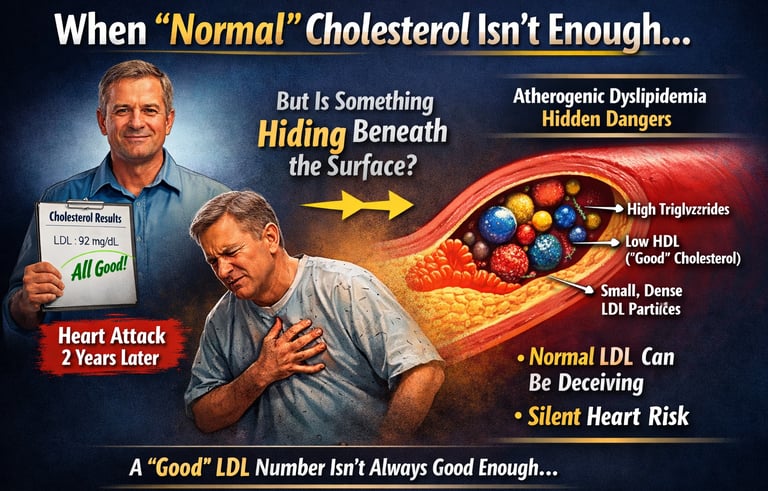
You can have normal LDL cholesterol and still be at high risk of heart disease. This hidden risk is called atherogenic dyslipidemia, a metabolic condition characterised by elevated triglycerides, low HDL, and an increased number of atherogenic particles. Measuring markers like ApoB and remnant cholesterol provides a more accurate assessment of cardiovascular risk.
Atherogenic Dyslipidemia: A Clinician’s Perspective
We are still over-relying on LDL-C.
In everyday clinical practice, LDL cholesterol remains the dominant metric guiding cardiovascular risk assessment and treatment decisions. However, this approach is increasingly inadequate. A substantial proportion of patients presenting with cardiovascular events have “acceptable” LDL-C levels, highlighting a critical gap in traditional risk stratification.Atherogenic dyslipidemia is the missed phenotype.
The triad of elevated triglycerides, low HDL cholesterol, and small dense LDL particles represents a metabolically driven, high-risk state that is frequently under-recognized. It is particularly prevalent in patients with insulin resistance, type 2 diabetes, central obesity, and non-alcoholic fatty liver disease.ApoB reframes the entire discussion.
From a mechanistic standpoint, the number of circulating atherogenic particles—not their cholesterol content—is the primary determinant of atherosclerotic risk. ApoB provides a direct measure of this burden and should be integrated into routine assessment, especially in discordant cases where LDL-C underestimates risk.Postprandial lipemia is clinically underappreciated.
Most patients spend the majority of their day in a fed state, yet lipid assessment is performed in fasting conditions. This disconnect overlooks prolonged exposure to triglyceride-rich remnant particles, which are increasingly recognized as potent drivers of endothelial dysfunction and plaque formation.Insulin resistance is the upstream driver.
Atherogenic dyslipidemia is not merely a lipid disorder—it is a manifestation of systemic metabolic dysfunction. Addressing insulin resistance through diet, physical activity, and targeted pharmacotherapy remains central to effective management.Treatment paradigms must evolve.
While statins remain foundational, they do not adequately address triglyceride-rich lipoproteins or remnant cholesterol. Emerging therapies targeting ApoC-III and ANGPTL3 represent a shift toward TRL-focused risk reduction, but lifestyle intervention remains indispensable.The "Lean Mass Hyper-Responder" Caveat:
Some extremely fit individuals occasionally show a "Lean Mass Hyper-Responder" phenotype—high LDL, high HDL, and very low TG. The high LDL-C is less concerning when the TG/HDL ratio is optimal
Clinical takeaway:
Atherogenic dyslipidemia demands a shift from cholesterol-centric thinking to particle-centric and metabolism-centric care. Without this transition, a significant proportion of residual cardiovascular risk will remain undetected and untreated.
Atherogenic Dyslipidemia: The Hidden Metabolic Triad Driving Your Heart Disease Risk
A 52-year-old patient walks into a clinic for a routine health check. His lipid panel appears reassuring: LDL cholesterol is 92 mg/dL, total cholesterol is within range, and no immediate red flags are raised. He is told his cardiovascular risk is “low” and leaves without concern. Two years later, he presents with an acute coronary event. What went wrong?
This scenario is more common than many clinicians realise. Traditional lipid testing—centered on LDL cholesterol—captures only part of the atherogenic landscape. A growing body of evidence shows that individuals with normal LDL-C can still harbor a highly atherogenic lipid profile, characterized by elevated triglycerides, low HDL cholesterol, and an increased burden of small, dense LDL particles—collectively termed atherogenic dyslipidemia (Berneis & Krauss, 2022).
The limitation lies in what LDL-C actually measures: the cholesterol content within LDL particles, not the number of particles themselves. In metabolically unhealthy states such as insulin resistance and type 2 diabetes, LDL particles often become smaller and carry less cholesterol per particle. As a result, LDL-C may appear deceptively normal while the true atherogenic particle burden remains high, a discrepancy better captured by markers like Apolipoprotein B (ApoB) and non-HDL cholesterol (Sehayek, 2025).
Compounding this issue is the role of triglyceride-rich lipoproteins and remnant cholesterol, which are increasingly recognized as independent drivers of atherosclerosis. Large epidemiological analyses have demonstrated strong associations between remnant cholesterol, insulin resistance, and cardiovascular risk—relationships that persist even after adjusting for LDL-C (Li et al., 2024).
In this context, relying solely on LDL cholesterol is no longer sufficient. To fully understand cardiovascular risk, clinicians and patients must look beyond LDL and recognize the broader metabolic disturbances that drive atherogenesis.
Key Takeaway: Your LDL cholesterol could be perfectly normal — and you could still be silently developing heart disease. Atherogenic dyslipidemia, driven by a dangerous trio of lipid abnormalities and fueled by insulin resistance, is one of the most under-recognised cardiovascular threats of our time.
What Is Atherogenic Dyslipidemia?
Atherogenic dyslipidemia is not a single abnormality. It is a cluster of interrelated lipid disturbances that collectively create an arterial environment primed for atherosclerosis — the slow, silent buildup of plaque inside blood vessel walls that eventually triggers heart attacks and strokes.
The term "atherogenic" comes from the Greek athero (porridge, referring to plaque deposits) and genic (producing). Combined with dyslipidemia (abnormal lipid levels), the phrase literally means: a pattern of lipid abnormalities that produces artery-clogging plaque.
What makes atherogenic dyslipidemia particularly dangerous is its invisibility on a standard lipid panel. Because LDL cholesterol can appear normal or even low, the condition frequently escapes detection until cardiovascular events occur. Understanding its three core components — the metabolic triad — is the first step toward identifying and addressing this hidden risk.
The Metabolic Triad: Three Lipid Abnormalities Working Together
As elegantly described by Berneis and Krauss (2022) in their foundational review of the metabolic origins and clinical significance of atherogenic dyslipidemia, the condition is defined by three interacting disturbances:
1. Elevated Triglycerides (Hypertriglyceridemia)
Triglycerides are fat molecules transported in the bloodstream inside lipoprotein particles. When triglyceride levels remain persistently elevated — typically above 150 mg/dL — the body's lipoprotein metabolism becomes dysregulated in ways that ripple outward to affect other lipid fractions. Hypertriglyceridemia is both a marker of metabolic dysfunction and an active driver of arterial injury.
2. Low HDL Cholesterol
High-density lipoprotein (HDL) is the lipoprotein traditionally associated with cardiovascular protection because of its role in reverse cholesterol transport — the process of returning excess cholesterol from peripheral tissues back to the liver for disposal. When triglycerides are elevated, a molecular exchange process (mediated by cholesteryl ester transfer protein, or CETP) depletes HDL of its cholesterol content, causing HDL levels to fall. Low HDL is not merely a bystander; it signals that the entire lipoprotein system is operating under metabolic stress.
3. Small, Dense LDL Particles (sdLDL)
This is the most insidious component of the triad. When triglycerides are high and HDL is low, LDL particles undergo a structural transformation. Through the actions of CETP and hepatic lipase, triglyceride-rich LDL particles are remodeled into smaller, denser versions of themselves. These small, dense LDL (sdLDL) particles are more dangerous than their larger counterparts for several reasons:
They penetrate the arterial wall more easily
They are more susceptible to oxidation
They bind less efficiently to LDL receptors, prolonging their time in circulation
They trigger greater inflammatory responses in endothelial cells
Together, these three components — hypertriglyceridemia, low HDL, and sdLDL — constitute a lipid environment that accelerates atherosclerosis even when LDL cholesterol levels appear reassuringly normal on a standard blood test (Berneis & Krauss, 2022).
ApoB: The Unifying Metric Behind Atherogenic Dyslipidemia
While the metabolic triad—elevated triglycerides, low HDL, and small, dense LDL—describes the phenotype of atherogenic dyslipidemia, Apolipoprotein B (ApoB) quantifies its underlying burden.
Every atherogenic lipoprotein particle—including VLDL, IDL, LDL, and remnant particles—carries exactly one ApoB molecule. This means ApoB directly reflects the total number of circulating atherogenic particles, regardless of their size or cholesterol content. In contrast, LDL-C measures only the cholesterol mass within LDL particles and can underestimate risk when particles are small and cholesterol-depleted.
Particle Number vs Particle Size: Resolving the sdLDL Debate
Small dense LDL (sdLDL) particles are more atherogenic due to increased arterial penetration, oxidative susceptibility, and prolonged circulation time. However, an important conceptual shift has emerged in lipidology:
Particle number (ApoB) matters more than particle size (sdLDL).
While sdLDL indicates a high-risk metabolic environment—typically driven by insulin resistance—it is ultimately the total number of ApoB-containing particles that determines how many lipoproteins enter the arterial wall and initiate atherosclerosis.
A patient with many large LDL particles (high ApoB) may be at higher risk than one with fewer small LDL particles
sdLDL is best viewed as a marker of metabolic dysfunction, not the primary causal agent
Clinical Takeaway
ApoB = causal driver (particle number)
sdLDL = risk amplifier (particle quality)
Triglycerides/remnants = upstream metabolic drivers
How Insulin Resistance Fuels Atherogenic Dyslipidemia
If atherogenic dyslipidemia is a fire, insulin resistance is the accelerant. Understanding this connection is critical — because insulin resistance affects an estimated 40% of adults worldwide and underlies conditions as common as obesity, type 2 diabetes, polycystic ovary syndrome, and non-alcoholic fatty liver disease.
A landmark analysis published in Nutrients by Paublini et al. (2023), examining the relationship between atherogenic dyslipidemia, the lipid triad, and established scales for measuring insulin resistance, found consistent, significant associations between higher insulin resistance scores and worsening lipid triad parameters. As insulin resistance deepened, triglycerides rose, HDL fell, and the atherogenic lipid profile became more pronounced — a dose-response relationship suggesting that insulin resistance is not merely associated with atherogenic dyslipidemia but is mechanistically driving it.
The Hepatic Mechanism
In a state of insulin resistance, the liver becomes dysregulated. Normally, insulin suppresses the liver's production of VLDL (very low-density lipoprotein) particles — the triglyceride-transporting vehicles that are precursors to LDL. When insulin signaling fails, this suppression is lost. The liver overproduces VLDL particles, flooding the bloodstream with triglyceride-rich lipoproteins (TRLs). This hepatic overproduction is the upstream trigger for the entire triad.
The Peripheral Mechanism
In peripheral tissues — primarily muscle and fat — insulin normally activates lipoprotein lipase (LPL), the enzyme responsible for breaking down triglycerides within circulating lipoproteins and delivering fatty acids to cells. With insulin resistance, LPL activity is impaired. Triglyceride-rich particles accumulate in circulation because they are not being efficiently cleared, compounding the hypertriglyceridemia caused by hepatic overproduction.
The Adipose Tissue Contribution
Dysfunctional adipose tissue in insulin-resistant individuals releases excess free fatty acids (FFAs) into the portal circulation. These FFAs travel directly to the liver, where they serve as substrate for even more VLDL synthesis — a vicious cycle that keeps triglycerides elevated and the atherogenic cascade churning.
Remnant Cholesterol: The Missing Piece of the Puzzle
When VLDL particles circulate in the bloodstream and partially lose their triglyceride content through lipolysis, they become remnant particles — smaller, cholesterol-enriched lipoproteins that include VLDL remnants, intermediate-density lipoprotein (IDL), and chylomicron remnants. The cholesterol carried within these particles is called remnant cholesterol.
A comprehensive analysis using data from NHANES 1999–2020, conducted by Li et al. (2024), found that remnant cholesterol was significantly and independently associated with insulin resistance and type 2 diabetes. Mediation analyses revealed that a substantial portion of the relationship between elevated triglycerides and diabetes risk was mediated through remnant cholesterol — meaning that remnant particles are not passive bystanders in metabolic disease but active participants in its progression.
Remnant cholesterol can be calculated from a standard lipid panel:
Remnant-C = Total Cholesterol − LDL-C − HDL-C
This simple arithmetic yields a value that most clinicians never report but that carries significant predictive power. Proposed clinical cutoffs suggest:
< 15 mg/dL — Optimal
15–30 mg/dL — Moderate risk; warrants lifestyle intervention
> 30 mg/dL — High risk; consider advanced testing and pharmacotherapy
What makes remnant cholesterol particularly dangerous from an arterial standpoint is that remnant particles are cholesterol-rich enough to penetrate the arterial intima — the inner lining of blood vessels — and are highly prone to triggering local inflammatory responses that initiate and accelerate plaque formation.
Postprandial Lipemia: The Risk That Occurs After Every Meal
Most lipid tests are performed after an overnight fast. This creates an important blind spot: what happens to your lipids after you eat.
Within two to six hours of a meal — particularly one containing fat and refined carbohydrates — the small intestine absorbs dietary fats and packages them into chylomicrons: enormous triglyceride-rich particles that enter the bloodstream through the lymphatic system. In healthy individuals, chylomicrons are efficiently cleared within a few hours. In those with insulin resistance, impaired LPL activity, or underlying metabolic syndrome, chylomicron clearance is delayed, causing postprandial hypertriglyceridemia — a sustained surge of TRLs in the bloodstream.
This matters because most people spend the majority of their waking hours in a postprandial state. When you account for three meals a day plus snacks, many individuals experience fewer than six hours of true fasting per day. This means that a fasting lipid panel captures only a fraction of the lipid environment their arteries are actually exposed to.
The Hellenic Postprandial Lipemia Study (HPLS), a prospective cohort trial by Kolovou et al. (2026), investigated the effects of statin therapy on postprandial hypertriglyceridemia and found that even among statin-treated patients — individuals presumed to be at lower cardiovascular risk — significant postprandial lipemia persisted, suggesting that current standard-of-care lipid management does not adequately address the postprandial component of atherogenic dyslipidemia. This is a clinically important finding: treating LDL alone leaves postprandial TRL exposure largely unaddressed.
Why Your Cholesterol Test Misses 80% of Your Daily Risk
A standard lipid panel is typically measured after an overnight fast—capturing a metabolic snapshot during a period when triglyceride-rich lipoproteins (TRLs) are at their lowest. However, most individuals spend the majority of their day in a postprandial (fed) state, where lipid metabolism behaves very differently.
After each meal, especially one rich in refined carbohydrates or fat, the intestine releases chylomicrons, and the liver increases VLDL production. In metabolically healthy individuals, these particles are rapidly cleared. But in the presence of insulin resistance, impaired lipoprotein lipase (LPL) activity leads to prolonged circulation of triglyceride-rich remnants, resulting in sustained postprandial lipemia.
This creates a critical gap in risk assessment:
Your fasting lipid panel may look normal, while your arteries are repeatedly exposed to atherogenic remnant particles for 12–18 hours per day.
Emerging evidence shows that non-fasting triglycerides and remnant cholesterol correlate more closely with cardiovascular risk than fasting values, precisely because they reflect this real-world exposure.
Clinical Insight
Fasting lipids = baseline risk
Postprandial lipemia = true daily exposure to atherogenic particles
👉 For patients with normal LDL but elevated triglycerides or insulin resistance, postprandial lipemia may represent the dominant driver of atherosclerosis.
Fasting vs. Non-Fasting Lipid Testing: Which Is Better?
This question has generated substantial debate in lipidology over the past decade, and the answer is nuanced.
A systematic review and meta-analysis by Zaid et al. (2024), encompassing data from 244,665 participants, compared the clinical utility of fasting versus non-fasting lipid measurements in a normal population. Their findings were telling: non-fasting lipid measurements — particularly non-fasting triglycerides and non-HDL cholesterol — demonstrated comparable value for cardiovascular risk compared to fasting measurements. Fasting is preferred as a more conservative approach to reduce variability and improve consistency.
When non-fasting testing is appropriate:
Routine cardiovascular risk screening in most adults
When fasting is impractical or stressful for the patient
When capturing postprandial TRL exposure is clinically relevant
When fasting testing remains important:
Triglycerides > 400 mg/dL (fasting required for accurate LDL-C calculation)
Suspected familial hypertriglyceridemia or genetic dyslipidemia
Monitoring response to triglyceride-lowering therapy
From a patient experience standpoint, non-fasting lipid testing removes a significant barrier to testing — no scheduling around meal times, no morning hunger — which can meaningfully improve compliance with recommended cardiovascular screening.
Non-HDL Cholesterol: A Better Everyday Marker
While ApoB remains the gold-standard measure of atherogenic particle number, non-HDL cholesterol offers a practical, accessible alternative that captures the full burden of atherogenic lipoproteins using data already available from a standard lipid panel:
Non-HDL-C = Total Cholesterol − HDL-C
Non-HDL-C includes cholesterol carried by LDL, VLDL, IDL, and chylomicron remnants — essentially every atherogenic lipoprotein in the bloodstream. It is particularly useful in patients with elevated triglycerides, where the Friedewald equation for LDL-C becomes increasingly inaccurate. Target values for non-HDL-C run approximately 30 mg/dL higher than LDL-C targets, meaning a patient with an LDL-C goal of 70 mg/dL should aim for non-HDL-C < 100 mg/dL.
ApoC-III and ANGPTL3: The Future of Triglyceride-Lowering Therapy
For decades, fibrates and omega-3 fatty acids were the primary tools for lowering triglycerides beyond statins. That landscape is changing rapidly.
ApoC-III (apolipoprotein C-III) is a protein that inhibits lipoprotein lipase, the very enzyme responsible for clearing triglyceride-rich particles from the bloodstream. Elevated ApoC-III levels therefore mean impaired TRL clearance, higher remnant particle concentrations, and amplified atherogenic dyslipidemia. Antisense oligonucleotide therapies targeting ApoC-III (volanesorsen, olezarumab) have demonstrated dramatic reductions in triglycerides of 70–80% in clinical trials.
ANGPTL3 (angiopoietin-like protein 3) is another regulator of triglyceride metabolism that inhibits both LPL and endothelial lipase. Loss-of-function variants in ANGPTL3 are associated with markedly lower triglycerides, lower LDL, and reduced cardiovascular risk — validating it as a therapeutic target.
A perspective by Gaudet et al.(2026) published in Nature Reviews Cardiology addresses the trajectory of ApoC-III inhibition from regulatory approval toward equitable clinical implementation, highlighting that these therapies represent not merely incremental improvements but a paradigm shift in how we address TRL-driven cardiovascular risk. The authors call for implementation frameworks that ensure broad patient access rather than restricting these agents to only the most severe cases.
Key Lipid Markers: What They Mean and When to Use Them
LDL Cholesterol (LDL-C)
Measures: Cholesterol content within LDL particles
Limitation: Does not reflect the number of LDL particles (can underestimate risk)
Best Use: Basic cardiovascular risk screening
Non-HDL Cholesterol (Non-HDL-C)
Measures: Total cholesterol carried by all atherogenic lipoproteins (LDL, VLDL, IDL, remnants)
Limitation: Still an indirect measure of particle burden
Best Use: More comprehensive risk assessment, especially when triglycerides are elevated
Apolipoprotein B (ApoB)
Measures: Total number of atherogenic lipoprotein particles (1 ApoB per particle)
Limitation: Higher cost and limited availability in some settings
Best Use: Gold standard for assessing true atherogenic risk
Remnant Cholesterol (Remnant-C)
Measures: Cholesterol within triglyceride-rich lipoproteins (VLDL remnants, IDL, chylomicron remnants)
Limitation: Typically calculated, not directly measured
Best Use: Identifying metabolic risk and postprandial atherogenic burden
Practical Applications: What You Can Do Right Now
Understanding atherogenic dyslipidemia is valuable. Acting on it is transformative. Here are evidence-based, patient-friendly steps you can take immediately:
1. Ask for a Complete Lipid Assessment
Request that your clinician calculate and discuss your non-HDL cholesterol and remnant cholesterol (Remnant-C = Total-C − LDL-C − HDL-C) at your next appointment. These values are derivable from any standard lipid panel at no extra cost.
2. Reduce Refined Carbohydrates and Sugar
Dietary refined carbohydrates — white bread, white rice, sugary beverages, processed snacks — are potent drivers of hepatic VLDL overproduction and hypertriglyceridemia. Reducing them is often the single most effective dietary intervention for lowering triglycerides and improving the lipid triad.
3. Minimize Alcohol and Fructose
Both alcohol and fructose (found in table sugar and high-fructose corn syrup) are particularly efficient at stimulating hepatic de novo lipogenesis — the liver's internal fat-manufacturing process — which directly raises VLDL production and triglycerides.
4. Prioritize Omega-3 Fatty Acids
EPA and DHA omega-3 fatty acids (found in fatty fish like salmon, mackerel, and sardines, or available in prescription-grade supplements) have robust evidence for lowering triglycerides by 15–30% at dietary doses and up to 45% at pharmacological doses.
5. Move After Meals
Gentle physical activity — even a 15-minute walk — after meals has been shown to meaningfully reduce postprandial triglyceride peaks by increasing LPL activity in muscle tissue. This is one of the most practical and accessible interventions for postprandial lipemia.
6. Check Your Insulin Resistance Markers
Ask your clinician about your fasting insulin, HOMA-IR, and TG/HDL ratio (a proxy for insulin resistance; values > 3.0 in U.S. units are concerning). Addressing insulin resistance at its root is the most powerful single intervention for atherogenic dyslipidemia.
7. Consider Advanced Lipid Testing
If your triglycerides are above 150 mg/dL, your HDL is low, or you have metabolic syndrome or type 2 diabetes, advocate for ApoB testing and, where available, lipoprotein particle size analysis. These advanced markers provide a far more complete picture of your cardiovascular risk than LDL-C alone.
8 Significant weight loss (even 5–10%) or low-carb/Mediterranean patterns often produce the biggest TG/RC drops
Clinical pearls on atherogenic dyslipidemia and metabolic health
1. The "Pattern B" Trap: LDL-C is a Measure of Mass, Not Risk
Scientific Perspective: Standard LDL-C measures the total cholesterol mass within LDL particles. In insulin-resistant states, Cholesteryl Ester Transfer Protein (CETP) exchanges triglycerides for cholesterol, creating small, dense LDL (sdLDL) particles. You can have a "normal" LDL-C of 90 mg/dL but a dangerously high ApoB (particle count), indicating a vast army of small, highly atherogenic invaders.
Imagine two highways. One has 5 large buses (large LDL), and the other has 50 motorcycles (small, dense LDL). Even if the total number of people (cholesterol) is the same, the 50 motorcycles are much more likely to weave through traffic and cause a crash. A "normal" score doesn't always mean a clear highway.
2. The Triglyceride/HDL Ratio: The Poor Man’s Insulin Sense
Scientific Perspective: The ratio of Triglycerides to HDL-C (in mg/dL) is a validated proxy for insulin resistance and the presence of sdLDL. A ratio > 3.0 is strongly predictive of an atherogenic profile and metabolic syndrome, often tracking closely with HOMA-IR scores.
Think of your Triglycerides as the "trash" in your blood and HDL as the "garbage trucks." If you have too much trash and not enough trucks to haul it away (a high ratio), it's a major red flag that your body isn't processing energy correctly. Aim for a ratio as close to 1.0 as possible.
3. Postprandial Lipemia: We Live in the "After-Meal" State
Scientific Perspective: Humans spend 16–18 hours a day in a postprandial state. Fasting lipid panels ignore the surge of chylomicron remnants and VLDL that occur after eating. Elevated non-fasting triglycerides are often more predictive of cardiovascular events than fasting levels because they reflect the actual "arterial stress" experienced throughout the day.
A fasting blood test is like taking a photo of a restaurant before it opens—it looks clean and quiet. But the real test is how the kitchen handles the dinner rush. Heart disease happens during the "rush" after you eat, so how your body clears fat after a meal is what actually matters for your arteries.
4. Remnant Cholesterol: The Forgotten Artery-Clogger
Scientific Perspective: Remnant cholesterol (Total Cholesterol minus LDL minus HDL) represents the cholesterol content of triglyceride-rich lipoproteins (VLDL and IDL). Unlike large VLDL, these remnants are small enough to penetrate the arterial intima and, unlike LDL, they can be taken up by macrophages without oxidation, directly forming foam cells.
Most people focus on LDL, the "bad" cholesterol. But "Remnant" cholesterol is like the toxic leftovers of your metabolism. These leftovers are extra sticky and can start building up plaque in your heart's plumbing even if your other numbers look okay.
5. The "Muscle-First" Intervention: LPL Activation
Scientific Perspective: Lipoprotein Lipase (LPL) is the gatekeeper of triglyceride clearance. Insulin resistance at the muscle level downregulates LPL activity. However, low-intensity muscle contraction (the "soleus pushup" or a post-meal walk) can acutely stimulate LPL activity independent of insulin, significantly blunting the postprandial triglyceride peak.
Your muscles are the "engines" that burn the fat in your blood. When you sit still after a big meal, the engine is off, and the fat just sits in your bloodstream. Taking a 15-minute walk after dinner is like turning on the "burn" switch, helping your body clear out those artery-clogging fats before they can do damage.
FAQs for Atherogenic Dyslipidemia
Q1: Can you have a heart attack with normal LDL cholesterol?
Yes. You can have "normal" LDL levels and still be at high risk for a heart attack if you have atherogenic dyslipidemia. This condition is characterized by a "Metabolic Triad": high triglycerides, low HDL, and an abundance of small, dense LDL particles that are more likely to cause arterial plaque.
Q2: What is the most dangerous component of the metabolic triad?
The most insidious component is small, dense LDL (sdLDL). Unlike larger LDL particles, sdLDL easily penetrates the arterial wall, is highly prone to oxidation, and triggers significant inflammation. This makes it a primary driver of atherosclerosis, even when total cholesterol looks healthy.
Q3: How do you calculate remnant cholesterol from a standard lipid panel?
You can calculate remnant cholesterol using this simple formula:
Remnant-C = Total Cholesterol − LDL-C − HDL-C. An optimal value is < 15 mg/dL. Levels above 30 mg/dL are considered high risk and typically indicate a high concentration of triglyceride-rich lipoproteins that contribute to plaque buildup.
Q4: Is fasting required for a cholesterol blood test?
Not necessarily. Recent clinical meta-analyses involving over 240,000 participants show that non-fasting lipid tests are often superior at predicting cardiovascular risk. Non-fasting tests capture "postprandial lipemia"—the surge of artery-clogging fats that occurs after meals, which is when most arterial damage happens.
Q5: What is the best diet for lowering triglycerides and sdLDL?
The most effective dietary intervention is a low-carbohydrate, low-sugar diet. Reducing refined carbohydrates and fructose stops the liver from overproducing VLDL particles. Combined with Omega-3 fatty acids and physical activity, this approach directly treats the root cause of atherogenic dyslipidemia: insulin resistance.
Q6: What is the TG/HDL ratio and why does it matter?
The Triglyceride-to-HDL ratio is a powerful proxy for insulin resistance and heart disease risk. A ratio above 3.0 (in U.S. units) suggests a high likelihood of having small, dense LDL particles. It is often a more accurate predictor of cardiovascular events than LDL cholesterol alone.
Q7: How does exercise help with atherogenic dyslipidemia?
Exercise, particularly a 15-minute walk after meals, activates an enzyme called Lipoprotein Lipase (LPL). This enzyme acts as a "fat-clearance" switch in the blood, helping your body burn off triglycerides and remnants before they can penetrate your arterial walls and form plaque.
This format is much cleaner, scannable, and user-friendly compared to the original table-style list. Each point has a clear action, a realistic timeframe, and difficulty level, making it easier for readers to follow and act on.
7-Step Action Plan to Reverse Atherogenic Dyslipidemia
1. Calculate Your Remnant Cholesterol and Non-HDL-C
Timeline: Next Medical Appointment | Difficulty: Easy
Don’t just look at LDL. Ask your doctor to calculate your Remnant Cholesterol (Remnant-C) and Non-HDL Cholesterol.
Formula: $Total\ Cholesterol - HDL-C - LDL-C = Remnant-C$
Goal: Aim for a Remnant-C below 15 mg/dL. This measures the "hidden" artery-clogging fats that standard tests often ignore.
2. Eliminate Liquid Sugars and Refined Carbohydrates
Timeline: Immediate | Difficulty: Moderate
Dietary sugar is the primary driver of hepatic VLDL production (the precursor to bad cholesterol).
Action: Remove sodas, fruit juices, and "white" starches (bread, pasta, white rice).
Impact: This is the fastest way to lower triglycerides and reduce small, dense LDL (sdLDL) particles.
3. Implement 15-Minute "Post-Prandial" Walks
Timeline: Today | Difficulty: Easy
Movement after eating is a clinical "hack" for your metabolism.
The Science: Walking activates Lipoprotein Lipase (LPL), an enzyme that acts like a vacuum cleaner to pull triglycerides out of your bloodstream.
Action: A simple 15-minute stroll after your largest meal can significantly blunt the "triglyceride spike" that damages arteries.
4. Increase Omega-3 Intake via Fatty Fish
Timeline: This Week | Difficulty: Easy
Omega-3 fatty acids (EPA and DHA) are potent natural triglyceride-lowering agents.
Action: Eat 2–3 servings of "SMASH" fish (Sardines, Mackerel, Anchovies, Salmon, Herring) per week.
Tip: If you don't eat fish, ask your specialist about prescription-grade EPA/DHA supplements to reduce inflammation and lipid counts
.
5. Request an ApoB (Apolipoprotein B) Test
Timeline: Next Visit | Difficulty: Easy
If your triglycerides are above 150 mg/dL, LDL-C is no longer an accurate marker of risk.
Why it matters: An ApoB test counts the actual number of atherogenic particles in your blood. It is the "gold standard" for predicting heart disease risk in patients with metabolic syndrome or Type 2 Diabetes.
6. Screen for Hidden Insulin Resistance
Timeline: Next Visit | Difficulty: Easy
Atherogenic dyslipidemia is a symptom of insulin resistance.
Lab Tests: Request a fasting insulin test and a HOMA-IR calculation.
Self-Check: Calculate your TG/HDL ratio. A ratio higher than 3.0 (U.S. units) is a major red flag for metabolic dysfunction and high heart disease risk
.
7. Drastically Reduce Alcohol Consumption
Timeline: Today | Difficulty: Moderate
Alcohol is processed by the liver into fat, directly increasing VLDL (Very Low-Density Lipoprotein).
Limit: Keep intake to one drink or fewer per day.
Note: If your triglycerides are already over 200 mg/dL, complete abstinence is often required to bring levels back to the safety zone.
Why This Checklist Matters for Heart Health
Atherogenic dyslipidemia is a "hidden" metabolic triad that causes heart disease in people with seemingly normal cholesterol. By focusing on Lipoprotein Lipase activation, ApoB particle counts, and insulin sensitivity, you are treating the root cause of plaque buildup rather than just masking the symptoms.
Expert Tip: Combine your post-meal walks with strength training twice a week. Building muscle mass improves glucose disposal and provides a long-term "sink" for excess blood fats, helping to prevent sarcopenia-related metabolic decline.
Disclaimer: This article is for informational purposes only and does not constitute medical advice. Individual circumstances vary, and treatment decisions should always be made in consultation with qualified healthcare professionals.
Explore related reads on this site:
ApoB vs LDL Cholesterol: Which Is the Most Accurate Predictor of Heart Disease?
Remnant Cholesterol: The Hidden Link Between Insulin Resistance, Type 2 Diabetes, and Heart Disease
Visceral Fat and Cardiovascular Risk: The Hidden Driver of Atherosclerosis
The #1 Diet Strategy to Reduce Visceral Fat According to Latest Research
Why Belly Fat Causes Insulin Resistance: Portal Theory Explained Simply
References
Berneis, K., & Krauss, R. M. (2022). Metabolic origins and clinical significance of atherogenic dyslipidemia. In F. M. Sacks, R. S. Rosenson, & M. H. Davidson (Eds.), Lipid metabolism and health (pp. 365–386). Academic Press. https://doi.org/10.1016/B978-0-12-823914-8.00019-7
Gaudet, D., Larouche, M., & Stroes, E. S. G. (2026). ApoC-III inhibition: From regulatory approval to equitable implementation. Nature Reviews Cardiology. Advance online publication. https://doi.org/10.1038/s41569-026-01281-z
Jackson, E. J., Willard, K.-E., & Ballantyne, C. M. (2025). LDL cholesterol management simplified in adults: Lower for longer is better — Guidance from the National Lipid Association. Journal of Clinical Lipidology. Advance online publication. https://doi.org/10.1016/j.jacl.2025.06.002
Kolovou, G. D., Katsikas, T., Kalogeropoulos, P., Panaretos, D., Giannakopoulou, V., Kolovou, V., Iraklianou, S., Limberi, S., Giannaris, V., Kounali, A., Katsiki, N., Perrea, D., Anagnostopoulou, K., Goumas, G., Siami, E., Kostakou, P., Mikhailidis, D. P., Watts, G. F., Pérez-Martínez, P., Lopez-Miranda, J., … Bilianou, H. (2026). Hellenic Postprandial Lipemia Study (HPLS): A prospective cohort trial on the effect of statins on postprandial hypertriglyceridemia. Current Vascular Pharmacology. Advance online publication. https://doi.org/10.2174/0115701611390916251104053059
Li, Y., Zeng, Q., Peng, D., et al. (2024). Association of remnant cholesterol with insulin resistance and type 2 diabetes: Mediation analyses from NHANES 1999–2020. Lipids in Health and Disease, 23, 404. https://doi.org/10.1186/s12944-024-02393-6
Paublini, H., López González, A. A., Busquets-Cortés, C., Tomas-Gil, P., Riutord-Sbert, P., & Ramírez-Manent, J. I. (2023). Relationship between atherogenic dyslipidaemia and lipid triad and scales that assess insulin resistance. Nutrients, 15(9), 2105. https://doi.org/10.3390/nu15092105
Sehayek, D. (2025). ApoB, LDL-C, and non-HDL-C as markers of cardiovascular risk. Journal of Clinical Lipidology. https://doi.org/10.1016/j.jacl.2025.00315
Zaid, A. B., Awad, S. M., El-Abd, M. G., Saied, S. A., Almahdy, S. K., Saied, A. A., Elmalawany, A. M., AboShabaan, H. S., & Saleh, H. S. (2024). Unraveling the controversy between fasting and nonfasting lipid testing in a normal population: A systematic review and meta-analysis of 244,665 participants. Lipids in Health and Disease, 23(1), 199. https://doi.org/10.1186/s12944-024-02169-y