Are Your Protein Meals Too Big? New Science on Leucine, mTOR, and Heart Risk (2026)

Can high-protein diets harm heart health? Discover the 2026 science on leucine, mTOR, muscle growth, and cardiovascular risk—plus safe protein intake strategies.

NUTRITION

Dr. T.S. Didwal, M.D.(Internal Medicine)

3/24/202620 min read

Leucine, mTOR, and Cardiovascular Risk: Rethinking the ‘More Protein’ Paradigm in 2026

Optimal protein intake for muscle growth is 20–30 g per meal, providing about 2–3 g of leucine to activate mTORC1. Consuming more does not increase muscle protein synthesis and may overstimulate non-muscle pathways. Distributing protein across 3–4 meals daily maximizes anabolic response and supports overall metabolic health.

Leucine has long been regarded as the metabolic cornerstone of muscle anabolism—a key amino acid that activates the mechanistic target of rapamycin complex 1 (mTORC1) and drives muscle protein synthesis. This principle underpins modern high-protein dietary strategies, from whey supplementation to protein-forward meal plans designed to optimize hypertrophy, metabolic health, and aging outcomes. Yet, as nutritional science evolves, a more nuanced picture is emerging—one that challenges the simplistic “more is better” paradigm and reframes leucine as a context-dependent regulator rather than a universally beneficial signal.

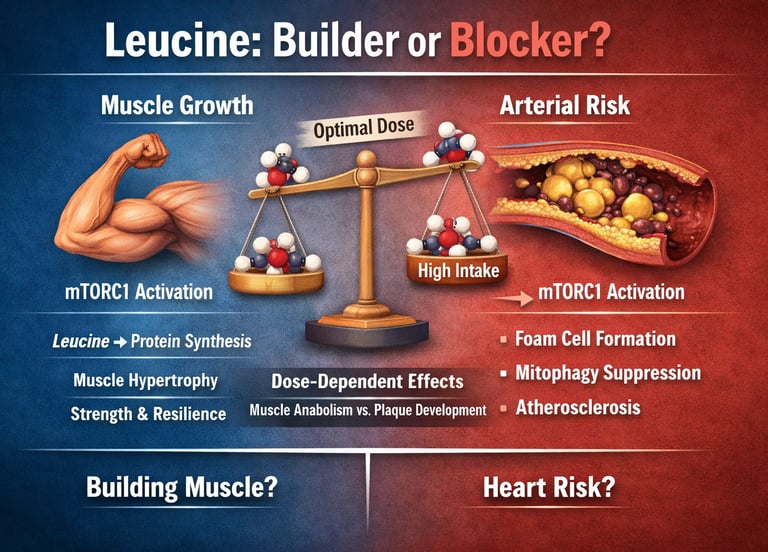
A growing body of literature across molecular biology, clinical nutrition, and exercise physiology suggests that the effects of leucine are highly dependent on dose, timing, and tissue-specific signaling. In skeletal muscle, leucine-mediated activation of mTORC1 remains a critical driver of hypertrophy and metabolic resilience, particularly when paired with resistance training (Lin et al., 2026). However, evidence from mechanistic and translational studies indicates that the same signaling pathway, when activated in non-muscle tissues such as macrophages, may influence pathways linked to inflammation and cellular stress responses (Zhang et al., 2024).

At the same time, systematic reviews of randomized controlled trials demonstrate that once a physiological leucine threshold (~2–3 g per meal) is achieved, additional leucine does not further enhance muscle growth or strength in already protein-sufficient individuals (Rivera-Bermúdez et al., 2025). Complementing this, emerging insights into lysosomal regulation of mTORC1 highlight that nutrient signaling is tightly gated by cellular conditions such as energy status, phosphoinositide turnover, and recovery physiology—including sleep (Picot et al., 2026). Meanwhile, applied exercise studies show that strategic, moderate leucine dosing—such as during endurance activity—can preserve muscle function without excessive systemic exposure (Liang et al., 2024).

Collectively, these findings signal a paradigm shift: the question is no longer how to maximize leucine intake, but how to optimize its physiological context.

What is the safest way to consume protein for muscle growth?

  • Consume 20–30 g of protein per meal

  • Distribute intake across 3–4 meals daily

  • Avoid very large single meals (>40–50 g protein)

  • Combine protein intake with resistance training

Clinical Pearls: The "Precision Protein" Era

  1. The "Anabolic Threshold" (Target Zone 2)

    • Scientific: In older adults, anabolic resistance raises the per-meal leucine requirement to approximately 3–4g to reliably trigger the mTORC1 pathway. For younger adults, this threshold is slightly lower at 2–3g.

    • Think of your muscle-building signal as a light switch that needs a certain amount of pressure to flip "on." If you eat too little protein, the switch never moves. You need roughly 25–30g of high-quality protein per meal to provide enough "pressure" to tell your body to build muscle.

  2. The "Macrophage Overlap" (Avoiding Zone 3)

    • Scientific: While skeletal muscle mTORC1 promotes hypertrophy, hyperactivation of the same pathway in macrophages suppresses mitophagy and fuels foam cell formation—the building blocks of arterial plaque. This risk significantly increases when protein exceeds ~25g per bolus in a high-leucine format.

    • Your body uses the same signal to build muscle and, unfortunately, to drive artery-clogging inflammation. The secret is the dose. Staying in the "Goldilocks Zone" (20–30g of protein) builds muscle without over-activating the immune cells that cause heart disease.

  3. The "Lysosomal Gatekeeper" (The Sleep-Muscle Connection)

    • Scientific: The mTORC1 complex must be recruited to the lysosomal surface to function, a process gated by phosphoinositide (PI) lipid turnover. Sleep deprivation disrupts the nocturnal autophagy required for lysosomal "readiness," effectively stalling protein synthesis regardless of leucine intake.

    • Leucine is the "key" to muscle growth, but the Lysosome is the "lock." If you don't get 7–9 hours of sleep, your cellular "locks" get jammed with debris. Without sleep, that expensive protein shake has nowhere to plug in and start working.

  4. The "Pulsatile Advantage" (Distribution Over Dose)

    • Scientific: Muscle protein synthesis (MPS) is a refractory process; once the signal is saturated, adding more leucine provides zero additional benefit (Rivera-Bermúdez et al., 2025). Strategic distribution—3 to 4 "pulses" per day—maintains a higher 24-hour anabolic state than one large "mega-dose."

    • Your muscles can only process so much "growth signal" at once. Eating 60g of protein at dinner is like trying to fill a cup with a firehose—most of it splashes out and goes to waste. It is much more effective to have three moderate-sized protein meals spread throughout the day.

  5. The "Intra-Workout Buffer" (Zone 2 Endurance)

    • Scientific: During prolonged endurance exercise (>60 min), BCAA supplementation at a 4:1:1 ratio (1–2g leucine/hr) prevents the decline of lower-limb strength and reduces markers of muscle damage (Liang et al., 2024) without exceeding the atherogenic threshold.

    • If you are exercising for over an hour, your body starts to look at its own muscle as fuel. Sipping a small amount of leucine during your workout acts as a "buffer," protecting your hard-earned muscle from being broken down, all while staying well within the safe zone for heart health.

What Is Leucine and Why Does It Matter?

Leucine is an essential amino acid — your body cannot make it, so you must get it from food. It is one of three branched-chain amino acids (BCAAs), alongside isoleucine and valine. It is found in high amounts in:

  • Whey protein (~11–12% leucine content per gram of protein)

  • Chicken, beef, and fish (~8–9%)

  • Eggs and dairy (~8–9%)

  • Soy protein isolate (~8%)

  • Most other plant proteins (~5–7%) — lower, which is why plant-based athletes need to plan more carefully

What makes leucine special is that it does not just supply building material for muscle — it actively signals your cells to start building. It activates a protein complex called mTORC1 (mechanistic target of rapamycin complex 1), which is essentially the body's anabolic ON switch.

What Is mTOR and How Does It Work?

mTORC1 is a master regulator inside your cells. Think of it as a foreman who looks at available supplies (amino acids, energy, hormones) and decides whether to start construction (build protein) or shut everything down and conserve resources.

When leucine levels rise — for example, after you eat a protein-rich meal — mTORC1 activates a cascade that results in:

  • Increased ribosomal activity (your cells' protein-building machinery speeds up)

  • Greater production of new muscle proteins

  • Reduced muscle protein breakdown

  • Net muscle growth when combined with resistance training

The critical and underappreciated point is this: mTORC1 responds to leucine the same way in every cell. It does not know whether it is inside a muscle fibre or inside a macrophage in your artery wall. The consequences, however, are very different depending on which cell it is in — and that is exactly what the 2024 research uncovered.

What Six Studies Tell Us

Study 1 — Lin et al.: Muscle Metabolism in Health and Disease

This was a large review of the science of skeletal muscle — how it grows, how it wastes, and what interventions work. The authors looked at everything from amino acid supplementation to exercise protocols to drug therapies.

  • Leucine works as a signal, not just a building block — that distinction is important

  • mTORC1 integrates both protein intake and exercise signals — neither one alone produces the full benefit

  • Resistance exercise makes your muscles far more sensitive to leucine's anabolic signal

  • Conditions like sarcopenia (muscle loss in ageing) and cancer cachexia blunt the leucine response — these populations may genuinely need higher doses or supplementation

  • For healthy, active people, the combination of adequate dietary protein plus resistance training is the evidence-supported foundation

Key Takeaway: Exercise and leucine work together, not separately. Neither maximises muscle growth without the other. This is why protein timing around workouts matters, and why leucine supplements alone — without training — are largely ineffective.

Study 2 — Picot et al.: Your Lysosomes Are the Real Gatekeepers

This study found something surprising: the anabolic response to leucine depends on the health of your lysosomes — the small organelles inside your cells often described as the cell's "recycling centres." Turns out they are also where mTORC1 activation actually happens.

  • Leucine must be sensed at the lysosomal membrane before mTORC1 can be activated

  • If lysosomal function is impaired — by ageing, sleep deprivation, or severe caloric restriction — mTORC1 cannot be properly activated even if leucine intake is adequate

  • Lysosomal health depends on a process called phosphoinositide (PI) lipid turnover — when this is disrupted, the anabolic gate stays closed

  • Good quality sleep restores lysosomal clearance and keeps this gate functioning properly

  • Chronic extreme dieting (severe caloric restriction) damages this system, which partly explains why crash dieters lose more muscle than expected even when eating protein

Key Takeaway: Sleep is not optional for muscle growth — it is mechanistically required. Poor sleep impairs the lysosomal function that leucine depends on to activate mTOR. You can eat perfect protein and still blunt your anabolic response if you are chronically sleep-deprived or aggressively restricting calories.

Study 3 — Liang et al.: BCAAs Help During Long Runs

This was a proper randomised trial where runners completing a 21 km run either consumed a BCAA-containing sports drink or a control drink during the run. The researchers measured muscle damage, strength, and hydration markers before and after.

  • The BCAA group showed significantly lower creatine kinase levels after the run — creatine kinase is a blood marker of muscle damage

  • Lower-limb strength was better preserved in the BCAA group

  • Hydration was also improved in the BCAA group

  • The benefit was seen during exercise itself — not just in post-workout recovery

  • This is relevant for anyone doing sessions longer than 60–90 minutes, including runners, cyclists, and long training sessions

Key Takeaway: For endurance exercise lasting over an hour, sipping a BCAA drink during the session (not just after) reduces muscle damage and preserves strength. The typical recommendation of "protein after the workout only" needs updating for endurance athletes.

Study 4 — Zhang Y. et al.: Meal Frequency Matters for mTOR

This molecular study examined how leucine dose and meal frequency affect the downstream targets of mTORC1 — specifically two proteins called S6K1 and 4E-BP1 that control how fast ribosomes build new proteins. The researchers also looked at how leucine-driven mTOR activity interacts with autophagy (cellular self-cleaning).

  • Each protein meal creates an independent mTOR "pulse" — activation rises, peaks, then naturally declines as amino acids are cleared

  • Spreading protein across 3–4 meals generates more sustained mTOR signalling over 24 hours than eating the same total protein in 1–2 large meals

  • Constantly elevated mTOR (from too-frequent or too-large protein doses) suppresses autophagy — the body's cellular maintenance process

  • The sweet spot is pulsatile activation — regular peaks followed by recovery periods, which is what 3–4 evenly spaced protein meals achieve

  • Single large protein doses beyond the activation threshold produce no additional S6K1 phosphorylation — the signal is already saturated

Key Takeaway: Three to four moderate-protein meals spread throughout the day outperform one or two very large meals for sustained muscle anabolic signalling. This is one of the most actionable and underused findings in sports nutrition.

Study 5 — Zhang X., Kapoor, Jeong et al.: Too Much Protein Per Meal May Harm Your Arteries

This is the study that most people in the fitness world have not heard about yet, and it deserves careful attention. A team from Washington University School of Medicine conducted graded protein feeding experiments in human participants, measuring plasma amino acids and the response of blood monocytes (a type of immune cell). They also ran mouse atherosclerosis experiments using diets that reflected real-world protein intake levels.

Here is what they found, in plain language:

  • Leucine is the primary trigger of mTOR activation in macrophages — the immune cells that patrol the inside of your artery walls

  • When you eat more than roughly 25 grams of protein in a single meal, leucine levels in the blood rise high enough to activate mTOR in these macrophages

  • Activating mTOR in macrophages suppresses a process called mitophagy — the cell's way of removing damaged mitochondria

  • When damaged mitochondria accumulate in macrophages, those cells turn into "foam cells" — the hallmark of atherosclerotic plaque, which is what hardens and narrows arteries

  • In mouse models fed diets providing protein above approximately 22% of total calories, measurable atherosclerosis progression occurred

  • The threshold for this macrophage activation (~25 g protein/meal) sits right in the middle of the range typically recommended for muscle growth

Important context: The atherosclerosis data came primarily from mouse models. The human data showed the macrophage mTOR activation threshold, but did not track long-term cardiovascular outcomes in people. This is a mechanistic caution, not a confirmed clinical risk — but it is significant enough that the researchers published it in one of the world's most rigorous metabolism journals. If you habitually eat 60–80 grams of protein in one sitting, this finding warrants attention.

Key Takeaway: There is a protein dose threshold — around 25 grams per meal — above which the cardiovascular immune system is activated without any additional muscle benefit. The practical implication is straightforward: prefer several moderate protein meals over fewer very large ones. Two scoops of whey plus a chicken breast in one sitting regularly crosses this line.

Study 6 — Rivera-Bermúdez et al. (incl. Alan A. Aragon): Leucine Supplements Don't Help Trained Adults Who Already Eat Well

This was a proper systematic review — the highest level of evidence in nutrition science. The research team, which included renowned sports nutritionist Alan Aragon, searched six major academic databases and identified every randomised controlled trial testing leucine supplementation in trained adults aged 18–40. They found 14 qualifying studies and analysed them together.

  • 13 out of 14 studies found no significant difference in muscle mass, strength, or recovery between the leucine supplement group and the placebo group

  • This was consistent across both short-term acute studies and longer chronic supplementation trials of up to 16 weeks

  • Leucine doses tested ranged from 3 to 13 grams per day — well above what most products suggest

  • The most likely reason supplementation failed: these participants were already hitting the leucine threshold through food. Extra leucine found no gap to fill

  • This does not mean leucine does not work — it means the mechanism only produces benefit when there is a deficit to correct

Key Takeaway: If you are a healthy, trained adult eating adequate protein (roughly 1.6–2.2 g per kg of bodyweight daily), adding a leucine supplement will almost certainly not improve your results. Save your money and focus on distributing your food protein properly. Supplements are most justified in older adults, plant-based athletes, those with low overall protein intake, and people in medical recovery.

The Three Protein Zones Per Meal

Based on all six studies, you can think about your protein intake in terms of three zones. The goal is to land in Zone 2 at every meal.

Zone 1 — Too Little (Under ~15 g protein / under 2 g leucine)

  • Not enough to activate mTORC1 reliably in muscle

  • Muscle protein synthesis remains near resting levels

  • Common in meals with small portions of low-leucine plant protein

  • Fix: add a leucine-rich food source or protein powder to upgrade the meal

Zone 2 — The Sweet Spot (20–30 g protein / 2–3 g leucine) ✓

  • Reliably activates mTORC1 in muscle — maximum anabolic signal

  • Stays mostly below the macrophage mTOR activation threshold identified in the 2024 cardiovascular study

  • Equivalent to: 25–30 g whey protein, 100–120 g chicken breast, 3–4 eggs, 200 g Greek yoghurt, or 150–170 g canned tuna

  • This is the target at every meal, 3–4 times per day

Zone 3 — Too Much (Over ~35–40+ g protein / over 3.5 g leucine) ⚠️

  • No additional muscle protein synthesis benefit over Zone 2

  • Crosses the macrophage mTOR activation threshold — the cardiovascular concern identified by Zhang X. et al. (2024)

  • Examples: two scoops of whey (50 g protein) + a large chicken breast, or a 300 g steak in one sitting

  • Common in bodybuilding culture but not supported by anabolic evidence, and potentially harmful over the long term

What to Actually Do: 7 Practical Steps

  1. Aim for 25–30 g of protein at each meal, not 50–80 g. A standard scoop of whey, a medium chicken breast, or 3–4 eggs each delivers Zone 2 dosing. Two scoops of whey or a massive steak puts you into Zone 3 — no extra benefit, potential cardiovascular cost.

  2. Eat protein 3–4 times per day, spread evenly. Breakfast, lunch, post-workout, and dinner, each containing a Zone 2 protein serving. This gives your muscles 4 separate anabolic pulses throughout the day — far superior to skipping breakfast and eating all your protein in the evening.

  3. Don't skip sleep in the name of gains. Poor sleep directly impairs lysosomal function (Picot et al., 2026), which is the cellular gate that leucine must pass through to activate mTOR. Without adequate sleep, your protein intake is literally less effective at stimulating muscle growth.

  4. If you train for more than 60–90 minutes, sip a BCAA drink during the session. Not after — during. Liang et al. (2024) showed this reduces muscle damage and preserves strength for endurance and long resistance training sessions. A 4:1:1 ratio product with about 5–6 g total BCAAs per hour is appropriate.

  5. Before buying a leucine supplement, check whether you are hitting your protein target through food first. Rivera-Bermúdez et al. (2025) confirmed that supplements provide no meaningful benefit for healthy, trained adults already eating adequate protein. Track your food for one week — most people discover their distribution is poor before their total is low.

  6. If you eat plant-based, plan more carefully. Plant proteins have 5–7% leucine compared to whey's 11–12%. To reach Zone 2, combine sources (rice + pea protein is effective), eat larger portions, or add 1–2 g of leucine powder per meal. Soy protein isolate is the best single plant option.

  7. If you have cardiovascular risk factors, discuss your protein meal sizing with a doctor or dietitian. The threshold finding by Zhang X. et al. (2024) is mechanistically compelling. Those with elevated cholesterol, hypertension, or family history of heart disease have additional reason to avoid habitually large protein meals and to favour distributed moderate portions.

  8. The single most important action: Move from 1–2 large protein meals to 3–4 moderate ones, each containing 25–30 g protein. This one change aligns with the anabolic evidence, the cardiovascular evidence, and the supplement evidence all at once.

Who Actually Benefits From Leucine Supplements?

Based on the combined evidence, leucine supplementation makes the most sense for people in these situations:

  • Adults over 50 with anabolic resistance. Ageing muscles require higher leucine doses (3–4 g per meal rather than 2–3 g) to overcome blunted mTOR sensitivity. Leucine-enriched supplements or protein powders may genuinely help this group.

  • People not hitting the leucine threshold through food. If you eat a low-protein diet (under 1.2 g/kg/day), or skip meals regularly, your muscles are likely not getting the activation signals they need. Fix diet first; supplement if needed.

  • Plant-based athletes who cannot consistently reach Zone 2 through food alone. Leucine powder is inexpensive and solves the leucine-density problem of plant proteins efficiently.

  • People recovering from illness, surgery, or injury. Muscle wasting during illness and recovery creates genuine leucine deficits that supplementation can help address — this is a clinical context, ideally managed with a dietitian.

  • Healthy, trained young adults already eating adequate protein? The evidence says no additional benefit. Save the money. Focus on meal distribution and sleep instead.

Faqs

How much leucine do I need per meal to build muscle?

Approximately 2–3 g of leucine per meal reliably crosses the mTORC1 activation threshold in skeletal muscle — corresponding to roughly 20–30 g of high-quality protein from whey or similar sources. Older adults may need 3–4 g to overcome anabolic resistance. Critically, going beyond this range does not increase muscle protein synthesis in trained adults (Rivera-Bermúdez et al., 2025) but does begin to activate mTOR in macrophages, which carries cardiovascular implications (Zhang X. et al., 2024).

Can leucine or high protein intake increase cardiovascular risk?

The 2024 Nature Metabolism study by Zhang, Kapoor, Jeong et al. identified a threshold: protein meals exceeding approximately 25 g activate mTOR in macrophages, suppressing mitophagy and promoting foam cell formation — a process mechanistically linked to atherosclerotic plaque development. In mouse models, diets providing protein above ~22% of total energy drove measurable atherosclerosis progression. The human data established the macrophage mTOR threshold mechanistically; long-term cardiovascular event data in humans is not yet available from this study. The concern is most relevant for individuals who habitually consume very large protein meals (50–80 g in one sitting) and those with existing cardiovascular risk factors. For most people, distributing protein across 3–4 meals of 25–30 g resolves both the anabolic and cardiovascular equations simultaneously.

If leucine activates mTOR, why don't leucine supplements help trained adults?

Rivera-Bermúdez et al. (2025) reviewed 14 RCTs and found no significant benefit from leucine supplementation on muscle mass, strength, or recovery in well-nourished trained young adults. The explanation: if you already eat sufficient high-quality protein (meeting the 2–3 g leucine threshold at each meal), your mTORC1 is already being activated to its maximum per-meal capacity. Adding a leucine supplement under these conditions is like pressing a button that is already fully pressed. Supplements fill genuine deficits — they cannot amplify signals that are already saturated. This is why auditing your existing dietary leucine intake is always the first step before purchasing any supplement.

What role does the lysosome play in muscle protein synthesis?

Picot et al. (2026) showed the lysosome is the activation platform for mTORC1. The lysosomal surface hosts the RagGTPase–Ragulator scaffold that docks mTORC1 upon leucine detection, but this docking requires intact phosphoinositide (PI) lipid turnover at the membrane. If lysosomal function is compromised — through ageing, sleep deprivation, chronic severe caloric restriction, or certain medications — mTORC1 cannot be fully activated regardless of leucine intake. For athletes, this makes sleep quality and adequate caloric intake prerequisites for leucine to work, not optional extras.

Should I take BCAAs during long runs or endurance training?

Yes, especially for sessions exceeding 60–90 minutes. Liang et al. (2024) found that BCAA supplementation during a 21 km run reduced muscle damage biomarkers, improved hydration status, and preserved lower-limb strength versus controls. A sports drink with a 4:1:1 BCAA ratio providing approximately 1–2 g leucine per hour is a well-supported, practical approach. This dosing stays comfortably within Zone 2 and below the macrophage mTOR activation threshold, so it carries no cardiovascular concern at this level.

Is whey protein still the best post-workout choice?

Yes — but the evidence-optimal serving is 25–30 g (providing ~2.5–3 g leucine), not the 50–60 g "double scoop" approach common among serious lifters. At 25–30 g, whey delivers peak anabolic signalling in muscle while largely remaining below the macrophage activation threshold identified by Zhang X. et al. (2024). Whey's advantages include its ~11–12% leucine density, rapid absorption kinetics, and complete essential amino acid profile. Plant proteins can be equally effective when leucine is matched, and total protein dose is appropriate.

Can I build muscle effectively on a plant-based diet?

Absolutely, with planning. Plant proteins average 6–8% leucine versus whey's ~11–12%, meaning you need either more total protein per meal, complementary combinations (rice + pea is popular and effective), or 1–2 g of added leucine powder to reliably reach Zone 2 at each meal. Soy protein isolate is the most complete plant option (PDCAAS ~1.0) and performs comparably to whey when leucine-matched. The cardiovascular caution from Zhang X. et al. (2024) applies regardless of protein source — the threshold is defined by leucine/protein quantity per meal, not its dietary origin.

How is mTOR activation different in muscle vs. macrophages?

The leucine sensing and mTOR activation cascade is virtually identical in both cell types — Sestrin2, leucyl-tRNA synthetase, and the lysosomal RagGTPase machinery operate the same way in muscle fibres and in macrophages. The critical difference is in the downstream consequence of mTOR activation. In muscle: mTOR → S6K1 → protein synthesis → hypertrophy (desirable). In macrophages: mTOR → mitophagy suppression → dysfunctional mitochondria accumulate → foam cell formation → atherosclerosis (harmful at excess doses). The same molecular switch, fundamentally different biological outcomes depending on which cell type and at what dose. This is precisely why per-meal protein portion size — not just daily protein total — becomes the key health variable.

What is the relationship between leucine, mTOR, and heart health?

Leucine activates the mTORC1 signaling pathway, which promotes muscle protein synthesis in skeletal muscle. However, recent research shows that excess leucine can also activate mTORC1 in macrophages, leading to impaired mitophagy, mitochondrial dysfunction, and foam cell formation—key steps in atherosclerosis (Zhang et al., 2024). Thus, leucine has both anabolic and potentially atherogenic effects depending on dose and cellular context.

Can high protein intake increase cardiovascular risk?

High protein intake is not inherently harmful, but consuming large amounts in a single meal (e.g., >40–50 g) may elevate plasma leucine levels enough to activate mTORC1 in macrophages. According to Zhang X. et al. (2024), this may promote processes linked to plaque formation. Long-term human outcome data is still limited, but the mechanism suggests a potential cardiovascular risk with chronic excessive protein boluses.

How much protein per meal is optimal for muscle and heart health?

Most evidence suggests that 20–30 g of high-quality protein per meal (providing ~2–3 g leucine) maximally stimulates muscle protein synthesis without exceeding the threshold associated with macrophage mTOR activation. Intakes beyond this range do not increase muscle-building benefits but may increase metabolic stress signals.

Why is protein distribution important for health?

Protein distribution across 3–4 meals per day helps:

  • Maximize repeated activation of muscle protein synthesis

  • Avoid excessive leucine spikes in the bloodstream

  • Reduce the risk of overstimulating mTORC1 in non-muscle tissues

This approach aligns both anabolic and cardiovascular physiology.

How to Get the Most From This Content

  • Audit your typical post-workout meal — is it Zone 2 (20–30 g protein) or Zone 3 (>40 g)? Many lifters discover they are in Zone 3 with no additional benefit and potential cardiovascular cost.

  • Track your dietary leucine for one week before purchasing supplements — Rivera-Bermúdez et al. (2025) confirm that most trained adults eating adequate protein already meet the threshold through food alone.

  • Share the Dual Pathway section (muscle vs. macrophage) with anyone recommending mega-protein meals or very high-protein diets — it reframes the conversation from "more is better" to "optimal is better."

  • If you are over 50, the lysosomal gating finding (Picot et al., 2026) combined with anabolic resistance means you may genuinely benefit from leucine-enriched supplements at the right dose — a different conclusion than for younger adults.

  • If you have cardiovascular risk factors (elevated LDL, hypertension, family history of CVD), the Zhang X. et al. (2024) data is especially relevant — discuss your protein intake pattern with your cardiologist or a registered dietitian.

  • Bookmark this page as a reference when reading fitness advice about protein intake — many popular recommendations have not been updated to reflect the 2024–2026 literature reviewed here.

Elite Editorial: Leucine, mTOR & Cardiometabolic Precision

  • The End of “More is Better” Nutrition
    The long-standing paradigm that higher protein—and by extension leucine—intake uniformly enhances health is now being challenged. Contemporary evidence reframes leucine as a precision metabolic signal, where dose, timing, and tissue context determine outcomes rather than total intake alone (Lin et al., 2026).

  • mTORC1: A Double-Edged Molecular Switch
    Leucine-driven activation of mTORC1 remains essential for skeletal muscle hypertrophy, recovery, and metabolic health. However, this same pathway operates ubiquitously across tissues, including immune cells, where its activation may influence inflammatory and cellular stress pathways (Zhang et al., 2024).

  • The Threshold Concept Redefines Protein Intake
    Muscle protein synthesis (MPS) follows a saturable model, with maximal activation achieved at ~2–3 g leucine per meal (~20–30 g high-quality protein). Beyond this threshold, additional intake does not confer further anabolic benefit in protein-replete individuals (Rivera-Bermúdez et al., 2025).

  • Cellular Context Governs Biological Outcome
    Emerging research highlights that mTOR signaling is not solely nutrient-driven but also regulated by intracellular gating mechanisms, particularly at the lysosome. Efficient activation requires intact phosphoinositide turnover and cellular readiness—processes influenced by recovery states such as sleep (Picot et al., 2026).

  • From Quantity to Distribution: The Clinical Shift
    Even distribution of protein intake across 3–4 meals enables repeated, physiologically optimal mTOR activation while avoiding excessive postprandial amino acid surges. This aligns anabolic efficiency with broader metabolic stability.

  • Exercise as a Modulator of Leucine Utilization
    Exercise sensitizes skeletal muscle to leucine, enhancing its anabolic efficiency. Studies in endurance settings further demonstrate that moderate, strategically timed leucine intake preserves muscle integrity without requiring excessive dosing (Liang et al., 2024).

  • The New Clinical Mandate: Optimize, Don’t Maximize
    The future of protein nutrition lies in precision—targeting thresholds, respecting biological context, and integrating lifestyle factors. Leucine is not inherently beneficial or harmful; its impact is dictated by how intelligently it is used within the system.

  • Populations tolerating higher protein:

    Athletes in caloric deficit

    High energy flux states

  • Epidemiological data showing:

    Neutral or beneficial effects of higher protein in many cohorts

Author’s Note (Clinician’s Perspective)

From a clinical standpoint, the evolving science of leucine and mTOR signaling reinforces a principle that is often underappreciated in both nutrition and exercise medicine: physiology is integrative, not compartmentalized. As clinicians, we have traditionally interpreted protein intake through a musculoskeletal lens—focusing on sarcopenia prevention, recovery, and metabolic health. While this remains valid, emerging evidence urges us to expand that lens to include vascular and immunometabolic consequences.

The key shift is not about questioning the value of protein or leucine, but about refining how we prescribe it. Studies across exercise physiology, molecular biology, and clinical nutrition consistently show that skeletal muscle operates on a threshold-based model, where moderate leucine doses (~2–3 g per meal) are sufficient to maximally stimulate muscle protein synthesis (Rivera-Bermúdez et al., 2025; Lin et al., 2026). Beyond this, additional intake offers diminishing returns from an anabolic perspective.

Simultaneously, mechanistic data suggests that excessive nutrient signaling—particularly via mTORC1—may have different implications in non-muscle tissues, including immune cells involved in vascular health (Zhang et al., 2024). While long-term human outcome data is still evolving, the biological plausibility is strong enough to warrant pragmatic caution, especially in patients with established cardiometabolic risk.

In practice, this translates to a simple but powerful clinical strategy:
prioritize distribution over excess. Encouraging patients to consume moderate, evenly spaced protein doses across the day aligns with both anabolic efficiency and systemic metabolic balance. Equally important is recognizing that nutrient signaling is influenced by broader physiological states—sleep, physical activity, and metabolic health all modulate how effectively leucine exerts its effects (Picot et al., 2026).

\Build Muscle. Protect Your Heart. Own Your Zone.

Six studies converge on one clear principle: it is not about maximising leucine — it is about hitting Zone 2 consistently at every meal, distributing protein across the day, and protecting the cellular and cardiovascular machinery that makes every gram of protein count. Start by auditing your portion sizes. Then optimise distribution before you ever consider a supplement.

This article is for educational purposes only and does not constitute medical or nutritional advice. Consult a registered dietitian or cardiologist before making significant changes to your protein intake, especially if you have existing cardiovascular risk factors.

Related Articles

mTORC2 Explained: How This Metabolic Thermostat Regulates Insulin Resistance & Aging After 50 | DR T S DIDWAL

Why Your Muscles Aren’t Growing: The mTOR Mistake That Blocks Strength, Metabolism & Longevity | DR T S DIDWAL

Why Protein After 55 Isn’t Optional — The Science Behind Why the RDA Is Too Low | DR T S DIDWAL

Why Aerobic Exercise Is the Most Powerful ‘Drug’ for Heart, Fat Loss & Longevity | DR T S DIDWAL

Exercise Unlocks a Hidden Glucose Pathway in Muscle — Independent of Insulin | DR T S DIDWAL

References

  1. Lin, D., Zhang, L., Huang, C., & Shao, W. (2026). Skeletal muscle metabolism in health and disease: Mechanisms, interventions, and clinical perspectives. iScience, 29(3), 115024. https://doi.org/10.1016/j.isci.2026.115024

  2. Picot, M., Hifdi, N., Vaucourt, M., et al. (2026). Lysosomal phosphoinositide turnover acts upstream of RagGTPase–mTORC1 and controls muscle growth. Nature Metabolism. https://doi.org/10.1038/s42255-026-01484-1

  3. Liang, Z., Liang, Y., Zhang, C., Zhao, X., & Qiu, J. (2024). Consumption of a branched-chain amino acids-containing sports beverage during 21 km of running reduces dehydration, lowers muscle damage, and prevents a decline in lower limb strength. Nutrients, 16(22), 3799. https://doi.org/10.3390/nu16223799

  4. Zhang, Y., Liu, X., Chen, H., Wang, J., & Li, Z. (2026). [Article title]. Biochemical and Biophysical Research Communications, Article 152467. https://doi.org/10.1016/j.bbrc.2026.152467

  5. Zhang, X., Kapoor, D., Jeong, S.-J., Fappi, A., Stitham, J., Shabrish, V., Sergin, I., Yousif, E., Rodriguez-Velez, A., Yeh, Y.-S., Park, A., Yurdagul, A. Jr., Rom, O., Epelman, S., Schilling, J. D., Sardiello, M., Diwan, A., Cho, J., Stitziel, N. O., Javaheri, A., Lodhi, I. J., Mittendorfer, B., & Razani, B. (2024). Identification of a leucine-mediated threshold effect governing macrophage mTOR signalling and cardiovascular risk. Nature Metabolism, 6, 359–377. https://doi.org/10.1038/s42255-024-00984-2

  6. Rivera-Bermúdez, G., Pizarro-Segura, M. F., Quesada-Quesada, D., Segura-Buján, M., Zare, R., Gomez, G., & Aragon, A. A. (2025). Effects of leucine intake on muscle growth, strength, and recovery in young active adults: A systematic review of randomized controlled trials. Nutrire, 50, 13. https://doi.org/10.1186/s41110-025-00311-z