Your Bones Are Secretly Controlling How You Age — The Science of Osteocalcin
Discover how osteocalcin, the powerful “bone hormone,” influences metabolism, insulin sensitivity, testosterone, brain health, and Alzheimer’s risk. Learn the latest science-backed strategies to boost osteocalcin naturally. Meta Description 2
AGING
Dr. T.S. Didwal, M.D.(Internal Medicine)
5/19/202615 min read
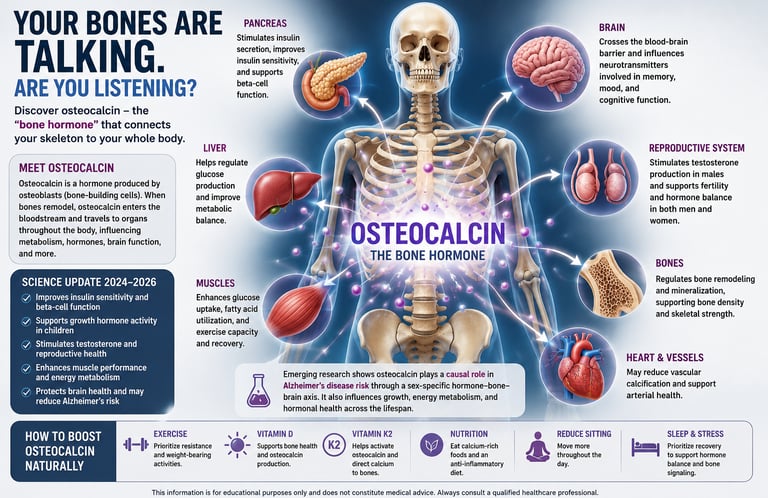
Osteocalcin is a hormone produced by bones that helps regulate blood sugar, insulin sensitivity, testosterone production, brain function, muscle metabolism, and healthy aging. Modern research shows the skeleton acts as an endocrine organ, communicating with the brain, pancreas, muscles, and reproductive system through osteocalcin signaling. Exercise, vitamin D, vitamin K2, and resistance training may naturally increase osteocalcin levels and support metabolic health, cognitive function, and longevity.
For most of modern medicine, bones were viewed as silent structural tissue — important for movement and protection, but largely disconnected from the body's deeper metabolic machinery. That assumption is rapidly collapsing. A growing body of research now shows that the skeleton functions as a dynamic endocrine organ that actively communicates with the brain, pancreas, muscles, reproductive organs, and cardiovascular system through powerful signaling molecules known as bone-derived hormones (Determe et al., 2025).
At the centre of this scientific revolution is osteocalcin, a hormone produced by bone-building osteoblasts that may influence insulin sensitivity, testosterone production, energy metabolism, cognitive performance, and even the risk of Alzheimer's disease. Once considered merely a marker of bone turnover, osteocalcin is now emerging as one of the most fascinating molecules in modern endocrinology and longevity science (Smith et al., 2024).
Recent studies from 2024–2026 suggest that low osteocalcin levels may be linked to insulin resistance, osteoporosis, age-related muscle decline, vascular calcification, hormonal dysfunction, and neurodegenerative disease (Gao et al., 2026; Zheng et al., 2026). Meanwhile, exercise — particularly resistance training and weight-bearing activity — appears to stimulate osteocalcin release, potentially creating a powerful “bone–muscle–brain” communication network that supports healthy aging.
Key Takeaways
Osteocalcin is a hormone produced by bones that influences metabolism, insulin sensitivity, testosterone production, brain function, and healthy aging.
Bones are now recognized as endocrine organs, actively communicating with the pancreas, muscles, brain, liver, and reproductive system through hormonal signaling pathways.
Higher osteocalcin levels are linked to better blood sugar control and improved beta-cell function, making bone health important in type 2 diabetes prevention (Gao et al., 2026).
Exercise naturally increases osteocalcin production, especially resistance training and weight-bearing activities such as walking, running, and strength training.
Osteocalcin may help protect brain health and memory, with emerging research suggesting a possible causal role in reducing Alzheimer's disease risk (Zheng et al., 2026).
Low osteocalcin is associated with aging, sedentary lifestyle, osteoporosis, low testosterone, inflammation, and metabolic dysfunction.
How Osteocalcin Levels Change Over Time
Osteocalcin levels fluctuate naturally across the lifespan. They tend to be highest during childhood and adolescence — periods of rapid bone growth — and decline steadily with age. Physical activity, particularly resistance and weight-bearing exercise, is one of the most reliable ways to boost osteocalcin. Conversely, a sedentary lifestyle, poor nutrition, chronic inflammation, and hormonal imbalances can suppress it.
1. Osteocalcin and Diabetes: Your Bones Are Helping Manage Your Blood Sugar
One of the most clinically significant discoveries in recent osteocalcin research involves its role in regulating insulin — the hormone that controls blood sugar. A 2026 study published in The Journal of Clinical Endocrinology and Metabolism examined osteocalcin's effects on insulin sensitivity, insulin secretion, and the adaptive capacity of beta cells (the insulin-producing cells of the pancreas) in Mexican American adults — a population disproportionately affected by type 2 diabetes (Gao et al., 2026).
The findings were striking. Higher circulating levels of osteocalcin were associated with improved insulin sensitivity and more efficient beta-cell function. In practical terms, this means that people with healthier bone metabolism — and thus more active osteocalcin signaling — may be better equipped to process glucose and maintain stable blood sugar levels. The study adds significant weight to the growing body of evidence that bone health and metabolic health are deeply intertwined.
What This Means for You
If you or a loved one is at risk for type 2 diabetes or living with insulin resistance, this research suggests that bone health strategies — including weight-bearing exercise and adequate vitamin D and calcium intake — may have metabolic benefits beyond simply protecting your skeleton. The skeleton is not a passive bystander to metabolic disease; it may be an active player in defending against it.
2. Osteocalcin and Growth: A New Biomarker for Children's Health
Osteocalcin is also emerging as a powerful diagnostic tool in pediatric medicine. A 2026 study published in Frontiers in Endocrinology explored whether serum osteocalcin levels could help distinguish between two conditions that look similar on the surface but require very different treatments: growth hormone deficiency (GHD) and idiopathic short stature (ISS) — a condition where a child is short but has no identifiable medical cause (Wang et al., 2026).
The research found that children with growth hormone deficiency had significantly different osteocalcin profiles compared to those with idiopathic short stature. Because growth hormone directly stimulates bone formation — and osteocalcin is a direct byproduct of that process — measuring osteocalcin may offer a non-invasive, cost-effective way to help clinicians make faster, more accurate diagnoses.
This is meaningful for families navigating the often lengthy and emotionally draining diagnostic process for childhood growth disorders. A blood test measuring osteocalcin, as part of a broader hormonal panel, could help paediatricians rule out or confirm growth hormone deficiency earlier — allowing treatment to begin at the most developmentally critical windows.
A Note for Parents
If your child is significantly shorter than peers and standard growth evaluations have been inconclusive, ask your pediatric endocrinologist about osteocalcin levels as part of a broader hormonal workup. While osteocalcin alone is not diagnostic, its profile alongside other markers may sharpen the clinical picture considerably.
3. The Full Spectrum: Osteocalcin's Surprising Endocrine Reach
A comprehensive 2025 review published in Clinica Chimica Acta provides perhaps the most thorough mapping to date of osteocalcin's roles across the human body (Determe et al., 2025). The review documents the following organ-level effects:
Pancreas: Osteocalcin stimulates beta cells to increase insulin production and improves insulin sensitivity in target tissues — as discussed above. It also appears to promote the proliferation of beta cells, suggesting a regenerative role.
Muscle: Osteocalcin has been shown to enhance muscle uptake of glucose and fatty acids during exercise, supporting physical performance and recovery. This may partly explain why active people tend to have better insulin sensitivity — exercise raises osteocalcin, which feeds back to improve metabolic function.
Liver: The liver, which plays a central role in glucose storage and release, is also responsive to osteocalcin signaling. Osteocalcin appears to help regulate hepatic glucose production, contributing to overall blood sugar balance.
Brain: Osteocalcin crosses the blood-brain barrier and has been shown to influence neurotransmitter systems involved in memory, anxiety, and mood — including serotonin and dopamine pathways. Animal studies have demonstrated that increasing osteocalcin in older mice can partially reverse age-related cognitive decline.
Reproductive system: In both males and females, osteocalcin appears to support sex hormone production and fertility. In males specifically, it stimulates testosterone synthesis in the testes — a finding with major implications for men's health (Determe et al., 2025).
This remarkable catalogue positions osteocalcin not as a niche bone biomarker but as a central coordinator of whole-body physiology.
4. Testosterone, Bones, and Your Heart: A Triple Threat in Aging Men
The relationship between osteocalcin and testosterone takes on added urgency in the context of male aging. A 2026 narrative review published in The Aging Male examined the dual impact of testosterone deficiency on both vascular health and bone integrity in older men (Li, 2026). The review highlights how declining testosterone — a hallmark of male aging often referred to as andropause — simultaneously accelerates coronary artery calcification and increases osteoporosis risk.
This creates a troubling feedback loop: as testosterone falls, bone remodeling slows, osteocalcin secretion decreases, and the metabolic, cognitive, and cardiovascular benefits of osteocalcin signaling are progressively lost. At the same time, arterial walls stiffen, and calcium is deposited in the wrong places — in blood vessels rather than bone. The skeleton weakens while the arteries harden.
The Osteocalcin Connection
Because osteocalcin is known to stimulate testosterone production, and testosterone in turn supports bone remodeling (which releases more osteocalcin), there is a positive feedback relationship between these two systems — one that can either build vitality or unravel it. When this loop is disrupted by aging, inactivity, or nutritional deficiency, the consequences extend far beyond weak bones.
For men over 40, this research underscores the importance of regular bone density monitoring, testosterone level assessment, and lifestyle strategies that preserve osteocalcin activity — most notably, consistent resistance exercise and optimal nutrition.
5. Osteocalcin and the Brain: A New Frontier in Alzheimer's Prevention
Perhaps the most exciting — and sobering — osteocalcin research of 2026 comes from a study published in Alzheimer's & Dementia: Translational Research & Clinical Interventions. Zheng and colleagues used a powerful combination of Global Burden of Disease data and Mendelian randomization — a method that uses genetic variants to establish causal relationships rather than mere associations — to explore the link between osteocalcin and Alzheimer's disease (Zheng et al., 2026).
Their findings revealed a sex-specific "hormone–bone–brain" axis in Alzheimer's pathology. In this framework, the interplay between sex hormones, osteocalcin, and brain function creates distinct risk profiles for men and women. Crucially, the Mendelian randomization analysis provided evidence for a causal role of osteocalcin — not just a correlation — in modulating Alzheimer's risk.
Why This Matters
Alzheimer's disease remains one of the most feared and least curable conditions of our time. A causal connection to an accessible, modifiable biomarker like osteocalcin opens exciting possibilities. If osteocalcin can be raised through exercise, lifestyle modifications, or future pharmacological interventions, it may represent a viable strategy for reducing Alzheimer's risk — particularly in populations where sex hormone levels are declining.
This does not mean lifting weights will cure Alzheimer's. But it does suggest that a life of physical activity and bone health may carry neurological dividends that we are only beginning to understand.
6. Energy Metabolism: Your Bones Fuel Your Body
Rounding out this portrait of osteocalcin's reach is a 2024 review in the journal Bone, which focused specifically on osteocalcin's role in energy metabolism (Smith et al., 2024). The review synthesizes evidence showing that osteocalcin directly influences how the body handles energy at rest and during exercise — affecting fat oxidation, glucose utilization, and mitochondrial function.
During physical activity, bones release osteocalcin into circulation, where it acts on muscle tissue to enhance exercise capacity. This cross-talk between the skeleton and muscle — sometimes called the "bone-muscle unit" — means that strong, active bones are not just a structural asset; they are a metabolic engine. The authors highlight osteocalcin as a key mediator of this relationship, reinforcing the idea that physical inactivity doesn't just weaken bones — it quietly impoverishes your body's energy economy (Smith et al., 2024).
Practical Applications: How to Support Healthy Osteocalcin Levels
The good news is that osteocalcin levels respond robustly to lifestyle interventions. Here are evidence-based strategies to optimize your osteocalcin activity:
1. Prioritize Resistance and Weight-Bearing Exercise Resistance training — lifting weights, bodyweight exercises, resistance bands — directly stimulates osteoblast activity and boosts osteocalcin secretion. Aim for at least two to three sessions per week. Walking, running, hiking, and dancing also count as bone-loading activities.
2. Optimize Vitamin D and K2. Vitamin D is essential for calcium absorption and bone health. Vitamin K2 directs calcium into bones (rather than arteries) and influences osteocalcin carboxylation. Both nutrients support the production and function of osteocalcin. Get your vitamin D levels tested and consider supplementation if you are deficient, particularly if you live in a low-sunlight region.
3. Ensure Adequate Dietary Calcium Calcium-rich foods — dairy products, leafy greens, fortified plant milks, and canned fish with bones — support the bone matrix from which osteocalcin is released.
4. Reduce Sedentary Time. Even breaking up long periods of sitting with short walks can have measurable effects on bone metabolism. Movement frequency matters, not just exercise intensity.
5. Maintain Healthy Testosterone Levels (for men) Because testosterone and osteocalcin exist in a supportive feedback loop, men should address testosterone deficiency proactively. Consult a healthcare provider if you are experiencing symptoms of low testosterone — fatigue, reduced muscle mass, cognitive fog, or mood changes.
6. Manage Chronic Inflammation. Inflammatory conditions suppress osteoblast activity and reduce osteocalcin output. An anti-inflammatory diet rich in omega-3 fatty acids, colorful vegetables, and whole grains — combined with stress reduction — supports bone signaling health.
7. Get Bone Health Screening If you are over 50, postmenopausal, or have risk factors for bone loss, ask your doctor about bone density testing and an osteocalcin blood test as part of a comprehensive metabolic and endocrine panel.
Frequently Asked Questions About Osteocalcin
Q1. What is osteocalcin and why should I care about it? Osteocalcin is a hormone-like protein produced by your bones that influences insulin sensitivity, brain health, testosterone production, muscle energy metabolism, and may play a causal role in reducing Alzheimer's risk. It is a key link between your skeleton and the rest of your body's systems.
Q2. Can I get my osteocalcin levels tested? Yes. A serum osteocalcin test is available through most clinical laboratories and is sometimes ordered as part of a bone turnover panel or endocrine evaluation. Talk to your healthcare provider about whether it makes sense to include it in your next blood panel, particularly if you have concerns about bone health, metabolic health, or hormonal function.
Q3. What causes low osteocalcin levels? Low osteocalcin is associated with a sedentary lifestyle, aging, vitamin D and K2 deficiency, low testosterone (especially in men), chronic inflammation, and conditions that impair bone remodeling such as osteoporosis. Certain medications — including long-term corticosteroids — can also suppress osteocalcin.
Q4. Does exercise really raise osteocalcin? Yes — this is one of the most consistently supported findings in the research. Weight-bearing and resistance exercises stimulate osteoblasts, which secrete osteocalcin. Even a single bout of vigorous exercise can transiently raise circulating osteocalcin levels. Long-term exercise programs produce sustained improvements.
Q5. Is osteocalcin relevant to women's health? Absolutely. Women experience significant declines in estrogen at menopause, which accelerates bone resorption and reduces osteocalcin production. This drop in osteocalcin may contribute to increased metabolic risk, cognitive changes, and cardiovascular vulnerability seen in postmenopausal women. Maintaining bone health through exercise and nutrition is critically important for women at every stage of life.
Q6. Can osteocalcin supplementation help? There are currently no approved osteocalcin supplements for human use. However, researchers are actively exploring osteocalcin-based therapies for metabolic and neurological conditions. At present, the most evidence-based way to raise osteocalcin is through regular physical activity, adequate nutrition, and addressing hormonal deficiencies.
Q7. Is osteocalcin linked to dementia risk? Emerging research from 2026 provides compelling evidence — using genetic analysis — that osteocalcin plays a causal role in Alzheimer's disease risk through a sex-specific bone-brain hormonal axis (Zheng et al., 2026). While this is not yet the basis for clinical guidelines, it strongly supports the idea that bone health and brain health are biologically linked, and that lifestyle habits protecting bones may also protect the mind.
Q8. What Does Osteocalcin Do?
Regulates insulin sensitivity and blood sugar
Supports testosterone production and hormonal balance
Influences brain health and memory pathways
Enhances muscle energy metabolism during exercise
Helps maintain bone strength and remodeling
May reduce Alzheimer's disease risk
Connects bone health with longevity and metabolism
Responds positively to resistance training and physical activity
Q9. How to Boost Osteocalcin Naturally?
Perform resistance training or weight-bearing exercise 2–3 times per week (most effective stimulus).
Optimize Vitamin D and Vitamin K2 levels.
Ensure adequate dietary calcium from whole foods.
Maintain healthy testosterone levels (especially in men).
Reduce chronic inflammation through diet and lifestyle.
Resistance exercise combined with optimal Vitamin D & K2 is currently the strongest evidence-based way to increase osteocalcin production.
Clinical pearls
1. The Dual Forms of Osteocalcin (Endocrine vs. Structural)
While carboxylated osteocalcin binds to the hydroxyapatite matrix, contributing to structural bone mineralization, it is the undercarboxylated form that acts as a biologically active endocrine hormone. Acidification of the resorption lacuna by osteoclasts during bone remodeling induces the decarboxylation of Osteocalcin releasing it into systemic circulation, where it binds to its specific receptor, GPRC6A.
Think of osteocalcin as having two modes: "lockdown" and "travel." Most of it stays locked inside your bones to keep them strong. However, when your body breaks down and rebuilds bone, it activates a "traveling" version of osteocalcin that escapes into your blood. This traveling version acts like a chemical text message sent from your skeleton to the rest of your body.
2. Metabolic Regulation & Beta-Cell Synergy
Circulating Osteocalcin acts directly on the pancreatic beta-cells via GPRC6A signaling to stimulate Cyclic Adenosine Monophosphate pathways, resulting in increased insulin expression and beta-cell proliferation. Concurrently, it upregulates adiponectin expression in adipocytes, enhancing peripheral insulin sensitivity and optimizing systemic glucose homeostasis.
Your bones actually help manage your blood sugar. When osteocalcin is released into your blood, it travels to your pancreas and triggers it to produce more insulin. At the same time, it helps your muscles and fat tissues respond better to that insulin, making it a powerful natural defense against type 2 diabetes.
3. The "Hormone–Bone–Brain" Axis & Neuroprotection
Osteocalcin crosses the blood-brain barrier, where it binds to GPR158 receptors in the CA3 region of the hippocampus. Mendelian randomization data indicate a causal pathway where osteocalcin modulates synthesis of monoamine neurotransmitters (serotonin, dopamine, norepinephrine), suppresses parasympathetic anxiety signaling, and mitigates age-related cognitive decline and neurodegenerative pathologies like Alzheimer's disease.
Your skeleton talks directly to your brain. Osteocalcin is one of the few proteins that can cross the brain's protective barrier. Once inside, it targets the brain's memory center, boosting feel-good chemicals like serotonin and dopamine. New genetic research even shows that higher osteocalcin levels may directly lower your risk of developing Alzheimer's disease.
4. The Testosterone Synergistic Feedback Loop
Osteocalcin signaling exhibits a sexually dimorphic, positive feedback loop in males. Circulating Osteocalcin binds to Leydig cells in the testes, stimulating the expression of enzymes required for testosterone biosynthesis. Conversely, circulating testosterone stimulates osteoblast proliferation and bone remodeling, further driving the production and release of systemic osteocalcin.
For men, bones and manhood exist in a continuous loop: healthy bones release osteocalcin, which signals the testes to produce more testosterone. In turn, healthy testosterone levels stimulate the bones to grow and release even more osteocalcin. When a man's testosterone drops with age, this loop breaks down, leading to weaker bones and a slower metabolism.
5. Diagnostic Differentiation in Pediatric Growth Disorders
Serum osteocalcin serves as a highly sensitive biomarker of osteoblast activity and longitudinal skeletal velocity. In pediatric endocrinology, distinctive osteocalcin kinetic profiles can be utilized to differentiate between Growth Hormone Deficiency (GHD) and Idiopathic Short Stature (ISS), enabling early, targeted therapeutic intervention during critical developmental windows.
If a child is growing much slower than their peers, doctors can check their osteocalcin levels to solve the mystery. Because human growth hormone directly triggers bone-building, a low osteocalcin level can help doctors pinpoint whether a child has a true growth hormone deficiency or is simply a "late bloomer," allowing them to start the right treatment much sooner.
6. Mechanical Load-Induced Endocrine Activation
Mechanical loading via high-impact, weight-bearing, or resistance exercise activates mechanoreceptors in osteocytes and osteoblasts, accelerating bone turnover rates. This mechanical stress serves as the primary non-pharmacological trigger to amplify osteocalcin transcription and subsequent systemic release, making skeletal loading a fundamental metabolic intervention.
You have direct control over how much of this "youth hormone" your body makes. Your bones only release osteocalcin when they are subjected to physical stress. Lifting weights, running, hiking, or even brisk walking tells your bones that they need to remodel. The harder your bones work, the more osteocalcin they pump into your body to power your muscles and brain.
Clinician’s Perspective:
From a clinician’s standpoint, osteocalcin represents a major shift in how we think about chronic disease, aging, and human physiology. Traditionally, bone health has been separated from metabolic health, cardiovascular disease, hormonal decline, and neurodegeneration. Emerging evidence suggests this separation may be biologically inaccurate.
In clinical practice, many patients with insulin resistance, type 2 diabetes, obesity, sarcopenia, osteoporosis, low testosterone, and cognitive decline often present together — especially after midlife. Osteocalcin may help explain why these conditions cluster. The skeleton is increasingly recognized as an endocrine organ that communicates with the pancreas, brain, muscles, liver, and reproductive system through hormonal signaling pathways (Determe et al., 2025).
What makes osteocalcin particularly intriguing is that it appears highly responsive to lifestyle intervention. Resistance training, weight-bearing exercise, improved nutrition, vitamin D optimization, and reduction in sedentary behavior may all enhance osteocalcin activity. This gives clinicians a potentially actionable biomarker that bridges preventive cardiology, endocrinology, geriatrics, and lifestyle medicine.
The possible connection between osteocalcin and Alzheimer's disease is especially compelling. If future human trials confirm a causal bone–brain relationship, preserving bone metabolism may become part of routine cognitive decline prevention strategies (Zheng et al., 2026).
However, clinicians should remain scientifically cautious. Much of the mechanistic evidence still comes from animal models, and standardized osteocalcin testing has not yet been universally integrated into routine clinical guidelines. At present, osteocalcin should be viewed as a promising emerging biomarker — not a standalone diagnostic tool.
Nonetheless, the broader message is already clear: protecting bone health through exercise, nutrition, hormonal balance, and metabolic optimization may have far-reaching effects well beyond preventing fractures. In the future, the skeleton may become a central target in precision longevity medicine.
Disclaimer: This article is for educational and informational purposes only and should not be considered medical advice. Always consult with qualified healthcare professionals before making changes to your health regimen or treatment plan. The information presented reflects current research as of February 2026 and may change as new evidence emerges.
Related Articles
Bone as an Endocrine Organ: Does Osteocalcin Influence Weight Regulation?
References
Determe, W., Hauge, S. C., Demeuse, J., Massonnet, P., Grifnée, E., Huyghebaert, L., Dubrowski, T., Schoumacher, M., Peeters, S., Le Goff, C., Evenepoel, P., Hansen, D., & Cavalier, E. (2025). Osteocalcin: A bone protein with multiple endocrine functions. Clinica Chimica Acta, 567, Article 120067. https://doi.org/10.1016/j.cca.2024.120067
Gao, Y., Hsu, V., Kil, A., Arias, M., Chen, H., Trigo, E., Mackay, A., Xiang, A. H., Buchanan, T. A., & Watanabe, R. M. (2026). Effect of osteocalcin on insulin sensitivity, insulin secretion, and β-cell compensation in Mexican Americans. The Journal of Clinical Endocrinology and Metabolism, 111(3), e937–e942. https://doi.org/10.1210/clinem/dgaf460
Li, S. (2026). Testosterone deficiency in aging males: A dual threat to vascular and bone health through coronary artery calcification and osteoporosis — a narrative review. The Aging Male, 29(1). https://doi.org/10.1080/13685538.2026.2662042
Smith, C., Lin, X., Parker, L., Yeap, B. B., Hayes, A., & Levinger, I. (2024). The role of bone in energy metabolism: A focus on osteocalcin. Bone, 188, Article 117238. https://doi.org/10.1016/j.bone.2024.117238
Wang, Y., Zhou, H., Wang, H., Ma, J., Chen, X., Yang, H., Zheng, H., & Wang, A. (2026). Serum osteocalcin as a novel biomarker for differentiating growth hormone deficiency from idiopathic short stature. Frontiers in Endocrinology, 17, Article 1745971. https://doi.org/10.3389/fendo.2026.1745971
Zheng, Z., Ren, Y., Gao, J., et al. (2026). A sex-specific "hormone–bone–brain" axis in Alzheimer's disease: Integrating Global Burden of Disease data and Mendelian randomization analysis to reveal the causal role of osteocalcin. Alzheimer's & Dementia: Translational Research & Clinical Interventions, 12, Article e70206. https://doi.org/10.1002/trc2.70206