Mitochondrial Dysfunction: The Core Driver of Aging and How Exercise Reverses It
Discover the science of mitochondrial aging, from ROS and mtDNA damage to NAD+ depletion. Learn how combining resistance and aerobic exercise is the proven therapeutic breakthrough to restore cellular energy and fight age-related disease.
AGING
Dr. T.S. Didwal, M.D.
5/14/202612 min read
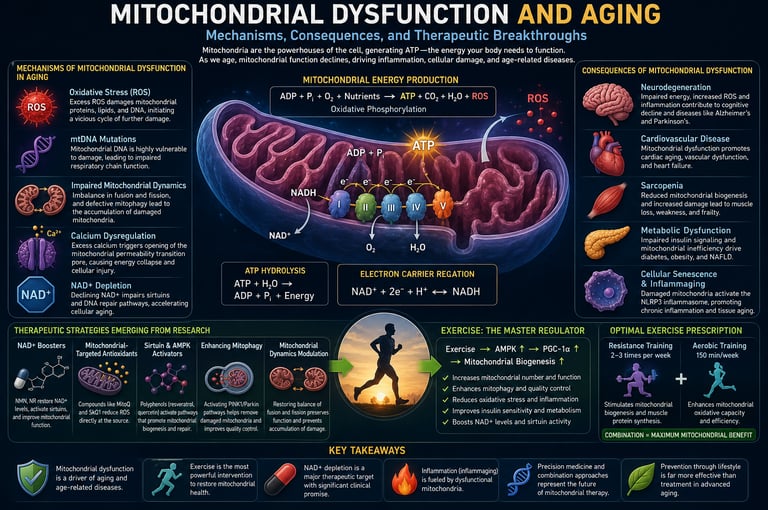
What if the true engine of aging is not your wrinkles, gray hair, or slowing metabolism — but a silent energy crisis unfolding deep inside your cells? Modern longevity research increasingly points to one microscopic structure as a central regulator of biological aging: the mitochondrion. These tiny cellular organelles generate the ATP required for every heartbeat, muscle contraction, immune response, and neural signal in the human body. Yet as we age, mitochondrial function progressively deteriorates, triggering oxidative stress, chronic inflammation, metabolic dysfunction, and cellular decline (Somasundaram et al., 2024).
Scientists now recognize mitochondrial dysfunction as one of the major hallmarks of aging and a key driver of age-related diseases including cardiovascular disease, type 2 diabetes, sarcopenia, neurodegeneration, and cognitive decline (Xu et al., 2025). Damaged mitochondria produce excessive reactive oxygen species (ROS), impair cellular energy metabolism, disrupt calcium homeostasis, and activate inflammatory pathways linked to “inflammaging” — the chronic low-grade inflammation associated with biological aging. Simultaneously, declining levels of NAD+ weaken critical cellular repair systems, accelerating mitochondrial damage and reducing metabolic resilience (Jia et al., 2025).
But there is also encouraging news emerging from modern exercise physiology and metabolic medicine. Research now shows that mitochondrial aging is highly modifiable. Regular physical activity — particularly a combination of resistance training, aerobic exercise, and high-intensity interval training — can stimulate mitochondrial biogenesis, improve mitochondrial quality control, enhance insulin sensitivity, and restore cellular energy production through activation of AMPK and PGC-1α signaling pathways (Bishop et al., 2025; Zhang et al., 2026).
Clinical Pearls:
1. Your Mitochondria Are the Body’s Energy Engines
Mitochondria produce the ATP that powers your muscles, brain, heart, and metabolism. As mitochondrial function declines with age, fatigue, weakness, slower metabolism, and chronic disease risk increase.
2. Aging Is Closely Linked to Cellular Energy Decline
Modern research shows that mitochondrial dysfunction is not just a consequence of aging — it may actually drive biological aging through oxidative stress, inflammation, and reduced cellular repair capacity.
3. Exercise Is the Most Powerful Mitochondrial Therapy
Regular physical activity stimulates mitochondrial biogenesis, helping your body create new, healthier mitochondria. Exercise also improves cellular energy production, insulin sensitivity, and metabolic health.
4. Combining Resistance and Aerobic Exercise Works Best
Strength training helps build muscle and mitochondrial density, while aerobic exercise improves mitochondrial efficiency and cardiovascular health. Together, they provide the strongest anti-aging benefits.
5. Chronic Inflammation Damages Mitochondria
Dysfunctional mitochondria can trigger persistent low-grade inflammation known as “inflammaging,” which contributes to diabetes, heart disease, muscle loss, and cognitive decline.
6. Lifestyle Choices Directly Influence Mitochondrial Health
Sleep quality, nutrition, daily movement, stress management, and metabolic fitness all affect mitochondrial function. Healthy lifestyle habits can slow cellular aging and support long-term vitality.
Why Mitochondria Matter More Than You Think
Mitochondria are often described as the “powerhouses of the cell,” but this dramatically understates their importance.
These dynamic organelles regulate:
Cellular energy production
Oxidative metabolism
Calcium signaling
Immune activation
Cellular repair
Apoptosis (programmed cell death)
Hormonal signaling
Reactive oxygen species (ROS) balance
Longevity pathways
Stem cell function
Muscle performance
Brain metabolism
In many ways, mitochondria act as the metabolic command centers of the human body. Their primary role is generating ATP (adenosine triphosphate), the energy currency that powers nearly every biological process.
ATP+H2O→ADP+Pi+Energy
Without sufficient ATP production, tissues with high energy demands begin to fail first:
Brain
Heart
Skeletal muscle
Liver
Kidneys
Immune cells
This explains why mitochondrial dysfunction is increasingly linked to:
Sarcopenia
Frailty
Cardiovascular disease
Type 2 diabetes
Metabolic syndrome
Neurodegenerative disease
Chronic fatigue
Accelerated biological aging
Cognitive decline
Reduced exercise tolerance
According to Somasundaram and colleagues (2024), mitochondrial dysfunction is not simply a consequence of aging — it is a major driver of aging pathology itself.
The Cellular Engine of Aging
How Mitochondria Age
Young mitochondria are highly efficient. They generate large amounts of ATP while maintaining tight control over oxidative stress, calcium balance, and metabolic signaling. However, aging progressively disrupts this balance through multiple interconnected mechanisms.
These include:
Oxidative stress
Mitochondrial DNA mutations
Impaired mitophagy
Dysregulated mitochondrial fusion and fission
NAD+ depletion
Chronic inflammation
Calcium overload
Loss of mitochondrial biogenesis
Together, these changes create what researchers increasingly call the “mitochondrial vicious cycle” of aging.
Oxidative Stress: The Double-Edged Sword of Cellular Energy
The process mitochondria use to generate ATP is known as oxidative phosphorylation.
ADP+Pi+O2+Nutrients→ATP+CO2+H2O+ROS
While highly efficient, this process naturally produces reactive oxygen species (ROS).
ROS are chemically reactive molecules capable of damaging:
Proteins
Lipids
Cellular membranes
DNA
Mitochondrial enzymes
In youth, antioxidant defense systems neutralize most ROS effectively. But aging weakens these defenses. As ROS accumulate, mitochondria themselves become damaged.
This creates a dangerous feedback loop:
Damaged mitochondria produce more ROS
More ROS cause further mitochondrial injury
ATP production falls
Cellular stress rises
Inflammation accelerates
Biological aging progresses
Xu et al. (2025) describe this as one of the central mechanisms connecting mitochondrial dysfunction to chronic disease and lifespan reduction.
Mitochondrial DNA Damage: Aging Written Into Cellular Memory
Unlike nuclear DNA, mitochondrial DNA (mtDNA) lacks robust protective mechanisms. This makes mtDNA particularly vulnerable to oxidative injury.
Over time, mutations accumulate within mitochondrial genes responsible for energy production.
The result:
Reduced respiratory chain efficiency
Lower ATP generation
Greater electron leakage
Increased ROS formation
Progressive metabolic decline
Post-mitotic tissues such as skeletal muscle, cardiac muscle, and neurons are especially vulnerable because these cells are rarely replaced.
This is one reason mitochondrial aging contributes heavily to:
Muscle loss
Heart dysfunction
Neurodegeneration
Frailty
NAD+ Depletion: The Longevity Molecule in Decline
One of the most important discoveries in aging biology is the dramatic decline of NAD+ levels with advancing age.
NAD+ (nicotinamide adenine dinucleotide) is essential for:
Energy metabolism
DNA repair
Mitochondrial maintenance
Sirtuin activation
Cellular stress resistance
NAD++2e−+H+↔NADH
As NAD+ levels fall:
Mitochondrial repair slows
Sirtuin activity declines
Oxidative damage accumulates
Cellular resilience weakens
Inflammation rises
Metabolic disease risk increases
Jia et al. (2025) identify NAD+ depletion as one of the most promising therapeutic targets in modern longevity medicine.
This has fueled enormous interest in compounds such as:
Nicotinamide riboside (NR)
Nicotinamide mononucleotide (NMN)
These molecules may help replenish cellular NAD+ pools and restore mitochondrial signaling pathways.
Inflammaging: How Damaged Mitochondria Trigger Chronic Inflammation
One of the most important concepts in modern geroscience is “inflammaging” — chronic low-grade inflammation associated with aging.
Damaged mitochondria are major contributors. When mitochondria become dysfunctional, they release molecular debris including:
mtDNA fragments
Cardiolipin
Oxidized proteins
ROS signals
These molecules activate inflammatory pathways such as the NLRP3 inflammasome. The result is persistent systemic inflammation.
This inflammatory state accelerates:
Insulin resistance
Atherosclerosis
Muscle catabolism
Neurodegeneration
Immune aging
Endothelial dysfunction
The relationship between mitochondrial dysfunction and inflammation is now considered bidirectional: inflammation damages mitochondria, and dysfunctional mitochondria amplify inflammation.
This vicious cycle is increasingly recognized as a core mechanism of biological aging.
Mitochondria and Muscle Aging: Why Strength Declines With Age
One of the most visible manifestations of mitochondrial dysfunction is sarcopenia — the age-related loss of muscle mass and strength.
Healthy muscle tissue depends heavily on mitochondrial efficiency.
Aging muscle shows:
Reduced mitochondrial density
Impaired ATP production
Defective mitophagy
Increased ROS production
Altered calcium handling
Reduced oxidative capacity
The consequences are profound:
Weakness
Reduced mobility
Fatigue
Increased fall risk
Loss of independence
Metabolic dysfunction
Recent work by Cefis et al. (2025) revealed that physically active men preserved mitochondrial respiration remarkably well across the lifespan.
Importantly, mitochondrial respiratory capacity itself did not significantly decline with age in active individuals. This suggests that inactivity — not aging alone — may drive much of mitochondrial deterioration.
However, mitochondrial calcium retention capacity still declined with age regardless of activity level, highlighting calcium regulation as an emerging therapeutic target.
The Brain’s Energy Crisis: Mitochondria and Cognitive Decline
The human brain consumes roughly 20% of total body energy despite accounting for only about 2% of body mass. This extraordinary metabolic demand makes neurons highly dependent on mitochondrial integrity.
Mitochondrial dysfunction in the brain contributes to:
Cognitive decline
Memory impairment
Alzheimer’s disease
Parkinson’s disease
Neuroinflammation
Synaptic dysfunction
Key mechanisms include:
Reduced ATP availability
Excess ROS production
Calcium dysregulation
Impaired neurotransmitter signaling
Increased neuronal apoptosis
Modern neurodegeneration research increasingly frames Alzheimer’s disease as a metabolic and mitochondrial disorder rather than solely an amyloid disease.
Exercise: The Most Powerful Mitochondrial Therapy Ever Discovered
Despite enormous pharmaceutical interest in anti-aging therapies, one intervention consistently outperforms nearly every drug studied:
Exercise.
According to Bishop, Lee, and Picard (2025), exercise acts as “mitochondrial medicine.”
Why? Because it simultaneously improves nearly every major aspect of mitochondrial biology.
Exercise Activates Mitochondrial Biogenesis
One of exercise’s most powerful effects is activation of PGC-1α, the master regulator of mitochondrial biogenesis.
Exercise→AMPK Activation→PGC-1α Upregulation→Increased Mitochondrial Biogenesis
This pathway stimulates cells to create entirely new mitochondria. Over time, exercise literally increases mitochondrial density inside muscle cells.
More mitochondria means:
Greater ATP production
Better endurance
Improved insulin sensitivity
Enhanced metabolic flexibility
Reduced fatigue
Greater resilience to aging
Exercise Improves Mitochondrial Quality Control
Healthy mitochondria constantly undergo:
Fusion
Fission
Mitophagy
These processes collectively form mitochondrial quality control (MQC).Aging disrupts this system. Exercise restores it.
Research by Cai et al. (2026) demonstrates that exercise improves:
Mitophagy
Fusion dynamics
Mitochondrial proteostasis
Inter-organelle communication
Oxidative efficiency
Exercise essentially helps cells:
Remove damaged mitochondria
Preserve healthy mitochondria
Build new mitochondria
No medication currently reproduces this systems-wide effect.
Why Resistance Training Matters for Longevity
Resistance exercise is often overlooked in longevity discussions dominated by aerobic exercise. This is a mistake.
Resistance training strongly stimulates:
Mitochondrial biogenesis
Muscle protein synthesis
Insulin sensitivity
Neuromuscular function
Metabolic resilience
Research now shows that resistance training improves mitochondrial function independently of aerobic training.
It also preserves lean mass, which is critically important because skeletal muscle acts as a major metabolic organ.
Loss of muscle mass strongly predicts:
Frailty
Falls
Diabetes
Mortality
Hospitalization risk
Aerobic Exercise and Mitochondrial Efficiency
Aerobic exercise enhances:
Oxidative phosphorylation
Fat oxidation
Mitochondrial respiratory efficiency
Cardiovascular mitochondrial density
Endurance training improves the ability of mitochondria to utilize oxygen effectively.
This improves:
VO2 max
Cardiovascular fitness
Metabolic flexibility
Insulin sensitivity
HIIT and Mitochondrial Adaptation
High-intensity interval training (HIIT) has emerged as a particularly potent mitochondrial stimulus.
Short bursts of intense exercise create profound metabolic stress that activates:
AMPK
SIRT1
PGC-1α
Mitophagy pathways
HIIT may improve mitochondrial adaptation faster than moderate continuous exercise in some individuals.
However, sustainability and recovery capacity matter greatly, especially in older adults.
The Ideal Exercise Prescription for Mitochondrial Health
Current evidence suggests the optimal strategy combines multiple modalities:
Weekly Mitochondrial Fitness Blueprint
Resistance Training
2–3 sessions weekly
Focus on major compound movements
Progressive overload
Preserve muscle mass and mitochondrial density
Aerobic Exercise
150 minutes weekly
Moderate-intensity walking, cycling, swimming, or jogging
Improves oxidative efficiency
HIIT
1–2 sessions weekly if tolerated
Enhances mitochondrial signaling pathways
Daily Movement
Avoid prolonged sitting
Frequent low-intensity movement supports mitochondrial metabolism
Can Supplements Improve Mitochondrial Function?
The supplement industry has aggressively marketed “mitochondrial boosters,” but the science remains mixed.
Some compounds, however, show legitimate promise.
NAD+ Precursors
NMN and NR
These compounds may:
Restore NAD+ pools
Activate sirtuins
Improve mitochondrial signaling
Enhance muscle function
Reduce oxidative stress
Human evidence remains early but promising.
Mitochondrial Antioxidants
Traditional antioxidants often fail because they do not adequately enter mitochondria.
Targeted compounds such as:
MitoQ
SkQ1
were specifically engineered to accumulate inside mitochondria. Preliminary evidence suggests they may reduce mitochondrial oxidative injury more effectively than standard antioxidants.
Polyphenols and Plant Compounds
Polyphenol-rich foods contain bioactive compounds that influence mitochondrial signaling pathways.
These include:
Resveratrol
Quercetin
Catechins
Anthocyanins
Dietary sources include:
Berries
Green tea
Cocoa
Olive oil
Red grapes
Pomegranate
These compounds may activate:
SIRT1
AMPK
PGC-1α
thereby supporting mitochondrial biogenesis and metabolic health.
Nutrition for Mitochondrial Health
Mitochondria are deeply influenced by diet quality.
Nutritional patterns associated with better mitochondrial function include:
Mediterranean diet
Nordic diet
Whole-food anti-inflammatory diets
Key principles include:
Prioritize:
Polyphenol-rich foods
Omega-3 fatty acids
Adequate protein intake
Fiber-rich carbohydrates
Micronutrient density
Limit:
Ultra-processed foods
Chronic caloric excess
Excess sugar intake
Industrial trans fats
Metabolic overload itself damages mitochondria. This may explain why obesity accelerates biological aging.
Sleep and Circadian Rhythm: The Overlooked Mitochondrial Regulator
Mitochondrial function follows circadian rhythms.
Poor sleep impairs:
ATP production
Glucose metabolism
Oxidative balance
Hormonal signaling
Chronic sleep deprivation increases:
ROS production
Insulin resistance
Systemic inflammation
Sleep is therefore not passive recovery — it is active mitochondrial maintenance.
Precision Longevity Medicine: The Future of Mitochondrial Care
The next frontier in longevity medicine is personalization.
Researchers are increasingly developing methods to assess individual mitochondrial health through biomarkers such as:
NAD+/NADH ratios
Lactate metabolism
mtDNA fragments
Oxidative stress markers
Mitochondrial imaging
Future therapies may combine:
Exercise prescriptions
Nutritional interventions
NAD+ restoration
Senolytics
Mitochondrial antioxidants
Personalized metabolic therapies
based on an individual’s mitochondrial profile.
Emerging Therapies on the Horizon
Senolytics
Senescent cells release inflammatory molecules that worsen mitochondrial dysfunction.
Senolytic drugs aim to selectively eliminate these aging cells.
This may reduce inflammaging and improve tissue resilience.
Gene Therapy
Researchers are exploring techniques to repair or replace defective mitochondrial DNA.
Although experimental, these approaches may eventually treat severe mitochondrial disorders.
Mitochondrial Transplantation
Early studies demonstrate that healthy mitochondria can sometimes be transferred into damaged tissues.
While still experimental, this concept could revolutionize regenerative medicine.
One Important Discovery in Modern Aging Science
Perhaps the most profound insight emerging from mitochondrial research is this:
Aging is not simply passive wear and tear. It is deeply influenced by cellular energy regulation. And cellular energy regulation is modifiable. This changes everything. Because it means biological aging may be slowed — at least partially — through targeted intervention.
Key Clinical Takeaways
1. Mitochondrial dysfunction is central to aging
It drives inflammation, metabolic disease, frailty, and neurodegeneration.
2. Exercise remains the gold-standard intervention
No medication currently matches its systemic mitochondrial benefits.
3. Resistance training is essential
Muscle preservation is a cornerstone of healthy aging.
4. NAD+ biology is a major therapeutic target
Restoring NAD+ may improve mitochondrial resilience.
5. Chronic inflammation accelerates mitochondrial decline
Reducing inflammaging is critical for longevity.
6. Lifestyle matters enormously
Sleep, nutrition, stress management, and movement profoundly influence mitochondrial health.
The Bottom Line
Your mitochondria may ultimately determine how well you age. These microscopic organelles influence energy production, inflammation, metabolism, cognitive performance, muscle function, and disease risk.As modern science increasingly reveals, mitochondrial dysfunction is not merely associated with aging — it is one of its central biological engines. But this story is not entirely deterministic.
Exercise, metabolic fitness, nutritional quality, sleep, and emerging mitochondrial therapies all appear capable of improving mitochondrial resilience and slowing aspects of biological decline. Among all interventions studied so far, regular physical activity remains the most powerful mitochondrial medicine available. The message from modern longevity science is becoming unmistakably clear: Healthy aging begins at the cellular level.
And the health of your mitochondria may be one of the strongest predictors of how long — and how well — you live.
FAQs: Common Questions About Mitochondrial Dysfunction and Aging
Q: At what age does mitochondrial dysfunction typically begin?
A: Mitochondrial dysfunction begins subtly in middle age (40s-50s) but accelerates significantly after age 60-65. However, even younger individuals can experience mitochondrial decline if sedentary or exposed to chronic stress. The good news: mitochondrial biogenesis can be stimulated at any age through exercise.
Q: Can I reverse mitochondrial dysfunction, or can I only slow it down?
A: Recent research, particularly Bishop et al. (2025), demonstrates that mitochondrial dysfunction can be substantially reversed through regular exercise and lifestyle interventions. While you cannot restore mitochondria to youthful states if severely compromised, comprehensive interventions can restore function to healthy levels in most cases.
Q: Which is better for mitochondrial health: resistance training or aerobic exercise?
A: Research by Zhang and colleagues (2025) indicates both are essential. Resistance training optimally stimulates mitochondrial biogenesis and rebuilds muscle, while aerobic exercise enhances mitochondrial oxidative capacity. The ideal approach combines both: 2-3 weekly resistance sessions plus 150 minutes of moderate-intensity aerobic activity.
Q: Are antioxidant supplements helpful for mitochondrial health?
A: Surprisingly, evidence suggests excessive antioxidant supplementation may actually impair mitochondrial adaptation to exercise. Exercise-induced ROS triggers beneficial adaptive responses; excessive antioxidants blunt these responses. Natural antioxidants in food (polyphenols) are preferable. However, mitochondrial-targeted antioxidants like MitoQ show promise because they work differently from standard supplements.
Q: Should I take NAD+ boosters like NMN or NR?
A: This depends on individual circumstances and is best determined through consultation with a healthcare provider. NAD+ boosters show promise in research, particularly combined with exercise. However, they're expensive and not yet standard clinical practice. Some evidence suggests exercise alone produces NAD+ improvements, though supplementation may provide additional benefit, particularly in advanced age or severe mitochondrial dysfunction.
Q: Can I develop mitochondrial disease from lifestyle factors, or is it purely genetic?
A: Both factors matter. While some mitochondrial diseases are genetic, acquired mitochondrial dysfunction develops through lifestyle factors: sedentary behavior, poor diet, chronic stress, sleep deprivation, and exposure to toxins all damage mitochondrial function over time. The encouraging news: most acquired mitochondrial dysfunction responds well to lifestyle intervention (Somasundaram et al., 2024).
Q: How quickly do mitochondrial adaptations occur with exercise?
A: Initial molecular changes occur within days (activation of PGC-1α and NAD+ pathways), but measurable improvements in mitochondrial biogenesis and ATP production typically require 4-8 weeks of consistent exercise. Significant functional improvements often require 3-6 months of dedicated training.
Q: Are there foods that specifically support mitochondrial health?
A: Polyphenol-rich foods (berries, dark chocolate, green tea, red wine) provide compounds that activate sirtuins and promote mitochondrial biogenesis. Complex carbohydrates support mitochondrial oxidative capacity, while adequate protein supports both mitochondrial protein synthesis and muscle maintenance. Mediterranean and Nordic diets emphasize mitochondrial-supportive foods.
The Bottom Line: Your mitochondria aren't inevitably destined to decline with age. Armed with understanding of the mechanisms driving mitochondrial dysfunction and the proven interventions that restore function, you can proactively protect your healthspan and independence as you age. Start today—your cellular powerhouses will thank you.
Disclaimer: This article is for informational purposes only and does not constitute medical advice. Individual circumstances vary, and treatment decisions should always be made in consultation with qualified healthcare professionals.
.Related Articles
The Science of Healthy Brain Aging: Microglia, Metabolism & Cognitive Fitness | DR T S DIDWAL
The Aging Muscle Paradox: How Senescent Cells Cause Insulin Resistance and The Strategies to Reverse It | DR T S DIDWAL
VO2 Max & Longevity: The Ultimate Guide to Living Longer | DR T S DIDWAL
Blue Zones Secrets: The 4 Pillars of Longevity for a Longer, Healthier Lifepost | DR T S DIDWAL
References
Cefis, M., Marcangeli, V., Hammad, R., Granet, J., Leduc-Gaudet, J.-P., Gaudreau, P., Trumpff, C., Huang, Q., Picard, M., Aubertin-Leheudre, M., Bélanger, M., Robitaille, R., Morais, J. A., & Gouspillou, G. (2025). Impact of physical activity on physical function, mitochondrial energetics, ROS production, and Ca²⁺ handling across the adult lifespan in men. Cell Reports Medicine, 6(2), Article 101968. https://doi.org/10.1016/j.xcrm.2025.101968
Zhang, C., Zheng, X., Xiang, L. et al. Exercise-mediated regulation of mitochondrial dynamics in aging muscle: implications for mitochondrial diseases. Mol Cell Biochem 481, 1103–1116 (2026). https://doi.org/10.1007/s11010-025-05441-6
Cai, T., Li, Y., Zhang, Y., Li, C., Li, S., & Zhang, Q. (2026). The role of exercise-mediated mitochondrial quality control remodeling in aging. Frontiers in Cell and Developmental Biology, 14, Article 1792645. https://doi.org/10.3389/fcell.2026.1792645Bishop, D. J., Lee, M. J., & Picard, M. (2025). Exercise as mitochondrial medicine: How does the exercise prescription affect mitochondrial adaptations to training? Annual Review of Physiology, 87(1), 107–129. https://doi.org/10.1146/annurev-physiol-022724-104836
Jia, D., Tian, Z., & Wang, R. (2023). Exercise mitigates age-related metabolic diseases by improving mitochondrial dysfunction. Ageing Research Reviews, 91, 102087. https://doi.org/10.1016/j.arr.2023.102087
Jia, L., Wei, Z., Luoqian, J., Wang, X., & Huang, C. (2025). Mitochondrial dysfunction in aging: Future therapies and precision medicine approaches. MedComm – Future Medicine, 4(3). https://doi.org/10.1002/mef2.70026
Memme, J. M., Erlich, A. T., Phukan, G., & Hood, D. A. (2021). Exercise and mitochondrial health. The Journal of Physiology, 599(3), 803–817. https://doi.org/10.1113/JP278853
Somasundaram, I., Jain, S. M., Blot-Chabaud, M., Pathak, S., Banerjee, A., Rawat, S., Sharma, N. R., & Duttaroy, A. K. (2024). Mitochondrial dysfunction and its association with age-related disorders. Frontiers in Physiology, 15, 1384966. https://doi.org/10.3389/fphys.2024.1384966
Xu, X., Pang, Y., & Fan, X. (2025). Mitochondria in oxidative stress, inflammation and aging: From mechanisms to therapeutic advances. Signal Transduction and Targeted Therapy, 10, 190. https://doi.org/10.1038/s41392-025-02253-4