Lipoprotein(a): The Genetic Key to Cardiovascular Disease Risk
A comprehensive guide to understanding Lipoprotein(a) (Lp(a)) as a genetic cardiovascular disease risk factor, featuring critical 2025 research updates.
HEART
Dr. T.S. Didwal, M.D.
4/6/202613 min read
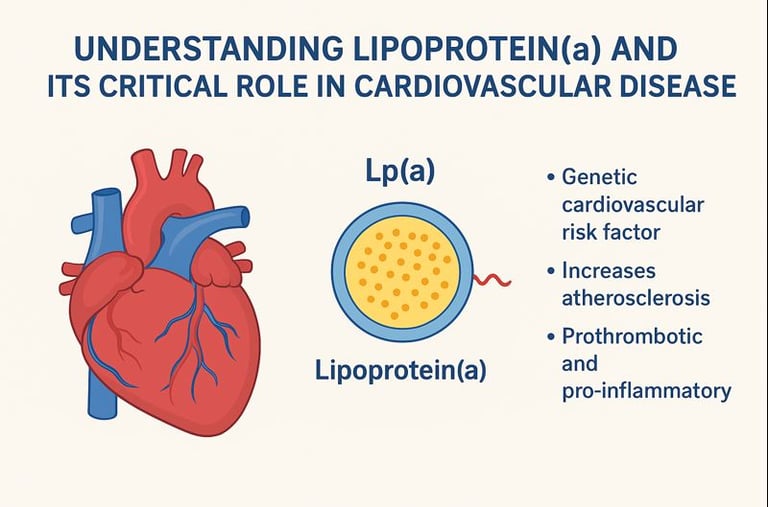
If you’ve recently reviewed your lipid profile and noticed a new term—lipoprotein(a) or Lp(a)—you’re not alone. This once-overlooked biomarker is now emerging as one of the strongest genetic predictors of cardiovascular disease, often more powerful than LDL cholesterol itself. Unlike LDL, which responds to diet, exercise, and statins, Lp(a) is 90% genetically determined, making it a silent threat that lifestyle alone cannot modify. What makes this particularly concerning is that elevated Lp(a) behaves through a dual-hit mechanism: it accelerates atherosclerosis like LDL, while simultaneously promoting clot formation and inflammation due to its unique apo(a) structure (Razavi et al., 2025).
Groundbreaking studies published in 2025 are reshaping how clinicians understand—and must approach—Lp(a). In U.S. Hispanic and Latino populations, even moderate elevations were shown to significantly increase the risk of coronary artery disease, stroke, and all-cause mortality, independent of traditional risk factors (Danilov et al., 2025). Meanwhile, in statin-treated patients with controlled LDL, Lp(a) continues to drive plaque progression and future events, highlighting its role as the ultimate residual risk factor (Fukase et al., 2025). With novel apo(a)-targeting therapies on the horizon, early detection is no longer optional—it is essential for truly personalized cardiovascular prevention.
In this comprehensive guide, we'll explore what Lp(a) is, why it matters for your heart health, and what the latest 2025 research tells us about preventing Lp(a)-related cardiovascular disease. Whether you're a healthcare professional looking to stay current or a patient curious about your own risk, this article will provide evidence-based insights backed by the most recent scientific findings.
Clinical Pearls on Lp(a)
Lp(a) is the Ultimate Residual Risk Factor, Independent of LDL Control.
Pearl: For patients on statin therapy who have achieved their LDL cholesterol goals, elevated Lp(a) levels still predict a persistent and significant risk of plaque progression and future cardiovascular events.
Evidence: The Fukase et al. (2025) study demonstrated that Lp(a) concentrations independently predicted increases in coronary artery plaque burden and volume, even with optimal LDL reduction.
Actionable Takeaway: Do not assume a patient's risk is managed solely because their LDL-C is at goal; Lp(a) screening is mandatory in all patients with established Coronary Artery Disease (CAD).
Screening Must Extend Beyond Traditional High-Risk Demographics.
Pearl: Lp(a) is a crucial, prevalent, and often underdiagnosed independent risk factor across diverse populations and chronic disease states.
Evidence: The Danilov et al. (2025) study established a clear dose-response relationship between Lp(a) and cardiovascular risk in U.S. Hispanic and Latino populations, highlighting a critical gap in current screening protocols. Separately, Alebna et al. (2025) identified a particularly dangerous, amplified risk when elevated Lp(a) co-exists with autoimmune diseases (e.g., lupus, rheumatoid arthritis).
Actionable Takeaway: Screen for Lp(a) not just in patients with a strong family history of premature CAD, but also in diverse ethnic groups and all patients with chronic inflammatory/autoimmune conditions.
Lp(a) Causes Harm Through a Dual Mechanism: Atherogenesis AND Thrombosis/Inflammation.
Pearl: Lp(a)'s danger stems from its similarity to LDL (causing plaque buildup), combined with its unique apolipoprotein(a) component (promoting clotting and inflammation).
Evidence: The Razavi et al. (2025) review consolidates evidence that Lp(a) is inextricably linked to atherosclerosis progression via oxidative stress and inflammation, while also impairing fibrinolysis (the ability to break down clots), making it highly thrombogenic.
Actionable Takeaway: When stratifying risk, recognize that Lp(a) increases the risk of both slow plaque buildup and acute, life-threatening thrombotic events (heart attack, stroke).
Lp(a) Management Requires Personalized, Cluster-Based Intervention.
Pearl: Patients with elevated Lp(a) are not a homogenous group; their overall risk profile dictates the best management strategy.
Evidence: The Saraiva et al. (2025) clustering analysis identified distinct patient phenotypes: some have high Lp(a) as their sole primary risk, while others have Lp(a) combined with significant metabolic abnormalities (obesity, insulin resistance).
Actionable Takeaway: A "one-size-fits-all" approach is insufficient. Patients with high Lp(a) only may be primary candidates for emerging targeted Lp(a)-lowering therapies, while those with coexisting metabolic syndrome require aggressive, comprehensive lifestyle and pharmacologic intervention for all associated risks.
Emerging Therapies are Transforming Lp(a) from an Unchangeable Risk Factor into a Modifiable Target.
Pearl: While lifestyle and statins fail to significantly lower Lp(a), genetic-level therapies are on the horizon, shifting the focus from risk awareness to active intervention.
Evidence: The Razavi et al. (2025) review highlighted the rapid development of novel apo(a)-targeting therapies, such as RNA interference agents, which promise significant Lp(a) reduction and offer hope for millions at high genetic risk.
Actionable Takeaway: Clinicians must be ready to discuss and integrate these future targeted therapies. The current inability to treat high Lp(a) with standard drugs is temporary, making early diagnosis more critical than ever to identify future treatment candidates.
Understanding Lipoprotein(a) and Its Critical Role in Cardiovascular Disease
What Is Lipoprotein(a) and Why Should You Care?
Lipoprotein(a) is a cholesterol-carrying particle that's remarkably similar to LDL cholesterol but with one critical difference: it contains an additional protein called apolipoprotein(a), or apo(a). This genetic variation makes Lp(a) unique and potentially more dangerous for cardiovascular health.
Unlike your diet or lifestyle—which you can modify to some degree—your Lp(a) levels are primarily determined by genetics. Studies show that up to 90% of the variation in Lp(a) concentration is inherited, making it a fundamental genetic cardiovascular risk factor. This means that no matter how carefully you exercise or watch your diet, if you have genes that produce high Lp(a), your baseline risk for coronary artery disease, heart attacks, and stroke is elevated.
What makes Lp(a) particularly concerning is its dual mechanism of harm. First, it behaves like LDL cholesterol, infiltrating artery walls and contributing to atherosclerosis. Second, it has prothrombotic and pro-inflammatory properties, meaning it promotes blood clotting and inflammation—two key drivers of heart attacks and strokes. This makes Lp(a) and cardiovascular events an especially dangerous combination.
Emerging Evidence: What 2025 Research Reveals About Lp(a)
Study 1: Lp(a) and Cardiovascular Risk in U.S. Hispanic and Latino Populations
Danilov et al. (2025) conducted one of the most comprehensive investigations into Lp(a) and cardiovascular disease within U.S. Hispanic and Latino communities, publishing their findings in the Journal of the American College of Cardiology. This landmark study enrolled thousands of participants from diverse Hispanic and Latino backgrounds, tracking the association between Lp(a) levels and both cardiovascular disease and all-cause mortality.
Key Findings:
The researchers discovered a striking dose-response relationship between Lp(a) concentration and cardiovascular risk. Participants with elevated Lp(a) experienced significantly higher rates of coronary artery disease, myocardial infarction (heart attacks), stroke, and all-cause mortality. Importantly, this association remained significant even after accounting for traditional risk factors like LDL cholesterol, hypertension, and diabetes. The study demonstrated that Lp(a) acts as an independent cardiovascular risk factor, meaning it increases risk beyond what traditional lipid markers predict.
Clinical Significance:
This research highlights a critical gap in cardiovascular disease prevention: many Hispanic and Latino individuals with dangerous Lp(a) levels go undiagnosed because Lp(a) screening isn't routinely performed. Since Lp(a) is genetically determined and cannot be significantly lowered by diet or conventional statins, early identification opens doors to emerging therapies that specifically target Lp(a). For clinicians, this study underscores the importance of risk stratification in diverse populations and the need for expanded Lp(a) testing protocols.
Study 2: Patient Profiling and Clustering Analysis in Elevated Lp(a)
Saraiva et al. (2025) took a different approach, employing advanced clustering analysis published in Frontiers in Cardiovascular Medicine. Rather than looking at Lp(a) in isolation, these researchers used unbiased statistical methods to identify distinct patient profiles among individuals with elevated Lp(a) levels.
Key Findings:
The clustering analysis revealed that individuals with elevated Lp(a) don't form a homogeneous group. Instead, the researchers identified multiple Lp(a)-associated patient phenotypes, each with unique clinical characteristics and risk profiles. Some patient clusters had Lp(a) as their primary risk factor with relatively normal traditional lipid profiles, while others exhibited Lp(a) elevation alongside other metabolic abnormalities like dyslipidemia, obesity, and insulin resistance. This heterogeneity is clinically crucial because it suggests that Lp(a) management strategies must be personalized.
Clinical Significance:
The discovery of distinct Lp(a) patient subtypes has profound implications for both research and clinical practice. It suggests that a one-size-fits-all approach to Lp(a)-related cardiovascular disease prevention will be insufficient. Some patients may benefit most from emerging Lp(a)-lowering therapies, while others might require more comprehensive metabolic interventions addressing their specific cluster characteristics. This research underscores the importance of precision medicine in cardiovascular disease management and the need for more sophisticated patient risk stratification tools.
Study 3: Global Public Health and Therapeutic Innovation
Razavi et al. (2025) published a comprehensive review in Current Cardiology Reports, framing Lp(a) as a global public health concern while synthesizing emerging therapeutic approaches. This review consolidates current knowledge about why Lp(a) is a cardiovascular health crisis and what innovations are on the horizon.
Key Findings:
The authors document that approximately 1 in 5 people worldwide have elevated Lp(a) levels (above 50 mg/dL), making it remarkably prevalent as a hidden cardiovascular risk factor. Yet despite this high prevalence, Lp(a) screening remains uncommon in routine clinical practice. The review highlights how Lp(a) and atherosclerosis progression are inextricably linked through multiple mechanisms: oxidative stress, inflammation, lipoprotein(a) aggregation, and impaired fibrinolysis.
Importantly, Razavi et al. (2025) describe emerging Lp(a)-lowering therapies, including novel approaches to reduce apo(a) expression at the genetic level. These represent a paradigm shift from our current inability to significantly lower Lp(a) with conventional medications.
Clinical Significance:
This review contextualizes Lp(a) within global health priorities and demonstrates that solutions are emerging. The identification of Lp(a) as a modifiable public health concern—even though individuals' genetic predisposition cannot be changed—offers hope for millions at risk. The therapeutic innovations discussed suggest we're entering a new era where Lp(a) management moves beyond risk awareness into active, targeted intervention.
Study 4 & 5: Lp(a) as a Persistent Residual Risk Factor in Treated Patients
Fukase et al. (2025) published a critical study in Scientific Reports examining Lp(a) in a population that's often overlooked: patients with coronary artery disease who are already on statin therapy. This research specifically investigated whether Lp(a) remains a significant risk factor even when LDL cholesterol is well-controlled.
Key Findings:
The study tracked patients with established coronary artery disease who were receiving standard statin treatment and found something sobering: Lp(a) is a residual risk factor independent of LDL cholesterol reduction. In other words, even when statins successfully lower LDL cholesterol to recommended targets, elevated Lp(a) levels continue to predict atherosclerotic coronary plaque progression. This finding has enormous clinical importance because it explains why some patients continue to suffer cardiovascular events despite optimal LDL control—the Lp(a) is silently driving disease progression.
The researchers documented that Lp(a) concentrations independently predicted increases in coronary artery plaque burden, plaque volume, and plaque characteristics associated with increased rupture risk. This demonstrates that Lp(a) and residual cardiovascular risk is a crucial concept: you cannot ignore Lp(a) just because someone's LDL cholesterol is at goal.
Clinical Significance:
For clinicians managing coronary artery disease, this research fundamentally changes how we should approach risk stratification. It suggests that Lp(a) screening should be part of standard care for all patients with cardiovascular disease, and that Lp(a) levels should inform treatment intensification beyond standard LDL-lowering therapy. The concept of residual cardiovascular risk becomes more complete when Lp(a) is measured and considered.
Study 6: Lp(a) and Cardiovascular Risk in Autoimmune Disease
Alebna et al. (2025) explored a particularly vulnerable population: individuals with autoimmune conditions, published in Atherosclerosis. This research examined whether Lp(a) and autoimmunity represent a particularly dangerous combination for cardiovascular events.
Key Findings:
The study found that among individuals with autoimmune diseases—including rheumatoid arthritis, lupus, and other systemic inflammatory conditions—elevated Lp(a) was associated with significantly increased cardiovascular risk. Notably, the Lp(a)-cardiovascular event association appeared to be amplified in the presence of active autoimmune disease. This suggests a potentially multiplicative interaction: the combination of genetic Lp(a) elevation and acquired inflammatory disease creates particularly hazardous conditions for atherosclerosis and cardiovascular events.
The mechanisms underlying this synergy likely involve the convergence of Lp(a) pro-inflammatory properties with the systemic inflammation characteristic of autoimmune conditions, creating a "perfect storm" for accelerated atherosclerosis and cardiovascular disease progression.
Clinical Significance:
This research identifies autoimmune disease patients with elevated Lp(a) as an ultra-high-risk group deserving special clinical attention. Rheumatologists and cardiologists must collaborate more effectively in cardiovascular risk management for these patients. The finding suggests that Lp(a) screening should be routine in autoimmune disease populations, and that particularly aggressive cardiovascular disease prevention strategies may be warranted.
Key Takeaways: What Every Patient and Provider Should Know
Lp(a) is a genetic cardiovascular risk factor that affects millions but remains underdiagnosed. Your Lp(a) level is largely determined by your genes, making it a form of inherited cardiovascular disease risk that independent of your lifestyle choices.
Lp(a) increases cardiovascular risk through multiple mechanisms: atherosclerosis acceleration, blood clotting tendency, and inflammation. This multi-pronged attack on the cardiovascular system makes Lp(a)-related cardiovascular disease particularly dangerous.
Lp(a) is an independent risk factor even when other lipids are controlled. The Fukase et al. (2025) study proves that achieving LDL goals with statins doesn't eliminate Lp(a)-related cardiovascular risk—you cannot ignore Lp(a) in statin-treated patients.
Patient heterogeneity demands personalized approach. The Saraiva et al. (2025) clustering analysis shows that individuals with elevated Lp(a) require individualized assessment; some have Lp(a) as their primary risk driver, while others have Lp(a) plus additional metabolic problems.
Emerging therapies are changing the Lp(a) management landscape. Rather than accepting elevated Lp(a) as unchangeable, new treatments targeting apo(a) expression offer hope for Lp(a)-lowering intervention.
Vulnerable populations require special attention. Hispanic and Latino individuals, those with autoimmune diseases, and patients with established coronary artery disease all deserve routine Lp(a) screening and proactive management.
Frequently Asked Questions About Lp(a) and Cardiovascular Health
Q: How is Lp(a) measured, and what levels should concern me?
A: Lp(a) testing is a simple blood test, typically measured in mg/dL or nmol/L. Levels below 50 mg/dL are generally considered low risk, 50–99 mg/dL is intermediate, 100–160 mg/dL is elevated, and above 160 mg/dL is very high. However, even "intermediate" levels carry increased cardiovascular disease risk, especially when combined with other factors.
Q: Can diet or exercise lower my Lp(a)?
A: Unfortunately, Lp(a) is largely resistant to lifestyle modifications. Diet and exercise won't significantly lower your Lp(a) because it's genetically determined. This is why Lp(a) screening and medical management are crucial for those with elevated levels.
Q: If I'm taking a statin and my LDL is at goal, do I still need to worry about Lp(a)?
A: Absolutely. The Fukase et al. (2025) research clearly demonstrates that Lp(a) remains a significant cardiovascular risk factor even with optimal LDL cholesterol control. If you have elevated Lp(a), your cardiologist should be aware, and you may benefit from additional cardiovascular risk reduction strategies.
Q: Are there treatments specifically for lowering Lp(a)?
A: Yes! Emerging therapies targeting apo(a) expression, including PCSK9 inhibitors at high doses and novel RNA interference agents, show promise for Lp(a) reduction. Discuss these options with your cardiologist if you have significantly elevated Lp(a).
Q: Should everyone be screened for Lp(a)?
A: The American Heart Association recommends Lp(a) screening for those with personal or family history of cardiovascular disease, premature heart attacks or strokes, and certain populations (like those of European descent). However, broader screening may be justified given the prevalence and consequences of elevated Lp(a).
Q: How does Lp(a) differ from regular cholesterol?
A: Unlike LDL cholesterol, Lp(a) is genetically determined and not significantly affected by diet or standard medications. Additionally, Lp(a) has unique pro-clotting and pro-inflammatory properties that make it particularly atherogenic and thrombogenic.
Q: Does having elevated Lp(a) mean I'll definitely have a heart attack?
A: No. Elevated Lp(a) increases your cardiovascular risk, but it's not a certainty. However, it means you should be more vigilant about managing other modifiable risk factors like blood pressure, LDL cholesterol, smoking, and diabetes.
Implications for Clinical Practice
Healthcare providers should consider implementing the following evidence-based practices based on the 2025 research:
Screening Protocols: Expand Lp(a) screening beyond high-risk groups to include all patients with established cardiovascular disease, those with family histories of premature heart disease, and diverse populations like Hispanic and Latino individuals, where data now confirms Lp(a) and cardiovascular disease associations.
Risk Stratification: Use Lp(a) results to refine cardiovascular risk assessment and inform treatment intensity. A patient with both elevated Lp(a) and other risk factors requires more aggressive intervention than traditional risk calculators might suggest.
Interdisciplinary Collaboration: Cardiologists should communicate with primary care providers and specialists managing chronic conditions like autoimmune diseases about the importance of Lp(a) in their patients' cardiovascular disease prevention.
Medication Selection: For appropriate candidates, consider PCSK9 inhibitors or emerging Lp(a)-lowering agents as part of comprehensive cardiovascular disease prevention strategies.
Patient Education: Help patients understand that Lp(a) is genetic and not their fault, reducing shame while emphasizing the importance of proactive management despite this unchangeable risk factor.
The Future of Lp(a) Management
The convergence of these five 2025 studies paints a clear picture: Lp(a) is far more important in cardiovascular disease than previously recognized, affects diverse populations, persists as a risk factor even with optimal standard therapy, and is increasingly targetable with emerging treatments. The coming decade will likely see:
Wider routine Lp(a) screening in clinical practice
Increased development and approval of Lp(a)-lowering medications
Better integration of Lp(a) assessment into cardiovascular risk calculators
More sophisticated approaches to Lp(a) patient stratification using methods like clustering analysis
Greater awareness among the general public that Lp(a) is a significant but manageable inherited cardiovascular risk factor
Author’s Note
As a clinician , I have witnessed firsthand how often elevated lipoprotein(a) goes undetected—despite being one of the most potent genetic drivers of heart disease. For years, Lp(a) sat in the shadows of LDL and HDL, rarely measured and frequently misunderstood. The recent wave of 2025 research has made it clear that this cannot continue. Lp(a) is not a niche marker; it is a major, high-impact determinant of cardiovascular risk, especially in diverse populations and patients with chronic inflammatory conditions.
My goal in writing this article is to translate complex scientific data into clear, actionable insights that empower both healthcare professionals and patients. Elevated Lp(a) is not your fault—it is inherited. But with improved screening, risk stratification, and the rapid development of targeted therapies, we are entering a new era where Lp(a) is becoming a modifiable risk factor.
I hope this comprehensive guide encourages clinicians to integrate routine Lp(a) testing into practice and motivates patients to advocate for their own screening. Awareness is the first step; personalized prevention is the next. Together, we can shift the landscape of cardiovascular risk management and improve long-term outcomes.
Disclaimer: This article is for informational purposes only and does not constitute medical advice. Individual circumstances vary, and treatment decisions should always be made in consultation with qualified healthcare professionals.
Related Articles
ApoB vs LDL Cholesterol: Which Is the Most Accurate Predictor of Heart Disease?
Atherogenic Dyslipidemia Explained: The Role of ApoB in Hidden Cardiovascular Risk
Why Your Waistline Matters More Than Your Weight for Heart Health | DR T S DIDWAL
The Metabolic Triad: Why Diabetes, Obesity & CVD Are One Epidemic | DR T S DIDWAL
What’s New in the 2025 Blood Pressure Guidelines? A Complete Scientific Breakdown | DR T S DIDWAL
Muscle Loss and Cardiovascular Disease: The Overlooked Connection You Need to Know | DR T S DIDWAL
References
Alebna, P. L., Ambrosio, M., Martin, M., Martey, S., Spitz, J. A., Sharma, G., Van Tassell, B., Dixon, D. L., Hundley, W. G., Salloum, F. N., & Mehta, A. (2025). Association of lipoprotein(a) with cardiovascular events among individuals with autoimmune conditions. Atherosclerosis, 406, 119244. https://doi.org/10.1016/j.atherosclerosis.2025.119244
Danilov, A., Duran-Luciano, P., Yuan, Y., De Oliveira Gomes, D., López, J. A. G., Kent, S. T., Booth, J. N., 3rd, Slipczuk, L., Martinez, C., Kaplan, R., Sotres-Alvarez, D., Thyagarajan, B., Marcovina, S., Sofer, T., Daviglus, M., Mehta, A., Navar, A. M., Levine, S. R., Floyd, J., Zou, F., … Rodriguez, C. J. (2025). Association of Lp(a) with cardiovascular disease and all-cause mortality in U.S. Hispanics and Latinos. Journal of the American College of Cardiology, 86(23), 2292–2310. https://doi.org/10.1016/j.jacc.2025.09.1605
Fukase, T., Dohi, T., Takahashi, N., et al. (2025). Clinical significance of lipoprotein(a) as a residual risk factor for atherosclerotic coronary plaque progression in statin-treated patients with coronary artery disease. Scientific Reports, 15, Article 30845. https://doi.org/10.1038/s41598-025-30845-1
Razavi, A. C., Hong, J., & Bhatia, H. S. (2025). Lp(a): Global public health concern: Emerging knowledge and therapeutic approaches. Current Cardiology Reports, 27(1), 104. https://doi.org/10.1007/s11886-025-02255-2
Saraiva, M., Garcez, J., Tavares da Silva, B., Ferreira, I. P., Oliveira, J. C., & Palma, I. (2025). Unveiling patient profiles associated with elevated Lp(a) through an unbiased clustering analysis. Frontiers in Cardiovascular Medicine, 12, 1546351. https://doi.org/10.3389/fcvm.2025.1546351