Just 2 Strength Workouts a Week Can Transform Your Metabolism—Here’s How
Muscle is your metabolic engine. Learn how resistance training improves insulin sensitivity, reduces fat, and protects your heart.
EXERCISEMETABOLISM
Dr. T.S. Didwal, M.D.(Internal Medicine)
5/3/202617 min read
What are the benefits of resistance training for cardiometabolic health?
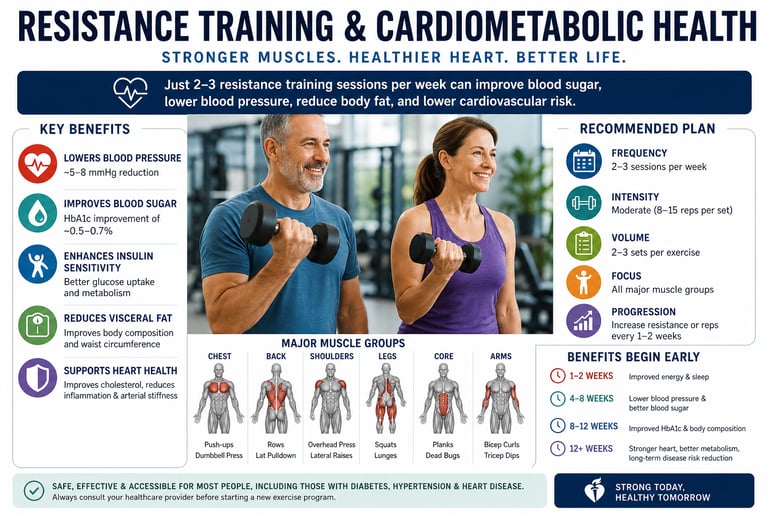
Resistance training performed 2–3 times per week significantly improves cardiometabolic health by lowering blood pressure (≈5–8 mmHg), reducing HbA1c (≈0.5–0.7%), improving insulin sensitivity, and decreasing visceral fat. These benefits occur within 4–12 weeks and are observed even without weight loss. Resistance training is safe and effective for individuals with Type 2 diabetes, hypertension, and cardiovascular disease when appropriately prescribed.
How does resistance training improve heart and metabolic health?
Lowers blood pressure (≈5–8 mmHg)
Reduces HbA1c (≈0.5–0.7%)
Improves insulin sensitivity
Decreases visceral (abdominal) fat
Improves lipid profile (↑ HDL, ↓ triglycerides)
Reduces inflammation (CRP, IL-6)
Enhances vascular function and arterial flexibility
Works independent of weight loss
Benefits begin in 4–8 weeks
What is the recommended resistance training plan for cardiometabolic health?
Frequency: 2–3 sessions per week
Intensity: Moderate (8–15 repetitions per set)
Volume: 2–3 sets per exercise
Focus: All major muscle groups
Duration: 20–45 minutes per session
Progression: Gradually increase resistance or repetitions every 1–2 weeks
Is 2 workouts per week enough?
Yes. Performing resistance training twice per week is sufficient to produce clinically meaningful improvements in blood pressure, insulin sensitivity, and body composition, particularly in beginners and clinical populations. Consistency and progressive overload are key, and benefits can appear within weeks, even without weight loss (American Heart Association; Ashton et al., 2020).
Clinician’s Perspective
Think of resistance training as “metabolic medicine.”
From a clinical standpoint, regular strength training improves multiple risk factors at once—blood sugar, blood pressure, cholesterol, and body composition—making it one of the most efficient non-drug interventions we can recommend.You don’t need extreme workouts to benefit.
Moderate-intensity exercise (where you can complete 8–15 repetitions with effort) is sufficient to produce meaningful improvements. Consistency matters far more than intensity.Benefits begin earlier than most patients expect.
Improvements in insulin sensitivity can occur within days, while measurable reductions in blood glucose and blood pressure often appear within 4–8 weeks—even before weight loss is noticeable.It works even if the scale doesn’t change.
Many patients feel discouraged when weight loss is slow. Clinically, we often see metabolic health improve first—better HbA1c, lower triglycerides, reduced waist circumference—before body weight shifts significantly.Particularly valuable in Type 2 diabetes and hypertension.
Resistance training increases muscle glucose uptake and reduces vascular stiffness, directly targeting the root physiology of these conditions.Safe for most cardiac patients—with proper guidance.
Current guidelines support resistance training in stable cardiovascular disease, including during cardiac rehabilitation, provided it is introduced gradually and monitored when needed.Muscle is protective as you age.
Preserving or building muscle mass helps prevent frailty, improves balance, and maintains independence—while also supporting long-term metabolic health.Small, sustainable routines are clinically effective.
Even two sessions per week can produce measurable health benefits. Starting with simple bodyweight exercises at home is often enough.Best results come from combining approaches.
Pairing resistance training with regular walking or aerobic activity provides additive cardiovascular and metabolic benefits.Bottom line:
As clinicians, we increasingly view resistance training not as optional fitness, but as a core component of disease prevention and treatment.HbA1c ↓ 0.5–0.7%
SBP ↓ 5–8 mmHg
Visceral fat ↓ %
Why Your Muscles Are Your Best Medicine
Resistance training has emerged as a cornerstone intervention for improving cardiometabolic health, with robust evidence supporting its role in reducing the risk and progression of Type 2 Diabetes, hypertension, and Cardiovascular Disease. Once considered secondary to aerobic exercise, it is now recognized as a primary therapeutic strategy, endorsed by leading organizations such as the American Heart Association (Paluch et al., 2024).
Recent systematic reviews and meta-analyses demonstrate that resistance training performed just 2–3 times per week significantly improves key metabolic parameters, including reductions in HbA1c, fasting glucose, and blood pressure, along with enhanced insulin sensitivity and favorable changes in body composition (Al-Mhanna et al., 2025; Ashton et al., 2020). Importantly, these benefits often occur within 4–12 weeks and are observed even in the absence of substantial weight loss—highlighting that metabolic health can improve independently of the scale.
The physiological mechanisms underlying these effects are multifactorial. Resistance training increases skeletal muscle mass, the primary site for glucose disposal, thereby improving glycemic control. It also enhances endothelial function, reduces arterial stiffness, and promotes favorable autonomic balance, all of which contribute to cardiovascular protection (Valenzuela et al., 2023). Additionally, emerging evidence suggests that resistance training induces epigenetic modifications that influence gene expression related to metabolic and vascular health, offering a novel explanation for its sustained benefits (Silva et al., 2026).
Clinically, resistance training is effective across diverse populations, including older adults, women, and individuals with established cardiometabolic disease (Liu et al., 2025). Moderate-intensity protocols—typically involving 8–15 repetitions per set—provide an optimal balance of efficacy and safety (De Oude et al., 2025).
What Is Cardiometabolic Health? A Plain-Language Overview
Cardiometabolic health is an umbrella term capturing several interrelated physiological markers that collectively predict your risk of cardiovascular disease (CVD), Type 2 diabetes, metabolic syndrome, and related conditions. Rather than fixating on a single number — say, weight or blood pressure in isolation — cardiometabolic health considers the full picture:
Blood pressure (systolic and diastolic)
Fasting blood glucose and HbA1c (long-term glucose control)
Insulin sensitivity
Lipid profile (HDL, LDL, triglycerides)
Body composition (lean mass vs. fat mass, especially visceral/abdominal fat)
Inflammatory markers (e.g., C-reactive protein)
Resting heart rate and autonomic balance
When these markers deteriorate together — a condition called metabolic syndrome — the risk of heart attack, stroke, and diabetes compounds dramatically. Conversely, improvements across these markers, even modest ones, translate into real-world reductions in hospitalizations, medication dependence, and mortality.
This is precisely where resistance training excels: it acts on nearly all of these markers simultaneously, through distinct physiological mechanisms.
The Science: What Recent Research Tells Us
1. Resistance Training in Type 2 Diabetes and Obesity (Al-Mhanna et al., 2025)
One of the most comprehensive analyses to date was published in the British Journal of Sports Medicine in 2025. This rigorous systematic review and meta-analysis of randomized controlled trials examined resistance training's effects specifically in patients with Type 2 diabetes and overweight or obesity — populations at the highest cardiovascular risk (Al-Mhanna et al., 2025).
Key findings:
Significant reductions in fasting blood glucose and HbA1c
Meaningful improvements in insulin sensitivity
Reduction in waist circumference and fat mass
Favorable shifts in lipid profiles
Blood pressure reductions in hypertensive participants
Crucially, these improvements emerged within 8–12 weeks — before major changes in body weight were even visible. This finding is clinically important: patients discouraged by the scale may already be experiencing significant internal metabolic benefit.
2. Middle-Aged and Older Women With Type 2 Diabetes (Liu et al., 2025)
A 2025 meta-analysis in Maturitas examined resistance training specifically in middle-aged and older women with Type 2 diabetes and overweight or obesity — a group often underrepresented in exercise research (Liu et al., 2025). The findings reinforced the broader evidence: resistance training significantly improved glycemic control, reduced body fat percentage, and enhanced cardiometabolic profiles in this demographic.
This research matters because it challenges the outdated assumption that strength training is primarily for young men. Women, particularly postmenopausal women, experience unique metabolic vulnerabilities; this study confirms that resistance training addresses them directly and safely.
3. Optimal Intensity: High vs. Low — Does It Matter? (De Oude et al., 2025)
A landmark systematic review and meta-analysis published in the European Heart Journal Open in September 2025 addressed one of the most debated questions in exercise medicine: does resistance training intensity matter for cardiovascular outcomes? (De Oude et al., 2025).
The analysis found that both moderate- and high-intensity resistance training improved cardiovascular risk factors, including blood pressure, lipids, and glucose — but with different magnitude and risk profiles. Moderate intensity (targeting 8–15 repetitions per set) offered the optimal balance of benefit and safety for most clinical populations. This evidence directly informs exercise prescription: you do not need to train to maximum effort to protect your heart. Consistent, moderate effort is sufficient — and more sustainable.
4. Cardiovascular Benefits of Exercise — Mechanisms (Valenzuela et al., 2023)
Understanding why resistance training works requires examining its physiological pathways. A comprehensive review in the European Heart Journal by Valenzuela et al. (2023) identified multiple integrated mechanisms:
Enhanced endothelial-dependent vasodilation — blood vessels become more responsive and flexible
Reduced arterial stiffness — arteries regain compliance, easing the heart's workload
Improved autonomic balance — increased parasympathetic (rest-and-digest) tone, reducing resting heart rate and blood pressure
Reduced systemic inflammation and oxidative stress
Improved myocardial efficiency — the heart pumps more effectively with less strain
Together, these adaptations explain why resistance training lowers blood pressure, reduces cardiovascular event risk, and improves quality of life in patients across the disease spectrum.
5. Short-, Medium-, and Long-Term Effects (Ashton et al., 2020)
Short-Term (≤ 8 weeks): Early metabolic improvements
↓ Blood pressure
↓ Fasting blood glucose
↑ Insulin sensitivity
Clinical insight: Initial benefits are rapid and measurable, even before visible body composition changes
Medium-Term (9–26 weeks): Structural and metabolic adaptation
↑ Lean muscle mass
↓ Visceral (abdominal) fat
↑ Lipid profile (↑ HDL, ↓ triglycerides)
Clinical insight: This phase reflects true metabolic remodeling, with improvements in body composition and cardiometabolic risk
Long-Term (≥ 27 weeks): Vascular and sustained systemic benefits
↑ Endothelial function
↑ Arterial compliance (reduced stiffness)
↑ Resting metabolic rate (sustained)
Clinical insight: Long-term training leads to cardiovascular protection and durability of benefits
Key Clinical Takeaway
Resistance training follows a progressive dose-response pattern
Early gains (within 8–12 weeks) are clinically meaningful
Continued training leads to deeper, sustained cardiometabolic and vascular benefits
6. The AHA 2023 Scientific Statement (Paluch et al., 2024)
Perhaps the most authoritative summary of current evidence, the AHA's 2023 Scientific Statement, published in Circulation, moved resistance training from "supplementary" to essential in cardiovascular care (Paluch et al., 2024). Specific recommendations include:
2–3 resistance training sessions per week for adults, targeting all major muscle groups
Explicit inclusion in cardiac rehabilitation programs for heart failure, coronary artery disease, post-stroke, and hypertensive patients
Safety confirmed across diverse populations when exercise is appropriately progressed
Benefits confirmed with varied modalities: free weights, machines, resistance bands, and bodyweight exercises
This represents a paradigm shift. Strength training is no longer optional for cardiovascular health — it is evidence-based, guideline-endorsed, and clinically imperative.
7. Breaking the Sedentary Cycle (Johnson, 2026)
A 2026 review in Current Epidemiology Reports examined resistance training specifically through the lens of sedentary behavior and cardiovascular risk (Johnson, 2026). The paper highlighted that resistance training is uniquely effective at reversing the metabolic harms of prolonged sitting — a critical insight for office workers, older adults, and individuals with mobility limitations who cannot sustain vigorous aerobic activity.
8. It's Time to Prescribe (Dores et al., 2024)
A compelling perspective paper in the Revista Portuguesa de Cardiologia made the case bluntly: cardiologists need to prescribe resistance training as actively as they prescribe medications (Dores et al., 2024). The authors reviewed the cardiovascular benefits and argued that underutilization of exercise prescription — particularly resistance training — represents a missed opportunity in clinical practice.
9. Epigenetic Regulation — A Frontier Emerging in 2026 (Silva et al., 2026)
The newest dimension of resistance training research explores its effects at the epigenetic level — how exercise changes gene expression without altering DNA itself. A 2026 study in Frontiers in Physiology by Silva et al. demonstrated that resistance training modulates epigenetic markers (including DNA methylation and histone modification) in cardiovascular-relevant genes (Silva et al., 2026). This mechanism may help explain why the benefits of long-term training persist even during periods of reduced activity — resistance training is literally reprogramming cardiovascular and metabolic gene expression.
10. Moderate-Frequency Resistance Training (2–3 Sessions/Week): Targeted Effects on Lipids and Blood Pressure
A 2026 systematic review and meta-analysis in Obesity Reviews evaluated the effects of moderate-frequency resistance training (2–3 sessions/week) in adults with overweight or obesity. Across 12 randomized controlled trials (n ≈ 454), this training frequency produced statistically significant reductions in diastolic blood pressure (≈ −1.5 mmHg), LDL cholesterol, and triglycerides (Wu et al., 2026).
However, unlike broader resistance training meta-analyses, this study found no consistent improvements in fasting glucose, HbA1c, systolic blood pressure, or HDL cholesterol when resistance training was performed in isolation.
Importantly, subgroup analyses suggested that combining resistance training with dietary interventions improved lipid profiles, highlighting that resistance training alone may be insufficient for full cardiometabolic optimisation in higher-risk populations.
Clinical interpretation: Moderate-frequency resistance training (2–3 sessions/week) is effective for improving lipid-related cardiovascular risk and diastolic blood pressure, but its effects on glycemic control may depend on additional factors such as diet, baseline metabolic status, and training volume.
How Resistance Training Works: The Physiological Mechanisms
Muscle as a Metabolic Organ
Resistance training increases skeletal muscle mass, which enhances glucose uptake via insulin-dependent and independent pathways, improving glycemic control.
Skeletal muscle is the largest insulin-sensitive tissue in the body. When you build more of it through resistance training, you expand your body's glucose disposal capacity — the ability to absorb and utilize glucose from the bloodstream. This is why resistance training improves HbA1c and fasting glucose so reliably, even in the absence of significant weight loss (Al-Mhanna et al., 2025).
Vascular Remodeling
Resistance training improves endothelial nitric oxide availability, reducing arterial stiffness and lowering blood pressure.
With consistent training, blood vessels become more elastic, endothelial cells produce more nitric oxide, and the structural stiffness of arteries decreases. The practical result is lower resting blood pressure and a cardiovascular system that handles physical and emotional stress more efficiently (Valenzuela et al., 2023).
Neurohormonal Recalibration
Resistance training normalizes the balance between the sympathetic (stress) and parasympathetic (recovery) branches of the autonomic nervous system. Chronic sympathetic overdrive — common in sedentary, stressed individuals — drives hypertension and arrhythmias. Resistance training shifts this balance favourably, reducing resting heart rate and blood pressure (Paluch et al., 2024).
Anti-Inflammatory Effects
Strength training reduces circulating levels of pro-inflammatory cytokines such as interleukin-6 (IL-6) and C-reactive protein (CRP), while increasing anti-inflammatory mediators. Since chronic low-grade inflammation is a root driver of both cardiovascular disease and insulin resistance, this mechanism is central to resistance training's cardiometabolic benefits.
Epigenetic Reprogramming
As highlighted by Silva et al. (2026), resistance training induces heritable changes in gene expression that support vascular health, metabolic efficiency, and cellular resilience — adaptations that outlast the exercise session itself.
Practical Applications: How to Start and Sustain a Resistance Training Program
Step 1 — Set Your Frequency
Aim for 2–3 sessions per week on non-consecutive days (e.g., Monday, Wednesday, Friday). Research consistently shows that 2 sessions weekly is sufficient for substantial cardiometabolic benefit (Paluch et al., 2024; Ashton et al., 2020). More is not always better; recovery is where adaptation happens.
Step 2 — Choose the Right Intensity
Target 8–15 repetitions per set, using a resistance level that challenges you within that range while maintaining good form. Based on De Oude et al. (2025), moderate intensity offers the best benefit-to-risk ratio for cardiovascular outcomes across most populations.
Step 3 — Design a Balanced Program
Major Muscle Groups and Example Exercises
Chest
Push-ups
Dumbbell press
Back
Seated rows
Lat pulldown
Bent-over row
Shoulders
Overhead press
Lateral raises
Legs
Squats
Lunges
Leg press
Step-ups
Core
Planks
Dead bugs
Cable rotations
Arms
Bicep curls
Tricep dips
Perform 2–3 sets per exercise, with 60–90 seconds rest between sets.
Step 4 — Choose Your Equipment
Any of the following are effective — pick what fits your lifestyle:
Free weights (dumbbells, barbells)
Weight machines (gym)
Resistance bands (home-friendly, travel-compatible)
Bodyweight (push-ups, squats, lunges — zero equipment needed)
The AHA confirms that modality matters less than consistency (Paluch et al., 2024).
Step 5 — Apply Progressive Overload
Every 1–2 weeks, slightly increase the challenge: add a small amount of weight, add a repetition, or reduce rest time. This principle — progressive overload — is what drives continued adaptation and prevents plateaus (Ashton et al., 2020).
Step 6 — Combine Smartly
Resistance training alone delivers robust cardiometabolic benefit, but combining it with 30 minutes of moderate aerobic activity (e.g., brisk walking, cycling) on alternate days offers additive improvements, particularly for lipid profiles and aerobic capacity.
Step 7 — Track Beyond the Scale
Monitor:
Energy levels throughout the day
Sleep quality
Resting heart rate (lower = better cardiovascular fitness)
Blood pressure (at pharmacy or home)
How clothes fit (reflects body composition shifts)
Lab values at your next check-up (glucose, HbA1c, lipids)
Frequently Asked Questions
Q1. I have heart disease — is resistance training safe for me? Yes, for most people with cardiovascular disease, resistance training is not only safe but recommended. The AHA's 2023 Scientific Statement explicitly supports its inclusion in cardiac rehabilitation for heart failure, coronary artery disease, post-stroke recovery, and hypertension, provided appropriate medical clearance and supervision (Paluch et al., 2024). Always consult your cardiologist before starting.
Q2. How quickly will I see results in my blood sugar and blood pressure? Faster than you might expect. Improvements in insulin sensitivity can begin within days. Meaningful reductions in fasting glucose and blood pressure are typically measurable within 4–8 weeks, and HbA1c improvements within 8–12 weeks — often before significant weight loss occurs (Al-Mhanna et al., 2025; Ashton et al., 2020).
Q3. Will strength training make me bulky? No — not for the vast majority of people. Resistance training at moderate intensity builds lean, functional muscle that improves your metabolism and body composition. Significant muscle bulk requires very high training volumes, specific nutrition protocols, and — in women — hormonal conditions that are not typical. Most people simply become leaner, stronger, and metabolically healthier.
Q4. What if I am older or postmenopausal? Does it still work? Absolutely. Liu et al. (2025) confirmed that middle-aged and older women with Type 2 diabetes and obesity achieved significant cardiometabolic improvements through resistance training. Adults in their 70s and 80s demonstrate impressive adaptations. Age is not a barrier — it is, in fact, a reason to start sooner.
Q5. Do I need a gym membership? No. Resistance bands, bodyweight exercises, or even household items (water bottles, backpacks) can effectively stimulate cardiometabolic adaptations. The AHA confirms that the modality matters far less than consistency (Paluch et al., 2024).
Q6. How does resistance training compare to medication for blood sugar control? Research suggests resistance training can match or exceed certain pharmacological interventions in improving HbA1c and insulin sensitivity, particularly in early-stage Type 2 diabetes (Al-Mhanna et al., 2025). It is not a replacement for medication in all cases, but it is a powerful complement — and one with only beneficial side effects. Discuss with your physician how exercise fits into your overall management plan.
Q7. What if I can only manage one session per week? Start there. Any resistance training is better than none. Johnson (2026) notes that even single weekly sessions reduce sedentary-related cardiovascular risk. As you build the habit, progressively work toward the recommended 2–3 sessions weekly.
Clinical Pearls
1. Glycemic Control & Insulin Sensitivity
Resistance training increases the translocation of GLUT4 transporters to the cell membrane in skeletal muscle, enhancing glucose uptake independently of insulin. Recent 2025 meta-analyses show that RT significantly reduces HbA1c levels (averaging a 0.34% to 0.6% drop) by expanding the "glucose sink"—the total volume of metabolically active muscle tissue available to clear sugar from the blood.
Think of your muscles as a "sponge" for sugar. When you strengthen them, that sponge gets bigger and more efficient. For someone with Type 2 diabetes, this means your body doesn't have to work as hard (or use as much medication) to keep your blood sugar in a safe range, especially after meals.
2. Blood Pressure Management
Chronic resistance exercise induces vascular remodeling, reducing arterial stiffness and increasing the bioavailability of nitric oxide, a potent vasodilator. Clinical data indicates that dynamic resistance training can lower systolic blood pressure by approximately 4–6 mmHg and diastolic by 3–5 mmHg, which is comparable to the effect of some first-line antihypertensive medications.
Your arteries are like garden hoses. Over time, they can get stiff and narrow, forcing your heart to pump harder. Lifting weights makes those "hoses" more flexible and wider, allowing blood to flow more easily. Many patients find that within 8 weeks, their morning blood pressure readings start to stabilize at lower numbers.
3. Visceral Fat & Metabolic Rate
While aerobic exercise burns more calories during the session, resistance training increases Resting Energy Expenditure (REE). By increasing lean muscle mass, patients experience a higher "afterburn" effect (Excess Post-exercise Oxygen Consumption). Crucially, RT specifically targets visceral adipose tissue (the dangerous fat surrounding internal organs) through the modulation of myokines like irisin.
Muscle is "expensive" for your body to maintain—it burns calories even when you are sitting on the couch. By building muscle, you turn up your body’s internal thermostat. Even if the number on the scale doesn't drop immediately, you'll likely notice your clothes fitting better around the waist as you swap "hidden" organ fat for functional muscle.
4. Lipid Profile Optimization
Resistance training alters the activity of lipoprotein lipase, an enzyme responsible for clearing fats from the bloodstream. Clinical trials demonstrate a consistent reduction in triglycerides and LDL (bad) cholesterol, alongside a modest but significant increase in HDL (good) cholesterol, particularly when training frequency is 3+ days per week.
Think of resistance training as a "cleanup crew" for your blood. It helps clear out the sticky fats that can clog your pipes (arteries) and boosts the "protector" cholesterol that carries those fats away. It’s a natural way to improve your blood test results without relying solely on statins.
5. Epigenetic "Reprogramming"
Cutting-edge 2026 research has identified that resistance training triggers DNA methylation changes in genes associated with cardiovascular health. This means exercise doesn't just change the muscle; it "turns on" protective genes and "turns off" genes linked to inflammation and cardiac decay, creating a more resilient cellular environment.
You aren't just "working out"—you are literally sending a new set of instructions to your cells. Resistance training helps "flip the switch" on your DNA, telling your body to stay younger and more resilient. This explains why the benefits of strength training often last long after you've left the gym.
6. Autonomic Nervous System Balance
High-intensity resistance training improves Heart Rate Variability (HRV) and enhances vagal tone. By recalibrating the balance between the sympathetic (fight-or-flight) and parasympathetic (rest-and-digest) systems, RT reduces the chronic "stress load" on the myocardium, leading to a lower resting heart rate and better stress recovery.
Strength training teaches your heart how to handle stress. By putting your body under a controlled "good stress" (lifting a weight), you train your nervous system to stay calm the rest of the day. Patients often report feeling less "jittery," sleeping better, and noticing their heart doesn't race as easily during stressful moments.
Author’s Note
As a clinician in internal medicine, I have seen a consistent pattern across patients with Type 2 Diabetes, hypertension, and Cardiovascular Disease: medications can stabilize numbers, but long-term transformation requires addressing the underlying physiology. Resistance training is one of the few interventions that directly targets this root—improving insulin sensitivity, vascular function, and body composition simultaneously.
What has changed in recent years is not just the volume of evidence, but its clarity. High-quality meta-analyses and guideline statements, including those from the American Heart Association, now place resistance training alongside aerobic exercise as a foundational therapy rather than an optional add-on. This represents a meaningful shift in how we approach prevention and treatment.
Equally important is the realization that benefits are not reserved for athletes or younger individuals. In clinical practice, I routinely see patients in their 50s, 60s, and beyond experience measurable improvements in blood sugar, blood pressure, and overall functional capacity within weeks of starting a structured, moderate program. Often, these changes occur even before visible weight loss, which can be both surprising and motivating.
While some recent analyses have focused specifically on adults with overweight or obesity, the broader body of evidence shows that resistance training delivers consistent cardiometabolic benefits across diverse populations, including individuals with Type 2 diabetes, hypertension, cardiovascular disease, and older adults (Al-Mhanna et al., 2025; Liu et al., 2025; Paluch et al., 2024).
This distinction is clinically important: although subgroup-specific studies help refine effect sizes, the underlying physiological mechanisms—improved insulin sensitivity, enhanced vascular function, and reduced inflammation—are universal, making resistance training applicable as a foundational intervention across risk categories.
Disclaimer: This article is for informational and educational purposes only and does not constitute medical advice. Individual circumstances vary. Always consult a qualified healthcare professional or board-certified cardiologist before beginning any new exercise program, particularly if you are sedentary, over age 45, or have a history of cardiovascular or metabolic conditions.
Related Articles
How Exercise Rewires Your Metabolism: Best Workouts for Blood Sugar, Fat Loss and Heart Health
Why Strength Training Reduces Inflammation and May Prevent Most Chronic Diseases.
The Science of Healthy Brain Aging: Microglia, Metabolism & Cognitive Fitness | DR T S DIDWAL
The Aging Muscle Paradox: How Senescent Cells Cause Insulin Resistance and The Strategies to Reverse It | DR T S DIDWAL
VO2 Max & Longevity: The Ultimate Guide to Living Longer | DR T S DIDWAL
References
Al-Mhanna, S. B., Franklin, B. A., Jakicic, J. M., Stamatakis, E., Pescatello, L. S., Riebe, D., Thompson, W. R., Skinner, J., Colberg, S. R., Alkhamees, N. H., Bin Sheeha, B., Gülü, M., Alghannam, A. F., & Batrakoulis, A. (2025). Impact of resistance training on cardiometabolic health-related indices in patients with type 2 diabetes and overweight/obesity: A systematic review and meta-analysis of randomised controlled trials. British Journal of Sports Medicine, 59(10), 733–746. https://doi.org/10.1136/bjsports-2024-108947
Ashton, R. E., Tew, G. A., Aning, J. J., Gilbert, S. E., Lewis, L., & Saxton, J. M. (2020). Effects of short-term, medium-term and long-term resistance exercise training on cardiometabolic health outcomes in adults: Systematic review with meta-analysis. British Journal of Sports Medicine, 54(6), 341–348. https://doi.org/10.1136/bjsports-2017-098970
De Oude, K. I., Elbers, R. G., Gerger, H., Maes-Festen, D. A. M., & Oppewal, A. (2025). The effect of different resistance exercise training intensities on cardiovascular risk factors: A systematic review and meta-analysis. European Heart Journal Open, 5(5), oeaf093. https://doi.org/10.1093/ehjopen/oeaf093
Dores, H., Antunes, M., Caldeira, D., & Pereira, H. V. (2024). Cardiovascular benefits of resistance exercise: It's time to prescribe. Revista Portuguesa de Cardiologia. https://doi.org/10.1016/j.repc.2024.02.009
Johnson, M. A. (2026). Breaking the sedentary cycle: The role of resistance training in cardiovascular health and disease prevention. Current Epidemiology Reports, 13, 10. https://doi.org/10.1007/s40471-026-00390-0
Liu, R., Shi, X., & Zhang, X. (2025). The effects of resistance training on glycemic control, cardiometabolic health, and body composition in middle-aged and older women with type 2 diabetes and overweight or obesity: A systematic review and meta-analysis. Maturitas, 201, 108691. https://doi.org/10.1016/j.maturitas.2025.108691
Paluch, A. E., Boyer, W. R., Franklin, B. A., Laddu, D., Lobelo, F., Lee, D. C., McDermott, M. M., Swift, D. L., Webel, A. R., & Lane, A. (2024). Resistance exercise training in individuals with and without cardiovascular disease: 2023 update. A scientific statement from the American Heart Association. Circulation, 149(3), e217–e231. https://doi.org/10.1161/CIR.0000000000001189
Silva, J. G., Rodrigues, L. F., Torres, T., Improta-Caria, A. C., Oliveira, E. M., & Fernandes, T. (2026). Resistance training and cardiovascular health: Epigenetic regulation. Frontiers in Physiology, 16, 1701689. https://doi.org/10.3389/fphys.2025.1701689
Wu, Y., Zhang, Y., Li, Y., Tin, H. T., Li, Y., & Yan, X. (2026). Effects of moderate-frequency resistance training on cardiometabolic risk factors in adults with overweight or obesity: A systematic review and meta-analysis. Obesity Reviews, e70130. https://doi.org/10.1111/obr.70130
Valenzuela, P. L., Ruilope, L. M., Santos-Lozano, A., Wilhelm, M., Kränkel, N., Fiuza-Luces, C., & Lucia, A. (2023). Exercise benefits in cardiovascular diseases: From mechanisms to clinical implementation. European Heart Journal, 44(21), 1874–1889. https://doi.org/10.1093/eurheartj/ehad170