How to Prevent Cognitive Decline: 12 Science-Backed Strategies to Protect Your Brain
Discover 12 evidence-based ways to prevent cognitive decline and reduce dementia risk. Learn how exercise, sleep, diet, social connection, and brain training protect long-term brain health.
AGING
Dr. T.S. Didwal, M.D.(Internal Medicine)
5/30/202624 min read
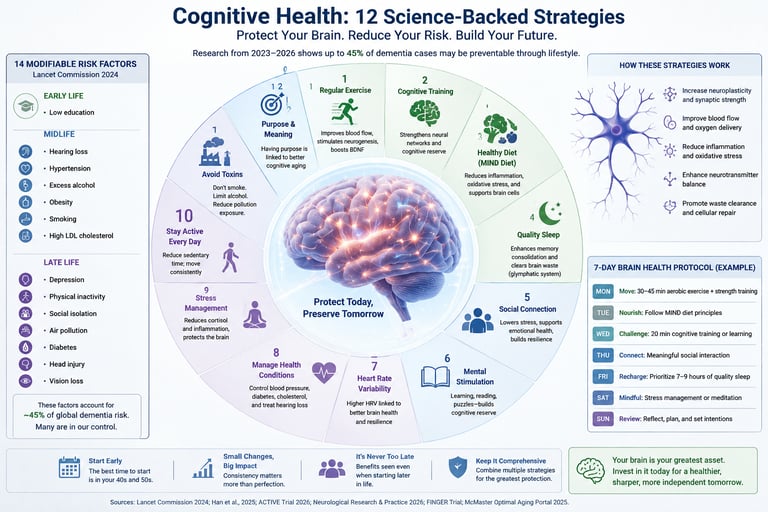
Every three seconds, another person somewhere in the world develops dementia — a statistic that feels abstract until it becomes personal. By 2050, more than 153 million people are projected to be living with the condition, a burden that will touch nearly every family (Reetz et al., 2026). Yet the most striking finding from the last two years of research is not how common cognitive decline is, but how much of it may be preventable.
In 2024, the Lancet Commission concluded that up to 45% of all dementia cases worldwide could be delayed or prevented by addressing 14 modifiable risk factors, from midlife hypertension and hearing loss to late-life social isolation and physical inactivity (Livingston et al., 2024). These aren’t rare, exotic threats. They are everyday aspects of how we move, sleep, eat, connect, and manage chronic health conditions.
What’s changed is our understanding of when prevention starts. The brain changes that lead to Alzheimer’s disease — amyloid plaques and tau tangles — can begin 20 to 30 years before memory slips become noticeable. That means the choices you make in your 40s and 50s help determine how your brain functions in your 70s and 80s. And the mechanisms are clearer than ever: exercise increases brain-derived neurotrophic factor and cerebral blood flow, sleep activates the brain’s glymphatic “cleaning system,” and cognitive challenge builds reserve that buffers against pathology (Han et al., 2025; Yamasaki & Ikeda, 2024).
This guide translates that science into a practical plan. You’ll learn the 12 interventions with the strongest evidence, how each one protects your brain at the cellular level, and the exact weekly protocol researchers are using in trials like FINGER. Prevention isn’t a promise of immunity — but it is, increasingly, a matter of odds you can improve.
Key Takeaways: How to Prevent Cognitive Decline
Up to 45% of dementia cases may be preventable by addressing 14 modifiable risk factors like hypertension, hearing loss, physical inactivity, and social isolation (Lancet Commission, 2024).
Brain changes start 20–30 years before symptoms. Midlife — your 40s and 50s — is the most powerful window for prevention.
Exercise is the single most effective intervention. Combined aerobic + resistance training shows the largest cognitive benefits, boosting BDNF, blood flow, and hippocampal volume (Han et al., 2025).
Sleep clears brain waste. 7–9 hours of deep sleep activate the glymphatic system to flush amyloid and tau proteins. Chronic sleep under 6 hours raises dementia risk 25–30%.
The MIND diet slows brain aging. Daily leafy greens, berries, fish, and olive oil are linked to cognition equivalent to being 7.5 years younger.
Processing-speed training has 20-year benefits. The ACTIVE study found it reduced dementia risk over two decades — more than memory games (Coe et al., 2026).
Manage hearing, blood pressure, and depression. These are the top modifiable medical risks. Treating hearing loss and hypertension directly protects the brain.
Social connection is medicine. Loneliness increases dementia risk by 50%. Meaningful conversation and engagement build cognitive reserve.
Multidomain approaches work best. The FINGER trial proved that combining exercise, diet, cognitive training, and vascular risk management outperforms any single strategy.
It’s never too late to start. Even after 65, lifestyle changes improve brain health and can slow mild cognitive impairment.
1. What Is Cognitive Decline — And When Does It Start?
Cognitive decline refers to a gradual deterioration in one or more mental abilities: memory, reasoning, language, attention, or executive function. It exists on a spectrum — from the subtle "senior moments" that are normal with aging, to Mild Cognitive Impairment (MCI), all the way to Alzheimer's disease and other dementias.
Here's what surprises most people: the brain changes associated with Alzheimer's disease can begin 20 to 30 years before symptoms appear. Amyloid plaques and tau tangles start accumulating silently in midlife. This is why prevention cannot wait until your 70s — the ideal window for intervention is your 40s and 50s.
Normal Aging vs. Pathological Decline
It's important to distinguish between the two. Normal age-related changes include slightly slower processing speed and mild difficulty with multi-tasking. These do not significantly impair daily life. Pathological decline — MCI or dementia — involves memory loss that disrupts daily activities, getting lost in familiar places, or severe personality changes.
45%of global dementia cases may be attributable to 14 modifiable risk factors — meaning nearly half could be prevented or delayed through lifestyle change. (Lancet Commission, 2024)
The Concept of Cognitive Reserve
One of the most empowering ideas in neuroscience is cognitive reserve — the brain's resilience against damage. People with higher cognitive reserve (built through education, social engagement, mental stimulation, and physical activity) can tolerate more pathological changes before showing symptoms. Building your reserve now is one of the most powerful investments you can make.
2. The 14 Modifiable Risk Factors for Dementia
The 2024 Lancet Commission on Dementia Prevention identified 14 modifiable risk factors that, taken together, account for approximately 45% of the global dementia burden. A subsequent 2025 paper in eBioMedicine proposed expanding this to 18 factors, incorporating HIV, vision loss, high LDL cholesterol, and systemic inflammation.
Understanding these risk factors is the foundation of any prevention strategy. Some are better known; others may surprise you.
Research suggests that nearly half of dementia cases may be linked to factors that can be modified throughout life. These risk factors operate across different stages of the lifespan:
Early Life
Low educational attainment
Midlife
Hearing loss
Hypertension (high blood pressure)
Excessive alcohol consumption
Obesity
Smoking
Elevated LDL ("bad") cholesterol
Later Life
Depression
Physical inactivity
Social isolation
Air pollution exposure
Diabetes
Head injury
Vision loss
Importantly, these risk factors rarely occur in isolation. For example, physical inactivity often coexists with obesity, hypertension, diabetes, and depression, creating a cumulative effect on brain health. This clustering helps explain why comprehensive, multidomain approaches—combining exercise, nutrition, cognitive engagement, social connection, and management of vascular risk factors—consistently produce greater benefits than interventions targeting a single risk factor alone
Medical Note
If you have any of the above conditions (hypertension, diabetes, hearing loss, depression), working with your doctor to manage them is one of the highest-impact steps you can take for brain health — often more powerful than any supplement.
3. Exercise: The Single Most Powerful Brain Intervention
If there is one thing neuroscientists agree on, it's this: physical exercise is the most robust lifestyle intervention for brain health ever studied. It stimulates neurogenesis (birth of new neurons) in the hippocampus — the brain's memory hub — increases BDNF (Brain-Derived Neurotrophic Factor), reduces neuroinflammation, and improves cerebral blood flow.
What the 2025 Network Meta-Analysis Found
A landmark 2025 network meta-analysis published in Frontiers in Aging Neuroscience by Han et al. synthesized evidence across multiple exercise types and their effects on cognitive function in older adults. It compared aerobic exercise, resistance training, mind-body exercise (yoga, tai chi), and combined approaches — and found that not all exercise is equal for the brain.
Key findings:
Combined aerobic + resistance training showed the largest improvements in global cognitive function compared to single-mode exercise.
Mind-body exercise (tai chi, qigong, yoga) demonstrated significant benefits for executive function and attention — likely due to the coordination of movement, breath, and mental focus.
Aerobic exercise alone was most effective for memory — consistent with its role in hippocampal neurogenesis.
The benefits were dose-dependent: more frequent, longer sessions generally yielded greater cognitive gains, though even moderate amounts (150 min/week) were beneficial.
The Neuroprotective Mechanisms of Exercise
Exercise protects the brain through multiple interconnected pathways:
BDNF upregulation: Exercise — especially aerobic — dramatically increases BDNF, often called "Miracle-Gro for the brain." BDNF promotes the growth of new neurons and strengthens synaptic connections.
Improved cerebral blood flow: Cardiorespiratory fitness (CRF) increases the delivery of oxygen and glucose to brain tissue, particularly the prefrontal cortex and hippocampus.
Reduced neuroinflammation: Chronic low-grade inflammation accelerates brain aging. Exercise downregulates pro-inflammatory cytokines (IL-6, TNF-α) in the brain.
Amyloid clearance: Emerging evidence suggests aerobic exercise may enhance the brain's glymphatic clearance system — the mechanism that flushes amyloid during deep sleep.
Vascular protection: Exercise reduces blood pressure, insulin resistance, and arterial stiffness — all major contributors to vascular dementia.
Cardiorespiratory Fitness and Brain Aging
It's not just how much you exercise, but how fit you are that matters. Higher cardiorespiratory fitness (CRF) has been consistently linked to larger hippocampal volume, better white matter integrity, and slower cognitive aging. A 2024 review noted that CRF mediates neuroprotective effects through improved cerebral blood flow, reduced inflammation, and enhanced neuroplasticity — even after adjusting for exercise amount.
Quick Win
You don't need to run marathons. Research shows that just 150 minutes per week of moderate-intensity aerobic activity — such as brisk walking — significantly reduces dementia risk. Add two sessions of resistance training, and you've activated virtually every protective pathway described above.
Resistance Training and Executive Function
Strength training deserves special mention. Resistance exercise has been shown to uniquely benefit executive function — the "CEO" functions of the brain, including planning, decision-making, and cognitive flexibility. It does so partly by improving insulin sensitivity, reducing cortisol, and increasing IGF-1, a growth factor that supports neuronal health.
4. Cognitive Training & Brain Plasticity
For decades, the effectiveness of brain training was hotly debated. The evidence has now matured considerably — and the picture is nuanced. Cognitive training does work, but the type of training and its transferability to real-world function matter enormously.
The ACTIVE Study: 20 Years of Evidence
The most compelling long-term evidence comes from the ACTIVE (Advanced Cognitive Training for Independent and Vital Elderly) study. Published in 2026 in Alzheimer's & Dementia, Coe et al. reported the impact of cognitive training on claims-based diagnosed dementia across a 20-year follow-up — making it one of the longest-running randomized controlled trials in this field.
The ACTIVE study tested three types of training: memory strategies, reasoning skills, and processing speed. After two decades, processing speed training showed the most durable protection against diagnosed dementia — a remarkable finding that suggests targeting processing speed (how quickly the brain processes information) may have unique long-term benefits.
Which Types of Cognitive Training Work?
Processing Speed Training
Best Evidence For: Long-term dementia prevention
Transferability: Moderate to High
Strength of Evidence: Strong
Reasoning / Strategy Training
Best Evidence For: Executive function and managing daily tasks
Transferability: Moderate
Strength of Evidence: Strong
Memory Strategy Training
Best Evidence For: Episodic memory recall
Transferability: Moderate
Strength of Evidence: Moderate
Computerized Brain Games
Best Evidence For: Performance on specific trained tasks
Transferability: Low
Strength of Evidence: Limited
Dual-Task Training
Best Evidence For: Attention maintenance and fall prevention
Transferability: Moderate
Strength of Evidence: Moderate
Social Cognitive Engagement
Best Evidence For: Building cognitive reserve and improving mood
Transferability: High
Strength of Evidence: Strong. The "Near Transfer" Problem
One critical limitation: most brain training improves performance on trained tasks but shows limited "far transfer" to untrained cognitive domains or real-world function. The exception appears to be higher-order reasoning and speed-of-processing training, which tend to generalize more broadly.
This is why structured cognitive training programs — especially those embedded in social contexts, with lifestyle components — consistently outperform isolated app-based games. A 2024 Frontiers in Dementia paper from Imperial College London described a cognitive training support programme for at-risk adults that combines computerized training with behaviour change principles, cognitive stimulation, social engagement, and lifestyle risk factor guidance.
Evidence-Based Tip
For cognitive training, choose activities that involve learning genuinely new skills — learning a musical instrument, a new language, or a complex craft — rather than simply repeating familiar tasks. Novelty and challenge drive neuroplasticity.
Learning New Skills vs. Brain Games
The neuroplasticity literature consistently shows that effortful learning of complex, novel skills produces greater structural brain changes than passive entertainment. Activities that combine motor, cognitive, and social demands — dancing, learning a new language, playing a musical instrument — engage multiple brain networks simultaneously and offer the richest stimulus for cognitive reserve.
5. Diet & Nutrition for Brain Health
The brain consumes roughly 20% of the body's total energy — making nutrition profoundly important to its function and resilience. While no single food prevents dementia, consistent dietary patterns have been linked to significantly reduced risk over decades of follow-up.
The MIND Diet
The MIND diet (Mediterranean-DASH Intervention for Neurodegenerative Delay) was specifically designed for brain health, combining elements of the Mediterranean and DASH diets. In observational studies, strict adherence has been associated with cognitive aging equivalent to being 7.5 years younger.
The MIND diet emphasizes:
10 brain-healthy food groups: leafy greens (daily), other vegetables, nuts, berries (especially blueberries), beans, whole grains, fish, poultry, olive oil, and wine in moderation.
5 foods to limit: red meat, butter and margarine, cheese, pastries and sweets, and fried or fast food.
Key Brain Nutrients
Omega-3 fatty acids (DHA/EPA): Essential structural components of neuronal membranes. Fatty fish (salmon, sardines, mackerel) 2–3× per week is the most bioavailable source.
Polyphenols: Found in berries, dark chocolate, olive oil, and green tea. They cross the blood-brain barrier and reduce neuroinflammation and oxidative stress.
B vitamins (B6, B12, folate): Deficiency elevates homocysteine — a neurotoxic amino acid linked to brain atrophy. Particularly important after age 50 when B12 absorption declines.
Vitamin D: Receptors for vitamin D exist throughout the brain. Deficiency is associated with increased dementia risk. Many adults, particularly in northern latitudes and those who spend little time outdoors, are deficient.
Magnesium: Involved in synaptic plasticity. Deficiency is common and associated with cognitive impairment.
The Gut-Brain Axis
Emerging research highlights the critical role of the gut microbiome in brain health. A diverse, fibre-rich diet supports gut bacteria that produce short-chain fatty acids — compounds that cross the gut-brain barrier and have neuroprotective effects. Ultra-processed foods, conversely, disrupt the microbiome and promote systemic inflammation that reaches the brain.
Important Note
Dietary supplements are generally not a substitute for a varied, whole-food diet for brain health. Evidence for isolated supplements (except omega-3s and vitamin D in those who are deficient) is considerably weaker than evidence for dietary patterns. Always consult your doctor before starting any supplement regimen.
6. Sleep: The Brain's Nightly Cleaning System
Sleep is not passive rest — it is a profoundly active neurological process that may be the single most important daily factor in long-term brain health. This is now understood largely through the discovery of the glymphatic system — a network of channels that flush the brain of metabolic waste products during deep non-REM sleep, including amyloid-beta and tau proteins.
Sleep and Amyloid Clearance
Poor sleep — whether due to short duration, disrupted architecture, or sleep apnea — significantly impairs glymphatic clearance. Over years and decades, this allows amyloid and tau to accumulate, accelerating the pathological cascade toward Alzheimer's disease. Even a single night of poor sleep measurably increases amyloid levels in the cerebrospinal fluid of healthy young adults.
Chronic sleep deprivation (under 6 hours per night) has been consistently associated with a 25–30% increased risk of dementia compared to 7–8 hours. Both too little and too much sleep (over 9 hours habitually) are associated with elevated risk — likely because prolonged sleep reflects existing neurological changes rather than being protective in itself.
Optimizing Sleep for Brain Health
Aim for 7–9 hours of quality sleep per night.
Keep a consistent sleep/wake schedule — even on weekends — to maintain circadian rhythm, which regulates the timing of glymphatic activity.
Sleep on your side: studies suggest the lateral sleep position maximizes glymphatic flow compared to sleeping on your back or stomach.
Address sleep apnea: untreated obstructive sleep apnea causes repeated oxygen deprivation and massively impairs glymphatic clearance. Treatment with CPAP has shown cognitive benefits.
Avoid alcohol before bed: though it may hasten sleep onset, alcohol dramatically reduces slow-wave (deep) sleep — the phase most important for amyloid clearance.
Keep the bedroom cool (around 18°C / 65°F): core body temperature must drop to initiate and maintain deep sleep stages.
"Sleep is not a luxury for the brain — it is the nightly maintenance schedule on which everything else depends."
7. Social Connection, Stress, and Mental Stimulation
Social Isolation: A Major Dementia Risk Factor
The 2024 Lancet Commission explicitly listed social isolation as one of the 14 modifiable risk factors for dementia, and the effect size is significant. Loneliness and social isolation are associated with a 50% increased risk of dementia, likely through multiple pathways: chronic stress activation (elevated cortisol damages the hippocampus), reduced cognitive stimulation, disrupted sleep, and higher rates of depression and physical inactivity.
Maintaining meaningful social relationships isn't just good for mood — it's a direct form of cognitive exercise. Conversations require working memory, language processing, theory of mind (understanding others' perspectives), and emotional regulation simultaneously.
Chronic Stress and the Cortisol-Hippocampus Axis
Prolonged psychological stress elevates cortisol, which is directly neurotoxic to hippocampal neurons and shrinks hippocampal volume over time. Stress management is therefore not a "soft" recommendation — it is mechanistically critical to brain preservation.
Evidence-supported stress reduction practices include:
Mindfulness meditation: Even 8 weeks of MBSR (Mindfulness-Based Stress Reduction) has been shown to increase hippocampal grey matter density.
Regular aerobic exercise (which also doubles as a powerful antidepressant)
Social engagement and volunteer activity
Time in nature: Green space exposure reliably reduces cortisol and activates parasympathetic (rest-and-digest) nervous system activity.
Mental Stimulation Throughout Life
Cognitively stimulating activities build cognitive reserve — the "buffer" against brain pathology. This includes reading, writing, playing music, engaging in creative hobbies, learning new languages, and participating in intellectually challenging conversations. The keyword is engagement: passive consumption of entertainment contributes far less than active, effortful mental work.
8. Heart Rate Variability: A Window Into Brain-Heart Health
Heart rate variability (HRV) — the variation in time between consecutive heartbeats — has emerged as a powerful non-invasive biomarker for brain health. Far from being a cardiovascular metric alone, HRV reflects the health of the autonomic nervous system (ANS), which directly modulates brain function through the vagus nerve.
HRV and Cognitive Performance
A 2025 review in Frontiers in Cardiovascular Medicine (Liu et al.) framed HRV as a "multidimensional marker" spanning from physiological function to brain-heart axis disorder prediction. Higher resting HRV is consistently associated with better cognitive performance, greater prefrontal cortex activity, and improved emotional regulation. It reflects stronger parasympathetic tone — the "rest, digest, and think" branch of the nervous system.
HRV Biofeedback as a Therapeutic Tool
A 2026 systematic review and meta-analysis in Applied Psychophysiology and Biofeedback (Kaneko et al.) found that HRV biofeedback — where individuals learn to consciously regulate their breathing to optimize HRV — significantly improved cardiac autonomic function in patients with cardiovascular disease. Since cardiovascular health is intimately linked to brain health (through shared vascular mechanisms), these benefits are likely to extend to cognitive outcomes.
Practices that improve HRV:
Regular aerobic exercise
Slow, paced breathing (5–6 breaths per minute)
Adequate sleep
Cold exposure (cautiously, with medical clearance)
Meditation and mindfulness
Reducing alcohol and smoking
9. Multidomain Interventions: The FINGER Approach
Given that dementia risk is shaped by multiple interacting factors, it follows that the most effective prevention strategies address several domains simultaneously. The pioneering FINGER trial (Finnish Geriatric Intervention Study to Prevent Cognitive Impairment and Disability) proved this in a large randomized controlled trial — and has since inspired a global network of replication studies.
What Is a Multidomain Intervention?
A multidomain intervention combines:
Structured physical exercise
Dietary guidance (typically Mediterranean or MIND diet)
Cognitive training
Social engagement
Vascular risk management (blood pressure, blood sugar, lipids)
The FINGER Trial Results
Over two years, the FINGER trial showed that a multidomain intervention in a high-risk older population significantly improved cognitive performance compared to general health advice alone. Executive function and processing speed showed the largest gains. Importantly, even participants who did not improve on all lifestyle factors showed cognitive benefits — suggesting that partial adherence is still meaningfully protective.
Current State of Prevention Science (2026)
A 2026 consensus paper in Neurological Research and Practice (Reetz et al.) reviewed the current state, gaps, and next steps in preventing cognitive decline and dementia. Key conclusions:
Prevention must begin in midlife, not only in late life when pathology is already advanced.
Personalization matters: one-size-fits-all interventions yield smaller effects than those tailored to individual risk profiles.
Digital tools and wearables offer promising scalability for delivering personalized multidomain programs at the population level.
Vascular risk factor control — particularly blood pressure management — remains among the most impactful single interventions available.
A 2024 systematic review published in eBioMedicine analysed randomised controlled trials of long-term (≥12 months) physical exercise and multidomain interventions in community-dwelling older adults without dementia. The review found that sustained multidomain interventions, including physical exercise, may be beneficial in preventing cognitive decline and reducing the risk of mild cognitive impairment, with results corroborated by the earlier FINGER trial findings.
10. Evidence Summary: Key Studies at a Glance
Han et al. (Front. Aging Neurosci., 2025)
Intervention: Exercise (Network Meta-Analysis)
Key Finding: Combining aerobic and resistance training provides the optimal approach for preserving and enhancing global cognition in older adults.
Evidence Grade: High
Coe et al. (Alzheimer's & Dementia, 2026)
Intervention: Cognitive Training (ACTIVE Study, 20-Year Follow-Up)
Key Finding: Targeted processing-speed training significantly reduced long-term, claims-based dementia incidence over 20 years.
Evidence Grade: High
Reetz et al. (Neurol. Res. Pract., 2026)
Intervention: Multidomain Prevention Review
Key Finding: Cognitive and metabolic decline prevention is highly feasible; personalized, multidomain interventions initiated during midlife yield the highest efficacy.
Evidence Grade: High
FINGER Trial / Ngandu et al. (2015)
Intervention: Multidomain Lifecycle Management (Diet, Exercise, Cognitive Training, and Vascular Risk Monitoring)
Key Finding: Simultaneous management of multiple lifestyle domains delivers substantial cognitive benefits to high-risk older adults compared to standard controls.
Evidence Grade: High
Lancet Commission (2024)
Intervention: Global Risk Factor Analysis
Key Finding: Addressing 14 specific, modifiable risk factors across the lifespan can mitigate or account for roughly 45% of the global dementia burden.
Evidence Grade: High
Systematic Review (eBioMedicine, 2024)
Intervention: Long-Term Exercise + Multidomain RCTs (12 Months or Greater)
Key Finding: Sustained multidomain programs combined with physical exercise significantly reduce Mild Cognitive Impairment (MCI) and dementia risk in community-dwelling older adults.
Evidence Grade: High
Liu et al. (Front. Cardiovasc. Med., 2025)
Intervention: HRV Literature Review
Key Finding: Heart rate variability serves as a robust, multidimensional biomarker capable of predicting functional disorders across the brain-heart axis.
Evidence Grade: Moderate
Kaneko et al. (Appl. Psychophysiol. Biofeedback, 2026)
Intervention: HRV Biofeedback (Systematic Review & Meta-Analysis)
Key Finding: Structured resonance breathing and biofeedback yield significant, measurable improvements in cardiac autonomic function for cardiovascular patients.
Evidence Grade: Moderate
11. Your 7-Day Brain Health Protocol
The following is a science-informed weekly protocol integrating the most evidence-supported strategies. It is designed to be realistic for busy adults — not perfection, but a sustainable framework. Always consult your doctor before beginning a new exercise program.
Monday / Wednesday / Friday
Aerobic Exercise: Perform 30–45 minutes at moderate intensity (e.g., brisk walking, cycling, swimming, or dancing).
Intensity Target: You should be working hard enough to speak comfortably but not sing.
Bonus: Exercise outdoors to maximize physiological benefits through green-space exposure.
Tuesday / Thursday
Resistance Training: Complete 30–45 minutes of bodyweight or resistance-based movements (e.g., squats, lunges, push-ups, or rows).
Target: Aim for 2 sets of 8–12 repetitions per exercise.
Form Tip: Work with a professional coach initially if you are unfamiliar with correct exercise mechanics.
Daily Habits
Cognitive Engagement: Dedicate 20–30 minutes to a cognitively demanding activity, such as using a language learning app, practising a musical instrument, reading non-fiction, or playing strategic games.
Stress Management: Incorporate 10 minutes of paced breathing or meditation to actively lower physiological stress and optimize heart rate variability (HRV).
Nutritional Optimization (MIND Diet Pattern):
Consume 2 or more servings of leafy green vegetables daily.
Eat at least 1 serving of berries or other vibrant, colorful fruits daily.
Incorporate fatty fish or robust plant-based omega-3 sources (like walnuts or flaxseeds) at least 3 times over the week.
Strictly minimize the intake of ultra-processed foods.
Sleep Hygiene:
Maintain a highly consistent daily sleep and wake schedule.
Eliminate all screens and blue-light exposure 60 minutes before going to bed.
Keep your sleeping environment cool, dark, and quiet.
Clinical note: If chronic loud snoring or daytime somnolence is present, obtain a formal screening for obstructive sleep apnea.
Weekly Goals
Social Connection: Engage in at least 2 meaningful, high-quality social interactions (prioritizing face-to-face contact). Consider joining a class, club, or volunteer organization that pairs social connection with cognitive challenge.
Ongoing Clinical Care
Medical Management: Ensure regular, objective tracking of vital health metrics, including blood pressure, fasting blood glucose, and lipid profiles. Schedule routine hearing evaluations (critical from age 50 and older) and regular depression screenings. Actively optimize any diagnosed chronic conditions alongside your clinical team.
Brain Health Checklist
150+ min/week aerobic exercise achieved
2+ resistance training sessions per week
The MIND diet pattern was followed most days
7–9 hours of quality sleep per night
Daily cognitively stimulating activity
Regular meaningful social contact
Stress management practice in place
Blood pressure below 130/80 mmHg
Hearing is tested and addressed if impaired
Depression is managed if present
12. Common Myths & Mistakes
Myth: Dementia is inevitable if it runs in the family.
Fact: Genetics influence risk, not destiny. Even people with APOE-ε4 — the highest genetic risk for Alzheimer’s — can dramatically lower their risk through healthy lifestyle factors.
Myth: You can't grow new brain cells after your 20s.
Fact: The hippocampus makes new neurons throughout life. Aerobic exercise, quality sleep, and caloric moderation all boost neurogenesis at any age.
Myth: Brain training apps prevent dementia.
Fact: Most apps only improve the specific game you practice. Real cognitive reserve comes from learning new, complex skills like music, languages, or dancing.
Myth: Supplements are the fastest route to a better brain.
Fact: Evidence for isolated supplements is weak compared to whole dietary patterns. Omega-3s and vitamin D help if you’re deficient, but nothing replaces exercise, sleep, and a varied diet.
Myth: Memory loss is the only sign of cognitive decline.
Fact: Early decline often shows up first as trouble with planning, problem-solving, or managing finances — before major memory issues appear.
Myth: It’s too late to start prevention after 65.
Fact: Midlife is ideal, but the brain stays plastic for life. Starting healthy habits at 65 or 70 still reduces dementia risk and can slow mild cognitive impairment.
Myth: An APOE-ε4 gene result means Alzheimer's is unavoidable.
Fact: APOE-ε4 raises risk but is not destiny. Lifestyle factors such as exercise, blood pressure control, sleep, and social engagement remain powerful determinants of long-term brain health, even among genetically at-risk individuals.
13. Frequently Asked Questions
At what age should I start worrying about cognitive decline?
Prevention is most impactful in midlife — your 40s and 50s — because brain changes begin decades before symptoms appear. However, it is never too early or too late to adopt brain-protective habits. The earlier you start, the larger your cognitive reserve.
What is the single most important thing I can do to prevent dementia?
If forced to choose one, the evidence most strongly supports regular aerobic exercise — it engages more neuroprotective mechanisms simultaneously than any other single intervention. But the research consistently shows that combinations of lifestyle changes are far more powerful than any one alone.
Does drinking alcohol increase dementia risk?
Yes — heavy and chronic alcohol consumption is a confirmed risk factor for dementia in the Lancet Commission framework. Even moderate drinking disrupts sleep architecture (reducing deep sleep critical for amyloid clearance). Current evidence does not support any level of alcohol as brain-protective.
Can treating hearing loss really reduce dementia risk?
Compelling evidence says yes. Untreated hearing loss reduces cognitive stimulation, increases social isolation, and forces the brain to compensate in ways that exhaust cognitive reserve. Hearing aid use in those with age-related hearing loss has been associated with reduced cognitive decline in recent trials. Get your hearing tested at age 50.
Is it possible to reverse cognitive decline that has already started?
For mild cognitive impairment (MCI), a meaningful proportion of cases do not progress to dementia, and some reverse to normal cognition — particularly with aggressive lifestyle intervention, management of vascular risk factors, and treatment of depression. Full Alzheimer's disease reversal with current tools is not yet consistently achievable, though early-stage slowing is possible.
How does stress contribute to cognitive decline?
Chronic stress elevates cortisol, which is neurotoxic to the hippocampus — shrinking its volume over time and impairing memory consolidation. Stress also disrupts sleep, increases inflammation, and reduces healthy lifestyle behaviours. Effective stress management is therefore a direct neurological intervention, not just a quality-of-life measure.
What does heart rate variability (HRV) have to do with brain health?
HRV reflects the health and flexibility of the autonomic nervous system, which regulates brain function through the vagus nerve. Higher HRV is associated with better cognitive performance, stronger prefrontal activity, and lower dementia risk. Practices that improve HRV — exercise, paced breathing, sleep — are also the most evidence-supported for brain health.
How much exercise is needed to protect brain health?
The current consensus aligns with general physical activity guidelines: at least 150 minutes of moderate-intensity aerobic exercise per week, plus two resistance training sessions. The 2025 network meta-analysis found that combined aerobic and resistance training produced the greatest cognitive benefits in older adults — suggesting variety is important.
Is the Mediterranean diet or the MIND diet better for the brain?
Both confer significant brain-protective benefits, but the MIND diet was specifically designed for cognitive protection. It emphasises daily leafy greens and berries above and beyond the Mediterranean diet, both of which have the strongest direct evidence for slowing cognitive aging. In observational studies, strict MIND diet adherence outperformed Mediterranean diet adherence for cognitive outcomes.
Can poor sleep cause dementia, or does dementia cause poor sleep?
Both are true — this is a bidirectional relationship. Sleep disturbances are among the earliest symptoms of Alzheimer's disease. But chronic poor sleep also accelerates amyloid and tau accumulation through impaired glymphatic clearance. Treating poor sleep aggressively — whether through CBT for insomnia, sleep apnea management, or sleep hygiene — may interrupt this cycle.
14.Clinical pearls
1. The "Miracle-Gro" Effect
Scientific Perspective: Physical exercise, particularly sustained aerobic activity, upregulates Brain-Derived Neurotrophic Factor (BDNF). This neurotrophin binds to TrkB receptors, activating downstream signaling cascades that stimulate adult neurogenesis in the subgranular zone of the dentate gyrus (hippocampus), while enhancing long-term potentiation (LTP).
Think of aerobic exercise as "Miracle-Gro" for your brain’s memory center. When you get your heart pumping, your body naturally releases a protein that helps sprout fresh, new brain cells and strengthens the connections between the ones you already have.
2. The Glymphatic Wash
Scientific Perspective: During slow-wave (deep) sleep, convective influx of cerebrospinal fluid (CSF) interchanges with interstitial fluid (ISF), mediated by astrocytic aquaporin-4 (AQP4) water channels. This glymphatic system facilitates the clearance of metabolic waste, including neurotoxic extracellular soluble A\beta (amyloid-beta) and hyperphosphorylated tau.
Your brain has a built-in "nightly dishwasher" called the glymphatic system. It only turns on when you enter deep, uninterrupted sleep. If you cut your sleep short or drink alcohol before bed, you essentially turn off the dishwasher before it can rinse away the toxic waste that builds up during the day.
3. High-Octane Fuel Over Supplements
Scientific Perspective: Multi-nutrient synergy within whole foods—such as the combination of long-chain omega-3 fatty acids (DHA/EPA), polyphenols, and carotenoids in the MIND diet—outperforms isolated synthetic elements. Whole food matrices modulate systemic inflammation via gut-microbiome signalling pathways, whereas isolated high-dose supplements lack these interactive co-factors and fail to yield comparable neuroprotective clinical endpoints.
Skipping vegetables and trying to fix it with a handful of brain vitamins is like putting cheap regular fuel into a luxury sports car and hoping a synthetic additive will save the engine. The brain responds to a symphony of nutrients working together in real food, not isolated solo acts from a supplement bottle.
4. The Processing Speed Moat
Scientific Perspective: Cognitive training exhibits steep gradient descent regarding "far transfer" tasks. However, target training that optimizes white matter tract integrity and myelination—specifically, processing speed training—sustains functional independence by expanding cognitive reserve, allowing individuals to maintain daily function despite underlying structural neuropathology.
Most digital brain games only make you good at the specific game you are playing. If you want true protection, focus on activities that force your brain to process information fast and react dynamically—like learning a new language, practising an instrument, or fast-paced sports. This builds a protective buffer that keeps your mind sharp even if structural wear-and-tear happens.
5. Microvascular Mechanics
Scientific Perspective: The blood-brain barrier (BBB) is heavily reliant on the integrity of the microvasculature. Chronic midlife hypertension induces endothelial dysfunction and arteriolosclerosis, compromising the neurovascular unit, inducing cerebral hypoperfusion, and accelerating white matter hyperintensities.
Patient-Friendly Perspective: The blood vessels in your brain are microscopic and incredibly fragile. If your blood pressure is constantly running high, it acts like a pressure washer blasting the inside of delicate plumbing. Keeping your numbers under control protects these tiny pipes from bursting or clogging, preventing silent, microscopic brain damage over time.
6. The "Theory of Mind" Workout
Scientific Perspective: Social isolation activates the hypothalamic-pituitary-adrenal (HPA) axis, causing chronic cortisol elevation that induces neurotoxicity in glucocorticoid-receptor-dense regions like the hippocampus. Conversely, complex social interaction requires real-time activation of the default mode network (DMN), language processing regions, and executive networks simultaneously.
Loneliness isn't just a sad feeling; it is a chronic stressor that floods your brain with a hormone called cortisol, which actively shrinks your memory hub. On the flip side, having a dynamic, laughing conversation with friends is a massive full-brain workout that requires your mind to listen, read body language, predict responses, and remember context all at once.
7. Sensory Deprivation Fatigue
Scientific Perspective: Untreated midlife sensorineural hearing loss increases cognitive load by forcing the prefrontal cortex to expend excessive compensatory metabolic resources on auditory decoding. This chronic redirection of energy causes accelerated gray matter atrophy in the auditory cortex and fast-tracks the depletion of global cognitive reserve.
When you have untreated hearing loss, your brain has to work twice as hard just to decipher words, leaving it completely exhausted at the end of the day. This constant overworking steals energy away from thinking and memory. Getting a hearing aid isn't about giving up; it's about freeing up your brain's processing power so it can focus on keeping you sharp.
15. Conclusion & Action Steps
The science on preventing cognitive decline has never been more advanced — or more optimistic. We now know that nearly half of all dementia cases may be preventable through modifiable lifestyle factors, and that the window of opportunity for meaningful intervention spans most of adult life.
The picture that emerges from 2025–2026 research is clear: no single magic bullet exists. The brain responds best to a rich, multi-pronged environment — regular physical challenge, intellectual novelty, deep social connection, restorative sleep, nourishing food, and managed stress. Each factor compounds the others.
The best time to start was 20 years ago. The second-best time is today.
Your Action Steps
This week: Begin or increase aerobic exercise. Even 20 minutes of brisk walking daily has measurable effects on brain-derived neurotrophic factor within days.
This month: Audit your sleep. Address any obvious disruptions — inconsistent schedules, excessive screen time before bed, or unexplored sleep apnea symptoms.
This quarter: Adopt a brain-protective dietary pattern. Shift toward more leafy greens, berries, fish, and olive oil. Reduce ultra-processed food.
This year: Schedule a hearing test (if over 50), have your blood pressure and blood glucose checked, and discuss your individual dementia risk profile with your GP.
Ongoing: Invest in social connection and cognitively stimulating activities. Learn something genuinely new and challenging. These are not indulgences — they are medicine.
Disclaimer: This article is for informational purposes only and does not constitute medical advice. Individual circumstances vary, and treatment decisions should always be made in consultation with qualified healthcare professionals.
Related Articles
Mitochondria, Motor Units, and Muscle Aging: A Complete Guide | DR T S DIDWAL
Can Aging Cells Cause Diabetes? The Science Behind SASP and Blood Sugar Dysfunction
Exercise and Longevity: The Science of Protecting Brain and Heart Health as You Age | DR T S DIDWAL
The Science of Healthy Brain Aging: Microglia, Metabolism & Cognitive Fitness | DR T S DIDWAL
References
Banerjee, A. (2026). Understanding the shortcomings of heart rate variability as a tool for autonomic analysis. Frontiers in Physiology, 17, Article 1760160. https://doi.org/10.3389/fphys.2026.1760160
Besson, C., Baggish, AL., Monteventi, P., et al. (2025). Assessing the clinical reliability of short-term heart rate variability: Insights from controlled dual-environment and dual-position measurements. Scientific Reports, 15, Article 5611. https://doi.org/10.1038/s41598-025-89892-3
Coe, N. B., Miller, K. E. M., Sun, C., et al. (2026). Impact of cognitive training on claims-based diagnosed dementia over 20 years: Evidence from the ACTIVE study. Alzheimer's & Dementia, 12, Article e70197. https://doi.org/10.1002/trc2.70197
de Jager Loots, C. A., Price, G., Barbera, M., et al. (2024). Development of a cognitive training support programme for prevention of dementia and cognitive decline in at-risk older adults. Frontiers in Dementia, 3, Article 1331741. https://doi.org/10.3389/frdem.2024.1331741
Han, H., Zhang, J., Zhang, F., Li, F., & Wu, Z. (2025). Optimal exercise interventions for enhancing cognitive function in older adults: A network meta-analysis. Frontiers in Aging Neuroscience, 17, Article 1510773. https://doi.org/10.3389/fnagi.2025.1510773
Kaneko, K., Aikawa, G., Sakuramoto, H., et al. (2026). Effects of heart rate variability biofeedback on cardiac autonomic function in patients with cardiovascular disease: A systematic review and meta-analysis. Applied Psychophysiology and Biofeedback. Advance online publication. https://doi.org/10.1007/s10484-025-09765-3
Krueger, K. R., Hainselin, M., Kuspinar, A., et al. (2025). Editorial: Lifestyle and healthy aging to prevent cognitive decline and dementia. Frontiers in Dementia. Advance online publication. https://doi.org/10.3389/frdem.2025.1694494
Liu, S., Cui, Y., & Chen, M. (2025). Heart rate variability: A multidimensional perspective from physiological marker to brain-heart axis disorders prediction. Frontiers in Cardiovascular Medicine, 12, Article 1630668. https://doi.org/10.3389/fcvm.2025.1630668
Livingston, G., Huntley, J., Liu, K. Y., et al. (2024). Dementia prevention, intervention, and care: 2024 report of the Lancet standing Commission. The Lancet. Advance online publication. https://doi.org/10.1016/S0140-6736(24)01296-0
Morris, M. C., Tangney, C. C., Wang, Y., Sacks, F. M., Bennett, D. A., & Aggarwal, N. T. (2015). MIND diet associated with reduced incidence of Alzheimer's disease. Alzheimer's & Dementia, 11(9), 1007–1014. https://doi.org/10.1016/j.jalz.2014.11.009
Nakano, T., Fujino, M., Miyata, M., et al. (2026). A clinically oriented framework for real-time heart rate variability analysis. Journal of Medical Systems, 50, Article 13. https://doi.org/10.1007/s10916-026-02342-z
Ngandu, T., Lehtisalo, J., Solomon, A., Levälahti, E., Ahtiluoto, S., Antikainen, R., Bäckman, L., Hänninen, T., Jula, A., Laatikainen, T., Lindström, J., Mangialasche, F., Paajanen, T., Peltonen, M., Rauramaa, R., Soininen, H., Strandberg, T., Tuomilehto, J., Kivipelto, M., ... & Kivipelto, M. (2015). A 2 year multidomain intervention of diet, exercise, cognitive training, and vascular risk monitoring versus control to prevent cognitive decline in at-risk elderly people (FINGER): A randomised controlled trial. The Lancet, 385(9984), 2255–2263. https://doi.org/10.1016/S0140-6736(15)60461-5
Reetz, K., Liepelt-Scarfone, I., Häger, A., et al. (2026). The best treatment is prevention: Prevention of cognitive decline and dementia — current state, gaps and next steps. Neurological Research and Practice, 8, Article 30. https://doi.org/10.1186/s42466-026-00494-4
Sustained physical exercise and multidomain interventions in community-dwelling older adults without dementia: A systematic review of randomized controlled trials. (2024). eBioMedicine, Article 105432 [S2274580724006204].
Verger, A., et al. (2025). Broadening dementia risk models: Building on the 2024 Lancet Commission report. eBioMedicine. Advance online publication. https://doi.org/10.1016/j.ebiom.2025.105950
Xia, W., et al. (2024). Cardiorespiratory fitness and brain aging: Mechanisms, evidence, and implications. ScienceDirect [Database Article].
Yaffe, K., Vittinghoff E., Dublin S., et al. (2024). Effect of personalized risk-reduction strategies on cognition and dementia risk profile: The SMARRT randomized clinical trial. JAMA Internal Medicine, 184, 54–62. https://doi.org/10.1001/jamainternmed.2023.6399
Yamasaki, T., & Ikeda, T. (2024). Advances in research on brain health and dementia: Prevention and early detection of cognitive decline. Brain Sciences, 14(4), Article 353. https://doi.org/10.3390/brainsci14040353