Obesity 2025: Revolutionary Research Advances in Treatment and Management
Explore the 2025 research transforming obesity care, from dual-agonist pharmacology (Tirzepatide) to novel molecular targets. Essential reading for clinicians and researchers.
OBESITY
Dr. T.S. Didwal, M.D.
12/1/202512 min read
The global obesity epidemic shows no signs of slowing. Recent projections indicate that by 2035, more than 1.77 billion people will be classified as overweight, with 1.53 billion living with obesity (Ahmed & Mohammed, 2025)—accounting for a staggering 54% of all adults worldwide. However, 2025 marks a turning point in how we understand and treat this complex metabolic condition. Groundbreaking research has unveiled innovative therapeutic approaches, molecular mechanisms, and personalized treatment strategies that are fundamentally transforming obesity management and offering renewed hope for millions worldwide.
In this comprehensive guide, we explore the most impactful 2025 obesity research advances, examining cutting-edge studies that reveal novel molecular mechanisms, validate emerging pharmacological treatments, and establish new paradigms for long-term weight management. Whether you're a healthcare professional, researcher, or someone personally affected by obesity, understanding these advances is crucial for navigating the evolving treatment landscape
Clinical Pearls
1. Obesity is a metabolic disease—not a failure of willpower
Modern science proves that obesity is driven by complex interactions between hormones, metabolism, genetics, and environment. It is not simply about eating less and exercising more.
If you struggle with weight, it is not your fault—and effective medical treatments are available.
2. New medications can help achieve significant weight loss
Advanced medicines like semaglutide and tirzepatide can help people lose 15–20% of body weight, which is similar to the results of some surgeries.
These medicines control appetite, improve metabolism, and reduce risk of diabetes, heart disease, and fatty liver.
3. Lifestyle change + medication works better than either alone
Research shows the best long-term results come from:
Healthy nutrition
Physical activity
Behavior support
Plus medical therapy when needed
Think of medication as a support system, not a replacement for healthy habits.
4. Stopping treatment usually leads to weight regain
Obesity behaves like other chronic diseases, such as diabetes or hypertension.
Just like blood pressure rises if medicines stop, weight often comes back when obesity medication is discontinued.
Long-term follow-up is key—not short-term dieting.
5. Treatment must be personalized—one size does NOT fit all
Different patients respond differently depending on:
Metabolism and genetics
Age and hormones
Other conditions like diabetes or arthritis
The most successful plans are individualized, with the help of healthcare professionals.
The Global Burden: Understanding Obesity's Scale in 2025
Before diving into research breakthroughs, it's essential to grasp the magnitude of the obesity crisis. According to recent epidemiological data, obesity now affects more than 1 billion adults globally, with one of every eight deaths attributed to non-communicable diseases being driven by excessive weight. The conditions most closely linked to obesity include type 2 diabetes, stroke, coronary heart disease, and various cancers.
What's particularly alarming is the childhood obesity epidemic. The marked global increase in obesity among young people has intensified research into potential early interventions and age-appropriate treatment modalities (Gómez-Ambrosi, 2025). Additionally, emerging evidence reveals significant health disparities in obesity-related outcomes across different populations, with African American and Hispanic communities experiencing disproportionate cardiometabolic risks.
The economic burden is equally staggering. The global market for weight-loss medications has expanded exponentially, with projections now reaching $150 billion by 2035—up from previous estimates of $105 billion. This market expansion reflects both the growing demand for obesity treatment options and the transformative impact of newly approved pharmaceutical interventions.
Study 1: Understanding Metabolic Foundations - Prevalence, Causes, and Future Directions
Key Findings
This comprehensive review provides a foundational understanding of obesity prevalence, its multifactorial causes, and evidence-based management strategies (Ahmed & Mohammed, 2025). The research emphasizes that obesity is not simply a matter of personal discipline but rather a complex metabolic condition influenced by genetic, environmental, behavioral, and medical factors.
The study identifies critical gaps in current obesity management, particularly regarding the long-term sustainability of various interventions. The authors stress that understanding both biological pathways and socioeconomic determinants is essential for developing effective, equitable obesity treatment strategies.
Key Takeaways
Obesity causation involves interplay between genetic predisposition, environmental factors, behavioral patterns, and underlying metabolic dysfunction
Current obesity management approaches must integrate lifestyle, behavioral, and pharmacological interventions
Future research must prioritize equitable access to treatment and address disparities in obesity outcomes across diverse populations
Personalized approaches based on individual metabolic profiles show promise for improved long-term weight management
Study 2: Progress in Modern Obesity Management - Latest Research Insights
Key Findings
This special issue compilation reveals the multifaceted nature of contemporary obesity management, highlighting that the field continues to evolve rapidly driven by new insights into metabolic regulation, behavioral interventions, and strategies to address treatment disparities (Gómez-Ambrosi, 2025). The research demonstrates that effective obesity care requires integration of diverse approaches spanning pharmacology, behavioral science, and surgical options.
Notably, the study emphasizes the importance of culturally tailored interventions to address health disparities in obesity-related outcomes. Research examining African American and Hispanic adolescents reveals significant differences in metabolic risk factors, underscoring the necessity for population-specific obesity prevention and treatment approaches.
Key Takeaways
Behavioral weight management interventions significantly impact eating behavior traits and long-term weight maintenance
Adolescent obesity requires integrated approaches combining pharmacological and behavioral interventions, with special attention to age-appropriate strategies
Addressing ethnoracial disparities in obesity outcomes demands culturally sensitive, personalized treatment protocols
Future obesity management must recognize the multifactorial nature of the condition and adopt inclusive, comprehensive strategies
Study 3: Recent Advances and Future Perspectives in Obesity Treatment
Key Findings
This landmark review synthesizes emerging evidence on obesity treatment paradigms, with particular emphasis on the revolutionary impact of GLP-1 receptor agonists and their derivatives (Janić et al., 2025). The research demonstrates a clear shift in therapeutic approach, with GLP-1 and GIP/GLP-1 receptor agonists now overtaking bariatric surgery as the leading intervention in many clinical contexts.
The study highlights findings from liraglutide trials conducted in non-diabetic populations. When liraglutide was combined with lifestyle modification, participants achieved an average weight reduction of 8.4 kg compared to just 2.8 kg in the placebo group (Janić et al., 2025). Remarkably, 63.2% of those treated with liraglutide achieved a minimum 5% body weight reduction (versus 27.1% in placebo), and 33.1% achieved at least a 10% weight loss despite mild gastrointestinal side effects.
Building on these findings, the STEP-1 trial examined semaglutide at 2.4 mg weekly, demonstrating even more impressive weight loss results (Janić et al., 2025). The therapeutic significance was recognized when the Lasker-DeBakey Clinical Medical Research Award was granted to Joel Habener, Svetlana Mojsov, and Lotte Bjerre Knudsen for their pioneering work in developing GLP-1-based therapy—a recognition underscoring the transformative impact of this drug class.
Key Takeaways
GLP-1 receptor agonists have revolutionized obesity treatment, demonstrating weight loss comparable to surgical interventions
Combination therapy of GLP-1 agonists with lifestyle modification yields superior results compared to pharmacotherapy alone
Semaglutide treatment produces significant improvements in multiple metabolic parameters beyond simple weight loss, including reduction in urinary albumin-to-creatinine ratio (UACR) by 52.1% after 24 weeks (Janić et al., 2025)
Semaglutide demonstrates efficacy for obesity-related comorbidities including knee osteoarthritis, metabolic dysfunction-associated steatohepatitis (MASH), and liver fibrosis
The paradigm shift from bariatric surgery toward pharmacological management reflects both the efficacy of newer medications and challenges in medication accessibility
Study 4: Nuclear Hormone-Sensitive Lipase and Adipose Tissue Metabolism
Key Findings
This groundbreaking molecular biology study illuminates a critical mechanism in adipose tissue regulation by identifying the role of nuclear hormone-sensitive lipase (HSL) in controlling adipocyte metabolism and tissue mass. This research represents a paradigm shift in understanding the molecular foundations of obesity pathophysiology.
The study reveals that HSL functions not only in the cytoplasm (where it degrades triglycerides) but also accumulates in the nucleus, where it performs novel regulatory functions. By controlling transcriptional processes related to lipid metabolism, nuclear HSL acts as a critical regulator of adipocyte metabolism and adipose tissue mass (Dufau et al., 2025). This discovery has profound implications for understanding how adipose tissue size is determined at the molecular level.
Key Takeaways
Hormone-sensitive lipase operates as a dual-function enzyme with both cytoplasmic and nuclear roles in regulating adipocyte metabolism
Nuclear HSL controls gene expression patterns that determine adipose tissue mass and metabolic capacity
Understanding these molecular mechanisms opens new therapeutic avenues for targeting obesity at the level of adipocyte function
This research demonstrates that effective weight management may require interventions targeting not just lipolysis but also fundamental adipocyte transcriptional regulation
Identification of nuclear HSL as a key regulator suggests potential for novel therapeutic targets in future obesity treatments
The Role of GLP-1 Receptor Agonists: A Paradigm Shift in Obesity Treatment
Understanding the GLP-1 Revolution
The emergence of GLP-1 receptor agonists represents perhaps the most significant advancement in obesity management in recent decades. These medications function by mimicking glucagon-like peptide-1, an incretin hormone that stimulates insulin secretion from the pancreas while simultaneously inhibiting glucagon release in a glucose-dependent manner.
Semaglutide and liraglutide have demonstrated remarkable efficacy in clinical trials, achieving weight loss in the range of 14-15%, with some patients experiencing reductions exceeding 20%. Beyond simple weight reduction, these medications improve multiple metabolic parameters, including lipid profiles, glucose control, and central adiposity reduction. Most significantly, they demonstrate cardiovascular and renal protective effects, addressing obesity as a systemic metabolic disease rather than merely a cosmetic concern.
The Tirzepatide Advantage: Dual Action Therapy
Tirzepatide, a GLP-1/GIP receptor agonist, represents the next evolution in pharmacological obesity treatment. The SURMOUNT trials demonstrated that tirzepatide achieved body weight reductions ranging from 12-20% depending on dosage, compared to just 3% with placebo. This dual-action mechanism—targeting both GLP-1 and GIP receptors—produces weight loss comparable to bariatric surgical interventions.
The anticipated results from SURMOUNT-5, expected in early 2025, promise direct comparison data between tirzepatide and semaglutide, helping clinicians determine optimal treatment selection for individual patients.
Accessibility and Future Developments
While GLP-1 and GIP/GLP-1 receptor agonists have transformed obesity treatment, significant challenges remain. Supply shortages have driven demand for compounded or counterfeit versions of these medications, raising safety concerns. The FDA issued formal warnings regarding adverse events associated with substandard compounded formulations in May 2025.
Encouragingly, oral semaglutide has received FDA approval, representing the first oral GLP-1 receptor agonist for long-term weight management. Additional agents including orforglipron, retatrutide, and pemvidutide are advancing through clinical trials, promising expanded treatment options with potentially improved tolerability and efficacy profiles.
Comprehensive Obesity Treatment Strategies: Beyond Pharmacotherapy
While GLP-1 receptor agonists dominate recent headlines, comprehensive obesity management requires integration of multiple therapeutic approaches.
Lifestyle Interventions: The Foundation
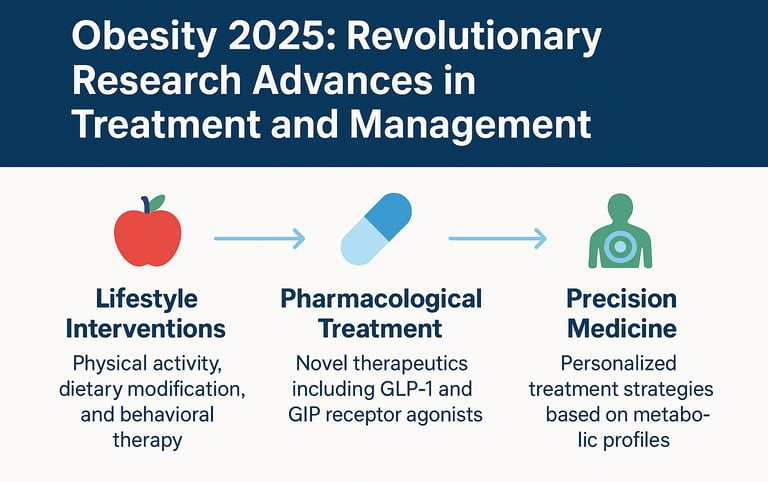
Physical activity, dietary modification, and behavioral therapy remain first-line interventions for obesity management. Recent evidence demonstrates that behavioral weight management interventions produce meaningful improvements in eating behaviors and long-term weight maintenance, particularly when integrated with pharmacological treatment.
Combination Therapies
The naltrexone/bupropion combination (marketed as Contrave) continues to serve as an alternative for patients unable to access or tolerate GLP-1 agonists. Clinical trials demonstrate weight loss of approximately 8%, though this remains less dramatic than newer pharmacological options.
Bariatric Surgery: Evolution in the Modern Era
Interestingly, the emergence of highly effective GLP-1 receptor agonists has reduced bariatric surgery prevalence among some patient populations. However, surgery remains appropriate for select patients, particularly those with severe obesity (BMI >40) or obesity with significant comorbidities. The timing and combination of bariatric surgery with pharmacological therapy represents an emerging area of clinical investigation.
Emerging Research and Future Horizons
Novel Pharmacological Agents in Development
HRS9531, a next-generation GLP-1/GIP receptor agonist, demonstrated 22.8% mean weight loss at 36 weeks in Phase 2 trials, with a favorable safety profile. Orforglipron, an oral GLP-1 receptor agonist, showed 14.7% weight loss at 36 weeks in Phase 2 studies, with Phase 3 results anticipated by mid-2025.
Retatrutide, a triple-hormone agonist targeting GLP-1, GIP, and glucagon receptors, represents an even more novel approach, with Phase 2b renal function trials expected to conclude in Q4 2025.
Addressing Disparities and Ensuring Equitable Access
Future obesity treatment strategies must prioritize equitable access to emerging therapies. Current disparities in medication availability and cost disproportionately affect low-income and marginalized populations. Policy initiatives addressing affordability, insurance coverage, and healthcare provider training will be essential for translating research advances into population-level health improvements.
The December 2024 Obesity Achievement
A remarkable milestone was reached in December 2024 when CDC data reported the first decrease in obesity prevalence in the U.S. in over a decade, dropping from 46% in 2022 to 45.6% in 2023. This decline correlates directly with increased GLP-1 receptor agonist dispensing, demonstrating that effective pharmacological treatment can meaningfully impact population health metrics.
Integrated Approach to Modern Obesity Management
The most effective obesity treatment in 2025 integrates multiple modalities:
Personalized Assessment: Evaluate genetic predisposition, metabolic phenotype, comorbidities, and medication tolerability to guide treatment selection.
Lifestyle Foundation: Implement evidence-based nutrition interventions, encourage regular physical activity, and provide behavioral support regardless of pharmacological treatment.
Pharmacological Precision: Match patients with appropriate medications based on efficacy profiles, side effect tolerability, and individual clinical characteristics. GLP-1 receptor agonists represent first-line therapy for many patients, while alternative agents serve those unable to tolerate or access these medications.
Long-Term Management: Recognize obesity as a chronic disease requiring sustained treatment. Address weight regain mechanisms, maintain metabolic improvements, and continuously adjust interventions based on individual response.
Comorbidity Management: Beyond weight loss, optimize diabetes control, cardiovascular health, liver function, and other obesity-related complications through integrated treatment approaches.
Key Takeaways:
Obesity is fundamentally a metabolic disease, not simply a behavioral problem, requiring comprehensive, individualized treatment approaches
GLP-1 and GIP/GLP-1 receptor agonists have revolutionized obesity treatment, achieving weight loss comparable to surgical interventions with additional metabolic benefits
Molecular research continues unveiling new therapeutic targets, with discoveries like nuclear hormone-sensitive lipase offering future treatment opportunities
Combination therapy approaches—integrating pharmacological, behavioral, and lifestyle interventions—produce superior long-term outcomes compared to single modalities
Health equity must be prioritized, ensuring that emerging obesity treatments reach all populations, particularly those disproportionately affected by the obesity epidemic
Emerging agents including oral GLP-1 agonists, triple-hormone agonists, and novel pharmacological approaches promise expanded treatment options with improved tolerability
Long-term sustainability remains a challenge; future research must focus on mechanisms of weight regain and strategies for durable weight management
Frequently Asked Questions (FAQs)
Q: Are GLP-1 receptor agonists appropriate for everyone with obesity?
A: While GLP-1 receptor agonists represent a major advance, they're not universally appropriate. Considerations include cost, access, gastrointestinal side effect tolerance, contraindications (such as personal/family history of medullary thyroid cancer), and individual metabolic profiles. Comprehensive medical evaluation is essential for treatment selection.
Q: How much weight loss should I expect with these medications?
A: Semaglutide typically produces 14-15% weight loss, while tirzepatide achieves 12-20% depending on dose. Results vary significantly between individuals. Combination with lifestyle modification generally produces superior outcomes compared to medication alone.
Q: Will I regain weight after stopping obesity medications?
A: Obesity, like hypertension or diabetes, is a chronic condition requiring sustained treatment. Research indicates that weight regain occurs in most patients upon medication discontinuation, supporting long-term pharmacological management as appropriate for chronic disease control.
Q: What about compounded GLP-1 medications I've heard about?
A: The FDA issued warnings regarding compounded and counterfeit GLP-1 agonists in May 2025, citing adverse events and quality concerns. FDA-approved medications from recognized manufacturers are recommended to ensure safety and efficacy.
Q: Are there alternatives for patients who can't tolerate or afford GLP-1 agonists?
A: Yes. Options include naltrexone/bupropion, emerging oral agents, bariatric surgery for appropriate candidates, and intensive lifestyle interventions with behavioral support. Individual medical evaluation helps identify optimal alternatives.
Q: How does obesity treatment integrate with diabetes management?
A: GLP-1 receptor agonists benefit both conditions, improving glycemic control while reducing body weight. This dual benefit explains their importance in managing obesity with type 2 diabetes comorbidity.
Q: What's the role of behavioral therapy in modern obesity treatment?
A: Despite pharmacological advances, behavioral interventions remain crucial. Cognitive behavioral therapy, motivational interviewing, and structured behavioral weight management programs enhance medication efficacy and improve long-term outcomes.
The Path Forward: Embracing a New Era in Obesity Management
The 2025 obesity research landscape represents a pivotal moment in medicine. We now possess unprecedented understanding of metabolic mechanisms driving obesity, coupled with increasingly effective therapeutic options. Yet significant challenges persist: ensuring equitable access to novel treatments, developing sustainable long-term management strategies, and addressing the social determinants of obesity.
The convergence of molecular discoveries—like the role of nuclear hormone-sensitive lipase—with clinical advances in pharmacological treatments suggests a future where obesity management becomes increasingly personalized and precise. Rather than one-size-fits-all approaches, clinicians will match individual patients with therapies optimized for their specific metabolic phenotype, genetic profile, and clinical circumstances.
Call to Action: Take Your Next Steps
If you're struggling with obesity: Don't accept outdated notions that weight management is simply about willpower. Obesity is a complex metabolic condition with evidence-based treatments that work. Consult with a healthcare provider about comprehensive treatment options, including assessment for GLP-1 receptor agonists or alternative therapies appropriate for your individual circumstances.
For healthcare professionals: Stay current with rapidly evolving obesity treatment guidelines. The 2025 research landscape offers new insights into patient selection, treatment optimization, and long-term management strategies. Consider completing continuing education on contemporary obesity pharmacotherapy and behavioral interventions.
For researchers and policy makers: The global obesity epidemic demands continued investment in understanding disease mechanisms, developing novel therapeutic agents, and creating healthcare systems that ensure equitable access to evidence-based treatments for all populations.
For the general public: Understand that obesity is not a personal failure but a significant public health challenge requiring comprehensive societal response. Advocate for policies supporting affordable treatment access, health equity, and environments promoting healthy nutrition and physical activity.
Conclusion
The 2025 obesity research landscape offers unprecedented hope grounded in rigorous scientific evidence. From molecular discoveries elucidating adipocyte metabolism to clinical triumphs of GLP-1 receptor agonists, we now possess the knowledge and tools to meaningfully address one of the world's most significant health challenges.
The studies examined in this comprehensive review—spanning metabolic regulation, clinical efficacy of emerging therapies, and innovative pharmacological approaches—collectively demonstrate that the era of ineffective, unsustainable obesity management has passed. We are entering a new age of precision medicine, where personalized treatment approaches integrate pharmacological innovation, behavioral science, and lifestyle modification.
Success in addressing the global obesity epidemic will require sustained commitment from researchers, clinicians, policymakers, and society broadly. By embracing evidence-based approaches, prioritizing health equity, and continuing to advance our understanding of obesity pathophysiology, we can transform outcomes for the billions worldwide affected by this disease.
The future of obesity management is here. Are you ready to be part of this transformative shift?
Disclaimer: This article is for informational purposes only and does not constitute medical advice. Individual circumstances vary, and treatment decisions should always be made in consultation with qualified healthcare professionals.
Related Articles
How Insulin Resistance Accelerates Cardiovascular Aging | DR T S DIDWAL
What’s New in the 2025 Blood Pressure Guidelines? A Complete Scientific Breakdown | DR T S DIDWAL
The Metabolic Triad: Why Diabetes, Obesity & CVD Are One Epidemic | DR T S DIDWAL
Reference List
Ahmed, S. K., & Mohammed, R. A. (2025). Obesity: Prevalence, causes, consequences, management, preventive strategies and future research directions. Metabolism Open, 27, 100375. https://doi.org/10.1016/j.metop.2025.100375
Dufau, J., Recazens, E., Bottin, L., Bergoglio, C., Mairal, A., Chaoui, K., ... & Langin, D. (2025). Nuclear hormone-sensitive lipase regulates adipose tissue mass and adipocyte metabolism. Cell Metabolism, 37(11), 2250. https://doi.org/10.1016/j.cmet.2025.09.014
Gómez-Ambrosi, J. (2025). Recent progress in the management of obesity: Advances and insights from the latest research. Nutrients, 17(7), 1225. https://doi.org/10.3390/nu17071225
Janić, M., Janež, A., El-Tanani, M., & Rizzo, M. (2025). Obesity: Recent advances and future perspectives. Biomedicines, 13(2), 368. https://doi.org/10.3390/biomedicines13020368