How to treat High blood pressure in Diabetics: Evidence-Based Guide to BP Management & Kidney Protection
Expert guide on choosing antihypertensives for Type 2 diabetes. Learn about RAS inhibitors, SGLT2/GLP-1 dual benefits, combination therapy, and personalized BP targets for superior cardiovascular and renal protection.
HEART
Dr. T.S. Didwal, M.D.
12/8/202514 min read
Managing blood pressure in patients with type 2 diabetes is one of the most critical aspects of preventive cardiovascular care. If you or a loved one lives with diabetes, you've likely heard about the importance of controlling blood sugar—but have you heard equally about hypertension management in diabetic patients? The truth is, high blood pressure and diabetes are frequent companions, and when they coexist, the risk of serious complications skyrockets.
Approximately 60% of people with diabetes also develop hypertension (Wander et al., 2024), making antihypertensive medication selection a cornerstone of comprehensive diabetes care. But here's the challenge: not all blood pressure-lowering drugs are created equal, especially for those with diabetes. Some antihypertensives not only lower blood pressure but also offer additional metabolic benefits, while others may adversely affect glucose metabolism.
This comprehensive guide explores the latest evidence on antihypertensive therapy for diabetic patients, examines cutting-edge research on novel therapeutic approaches, and helps you understand which medications for hypertension in diabetes might be right for you or your patients.
Clinical Pearls
RAS Inhibitors are Renoprotective First-Line: For any patient with Type 2 Diabetes (T2D) and hypertension, especially those showing signs of kidney injury (like albuminuria), a RAS inhibitor (ACE inhibitor or ARB) should be considered the foundational first-line agent due to its proven, superior ability to reduce intra-glomerular pressure and protect the kidneys, a benefit extending beyond simple blood pressure reduction (Ichikawa et al., 2025).
SGLT2 Inhibitors and GLP-1 RAs are Dual-Benefit Necessities: When selecting antihypertensives, prioritise incorporating an SGLT2 inhibitor and/or a GLP-1 receptor agonist into the regimen. These agents offer modest blood pressure reduction (3–5 mmHg) but provide major, independent cardiovascular and renal protection, making them essential components of modern diabetes and hypertension care, regardless of the patient's starting blood pressure (Siddiqi et al., 2025).
Combination Therapy is the Standard for Optimal Control: A single agent is rarely sufficient for T2D patients to meet the target of <130 mmHg. Plan to start with or quickly progress to combination therapy—typically a RAS inhibitor + Calcium Channel Blocker (CCB)—as this combination achieves approximately double the blood pressure reduction of monotherapy with excellent tolerability and efficacy (Wang et al., 2025).
Diuretics Demand Low Doses: If a diuretic is required for blood pressure control, use low-dose thiazide or thiazide-like diuretics (e.g., HCTZ 12.5mg vs. 25mg). High-dose diuretics risk-averse metabolic effects, including worsening hyperglycemia and hypokalemia, whereas low doses preserve antihypertensive efficacy while minimizing these metabolic risks (Ichikawa et al., 2025).
Always Assess for Albuminuria and Monitor Potassium: Given the heavy reliance on RAS inhibitors and SGLT2 inhibitors for renal protection, regular monitoring is non-negotiable. Check the Urinary Albumin-to-Creatinine Ratio (UACR) annually to guide therapy, and closely monitor serum potassium and eGFR when initiating or titrating RAS inhibitors, as hyperkalemia risk increases with declining kidney function.
Why Antihypertensives Matter for Diabetic Patients
The Intersection of Diabetes and Hypertension: A Clinical Challenge
Diabetes fundamentally alters how blood vessels function. High glucose levels damage the endothelium—the delicate inner lining of blood vessels—reducing its ability to dilate and regulate blood pressure. Additionally, diabetes promotes inflammation and oxidative stress, both of which stiffen arteries and elevate blood pressure. This creates a vicious cycle: high blood sugar worsens hypertension, and high blood pressure accelerates diabetic complications.
The consequences are severe. People with both diabetes and high blood pressure face significantly elevated risks of myocardial infarction, stroke, chronic kidney disease, and diabetic retinopathy. In fact, blood pressure control in diabetic patients is associated with a 20-30% reduction in microvascular complications and substantial reductions in cardiovascular events (Wander et al., 2024).
This is why choosing the right antihypertensive agent matters profoundly. The ideal medication should not only reduce blood pressure but also protect kidney function, prevent further metabolic deterioration, and ideally offer cardioprotective or metabolic benefits.
RAS Inhibitors: The Gold Standard for Diabetic Hypertension
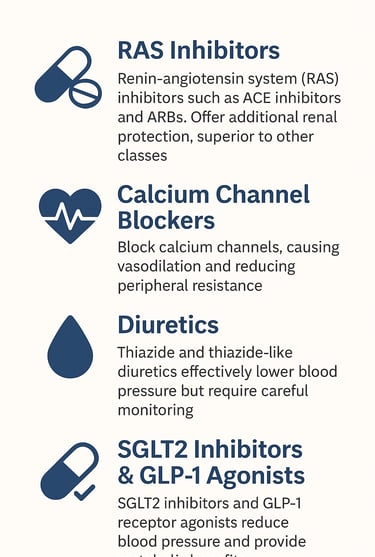
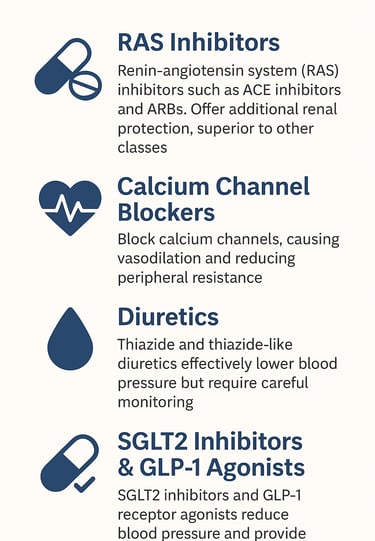
Renin-angiotensin system (RAS) inhibitors represent a cornerstone of hypertension treatment in type 2 diabetes. This class includes ACE inhibitors (angiotensin-converting enzyme inhibitors) and angiotensin II receptor blockers (ARBs), collectively referred to as RAS inhibitors for diabetes.
The Evidence: Ichikawa et al. (2025) Meta-Analysis
A major systematic review and meta-analysis by Ichikawa and colleagues (2025) evaluated the efficacy of renin-angiotensin system inhibitors, calcium channel blockers, and diuretics in hypertensive patients with diabetes. This landmark study provided crucial insights into how different antihypertensive medication classes perform in diabetic populations.
Key Findings: The analysis revealed that RAS inhibitors demonstrated superior renoprotective effects compared to other classes (Ichikawa et al., 2025). When examining albuminuria status—a marker of early kidney damage—RAS inhibitors showed the greatest benefit in reducing proteinuria, suggesting they offer protection beyond simple blood pressure reduction. This finding is crucial because diabetic kidney disease is one of the leading causes of end-stage renal disease globally.
The study also demonstrated that ACE inhibitors and ARBs were equally effective at lowering blood pressure in diabetic patients, with equivalent safety profiles. This equivalence gives clinicians flexibility in drug selection based on individual patient factors and tolerability.
Key Takeaway: RAS inhibitors should typically be first-line therapy for hypertensive diabetic patients, particularly those with evidence of kidney disease in diabetes or albuminuria.
Mechanisms Beyond Blood Pressure Reduction
Why are RAS inhibitors so beneficial for diabetes? The answer lies in their multiple biological actions. These medications don't just relax blood vessels; they also:
Reduce intra-glomerular pressure in the kidneys, protecting the filtration apparatus
Decrease aldosterone production, reducing sodium retention and fibrosis
Reduce inflammation and oxidative stress
Improve insulin sensitivity (modest effect)
Prevent left ventricular hypertrophy
Calcium Channel Blockers: The Alternative First-Line Option
Calcium channel blockers (CCBs) represent another effective option in antihypertensive management for diabetes. These medications work by blocking calcium influx into vascular smooth muscle cells, causing vasodilation and reduced peripheral resistance.
Comparative Efficacy: The Ichikawa Analysis
In the same comprehensive meta-analysis by Ichikawa et al. (2025), calcium channel blockers demonstrated comparable blood pressure-lowering efficacy to RAS inhibitors. However, important distinctions emerged regarding specific clinical outcomes.
Key Differences: While CCBs effectively reduced systolic and diastolic blood pressure, they showed less renoprotective effect than RAS inhibitors in patients with albuminuria (Ichikawa et al., 2025). This doesn't mean calcium channel blockers are inferior; rather, it means they may be better suited for diabetic patients without significant proteinuria.
Advantages of CCBs in Diabetes:
Neutral metabolic effects (don't worsen glucose control)
Excellent tolerability in most patients
Additional cardioprotective effects
No hyperkalemia risk
Key Takeaway: Calcium channel blockers serve as excellent alternatives for diabetic hypertensive patients who cannot tolerate RAS inhibitors or who lack evidence of kidney disease.
Diuretics in Diabetic Hypertension: A Nuanced Approach
The Complexity of Diuretic Use
Diuretic antihypertensives have a complicated history in diabetes and hypertension management. While extremely effective at lowering blood pressure, traditional thiazide diuretics can adversely affect metabolic parameters.
Evidence from Ichikawa et al. (2025)
The Ichikawa meta-analysis examined diuretic efficacy in diabetic patients. Diuretics demonstrated effective blood pressure reduction, but importantly, the analysis revealed dose-dependent metabolic effects (Ichikawa et al., 2025).
Key Findings:
Standard-dose thiazide diuretics (e.g., hydrochlorothiazide 25 mg daily) showed concerning metabolic effects, including hyperglycemia and hypokalemia
Low-dose diuretics (e.g., hydrochlorothiazide 12.5 mg daily) maintained metabolic neutrality while preserving antihypertensive efficacy
Potassium-sparing diuretics offered better metabolic profiles
The Modern Approach: Current guidelines emphasize using low-dose thiazides or thiazide-like diuretics in diabetic patients with hypertension, typically in combination with other agents rather than monotherapy. This strategy preserves blood pressure-lowering benefits while minimizing metabolic risks.
Key Takeaway: Diuretics remain valuable in antihypertensive regimens for diabetes, but should be used judiciously at low doses and preferably in combination therapy.
Novel Antihypertensives: SGLT2 Inhibitors and GLP-1 Receptor Agonists
A Paradigm Shift in Antihypertensive Selection
The landscape of antihypertensive medication for diabetes has dramatically shifted in recent years with the emergence of diabetes medications with dual benefits: glucose-lowering and blood pressure reduction.
SGLT2 Inhibitors: Beyond Glycemic Control
SGLT2 inhibitors (sodium-glucose cotransporter-2 inhibitors) have revolutionized diabetes management, and their blood pressure-lowering effects have proven to be a significant bonus.
Siddiqi et al. (2025): Blood Pressure-Lowering Effects of SGLT2 Inhibitors and GLP-1 Receptor Agonists
This critical review by Siddiqi and colleagues comprehensively examined the blood pressure-lowering mechanisms of SGLT2 inhibitors and GLP-1 receptor agonists.
Key Mechanisms of SGLT2 Inhibitors:
Natriuresis and osmotic diuresis: SGLT2 inhibitors increase urinary glucose and sodium excretion, leading to mild volume depletion and blood pressure reduction
Sympathetic nervous system suppression: These agents reduce sympathetic tone, a key driver of hypertension
Improved endothelial function: They reduce oxidative stress and inflammation
Weight loss: Average reduction of 2-3 kg, contributing to blood pressure lowering
Blood Pressure Reduction: SGLT2 inhibitors typically reduce systolic blood pressure by 3-5 mmHg and diastolic pressure by 1-3 mmHg (Siddiqi et al., 2025). While these numbers might seem modest, they represent clinically meaningful reductions comparable to some traditional antihypertensive drugs.
Renal Protection: Perhaps most importantly for diabetic patients, SGLT2 inhibitors offer substantial kidney disease prevention in diabetes, reducing albuminuria by 30-40% independent of their modest blood pressure-lowering effects (Siddiqi et al., 2025). This renoprotection rivals that of RAS inhibitors.
Key Takeaway: SGLT2 inhibitors should be considered first-line agents in antihypertensive therapy for type 2 diabetes, particularly in those with chronic kidney disease or albuminuria.
GLP-1 Receptor Agonists: The Metabolic Multi-Tool
GLP-1 receptor agonists (glucagon-like peptide-1 receptor agonists) represent another breakthrough class in antihypertensive management for diabetic patients.
Blood Pressure Benefits of GLP-1 Agonists
The Siddiqi et al. (2025) review revealed that GLP-1 receptor agonists reduce systolic blood pressure by 2-5 mmHg and diastolic pressure by 1-2 mmHg. While mechanistically distinct from SGLT2 inhibitors, these agents achieve blood pressure reduction through multiple pathways:
Mechanisms:
Weight loss: GLP-1 agonists promote satiety and reduce caloric intake, resulting in weight loss of 3-5 kg or more
Reduced sympathetic activity: These agents calm the nervous system's cardiovascular response
Improved vasodilation: Enhanced endothelial function and nitric oxide availability
Reduced inflammation: Systemic anti-inflammatory effects
Cardiovascular Benefits Beyond Blood Pressure: Importantly, GLP-1 receptor agonists have demonstrated cardiovascular risk reduction in major trials, with benefits exceeding what would be predicted from blood pressure lowering alone. This suggests additional cardioprotective mechanisms.
Key Takeaway: For diabetic patients with hypertension who also need weight loss or have established cardiovascular disease, GLP-1 receptor agonists offer compelling benefits.
Emerging and Novel Therapeutic Approaches
Pena et al. (2025): Frontier Therapies in Hypertension
A comprehensive review by Pena and colleagues examined emerging therapeutic frontiers in hypertension management, including novel mechanisms and emerging drug classes specifically relevant to diabetic populations (Pena et al., 2025).
Key Innovations Discussed:
Finerenone: A non-steroidal mineralocorticoid receptor antagonist with enhanced renal protection in diabetes
Adrenergic pathway modulators: New agents targeting specific sympathetic pathways
Endothelin antagonists: For resistant hypertension in diabetic patients
Soluble guanylate cyclase stimulators: A novel mechanism for blood pressure reduction
Clinical Relevance: These emerging therapies address the subset of diabetic hypertensive patients who don't achieve adequate blood pressure control with standard regimens or who have contraindications to conventional antihypertensives.
Key Takeaway: For resistant hypertension in diabetes, novel agents like finerenone offer new possibilities when traditional antihypertensive combinations prove inadequate.
Comprehensive Meta-Analysis: Wang et al. (2025)
The Lancet Study: Blood Pressure-Lowering Efficacy
A landmark meta-analysis published in The Lancet by Wang and colleagues synthesized data from thousands of randomized controlled trials examining the blood pressure-lowering efficacy of antihypertensive drugs and their combinations.
Major Findings:
Combination therapy with two antihypertensive agents achieves approximately twice the blood pressure reduction of monotherapy (Wang et al., 2025)
RAS inhibitors combined with calcium channel blockers demonstrated superior efficacy and tolerability
RAS inhibitor-diuretic combinations were highly effective but required careful monitoring of electrolytes and renal function
Individual drug responses vary considerably based on genetic and demographic factors
Implications for Diabetes: The study emphasized that personalized antihypertensive regimens should account for individual characteristics, comorbidities, and medication tolerability.
Key Takeaway: Combination antihypertensive therapy is often necessary for optimal blood pressure control in diabetic patients, with RAS inhibitor + calcium channel blocker combinations offering excellent efficacy and safety.
Sayer et al. (2025): Integrating Novel Approaches
The Nature Reviews: Cardiology article by Sayer, Webb, and colleagues synthesized current knowledge on novel pharmacological approaches to lowering blood pressure, with specific attention to agents beneficial in diabetic populations (Sayer et al., 2025).
Highlighted Advances:
Dual SGLT2 inhibitor-GLP-1 agonist therapy: Enhanced blood pressure reduction and metabolic benefits when combined
Optimized combination strategies: Evidence-based protocols for antihypertensive regimen selection
Biomarker-guided therapy: Using specific markers (e.g., renin levels, aldosterone) to guide medication selection
Practical Implication: These insights support a shift toward precision medicine in hypertension management in diabetes, selecting antihypertensives based on individual biochemistry rather than one-size-fits-all approaches.
Key Takeaway: Modern antihypertensive management for diabetic patients benefits from considering dual-action agents and biomarker-guided selection strategies.
Indian Guidelines: Wander et al. (2024)
Contextualizing Diabetes and Hypertension Management
The Indian Guideline 2024 by Wander and colleagues, published by the Association of Physicians of India, provides crucial context for antihypertensive management in type 2 diabetes within diverse populations (Wander et al., 2024).
Key Recommendations:
RAS inhibitors or calcium channel blockers as preferred first-line antihypertensives for diabetic hypertensive patients
Intensive blood pressure targets (systolic <130 mmHg) recommended for most diabetic patients with hypertension
SGLT2 inhibitors and GLP-1 agonists should be incorporated based on individual indications beyond blood pressure control
Regular monitoring of kidney function and electrolytes essential with RAS inhibitor or diuretic use
Clinical Perspective: These guidelines emphasize that antihypertensive selection in diabetes must account for individual risk stratification and local epidemiological patterns.
Key Takeaway: Evidence-based antihypertensive regimens adapted to individual and population characteristics yield optimal outcomes in diabetic hypertension management.
Optimizing Antihypertensive Therapy: Liu et al. (2023)
Fine-Tuning the Approach
Liu, Higashikuni, and Sata's 2023 analysis on optimizing antihypertensive therapy in patients with diabetes mellitus provides practical guidance for clinical implementation (Liu et al., 2023).
Core Principles:
Individualization: No single regimen works for all diabetic patients; antihypertensive selection should account for age, comorbidities, medication interactions, and metabolic status
Sequential optimization: Starting with monotherapy and systematically adding agents if needed
Comprehensive cardiovascular risk reduction: Beyond blood pressure, addressing lipids, glucose, and inflammation simultaneously
Regular reassessment: Blood pressure targets and medication regimens should be revisited periodically
Practical Example: A 58-year-old man with type 2 diabetes, hypertension, and early kidney disease might benefit from a regimen like: (1) SGLT2 inhibitor (for glucose control and renal protection), (2) ACE inhibitor or ARB (additional renal protection), and (3) calcium channel blocker (additional blood pressure control and cardioprotection). This combination targets multiple pathways while avoiding metabolic risks.
Key Takeaway: Antihypertensive therapy optimization in diabetes requires systematic, individualized approaches with regular monitoring and adjustment.
Practical Considerations: Side Effects and Monitoring
Common Side Effects by Drug Class
Understanding potential adverse effects helps guide medication selection and improves adherence to antihypertensive therapy.
RAS Inhibitors:
Dry cough (10-20% of patients)
Hyperkalemia risk (especially with kidney disease)
Acute kidney injury risk (transient, usually resolves)
Calcium Channel Blockers:
Ankle edema (dose-dependent)
Headache
Reflex tachycardia (rarely problematic with modern formulations)
Diuretics:
Hypokalemia and hyponatremia (mitigated with low-dose therapy)
Hyperglycemia (traditionally concerning, less so with low-dose thiazides)
Hyperuricemia
SGLT2 Inhibitors:
Genital mycotic infections
Euglycemic diabetic ketoacidosis (rare but serious)
Orthostatic hypotension
GLP-1 Agonists:
Gastrointestinal side effects (usually transient)
Pancreatitis risk (debated; likely minimal)
Essential Monitoring Parameters
Regardless of chosen antihypertensive regimen, certain parameters require regular monitoring in diabetic patients:
Blood pressure: Home monitoring recommended for diabetic hypertensive patients
Serum creatinine and estimated glomerular filtration rate: Essential for RAS inhibitor and diuretic monitoring
Serum potassium: Particularly important with RAS inhibitor or potassium-sparing diuretic use
Fasting glucose and HbA1c: Ensure antihypertensives don't worsen glucose control
Lipid panel: For comprehensive cardiovascular risk reduction
Urinary albumin-to-creatinine ratio: To assess kidney disease progression
Special Populations and Scenarios
Resistant Hypertension in Diabetes
When blood pressure targets aren't achieved despite three or more antihypertensive agents at optimal doses, clinicians face resistant hypertension in diabetic patients. This scenario requires:
Verification of actual medication adherence
Investigation for secondary hypertension causes
Addition of specialized agents (e.g., finerenone, spironolactone, hydralazine)
Referral to hypertension specialists
Diabetic Kidney Disease
In patients with albuminuria or reduced kidney function, RAS inhibitor-based regimens typically offer superior outcomes compared to non-RAS inhibitor combinations. SGLT2 inhibitors add substantial additional renal protection.
Acute Kidney Injury Risk
Certain combinations, particularly RAS inhibitor + diuretic + NSAID ("triple whammy"), increase acute kidney injury risk. Avoiding NSAIDs and careful monitoring are essential.
Frequently Asked Questions (FAQs)
Q: Which antihypertensive is best for type 2 diabetes?
A: No single "best" medication exists. However, RAS inhibitors (ACE inhibitors or ARBs) or calcium channel blockers serve as excellent first-line choices. For additional benefits, SGLT2 inhibitors or GLP-1 receptor agonists should be incorporated based on individual clinical indicators.
Q: Can antihypertensives worsen my blood sugar control?
A: Some older diuretics at high doses can modestly impair glucose tolerance. However, modern low-dose diuretics, RAS inhibitors, calcium channel blockers, SGLT2 inhibitors, and GLP-1 agonists are all metabolically neutral or beneficial.
Q: Is it safe to combine SGLT2 inhibitor with GLP-1 agonist?
A: Yes. Combining these agents offers synergistic blood pressure-lowering and metabolic benefits. However, monitor closely for orthostatic hypotension and ensure adequate kidney function.
Q: How often should my blood pressure and kidney function be monitored?
A: Annual monitoring is standard for stable patients on antihypertensives. More frequent monitoring (every 3-6 months) is recommended when starting new agents or after dose adjustments.
Q: What blood pressure target should I aim for?
A: Most diabetic patients benefit from systolic blood pressure targets of <130 mmHg. However, individual targets vary; discuss appropriate goals with your healthcare provider.
Q: Are generic antihypertensives as effective as brand-name medications?
A: Yes. FDA-approved generic antihypertensives contain identical active ingredients and demonstrate bioequivalence to brand-name versions.
Key Takeaways
RAS inhibitors remain foundational: ACE inhibitors and ARBs should typically be first-line antihypertensives for diabetic patients with hypertension, particularly those with kidney disease or albuminuria.
Calcium channel blockers are excellent alternatives: These agents provide comparable blood pressure reduction with excellent tolerability and metabolic neutrality.
SGLT2 inhibitors and GLP-1 agonists offer dual benefits: Beyond blood pressure reduction, these agents provide glucose control, weight loss, and cardioprotection—making them ideal additions to antihypertensive regimens.
Combination therapy is often necessary: Most diabetic patients with hypertension require two or more agents to achieve optimal blood pressure control. RAS inhibitor + calcium channel blocker combinations demonstrate superior efficacy.
Diuretics remain useful but require caution: Low-dose thiazide or thiazide-like diuretics preserve antihypertensive efficacy while minimizing metabolic risks.
Individualization is essential: Antihypertensive selection should account for age, comorbidities, kidney function, and metabolic status. No one-size-fits-all regimen exists.
Regular monitoring is critical: Blood pressure, kidney function, electrolytes, and glucose control require periodic reassessment to ensure optimal outcomes and early detection of adverse effects.
Call to Action
If you have type 2 diabetes and hypertension, taking control of your blood pressure is one of the most powerful steps you can take to prevent serious complications. Don't settle for suboptimal blood pressure control—work with your healthcare team to identify the ideal antihypertensive regimen for your unique situation.
Consider these action steps:
Schedule a medication review: If you've been on the same antihypertensive regimen for years, discuss whether newer agents like SGLT2 inhibitors or GLP-1 agonists might benefit you.
Start home blood pressure monitoring: Understanding your daily blood pressure patterns empowers both you and your healthcare provider to make informed adjustments.
Discuss your individual risk profile: Ask your provider about your specific cardiovascular and renal risks, which should guide medication selection.
Don't skip doses: Medication adherence is crucial; if side effects are problematic, discuss alternatives rather than stopping treatment.
Invest in lifestyle modifications: While antihypertensives are essential, combining blood pressure medications with weight loss, sodium reduction, stress management, and regular exercise amplifies their benefits.
Stay informed: New evidence emerges regularly regarding antihypertensive management in diabetes. Ask your healthcare provider about the latest developments relevant to your care.
Your health is worth the effort. By actively managing your blood pressure with appropriate antihypertensive therapy, you're investing in a healthier future with fewer complications and better quality of life.
Disclaimer: This article is for informational purposes only and does not constitute medical advice. Individual circumstances vary, and treatment decisions should always be made in consultation with qualified healthcare professionals.
Related Articles
The BMI Paradox: Why "Normal Weight" People Still Get High Blood Pressure | DR T S DIDWAL
How Insulin Resistance Accelerates Cardiovascular Aging | DR T S DIDWAL
Sleep & Hypertension: Duration, Quality, and Blood Pressure | DR T S DIDWAL
References
Ichikawa, D., Kawarazaki, W., Saka, S., et al. (2025). Efficacy of renin-angiotensin system inhibitors, calcium channel blockers, and diuretics in hypertensive patients with diabetes: Subgroup analysis based on albuminuria in a systematic review and meta-analysis. Hypertension Research, 48, 1880–1890. https://doi.org/10.1038/s41440-025-02146-7
Liu, W., Higashikuni, Y., & Sata, M. (2023). Optimizing antihypertensive therapy in patients with diabetes mellitus. Hypertension Research, 46, 797–800. https://doi.org/10.1038/s41440-022-01150-5
Pena, D., Aurelian, J., Grigore, M., Hodorogea, A., Weiss, E., Bădilă, E., Ilieșiu, A., & Balahura, A. (2025). Emerging therapeutic frontiers in hypertension management. Frontiers in Cardiovascular Medicine, 12, 1550181. https://doi.org/10.3389/fcvm.2025.1550181
Sayer, M., Webb, D. J., & Dhaun, N. (2025). Novel pharmacological approaches to lowering blood pressure and managing hypertension. Nature Reviews Cardiology, 22(9), 649–663. https://doi.org/10.1038/s41569-025-01131-4
Siddiqi, A. K., Khan, M. S., Kulkarni, A., et al. (2025). Blood pressure-lowering effects of SGLT2 inhibitors and GLP-1 receptor agonists. Current Hypertension Reports, 27, 28. https://doi.org/10.1007/s11906-025-01342-7
Wander, G. S., Panda, J. K., Pal, J., Mathur, G., Sahay, R., Tiwaskar, M., Chatterjee, N., Chakrabarty, S., Singh, D. P., Murthy, L. S., Ghosh, S., Samajdar, S. S., & Maheswari, S. (2024). Management of hypertension in patients with type 2 diabetes mellitus: Indian guideline 2024 by Association of Physicians of India and Indian College of Physicians. The Journal of the Association of Physicians of India, 72(8), e1–e25. https://doi.org/10.59556/japi.72.0620
Wang, N., Salam, A., Pant, R., Kumar, A., Dhurjati, R., Haghdoost, F., Vidyasagar, K., Kaistha, P., Esam, H., Gnanenthiran, S. R., Kanukula, R., Whelton, P. K., Egan, B., Schutte, A. E., Rahimi, K., Berwanger, O., & Rodgers, A. (2025). Blood pressure-lowering efficacy of antihypertensive drugs and their combinations: A systematic review and meta-analysis of randomised, double-blind, placebo-controlled trials. The Lancet, 406(10506), 915–925. https://doi.org/10.1016/S0140-6736(25)00991-2