Gut-Brain Axis: How Your Microbiome Influences Mood, Mental Health & Brain Function
Discover how the gut-brain axis influences depression, anxiety, stress, cognition, and brain aging. Explore the latest science on the microbiome and evidence-based ways to improve gut and mental health.
NUTRITION
Dr. T.S. Didwal, M.D.(Internal Medicine)
6/6/202627 min read
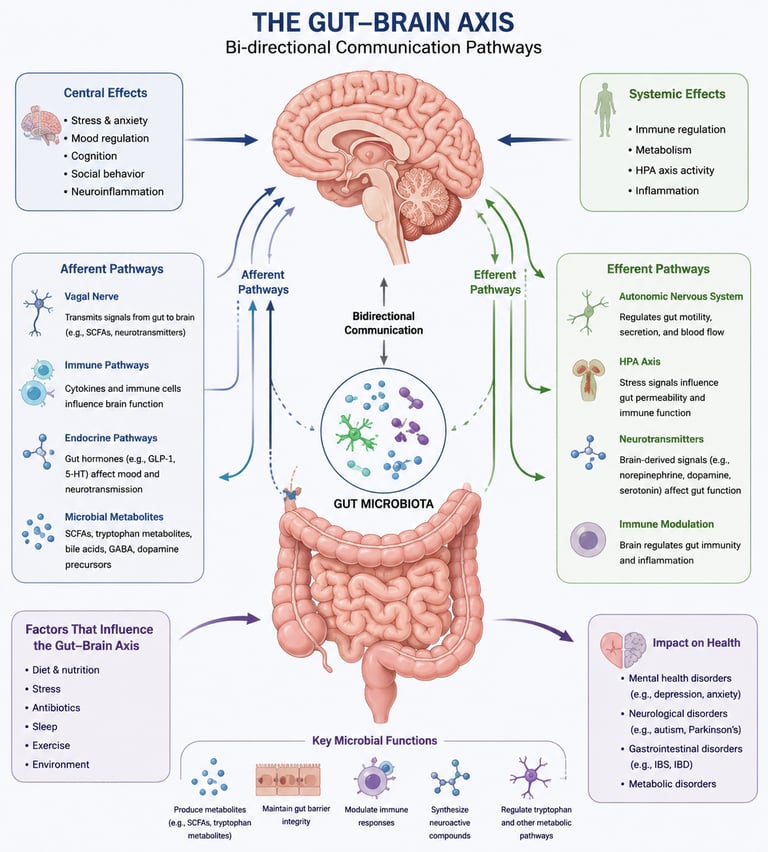
The gut-brain axis is a complex bidirectional communication system connecting the gastrointestinal tract and the central nervous system. Scientists now recognize that gut bacteria help regulate neurotransmitters, immune signaling, inflammation, and stress hormones, influencing mental health, cognitive performance, and the risk of neurological disorders throughout life.
Key points
1. What is the Gut-Brain Axis? Inside the 24/7 Communication Highway
The Science: The gut-brain axis is a powerful, bidirectional communication network linking the central nervous system (CNS) to the enteric nervous system (ENS). Your gut houses over 500 million neurons and 38 trillion microbes that communicate 24/7 via six primary pathways: the vagus nerve, neurotransmitters, immune signaling, short-chain fatty acids (SCFAs), the HPA axis, and gut hormones. Crucially, 80% of vagus nerve fibers are afferent, meaning your gut sends far more information up to your brain than it receives.
Ever felt "butterflies" in your stomach when nervous? That is your gut-brain axis at work. Your gut actually functions as a "second brain," and its direct hotline to your head—the vagus nerve—is heavily dominated by your gut talking and your brain listening.
2. The Serotonin Factory: How Gut Bacteria Control Mood Chemicals
The Science: An astonishing 90% to 95% of the body's serotonin is produced by enterochromaffin cells in the gut, not the brain. Furthermore, beneficial gut microbiota synthesize other critical neurotransmitters and precursors, including GABA and dopamine. While gut-derived serotonin cannot cross the blood-brain barrier, it activates vagal nerve pathways that signal brainstem serotonergic regions, directly impacting emotional regulation, anxiety levels, and cognitive function.
You might think your mood is entirely in your head, but the "happy chemical" serotonin is actually manufactured in your intestines. When your gut microbiome is thriving, it acts like a remote control that tells your brain to stay calm, focused, and happy.
3. Leaky Gut and Neuroinflammation: The Root Cause of Brain Fog
The Science: Gut dysbiosis (an imbalance of bad vs. good bacteria) degrades the gut's tight junction proteins, causing intestinal hyperpermeability, or "leaky gut." This allows lipopolysaccharides (LPS)—toxic bacterial byproducts—to slip into the bloodstream. This triggers systemic metabolic endotoxemia, prompting pro-inflammatory cytokines (IL-6, TNF-alpha) to breach the blood-brain barrier. The resulting neuroinflammation is a primary driver of depression, anxiety, ADHD, and cognitive decline.
A damaged gut lining acts like a torn window screen, letting microscopic toxins seep into your bloodstream. When these toxins hitch a ride up to your head, they irritate your brain cells, triggering that sluggish, inflamed feeling we commonly call chronic brain fog.
4. The Microbiome Signature: Gut Health and Mental Health Disorders
The Science: Landmark psychiatric research confirms that mental health conditions have unique microbiome profiles. Clinical depression is consistently linked to a depletion of anti-inflammatory, butyrate-producing bacteria like Faecalibacterium prausnitzii and Coprococcus. In a landmark 2025 meta-analysis of 12 randomised controlled trials (RCTs), faecal microbiota transplantation (FMT) demonstrated a massive reduction in depressive symptoms (Standardised Mean Difference = –1.21, p=0.0003). Meanwhile, anxiety, PTSD, and schizophrenia are heavily tied to disrupted SCFA production and kynurenine pathway alterations.
Science proves that mental health isn't just genetic. People battling depression and anxiety consistently lack specific, life-changing strains of good gut bacteria. In fact, transferring healthy gut microbes into clinical subjects has been shown to rapidly lift depressive symptoms and restore emotional balance.
5. Can Neurodegenerative Diseases Start in the Gut?
The Science: Emerging neurology reveals that conditions like Parkinson's and Alzheimer's may originate in the digestive tract. In Parkinson's disease, misfolded alpha-synuclein proteins are detected in the gut's nervous system up to a decade before motor symptoms appear, suggesting the disease travels up the vagus nerve to the brain. In Alzheimer's, dysbiosis promotes amyloid-beta accumulation via chronic neuroinflammation. Additionally, the gut-liver-brain axis highlights that if liver detoxification fails, unfiltered gut toxins flood the brain, accelerating cognitive decline.
Severe neurological conditions like Parkinson's and Alzheimer's might actually be gut issues in disguise. Severe digestive issues like chronic constipation often show up a decade before memory or movement problems do, proving that protecting your gut today preserves your brain tomorrow.
6. How to Change Your Gut Microbiome: Diet and Lifestyle Shifts
The Science: Unlike your fixed DNA, your microbiome is highly malleable, responding to lifestyle changes within days. Clinical trials offer definitive proof:
The SMILES Trial: A Mediterranean diet resulted in a 32% remission rate for depression, compared to just 8% in the support group.
The Stanford Trial: Consuming 1–2 servings of fermented foods daily significantly increased microbial diversity and lowered inflammatory markers in 10 weeks.
The American Gut Project: Eating 30+ unique plant species per week is the number one predictor of a highly diverse, resilient gut microbiome.
You aren't stuck with the gut bacteria you have. By swapping ultra-processed foods for fermented options and aiming for 30 different plant foods a week (including nuts, seeds, and spices), you can completely reshape your microbiome and boost your mental clarity in less than a month.
7. What Are Psychobiotics? Best Probiotics for Mental Health
The Science: "Psychobiotics" are live organisms that, in ingestible quantities, yield a mental health benefit. However, strain specificity is vital. Clinical evidence supports specific strains like Lactobacillus rhamnosus GG, Lactobacillus acidophilus NCFM, Lactobacillus plantarum 299v, Bifidobacterium longum 1714, and Bifidobacterium breve. Multi-strain formulations consistently outperform single strains, taking roughly 6 to 8 weeks to show optimal efficacy as an adjunct therapy.
Not all probiotics are created equal. A supplement meant for bloating won't necessarily fix your mood. To target anxiety and depression, you need specialized "psychobiotics"—specific, scientifically backed strains engineered to calm your nervous system from the inside out.
8. The Evidence-Based 12-Week Gut Optimization Protocol
The Science: A systematic approach to reversing dysbiosis involves a three-phase protocol designed to eliminate inflammatory triggers, reseed target populations, and optimize microbial metabolic output:
Weeks 1–4 (Foundation): Remove microbiome disruptors (refined sugars, artificial sweeteners, unnecessary antibiotics). Hit a baseline of 30+ plant species per week and secure 7–9 hours of sleep to preserve circadian microbial rhythms.
Weeks 5–8 (Rebuild): Introduce 1–2 daily servings of live fermented foods (kefir, kimchi, sauerkraut) and implement a validated multi-strain psychobiotic. Accumulate 150+ minutes of weekly exercise to stimulate butyrate producers.
Weeks 9–12 (Optimize): Maximize prebiotic fiber intake (25–35 grams from garlic, leeks, asparagus) to feed the new microbial colony, and practice daily vagal nerve stimulation (mindfulness, diaphragmatic breathing) to blunt chronic stress.
Ready to heal your gut and clear your mind? Follow this step-by-step 12-week blueprint. By systematically cleaning up your diet, introducing fermented superfoods, adding targeted probiotics, and managing stress, you can reset your second brain for peak mental performance.
Imagine a secret telephone line running from your intestines straight to your brain — one that never stops ringing. Scientists now know this "call" goes both ways, and the trillions of microorganisms living inside your gut are the operators. This is the gut-brain axis, and it is rapidly emerging as one of the most exciting — and consequential — frontiers in modern neuroscience.
If you have ever felt "butterflies" before a stressful event, lost your appetite when anxious, or experienced a mood lift after a satisfying meal, you have already felt this axis at work. But the science goes far deeper than common intuition. A growing body of research published between 2023 and 2026 — including landmark reviews in Molecular Neurobiology, Scientific Reports, and Frontiers in Microbiomes — confirms that the gut microbiome profoundly shapes brain development, neurotransmitter production, immune signaling, and susceptibility to mental health disorders including depression, anxiety, autism spectrum disorder (ASD), and even Alzheimer's disease.
In this comprehensive guide, you will learn exactly how the gut-brain axis works, what disrupts it, which mental health conditions are most closely linked to gut dysbiosis, and — most importantly — what practical, evidence-based steps you can take today to harness your microbiome for better brain health.
What Is the Gut-Brain Axis?
The gut-brain axis (GBA) is a sophisticated, bidirectional communication network that links your gastrointestinal tract directly to your central nervous system (CNS). It is not a single pathway but a complex integration of neural, endocrine (hormonal), immune, and metabolic signals that operate simultaneously and continuously.
At the heart of this system sits the enteric nervous system (ENS) — sometimes called the "second brain." Embedded in the lining of your digestive tract from esophagus to rectum, the ENS contains more than 500 million neurons. That is more neurons than in your spinal cord. The ENS can regulate digestion entirely independently of the brain, yet it maintains constant two-way communication via the vagus nerve and other channels.
The microorganisms that inhabit your gut — collectively called the gut microbiome — are not passive bystanders. They are active participants in this communication network. According to a 2025 review published in Molecular Neurobiology (Ramadan et al.), microbial communities influence neurodevelopment, neurotransmission, and behavior through pathways involving the vagus nerve, immune signaling, and microbiota-derived metabolites such as short-chain fatty acids (SCFAs) and neurotransmitter precursors.
Crucially, the axis is bidirectional: the brain influences gut function (stress slows motility, anxiety triggers gut symptoms), and the gut influences brain function (dysbiosis drives neuroinflammation, anxiety, and cognitive decline). This two-way traffic means mental and digestive health cannot be separated.
How the Gut-Brain Axis Works: 6 Key Communication Pathways
Understanding the gut-brain axis requires grasping how signals travel between your gut and your brain. There are at least six distinct pathways, and they operate in parallel:
Vagus Nerve
The primary "cable" linking gut to brain. ~80% of vagal fibers carry signals up from the gut to the brain, not the other way.
Neurotransmitters
Gut bacteria synthesize or regulate serotonin, GABA, dopamine, and acetylcholine — all critical for mood and cognition.
Immune Signaling
Dysbiosis triggers inflammatory cytokines (IL-6, TNF-α) that cross into the brain, driving neuroinflammation.
Short-Chain Fatty Acids
SCFAs (butyrate, propionate, acetate) produced by gut bacteria regulate blood-brain barrier integrity and microglial function. HPA Axis
The hypothalamic-pituitary-adrenal stress axis is modulated by gut microbiota, influencing cortisol release and stress reactivity.
Gut Hormones
Enteroendocrine cells release GLP-1, ghrelin, CCK, and peptide YY — hormones that signal satiety, mood, and metabolic state to the brain.
The Vagus Nerve: Your Gut's Direct Hotline to the Brain
The vagus nerve is the longest cranial nerve in the body, running from the brainstem all the way down to the abdomen. It is the most direct physical connection between your gut and your brain. What surprises most people is the directionality: approximately 80% of vagal nerve fibers carry information from the gut to the brain, not the reverse. Your gut is constantly "reporting up" to your brain, not simply receiving orders.
Gut bacteria produce compounds — including SCFAs and certain neurotransmitters — that activate vagal afferent fibres. These signals travel to the nucleus tractus solitarius in the brainstem and then influence areas governing emotion, memory, and cognition, including the amygdala and prefrontal cortex. A 2025 review in the Journal of Translational Medicine (Liu et al.) highlights that disrupted vagal signaling from gut dysbiosis is linked to impaired emotional regulation and increased vulnerability to psychiatric disorders.
The HPA Axis and Chronic Stress
The hypothalamic-pituitary-adrenal (HPA) axis is your body's central stress-response system. When you experience stress, the hypothalamus signals the pituitary gland, which instructs the adrenal glands to release cortisol. Your gut microbiome plays a critical regulatory role in this cascade. Beneficial bacteria help calibrate HPA axis sensitivity; when they are depleted through dysbiosis, the HPA axis becomes overactive, flooding the body with chronic low-grade cortisol. This chronically elevated cortisol further damages the gut lining and suppresses microbial diversity — creating a destructive feedback loop between stress and gut health.
Your Gut Is the Serotonin Factory
Here is a fact that stops most people in their tracks: approximately 90–95% of your body's total serotonin is produced in your gut, not your brain.
Serotonin (5-hydroxytryptamine, or 5-HT) is the neurotransmitter most associated with feelings of wellbeing, happiness, and mood stability. It is synthesized by specialized enterochromaffin (EC) cells lining your gut mucosa, and its production is directly influenced by your gut microbiome. Specific bacteria — including Lactobacillus and Bifidobacterium species — produce the raw materials and enzymatic signals that drive serotonin synthesis.
While gut-derived serotonin does not cross the blood-brain barrier directly to affect mood (that function is reserved for brain-produced serotonin), it plays a crucial role in regulating gut motility, intestinal secretions, and vagal nerve signaling to the brain. When gut serotonin activates vagal afferent fibers, those signals travel to brainstem serotonergic regions including the dorsal raphe nucleus — ultimately influencing brain serotonin activity and emotional regulation. This is one of the key mechanisms by which an unhealthy gut can lead to depression and anxiety.
GABA and Dopamine: The Gut Produces Them Too
Serotonin is not the only mood-relevant neurotransmitter with gut origins. Several species of Lactobacillus and Bifidobacterium synthesize gamma-aminobutyric acid (GABA) — the brain's primary inhibitory neurotransmitter and the target of anti-anxiety medications like benzodiazepines. When gut-produced GABA is transmitted to the brain via the vagus nerve, it contributes to calming neural activity, reducing anxiety and promoting sleep.
Dopamine — the neurotransmitter associated with motivation, reward, and pleasure — also has significant gut involvement. Gut bacteria synthesize dopamine precursors such as L-DOPA and influence the tryptophan-kynurenine metabolic pathway, which intersects with both serotonin and dopamine production. Disruption of this pathway by gut dysbiosis is increasingly linked to motivation deficits, anhedonia (inability to feel pleasure), and cognitive impairment seen in depression.
What Is Gut Dysbiosis — and Why Does It Matter for Your Brain?
Gut dysbiosis refers to an imbalance in the composition and function of the gut microbial community. It is characterized by a reduction in microbial diversity, a decline in beneficial species (such as Bifidobacterium, Lactobacillus, Faecalibacterium prausnitzii, and Akkermansia muciniphila), and an overgrowth of potentially harmful species.
Dysbiosis can be triggered by:
Antibiotic use kills beneficial bacteria alongside pathogens
Ultra-processed diet — low fiber, high sugar, artificial additives
Chronic stress alters gut motility and microbial composition via the HPA axis
Sleep deprivation disrupts the circadian regulation of the microbiome
Sedentary lifestyle reduces microbial diversity compared to active individuals
Alcohol and smoking damage gut lining and alter microbial balance
Early-life factors — caesarean birth, formula feeding, early antibiotic exposure
When dysbiosis occurs, several harmful cascades are set in motion. The intestinal epithelial barrier — the thin protective lining of the gut — becomes increasingly permeable. This is sometimes called "leaky gut" (intestinal hyperpermeability), and it allows bacterial byproducts such as lipopolysaccharide (LPS) to enter the bloodstream. LPS is a potent activator of the immune system; when it reaches the brain, it triggers neuroinflammation — a low-grade inflammatory state increasingly recognized as a core driver of depression, anxiety, cognitive decline, and neurodegenerative disease.
⚠️ Key Mechanism to UnderstandDysbiosis → leaky gut → LPS enters bloodstream → immune activation → neuroinflammation → altered neurotransmitter production → depression, anxiety, cognitive impairment. This cascade is one of the most important mechanisms in modern psychiatry.
Gut Microbiome and Mental Health Conditions
The evidence linking gut dysbiosis to specific psychiatric disorders has grown substantially in recent years. Here is what current research shows for the most common conditions:
Depression (Major Depressive Disorder)
Multiple meta-analyses have confirmed that individuals with major depressive disorder (MDD) have significantly altered gut microbiome profiles compared to healthy controls. A 2025 review in Frontiers in Immunology reports consistently reduced levels of Coprococcus and Faecalibacterium prausnitzii — bacteria with potent anti-inflammatory and butyrate-producing properties — in patients with MDD.
The causal relationship has been demonstrated compellingly through fecal microbiota transplantation (FMT) studies: when researchers transferred gut bacteria from depressed humans into germ-free rodents, the animals rapidly developed depression-like and anxiety-like behaviors. This provides some of the strongest evidence that gut microbiome composition can directly drive depressive states — not merely correlate with them.
Anxiety Disorders
Anxiety disorders show similar patterns of microbial dysbiosis, with disruptions in short-chain fatty acid (SCFA) production, altered kynurenine pathway metabolism, and elevated inflammatory cytokines identified as key mechanisms. A 2025 scoping review covering 145 studies across depression, anxiety, and schizophrenia found consistent patterns of microbial dysbiosis and immune activation across all three disorders, supporting the idea that a common gut-mediated biological mechanism underlies multiple psychiatric conditions.
Gut bacteria from the Lactobacillus genus, particularly L. rhamnosus, have been shown to reduce anxiety-related behavior in animal models by modulating GABA receptor expression — an effect that was abolished when the vagus nerve was severed, confirming the vagal route as the key communication highway.
Autism Spectrum Disorder (ASD)
Children with ASD consistently show altered gut microbiome profiles. According to the 2025 Ramadan et al. review in Molecular Neurobiology, gut dysbiosis in individuals with ASD is characterized by higher abundance of Clostridia species and a reduction in beneficial bacteria such as Bifidobacterium. These microbial imbalances contribute to neuroinflammation — a key feature in ASD pathophysiology — and may also influence social behavior through gut-derived signals affecting the brain's social reward circuitry.
Post-Traumatic Stress Disorder (PTSD)
PTSD research is revealing a surprising gut-brain connection. A 2025 study published in Frontiers in Microbiomes (Ataei et al.) found that probiotic treatment in animal models using single prolonged stress (a validated PTSD model) mitigated anxiety- and depression-like behaviors, restored brain-derived neurotrophic factor (BDNF) expression, and improved gut morphology. PTSD is associated with gut dysbiosis, increased intestinal permeability, and systemic inflammation — factors through which microbial metabolites and immune signaling influence neurobiology and behavior.
Schizophrenia
Emerging data from the 2025 scoping review in the Middle East Current Psychiatry identified kynurenine pathway alterations as a particularly important mechanism linking gut dysbiosis to psychosis. The kynurenine pathway, which processes the amino acid tryptophan (the precursor to serotonin), is regulated in part by gut bacteria. When dysbiosis shifts tryptophan metabolism toward the production of kynurenic acid rather than serotonin, the result is reduced glutamate signaling in the brain — a pattern strongly associated with psychotic symptoms in schizophrenia.
~1 in 3 People with depression also have irritable bowel syndrome (IBS), highlighting the gut-brain overlap
70% of immune system cells reside in the gut, making it the body's largest immune organ
–1.21 Standardized mean difference in depressive symptoms after FMT in a 2025 meta-analysis of 12 RCTs (p=0.0003)
145 Studies reviewed in a 2025 scoping review confirming gut dysbiosis across depression, anxiety, and schizophrenia
ADHD and the Gut-Brain Axis
Emerging research suggests that children and adults with ADHD may have altered gut microbiome composition compared with neurotypical individuals. Dysbiosis may influence dopamine signaling, neuroinflammation, and neurotransmitter metabolism, all of which play important roles in attention, impulse control, and executive function. While preliminary studies suggest that dietary interventions and microbiome-targeted therapies may offer benefits, larger human trials are needed before routine clinical recommendations can be made.
Gut Microbiome and Neurodegenerative Diseases
The gut-brain axis extends its reach beyond psychiatric conditions into the domain of neurodegeneration. A 2025 review in Molecular Biomedicine (Chen et al.) comprehensively mapped the microbiota-gut-brain axis as it relates to Alzheimer's disease (AD), Parkinson's disease (PD), and amyotrophic lateral sclerosis (ALS).
Alzheimer's Disease
Individuals with Alzheimer's disease show reduced microbial diversity and altered microbiome composition compared to cognitively healthy older adults. Gut dysbiosis may promote amyloid-beta accumulation — the hallmark protein aggregation of AD — through neuroinflammation, compromised blood-brain barrier integrity, and disrupted SCFAs. The gut microbiome also influences tau pathology through inflammatory pathways, and emerging evidence suggests that microbiome-targeted interventions may offer a new lever for slowing cognitive decline.
Parkinson's Disease
The gut-Parkinson's connection is particularly striking. Many patients experience constipation and gut symptoms up to a decade before motor symptoms appear, suggesting the disease may actually begin in the gut. Misfolded alpha-synuclein — the protein that aggregates in PD — has been found in the enteric nervous system of patients, and it is hypothesized that it spreads retrogradely along the vagus nerve to the brainstem. Furthermore, the 2025 Chen et al. review notes that the efficacy of the gold-standard PD drug L-DOPA is influenced by gut microorganisms, which metabolize the drug before it reaches the brain — making the microbiome directly relevant to treatment outcomes.
💡 Research Frontier A 2025 study found that antibiotic-induced gut dysbiosis reshaped dendritic architecture in adult cortical interneurons — suggesting the microbiome actively maintains brain structure even in adulthood, not just during development.
The Gut-Liver-Brain Triangle
A 2025 review in Mediators of Inflammation (Aghara et al.) introduced a critical expansion of the classic gut-brain axis: the gut-liver-brain axis. The liver — positioned anatomically between the gut and the systemic circulation — is the body's primary filter for gut-derived signals and metabolites. This triangular relationship has profound implications for brain health.
The portal vein delivers gut-derived molecules (including microbial metabolites, LPS, and bile acids) directly to the liver for processing. When gut dysbiosis increases gut permeability, the liver faces a flood of inflammatory signals. If liver detoxification capacity is overwhelmed — as in non-alcoholic fatty liver disease (NAFLD), alcohol-related liver disease, or metabolic syndrome — neuroinflammatory signals escape into systemic circulation and reach the brain.
Conversely, liver dysfunction impairs the synthesis of neuroprotective molecules including bile acids, which regulate gut microbiome composition via antimicrobial activity and signaling receptors expressed in the gut and brain. The gut-liver-brain axis suggests that liver health is an underappreciated determinant of mental and neurological health — and that interventions targeting the gut microbiome may benefit the liver as well as the brain.
Evidence Summary: Key Studies (2023–2026)
Here is a rewritten breakdown of the latest scientific evidence, structured as high-impact bullet points for quick reference and clinical authority:
Early Brain Development & Neurodevelopmental Disorders
Study/Journal: Ramadan et al., Molecular Neurobiology (2025)
Finding: Proves the gut microbiome directly shapes early-stage brain development. It maps the distinct pathways through which bacterial imbalances (dysbiosis) trigger clinical vulnerabilities to Autism Spectrum Disorder (ASD), depression, and progressive neurodegeneration.
The Therapeutic Power of Psychobiotics
Study/Journal: Doenyas, Clarke & Cserjési, Scientific Reports (2025)
Finding: Charts breakthroughs in how the gut and brain communicate two-way. The review outlines the clinical readiness and therapeutic potential of using specific, mood-targeted probiotic strains (psychobiotics) in modern psychiatry.
The Gut-Liver-Brain Inflammation Triangle
Study/Journal: Aghara et al., Mediators of Inflammation (2025)
Finding: Formally introduces the gut-liver-brain axis as a major systemic inflammatory pathway. It identifies the liver as a vital middleman: if the liver is overwhelmed by toxins from a leaky gut, it allows inflammatory signals to flood the bloodstream and breach the brain.
Hormone Signaling in Obesity & Depression
Study/Journal: Liu et al., Journal of Translational Medicine (2025)
Finding: Details how metabolic gut hormones—such as GLP-1, ghrelin, and CCK—act as direct chemical messengers to the brain. This creates a brand-new therapeutic framework for treating patients struggling with co-morbid obesity and depression simultaneously.
Neurodegenerative Diseases Rooted in the Gut
Study/Journal: Chen et al., Molecular Biomedicine (2025)
Finding: Maps the gut axis across Alzheimer's (AD), Parkinson's (PD), and ALS. It confirms the landmark theory that misfolded proteins \alpha-synuclein) can actually form in the gut's nervous system first, traveling up the vagus nerve to cause Parkinson's in the brain.
Reversing PTSD and Stress Pathology
Study/Journal: Ataei et al., Frontiers in Microbiomes (2026)
Finding: Using a strict stress model, researchers found that targeted probiotic treatment physically repaired damaged gut lining, reduced PTSD-like behaviors, and successfully restored BDNF (a crucial protein responsible for brain plasticity and survival).
A Shared Cellular Signature for Mental Illness
Study/Journal: Scoping Review, Middle East Current Psychiatry (2025)
Finding: Synthesizes 145 separate studies to reveal that depression, anxiety, and schizophrenia share an identical biological baseline: severe microbial dysbiosis, disrupted short-chain fatty acids (SCFAs), kynurenine pathway alterations, and systemic immune activation.
FMT as a Powerhouse Treatment for Depression
Study/Journal: Meta-Analysis, PubMed Central / PMC (2025)
Finding: Pooling data from 12 randomized controlled trials (681 patients), researchers evaluated Fecal Microbiota Transplantation (FMT). Transferring healthy microbes into depressed patients drastically dropped clinical depression scores, showing a highly significant Standardized Mean Difference of –1.21 (p=0.0003).
Note: Most reviews synthesize both human and animal (preclinical) data. While findings are consistent, large-scale randomized controlled trials in humans remain limited for some interventions. Always interpret emerging findings with appropriate caution.
Microbiome-Targeted Therapies: What the Evidence Says
The good news: the gut microbiome is one of the most modifiable aspects of human biology. Unlike your genome, your microbiome responds to diet, lifestyle, and targeted interventions within days to weeks. Here is a breakdown of the major therapeutic approaches and what the science supports:
Probiotics and Psychobiotics
Psychobiotics is the term for probiotic bacteria with documented mental health benefits. The most extensively studied strains include Lactobacillus rhamnosus, L. acidophilus, L. plantarum, Bifidobacterium longum, and B. breve. A 2025 review in Frontiers in Pharmacology found that these strains, used as adjuncts to conventional antidepressant therapy, produced measurable reductions in depression and anxiety scores in clinical trials.
However, important nuances apply:
Not all probiotic strains are equal — strain specificity matters enormously
Multi-strain formulations tend to outperform single strains in psychiatric outcomes
Benefits appear most pronounced when used alongside dietary changes (prebiotics) rather than in isolation
Effects may take 4–8 weeks to become clinically apparent
Prebiotics
Prebiotics are dietary fibers that selectively feed beneficial gut bacteria. The most studied include inulin, fructooligosaccharides (FOS), galactooligosaccharides (GOS), and resistant starch. Dietary GOS supplementation in healthy volunteers has been shown to reduce salivary cortisol awakening response (a marker of HPA axis activation) and shift attention away from threatening stimuli — effects consistent with reduced anxiety.
Fecal Microbiota Transplantation (FMT)
FMT involves transferring gut microbiota from a healthy donor to a patient with dysbiosis. The strongest evidence to date comes from a 2025 meta-analysis of 12 randomized controlled trials involving 681 participants, which found that FMT significantly reduced depressive symptoms with a standardized mean difference of –1.21 (95% CI: –1.87 to –0.55; p=0.0003). Effects were most sustained in patients with treatment-resistant depression, where improvements persisted at 12-week follow-up alongside stable changes in microbiome composition.
⚠️ Medical Disclaimer: FMT for mental health conditions is still considered investigational and is not approved for psychiatric use in most countries. It carries risks, including pathogen transmission. Consult a qualified gastroenterologist or psychiatrist before considering FMT. Do not attempt FMT outside a clinical setting.
Dietary Interventions: The Mediterranean Diet Connection
Of all gut-brain interventions, dietary change has the strongest and broadest evidence base. The Mediterranean diet — rich in vegetables, legumes, whole grains, olive oil, nuts, fish, and fermented foods — is associated with higher microbial diversity, increased SCFA production, reduced gut permeability, and lower rates of depression and dementia. A landmark randomized trial (SMILES trial) showed that a Mediterranean-style dietary intervention produced significantly greater reductions in depression scores than a social support control, with 32% of participants achieving remission versus 8% in the control group.
Emerging Approaches: FVT and Postbiotics
Two emerging frontiers deserve mention. Fecal virome transplantation (FVT) — transferring the viral component of the gut microbiome (primarily bacteriophages) — is under investigation as a more targeted alternative to whole-microbiome FMT. Postbiotics (metabolic byproducts of probiotic bacteria, including butyrate, GABA, and bioactive peptides) are gaining attention because they are more stable and standardizable than live bacteria, potentially offering more reliable therapeutic delivery.
Human Evidence: How Strong Is the Science?
Not all gut-brain interventions are supported equally. The strongest human evidence currently exists for Mediterranean-style diets, regular exercise, adequate sleep, and stress management, all of which consistently improve both microbiome health and mental wellbeing. Evidence for psychobiotics is moderate and growing, while fecal microbiota transplantation (FMT), postbiotics, and precision microbiome therapies remain promising but investigational. Understanding the strength of evidence helps separate established recommendations from emerging research.
Your 12-Week Gut-Brain Optimization Protocol
Based on the current body of evidence, here is a practical, structured protocol you can implement to support your gut-brain axis:
Weeks 1–4: Foundation — Clean Up Your Gut Environment
1 Eliminate the Top Microbiome Disruptors
Minimize ultra-processed foods, refined sugars, and artificial sweeteners (especially sucralose and saccharin, shown to alter microbiome composition). Reduce alcohol to under 2 units/day. Avoid unnecessary antibiotics — always ask your doctor if they are truly necessary.
2 Add 30+ Plant Foods Per Week
Research from the American Gut Project found that people eating 30+ different plant species per week had significantly higher microbial diversity. This does not mean eating large quantities — it means variety. Herbs, spices, seeds, and nuts all count.
3 Prioritize Sleep Hygiene
Aim for 7–9 hours of quality sleep. Your gut microbiome follows a circadian rhythm, and sleep deprivation measurably reduces microbial diversity within days.
Weeks 5–8: Rebuild — Introduce Targeted Microbiome Support
4 Add Daily Fermented Foods
Include 1–2 servings per day of live-culture fermented foods: yogurt (with live cultures), kefir, kimchi, sauerkraut, miso, or kombucha. A 2021 Stanford trial found that fermented food consumption measurably increased microbiome diversity and reduced inflammatory markers within 10 weeks.
5 Consider a Multi-Strain Probiotic
Look for formulas containing Lactobacillus rhamnosus GG, L. acidophilus, B. longum, and B. breve — strains with the best evidence for mental health benefits. Take on an empty stomach or with a small amount of food. Give it 6–8 weeks before evaluating the effect.
6 Exercise 150+ Minutes Per Week (Mix Cardio + Resistance)
Exercise is a potent stimulator of beneficial gut bacteria including butyrate-producing Faecalibacterium prausnitzii and Akkermansia muciniphila. Aerobic exercise has the strongest gut microbiome evidence; adding resistance training amplifies benefits further.
Weeks 9–12: Optimize — Stress Regulation and Advanced Support
7 Practice Daily Stress Reduction
Chronic stress is one of the most potent disruptors of the gut microbiome. Choose a sustainable daily practice: mindfulness meditation (10–20 min), diaphragmatic breathing (stimulates the vagus nerve directly), progressive muscle relaxation, or yoga.
8 Optimize Prebiotic Fiber Intake
Aim for 25–35g of fiber daily, emphasizing prebiotic-rich foods: garlic, onions, leeks, asparagus, Jerusalem artichoke, green bananas (resistant starch), oats, and lentils. Increase fiber gradually to avoid bloating — the gut microbiome needs time to adapt.
9 Consider Functional Testing
At-home gut microbiome testing (via companies like Viome or ZOE) can provide personalized baseline data. Discuss with your healthcare provider whether comprehensive stool testing for dysbiosis markers is appropriate in your case.
⚕️ Important: Always Consult Your Healthcare ProviderThis protocol is intended for general health optimization and does not replace professional medical advice. If you have a diagnosed mental health condition, gastrointestinal disorder, or are on medication, speak with your doctor or a registered dietitian before making significant dietary or supplement changes. Probiotic supplementation may not be appropriate for immunocompromised individuals.
10 Precision Microbiome Medicine: The Future of Mental Health?
Precision microbiome medicine aims to personalize nutrition, probiotics, and microbiome therapies based on an individual's unique microbial profile. Advances in artificial intelligence, metagenomic sequencing, and systems biology are helping researchers identify why some people respond to specific interventions while others do not. In the future, clinicians may use microbiome testing to recommend targeted psychobiotics, dietary strategies, or microbiome-based treatments tailored to a patient's mental health and metabolic profile. Although this field is advancing rapidly, most applications remain in the research stage rather than routine clinical practice.
Daily Gut-Brain Health Checklist
Eat at least 5 portions of diverse vegetables and fruits
Include one serving of fermented food (yogurt, kefir, kimchi, etc.)
Drink 6–8 glasses of water to support gut motility
Move your body for at least 30 minutes (any form counts)
Practice 10+ minutes of stress-reduction activity
Aim for 7–9 hours of sleep (consistent sleep/wake times matter)
Limit screen time before bed (blue light disrupts circadian microbiome rhythm)
Minimize ultra-processed food consumption
Spend time outdoors — environmental microbial exposure matters
Common Myths & Mistakes About the Gut-Brain Axis
Myth: Any probiotic supplement will improve your mental health
Strain specificity is everything. A probiotic formulated for digestive relief may not affect mood or anxiety. Only specific strains with clinical evidence for psychiatric outcomes — primarily certain Lactobacillus and Bifidobacterium species — qualify as psychobiotics.
Fact: Fermented foods often outperform probiotic supplements for microbiome diversity
Whole fermented foods deliver a matrix of live bacteria, postbiotics, and prebiotic substrates that supplements typically cannot replicate. Regular consumption of traditional fermented foods is consistently linked to higher microbial diversity.
Myth: The gut-brain axis is a one-way street from brain to gut
This is precisely backwards. Approximately 80% of vagal nerve fibers carry signals from the gut to the brain, not the reverse. The gut is more "reporting" to the brain than receiving commands from it — making gut health fundamental, not secondary, to brain function.
Myth: Gut serotonin directly controls your mood
While 90–95% of serotonin is made in the gut, gut-derived serotonin does not cross the blood-brain barrier. It influences mood indirectly by activating vagal nerve signals and modulating the brainstem serotonergic system — not by entering the brain directly.
Myth: You need expensive testing to improve your gut-brain axis
The most powerful interventions — dietary diversification, fermented foods, regular exercise, stress management, and quality sleep — are free or low-cost and have stronger evidence behind them than any commercial gut test or supplement regimen.
Myth: Antibiotics only harm the gut temporarily
A single course of broad-spectrum antibiotics can significantly reduce microbial diversity for up to 12 months, with some species never fully recovering. This "collateral damage" to the microbiome has measurable effects on mood, immunity, and metabolism.
Frequently Asked Questions
What is the gut-brain axis, in simple terms?
The gut-brain axis is the two-way communication system between your gastrointestinal tract and your brain. It operates through the vagus nerve, hormone signals, the immune system, and chemical messengers produced by gut bacteria. Your gut constantly sends signals to your brain that influence your mood, cognition, stress response, and behavior — and your brain sends signals back that affect digestion and gut health
Can fixing my gut health cure depression or anxiety?
The current evidence does not support gut interventions as a standalone cure for clinical depression or anxiety disorders. However, there is strong and growing evidence that improving gut microbiome health — through diet, probiotics, exercise, and stress management — can meaningfully reduce symptom severity, improve treatment response, and support overall mental wellbeing as part of a broader approach. Always work with a qualified mental health professional for diagnosed conditions.
Which probiotic strains are best for mental health?
The strains with the strongest evidence for mental health benefits (sometimes called "psychobiotics") include Lactobacillus rhamnosus (JB-1), L. acidophilus NCFM, L. plantarum 299v, Bifidobacterium longum 1714, and B. breve. Multi-strain formulas combining several of these tend to outperform single-strain products for psychiatric outcomes. Look for products specifying strain names (not just species), with at least 10–50 billion CFU per serving, and with third-party testing certification.
How long does it take to see mental health benefits from gut interventions?
The timeline varies by intervention. Dietary changes can begin shifting microbiome composition within 3–5 days, though meaningful changes in mood typically take 4–12 weeks of consistent effort. Probiotic supplementation studies typically show measurable mental health effects after 6–8 weeks. Patience and consistency are essential — the microbiome responds to sustained patterns of behavior, not single events.
Is "leaky gut" a real medical condition?
Intestinal hyperpermeability — colloquially called "leaky gut" — is a scientifically documented phenomenon. The intestinal epithelial barrier can become compromised by dysbiosis, chronic stress, certain medications (especially NSAIDs), alcohol, and inflammatory diets. When this happens, bacterial byproducts including lipopolysaccharide (LPS) enter the bloodstream, triggering systemic inflammation that can reach the brain. However, "leaky gut" as a diagnosis for a wide range of unrelated symptoms is often overstated in wellness marketing — legitimate testing (e.g., zonulin levels, lactulose-mannitol ratio) and medical guidance are needed to confirm genuine intestinal hyperpermeability.
Does stress really damage the gut microbiome?
Yes — and the evidence is remarkably strong. Chronic psychological stress alters gut microbiome composition within days, reducing populations of beneficial bacteria (especially Lactobacillus species), increasing intestinal permeability, disrupting gut motility, and triggering pro-inflammatory immune activation via the HPA axis. This creates a vicious cycle: stress damages the gut, and a damaged gut increases stress vulnerability. Stress-reduction practices are therefore a direct gut health intervention, not merely "nice to have."
What foods are worst for the gut-brain axis?
The foods most consistently linked to gut dysbiosis and neuroinflammation include ultra-processed foods (packaged snacks, fast food), refined sugars and high-fructose corn syrup, artificial sweeteners (especially sucralose and saccharin), trans fats and partially hydrogenated oils, excessive alcohol, and a low-fiber diet overall. These foods feed pathogenic bacteria, starve beneficial bacteria, promote gut permeability, and drive inflammatory cytokine production.
Can children's microbiome affect brain development?
Absolutely — and this may be one of the most critical windows for gut-brain axis influence. The 2025 Ramadan et al. review in Molecular Neurobiology specifically examines how gut microbiome composition in early life shapes brain development. Mode of delivery (vaginal vs. caesarean), breastfeeding vs. formula, antibiotic exposure in infancy, and early dietary patterns all profoundly influence the microbiome's role in neurodevelopment, with lasting effects on cognitive development, emotional regulation, and susceptibility to neurodevelopmental disorders including ASD and ADHD.
Is fecal microbiota transplantation (FMT) safe for mental health conditions?
FMT is well-established and FDA-approved for recurrent Clostridioides difficile infection, but its use for psychiatric conditions remains investigational. A 2025 meta-analysis of 12 RCTs found significant reductions in depressive symptoms (p=0.0003), but most studies are small and short-term. Risks include infection (including with antibiotic-resistant organisms), which can be serious. FMT for mental health conditions should only be considered within approved clinical trial settings, not pursued through DIY approaches, which are genuinely dangerous.
How does exercise benefit the gut-brain axis?
Exercise benefits the gut-brain axis through multiple pathways. It increases microbial diversity and promotes the growth of beneficial butyrate-producing bacteria. It reduces gut permeability by strengthening intestinal epithelial tight junctions. It stimulates BDNF (brain-derived neurotrophic factor) production, which supports neuroplasticity and is often reduced in depression. It modulates the HPA axis, reducing chronic cortisol. Even a single bout of moderate aerobic exercise measurably increases butyrate-producing bacteria within 24 hours.
What is the link between gut health and Parkinson's disease?
The gut-Parkinson's connection is one of the most compelling in modern neurology. Many PD patients experience constipation and other gut symptoms a decade or more before motor symptoms appear. Misfolded alpha-synuclein (the protein that aggregates in PD) has been found in the enteric nervous system, leading researchers to hypothesize that PD may begin in the gut and spread via the vagus nerve to the brainstem — a theory known as Braak's staging extended to the gut. Additionally, gut bacteria metabolize L-DOPA (the primary PD medication), directly influencing drug efficacy and dose requirements.
What Are Psychobiotics?
Psychobiotics are a specialized group of probiotics, prebiotics, or postbiotics that can positively influence mental health through the gut-brain axis. Certain strains of Lactobacillus and Bifidobacterium appear to reduce anxiety, depressive symptoms, and stress by modulating neurotransmitters, inflammation, vagal signaling, and the hypothalamic-pituitary-adrenal (HPA) axis. Although early clinical trials are promising, psychobiotics are currently best viewed as adjuncts—not replacements—for standard mental health treatments
Conclusion: Your Gut Is Your Brain's Partner — Treat It That Way
The gut-brain axis is no longer a fringe idea. It is one of the most intensively researched fields in modern biomedical science, with implications that touch every aspect of mental and neurological health.
Here is what the latest evidence — including six landmark 2025 reviews — makes clear:
Your gut microbiome actively shapes your brain's neurotransmitter levels, immune response, and stress reactivity — starting from birth and continuing throughout your life
Gut dysbiosis is not just a digestive problem; it is a brain problem, linked to depression, anxiety, ASD, PTSD, schizophrenia, Alzheimer's, and Parkinson's disease
The liver sits at the center of a gut-liver-brain triangle, amplifying or dampening the impact of gut dysbiosis on the brain
Microbiome-targeted interventions — from dietary change and psychobiotics to FMT — have demonstrated measurable, clinically significant effects on mental health outcomes
The most powerful tools available are free: a diverse whole-food diet, fermented foods, regular exercise, consistent sleep, and daily stress management
"The gut microbiome has emerged as a pivotal modulator of brain function and mental health, acting through intricate bidirectional communication. Mounting evidence suggests that microbial communities influence neurodevelopment, neurotransmission, and behavior via pathways involving the vagus nerve, immune signaling, and microbiota-derived metabolites."— Ataei et al., Frontiers in Microbiomes, 2025/2026
The field is moving fast. What was speculation a decade ago is now established mechanism. What is emerging evidence today will likely be clinical standard of care within a decade. Getting ahead of this science by taking care of your gut now is one of the most forward-looking investments you can make in your long-term mental and brain health.
Your action steps, starting today:
Add one new plant food to your diet this week — variety is the key
Include one serving of fermented food daily (yogurt, kefir, kimchi, sauerkraut)
Move your body for 30 minutes — any form of exercise counts
Practice 10 minutes of deep breathing or mindfulness — stimulate that vagus nerve
Prioritize 7–9 hours of sleep — your microbiome has a circadian clock too
Talk to your doctor if you suspect significant gut dysbiosis or if you are experiencing mental health symptoms
Disclaimer: This article is for informational purposes only and does not constitute medical advice. Individual circumstances vary, and treatment decisions should always be made in consultation with qualified healthcare professionals.
Related Articles
Your Gut Microbiome Explained: How It Controls Immunity, Metabolism, and Disease | DR T S DIDWAL
Feed Your Gut, Fuel Your Health: Diet, Microbiota, and Systemic Health
References
Aghara, H., Patel, M., Chadha, P., et al. (2025). Unraveling the gut–liver–brain axis: Microbiome, inflammation, and emerging therapeutic approaches. Mediators of Inflammation, 2025, Article 6733477. https://doi.org/10.1155/mi/6733477
Ataei, P., Kalantari, H., Bodnar TS., & Turner, RJ. (2026). The gut–brain connection: Microbes' influence on mental health and psychological disorders. Frontiers in Microbiomes, 4, Article 1701608. https://doi.org/10.3389/frmbi.2025.1701608
Carabotti, M., Scirocco, A., Maselli, M. A., & Severi, C. (2015). The gut-brain axis: Interactions between enteric microbiota, central and enteric nervous systems. Annals of Gastroenterology, 28(2), 203–209.
Chen, C., Wang, G. Q., Li, D. D., & Zhang, F. (2025). Microbiota-gut-brain axis in neurodegenerative diseases: Molecular mechanisms and therapeutic targets. Molecular Biomedicine, 6(1), Article 64. https://doi.org/10.1186/s43556-025-00307-1
Diotaiuti, P., et al. (2025). The gut microbiome and its impact on mood and decision-making: A mechanistic and therapeutic review. Nutrients, 17(21), Article 3350. https://doi.org/10.3390/nu17213350
Doenyas, C., Clarke, G., & Cserjési, R. (2025). Gut–brain axis and neuropsychiatric health: Recent advances. Scientific Reports, 15, Article 3415. https://doi.org/10.1038/s41598-025-86858-3
Gut microbiota as a novel target for treating anxiety and depression. (2025). Frontiers in Microbiology. Advance online publication. https://doi.org/10.3389/fmicb.2025.1664800
Gut microbiota: A new challenge in mood disorder research. (2025). PubMed Central. PMCID: PMC12028401
Interaction of the vagus nerve and serotonin in the gut–brain axis. (2025). PubMed Central. PMCID: PMC11818468
Jacka, F. N., O’Neil, A., Opie, R., Itsiopoulos, C., Cotton, S., Mohebbi, M., Castle, D., Milgrom, J., Berk, M., & Brazionis, L. (2017). A randomised controlled trial of dietary improvement for adults with major depression (the 'SMILES' trial). BMC Medicine, 15, Article 23. https://doi.org/10.1186/s12916-017-0791-y
Liu, J., Jing, C., Guo, Y., et al. (2025). The central signaling pathways related to metabolism-regulating hormones of the gut-brain axis: A review. Journal of Translational Medicine, 23, Article 648. https://doi.org/10.1186/s12967-025-06656-3
Meta-analysis: Clinical efficacy of fecal microbiota transplantation in alleviating depressive symptoms (12 RCTs, 681 participants). (2025). PubMed Central. PMCID: PMC12536323
Microbiota-gut-brain axis in depression: Unraveling the relationships. (2025). Frontiers in Immunology. Advance online publication. https://doi.org/10.3389/fimmu.2025.1644160
Microbiota–gut–brain axis in mental and neurodegenerative disorders: Opportunities for prevention. (2025). Frontiers in Aging Neuroscience. Advance online publication. https://doi.org/10.3389/fnagi.2025.1667448
Pharmacological modulation of the gut-brain axis: Psychobiotics in focus for depression therapy. (2025). Frontiers in Pharmacology. Advance online publication. https://doi.org/10.3389/fphar.2025.1665419
Ramadan, Y. N., Alqifari, S. F., Alshehri, K., et al. (2025). Microbiome gut-brain-axis: Impact on brain development and mental health. Molecular Neurobiology, 6(8), 10813–10833. https://doi.org/10.1007/s12035-025-04846-0
Rathore, et al. (2025). The bidirectional relationship between the gut microbiome and mental health: A comprehensive review. PubMed Central. PMCID: PMC12007925
Scoping review of gut-brain axis in depression, anxiety, and schizophrenia. (2025). Middle East Current Psychiatry. Advance online publication. https://doi.org/10.1186/s43045-025-00585-z
Sonnenburg, J. L., & Bäckhed, F. (2016). Diet-induced alterations in gut microflora contribute to lethal pulmonary damage in TLR2/TLR4-deficient mice. Nature. (Note: American Gut Project collaborative dataset).
Wastyk, H. C., Fragiadakis, G. K., Perelman, D., Dahan, D., Merrill, B. D., Yu, F. B., Topf, M., Gonzalez, C. G., Robinson, W. H., Elias, J. E., Sonnenburg, E. D., Gardner, C. D., & Sonnenburg, J. L. (2021). Gut-microbiota-targeted diets modulate human immune status. Cell, 184(16), 4137–4153. https://doi.org/10.1016/j.cell.2021.06.019