Omega-3 (EPA/DHA): Complete Guide to Heart Health & Disease Prevention
Stop guessing about fish oil. Get the 2025 science on EPA vs. DHA for cardiovascular health, triglyceride reduction, and reduced heart attack risk. Latest evidence included.
NUTRITION
Dr. T.S. Didwal, M.D.
12/14/202510 min read
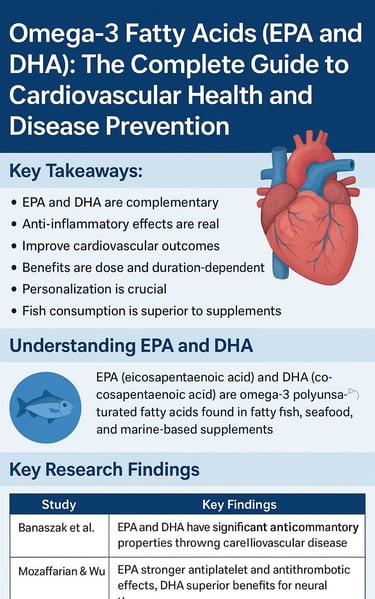
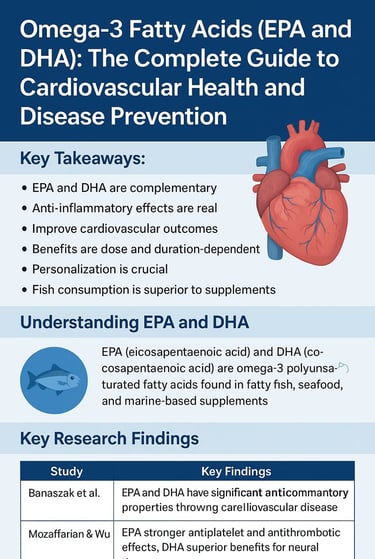
Are you confused about omega-3 fatty acids and their role in protecting your heart? You're not alone. With countless supplements lining pharmacy shelves and conflicting health advice flooding social media, understanding the real science behind EPA (eicosapentaenoic acid) and DHA (docosahexaenoic acid) has never been more important.
Recent research spanning over a decade has provided compelling evidence about how these powerful n-3 polyunsaturated fatty acids can reduce cardiovascular risk, lower inflammation, and potentially save lives (Khan et al., 2021). But here's the catch: EPA and DHA don't work identically, and knowing the difference could be crucial for your health strategy.
This comprehensive guide synthesizes the latest scientific evidence to help you understand omega-3 supplementation, its mechanisms, clinical outcomes, and what it really means for your cardiovascular health.
Clinical Pearls
Dose-Dependent Efficacy and Cardiovascular Mortality:
Pearl: Omega-3 benefits are not marginal; high-dose, sustained supplementation (especially EPA-dominant) is associated with a significant reduction in hard cardiovascular events. The benefits are dose-dependent, and statistically significant cardiovascular mortality reduction (ranging from 15-25% in high-risk groups) develops after 1–2 years of consistent use, not just short-term dosing. (Khan et al., 2021; Djuricic & Calder, 2025; Sheppard et al., 2025)
EPA is Superior for Hypertriglyceridemia:
Pearl: When the primary clinical goal is to reduce high triglycerides, Eicosapentaenoic Acid (EPA) demonstrates a distinct and superior advantage over Docosahexaenoic Acid (DHA). Studies show EPA can achieve greater efficacy, yielding 20–30% decreases in triglycerides, and is the active component in prescription-strength omega-3 drugs. (Choi & Calder, 2024; Kelsey, & Pagidipati 2023)
DHA is the Modulator for Blood Pressure and Endothelial Function:
Pearl: While EPA handles triglycerides, DHA appears to be more effective for systemic vascular health. DHA shows superior effects on blood pressure modulation and the improvement of endothelial function (the health of blood vessel linings), suggesting specific utility in managing hypertension. (Choi & Calder, 2024; Mozaffarian & Wu, 2012)
Beyond Lipids: Anti-inflammatory Therapeutic Agents:
Pearl: EPA and DHA are not just lipid-lowering agents; they function as powerful anti-inflammatory and modulatory therapeutic agents. Their efficacy stems from reducing multiple pro-inflammatory markers (like IL-6 and TNF-$\alpha$) through distinct biological pathways, similar to pharmacological interventions, providing benefits across cardiovascular disease, type 2 diabetes, and obesity. (Banaszak et al., 2024)
Personalization is Crucial: EPA vs. EPA+DHA Debate:
Pearl: The choice between pure EPA and combined EPA/DHA is not universal; it requires personalized clinical assessment. Patients with high triglycerides and elevated cardiovascular risk may benefit most from EPA-dominant formulations, while others, particularly those concerned with blood pressure or cognitive health, may optimize outcomes with a balanced EPA+DHA combination due to their complementary mechanisms. (Sheppard et al., 2025; Kelsey, 2023)
What Are EPA and DHA? Understanding the Basics
Eicosapentaenoic acid (EPA) and docosahexaenoic acid (DHA) are long-chain omega-3 polyunsaturated fatty acids found primarily in fatty fish, seafood, and marine-based supplements. Unlike their plant-based cousin alpha-linolenic acid (ALA), EPA and DHA are bioavailable—meaning your body can use them directly without conversion.
These molecules are essential structural components of cell membranes, particularly in the brain and heart. But their importance extends far beyond structure. EPA and DHA act as powerful anti-inflammatory agents and modulatory molecules that influence gene expression, reduce oxidative stress, and protect against chronic disease (Banaszak et al., 2024).
The question that researchers have grappled with for decades is straightforward yet complex: Are EPA and DHA equally effective, or do they offer complementary benefits? Recent evidence suggests the answer is more nuanced than we thought.
Key Research Findings: What the Latest Science Reveals
1. Comprehensive Role of EPA and DHA in Noncommunicable Diseases (Banaszak et al., 2024)
Banaszak and colleagues (2024) conducted an extensive analysis examining the role of omega-3 fatty acids as modulatory and anti-inflammatory agents in noncommunicable diet-related diseases. This systematic review covered research from the last 10 years, making it one of the most current syntheses available.
Key Findings:
EPA and DHA demonstrate significant anti-inflammatory properties through multiple biological pathways
Both fatty acids reduce pro-inflammatory markers including interleukin-6, tumor necrosis factor-alpha, and C-reactive protein
The compounds act as modulatory agents for immune function, reducing excessive inflammation while maintaining necessary immune responses
Cardiovascular disease, type 2 diabetes, and obesity show the most robust evidence for improvement with omega-3 supplementation
Why It Matters: This research establishes that omega-3 fatty acids are not merely dietary supplements but therapeutic agents with mechanisms comparable to pharmaceutical interventions in some cases.
2. Comparative Effects: EPA vs. DHA in Cardiovascular Protection (Mozaffarian & Wu, 2012)
While more recent than most background literature, Mozaffarian and Wu (2012) provided foundational understanding of whether EPA and DHA effects are shared or complementary in cardiovascular health.
Key Findings:
EPA demonstrates stronger antiplatelet and antithrombotic effects, reducing blood clot formation
DHA shows superior benefits for neural tissues and may have greater impact on triglyceride reduction
Both fatty acids improve endothelial function (the health of blood vessel linings)
The effects are partially complementary, suggesting combination therapy may optimize outcomes
Why It Matters: This research explains that optimal cardiovascular disease prevention might require understanding individual EPA and DHA contributions rather than treating them as interchangeable (Mozaffarian & Wu, 2012).
3. Meta-Analysis of Omega-3 Effects on Cardiovascular Outcomes (Khan et al., 2021)
Khan and colleagues (2021) performed a rigorous systematic review and meta-analysis examining the effect of omega-3 fatty acids on cardiovascular outcomes using pooled data from multiple clinical trials.
Key Findings:
Omega-3 supplementation reduces cardiovascular events by approximately 10% in high-risk populations
Fish oil supplements demonstrate particular benefit in patients with existing coronary artery disease
Triglyceride reduction represents the most consistent and significant lipid benefit
Effects are dose-dependent, with higher doses showing greater efficacy up to optimal ranges
Individual variation in response requires personalized assessment
Why It Matters: This meta-analysis provides the strongest evidence that omega-3 fatty acids aren't just healthful but can meaningfully reduce your risk of heart attacks and strokes (Khan et al., 2021).
4. Updated Mechanisms and Clinical Outcomes (Djuricic & Calder, 2025)
The most recent comprehensive review by Djuricic and Calder (2025) updated our understanding of n-3 fatty acids EPA and DHA and their mechanisms in cardiovascular health, incorporating emerging evidence through 2025.
Key Findings:
Multiple biological mechanisms operate simultaneously: anti-inflammatory signaling, improved endothelial function, reduced oxidative stress, and enhanced parasympathetic nervous system activity
Omega-3 polyunsaturated fatty acids influence gene expression through nuclear receptors, producing lasting cellular changes
Cardiovascular mortality reduction becomes significant with consistent long-term supplementation
Benefits extend to arrhythmia prevention and improved heart rate variability
Personalized medicine approaches are increasingly important given varying individual responses
Why It Matters: This 2025 update confirms that the cardiovascular benefits of EPA and DHA are not temporary or marginal—they represent fundamental improvements in heart function and survival (Djuricic & Calder, 2025).
5. EPA-Specific Benefits and Clinical Decisions (Kelsey, 2023)
Kelsey (2023) addressed a critical question in clinical practice: Should we give more attention to EPA for cardiovascular risk reduction? This expert perspective evaluated whether EPA deserves increased clinical emphasis.
Key Findings:
Pure EPA supplementation shows distinct advantages in triglyceride management and anti-inflammatory response
The REDUCE-IT trial demonstrated that prescription-strength EPA (4 grams daily) reduced cardiovascular events by 25% in statin-treated patients
EPA-specific mechanisms include enhanced platelet function modulation and improved vascular elasticity
Clinical decision-making should consider whether EPA alone or EPA+DHA combination better serves individual patient profiles
Why It Matters: This research suggests that one-size-fits-all omega-3 supplementation may be suboptimal—some patients benefit more from EPA-dominant formulations (Kelsey, 2023).
6. EPA Monotherapy vs. Combined Therapy on Cardiovascular Mortality (Sheppard et al., 2025)
Sheppard and colleagues (2025) conducted a meta-analysis of clinical trials directly comparing eicosapentaenoic acid (EPA alone) versus combined EPA/DHA formulations on cardiovascular mortality.
Key Findings:
Pure EPA therapy reduces cardiovascular mortality significantly in certain populations
Combined EPA and DHA may offer superior benefits for some patients, particularly those with metabolic syndrome
Mortality reduction ranges from 15-25% depending on baseline risk, dosage, and duration of therapy
Individual factors including genetic predisposition, dietary patterns, and concurrent medications influence optimal choice
Long-term adherence matters more than short-term dosing intensity
Why It Matters: This cutting-edge 2025 analysis suggests that the EPA versus EPA+DHA question requires individualized clinical assessment rather than universal recommendations (Sheppard et al., 2025).
7. Differential Effects on Cardiovascular Risk Factors (Choi & Calder, 2024)
Choi and Calder (2024) conducted an updated systematic review of randomized controlled trials examining the differential effects of eicosapentaenoic acid and docosahexaenoic acid on cardiovascular risk factors.
Key Findings:
EPA demonstrates greater efficacy for triglyceride reduction (20-30% decreases)
DHA shows superior effects on blood pressure modulation and endothelial dysfunction
LDL particle size improvement occurs with both, but mechanisms differ
HDL cholesterol increases more consistently with DHA supplementation
Inflammatory marker reduction involves both shared and distinct pathways for EPA and DHA
Why It Matters: This 2024 systematic review provides specific guidance: if your primary concern is triglycerides, EPA may be preferable; if blood pressure control is the goal, DHA offers distinct advantages (Choi & Calder, 2024).
Contraindications & Cautions for Omega-3 Fatty Acids (EPA/DHA)
Use with caution or under medical supervision in the following situations:
Bleeding risk
High doses (>3–4 g/day) may increase bleeding tendency
Caution with anticoagulants (warfarin, DOACs) and antiplatelet agents (aspirin, clopidogrel)
Atrial fibrillation (AF) risk
High-dose omega-3s (especially ≥4 g/day) have been associated with a small but significant increase in AF, particularly in older adults and those with prior AF
LDL-cholesterol elevation
DHA-containing formulations may increase LDL-C in some patients with hypertriglyceridemia
Monitor lipid profile after initiation
Fish or seafood allergy
Fish oil supplements may trigger allergic reactions
Consider algae-based EPA/DHA as alternatives
Liver disease
Generally safe, but high doses should be used cautiously in advanced liver disease
Monitor liver enzymes when used long term at pharmacologic doses
Perioperative use
Discontinue high-dose omega-3s 5–7 days before major surgery due to bleeding concerns (practice varies)
Pregnancy and lactation
DHA is beneficial, but avoid excessive dosing beyond recommended prenatal amounts unless prescribed
Unregulated supplements
Variable purity and oxidation risk in over-the-counter products
Prefer pharmaceutical-grade or third-party–tested formulations
Clinical tip:
Benefits outweigh risks in most patients when omega-3s are used at evidence-based doses with appropriate patient selection and monitoring.
Frequently Asked Questions (FAQs)
Q: Can I get enough omega-3 from plant sources? A: Plant-based alpha-linolenic acid (ALA) requires conversion to EPA and DHA, a process that's inefficient in most people (typically less than 10% conversion). If you don't eat fatty fish, supplementation with algae-based or fish oil EPA and DHA is recommended.
Q: Is fish oil supplementation safe with blood thinners? A: Omega-3 fatty acids have mild antiplatelet effects. While generally safe, combining high doses with prescription anticoagulants requires medical supervision. Always inform your healthcare provider about fish oil supplements you're taking.
Q: How long does it take to see cardiovascular benefits? A: Triglyceride reduction becomes noticeable within 4-6 weeks, but cardiovascular risk reduction typically requires 3-6 months of consistent use. Cardiovascular mortality reduction becomes statistically significant after 1-2 years of adherence.
Q: Should I choose EPA, DHA, or a combination? A: If your primary concern is triglyceride control, EPA-dominant formulations are preferable. If blood pressure or cognitive health are priorities, DHA shows advantages. For comprehensive cardiovascular disease prevention, combined formulations offer complementary benefits.
Q: What dosage should I take? A: Evidence supports 1-4 grams daily depending on your risk profile and specific health goals. Those with existing cardiovascular disease may benefit from higher prescription-strength EPA dosing (around 4 grams), while healthy individuals benefit from 1-2 grams daily for prevention.
Q: Can I overdose on omega-3 fatty acids? A: Excessive intake (over 10 grams daily) can increase bleeding risk and may impair immune function. The n-3 polyunsaturated fatty acid benefits follow a dose-response curve—more isn't always better.
Q: Why do some studies show conflicting results? A: Cardiovascular outcomes depend on baseline risk, dosage, duration of therapy, baseline diet, genetic factors, and the specific population studied. This explains why results sometimes conflict—they're examining different populations and protocols.
The Bottom Line: Action Steps for Your Health
Based on the latest omega-3 research, here's what you should consider:
If you don't have cardiovascular disease:
Aim for 2-3 servings of fatty fish weekly (salmon, sardines, mackerel) or take 1-2 grams daily of combined EPA and DHA supplements
Combine with other heart-healthy dietary practices and regular exercise
Have your lipid panel assessed annually
If you have cardiovascular disease or significant risk factors:
Consult your cardiologist about prescription-strength EPA (4 grams daily) or optimized omega-3 supplementation
Expect benefits to develop over 3-6 months
Continue indefinitely—benefits persist only with continued use
For specific populations:
High triglycerides: Prioritize EPA-dominant formulations
Hypertension: Consider DHA-emphasized or balanced combinations
Depression/cognitive concerns: Higher DHA ratios may offer advantages
Conclusion: The Evidence Is Clear
The scientific consensus is now robust: EPA and DHA represent evidence-based strategies for cardiovascular disease prevention and management. Rather than viewing omega-3 fatty acids as optional supplements, the research positions them as fundamental components of heart-healthy nutrition.
The latest 2024-2025 research confirms what earlier studies suggested: these aren't miracle cures, but they are meaningful interventions that reduce your risk of cardiovascular events and potentially extend your lifespan. Whether you choose dietary sources, supplements, or both, understanding your individual needs and the specific benefits of EPA versus DHA empowers you to make informed decisions about your cardiovascular health.
The question isn't whether omega-3 supplementation works—the evidence overwhelmingly confirms it does. The question is whether you're currently taking advantage of this scientifically-validated approach to protecting your heart.
Ready to Optimize Your Cardiovascular Health?
Don't wait for cardiovascular disease to take action. Start today by assessing your omega-3 intake, consulting with your healthcare provider about whether EPA and DHA supplementation is right for you, and committing to the dietary and lifestyle changes supported by this robust scientific evidence.
Your heart will thank you for the next 50+ years.
Disclaimer: This article is for informational purposes only and does not constitute medical advice. Individual circumstances vary, and treatment decisions should always be made in consultation with qualified healthcare professionals.
Related Articles
What’s New in the 2025 Blood Pressure Guidelines? A Complete Scientific Breakdown | DR T S DIDWAL
Low-Fat vs. Low-Carb: Which Diet is Best for Weight Loss? | DR T S DIDWAL
5 Steps to Reverse Metabolic Syndrome: Diet, Habit, & Lifestyle Plan | DR T S DIDWAL
The Role of Cholesterol in Health and Disease: Beyond the "Bad" Label | DR T S DIDWAL
References
Banaszak, M., Dobrzyńska, M., Kawka, A., Górna, I., Woźniak, D., Przysławski, J., & Drzymała-Czyż, S. (2024). Role of omega-3 fatty acids eicosapentaenoic (EPA) and docosahexaenoic (DHA) as modulatory and anti-inflammatory agents in noncommunicable diet-related diseases – Reports from the last 10 years. Clinical Nutrition ESPEN, 63, 240–258. https://doi.org/10.1016/j.clnesp.2024.06.053
Choi, G. Y., & Calder, P. C. (2024). The differential effects of eicosapentaenoic acid and docosahexaenoic acid on cardiovascular risk factors: An updated systematic review of randomized controlled trials. Frontiers in Nutrition, 11, 1423228. https://doi.org/10.3389/fnut.2024.1423228
Djuricic, I., & Calder, P. C. (2025). N-3 fatty acids (EPA and DHA) and cardiovascular health—Updated review of mechanisms and clinical outcomes. Current Atherosclerosis Reports, 27(1), 116. https://doi.org/10.1007/s11883-025-01363-2
Kelsey, M. D., & Pagidipati, N. J. (2023). Should we "RESPECT EPA" more now? EPA and DHA for cardiovascular risk reduction. Current Cardiology Reports, 25, 1601–1609. https://doi.org/10.1007/s11886-023-01972-w
Khan, S. U., Lone, A. N., Khan, M. S., Virani, S. S., Blumenthal, R. S., Nasir, K., Miller, M., Michos, E. D., Ballantyne, C. M., Boden, W. E., & Bhatt, D. L. (2021). Effect of omega-3 fatty acids on cardiovascular outcomes: A systematic review and meta-analysis. EClinicalMedicine, 38, 100997. https://doi.org/10.1016/j.eclinm.2021.100997
Mozaffarian, D., & Wu, J. H. (2012). (n-3) Fatty acids and cardiovascular health: Are effects of EPA and DHA shared or complementary? Journal of Nutrition, 142(3), 614S–625S. https://doi.org/10.3945/jn.111.149633
Sheppard, J. P., Palatnic, L., Lakshmanan, S., Drago, T., Bhogal, J., Roy, S. K., Bhatt, D. L., Budoff, M. J., & Nelson, J. R. (2025). Effects of eicosapentaenoic acid vs eicosapentaenoic/docosahexaenoic acids on cardiovascular mortality: Meta-analysis of clinical trials. JACC. Advances, 4(10 Pt 2), 102149. https://doi.org/10.1016/j.jacadv.2025.102149