Erectile Dysfunction and Heart Disease: Why ED Is a Cardiovascular Warning Sign in 2025
ED is a vascular event, not just a lifestyle issue. Uncover the 3-year window between sexual symptoms and heart disease—and how to use it to save your life
AGINGHEART
Dr. T.S. Didwal, M.D.(Internal Medicine)
2/16/202612 min read
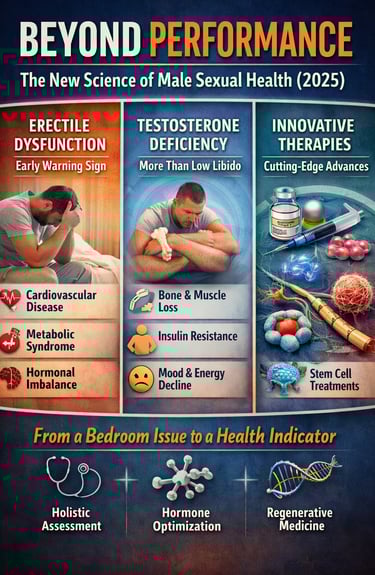
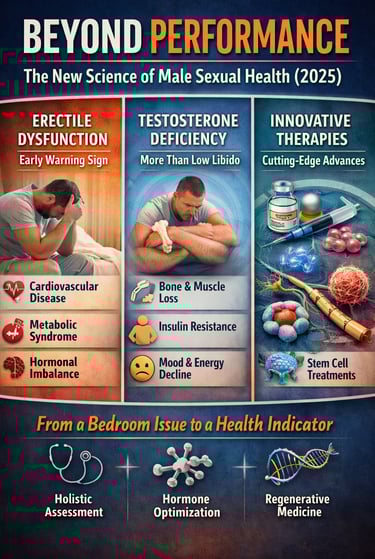
For decades, male sexual health was reduced to a single question: “Can you get an erection?” Today, the science tells a far more complex and clinically urgent story. Erectile dysfunction (ED) is no longer viewed as an isolated quality-of-life issue but as an early biomarker of systemic vascular disease, metabolic dysfunction, and hormonal imbalance (Salonia et al., 2025). In many men, ED precedes overt cardiovascular disease by several years, making it a potential window into cardiometabolic risk rather than merely a bedroom concern.
Simultaneously, testosterone deficiency—or male hypogonadism—has emerged as a condition with implications extending beyond libido and performance. Low testosterone is increasingly linked to insulin resistance, unfavorable body composition, reduced bone density, mood disturbance, and diminished vitality (Yassin et al., 2025). Yet despite growing awareness, diagnostic criteria remain inconsistent across international societies, creating uncertainty in both testing thresholds and treatment decisions (Tsampoukas et al., 2025).
Meanwhile, therapeutic innovation is accelerating. Large randomized data from the T4DM trial suggest that carefully selected men receiving testosterone therapy may experience meaningful improvements in sexual function and metabolic parameters (Wittert et al., 2025). At the frontier, regenerative approaches such as stem cell therapy aim not merely to enhance erectile performance temporarily, but to restore damaged vascular and neural tissue itself (Fu et al., 2025).
The result is a pivotal moment in sexual medicine: a shift from symptom suppression toward systemic evaluation, personalized hormone assessment, and biologically restorative therapies. Male sexual health in 2025 is no longer peripheral—it is central to preventive medicine.duction
Cinical pearls
1. The "Canary in the Coal Mine" Phenomenon
Scientific Tone: Erectile dysfunction (ED) is often a precursor to major adverse cardiovascular events (MACE). Due to the smaller diameter of the cavernosal arteries compared to coronary arteries, endothelial dysfunction manifests penilely before it does cardially.
Patient-Friendly Tone: Think of your erections as a "check engine light" for your heart. Because the blood vessels in the penis are much smaller than those in the heart, they often show signs of clogging or poor circulation first. Solving ED isn't just about sex; it’s about preventing a heart attack.
2. The Diurnal Rhythm Requirement
Scientific Tone: Diagnosis of hypogonadism must be predicated on total testosterone levels drawn between 7:00 AM and 10:00 AM. Diurnal variation in testosterone production can result in "false low" readings if sampled in the afternoon, leading to over-diagnosis.
Patient-Friendly Tone: Timing is everything. Your testosterone is highest in the morning and drops significantly by the afternoon. If you get your blood drawn at 3:00 PM, your results might look low even if you're perfectly healthy. Always test before 10:00 AM for an honest number.
3. Regenerative vs. Symptomatic Therapy
Scientific Tone: Conventional PDE-5 inhibitors (like Viagra) are palliative, facilitating vasodilation without addressing underlying structural pathology. Emerging mesenchymal stem cell (MSC) therapies aim for true disease modification by inducing angiogenesis and repairing the tunica albuginea.
Patient-Friendly Tone: Current pills are like a "bandage"—they help for a few hours but don't fix why the problem started. New research into stem cells is like "home repair"—it aims to actually fix the damaged tissue and blood vessels so the body can work naturally again.
4. The Testosterone-Metabolic Feedback Loop
Scientific Tone: Hypogonadism and Type 2 Diabetes exist in a bidirectional relationship. Low testosterone promotes visceral adiposity and insulin resistance, while adipose tissue contains aromatase, which converts testosterone to estradiol, further suppressing the HPG axis.
Patient-Friendly Tone: Low testosterone and belly fat are best friends. Belly fat actually turns your testosterone into estrogen, which then makes you gain more fat. Breaking this cycle often requires a "double-barrel" approach of hormone therapy and weight loss to get your metabolism back on track.
5. Multimodal Standardization
Scientific Tone: Effective management of male reproductive health requires a multidisciplinary framework. Monotherapy often fails in complex cases where psychogenic factors, hormonal deficits, and vascular insufficiency coexist, necessitating a "biopsychosocial" treatment model.
Patient-Friendly Tone: There is rarely a "magic pill." For most men, the best results come from a "team" approach: checking your hormones, fixing your diet, and sometimes talking to a counselor to handle the stress or anxiety that comes with sexual health issues.
Beyond Performance — The New Science of Male Sexual Health
Male sexual health remains a critical yet often overlooked aspect of overall wellbeing in modern medicine. Whether you're struggling with erectile dysfunction, concerned about testosterone levels, or simply wanting to understand the latest treatment options, the latest 2025 research provides transformative insights into how healthcare providers are revolutionizing male reproductive health. From cutting-edge stem cell therapy to updated clinical guidelines, the landscape of sexual dysfunction treatment is evolving rapidly.
In this comprehensive guide, we'll explore five groundbreaking 2025 studies that reshape our understanding of men's sexual health, hypogonadism, and penile dysfunction. Whether you're a healthcare professional, a patient seeking answers, or someone interested in medical advances, this article distills complex research into actionable insights.
Stem Cell Therapy for Erectile Dysfunction (2025): A Breakthrough in Regenerative Medicine
Stem cell therapy is emerging as a transformative treatment for erectile dysfunction (ED), offering hope beyond conventional medications. In a landmark 2025 review published in Frontiers in Medicine, Fu et al. examined cutting-edge research on regenerative approaches for ED, highlighting the growing promise of stem cell–based therapies.
Unlike phosphodiesterase-5 (PDE5) inhibitors, which temporarily improve symptoms, stem cell therapy targets the root causes of erectile dysfunction, including vascular damage, smooth muscle loss, inflammation, and fibrosis. Preclinical studies show that mesenchymal stem cells (MSCs) enhance angiogenesis (new blood vessel formation), restore neurovascular signaling, and improve penile tissue integrity in animal models.
The review by Fu et al., (2025) emphasizes that stem cell transplantation may improve blood flow, reduce scarring, and promote long-term tissue regeneration—potentially leading to more durable outcomes than traditional drug therapy. Importantly, these therapies are progressing from laboratory research into early-stage clinical trials, marking a significant shift in ED management strategies.
While more human studies are needed to confirm safety and long-term effectiveness, current evidence strongly supports continued investment in regenerative medicine for erectile dysfunction. Stem cell therapy could represent the future of ED treatment—focused not just on symptom relief, but on true biological repair and functional restoration.
2025 European Urology Guidelines on Erectile Dysfunction & Male Sexual Health
The 2025 update of the European Association of Urology (EAU) guidelines, published in European Urology by Salonia et al.,( 2025), establishes the most comprehensive clinical standards for male sexual and reproductive health. Covering erectile dysfunction (ED), male hypogonadism, premature ejaculation, and Peyronie’s disease, these evidence-based recommendations redefine modern sexual medicine.
A major emphasis of the 2025 guidelines is accurate diagnosis. Testosterone testing should be performed using early morning blood samples to ensure reliability. For erectile dysfunction, clinicians are advised to conduct a full cardiovascular risk assessment, recognizing ED as a potential early marker of heart disease. Psychological health and relationship factors must also be evaluated as part of a holistic diagnostic approach.
The guidelines stress careful patient selection and monitoring for testosterone replacement therapy (TRT), along with consideration of combination therapies when appropriate. Importantly, lifestyle interventions—including weight management, physical activity, and cardiovascular optimization—remain foundational to all treatment strategies.
Overall, the 2025 EAU guidelines highlight a multidisciplinary, individualized approach to male sexual health. By integrating hormonal, cardiovascular, and psychological assessment, clinicians can improve patient outcomes and deliver safer, more effective care.
Standardizing Male Hypogonadism Diagnosis: Why 2025 Research Calls for Unified Testosterone Guidelines
A 2025 study published in the International Journal of Impotence Research by Tsampoukas et al. highlights a critical issue in men’s health: the lack of standardized diagnostic criteria for male hypogonadism. Despite affecting millions of men worldwide, low testosterone remains inconsistently diagnosed due to conflicting international guidelines.
The researchers identified major discrepancies among specialist societies regarding testosterone cutoff values, laboratory testing protocols, and symptom assessment criteria. Some guidelines prioritize biochemical thresholds, while others emphasize clinical symptoms, creating confusion for both clinicians and patients. Variability in early morning testosterone testing recommendations and repeat confirmation protocols further complicates diagnosis.
This inconsistency has real-world consequences. Men with genuine testosterone deficiency may go undiagnosed and untreated, while others may receive unnecessary testosterone replacement therapy (TRT). Such disparities affect treatment outcomes, healthcare efficiency, and long-term safety monitoring.
Tsampoukas and colleagues advocate for unified diagnostic standards, including standardized testosterone thresholds and harmonized symptom-based criteria. Establishing consistent global guidelines would improve patient selection for TRT, enhance research comparability, and ensure equitable access to evidence-based care.
The study underscores an urgent need for collaboration among endocrine and urology societies to create clearer, more consistent pathways for diagnosing and managing male hypogonadism.
Testosterone and Men’s Health: How Hormone Levels Impact Heart, Metabolism, Brain, and Performance
A 2025 review by Yassin et al. (2025). published in UroPrecision highlights the far-reaching impact of testosterone on men’s health beyond sexual function. While low testosterone (hypogonadism) is commonly associated with erectile dysfunction, the research emphasizes that testosterone is a systemic hormone influencing cardiovascular health, metabolic regulation, bone density, cognitive performance, mood, muscle mass, and overall vitality.
The study explains how testosterone deficiency is linked to hypertension, atherosclerosis, insulin resistance, type 2 diabetes, obesity, osteoporosis, depression, and reduced physical performance. Importantly, the authors note that low testosterone is not merely a reproductive issue—it is closely intertwined with cardiometabolic risk and quality of life.
Testosterone replacement therapy (TRT), when appropriately prescribed and medically monitored, may improve erectile function, glucose control, body composition, bone mineral density, mood stability, and energy levels. Emerging evidence also suggests potential cardiovascular benefits in carefully selected patients, although individualized risk assessment remains essential.
The key takeaway: testosterone evaluation should extend beyond sexual symptoms to include comprehensive cardiometabolic and psychological assessment. Optimizing testosterone levels may play a significant role in promoting healthy aging, metabolic resilience, and long-term wellbeing in men.
Testosterone Therapy and Erectile Function: Evidence from the T4DM Clinical Trial
A 2025 secondary analysis of the T4DM (Testosterone for Diabetes) Trial by Wittert et al., (2025)., published in The Journal of Clinical Endocrinology & Metabolism, provides strong clinical evidence supporting testosterone replacement therapy (TRT) for improving sexual function in men with low testosterone. Unlike observational studies, this randomized clinical trial offers high-quality data demonstrating that testosterone treatment significantly enhances erectile function, sexual satisfaction, and overall sexual health in appropriately selected men.
The findings show that treatment response varies based on baseline testosterone levels, age, cardiometabolic status, and individual physiology—highlighting the importance of personalized medicine. Sustained testosterone therapy was associated with maintained improvements in erectile quality over time, while careful monitoring ensured safety and minimized adverse events.
Importantly, benefits extended beyond sexual performance. Testosterone therapy also showed positive effects on metabolic health markers, reinforcing the connection between hormonal balance, insulin sensitivity, and cardiovascular risk factors. The study underscores that optimal outcomes require thorough baseline assessment, individualized dosing strategies, and regular follow-up evaluations.
The key takeaway: Clinical trial evidence confirms that testosterone therapy can be an effective, evidence-based treatment for sexual dysfunction in men with hypogonadism—provided careful patient selection, monitoring, and integration with lifestyle interventions are prioritized.
Integrating the Research: A Comprehensive Framework for Male Sexual Health
How These Studies Connect
These five 2025 studies collectively paint a comprehensive picture of modern male sexual health care:
Fu et al. demonstrates where future ED treatment is heading: regenerative medicine and stem cell therapy
Salonia et al. provides current evidence-based guidelines for practicing clinicians
Tsampoukas et al. identifies critical gaps requiring standardization
Yassin et al. emphasizes the systemic nature of testosterone's health effects
Wittert et al. validates testosterone therapy's clinical efficacy
The Evolution of Male Sexual Health Treatment
Traditional Approach (2010-2020):
Focus on symptom management using PDE-5 inhibitors
Limited hormonal assessment
Minimal psychological intervention
Separate treatment of sexual vs. metabolic dysfunction
Modern Approach (2025+):
Comprehensive assessment of cardiovascular, metabolic, and psychological health
Standardized diagnostic criteria for hypogonadism
Personalized treatment planning combining pharmacotherapy, lifestyle modification, and psychological support
Emerging regenerative therapies for refractory cases
Integration of sexual health with overall wellbeing
Frequently Asked Questions About Male Sexual Health
Q: What's the difference between erectile dysfunction and hypogonadism?
A: Erectile dysfunction (ED) refers to difficulty achieving or maintaining erections, while male hypogonadism describes inadequate testosterone production. However, they're closely related—low testosterone commonly causes ED. Many men have both conditions requiring coordinated treatment.
Q: How is low testosterone properly diagnosed?
A: According to the research, proper diagnosis requires early morning blood tests (testosterone peaks in morning), ideally multiple measurements, and clinical symptom assessment. However, Tsampoukas et al. highlight that standardized diagnostic cutoff values still need development across international guidelines.
Q: Is testosterone therapy safe?
A: The Wittert et al. trial demonstrates safety when patients are properly selected and regularly monitored. Testosterone therapy requires baseline assessment for cardiovascular risk, prostate health, and blood clotting disorders. Regular follow-up ensures treatment efficacy and safety.
Q: What about stem cell therapy for erectile dysfunction?
A: Fu et al.'s research shows preclinical promise, but stem cell therapy remains largely investigational. Several clinical trials are underway, but FDA-approved stem cell treatments for ED aren't yet widely available. However, promising clinical applications should emerge within the next 3-5 years.
Q: How important is lifestyle modification in sexual health treatment?
A: The EAU guidelines emphasize that lifestyle changes—including cardiovascular exercise, weight management, stress reduction, smoking cessation, and limiting alcohol—form the foundation of sexual health treatment, often reducing or eliminating the need for pharmaceutical interventions.
Q: Can erectile dysfunction indicate serious health problems?
A: Absolutely. Fu et al., Yassin et al., and Wittert et al. all emphasize that ED often signals cardiovascular disease, diabetes, hypertension, or metabolic dysfunction. Comprehensive cardiovascular assessment should accompany any ED evaluation.
Key Takeaways for Patients and Healthcare Providers
For Patients:
Sexual health matters—don't dismiss erectile dysfunction as normal aging; it often signals treatable underlying conditions
Comprehensive evaluation beats symptom-focused treatment; expect hormonal assessment, cardiovascular screening, and psychological evaluation
Lifestyle modification remains foundational; exercise, weight management, and stress reduction should be first-line interventions
Newer treatment options including stem cell therapy are emerging; discuss with specialists about clinical trial opportunities
Individualized treatment works better than generic protocols; your response to therapy may differ from others'
For Healthcare Providers:
Standardized assessment of testosterone using proper testing protocols improves diagnostic accuracy
EAU guidelines provide evidence-based framework for male sexual health management
Multidisciplinary collaboration (urology, cardiology, psychology, endocrinology) optimizes patient outcomes
Regenerative medicine represents next frontier; stay informed about stem cell therapy developments
Personalized medicine approaches increasingly replace one-size-fits-all protocols
Safety, Standardization, and Ongoing Debate in Testosterone Therapy
Testosterone replacement therapy (TRT) has undergone intense scrutiny over the past decade. Early observational studies raised concerns about increased cardiovascular events shortly after therapy initiation, prompting regulatory warnings and widespread debate. More recent randomized data and large meta-analyses suggest that, when prescribed to appropriately selected men, TRT appears largely cardiovascular-neutral. However, long-term outcome data remain limited, and risk stratification is essential—particularly in men with recent myocardial infarction, stroke, or unstable cardiovascular disease.
Accurate diagnosis also requires nuance. Total testosterone alone may be misleading, especially in obesity or aging where sex hormone–binding globulin (SHBG) levels fluctuate. In borderline cases, calculated or measured free testosterone improves diagnostic precision. Current guidelines continue to recommend symptom correlation with confirmed low morning testosterone rather than age-adjusted thresholds alone.
Safety monitoring remains central to responsible prescribing. TRT can cause erythrocytosis, increasing thrombotic risk when hematocrit exceeds 54%. Prostate surveillance is equally important. Although contemporary evidence does not support TRT as a cause of prostate cancer, PSA monitoring before initiation, at 3–6 months, and annually thereafter is recommended, with significant PSA rises warranting urologic evaluation.
Ultimately, TRT should be guided by individualized risk–benefit assessment, shared decision-making, and structured follow-up rather than simplistic hormonal normalization.
Call to Action: Taking Control of Your Male Sexual Health
If you're experiencing erectile dysfunction, low sexual desire, fatigue, or other symptoms suggesting sexual or hormonal dysfunction:
Schedule a Comprehensive Evaluation Don't settle for quick consultations. Request comprehensive assessment including cardiovascular screening, hormonal testing, metabolic evaluation, and psychological assessment.
Ask About Standardized Testing Request proper early morning testosterone testing with multiple measurements following evidence-based protocols. Reference the EAU guidelines if needed.
Discuss All Treatment Options Talk with your provider about pharmacological options (PDE-5 inhibitors, testosterone therapy), lifestyle modifications, and emerging therapies like stem cell therapy through clinical trials.
Consider a Specialist Consultation If your primary care provider seems unfamiliar with 2025 guidelines and recent advances, request referral to a sexual medicine specialist or urologist trained in modern sexual health management.
Explore Clinical Trial Opportunities If conventional treatments haven't worked, clinical trials for stem cell therapy and other innovative approaches may be available. Ask your provider about trial eligibility.
Invest in Lifestyle Modifications Even before starting pharmaceutical treatment, commit to cardiovascular exercise (150+ minutes weekly), weight management, healthy diet, stress reduction, and smoking cessation. These changes alone often significantly improve sexual function.
Author’s Note
Male sexual health sits at a unique intersection of endocrinology, cardiometabolic medicine, urology, and preventive care. Yet, for too long, it has been either oversimplified into performance metrics or sensationalized in commercial narratives. The purpose of this article is neither to promote therapy nor to diminish legitimate concerns—but to present a balanced, evidence-based synthesis of current 2025 research.
The studies discussed here reflect a pivotal transition in sexual medicine. Erectile dysfunction is increasingly recognized as an early vascular warning sign rather than an isolated complaint. Testosterone deficiency is now understood as a systemic hormonal condition with metabolic, skeletal, and psychological implications. At the same time, therapeutic innovation—from refined testosterone protocols to investigational regenerative therapies—demands careful scrutiny, not blind enthusiasm.
Importantly, testosterone replacement therapy (TRT) remains a medical intervention requiring rigorous diagnosis, appropriate patient selection, and ongoing monitoring. Cardiovascular safety debates, erythrocytosis risk, prostate surveillance considerations, and fertility implications must be openly discussed with patients. Similarly, regenerative approaches such as stem cell therapy remain investigational and should only be pursued within properly regulated clinical trials.
Medicine advances through scientific dialogue, critical appraisal, and thoughtful application—not trends. My intent is to encourage informed conversations between patients and clinicians grounded in physiology, risk stratification, and long-term health outcomes.
Sexual health is not peripheral to medicine—it is deeply connected to vascular health, metabolic integrity, hormonal balance, and quality of life. Approached responsibly, it can serve as an early gateway to preventive care and holistic health optimization.
Related Articles
References
Fu, X., Sheikholeslami, A., Zhanbyrbekuly, U., Davoodi Asl, F., Mussin, N. M., Fazaeli, H., Daniyalov, K., Tanideh, N., Mahdipour, M., Kurmanalina, M. A., & Tamadon, A. (2025). Advances in stem cell therapy for erectile dysfunction: Preclinical evidence and emerging therapeutic approaches. Frontiers in Medicine, 12, 1519095. https://doi.org/10.3389/fmed.2025.1519095
Salonia, A., Capogrosso, P., Boeri, L., Cocci, A., Corona, G., Dinkelman-Smit, M., Falcone, M., Jensen, C. F., Gül, M., Kalkanli, A., Morgado, L. A., Russo, G. I., Serefoğlu, E. C., Verze, P., & Minhas, S. (2025). European Association of Urology guidelines on male sexual and reproductive health: 2025 update on male hypogonadism, erectile dysfunction, premature ejaculation, and Peyronie's disease. European Urology, 88(1), 76–102. https://doi.org/10.1016/j.eururo.2025.04.010
Tsampoukas, G., Karna, S., Morgado, A., et al. (2025). Variations in diagnostic criteria for male hypogonadism: Is there a need for standardizing specialist society guidelines? International Journal of Impotence Research, 37, 1–8. https://doi.org/10.1038/s41443-025-01128-0
Yassin, A., Al-Zoubi, R. M., Alzubaidi, R. T., Kamkoum, H., Zarour, A. A., Garada, K., Elaarag, M., Al-Qudimat, A. R., Fares, Z. E., & Al-Ansari, A. A. (2025). Testosterone and men's health: An in-depth exploration of their relationship. UroPrecision, 3(1), 36–46. https://doi.org/10.1002/uro2.115
Wittert, G. A., Robledo, K. P., Handelsman, D. J., Inder, W. J., Stuckey, B. G. A., Yeap, B. B., Bracken, K., Allan, C. A., Jesudason, D., Jenkins, A., Januszewski, A. S., & Grossmann, M. (2025). Testosterone treatment and sexual function in men: Secondary analysis of the T4DM (Testosterone for Diabetes) Trial. The Journal of Clinical Endocrinology & Metabolism, 110(7), e2157–e2170. https://doi.org/10.1210/clinem/dgaf060