The Missing Nutrient in Modern Diets: How Fiber Protects Your Brain, Gut, Heart, and Metabolism
The latest nutrition science shows fiber is far more than a digestive aid. Discover its role in diabetes, heart health, inflammation, and agin
NUTRITION
Dr. T.S. Didwal, M.D.(Internal Medicine)
5/17/202617 min read
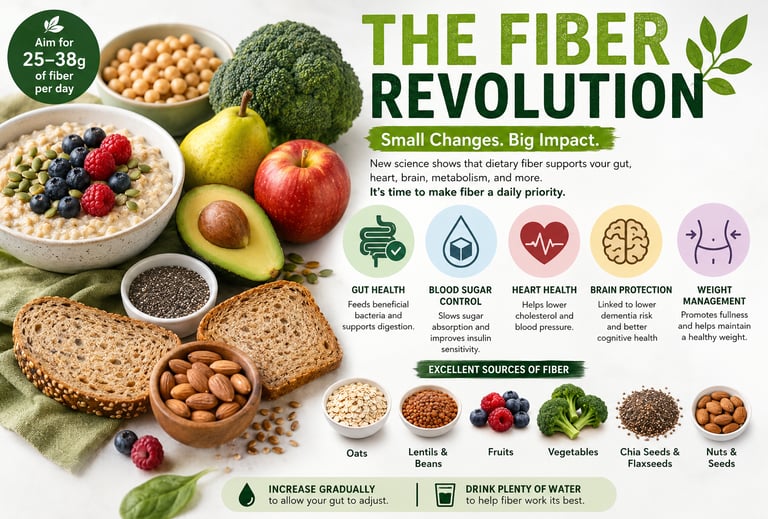
Most people know they should eat more fiber — but few understand just how profoundly it protects every system in the body. New science is changing that story.
For decades, dietary fiber was treated as little more than a digestive aid — something associated with bran cereal, constipation relief, and routine dietary advice. But modern nutrition science is radically redefining its importance. A growing body of research now suggests that fiber is not merely beneficial for bowel health; it may be one of the most powerful regulators of human metabolism, inflammation, brain ageing, and chronic disease risk ever identified (Reynolds et al., 2026). Scientists are increasingly linking low fiber intake to obesity, insulin resistance, metabolic syndrome, cardiovascular disease, and even dementia through interconnected biological pathways involving the gut microbiome and immune system (Pugh & Chambers, 2025; Lee et al., 2026).
Despite these discoveries, most adults consume barely half the recommended daily fiber intake — a silent nutritional deficiency hiding inside modern ultra-processed diets. Large population studies spanning two decades show that people who consume more dietary fiber consistently have lower rates of obesity and better metabolic health outcomes (Lai et al., 2025). At the same time, emerging evidence suggests that fiber-derived compounds produced by gut bacteria may influence everything from blood sugar control to muscle preservation and cognitive resilience (Xie et al., 2026).
The science is becoming difficult to ignore: fiber is no longer a side note in nutrition — it is central to human health.
Key Points
Dietary fiber is emerging as one of the most important nutrients for metabolic, digestive, cardiovascular, and brain health.
Most adults consume only 10–15 grams of fiber daily — far below recommended targets.
Soluble fiber helps regulate blood sugar, cholesterol, and appetite by slowing digestion.
Insoluble fiber supports bowel regularity and digestive health.
High-fibre diets are strongly associated with lower obesity risk and reduced waist circumference.
Fiber improves insulin sensitivity by nourishing beneficial gut bacteria and increasing short-chain fatty acid (SCFA) production.
Studies show that higher fiber intake can reduce fasting glucose and HbA1c in people with type 2 diabetes.
A high carbohydrate-to-fiber ratio is linked to increased dementia risk in older adults.
Fiber may protect brain health through the gut-brain axis, reduce inflammation, and improve vascular function.
Increased fiber intake lowers inflammatory markers associated with metabolic syndrome.
Emerging research suggests dietary fiber may help preserve skeletal muscle mass during ageing and obesity.
Whole-food fiber sources appear more beneficial for microbiome diversity than isolated fiber supplements alone.
Fiber intake should be increased gradually and paired with adequate hydration to reduce bloating and digestive discomfort.
Excellent fiber sources include oats, legumes, vegetables, fruits, flaxseeds, chia seeds, nuts, and whole grains.
Nutrition researchers now argue that dietary fiber should be considered an essential nutrient rather than an optional dietary component.
Building a diverse, fiber-rich diet may help reduce long-term risk of obesity, diabetes, cardiovascular disease, inflammation, and cognitive decline.
What Is Dietary Fiber, and Why Does It Matter So Much?
Dietary fiber refers to plant-based carbohydrates that the human body cannot fully digest. Unlike sugars or starches, fiber passes through the small intestine largely intact and travels to the large intestine, where it performs a remarkable range of functions — from feeding beneficial gut bacteria to regulating blood sugar and reducing inflammation.
There are two broad categories:
Soluble fiber (found in oats, legumes, apples, and flaxseeds) dissolves in water to form a gel-like substance that slows digestion and helps control blood glucose and cholesterol.
Insoluble fiber (found in whole wheat, nuts, and vegetables) adds bulk to stool and promotes regular bowel movements.
Both types play distinct and complementary roles in human health — and as the science below reveals, the benefits stretch far beyond digestion.
Reclassifying Fiber: An Essential Nutrient
In a landmark 2026 commentary published in Nature Food, Reynolds et al. argued that dietary fiber should be formally reclassified as an essential nutrient. The authors pointed to decades of evidence showing that fiber is indispensable to healthy metabolic, immune, and neurological functioning — and that chronic fiber deficiency is associated with a wide spectrum of preventable disease (Reynolds, Cummings, Tannock, et al., 2026). This reclassification matters because it shifts the conversation from fiber being a "good habit" to being a biological necessity — as foundational as vitamins or minerals.
Fiber and Obesity: What 20 Years of National Data Reveals
One of the most comprehensive analyses of dietary fiber and body weight in recent years comes from a large-scale study examining U.S. adults over 20 years. Lai et al. (2025), published in Frontiers in Nutrition, analyzed data from the National Health and Nutrition Examination Survey (NHANES) spanning 1999 to 2018 — covering tens of thousands of participants across diverse demographic groups.
The findings were striking. Across all age groups, sexes, and ethnic backgrounds, higher dietary fiber intake was consistently associated with lower rates of obesity and overweight. Importantly, the relationship was not linear; there appeared to be a threshold effect, suggesting that even modest increases in fiber intake — moving from very low to moderate — produced meaningful reductions in body mass index (BMI) and waist circumference (Lai et al., 2025).
Why does fiber help with weight management? Several mechanisms are at play:
Satiety signaling — Fiber increases feelings of fullness by slowing gastric emptying and stimulating the release of satiety hormones like GLP-1 and PYY.
Caloric displacement — High-fiber foods tend to be lower in calorie density, naturally reducing overall energy intake.
Gut microbiome modulation — Fermentable fibers feed beneficial gut bacteria, which produce short-chain fatty acids (SCFAs) that regulate fat storage and appetite.
The NHANES data spanning two decades makes this one of the most temporally robust findings in nutritional epidemiology: fiber isn't just correlated with healthy weight — the relationship holds consistently across time, demographics, and lifestyle variations.
Fiber, Blood Sugar, and Type 2 Diabetes: A Gut-Level Story
If obesity is one of the great public health crises of our era, type 2 diabetes is its frequent companion — and dietary fiber sits at the intersection of both.
The Gut Microbiome Connection
A 2025 review published in Current Opinion in Clinical Nutrition and Metabolic Care by Pugh and Chambers examined how dietary fiber shapes the gut microbiome and, through it, glucose homeostasis. The authors found that fermentable dietary fibers feed specific bacterial species — including Bifidobacterium and Faecalibacterium prausnitzii — that produce short-chain fatty acids, particularly butyrate, propionate, and acetate.
These SCFAs perform a suite of metabolic functions: they activate G-protein-coupled receptors in the gut lining that improve insulin sensitivity, reduce hepatic glucose production, and lower systemic inflammation — all of which are central to the pathophysiology of type 2 diabetes (Pugh & Chambers, 2025). In other words, fiber doesn't just slow the absorption of sugar — it rewires the biological machinery responsible for managing blood glucose at a cellular level.
Clinical Evidence: Fibre in Diabetic Patients
A 2025 systematic review and meta-analysis published in Clinical Nutrition by Çolak et al. went even further, examining the effects of isolated single fibers, fiber mixtures, and fiber-rich whole foods on glycemic control in patients already diagnosed with type 2 diabetes. Their pooled analysis of multiple randomized controlled trials found that:
Both single fibers (such as inulin or psyllium) and mixed fiber formulations significantly reduced fasting blood glucose and HbA1c levels.
Fiber-rich whole foods produced the most sustained improvements in gut microbiota diversity.
The benefits were consistent across different fiber types, suggesting that variety and sufficient quantity matter more than any single "super fiber" (Çolak et al., 2025).
Practical takeaway: If you have type 2 diabetes or prediabetes, increasing dietary fiber — particularly from whole food sources — is one of the most evidence-supported interventions you can make alongside, not instead of, medical treatment.
Fiber and Your Brain: The Dementia Connection Nobody Is Talking About
Perhaps the most alarming finding in recent fiber research involves the brain — specifically, the risk of dementia.
A 2026 study published in BMC Neurology by Lee et al. analyzed data from the UK Biobank, one of the largest and most detailed health databases in the world, examining older adults' dietary patterns in relation to dementia incidence. The key metric was the carbohydrate-to-dietary fiber ratio (CFR) — a measure of how refined and fibre-depleted a person's carbohydrate intake is.
The results were sobering. Older adults with a high carbohydrate-to-fibre ratio — meaning they consumed lots of refined carbohydrates relative to fiber — had a significantly elevated risk of developing dementia compared to those with a lower ratio (Lee et al., 2026). The risk remained significant even after adjusting for confounding variables, including physical activity, smoking, cardiovascular health, and socioeconomic status.
This finding points toward several converging mechanisms:
Neuroinflammation — High glycemic diets drive systemic and cerebral inflammation, a known driver of neurodegeneration.
Gut-brain axis disruption — A fibre-depleted gut microbiome produces fewer neuroprotective metabolites and more pro-inflammatory compounds that can cross the blood-brain barrier.
Vascular pathways — Fiber's role in regulating blood pressure and cholesterol directly protects cerebrovascular health, which is intimately tied to cognitive function.
This research reframes the conversation about dementia prevention. Brain health is not just about omega-3s and puzzles — it is also about what happens in your gut, and fiber is the key driver of gut-brain axis health.
Fiber, Inflammation, and Metabolic Syndrome: Connecting the Dots
Metabolic syndrome — a cluster of conditions including high blood pressure, high blood sugar, excess abdominal fat, and abnormal cholesterol — affects roughly one-third of adults in developed nations and sharply elevates risk for heart disease, stroke, and diabetes.
A 2026 study published in Nutrition & Metabolism by Zhang et al. used NHANES data to examine how dietary fiber intake correlates with metabolic syndrome prevalence — and critically, through what pathways that relationship operates. Using mediation analysis, the researchers found that systemic inflammation was a significant mediator: fiber reduces inflammatory biomarkers (particularly C-reactive protein and interleukin-6), and this reduction in inflammation partially explains fiber's protective effect against metabolic syndrome (Zhang et al., 2026).
Importantly, the study also found that fiber's benefits were modified by population characteristics including age, sex, and physical activity level — meaning that while fiber is beneficial across the board, the optimal amount and type may vary depending on individual factors. This supports a personalized nutrition approach to fiber intake rather than a rigid one-size-fits-all prescription.
Fiber and Muscle Health: The Surprising Connection You Need to Know
Here is a finding that will surprise most readers: dietary fiber may help preserve your skeletal muscle mass as you age — or as you gain weight.
A 2026 study published in npj Science of Food by Xie et al. examined the effects of composite dietary fiber on obesity-induced skeletal muscle atrophy in a mouse model. The researchers found that a blend of different dietary fibers significantly reduced muscle loss associated with obesity — and that this protection was mediated through gut microbiota-derived short-chain fatty acids, particularly butyrate (Xie et al., 2026).
Butyrate, produced when gut bacteria ferment dietary fiber, appears to activate muscle protein synthesis pathways while simultaneously inhibiting pathways that break down muscle tissue. The gut-muscle axis — a relatively new area of research — suggests that the health of your gut microbiome directly influences your body composition and physical strength.
While this study was conducted in animal models and human trials are ongoing, the mechanistic evidence is compelling: a fiber-replete gut microbiome may be a key defense against sarcopenia (age-related muscle loss), which affects quality of life and independence in older adults worldwide.
How Much Fiber Do You Actually Need?
Adult women (under 50): Aim for 25 grams of fiber per day
Adult men (under 50): Aim for 38 grams per day
Adult women (over 50): Aim for 21 grams per day
Adult men (over 50): Aim for 30 grams per day
Children and adolescents: Generally require 14–31 grams daily, depending on age and calorie intake
The Fiber Gap Problem
Most adults in the U.S. and U.K. consume only 10–15 grams of fiber daily
This means many people are getting only about half of the recommended minimum intake
Low fiber intake is increasingly linked to:
obesity
type 2 diabetes
poor gut health
cardiovascular disease
metabolic syndrome
The Good News
You do not need a drastic dietary overhaul to improve fiber intake
Small, strategic changes can make a major difference over time:
swapping refined grains for whole grains
adding legumes to meals
eating more vegetables and fruits
including seeds, nuts, and oats regularly
Even modest increases in daily fiber intake are associated with measurable health benefits.
Practical Applications: How to Boost Your Fiber Intake Starting Today
Morning (Add 8–10g Before Noon)
Swap refined cereal for oats — One cup of cooked oats delivers 4g of fiber and is rich in beta-glucan, the soluble fiber most strongly linked to cholesterol reduction.
Add chia seeds or flaxseeds to yogurt, smoothies, or oatmeal (2 tablespoons = 5–8g fiber).
Choose whole grain bread (look for "whole wheat" as the first ingredient — at least 2–3g per slice).
Midday (Build a Fiber-Dense Lunch)
Legume-based soups or salads — Half a cup of lentils or chickpeas adds 7–8g of fiber, plus protein.
Add avocado to salads or wraps — half an avocado = 5g of fiber.
Use the "plate method": fill half your plate with vegetables, one quarter with whole grains, and one quarter with protein.
Evening (Don't Neglect Dinner)
Choose brown rice, quinoa, or barley over white rice.
Add roasted vegetables — broccoli, Brussels sprouts, and sweet potato are fiber-dense and easy to prepare.
Include beans or lentils in curries, stews, or stir-fries — a full cup provides 15g of fiber.
Snacks That Deliver Fiber
Apple with skin (~4.5g) + almond butter
A small handful of mixed nuts and dried figs
Hummus with raw carrot and celery sticks
Air-popped popcorn (3 cups = ~3.5g) — a surprisingly good fiber snack
Important Tips
Increase fiber gradually — adding too much too fast can cause bloating and gas as your gut microbiome adjusts.
Drink more water — fiber absorbs water; dehydration can negate its benefits and cause constipation.
Prioritize whole food sources over supplements when possible — whole foods provide fiber plus vitamins, minerals, and phytonutrients that work synergistically.
Variety matters — different fibers feed different bacterial species; diversity in your fiber sources drives diversity in your microbiome.
When More Fiber Is Not Always Better
Although dietary fiber provides major metabolic and cardiovascular benefits, increasing fiber too quickly — or using the wrong type of fiber — can cause problems in some individuals.
People with conditions such as irritable bowel syndrome (IBS), inflammatory bowel disease (IBD), gastroparesis, or intestinal strictures may experience bloating, abdominal pain, gas, or worsening digestive symptoms with high-fiber diets, particularly from fermentable FODMAP-rich foods. In these cases, fiber intake often needs to be individualized rather than universally increased.
Excessive fiber intake without adequate hydration may also contribute to constipation or gastrointestinal discomfort. In older adults with poor appetite, extremely high-fiber diets can unintentionally reduce overall calorie and protein intake, potentially worsening frailty or muscle loss.
Some high-fiber foods also contain phytates, natural compounds that can modestly reduce absorption of minerals such as iron, zinc, and calcium when diets are poorly balanced. However, this is rarely clinically significant in people consuming varied, nutrient-dense diets.
The key message from current nutrition science is not simply “eat as much fiber as possible,” but rather: increase fiber gradually, prioritize diverse whole-food sources, maintain hydration, and tailor intake to individual digestive tolerance and medical conditions.
Frequently Asked Questions About Dietary Fiber
❓ FAQ 1: Can I get enough fiber from supplements like psyllium husk instead of food?
Fiber supplements can help close the gap and have been shown to provide measurable benefits for blood glucose and cholesterol. However, Çolak et al. (2025) found that whole food fiber sources produced more diverse and sustained improvements in gut microbiota compared to isolated fiber supplements. Whole foods deliver fiber alongside vitamins, minerals, and phytonutrients that act synergistically. Use supplements as a bridge — not a replacement.
❓ FAQ 2: How quickly can I expect to see benefits after increasing my fiber intake?
Research suggests that measurable changes in gut microbiota composition can occur within 2–4 weeks of consistently increasing fiber intake. Improvements in blood sugar regulation and satiety may be noticeable even sooner. Longer-term outcomes like weight management, reduced inflammation, and cardiovascular protection develop over months of sustained higher fiber intake.
❓ FAQ 3: Is high fiber intake safe for everyone?
For most healthy adults, increasing fiber to recommended levels is entirely safe and beneficial. However, people with inflammatory bowel disease (IBD), irritable bowel syndrome (IBS), or certain digestive conditions may need to adjust fiber types and quantities under medical supervision. If you are managing a chronic illness, speak with your healthcare provider or a registered dietitian before significantly changing your diet.
❓ FAQ 4: Can fiber actually help prevent dementia?
The evidence is promising but not yet definitive in humans. Lee et al. (2026) found a significant association between a high carbohydrate-to-fiber ratio and increased dementia risk in a large UK Biobank cohort — a robust dataset. The biological mechanisms (neuroinflammation, gut-brain axis, vascular protection) are well-established. While more longitudinal human trials are needed, the current evidence strongly supports a fiber-rich diet as part of a brain-protective lifestyle.
❓ FAQ 5: Does fiber type matter, or should I just aim for total grams?
Both matter. Total grams determine whether you meet baseline physiological needs. But variety in fiber type matters for microbiome diversity. Soluble fibers (oats, beans, flaxseed) are particularly important for blood sugar and cholesterol. Insoluble fibers (whole wheat, vegetables) support bowel health. Resistant starch (found in cooled cooked potatoes, green bananas, and legumes) is particularly potent for SCFA production. Aim for variety across fiber types rather than just hitting a number.
❓ FAQ 6: I have type 2 diabetes. Will more fiber lower my blood sugar medication needs?
Fiber can meaningfully improve glycemic control, as demonstrated by Çolak et al. (2025). However, never reduce or stop medication without consulting your doctor. Think of dietary fiber as a powerful complement to — not a replacement for — prescribed treatment. Work with your healthcare team to monitor your HbA1c and fasting glucose as you increase fiber; your medication may need adjustment over time as your blood sugar improves.
❓ FAQ 7: Can children benefit from higher fiber intake as well?
Absolutely. A fiber-rich diet in childhood shapes the microbiome during a critical developmental window, potentially reducing lifetime risk of obesity, allergies, and metabolic disease. Age-appropriate fiber targets (14g per 1,000 calories consumed is one general guideline) can be met through fruits, vegetables, whole grains, and legumes. Avoid adult-dose fiber supplements in children without medical guidance.
Clinical pearls
1. Rewiring Glucose Metabolism via the Gut (SCFAs)
Scientific Perspective: Fiber is no longer viewed merely as a mechanical bulking agent that physically retards carbohydrate absorption in the gut. Fermentable prebiotic fibers are substrates for specific colonic taxa (e.g., Faecalibacterium prausnitzii), yielding short-chain fatty acids (SCFAs) like butyrate and propionate. These act as signaling ligands that bind to enteroendocrine G-protein-coupled receptors (GPR41/43), subsequently upregulating the endogenous secretion of glucagon-like peptide-1 (GLP-1) and peptide YY (PYY), which systemically enhances peripheral insulin sensitivity and dampens hepatic gluconeogenesis.
Think of fiber as a specialized fuel for a highly beneficial factory inside your gut. When you feed this factory foods like beans, oats, and lentils, it churns out natural chemicals called short-chain fatty acids. These chemicals travel through your body to act like a natural, internal version of modern weight-loss and diabetes medications—helping your body naturally lower its own blood sugar and sending signals to your brain that you are comfortably full.
2. The Carbohydrate-to-Fiber Ratio (CFR) in Neuroprotection
Scientific Perspective: When assessing cognitive decline and dementia risk, evaluating the Carbohydrate-to-Dietary-Fiber Ratio (CFR) provides a superior clinical metric compared to tracking total carbohydrate mass alone. A high CFR (indicative of highly refined, fiber-depleted carbohydrates) induces a sustained postprandial glycemic spike that promotes systemic and neuroinflammation. Conversely, a low CFR stabilizes the blood-brain barrier by minimizing glycemic volatility and fostering a gut-microbiome architecture that produces neuroprotective metabolites.
When it comes to protecting your brain memory as you age, the quality of your carbohydrates matters far more than the quantity. Eating "naked" carbs—like white bread, pastries, or sugary cereals that have had their fiber stripped away—causes drastic sugar spikes that irritate and inflame the blood vessels supplying your brain. Pairing your carbs with fiber acts like an emergency brake, smoothing out those spikes and shielding your brain from long-term inflammatory damage.
3. The Gut-Muscle Axis and Sarcopenia Prevention
Scientific Perspective: Age-related and obesity-induced skeletal muscle atrophy (sarcopenia) is heavily modulated by systemic inflammatory cytokines that disrupt muscle protein synthesis pathways. Microbial fermentation of composite dietary fibers mitigates this by generating systemic butyrate. Butyrate suppresses chronic low-grade inflammation (downregulating IL-6 and C-reactive protein) and cross-activates muscular anabolic pathways, thereby preserving muscle architecture and reducing protein degradation.
We usually associate building and keeping muscle with eating protein and lifting weights, but your gut health plays a major, hidden role. When your gut bacteria ferment fiber, they create a compound called butyrate that tells your body to stop breaking down its own muscle tissue. Eating enough fiber protects your physical strength and independence as you age by keeping your muscles from quietly wasting away.
4. Gradual Titration to Prevent "Dysbiotic Distress"
Scientific Perspective: Abrupt, high-dose increases in dietary fiber outpace the functional capacity of the existing gut microbiome. In individuals accustomed to a low-fiber diet, the sudden presence of large amounts of substrate leads to rapid, incomplete fermentation by opportunistic, gas-producing bacterial strains, resulting in severe luminal distension, bloating, and abdominal pain. Gradual titration over several weeks allows for the competitive proliferation of specialized saccharolytic bacteria to smoothly handle the increased metabolic load.
Think of your gut microbiome like an untrained muscle at the gym. If you haven't eaten much fiber in years, throwing 40 grams of it into your system all at once is like trying to bench-press 300 pounds on day one—it will cause painful cramping and bloating. You need to train your gut bacteria slowly. Add just one extra high-fiber food every few days, and drink plenty of water to give your digestive tract time to build up its strength.
5. Whole Foods Over Isolated Supplements
Scientific Perspective: While isolated fiber supplements (such as synthetic inulin or psyllium powders) successfully improve stool consistency and can aid in acute glycemic control, they lack the structural complexity of a whole-food matrix. Whole plant foods present a complex composite of diverse fiber types naturally bound to micronutrients, vitamins, and polyphenols. This synergistic matrix slows down fermentation kinetics, ensuring a gradual release of metabolites along the entire length of the large intestine rather than causing an isolated, proximal colonic spike.
While stirring a fiber powder into a glass of water is a helpful safety net, it cannot completely replace real, whole foods. A piece of fruit, a bowl of broccoli, or a serving of nuts contains a complex matrix of different fiber types woven together with natural vitamins and antioxidants. This whole-food structure ensures that your digestive system gets a slow, steady, and nourishing clean-up from top to bottom, rather than a sudden burst in just one spot.
Your 7-Day Fiber Challenge
Ready to transform your health one meal at a time? Here's how to get started — and stay engaged:
Take the 7-Day Fiber Pledge
Commit to adding one high-fiber food to every meal for seven days. That's it. One small addition per meal can move you from 12g to 25g+ of daily fiber without overhauling your entire diet.
Day-by-Day Starter Guide:
Day 1: Add chia seeds to your breakfast
Day 2: Swap white rice for brown rice at dinner
Day 3: Include a legume-based dish (dal, hummus, bean soup)
Day 4: Add a side of steamed broccoli or sweet potato
Day 5: Choose a whole-grain wrap or bread for lunch
Day 6: Snack on apple slices with almond butter
Day 7: Build a full plant-heavy, fiber-rich meal from scratch
A Clinician’s Perspective: Why Fiber Often Becomes the “Missing Prescription”
In clinical practice, one of the most common patterns seen in patients with obesity, prediabetes, type 2 diabetes, fatty liver disease, and metabolic syndrome is not simply excessive calorie intake — it is profound dietary fiber deficiency. Many patients consume highly refined, ultra-processed foods that are calorie-dense but microbiome-poor, leading to impaired satiety, unstable blood sugar, chronic low-grade inflammation, and progressive weight gain over time.
Consider a typical patient example: a 52-year-old man with central obesity, hypertension, prediabetes, and chronic fatigue consuming a diet dominated by refined grains, packaged snacks, and sugary beverages. His daily fiber intake was estimated at less than 12 grams — far below recommended levels. Rather than focusing only on calorie restriction, the treatment strategy emphasized gradual fiber enrichment: oats and chia seeds at breakfast, legumes at lunch, vegetables at dinner, and replacing refined carbohydrates with whole-food alternatives. Within several months, he reported improved satiety, reduced evening cravings, more stable energy levels, modest weight loss, improved bowel regularity, and better glycemic control alongside medical therapy.
Clinically, fiber works not as a “quick fix,” but as a foundational metabolic therapy. It influences appetite regulation, gut microbiome diversity, insulin sensitivity, inflammation, lipid metabolism, and even long-term cardiovascular and cognitive risk. For many patients, increasing dietary fiber becomes one of the highest-yield nutritional interventions available because it simultaneously targets multiple chronic disease pathways rather than a single symptom or laboratory marker.
Related Articles
Rethinking Dietary Fat Through a Longevity Lens: Mitochondria, Autophagy, and Aging
De Novo Lipogenesis Explained: How Sugar Turns Into Liver Fat and High Triglycerides
Rethinking Dietary Fats: What New Research Reveals About Plant vs. Animal Fats | DR T S DIDWAL
References
Çolak, H., et al. (2025). Effects of isolated single fibers, fiber mixtures, and fiber-rich foods on glycemic control and gut microbiota in patients with type 2 diabetes mellitus: A systematic review and meta-analysis. Clinical Nutrition. Advance online publication. https://doi.org/10.1016/j.clnu.2025.04.012
Lai, S., Zeng, Y., Lin, G., Li, Y., Lin, Z., & Ouyang, X. (2025). Association between dietary fiber intake and obesity in US adults: From NHANES 1999–2018. Frontiers in Nutrition, 12, Article 1602600. https://doi.org/10.3389/fnut.2025.1602600
Lee, E., Hwang, J., Kim, D. W., et al. (2026). Association between high carbohydrate to dietary fiber ratio and risk of dementia in older adults: Analysis from the UK Biobank. BMC Neurology, 26, Article 33. https://doi.org/10.1186/s12883-025-04583-w
Pugh, J. E., & Chambers, E. S. (2025). Dietary fibre and the gut microbiome: Implications for glucose homeostasis. Current Opinion in Clinical Nutrition and Metabolic Care, 28(6), 483–488. https://doi.org/10.1097/MCO.0000000000001160
Reynolds, A. N., Cummings, J., Tannock, G., et al. (2026). Dietary fibre as an essential nutrient. Nature Food, 7, 4–5. https://doi.org/10.1038/s43016-025-01282-0
Xie, Y., Deng, D., Wang, S., et al. (2026). Composite dietary fiber alleviates obesity-induced skeletal muscle atrophy by regulating gut microbiota-derived short-chain fatty acids in mice. npj Science of Food, 10, Article 49. https://doi.org/10.1038/s41538-025-00698-z
Zhang, Q., Wu, D., Guo, F., et al. (2026). Dietary fiber and metabolic syndrome in NHANES: Mediation through inflammation and modifications by population characteristics. Nutrition & Metabolism, 23, Article 21. https://doi.org/10.1186/s12986-026-01074-8